




Tripolis Ancient City Guide: Colonnades and Mosaics Near Pamukkale
A quiet, still-excavated Roman city above the Büyük Menderes valley, a short drive from Pamukkale.
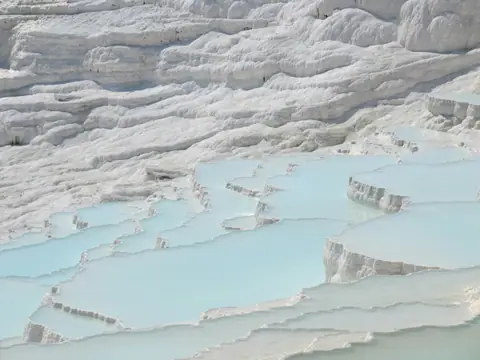
Most people who come to this corner of Denizli province see the white terraces of Pamukkale, walk around Hierapolis and leave. About 20 km to the northwest, above the valley of the Büyük Menderes (the river the ancients called the Maeander), there is a second Roman city that hardly anyone visits. Tripolis on the Meander has a colonnaded street, a Late Antique house with mosaic floors, and an excavation team still working on it. When we went, we had most of it to ourselves.
Tripolis in short
Short answer: if you already have a car at Pamukkale and a free half day, go. You need about one and a half to two hours on site. It is not Ephesus, and it doesn't try to be. What it gives you is scale without crowds, and the feeling of a city in the middle of being uncovered.
The ruins lie on a hillside just east of Yenicekent, a small town in the Buldan district, spread over roughly 3 km² between the town and the river. Denizli city is about 40 km away. The sensible pairing is Hierapolis in the morning and Tripolis after lunch, or the other way round if you want Pamukkale's travertines at sunset.
A short history of a border town
Tripolis sat where three ancient regions met: Phrygia, Lydia and Caria. Ancient writers assigned it to one or the other depending on who was describing it. In the Hellenistic period it was called Apollonia. It was briefly renamed Antoniopolis after Mark Antony passed through Asia Minor in 41 BC, and it became Tripolis under Augustus.
Its fortune came from the road. The city stood on the route linking Sardis and the Aegean coast with Laodicea and the east, and it competed with its neighbour Hierapolis across the valley. It did well in the Roman imperial period, especially from the 2nd century AD. Earthquakes, a bad one in the late 5th century among them, and the Persian invasions of the late 6th and 7th centuries slowly emptied it. Byzantine walls went up later, and the area came under Ottoman rule in 1429.
Systematic excavation has run since 2012, directed by Prof. Bahadır Duman of Pamukkale University with the Denizli Museum. Work continues every season, so each visit can show something that was not visible a year earlier.
What you see on the ground
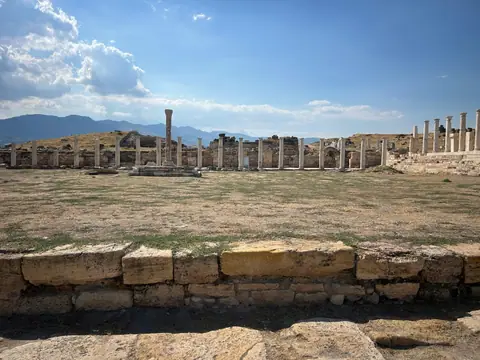
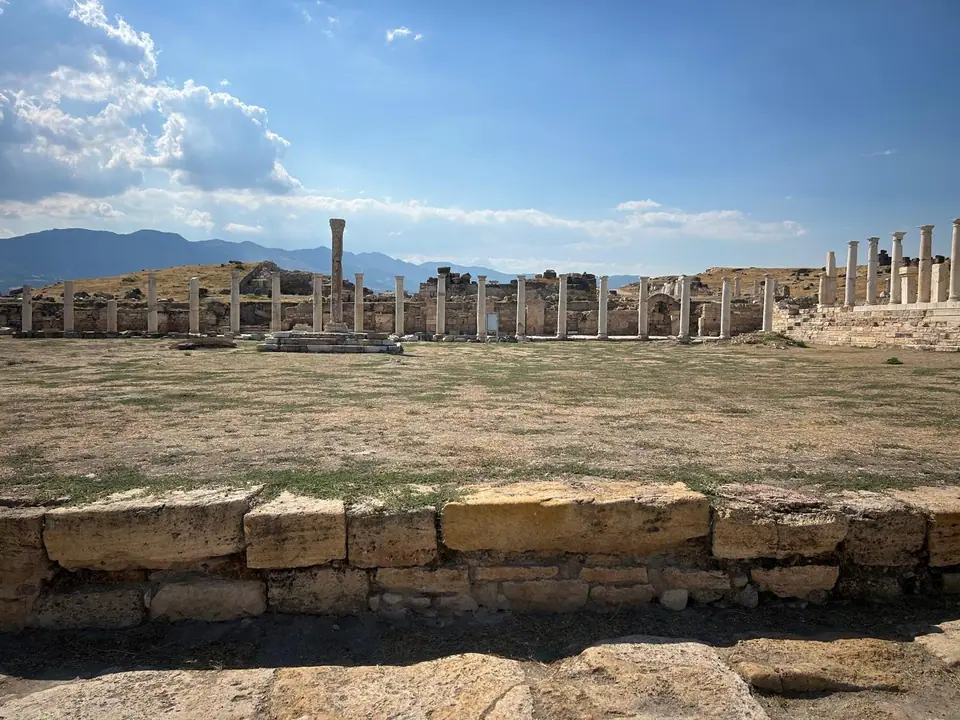
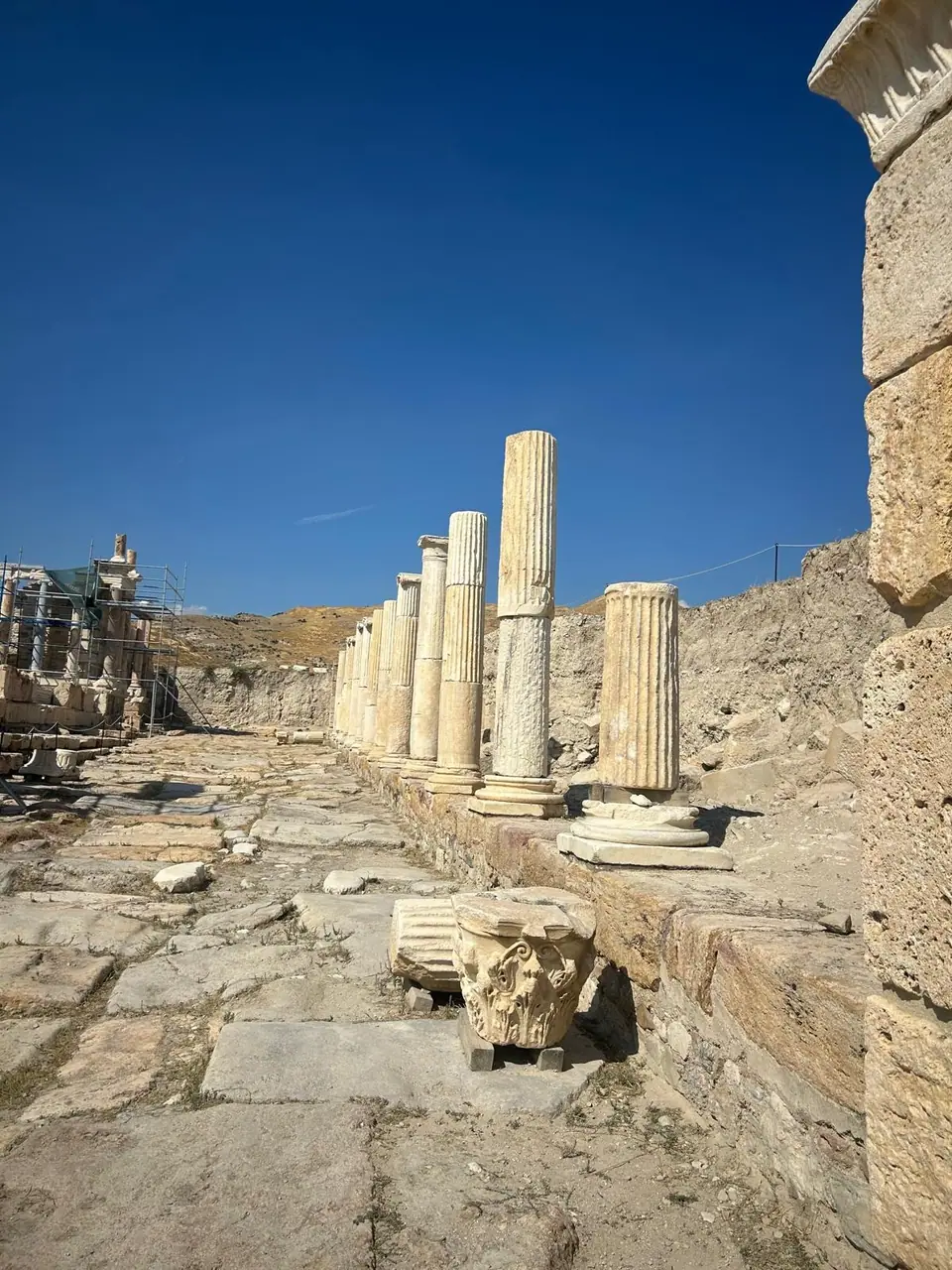
The spine of the site is the Colonnaded Avenue, running east to west, which is the view on most photos of Tripolis. Columns stand in rows along a paved street, with dry grass around them in summer and mountains on the far side of the valley. Walk the paving slowly. Pieces of the buildings that once lined it are still lying where they fell.
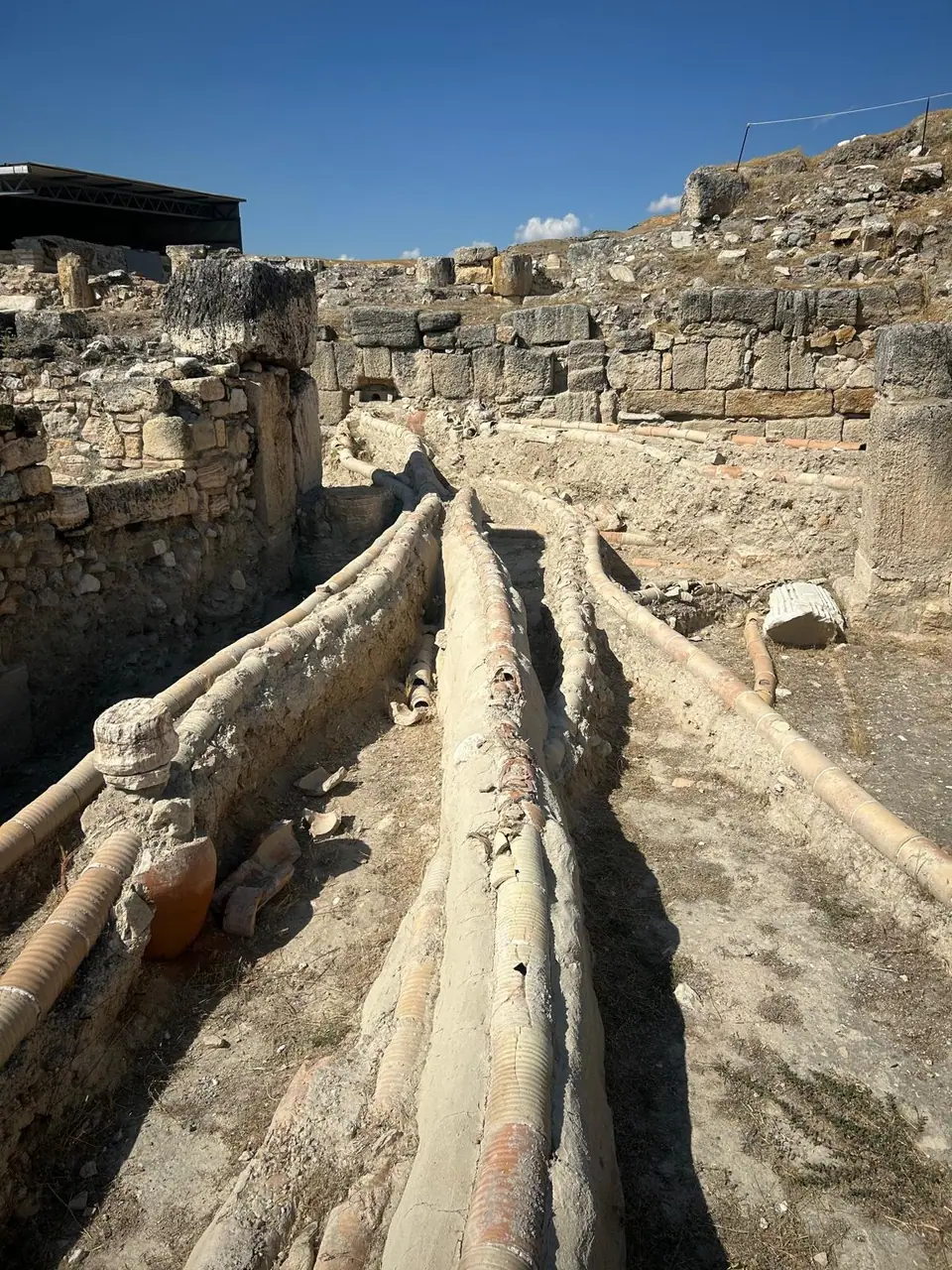
Look at the ground as much as at the columns. Along one stretch we found long rows of terracotta water pipes, section after section fitted together and laid in a stone channel. It is the kind of detail that makes a city feel lived in: somebody planned the plumbing.
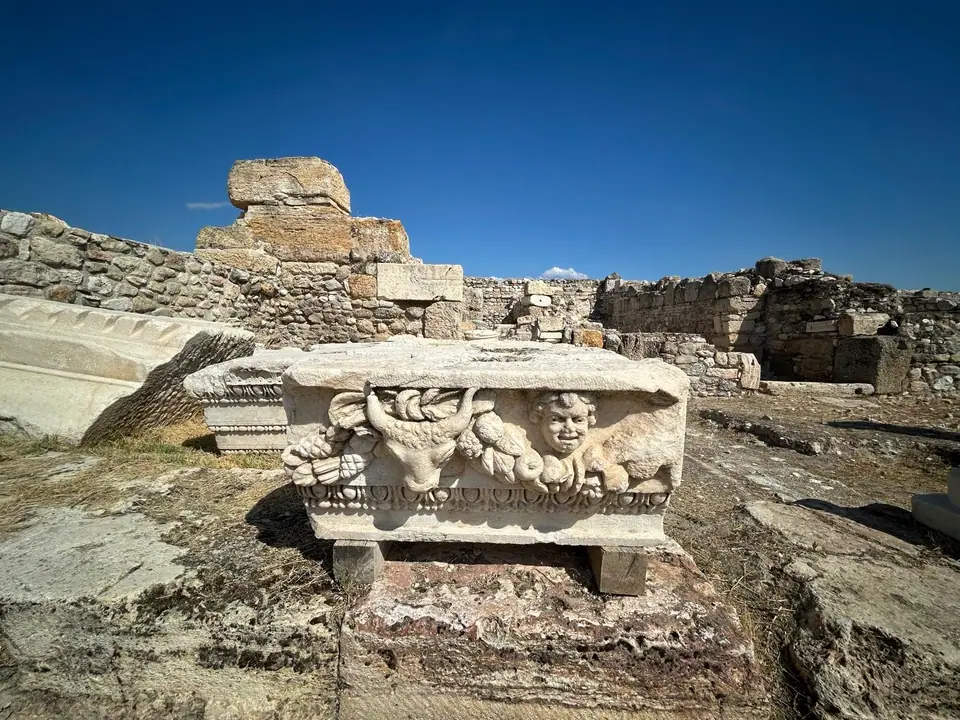
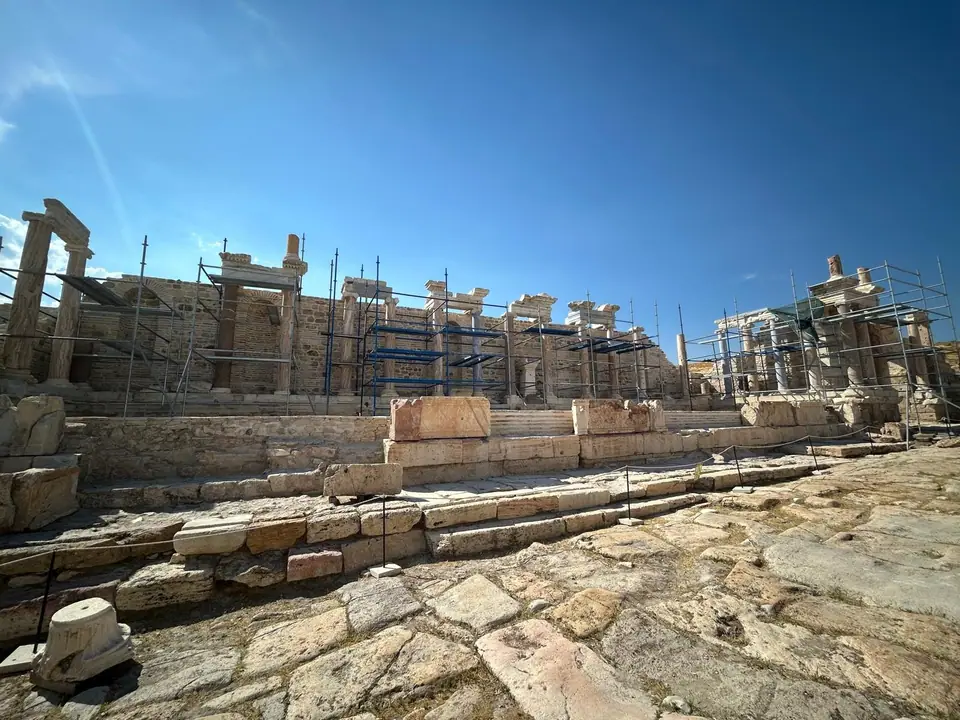
Carved marble turns up everywhere too. One block we photographed, possibly from a sarcophagus, is decorated with heavy garlands and a Medusa-like face. Near the centre, one monumental building front was under scaffolding during our visit, with restoration in progress. The site also has a theatre, baths, agoras and Byzantine churches, and all of them are open to walk around.
The Mosaic House and the residential quarter
This was our favourite corner, and the information board (it is labelled "Residential Area", Konut Alanı in Turkish) explains it well. The Mosaic House is a courtyard house built around a peristyle (a courtyard ringed by columns). It stands near the crossing of the Colonnaded Avenue and the main north to south street, which the excavators call Hierapolis Street. It is considered one of the most important Late Antique buildings in the city.
A second large peristyle house with colonnaded porches lies just to the south. Both were outside the Late Antique fortification walls, just south of the Early Byzantine church. The excavated area covers about 1,000 m² with 14 rooms, seven of them belonging to the Mosaic House. The houses were single storey at first and partly rose to two storeys later; the team found stairs and the stone brackets that once held balconies. The board lists four building phases, from the late Hellenistic or early Roman imperial period to the late 6th or 7th century AD.
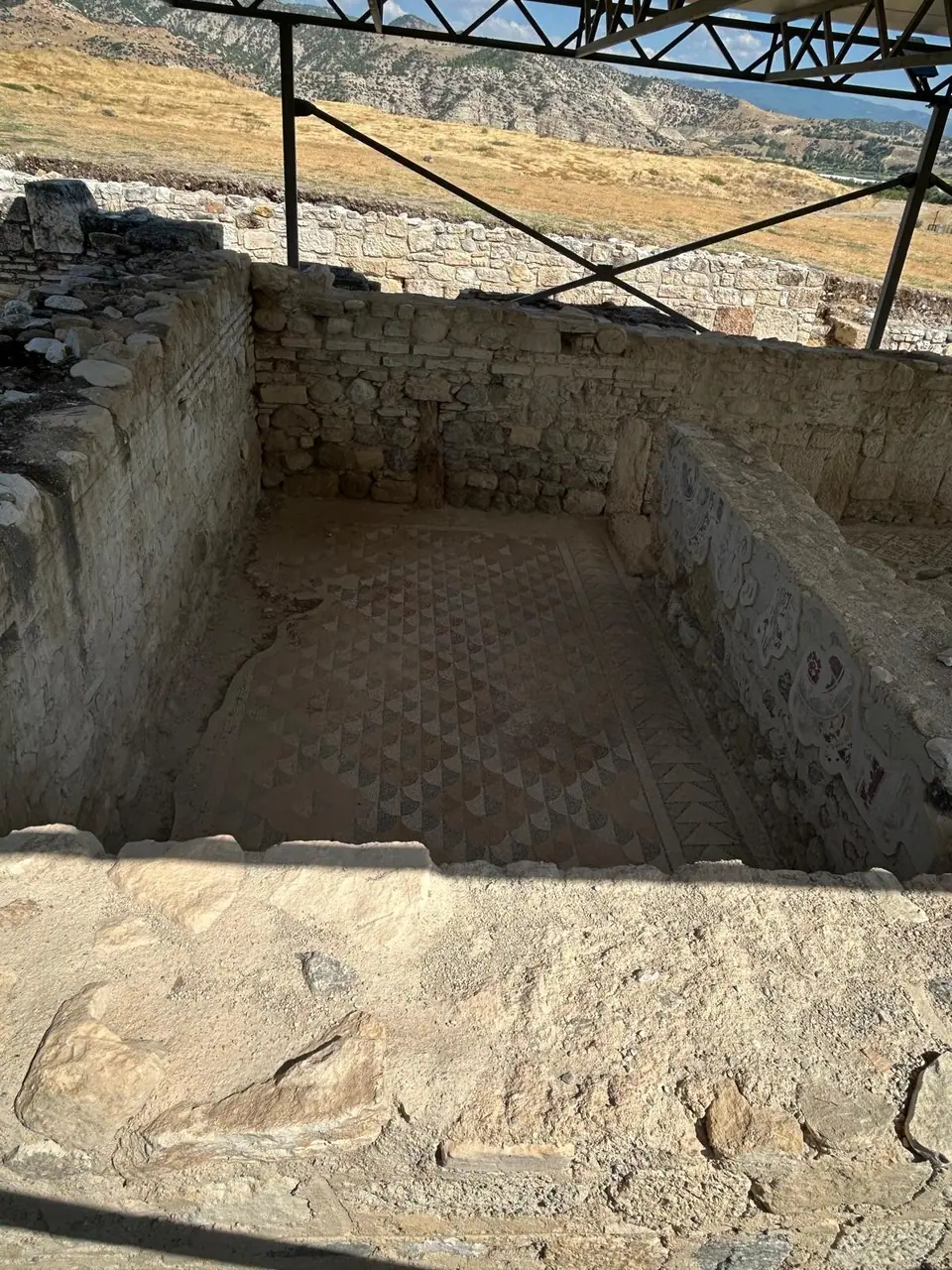
A modern steel roof now shelters the mosaic rooms. It is also the only real shade we found on the whole site.
A half-day route from Pamukkale
This is the loop we drove. It works as an afternoon out of Pamukkale village and needs a car.
- Pamukkale to Buldan. Head northwest out of the valley. The road climbs into vineyard country around Buldan, a district town known for its grapes and for Buldan bezi (Buldan cloth), a light cotton weave made on local looms for centuries. The town has shops selling it if you want to stop.
- Tripolis. Drop down to Yenicekent and follow the signs to the ruins, just east of the town. Park at the entrance and give it one and a half to two hours.
- Güney Şelalesi. On the way back we drove further up the Büyük Menderes valley to Güney Şelalesi (the Güney waterfall), about 5 km southwest of the small town of Güney, where water spills over travertine formations near the Cindere dam lake. Restaurants beside the falls serve trout (alabalık), often raised in their own ponds and cooked on a clay tile. It adds a little driving, so leave time for a long lunch.
- Back to Pamukkale in the evening, or on to Denizli.
Practical questions
Is there an entry fee?
Entry is free. Rules can change, so it does no harm to check the Denizli Tripolis Archaeological Site page on turkishmuseums.com before you go; the same page has the current visiting hours.
Can we get there without a car?
It is possible but slow. Minibuses (dolmuş) run from the Denizli bus station (otogar) to Yenicekent, and from the town the ruins are a short walk or taxi ride. A taxi or a hired car from Pamukkale is far simpler.
What facilities are there?
There is parking and there are toilets at the entrance. There is no café on site, and the nearest shops are in Yenicekent, so bring water and food.
When should we go?
Spring and autumn. We went on a hot, bright day and the photos show it: full sun, dry grass, almost no shade outside the mosaic shelter. In summer, bring a hat and twice the water you think you need. Morning or late afternoon is kinder than midday, and good shoes help on the uneven paving.