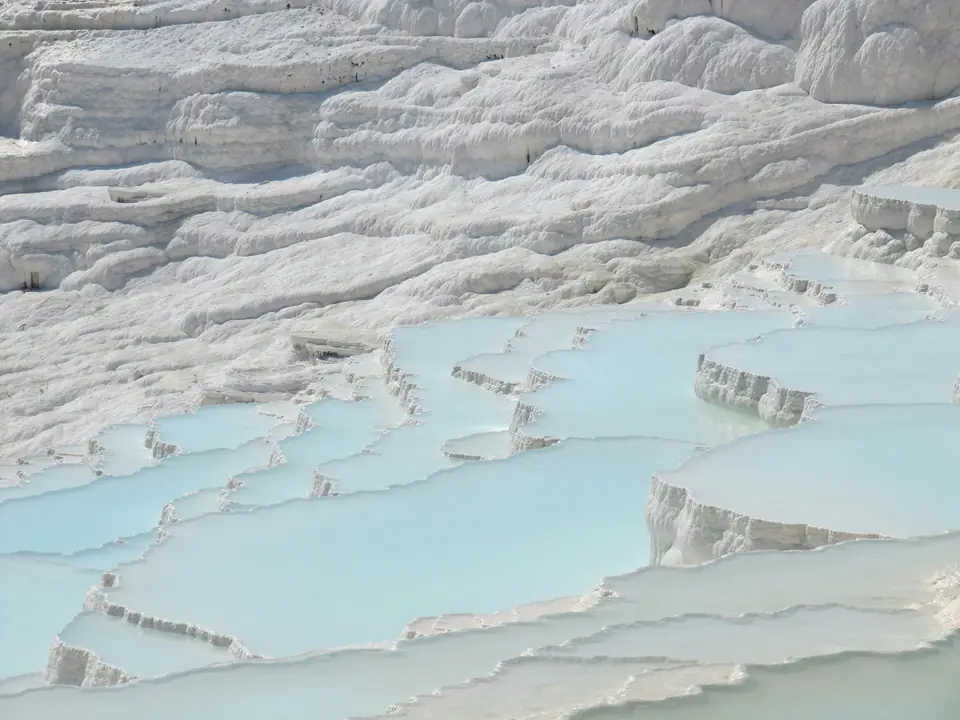
Photo by Arnaud Civray on Unsplash
Pamukkale
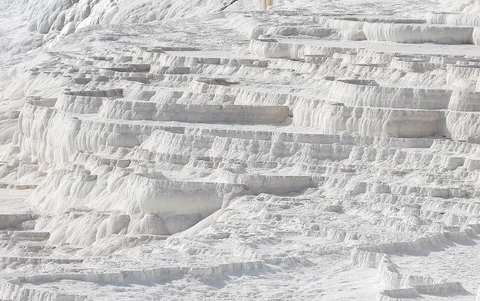
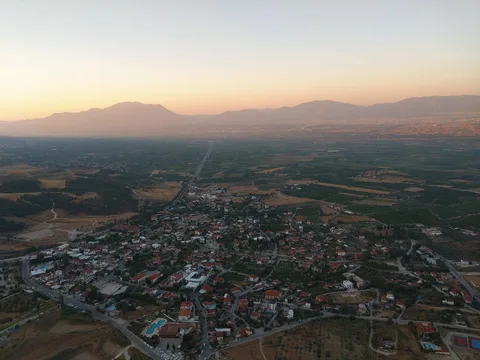
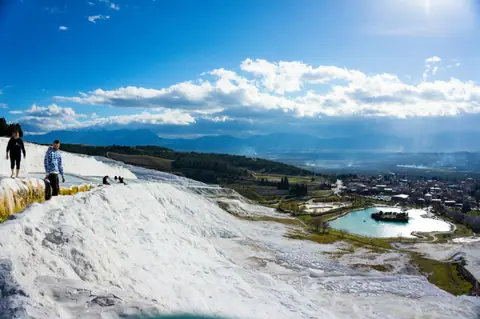
Pamukkale unites gleaming white calcite terraces with the expansive Roman ruins of Hierapolis across the warm plains of southwestern Turkey.
Quick decisions
How many days?
One full day covers the calcite pools and primary Roman ruins, though an overnight stay lets you explore before tour groups arrive.
Where should I stay?
Choose Pamukkale village for walking access to the lower entrance, or Denizli centre for direct rail connections and commercial facilities.
Do I need a car?
Public minibuses run reliably between Denizli terminal and the site gates, making private cars unnecessary for general sightseeing around the park.
Best for
Travellers fascinated by classical archaeology, thermal hydrology, natural mineral landscapes, and peaceful Aegean village atmospheres benefit most from visiting this valley.
Before you go
Pack a light fabric bag for your footwear, as staff enforce barefoot walking rules strictly across the delicate travertine slopes.
Getting around
Walk between ancient sectors or hire local site shuttles, pairing your day with practical travel advice for smooth exploration.
Continue your trip
Catch regional trains west toward coastal Aegean centres, checking Izmir transport options before boarding your departure service across the province.
Overview
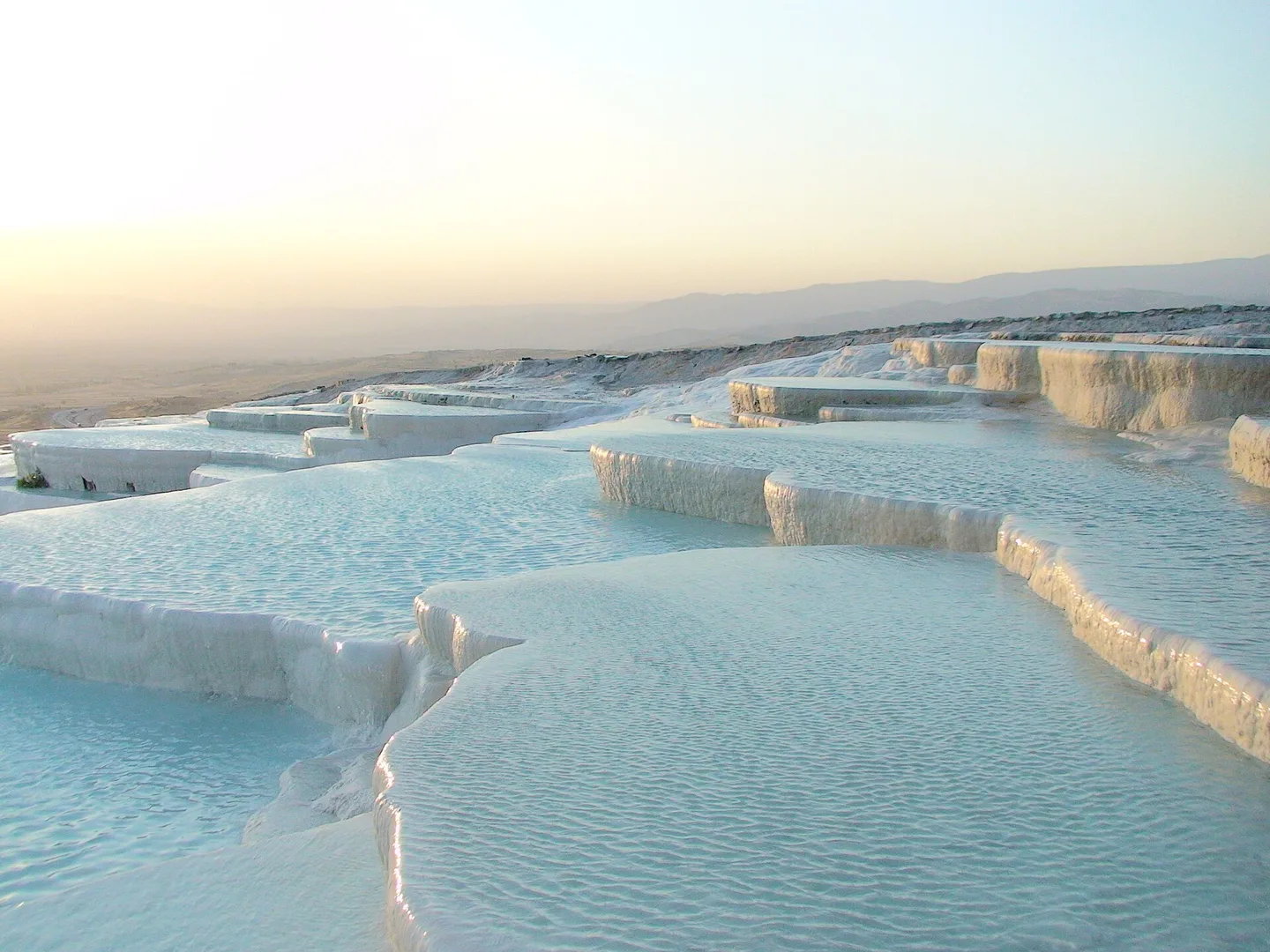
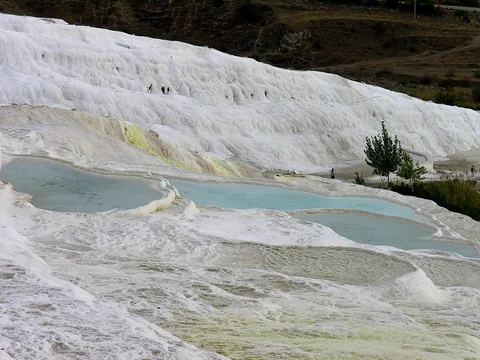
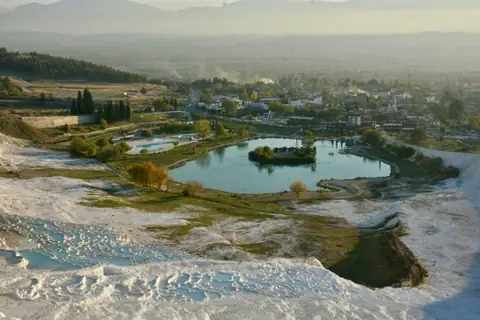
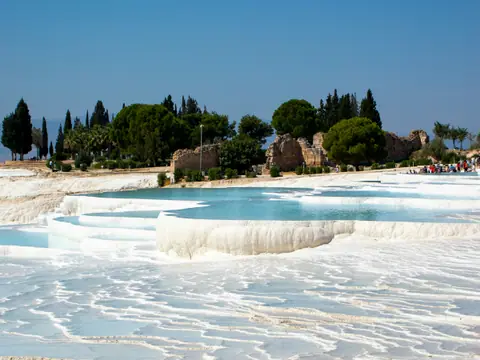
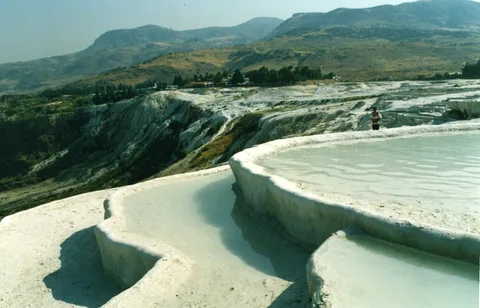
Pamukkale stands as one of the finest geological sights in the eastern Mediterranean basin. Mineral-rich thermal springs spill down limestone cliffs, depositing brilliant white calcium carbonate into natural shelves and turquoise pools over millennia. Hellenistic kings of Pergamum founded Hierapolis atop the plateau in the second century BC. Later Roman builders expanded the sanctuary into a thriving spa city of stone bathhouses, marble theatres, and colonnaded avenues.
Today the combined archaeological park and travertine slope form an expansive UNESCO reserve in southwestern Anatolia. Deep geothermal fissures dissolve pure limestone underground and release carbon dioxide gas at the surface, precipitating hardened white rimstone basins across the hillside. Visiting at opening light reveals peaceful marble avenues and open valley views before midday heat rises across the exposed plateau.
Getting there
Denizli functions as the central transport gateway for the entire thermal basin. Frequent shared dolmus minibuses depart from platform sixty-six on the lower level of the provincial bus terminal straight toward the village square beneath the cliffs. Regional trains connect the main railway station with Aegean coastal hubs, while domestic flights land at Cardak airport east of town with coordinated coach shuttles.
Entering the protected reserve requires choosing between the lower village pedestrian gate and the upper plateau car parks. Walking up from the town edge requires ascending barefoot along warm water channels, whereas northern and southern road gates lead straight onto plateau boardwalks beside the ruins. Review regional rail, coach and gate access details before departing your valley rail hub.
Where to stay
Choosing an overnight base balances immediate morning terrace entry against broader intercity transport links. Pamukkale village sits directly beneath the shining slopes, offering quiet family pensions, shaded gardens, and flat walks to the lower gate. Staying beside the park lake lets early risers step onto smooth white stone walkways ahead of coastal coach arrivals.
Alternatively, Denizli city centre suits rail passengers with commercial hotels and lively dining avenues beside the train station. Five kilometres northwest, the spa hamlet of Karahayit draws visitors to iron-rich reddish thermal springs piped into hotel bathing pools. Balance quiet village lanes against city transit using our plateau and village pacing outline.
Things to do
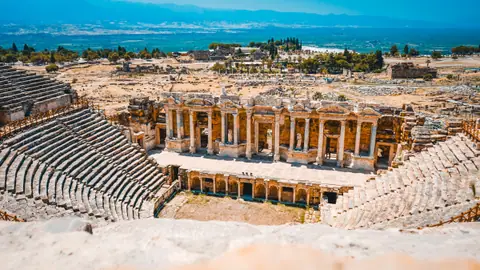
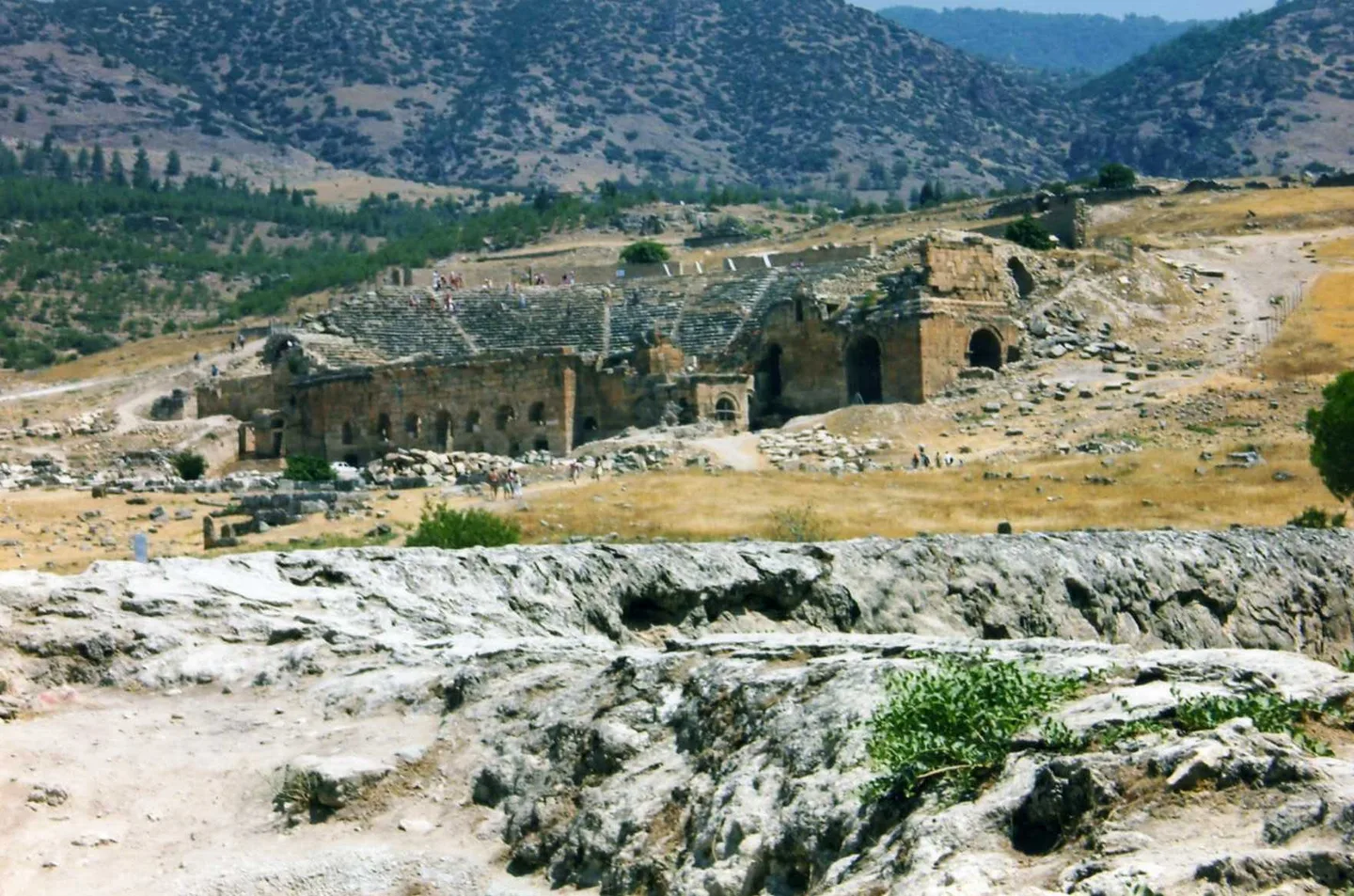
Hierapolis covers a vast rocky plateau above the travertines, calling for sturdy soles and strong sun protection. The grand Roman theatre dominates the eastern hillside with carved stage reliefs overlooking broad valley plains. Northward, the expansive necropolis stretches across rolling fields dotted with marble sarcophagi, stone tumuli, and house-shaped tombs.
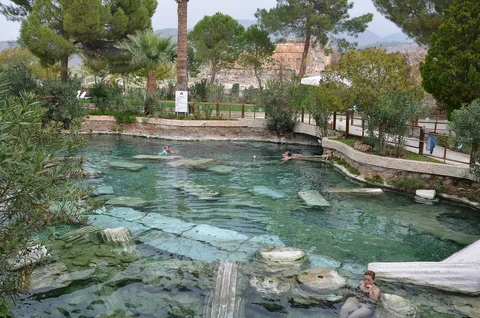
Between the theatre and cliff edge lies the Antique Pool, where warm spring water covers toppled marble columns from classical earthquakes. Restored Roman bath halls nearby hold funerary statues and intricate stone friezes inside the site museum. Map plateau monuments, the Sacred Pool and thermal viewpoints alongside a focused walk through Hierapolis Frontinus Gate and theatre tiers.
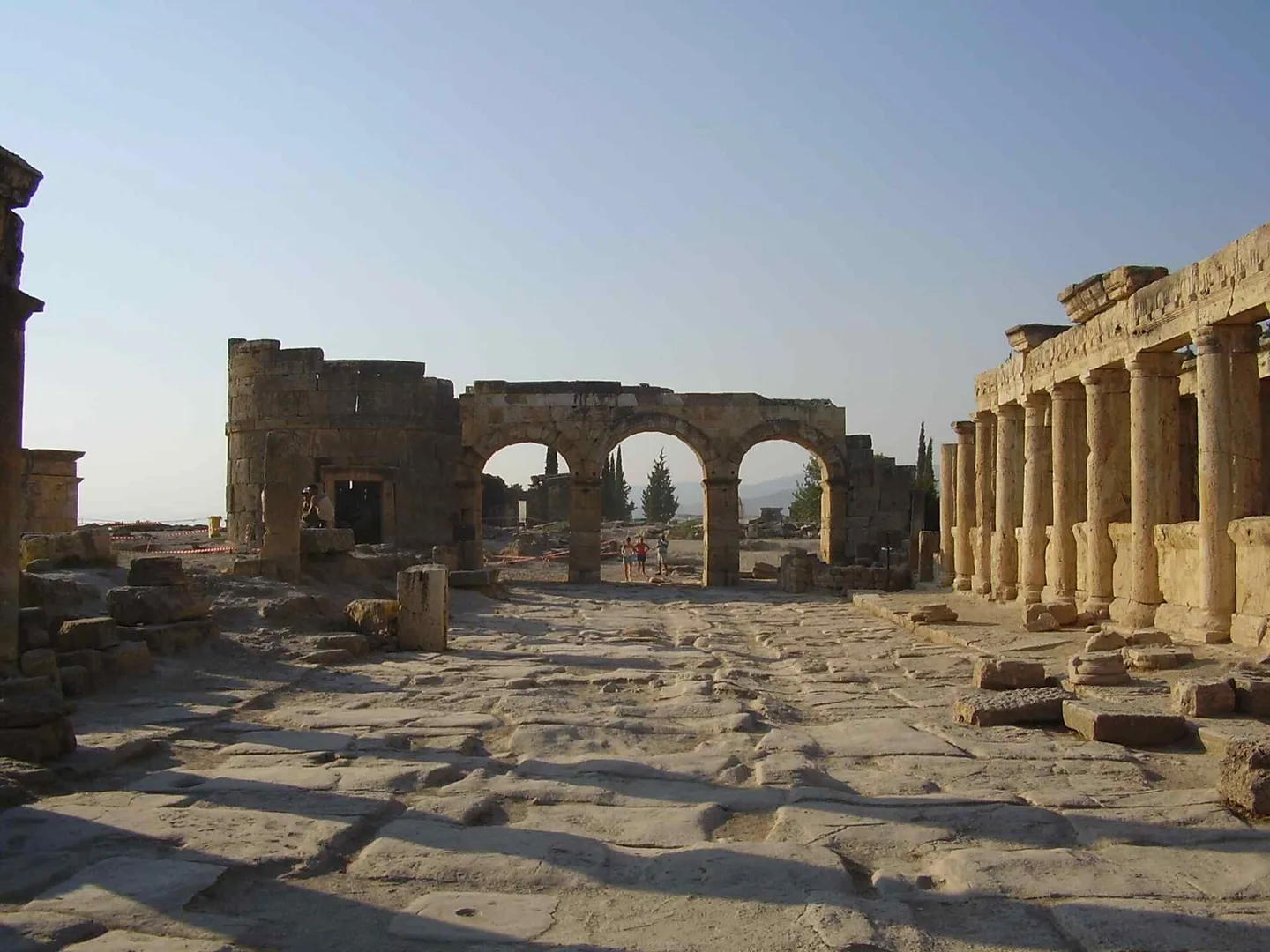
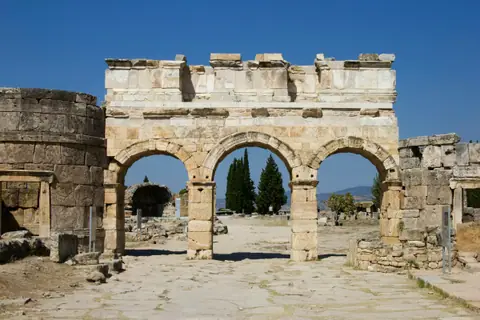
On the eastern slope behind the auditorium, the octagonal Martyrium of Saint Philip marks an important early Christian pilgrimage shrine. Along the northern avenue, the three-arched Frontinus Gate opens onto paved Roman streets bordered by original limestone drainage gutters.
Food and drink
Dining around the valley highlights straightforward Aegean Anatolian cooking built on fresh highland produce. Local tables start with cold olive-oil greens, strained yoghurt dips, and blistered wood-fired flatbreads alongside succulent slow-roasted lamb kebab. Pomegranate orchards and vineyards on surrounding lowlands supply crisp salads, fresh pressed juices, and fragrant thyme herbal teas.
After coastal day coaches depart, family kitchens near the village lake cook crisp cheese pide and stewed vegetables at relaxed outdoor tables. Casual bakeries pull savoury lamb flatbreads straight from stone hearths between morning and afternoon walks, followed by hot tea in tulip glasses with sesame halva and sweet candied walnuts.
Culture
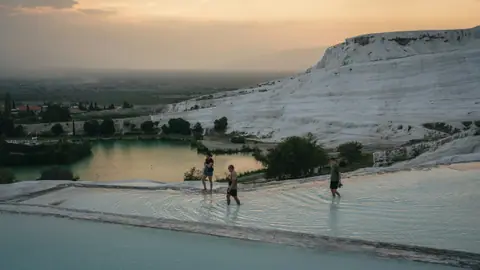
Strict preservation rules protect Pamukkale's delicate travertine crust from erosion and surface staining. Park staff prohibit shoes across active white terraces, requiring walkers to carry footwear in shoulder bags along designated water channels. Stepping onto dry fragile shelves or cordoned pools remains forbidden so calcite layers regenerate naturally.
Ancient Hierapolis carries long pilgrimage history as a healing sanctuary and the hilltop Martyrium site of Saint Philip. Modest, sun-smart clothing suits historic basilica grounds and intense plateau glare across exposed stone avenues. Prepare clothing and season dates through our notes on monthly weather across the thermal plateau. Modern park managers rotate spring sluice gates steadily across dry and wet channels so calcium carbonate deposits form evenly across the protected cliffs. Keeping within marked barefoot paths preserves delicate limestone slopes for future guests.
Weather by month
Pamukkale is warmest in July, with average highs around 38°C, and coldest in January, when nights drop to about 2°C. January is the wettest month by rainfall (67 mm), with rain on about 9 days. For mild weather with fewer rainy days, aim for April, October and November.
| Month | Low | Range | High | Rain | Rainy days |
|---|---|---|---|---|---|
| Jan | 2°C | 11°C | 67 mm | 9 d | |
| Feb | 4°C | 14°C | 34 mm | 6 d | |
| Mar | 6°C | 18°C | 55 mm | 8 d | |
| Apr | 11°C | 24°C | 23 mm | 5 d | |
| May | 16°C | 29°C | 37 mm | 8 d | |
| Jun | 20°C | 33°C | 24 mm | 6 d | |
| Jul | 24°C | 38°C | 3 mm | 1 d | |
| Aug | 24°C | 38°C | 3 mm | 1 d | |
| Sep | 20°C | 33°C | 6 mm | 2 d | |
| Oct | 15°C | 26°C | 18 mm | 3 d | |
| Nov | 9°C | 19°C | 34 mm | 4 d | |
| Dec | 5°C | 13°C | 45 mm | 7 d |
Averages of daily values from 2015 to 2024. Rainy days are days with at least 1 mm of rain. Source: Open-Meteo · Compare destinations by month.
Pamukkale on the map
Every place we cover in Pamukkale. Tap a category or pin to explore.
In-depth Pamukkale guides
Browse the guides grouped by topic: sights, neighbourhoods, food, transport, day trips and trip planning.
Sights, Landmarks & Parks
Key monuments, viewpoints, museums and nature trails.
- What to See in Pamukkale: Travertines, Hierapolis and Ancient RuinsPamukkale blends snow-white mineral terraces with ancient Greco-Roman civic monuments across the sunny Lycus River valley of western Anatolia.
- Pamukkale and Hierapolis Entry Tickets: Official Rules and Gate TipsUnderstanding ticket rules for Pamukkale and ancient Hierapolis helps you choose your entry gate and manage site regulations smoothly.
- Hierapolis Ancient City Guide: Roman Theatre, Martyrium and NecropolisHierapolis crowns the white travertine plateau with remarkably preserved Roman colonnades, sacred geothermal fissures, monumental tombs, and a restored antique theatre.
- Cleopatra's Pool Guide: Thermal Water and Submerged Roman ColumnsBathe among submerged Roman marble columns in naturally heated mineral waters right in the heart of ancient Hierapolis.
- Pamukkale Hot Air Balloon Guide: Sunrise Flights vs CappadociaHot air balloon flights over Pamukkale offer tranquil sunrise views over white terraces and ancient ruins rather than dense crowds.
Getting Around & Arrival
Airport transfers, public transit, passes and driving rules.
Trip Planning & Itineraries
When to visit, what to pack and day-by-day routes.
- Pamukkale Orientation: Travertine Cliffs, Hierapolis and Denizli ValleyWe navigate the vertical landscape of Pamukkale, dividing the mineral cliff terraces from the ancient Roman plateau of Hierapolis above.
- Pamukkale Seasonal Climate Guide: Spring Warmth, Glare and Winter PoolsPamukkale offers distinct seasonal faces, from quiet winter thermal steam to brilliant spring wildflowers across ancient Hierapolis.
- What to Wear to Pamukkale: Barefoot Travertines and Ruin WalkingPlanning your Pamukkale outfit requires balancing strict barefoot rules across wet calcium slopes with rugged footwear for expansive ancient limestone ruins.
- Pamukkale in One Day: Downhill Route from Hierapolis to the White TerracesA single-day downhill route across ancient ruins and white mineral shelves lets you bypass exhausting climbs under the hot sun.
Need your embassy or consulate in Turkey? See embassies and consulates in Turkey.
Reviews
Log in to write a review.
Pamukkale is a wonderful experience; I recommend everyone visit.