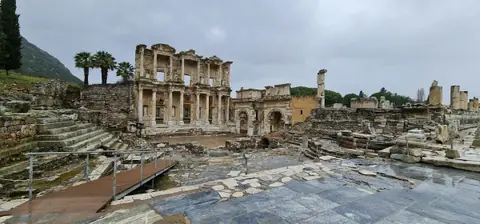
Photo by Mert Kahveci on Unsplash
Ephesus
One of the best-preserved Roman cities in the eastern Mediterranean, a short hop from the Aegean coast.
Quick decisions
How many days?
Half a day: the ancient city on its own, top to bottom. 1 day: the site, the Terrace Houses and the museum in Selçuk. 2 days: add the House of the Virgin Mary, the Temple of Artemis and an evening up in Şirince. 3 days: slow down, add a beach afternoon at Pamucak.
Where should I stay?
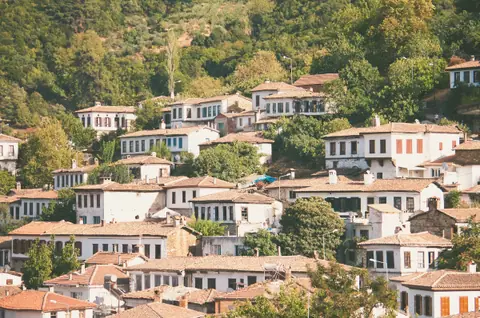
Selçuk: small, walkable, 3 km from the site, full of family-run guesthouses. Şirince: a hill village with stone houses, lovely at night, but you'll want a car. Kuşadası: a proper beach resort 20 km away if you want the sea more than the ruins. More in our where to stay guide.
Do I need a car?
Not for Ephesus itself. Taxis and minibuses cover Selçuk to the site. A car starts to make sense once you add the House of the Virgin Mary, Şirince and Pamukkale into the same trip.
Best for
History lovers: an easy yes. Families: yes, but the heat and the marble slopes are hard on small kids in summer. Couples: pair it with Şirince and it works well. Budget travellers: Selçuk is one of the cheaper bases on the Aegean coast.
Before you go
Timing: be at the gate when it opens, before the cruise groups arrive. Water: carry more than you think you need, there's almost no shade. Shoes: the old marble streets are polished smooth and slippery. Tickets: prices change every year, so check the official museum site before you go.
Getting around
Airport to Selçuk: İzmir Adnan Menderes (ADB) is about an hour by road, or take the regional train from the airport station. Selçuk to the site: a short taxi ride, or a 35 to 40 minute walk along a tree-lined road. Full details in our getting there guide.
Continue your trip
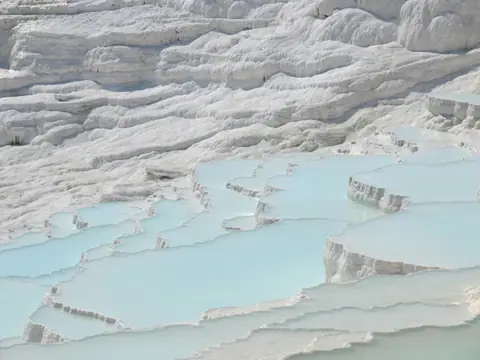
Pamukkale is about 3 hours east by road or rail, and the two make a natural pair. Heading north, İzmir is an hour away. South, Bodrum and the Turquoise Coast are a longer drive but doable.
Overview
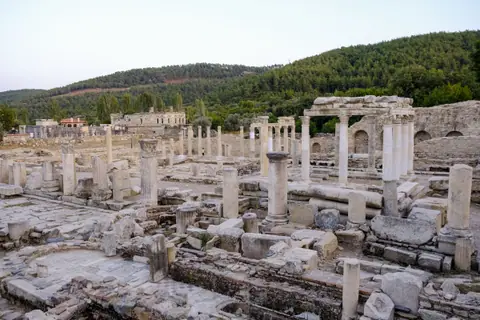
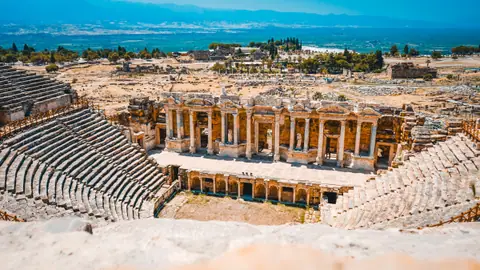
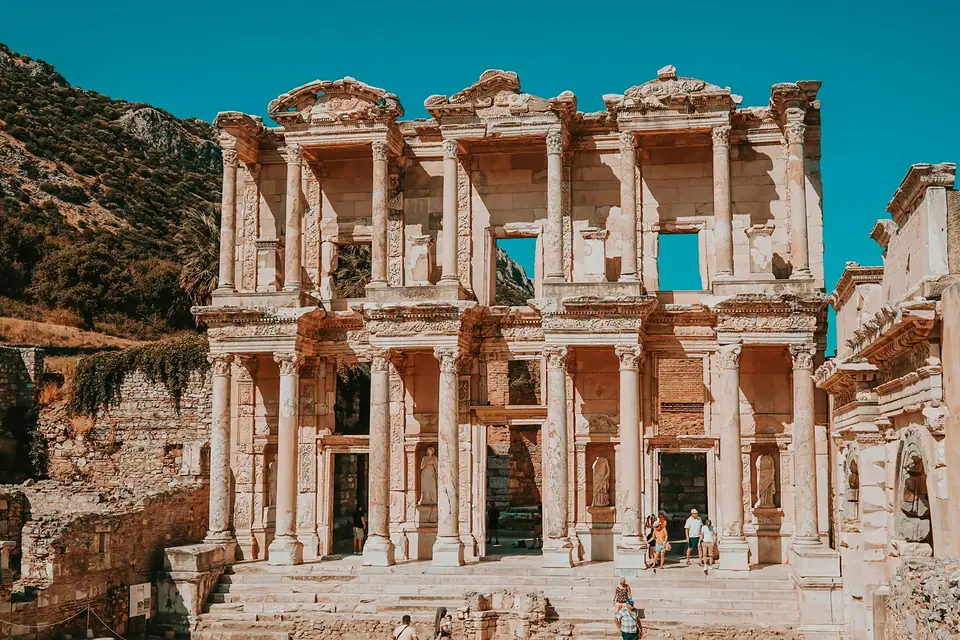
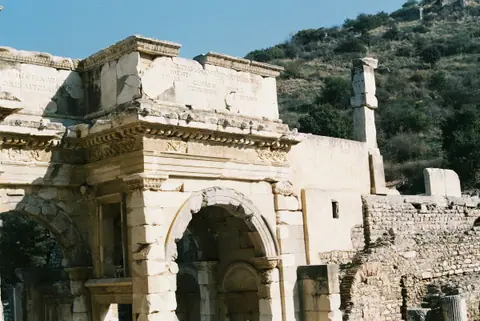
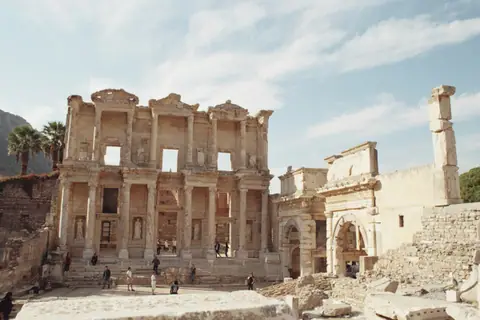
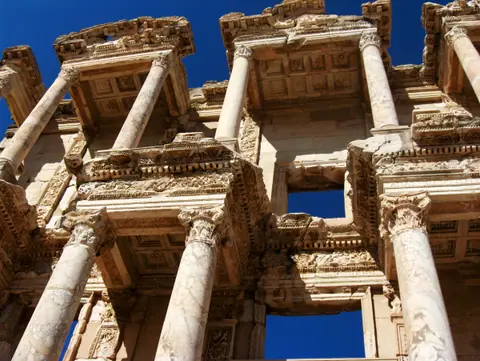
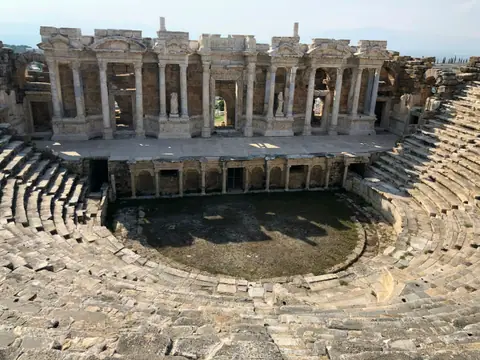
Ephesus was one of the largest cities of the Roman Empire, a port town that grew rich on trade and religion until its harbour slowly filled with silt and the sea moved away. Today the coastline is several kilometres off, and what's left behind is a city you can actually walk through: paved streets, a theatre that once seated around 24,000 people, public toilets, shop fronts, and the two-storey façade of the Library of Celsus.
Plenty of ancient sites leave you reading signs and imagining things. Ephesus is different because so much of it is still standing. You walk downhill along Curetes Street and the scale starts to make sense. Go early, skip the midday heat, and buy the extra ticket for the Terrace Houses. That's most of the advice you need.
Getting there
The nearest airport is İzmir Adnan Menderes, about an hour north. From there it's a drive, a transfer, or a regional train to Selçuk, the town next to the site. Our getting there guide covers every option, including routes from Istanbul, Kuşadası and Pamukkale.
Where to stay
Most people base themselves in Selçuk, which is quiet, cheap and close. Şirince is the romantic option if you have a car, and Kuşadası suits travellers who want a beach with their history. We compare all three in our where to stay guide.
Things to do
The ancient city takes a few hours on its own, but the area has more to it than one site. See our things to do guide, plus dedicated guides to the Terrace Houses, the House of the Virgin Mary and a side trip to Şirince.
Food and drink
Selçuk's local speciality is çöp şiş, small lamb skewers grilled over charcoal and wrapped in thin bread with onions and parsley. Order more than you think. Up the hill, Şirince is known for its fruit wines. They're sweet and a bit of a novelty, so taste before you buy a bottle.
Culture
Ephesus mattered to almost every culture that passed through the Aegean. The Greeks built the Temple of Artemis here, one of the Seven Wonders of the Ancient World. The Romans made it a provincial capital. Early Christians came too: Saint Paul preached here, and tradition holds that Saint John and the Virgin Mary spent their final years nearby. Those layers are why a trip here rarely stops at the ancient city gates.
Weather by month
Ephesus is warmest in July, with average highs around 36°C, and coldest in January, when nights drop to about 6°C. January is the wettest month by rainfall (144 mm), with rain on about 12 days. For mild weather with fewer rainy days, aim for May and October.
| Month | Low | Range | High | Rain | Rainy days |
|---|---|---|---|---|---|
| Jan | 6°C | 13°C | 144 mm | 12 d | |
| Feb | 7°C | 15°C | 77 mm | 10 d | |
| Mar | 8°C | 17°C | 85 mm | 11 d | |
| Apr | 12°C | 21°C | 48 mm | 6 d | |
| May | 16°C | 26°C | 40 mm | 6 d | |
| Jun | 21°C | 31°C | 34 mm | 5 d | |
| Jul | 24°C | 36°C | 4 mm | 1 d | |
| Aug | 24°C | 35°C | 3 mm | 1 d | |
| Sep | 21°C | 31°C | 21 mm | 3 d | |
| Oct | 16°C | 26°C | 46 mm | 3 d | |
| Nov | 12°C | 20°C | 121 mm | 9 d | |
| Dec | 8°C | 15°C | 114 mm | 10 d |
Averages of daily values from 2015 to 2024. Rainy days are days with at least 1 mm of rain. Source: Open-Meteo · Compare destinations by month.
Ephesus on the map
Every place we cover in Ephesus. Tap a category or pin to explore.
In-depth Ephesus guides
Browse the guides grouped by topic: sights, neighbourhoods, food, transport, day trips and trip planning.
Sights, Landmarks & Parks
Key monuments, viewpoints, museums and nature trails.
- Things to Do in EphesusWhat to see inside the ancient city, and the best sights nearby.
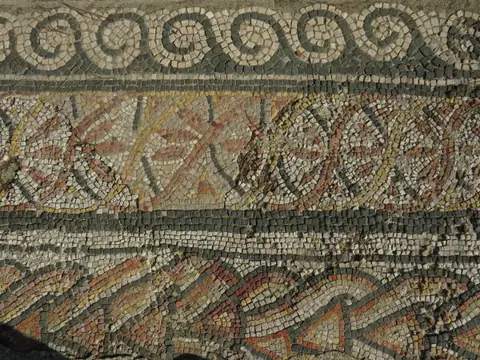
- Ephesus Terrace Houses Guide: What to See and Visitor LogisticsExplore the Roman residential villas inside Ephesus. Read our practical guide covering hillside frescoes, intricate mosaic pavements, gangway access, and walking logistics.
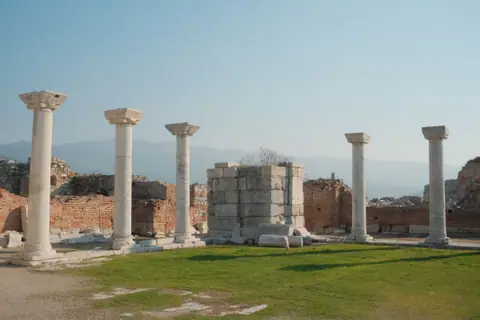
- House of the Virgin Mary Near Ephesus: Complete Visitor GuidePlan your trip to the House of the Virgin Mary on Mount Bülbül with guidance on mountain taxis, sacred springs, chapel etiquette, and regional transport.
Neighbourhoods & Where to Stay
Districts, historic quarters and the best bases for your stay.
Getting Around & Arrival
Airport transfers, public transit, passes and driving rules.
Day Trips & Excursions
Easy half-day and full-day trips from the city.
Trip Planning & Itineraries
When to visit, what to pack and day-by-day routes.
- Ephesus: What to Know Before You GoThe essentials for a first visit to Ephesus, from gates and tickets to timing.
- Best Time to Visit Ephesus: Seasons, Weather, and CrowdsDiscover the ideal months and times of day to tour ancient Ephesus, featuring verified monthly climate averages, cruise ship patterns, and seasonal walking strategies.
- What to Wear in Ephesus: Footwear, Sun Protection, and Modesty GuidelinesPrepare your wardrobe for Ephesus with essential advice on non-slip footwear for ancient marble streets, intense summer sun protection, and respectful attire for sacred sites.
- One Day in Ephesus Itinerary: Upper Gate to SelçukA relaxed one-day walking route through Ephesus from the upper gate downhill past the Terrace Houses, Celsus Library and Great Theatre to Selçuk.
Need your embassy or consulate in Turkey? See embassies and consulates in Turkey.
Reviews
Log in to write a review.
No reviews yet.