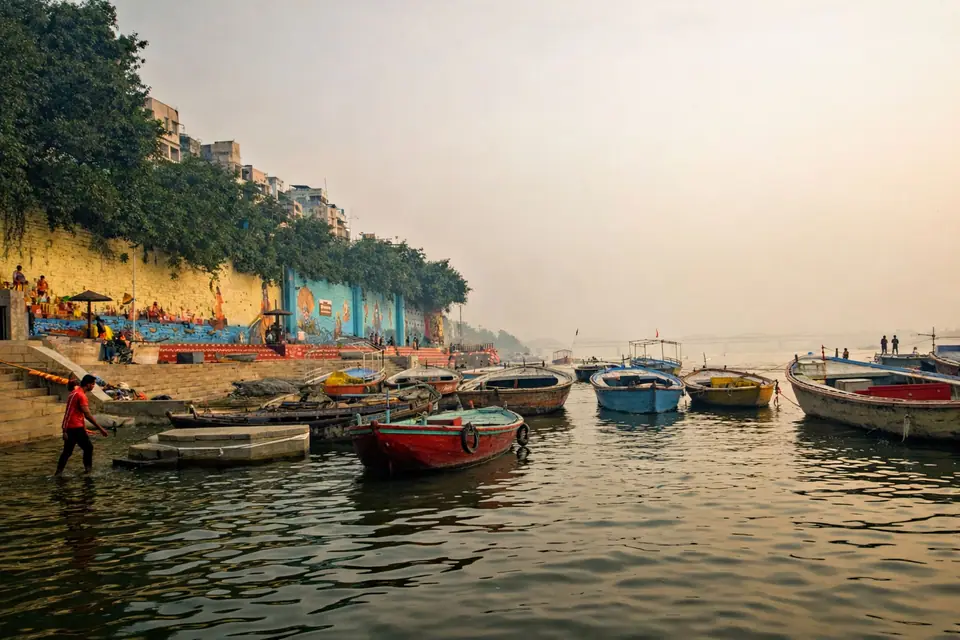
A detailed riverfront walk and boat route along the 84 crescent ghats of the Ganges in Kashi, the labyrinthine galis around Vishwanath, Ramnagar Fort, and Sarnath Deer Park.
Ancient Kashi Between the Varuna and Assi and the Deer Park of Sarnath
Situated between the Varuna and Assi streams where the River Ganges curves uniquely northward in a sweeping crescent, Varanasi, also known as Kashi (City of Light) and Banaras, is one of the world's oldest continuously inhabited cities, celebrated in the Rigveda and the epics as the capital of the ancient Kingdom of Kashi. Around 528 BC, just ten kilometres north in the deer park of Sarnath (Isipatana), Gautama Buddha delivered his first sermon (Dhammacakkappavattana Sutta) after attaining enlightenment.
In the eighteenth century, Maratha queens led by Maharani Ahilyabai Holkar of Indore, alongside Rajput, Bundela, and Bengali rulers, reconstructed the stone stepped riverfront ghats and temples that line the western bank of the Ganges today.
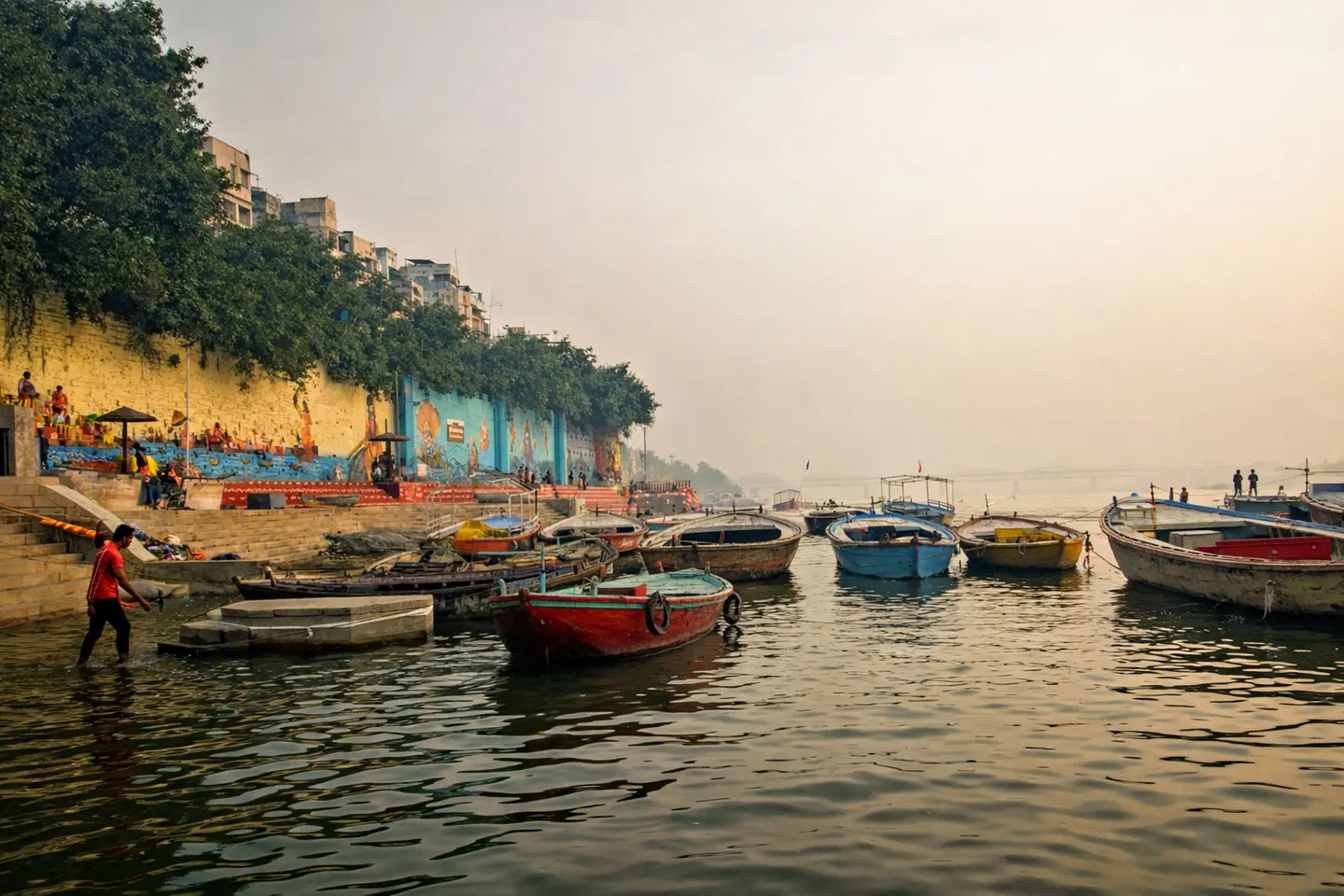
Southern Ghats: Assi Ghat, Tulsi Ghat to Kedar Ghat
Assi Ghat Subah-e-Banaras, Tulsi Ghat & Goswami Tulsidas Akhara, Lolark Kund, Anandamayi Ghat, Jain Ghat, Chet Singh Ghat & 1781 Fort, Niranjani Ghat, Shivala Ghat, Harishchandra Ghat, and Kedar Ghat Gauri Kedareshwar Temple
Assi Ghat
Forming the southern anchor of the historic riverfront, this wide stone terrace marks the confluence of the sacred Ganga and the historic Assi stream. Pilgrims assemble before sunrise under a sprawling sacred fig tree to perform morning rituals and ablutions. The open paved concourse hosts daily devotional singing and traditional physical training sessions each dawn.
Subah-e-Banaras Pavilion
This elevated riverfront platform on Assi Ghat serves as the dedicated venue for dawn ceremonies that celebrate ancient Hindu traditions. Priests clad in silk dhotis conduct elaborate synchronized fire offerings facing the rising sun, followed by classical vocal performances and community yoga sessions. Visitors observe Vedic chanting accompanied by the rhythmic ringing of brass bells.
Ganga Mahal Ghat (Assi)
Constructed in 1830 as an extension of Assi Ghat, this imposing brick and sandstone palace showcases grand Rajput architectural features. The river-facing facade incorporates carved stone brackets, arched balconies, and broad steps descending directly into the water. Today, the upper levels host academic programmes and educational institutions focused on traditional arts.
Riva Ghat
Constructed in the early twentieth century by the ruler of Rewa state, this quiet stone quay features a sturdy masonry palace above the water. The grand residence was later transferred to the Banaras Hindu University to serve as a hostel for scholars. Massive octagonal bastions support the foundations against monsoon currents.
Tulsi Ghat
Named after the sixteenth-century saint who translated the Valmiki Ramayana into the vernacular Awadhi language, this ghat remains central to local religious literature. The site preserves centuries-old stepped embankments and hosts the annual Krishna Leela performance during the autumn festival season. Pilgrims visit the riverfront to honour the saintly heritage.
Goswami Tulsidas Akhara
Situated atop the stone ramparts of Tulsi Ghat, this historic compound contains the original earth-pit arena founded for youth physical conditioning. The adjacent residence preserves personal relics attributed to Tulsidas, including a piece of his wooden boat and ancient manuscript copies. Wrestlers practice classical kushti exercises here twice daily.
Lolark Kund
Located inland just behind Tulsi Ghat, this ancient water tank descends steeply via fifty stone stairs into a subterranean masonry pool. Regarded as one of the oldest sacred sites in the city, it attracts thousands during the annual Lolark Shashthi festival when couples bathe to seek blessings for offspring. Carved stone deities line the steep walls.
Bhadaini Ghat
Characterised by the absence of religious temples on its lower terrace, Bhadaini Ghat is defined by a massive Victorian-era waterworks complex constructed in 1892. The river steps provide uninterrupted views of the river curve, serving as an important municipal utility that still pumps drinking water across the old quarters. Sturdy stone embankments protect the riverbank.
Janaki Ghat
Established in the late nineteenth century by Maharani Kameshwar Priya of Sursand, Bihar, this ghat features clean stone steps leading down from private palatial quarters. The landing accommodates daily bathers seeking quiet waters away from busier ceremonial sites. Its simple design highlights classic stone paving and solid river retaining walls.
Anandamayi Ghat
Originally known as Imalia Ghat, this site was acquired in 1944 and developed into an ashram by disciples of the female mystic Anandamayi Ma. The ashram compound houses a charitable dispensary, prayer halls, and simple accommodations overlooking the Ganga. Broad, impeccably swept stone steps descend into the sacred river.
Vachcharaja Ghat
Constructed in the late eighteenth century, this quiet stone quay takes its name from a wealthy Jain merchant who funded its river masonry. Jain pilgrims revere this stretch of the riverfront as the traditional neighbourhood of the seventh Jain Tirthankara, Suparshvanatha. The area features modest shrines and residential buildings overlooking the river.
Jain Ghat
Separated from Vachcharaja Ghat in the twentieth century, Jain Ghat is marked by distinct temple spires rising above the southern riverbank. The shrines are dedicated to Suparshvanatha and Parshvanatha, attracting Digambara and Svetambara devotees from across western and northern India. The stone steps feature small bathing enclosures sheltered from river currents.
Nishadraj Ghat
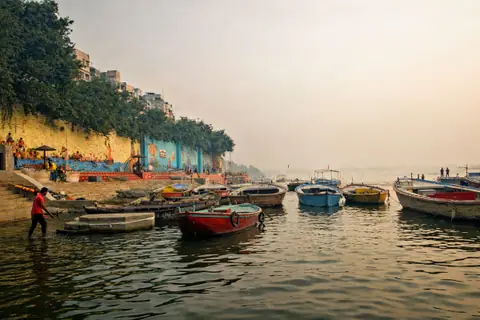
Named after Nishada king Guha, the mythological river ferryman from the Ramayana, this busy waterfront is the traditional headquarters for local boat operators. Wooden rowboats and hand-carved river skiffs crowd the shoreline here for caulking, painting, and maintenance. The landing provides an authentic glimpse into the daily working life of hereditary boatmen.
Chet Singh Ghat
This magnificent stone fortification with towering bastions and high walls was the defensive palace of Maharaja Chet Singh of Banaras. In August 1781, British forces under Warren Hastings attempted to capture the Maharaja here, sparking a fierce rebellion before Chet Singh escaped down the stone walls. The grand facade remains one of the riverfront's finest military monuments.
Niranjani Ghat
Established in 1897 by the Niranjani order of Shaivite ascetics, this riverfront property features a monastery compound with classical arched verandas. Naga sadhus and ascetics stay here during seasonal pilgrimages to bathe in the river. The steps feature four small shrines housing ancient stone footprints of revered monastic masters.
Mahanirvani Ghat
Bordering Niranjani Ghat, this stone terrace is traditionally maintained by the Mahanirvani Akhara, a major Shaivite monastic order. The landing is historically associated with Swami Vivekananda, who resided at the adjoining garden estate in 1902 during his stay in the holy city. The wide, quiet steps offer commanding views toward the river bend.
Shivala Ghat
Dominated by the sprawling stone palace built by Maharaja Balwant Singh in the eighteenth century, Shivala Ghat features a fortified river facade. Part of this complex once housed exiled members of the royal family of Awadh. Today, local pilgrims gather around its broad stone steps to offer prayers at small Shiva temples dotting the upper terrace.
Lali Ghat
Built around 1778, this modest ghat features quiet stone steps that serve local washermen and neighborhood residents. Distinctive wooden platforms supported by wooden poles extend over the water, where traditional priests assist pilgrims with ablution rites. Above the steps rise weathered residences that illustrate the vernacular brick architecture of old Banaras.
Harishchandra Ghat
One of the two primary cremation ghats in the holy city, this somber site is named after King Harishchandra, who according to legend worked here as a cemetery assistant to uphold truth. Stone steps accommodate traditional open-air funeral pyres burning continuously beside modern electric crematoria. Pilgrims also visit to perform rites for departed ancestors.
Gauri Kedareshwar Temple
Standing majestically atop Kedar Ghat, this historic temple is famous for its exterior painted in bold red and white stripes reminiscent of South Indian temple art. The sanctum enshrines a self-manifested stone lingam venerated as Kedarnath of the south, drawing continuous lines of devotees. The steep stepped embankment is widely used for ceremonial river immersions.
Central Ghats: Dashashwamedh, Manmandir & Manikarnika
Chauki Ghat, Munshi Ghat Darbhanga Palace, Ahilyabai Ghat, Dashashwamedh Ghat Ganga Aarti Steps, Prayag Ghat, Rajendra Prasad Ghat, Manmandir Ghat & 1737 Jantar Mantar Rooftop Observatory, Tripura Bhairavi Ghat, Lalita Ghat Nepali Pagoda Temple, and Manikarnika Ghat & Chakrapushkarini Kund
Chauki Ghat
Named after the historic stone platform shaded by a massive sacred tree, Chauki Ghat serves as a prominent focal point for the veneration of nagas (serpent deities). Travellers find intricate stone carvings of intertwined serpents leaning against tree trunks and masonry steps. The location offers a quiet vantage point along the riverfront south of Dashashwamedh.
Kedar Ghat
Recognisable by its bold red and white horizontal brick paintwork, Kedar Ghat anchors the principal southern Shaivite pilgrimage sector. The riverfront gives access to the Sri Kedareshwar Temple, an ancient complex holding an irregular stone lingam of natural rock origin. Daily rituals conducted here display prominent South Indian liturgical styles and devotional music.
Munshi Ghat
Constructed in 1812 by Sridhara Narayana Munshi, a finance minister of Nagpur, this ghat forms an architectural prelude to the larger palaces nearby. The frontage features sturdy sandstone revetments built to withstand monsoon flooding. A spacious upper terrace provides clear river views while connecting seamlessly to the royal riverbank architecture of Darbhanga Palace.
Darbhanga Ghat and BrijRama Palace
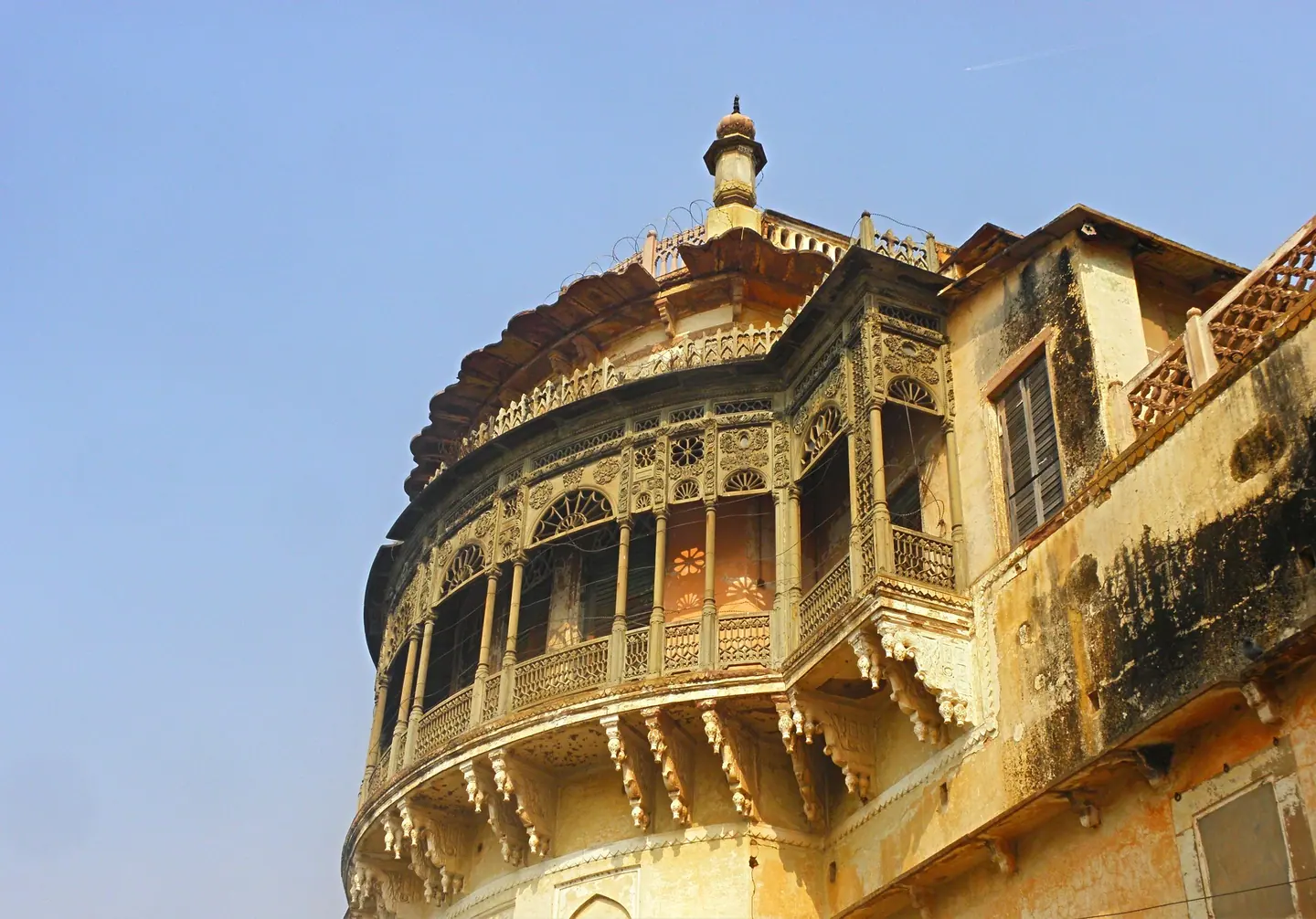
Originally commissioned in 1812 by the Nagpur royal family and later acquired by the Maharaja of Darbhanga in 1915, this sandstone bastion dominates the central waterfront. The multi-tiered façade incorporates stone balconies, Greek pillars, and fortified turrets. Today it operates as a heritage hotel, retaining historic wood-carved ceilings and classical riverside masonry.
Ahilyabai Ghat
Commissioned in 1778 by the Maratha ruler Ahilyabai Holkar of Indore, this ghat bears the distinction of being the first structurally completed stone embankment along the river. The complex incorporates residential apartments, open pavilions, and an expansive flight of steps. It stands as a monument to Holkar's extensive philanthropic building campaign across northern India.
Shitala Ghat
Forming the southern approach to Dashashwamedh Ghat, this site owes its prominence to the shrine of Shitala Devi, the goddess invoked against smallpox and infectious diseases. Renovated by the Narayana dynasty in the eighteenth century, the steps accommodate thousands of bathers seeking maternal blessings. The flat stone platform hosts auxiliary evening prayer ceremonies.
Dashashwamedh Ghat
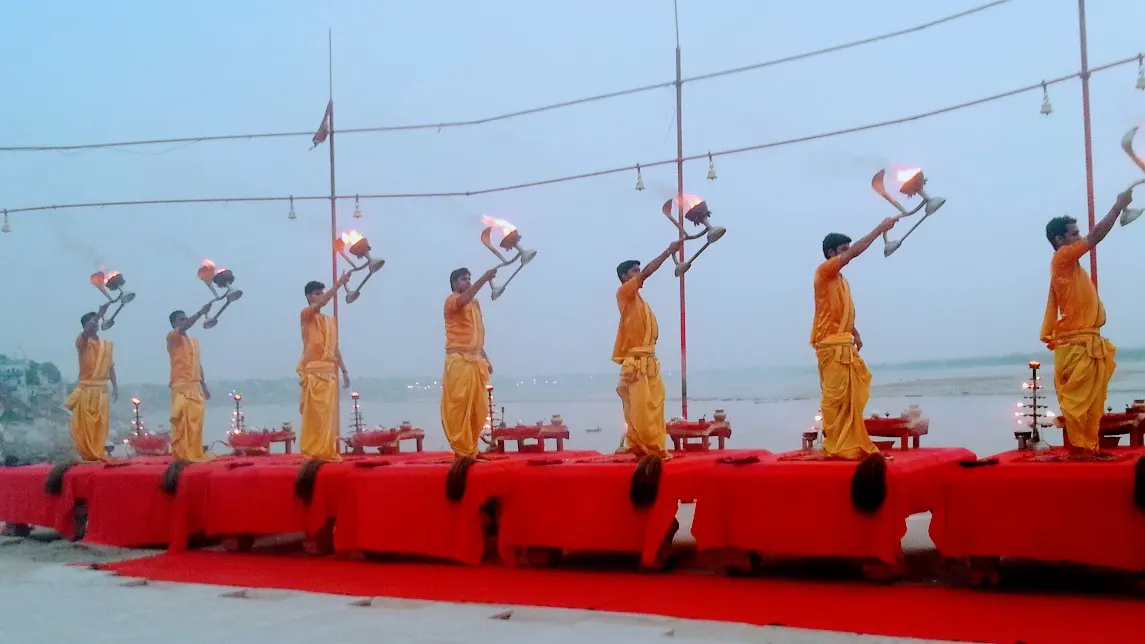
Mythology recounts that Lord Brahma performed the ten-horse sacrifice (Dasa-ashwamedha) on this very site, establishing it as the most sacred civic hub along the riverfront. The massive staircases were rebuilt in 1748 by Peshwa Balaji Baji Rao. Every evening, brass lamp holders are elevated by ritual priests across wooden podiums facing the water.
Ganga Aarti Steps
At dusk, these wide stone steps become the centre of the Maha Aarti ritual conducted by young Brahmin priests. Facing east towards the river, the priests rhythmically wield tiered brass incense burners, blowing conch shells in unison before assemblies of moored wooden boats. The synchronized movement presents centuries-old Vedic ceremonial choreography to public view.
Prayag Ghat
Constructed in the eighteenth century by Queen Ahilyabai Holkar, Prayag Ghat conceptually duplicates the sanctity of the famous Triveni Sangam at Prayagraj. Devotees unable to travel west perform the same purification rituals along these wide platforms. The masonry here features broad terraces designed to withstand the river currents that press inward around the bend.
Rajendra Prasad Ghat
Formerly an integral wing of Dashashwamedh Ghat, this stretch was officially renamed in 1979 to commemorate Dr Rajendra Prasad, independent India's inaugural president. A life-sized stone equestrian statue honors his contributions to the state. The wide pavement serves as an overflow concourse for major civic gatherings and religious festivals.
Manmandir Ghat
Constructed around 1585 by Raja Man Singh of Amber, a premier general of the Mughal emperor Akbar, this ghat showcases Rajput masonry. The multi-storey riverfront wall is punctured by ornamental jharokhas and carved sandstone brackets. The palace building was originally intended as a secure royal residence and observatory during pilgrimage visits to the sacred river.
Jantar Mantar Varanasi
Erected in 1737 on the terrace of Manmandir Palace by Maharaja Sawai Jai Singh II of Jaipur, this open-air observatory contains massive stone instruments. Key structures include the Samrat Yantra (sun dial), Digamsha Yantra, and Chakra Yantra. They were designed to calculate celestial coordinates, track planetary motions, and prepare astronomical tables with notable precision.
Tripura Bhairavi Ghat
This quiet stretch of stone steps takes its name from the shrine of Tripura Bhairavi, one of the ten Mahavidya tantric goddesses. Renovated by the King of Banaras in the late eighteenth century, the site includes multiple auxiliary lingams and private riverfront courtyards. Narrow passageways lead from here deep into the oldest commercial alleys of the city.
Mir Ghat
Established in 1735 by Mir Rustam Ali, a Mughal governor and commander of the imperial fleet in Banaras, Mir Ghat blends administrative and religious history. The ghat grants access to sacred inner shrines such as the Dharmakeshwara and Vishalakshi temples. Its stone terraces are noted for providing quiet bathing spaces between historic commercial ghats.
Vishalakshi Temple
Located in the narrow lanes just above Mir Ghat, this sacred complex is counted among the fundamental Shakti Pithas of Hindu cosmology. Dedicated to the wide-eyed goddess Vishalakshi, the temple is heavily frequented by South Indian pilgrims. The inner sanctum features a small stone image surrounded by an ornate silver arch and traditional Dravidian-style brasswork.
Lalita Ghat
Commissioned in the early nineteenth century by Rana Bahadur Shah, the exiled King of Nepal, Lalita Ghat is built from heavy chunar sandstone. Named after the goddess Lalita, the complex features broad ghat platforms and stone pavilions. It remains an important bridgehead for travellers arriving via the newly developed Kashi Vishwanath corridor.
Nepali Mandir
Constructed in 1843 from terracotta and durable timber imported directly from Nepal, this shrine resembles the traditional multi-tiered pagodas of the Kathmandu Valley. The eaves are decorated with intricate woodwork, including erotically carved supporting struts and depictions of deities. Also known as the Kathwala Temple, it remains a rare example of Nepalese architecture in Varanasi.
Chakrapushkarini Kund
Situated immediately behind the primary cremation platforms of Manikarnika Ghat, this rectangular stone tank is regarded by tradition as the oldest water body in the city. According to myth, Lord Vishnu excavated it with his discus (chakra) prior to creation. The surrounding stone pavement contains carved stone footprints known as Charana Paduka, honoring Vishnu's presence.
Manikarnika Ghat
Operating continuously day and night, Manikarnika Ghat is the principal site where Hindus seek liberation (moksha) through death. Stone platforms rise alongside monumental stacks of timber sourced from local forests, where pyres burn constantly over sacred embers. The location takes its name from Parvati's fallen earring (Manikarnika), tying primal mythology directly to funeral rites.
Scindia Ghat
Constructed in 1830 by Maharani Baiza Bai of Gwalior, Scindia Ghat is famous for its submerged Shiva shrine, which tilted and partially collapsed into the river under its own immense weight. The remaining stepped pavilions display grand Maratha stonework. The peaceful terraces above provide access to the tranquil residential alleyways of the Siddha Kshetra.
Northern Ghats: Scindia Ghat, Panchganga to Raj Ghat
Scindia Ghat Partially Submerged Shiva Temple, Bhonsale Ghat, Ram Ghat, Panchganga Ghat & Alamgir Mosque, Bindu Madhav Temple, Gai Ghat, Trilochan Ghat, Prahlad Ghat, and Raj Ghat Archaeological Mound & Malviya Bridge
Scindia Ghat
Constructed in the nineteenth century by the royal Scindia dynasty of Gwalior, this riverfront site borders Manikarnika to the north. Visitors will observe expansive stone flights leading into the water alongside narrow alleyways hosting classical music academies. The lower terraces afford views of traditional bathers performing morning rituals.
Ratneshwar Mahadev Temple
Constructed in the nineteenth century, this Nagara-style stone temple leans dramatically into the Ganges due to foundation subsidence on the riverbank silt. The sanctum remains submerged for most of the year, emerging only during the dry season. Intricate carvings of celestial figures and deities adorn the exterior spire.
Sankatha Ghat
Named after the goddess Sankatha Devi, this ghat features broad stone staircases engineered to handle heavy monsoon currents. Rebuilt in the late eighteenth century by the Baroda royal family, the riverbank connects directly to steep interior lanes. Devotees visit during planetary transits to pray for protection from misfortune.
Bhonsale Ghat
Erected around 1780 by the Bhonsale dynasty, this ghat displays heavy stone masonry, defensive battlements and distinctive arched windows overlooking the water. The upper residential quarters incorporate classic Maratha architectural details, including wooden pillars and courtyard verandas. Stone steps descend steeply into the river, where early morning pilgrims congregate.
Naya Ghat
Rebuilt by the Peshwas and subsequently maintained by Maratha nobles, this flight of steps served as an auxiliary landing stage for river traffic. The riverbank here is lined with stone pavilions and priests seated under wicker umbrellas. We note the solid stone retaining walls that have resisted annual floodwaters for two centuries.
Ram Ghat
Built during the late seventeenth century under the patronage of Raja Man Singh of Amber, Ram Ghat features sweeping stone terraces. The site houses a small riverside shrine dedicated to Lord Rama, displaying traditional North Indian temple carving. Devotees gather here during regional festivals to perform sacred ablutions.
Jatara Ghat
Constructed in the early eighteenth century, this compact ghat served as a bathing quarter for pilgrims arriving from central India. The structure consists of clean-cut chunar sandstone blocks designed to endure river silt erosion. Modest shrines dedicated to local guardian deities sit tucked into the flanking masonry.
Gwalior Ghat
Renovated in the nineteenth century, Gwalior Ghat stands as a companion monument to nearby Scindia Ghat. The architecture includes broad landings, shaded alcoves for holy men, and substantial stone revetments facing the morning sun. Travellers can inspect old dedicatory plaques set into the upper masonry walls.
Panchganga Ghat
Believed by tradition to mark the subterranean meeting of five sacred streams, this imposing ghat is supported by colossal stone buttresses. During the autumn month of Kartik, stone octagonal pillars across the terraces hold wicker baskets containing oil lamps. The riverside stairs lead to multiple ancient shrines and ashrams.
Alamgir Mosque
Commissioned by the Mughal Emperor Aurangzeb in the seventeenth century, this structure dominates the high river bluff above Panchganga Ghat. Built with sandstone arches and fluted cupolas, the mosque blends Indo-Islamic and Hindu architectural influences on its base. Visitors will notice the elevated terrace that provides expansive vistas over the river bend.
Bindu Madhav Temple
Re-established in the late eighteenth century by the Maratha general Bhawanrao Trayambak, this temple preserves the worship of Vishnu as Bindu Madhav. The sanctum contains a consecrated black stone murti surrounded by ornate brass appointments. The temple interior displays classic Maratha wooden joinery and stone relief carvings.
Durga Ghat
Erected by Narayana Diksit, a guru to the Maratha Peshwas, this ghat features high stone foundations that elevate residential buildings above seasonal floods. The stairs lead to the Brahmacharini Durga temple, attracting numerous worshippers during the autumn Navratri festival. Sturdy bastions flank the riverfront edge.
Brahma Ghat
Associated with traditional Vedic learning, Brahma Ghat features several ancient residential compounds, or mathas, along its crest. The stone steps are paved with durable sandstones that have survived centuries of pilgrims and monsoons. The atmosphere remains quieter here than at the southern ceremonial ghats.
Bundi Parkota Ghat
Commissioned by the rulers of Rajasthan in the sixteenth century, this fortified ghat features high defensive stone walls and projecting balconies. The Chunar sandstone façade presents architectural motifs typical of Rajput palaces, including delicate bracket capitals. Its lower stone platform offers mooring points for wooden pilgrim boats.
Shitala Ghat
Rebuilt in the eighteenth century by local rulers, this smaller ghat honours Shitala Devi, a deity invoked for recovery from fevers. Modest whitewashed shrines sit along the stone stairways where local families gather to offer neem leaves and river water. The landing marks the boundary toward Varanasi's quieter northern quarter.
Gai Ghat
Named after the sacred cow, this ghat houses an eighteenth-century stone sculpture of a recumbent bovine near the water. Reconstructed by the royal Balwant Singh of Kashi in the eighteenth century, the wide steps provide easy access for livestock and villagers. Pilgrims consider bathing here particularly auspicious for clearing familial debts.
Badri Nayarana Ghat
Constructed in the early twentieth century by the Maharaja of Nagpur, this ghat allows pilgrims unable to travel to the Garhwal Himalayas to worship Badrinath locally. The stone temple on the upper level replicates motifs of northern Indian mountain shrines. The stone ghat steps provide quiet perspectives of dawn boat traffic.
Trilochan Ghat
Mentioned in medieval pilgrimage texts, Trilochan Ghat derives its identity from the shrine of the three-eyed Shiva located atop the steps. The riverfront features two water-filled stone cisterns, known as Pilpila Tirtha, where ritual baths are historically performed. Travellers will find fewer crowds and broad stone benches here.
Prahlad Ghat
Marking the transition toward the city outskirts, Prahlad Ghat is lined with traditional wrestling arenas, known as akhadas, and monastic dwellings. Rebuilt in the late nineteenth century, the masonry extends along a wide curve of the river. The site hosts shrines dedicated to Prahlad and his protector, the Narasimha avatar of Vishnu.
Raj Ghat and Malviya Bridge
Completed in 1887 as the Dufferin Bridge, this double-deck steel truss structure carries trains on the lower tier and roadway traffic above. Immediately adjacent lies the Raj Ghat archaeological mound, where excavations revealed urban settlements dating from the eighth century BC. The adjacent riverfront provides views of Varanasi's curved northern approach.
Vishwanath Corridor, Chowk Galis, Durga Kund & BHU
Kashi Vishwanath Temple & Ganga Corridor, Annapurna Devi Temple, Kal Bhairav Temple Kotwal of Kashi, Thatheri Bazaar Brass Lane, Chowk Silk Weaving Quarter, Sankat Mochan Hanuman Temple, Durga Kund Red Temple, Tulsi Manas Mandir, Bharat Kala Bhavan Museum, and New Vishwanath Temple at BHU
Kashi Vishwanath Temple
Rebuilt by the Maratha queen Ahilyabai Holkar in 1780, this revered shrine features a towering spire plated with pure gold gifted by Maharaja Ranjit Singh. We observe continuous devotional rituals within the inner sanctum, where pilgrims queue to offer Ganges water directly to the ancient Shiva lingam.
Kashi Vishwanath Corridor
Inaugurated in 2021, this extensive pedestrian thoroughfare links the central shrine directly to the bathing ghats along the sacred Ganges. Constructed from red and buff Chunar sandstone, the complex features spacious plazas, administrative buildings, pilgrim facilitation centres, and newly uncovered subsidiary shrines integrated into the promenade.
Annapurna Devi Mandir
Erected in the eighteenth century by the Maratha general Peshwa Baji Rao, this compact temple stands adjacent to Kashi Vishwanath. It honours Annapurna, an incarnation of Parvati who ensures no inhabitant of Kashi starves, and houses a solid gold idol displayed exclusively during the annual Annakut festival.
Kal Bhairav Temple
Believed to serve as the divine police chief of Varanasi, Kal Bhairav oversees the spiritual welfare of all who enter the city. The temple features a silver-faced deity adorned with garlands and carrying a truncheon, surrounded by traditional stalls selling protective black threads to visiting pilgrims.
Thatheri Bazaar
This historic narrow alley has hosted coppersmiths and brass casters for generations, preserving traditional Indian metalworking crafts. We encounter rhythmic hammering from family-run workshops that produce engraved utensils, ritual bells, lamps, and decorative deities popular across the entire region.
Chowk Varanasi
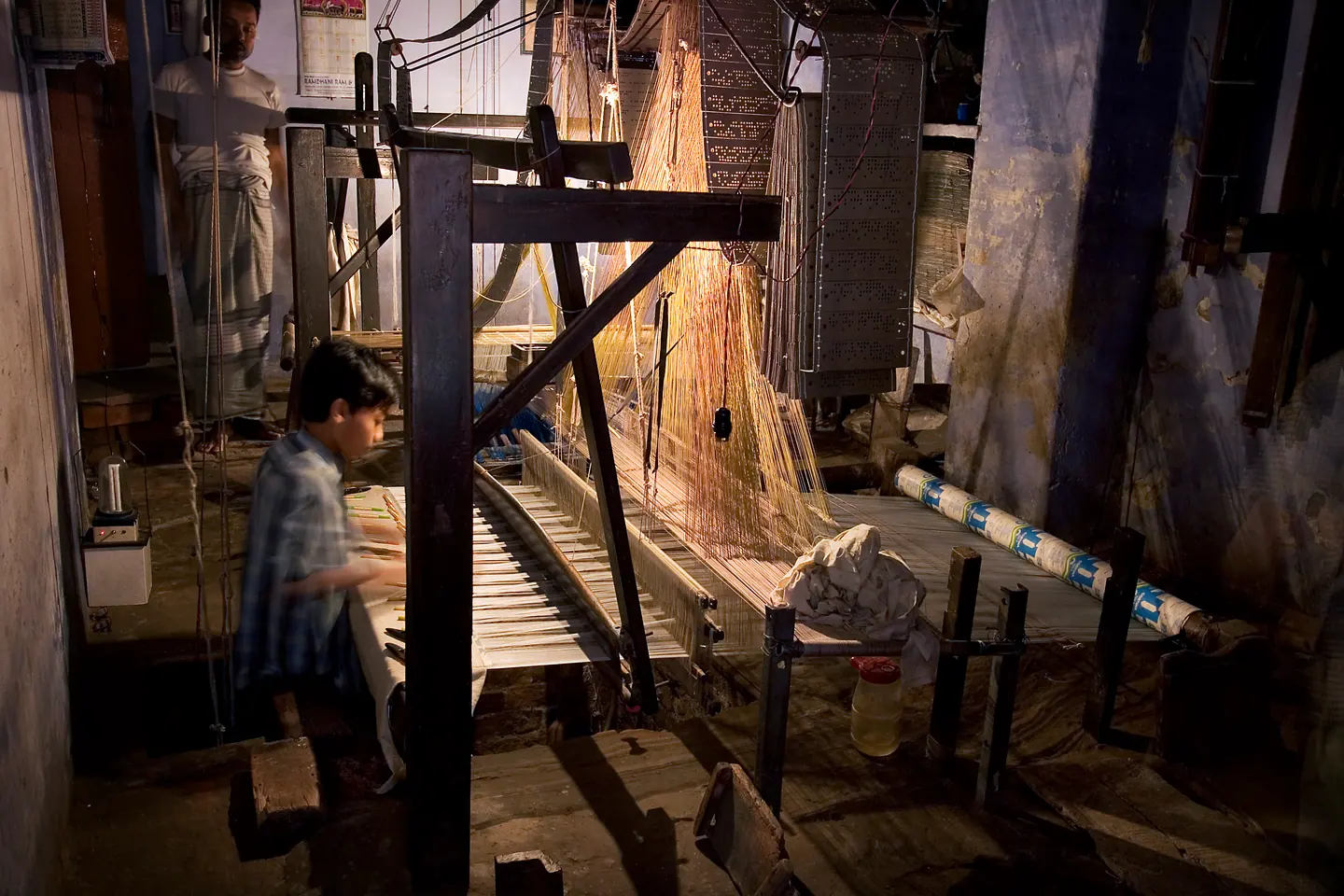
Serving as the commercial heart of the old city since medieval times, Chowk is renowned for its historic Banarasi silk fabric shops. Labyrinthine alleys branch out into residential quarters where master artisans still weave gold and silver zari brocades on traditional wooden pit looms.
Kachori Gali
Branching directly off the central bazaar network, this narrow passage is celebrated for its multi-generational sweetshops and street kitchens. Morning visitors watch cooks fry spiced lentil pastries in enormous iron cauldrons, serving them piping hot alongside chickpea curry and sweet jalebis.
Gopal Mandir
Constructed by wealthy merchant patrons, this hidden courtyard temple represents the devotional traditions of the Vallabhacharya sect in central Varanasi. The inner sanctum contains a finely sculpted image of baby Krishna, and the surrounding structures exhibit intricate timber beams and classical brickwork.
Maha Mrityunjaya Temple
Located near the historic Daranagar neighbourhood, this ancient temple is dedicated to Shiva as the conqueror of death. Pilgrims gather here daily to chant the Maha Mrityunjaya mantra, and worshippers frequently draw sacred water from an adjacent stone well believed to contain curative properties.
Dandapani Temple
Situated in the dense lanes near Kashi Vishwanath, Dandapani represents another classical guardian figure within the holy precinct. The interior displays an ancient stone depiction of the deity wielding a staff, symbolising strict moral governance over the city under the authority of Kal Bhairav.
Sankat Mochan Hanuman Temple
Established according to tradition by the poet-saint Goswami Tulsidas, this expansive temple draws thousands of devotees seeking relief from suffering. The peaceful courtyard features open-air pavilions, resident troops of macaque monkeys, and vendors preparing traditional besan laddoos as devotional offerings.
Durga Kund Mandir
Constructed in North Indian Nagara style by a Bengali queen in the eighteenth century, this temple stands coated in deep red ochre paint. The multi-tiered spire rises directly above a stone-lined rectangular reservoir, housing an ancient carved image of the warrior goddess Durga.
Tulsi Manas Mandir
Erected in 1964 on the grounds where Tulsidas composed the Ramcharitmanas, this vast two-storey temple is clad in pristine white Makrana marble. The interior walls feature engraved verses from the Awadhi epic, accompanied by automated mechanical dioramas illustrating pivotal scenes from the text.
Tridev Mandir
Standing close to Tulsi Manas Mandir, this modern sanctuary honours Salasar Hanuman, Khatu Shyam, and Rani Sati. Built from polished Rajasthani marble, the hall displays detailed relief carvings and attracts sizeable congregations during festive religious observances throughout the calendar year.
Durga Kund
Commissioned in the eighteenth century alongside the Durga shrine, this expansive reservoir features stone masonry steps descending to the water level. Though formerly fed directly by natural channels, the tank remains an integral part of neighbourhood temple festivals and seasonal ritual purification routines.
Bharat Kala Bhavan
Established on the Banaras Hindu University campus in 1920, this museum houses an extraordinary assemblage of Indian cultural antiquities. Galleries showcase fifth-century Gupta stone sculptures, delicate Mughal and Pahari miniature paintings, and centuries-old brocaded Banarasi textiles preserved in climate-controlled displays.
New Vishwanath Temple
Conceived by university founder Pandit Madan Mohan Malaviya and financed by the Birla industrial family, this temple was completed in 1966. Its central marble tower rises seventy-seven metres, and the spacious interior ground floor displays carved transcriptions of the Bhagavad Gita.
Sayaji Rao Gaekwad Library
Named after the Maharaja of Baroda who financed its establishment, this handsome institutional building is an exceptional specimen of Indo-Saracenic educational architecture. It preserves an immense collection of printed volumes alongside rare Sanskrit, Persian, and Arabic palm-leaf manuscripts gathered from across the subcontinent.
Banaras Hindu University Main Gate
This imposing gateway reflects traditional Rajput and Mughal architectural motifs, demarcating the leafy university campus from the outer city. Established in 1916, the grounds beyond feature wide tree-lined avenues leading past historic faculties, student hostels, and experimental botanical gardens.
Bharat Mata Mandir
Inaugurated by Mahatma Gandhi in 1936 on the Mahatma Gandhi Kashi Vidyapith campus, this unusual shrine features no anthropomorphic deities. Instead, it holds an extraordinary three-dimensional relief map of undivided India carved into Makrana marble, illustrating mountain ranges, oceans, and rivers with accurate cartographic precision.
Ramnagar Fort Across the Ganges & Sarnath Buddhist Sanctuary
Ramnagar Pontoon Bridge & Fort Museum, Vyasa Temple, Chunar Sandstone View, Sarnath Dhamek Stupa, Dharmarajika Stupa, Ashoka Lion Capital Pillar Site, Mulagandhakuti Vihara Frescoes, Sarnath Archaeological Museum, Chaukhandi Stupa, and Tibetan Temple Sarnath
Ramnagar Fort
Constructed in the Mughal architectural style by Kashi Naresh Raja Balwant Singh in 1750, this fortress stands on the eastern bank of the Ganges. The complex incorporates carved balconies, open courtyards, and pavilion chambers. We observe the ceremonial durbar hall and the traditional private residential quarters still maintained by the titular royal family.
Saraswati Bhawan Museum
Housed within the inner ramparts of Ramnagar Fort, this museum exhibits the historic treasures of the Maharaja of Benares. The collections include rare palm-leaf texts, illustrated medieval manuscripts, antique American cars, and gold-embroidered palanquins. Visitors can inspect an ornate nineteenth-century astronomical clock that tracks planetary movements alongside standard solar time.
Vyasa Temple Ramnagar
Perched on the southern battlements of Ramnagar Fort overlooking the river, this temple honors the composer of the Mahabharata. Local tradition holds that Vyasa resided on this bank after being expelled from the sacred zone of Kashi. The sanctuary features stone relief carvings and offers wide prospects across the water toward the northern ghats.
Ramnagar Durga Temple
Commissioned by the royal family in the eighteenth century, this stone complex features towering spires crafted from Chunar sandstone. The temple stands beside a large rectangular tank bordered by stone steps and defensive corner pavilions. Fine carvings decorate the outer plinths, depicting celestial guardians and regional floral motifs.
Chunar Sandstone Ramparts of Ramnagar
These defensive ramparts were raised using dense buff-coloured sandstone quarried upriver at Chunar. Designed to resist seasonal monsoon floods and riverine attacks, the foundations drop steeply into the Ganges. We examine the weathered defensive bastions and arched gun embrasures that overlook the traditional pontoon crossing route.
Ramnagar Pontoon Bridge Site
For generations, engineers assembled this floating bridge using wooden boats anchored in the riverbed during dry winter months. The structure connected city pilgrims with Ramnagar fortresses before being dismantled for monsoon currents. The site offers an authentic glimpse of heritage river navigation and temporary civil infrastructure.
Janakpur Temple Ramnagar
This temple forms a key staging ground for the centuries-old Ramnagar Ramlila theatrical cycle, which plays out across entire local landscapes. Built with sandstone arches and an enclosed courtyard, it represents the kingdom of Janakpur in the epic narrative. Its architecture reflects provincial Awadh court influence adapted for religious performance.
Dhamek Stupa
Commissioned during the Gupta dynasty to replace a Mauryan structure, this cylindrical tower rises over forty-three metres above the Sarnath plain. The lower stone face retains intricate high-relief carvings of geometric lattices, swags, and lotus flowers. It marks the Deer Park location where Gautama Buddha taught the Four Noble Truths.
Dharmarajika Stupa
Built by Emperor Ashoka in the third century BC, this circular brick foundation held consecrated bone relics of the Buddha. The upper structure was demolished in the eighteenth century by a local official seeking building stone. Today, the excavated circular base reveals successive layers of brickwork added across centuries of Buddhist patronage.
Pillar of Ashoka Sarnath Site
This preserved stump represents the original position of Emperor Ashoka's inscribed pillar in the Deer Park. It retains clear Brahmi script edicts warning monks against schism within the sangha. The polished monolithic column once supported the famous Lion Capital now preserved in the adjacent archaeological museum.
Mulagandhakuti Vihara Excavated Ruins
These substantial brick foundations outline the principal shrine of historic Sarnath, described in detail by Chinese pilgrim Xuanzang. Massive walls and decorative stone plinths indicate a grand tower that once stood here during the Gupta and Pala periods. Archaeologists uncovered delicate terracotta plaques and stone fragments around its central sanctum.
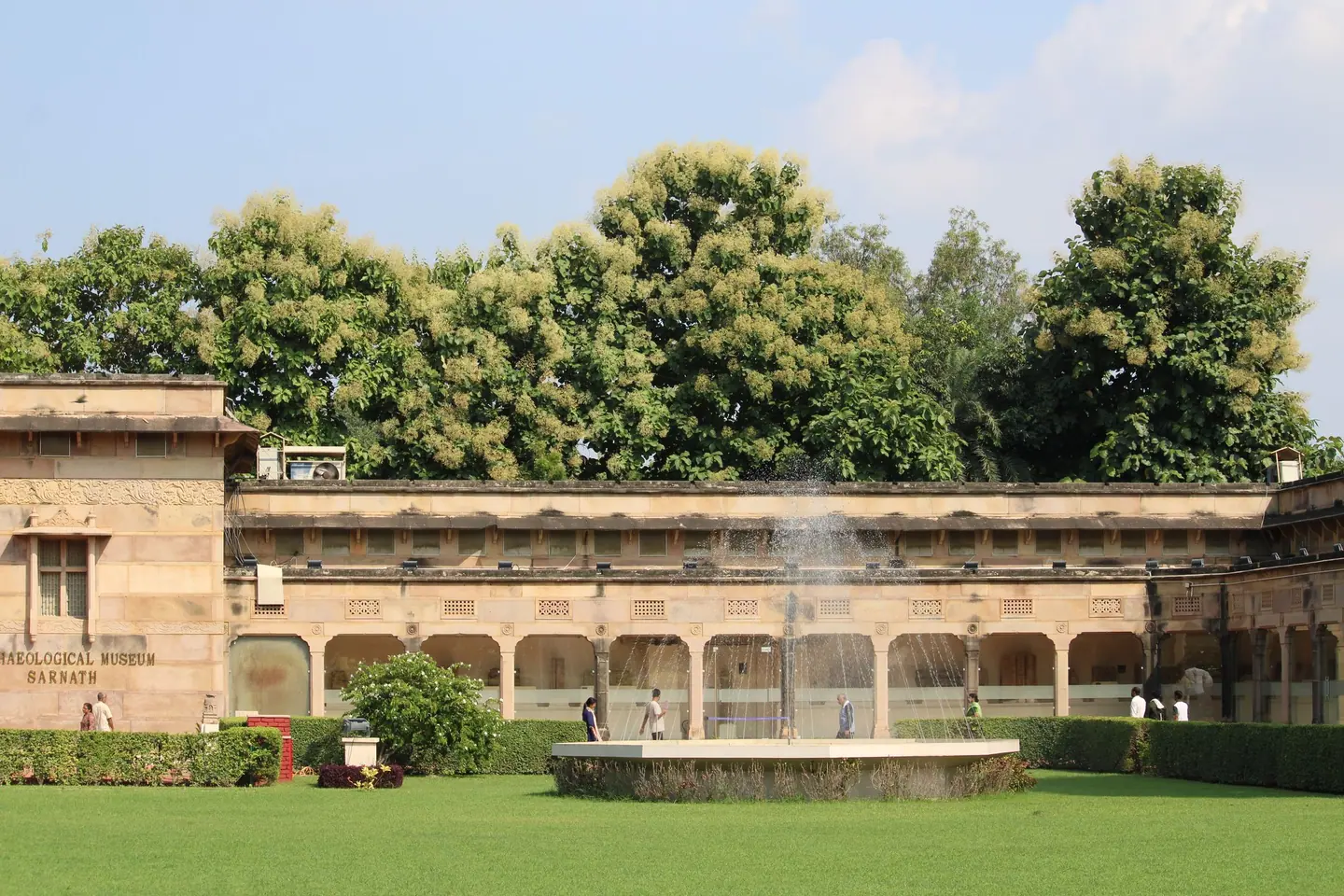
Sarnath Archaeological Museum
Constructed in 1910 from local sandstone to resemble a Buddhist monastery, this museum houses antiquities found during Deer Park excavations. The central bay contains the pristine polished Lion Capital of Ashoka, the official emblem of India. Galleries also feature fifth-century preaching Buddha sculptures and medieval Mahayana iconography.
Chaukhandi Stupa
Rising on a square stepped plinth, this ancient brick monument commemorates the spot where the Buddha first met his initial five disciples. In the late sixteenth century, the Mughal governor added an octagonal stone tower to honor Emperor Humayun's visit. The hybrid profile combines Buddhist terrace construction with classical Mughal commemorative architecture.
Mulagandhakuti Vihara Modern Temple
Erected by the Maha Bodhi Society under the leadership of Anagarika Dharmapala, this sanctuary revives ancient Buddhist worship in Sarnath. Inside, extensive wall frescoes by Japanese artist Kosetsu Nosu illustrate the life and journeys of Gautama Buddha. A silver casket beneath the main altar enshrines authentic sacred relics found at Taxila.
Bodhi Tree Shrine Sarnath
Planted in 1931 in the garden of the modern Vihara, this sacred tree was propagated from the historic Sri Maha Bodhi in Sri Lanka. That parent tree was itself grown from a branch of the original Bodh Gaya enlightenment tree. A circumambulatory path and brass prayer wheels surround its shaded trunk.
Tibetan Temple Sarnath
Serving the Tibetan exile and pilgrim community, this monastery displays historic Himalayan temple architecture. The interior prayer hall contains a gilded Shakyamuni Buddha image flanked by detailed thangkas and tiered butter lamps. We note the long rows of brass prayer wheels installed along the exterior courtyard walls.
Wat Thai Sarnath
Constructed by the Royal Thai Buddhist community, this temple exhibits sweeping multi-tiered gabled roofs finished with golden nagas and glazed red tiles. The landscaped grounds hold an eighty-foot standing stone Buddha statue carved in the Sukhothai artistic tradition. Monks maintain tranquil meditation pavilions and open-air teaching cloisters throughout the compound.
Chinese Buddhist Temple Sarnath
Founded by Abbot Chang Chuan, this compound reflects classical Chinese ecclesiastical design with sweeping eaves and carved stone guardians. The quiet prayer hall houses marble statues of the Buddha alongside hanging scroll calligraphies. A peaceful inner courtyard displays historical photographs documenting Buddhist connections between China and twentieth-century India.
Shreyanshnath Jain Temple
Located near the Dhamek Stupa, this marble-clad shrine marks the traditional birthsite of Lord Shreyanshnath. The temple interior features polished stone floors, intricate floral ceiling carvings, and gilded altarpieces displaying serene tirthankara iconography. Wall paintings illustrate the historic life events and austerities of the celebrated teacher.
Horinji Japanese Temple Sarnath
This temple reflects East Asian aesthetic restraint, featuring unadorned timber beams, paper-pattern screens, and sliding doors. Managed by the Japanese Buddhist organization, the interior contains a carved sandalwood Buddha and ceremonial bronze bell. The peaceful surrounding garden emphasizes gravel pathways, manicured shrubs, and contemplative natural open space.
Dawn River Walks and Sarnath Excursions from Varanasi
For neighbourhood accommodation notes, seasonal weather tables and airport transfer details, consult our Varanasi destination guide, or browse other city and regional walking routes across the atlas.