


























Quick Field Data
- UNESCO Inscription: 1986 alongside an expansion in 1994 and renaming in 2007 (Criteria viii, ix, x; serial natural reserve preserving Cenozoic volcanic erosion calderas and ancient Gondwana subtropical and cool temperate rainforest ecosystems).
- Scale & Footprint: Encompasses approximately 370,000 hectares (910,000 acres) across 41 rainforest reserves situated predominantly along the Great Escarpment in northeast New South Wales and southeast Queensland, Australia.
- Access & Ticketing: Administered jointly by the Queensland Parks and Wildlife Service alongside the National Parks and Wildlife Service of New South Wales; many reserves feature visitor facilities and walking trails, so check the official site before visiting.
- Arrival Logistics: Distributed along the Great Escarpment on the eastern coast of Australia across northeast New South Wales and southeast Queensland, including Lamington and Springbrook National Parks.
Continental Drift, Cenozoic Shield Volcanoes, and Ancient Gondwana Lineages
After Australia broke away from Antarctica during the separation of the supercontinent Gondwana about 180 million years ago, humid rainforests covered most of the continent while new continental margins developed around the landmass. Along Australia's eastern edge, this margin formed an asymmetrical marginal swell running parallel to the coastline; over millions of years, differential river erosion of this uplift sculpted the Great Divide and the sheer cliffs of the Great Escarpment. As the Australian continental plate drifted northward during the Cenozoic Era, two major geological and climatic processes reshaped the eastern highlands and concentrated ancient forest lineages along the coastal mountain rim. The ancient forests receded steadily.
First, as the continental plate moved northward over one of the planet's mantle hot spots during the Cenozoic Era, a sequence of volcanoes erupted along the east coast, creating the volcanic shields of Tweed alongside Focal Peak and Ebor as well as Barrington. Examining how these volcanic remnants interact with the eastern highlands enables geologists to date the geomorphic evolution of eastern Australia across millions of years. Most prominent among them is the Tweed Shield erosion caldera, regarded as one of the world's finest preserved erosion calderas due to its vast size alongside its age, its prominent central mountain mass at Wollumbin (Mt Warning), and the deep erosion of the caldera floor down to basement rock, where all three stages of shield-volcano erosion (the planeze and the residual and skeletal stages) remain clearly distinguishable alongside the Ebor Volcano.
Second, as the Australian continent dried out during its northward journey, rainforests contracted until by 1788 just 1 percent of Australia remained covered by rainforest. For millennia, Aboriginal Australians utilised these rainforests for ceremonial activities alongside food gathering and shelter, and later as a refuge from European settlement. Following European colonisation, commercial timber logging cleared a further 75 percent of the remaining rainforest cover that stood in 1788. To safeguard the surviving remnants, the Central Eastern Rainforest Reserves were inscribed on the UNESCO World Heritage List in 1986 (during the World Heritage Committee's tenth session under natural selection criteria 8 alongside 9 and 10), expanded in 1994 to increase the total area by 35 percent, listed on the New South Wales State Heritage Register on 2 April 1999 and on the Australian National Heritage List in May 2007 (15 May 2007), and renamed the Gondwana Rainforests of Australia in 2007 (with a further Tentative List expansion added in 2010).
Subtropical Rainforests, Antarctic Beech Groves, and Threatened Endemic Fauna
Encompassing 41 rainforest reserves across approximately 370,000 hectares (910,000 acres) in northeast New South Wales and southeast Queensland, the Gondwana Rainforests protect the planet's most extensive subtropical rainforests alongside almost all of the world's surviving Antarctic beech cool temperate rainforests. Because these reserves shelter plant and animal lineages whose evolutionary origins trace directly back to before the separation of Gondwana (many restricted largely or entirely to these escarpment refugia), the serial reserves document major stages in the evolutionary history of Earth's flora and fauna as well as ongoing geological and biological processes across the eastern Australian highlands and coastal ranges.
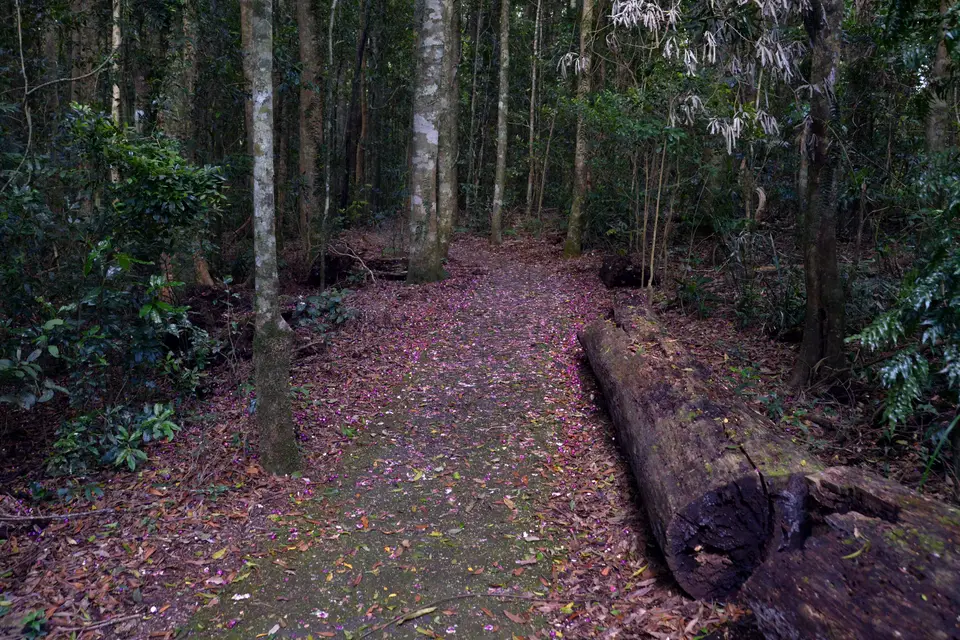
Across the wet valleys and volcanic plateaus, ancient spore-bearing ferns and primitive conifers grow alongside early lineages of flowering plants that evolved when Australia still formed part of Gondwana. Plant genera of major conservation significance within the reserves include species of Cryptocarya alongside Tasmannia and Endiandra, as well as the rare and threatened nightcap oak. High along the cool, mist-shrouded mountain rims of the Great Escarpment, the subtropical vine forests transition into cool temperate Antarctic beech stands that mirror the ancient forests that once covered Gondwana before continental drift separated the southern landmasses and dried the continental interior over millions of years.
These diverse forest strata provide the principal habitat for more than 200 rare and threatened plant and animal species, supporting abundant populations of marsupials alongside birds and snakes as well as frogs. Biological surveys across the 41 reserves have recorded approximately 270 species of bird alongside 110 species of reptile and 45 species of frog. Among the most significant and threatened animal species sheltered within the leaf litter and the streams and canopy of the Gondwana Rainforests are the parma wallaby alongside the Hastings River mouse and the ancient songbird lineage of the rufous scrubbird, whose restricted upland populations rely on intact cool temperate and subtropical forest cover across the escarpment reserves.
Field Navigation across the Volcanic Calderas and Escarpment Reserves
Receiving around 2 million visitors each year, the 41 reserves of the Gondwana Rainforests offer established walking trails and visitor facilities across southeast Queensland and northeast New South Wales, allowing travellers to explore both eroded volcanic calderas and high-altitude escarpment forests where ancient Gondwana plant and animal lineages persist in humid mountain refugia.
- Exploring the Tweed Shield Caldera and Queensland Reserves: Visit the northern reserves of southeast Queensland, including Lamington National Park and Springbrook National Park (home to waterfall settings such as Box Log Falls), where walking trails traverse the rim of the Tweed Shield erosion caldera with views toward the central mountain mass of Wollumbin (Mt Warning) and the Focal Peak volcanic shield, showing how river erosion carved the ancient volcanic shield down to basement rock while preserving subtropical rainforest valleys along the eastern slopes.
- Tracing the Three Stages of Volcanic Erosion along the Great Escarpment: Follow the reserve clusters south into northeast New South Wales along the Great Divide and Great Escarpment to observe the planeze and the residual and skeletal stages of shield-volcano erosion across the Tweed alongside Ebor and Barrington volcanic shields, where steep gorges and waterfalls expose the geological interaction between Cenozoic hot-spot vulcanism and the differential river erosion of the eastern highlands.
- Observing Gondwana Lineages and Rainforest Birds on Forest Trails: Walk the marked rainforest tracks across the high-altitude reserves to spot ancient spore-bearing ferns and primitive conifers, flowering plants of the genera Cryptocarya alongside Tasmannia and Endiandra, and cool temperate Antarctic beech groves while listening for the 270 recorded bird species alongside 110 reptile species and 45 frog species that inhabit the sheltered gullies and mountain streams across the 370,000-hectare serial reserve network.
Post-Bushfire Recovery and Biosecurity Conservation
During the 2019 to 2020 Australian bushfire season, severe wildfires damaged approximately 53 percent of the land area across the Gondwana Rainforests, heavily impacting fire-sensitive habitats for the parma wallaby alongside the Hastings River mouse and the rufous scrubbird as well as the nightcap oak, and prompting international scientific calls in 2020 by researchers Robert M. Kooyman alongside James Watson and Peter Wilf in the journal Science to protect the reserves during ecological regeneration. Because these escarpment reserves shelter more than 200 rare and threatened plant and animal species whose evolutionary origins trace back to the ancient supercontinent before Australia separated from Antarctica, protecting unburnt refugia and regenerating damaged forest gullies remains a central priority across northeast New South Wales and southeast Queensland. Today, the Queensland Parks and Wildlife Service and the National Parks and Wildlife Service of New South Wales coordinate ongoing ecological recovery across all 41 reserves and active defences against climate change alongside pathogens and invasive weeds and species such as myrtle rust and bitou bush that threaten the surviving 1 percent of Australia's rainforest cover. Discover additional ancient forest ecosystems in our UNESCO World Heritage Atlas.
