





















Quick Field Data
- UNESCO Inscription: 1997 · Criteria (ii), (iv), (v)
- Scale & Footprint: About 15 kilometres of the eastern Ligurian coast between Levanto and La Spezia, with five villages, Portovenere and the islands of Palmaria, Tino and Tinetto
- Access & Ticketing: The villages are free to enter; the main coastal paths require the Cinque Terre Card, and the Via dell'Amore needs a booked time slot
- Arrival Logistics: Regional trains on the Genoa to Pisa line stop at all five villages, and a seasonal ferry links Levanto, the villages and La Spezia
Terraces Cut into a Cliff Coast
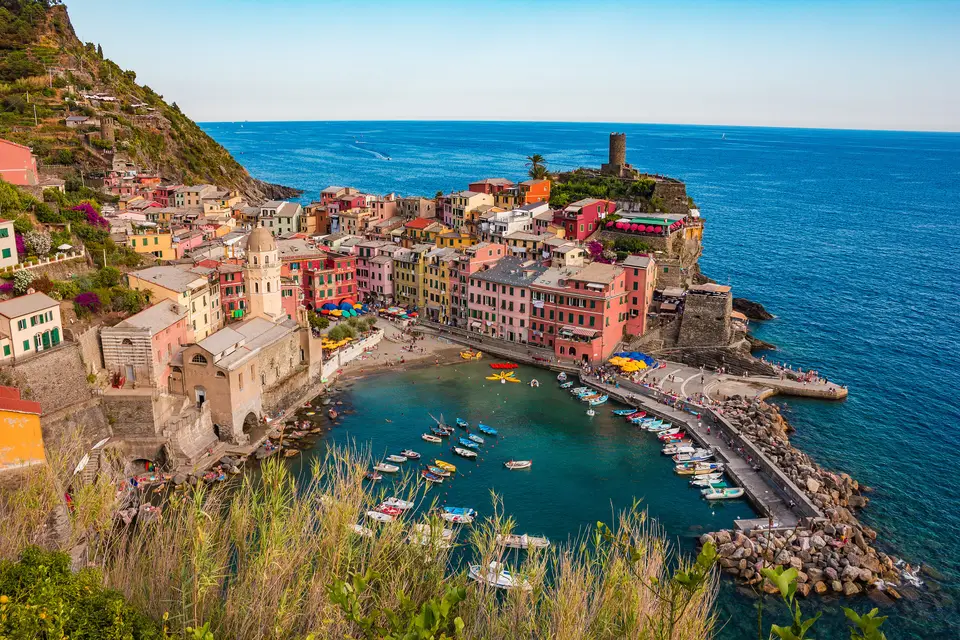
The Cinque Terre are five villages on a steep stretch of the Ligurian coast. From north to south they are Monterosso al Mare, Vernazza, Corniglia, Manarola and Riomaggiore. The mountains drop almost directly into the sea, and there is little flat land. People made their own fields by building terraces.
UNESCO dates most of the terraces to the twelfth century. They are held up by dry-stone walls built without mortar. On these narrow strips farmers grew vines and olive trees. The walls need constant repair, because rain washes soil away and a broken wall can bring down the terraces above it.
The villages are compact. Houses are built on rock and grouped around a church or a castle. Narrow lanes and stairs run down to small harbours. UNESCO notes that the coast was almost impossible to reach except by sea until the Genoa to La Spezia railway was built in the 1870s.
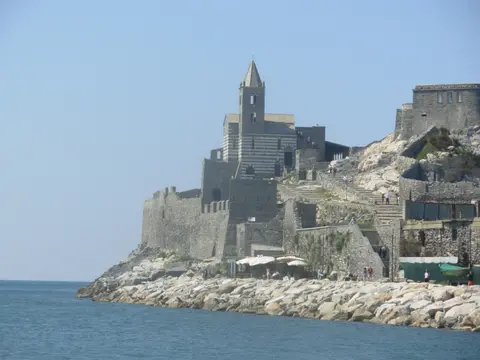
The site also includes Portovenere at the southern end and three small islands off its point: Palmaria, Tino and Tinetto. Together, the villages, terraces and islands form one cultural landscape. UNESCO describes it as an example of people living in harmony with a harsh natural setting.
A Farming Coast Under Pressure
For centuries the main crop was the vine. The local Sciacchetrà is a sweet white wine made from Bosco, Albarola and Vermentino grapes. A cooperative of local growers still produces it, together with the dry Cinque Terre wine. Every bottle depends on the terraces and the hand work they require.
Some terraces have been abandoned. UNESCO warns that empty terraces are prone to landslides and that new woodland is spreading over old fields. To protect the landscape, a marine protected area was set up off the coast and the Cinque Terre National Park was created in 1999.
Heavy rain is the main natural danger. On 25 October 2011 floods and mudslides killed nine people. Vernazza and Monterosso al Mare were badly damaged. UNESCO notes that the flood damage was limited in extent but has not been fully repaired. It also stresses that the traditional ways of farming, building and repairing walls have survived despite modern pressures. Without the farmers who keep rebuilding the walls, the landscape that earned the listing would slowly slide into the sea.
The Sentiero Azzurro is the coastal trail that links the five villages. Its best-known part, the Via dell'Amore between Riomaggiore and Manarola, was closed from late 2019 until February 2025. It reopened with strict visitor limits.
Since 2016, a shared management plan has brought the park and the town of Portovenere together. The role of site manager rotates between the president of the national park and the mayor of Portovenere. Their main task is to balance farming, residents and millions of visitors a year.
Getting Around the Villages, Trails and Islands Today
The villages are small, and in summer the trains and lanes are crowded from morning until evening. Most visitors move between villages by train. Most long-distance trains skip the villages, so plan on a regional train or the Cinque Terre Express from La Spezia or Genoa.
- Combine Trains, Boats and One Good Walk: Use the regional trains to hop between villages, and take the ferry for the view of the cliffs from the sea. The ferry calls at the main villages but not at Corniglia, which has no landing point. Pick one stretch of the coastal path rather than trying to walk everything in a day.
- Book the Via dell'Amore and Check Path Status: The Via dell'Amore is 900 metres long and runs one way only, from Riomaggiore to Manarola. Entry needs a date and time slot, limited to 400 people per hour, and is included in the Cinque Terre Card. Paths can close after rain, so check the national park's notices on the day. Wear proper walking shoes, because the stone paths are steep and uneven.
- Avoid the Crowds and Visit Portovenere: Come in spring or autumn, and start early or stay late when day groups leave. End the trip in Portovenere, at the southern end of the site, facing the island of Palmaria. Find more coastal landscapes in our UNESCO World Heritage Atlas, and continue inland to Florence, our closest city guide.
