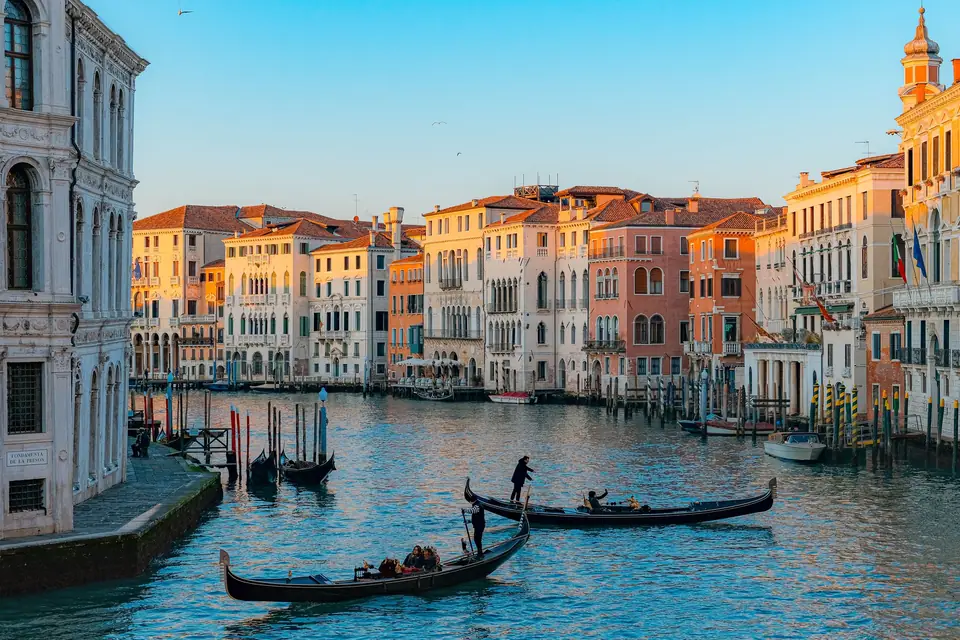
Venice
A car-free lagoon republic of marble palaces along the Grand Canal, Byzantine gold mosaics in St Mark's Basilica and quiet neighbourhood wine bars across 118 islands.
Quick decisions
How many days?
3 days: St Mark's Square and the Doge's Palace, Rialto and Dorsoduro, and a day on the lagoon islands of Murano, Burano and Torcello. 4 days: add quiet Cannaregio, Castello and the Biennale gardens. Follow our three-day route.
Where should I stay?
Dorsoduro or San Polo: central, artistic and calmer after dusk. Cannaregio: local canal-side wine bars and easy walking from Santa Lucia train station. San Marco: right by the basilica, though busiest by day. Compare all six sestieri in our neighbourhood guide.
Do I need a car?
Never. Not a single car, scooter or bicycle is allowed in historic Venice. Everything moves on foot or by boat; if driving, park on the mainland at Mestre or Tronchetto.
Best for
Walkers and photographers: dawn and dusk on empty stone bridges. Art and architecture: Bellini, Titian, Tintoretto and Palladio in the churches they painted for. Evening grazing: standing at bacari counters with cicchetti and spritz.
Before you go
Day-tripper access fee: on selected peak dates between spring and mid-summer, day visitors who do not stay overnight must register online (hotel guests are exempt but still register their exemption). Vaporetto passes: single waterbus tickets are pricey, so buy a 24-, 48- or 72-hour ACTV pass. Details in our practical briefing.
Getting around
From Marco Polo Airport (VCE): Alilaguna waterbuses cross the lagoon straight into the city, or ATVO/ACTV buses reach Piazzale Roma in 20 minutes. On the canals: ACTV vaporetti (Line 1 and Line 2) and wooden traghetto gondola ferries. Read arrival and transport.
Overview
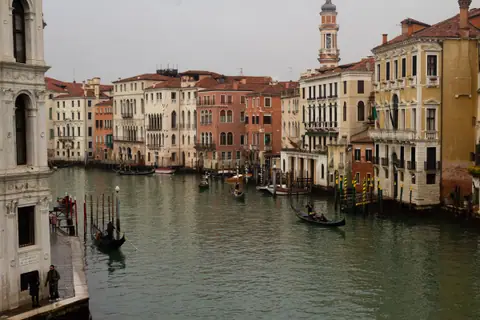
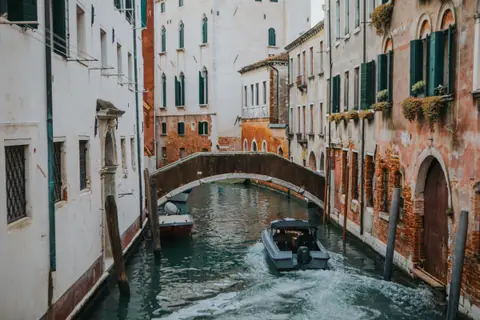
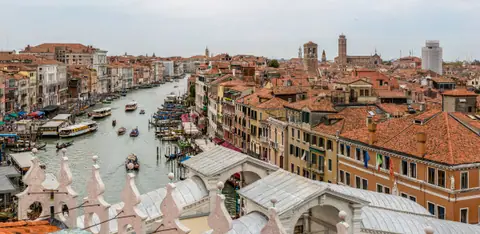
Venice makes sense the moment you stop looking at conventional road maps and start reading it as a maritime republic built to face the water. Spread across 118 small islands linked by more than 400 arched stone bridges inside a shallow Adriatic lagoon, the historic centre has not a single car, scooter or bicycle. Instead, an inverted S-curve of deep water, the Grand Canal (Canal Grande), serves as the main boulevard, dividing the city into six historic districts (sestieri): Cannaregio, Castello and San Marco on the north and east side; Santa Croce, San Polo and Dorsoduro on the south and west side. Only four pedestrian bridges cross the Grand Canal on foot.
Between late morning and mid-afternoon, day-trippers pack the narrow lanes linking the train station, the Rialto Bridge and St Mark's Square. Walk two canals sideways into Castello or Cannaregio, or stay overnight so you have the misty morning quays and lamp-lit squares to yourself, and Venice feels completely different. Read our first-timer briefing before you go.
Getting there
Because historic Venice sits four kilometres off the mainland across a shallow lagoon, all rail and road links funnel into the north-western corner of the city. High-speed Frecciarossa and Italo trains terminate right on the Grand Canal at Venezia Santa Lucia station (do not get off one stop early on the mainland at Venezia Mestre), while airport buses and cars stop nearby at Piazzale Roma, the last point with road access.
From Venice Marco Polo Airport (VCE) across the northern lagoon, you can either take a direct mainland ATVO or ACTV bus to Piazzale Roma in twenty minutes or arrive by water on an Alilaguna boat (Blue, Orange or Red lines) or private water taxi to docks in Cannaregio, Rialto or San Marco. Inside the city, transport relies on walking, standing traghetto gondola ferries across the Grand Canal, and ACTV vaporetti waterbuses, where a 24-, 48- or 72-hour pass saves over single fares. All routes and vaporetto rules are in how to get to Venice.
Where to stay
Where you sleep shapes how quiet your evenings feel and how much luggage you haul over stepped stone bridges. Before booking any hotel, check which ACTV vaporetto dock sits closest to the property and count how many bridges separate that pier from the door; packing light and following the footwear advice in what to wear in Venice saves your arms.
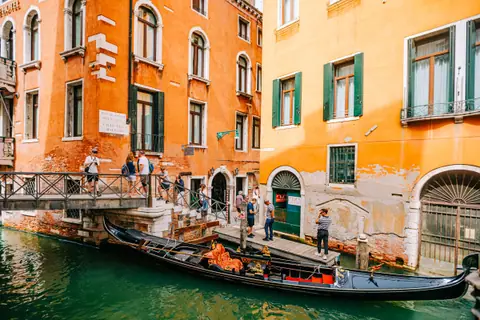
Each of the six historic sestieri has a distinct character. Staying in Dorsoduro (around the Accademia Bridge, Campo Santa Margherita and the sunny Zattere promenade) or in neighbouring San Polo and Santa Croce offers central walking access to Rialto with peaceful nights once day visitors leave. Cannaregio across the north of the city is ideal if you arrive at Santa Lucia train station and want canal-side wine bars along the Fondamenta della Misericordia. San Marco places you steps from the basilica for dawn walks, though daytime lanes are busy, while eastern Castello suits visitors attending the Biennale, covered in best time to visit Venice. We compare all six districts in where to stay in Venice.
Things to do
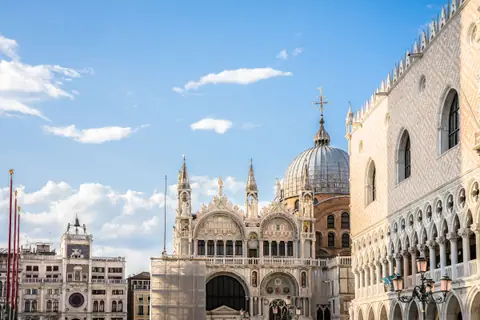
Sightseeing in Venice works best when you pair one major pre-booked interior each morning with an unhurried afternoon walk through a quieter neighbourhood. Start early in Piazza San Marco to enter the Doge's Palace (Palazzo Ducale), walking through the gilded council chambers painted by Tintoretto and Veronese and across the enclosed stone Bridge of Sighs, before using a timed slot at St Mark's Basilica to stand beneath 8,000 square metres of Byzantine gold mosaics, inspect the Pala d'Oro altar screen and step out onto the upstairs Loggia dei Cavalli terrace.
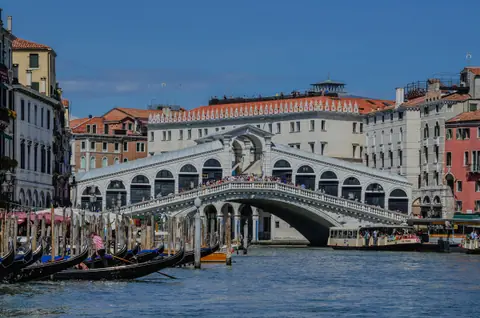
In the afternoon, cross the 1591 Istrian-stone Rialto Bridge into San Polo and Dorsoduro to see Titian's Assumption inside the Frari Basilica, Tintoretto's dramatic canvases at the Scuola Grande di San Rocco, and the Gallerie dell'Accademia alongside the Peggy Guggenheim Collection. At dusk, ride Vaporetto Line 1 down the full length of the Grand Canal past 150 marble palaces, and take Line 12 from Fondamente Nove out to the lagoon islands of Murano, Burano and Torcello. See the full list in things to do in Venice.
Food and drink
Venetian dining is built around the shifting tides of the Adriatic lagoon and the early-evening ritual of the neighbourhood wine bar counter. Rather than sitting down early for a heavy meal, locals gather at dusk inside a traditional dark-wood bacaro to stand at the counter or along the canal quay with a small glass of house wine (an ombra) or a bittersweet Venetian spritz made with Select, Aperol or Campari. Beside the drinks sit glass cases of cicchetti, small savoury plates eaten on toothpicks or toasted bread: creamy whipped salt cod (baccalà mantecato) on grilled white polenta, sweet-and-sour fried sardines with onions, pine nuts and raisins (sarde in saor), pork-and-beef meatballs (polpette) and warm fried mozzarella in carrozza.
When you sit down at an osteria in Cannaregio, San Polo or Castello, look for lagoon specialities: cuttlefish ink risotto (risotto al nero di seppia), spaghetti with lagoon clams (vongole) or spider crab (granseola), pan-seared calf's liver with white onions (fegato alla veneziana) and soft-shell green crabs (moeche) in spring and autumn. Explore our favourites in our cicchetti and islands guide.
Culture
Founded in the fifth and sixth centuries by mainland Veneti refugees on muddy lagoon shoals after the fall of Rome, the Republic of Venice (La Serenissima) ruled maritime trade between Western Europe, Byzantium and the Levant for a thousand years. Because Venice looked east across the Mediterranean, its architecture developed a hybrid splendour of pointed Venetian-Gothic stone arches, Byzantine gilded mosaics and Syrian-inspired marble palace facades facing the water.
To prevent urban fires and guard trade secrets, the Republic moved its glassmaking furnaces in 1291 to the island of Murano, while state shipwrights in the walled Arsenale pioneered assembly-line galley construction. That eastern trade wealth funded the Venetian school of painting led by Giovanni Bellini, Giorgione, Titian, Paolo Veronese and Jacopo Tintoretto, who favoured luminous oil pigments on canvas able to withstand the humid lagoon air and fill parish churches and charitable confraternity halls (scuole grandi) with warm, shimmering colour. Follow our three-day Venice itinerary to connect these historic landmarks across the six districts.
Weather by month
Venice is warmest in July, with average highs around 29°C, and coldest in January, when nights drop to about 1°C. November is the wettest month, with rain on about 9 days. For mild weather with fewer rainy days, aim for September.
| Month | Low | Range | High | Rain | Rainy days |
|---|---|---|---|---|---|
| Jan | 1°C | 7°C | 47 mm | 6 d | |
| Feb | 2°C | 10°C | 54 mm | 6 d | |
| Mar | 6°C | 14°C | 56 mm | 7 d | |
| Apr | 9°C | 18°C | 68 mm | 8 d | |
| May | 14°C | 22°C | 79 mm | 9 d | |
| Jun | 18°C | 27°C | 72 mm | 7 d | |
| Jul | 20°C | 29°C | 58 mm | 6 d | |
| Aug | 20°C | 29°C | 66 mm | 6 d | |
| Sep | 16°C | 24°C | 78 mm | 7 d | |
| Oct | 11°C | 19°C | 86 mm | 8 d | |
| Nov | 6°C | 13°C | 89 mm | 9 d | |
| Dec | 2°C | 8°C | 58 mm | 7 d |
Averages of daily values from 2015 to 2024. Rainy days are days with at least 1 mm of rain. Source: Open-Meteo · Compare destinations by month.
Venice on the map
Every place we cover in Venice. Tap a category or pin to explore.
In-depth Venice guides
Browse the guides grouped by topic: sights, neighbourhoods, food, transport, day trips and trip planning.
Sights, Landmarks & Parks
Key monuments, viewpoints, museums and nature trails.
Neighbourhoods & Where to Stay
Districts, historic quarters and the best bases for your stay.
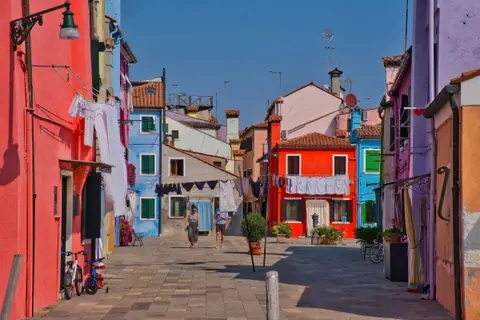
Food & Drink
Local dishes, markets, cafés and dining districts.
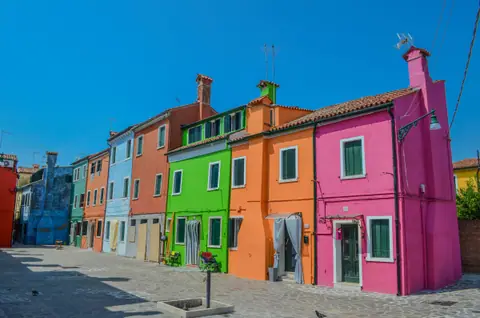
Getting Around & Arrival
Airport transfers, public transit, passes and driving rules.
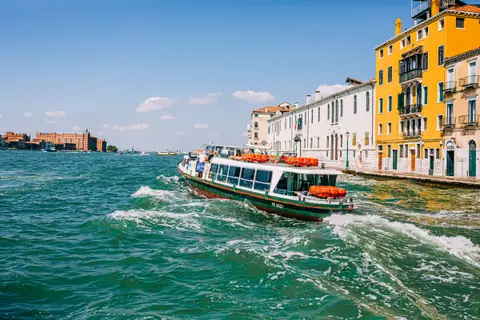
Trip Planning & Itineraries
When to visit, what to pack and day-by-day routes.
- Venice: What to Know Before You GoLagoon rules, vaporetto passes, packing for stepped bridges and how Venice addresses work.
- Best Time to Visit VeniceClear autumn light, Biennale months, Carnival masks and quiet winter mornings on the lagoon.
- What to Wear in VeniceNon-slip shoes for stepped Istrian stone bridges, compact bags and Basilica dress rules.
- 3 Days in Venice: Canals, Palaces and the Lagoon IslandsThree unhurried days combining early-morning icons with quiet afternoon canals and island boats.
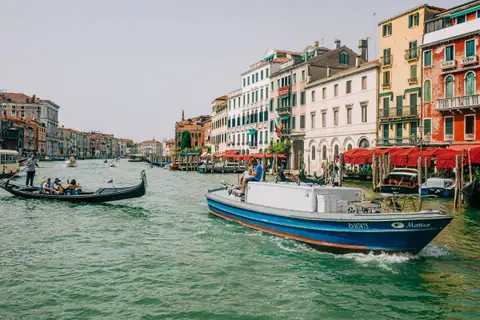
Need your embassy or consulate in Italy? See embassies and consulates in Italy.
Reviews
Log in to write a review.
No reviews yet.