





















Valencia
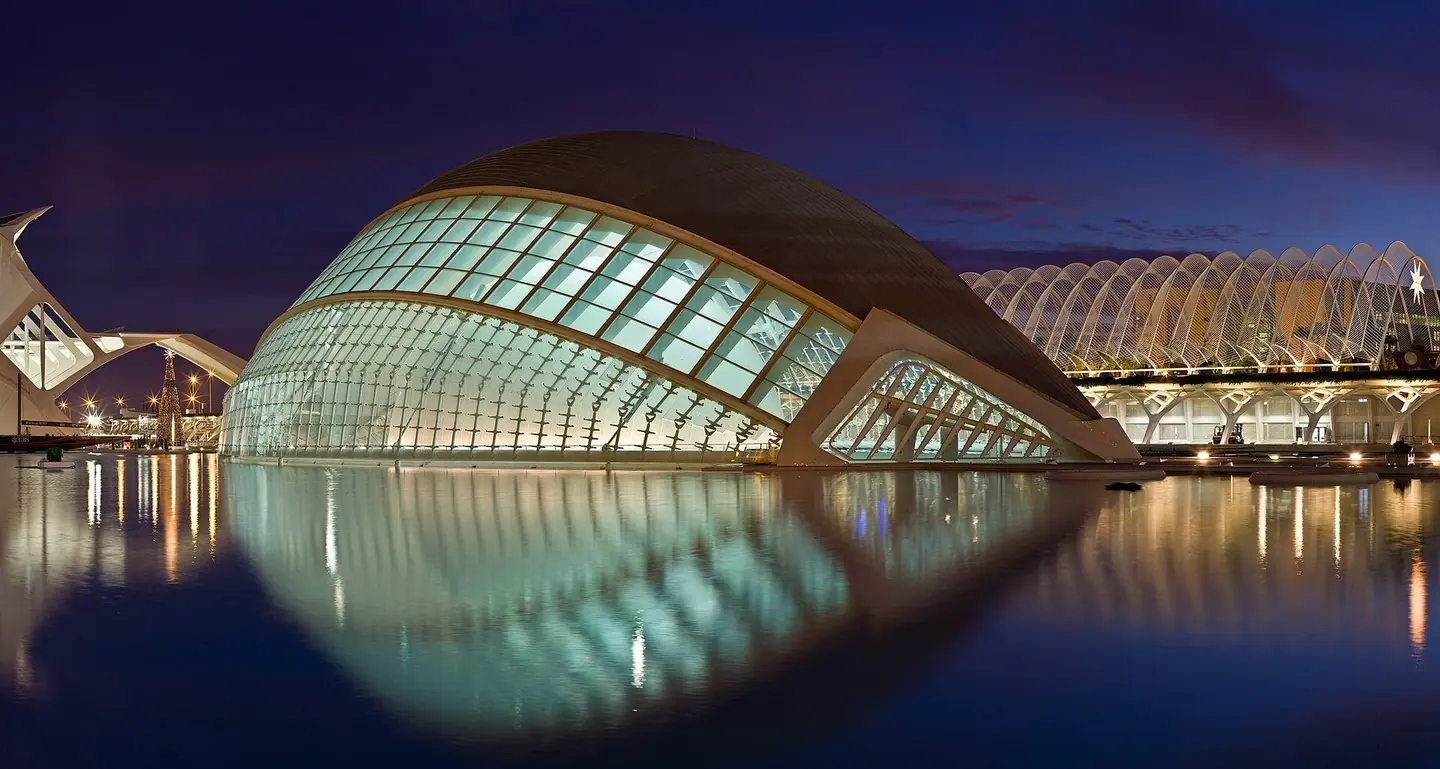
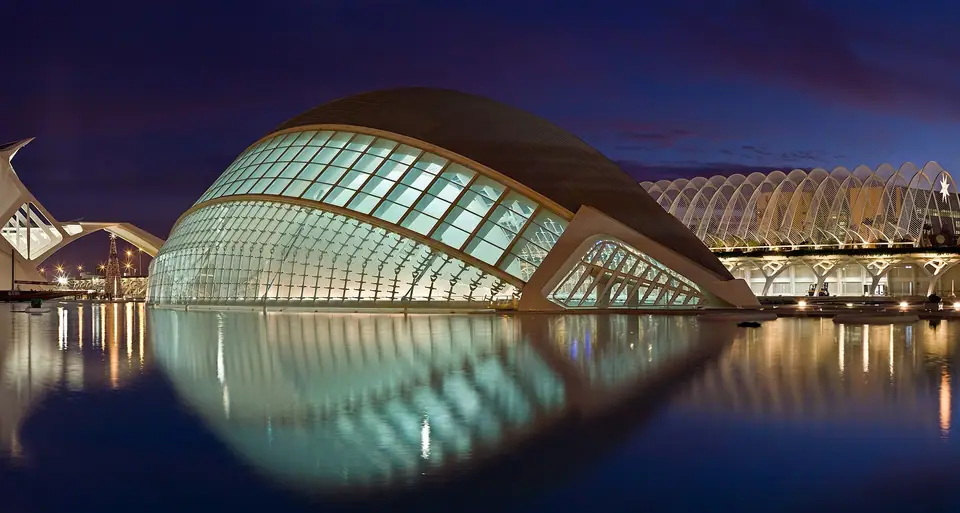
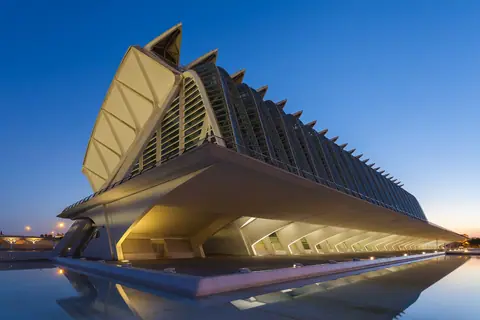
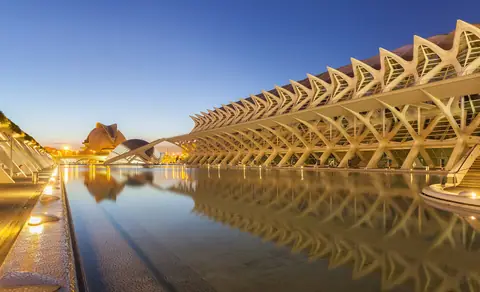
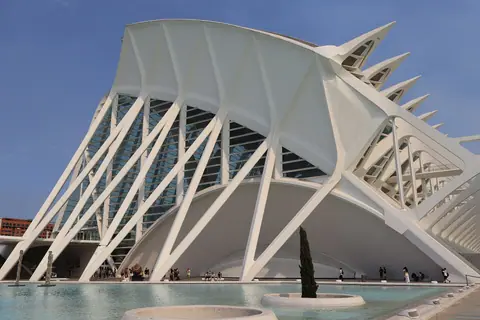
Where the helical Gothic stone columns of the UNESCO Silk Exchange and the 1928 domes of Mercado Central meet the 9-kilometre sunken Turia Gardens, Santiago Calatrava's futuristic City of Arts and Sciences, and the rice fields of the Albufera lagoon, Valencia unites 2,160 years of Mediterranean history with bright Levantine light.
Quick decisions
How many days?
Allow 3 to 4 days: Day 1 for La Lonja de la Seda and Mercado Central plus Valencia Cathedral and El Miguelete, Day 2 for El Carmen and cycling the 9 km Turia Gardens to the City of Arts and Sciences, Day 3 for El Cabanyal and Malvarrosa Beach, and Day 4 for Albufera Natural Park or Xàtiva Castle.
Where should I stay?
Base yourself in Ciutat Vella or Eixample and Ruzafa for walkable access to Gothic monuments and Modernista dining, near the City of Arts for family parks, or along Malvarrosa for sea breezes.
Do I need a car?
No: Ciutat Vella is largely pedestrianised, over 200 km of flat cycle lanes follow the Turia riverbed to the sea, and Metrovalencia and EMT buses accept contactless bank cards.
Best for
Valencian Gothic and Art Nouveau architecture, Santiago Calatrava's white-mosaic cultural complex, urban cycling, Mediterranean beaches, UNESCO Fallas traditions, and authentic wood-fired paella.
Before you go
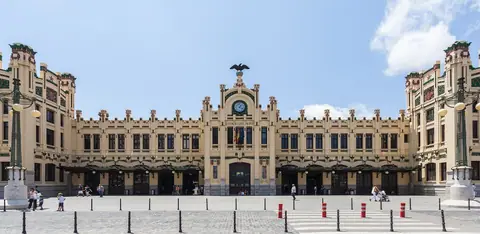
Valencia is officially bilingual in Valencian and Castilian Spanish, and high-speed AVE trains use València Joaquín Sorolla rather than the historic Estació del Nord 800 metres north.
Getting around
Ride Metrovalencia Lines 3 and 5 from Manises Airport (Zone B requires a SUMA Zone AB+ fare or contactless tap) or rent a bike through the sunken Turia park.
Overview
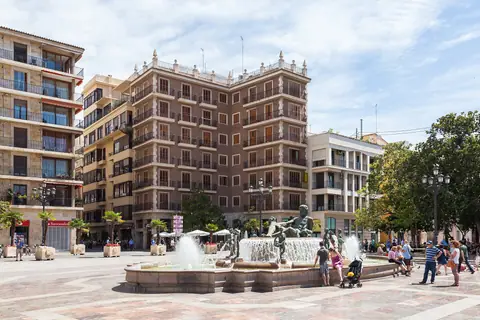
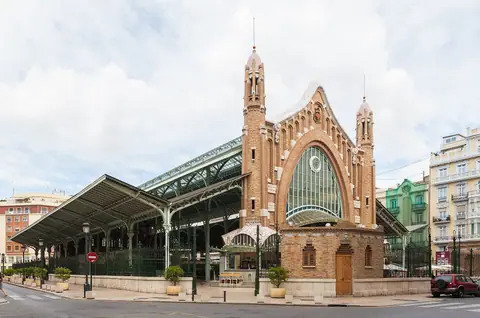
Founded by Roman consul Decimus Junius Brutus Callaicus in 138 BCE as the river island colony of Valentia Edetanorum, ruled for five centuries as Islamic Balansiya (714 to 1238 CE), and elevated during the fifteenth-century Valencian Golden Age into the wealthiest silk and merchant banking capital of the Crown of Aragon, Valencia (València in Valencian) is Spain's third-largest metropolis, counting roughly 825,000 city residents and 1.6 million across its metropolitan area. Few European cities are shaped as visibly by a single hydrographic event. After the catastrophic 14 October 1957 Great Flood of Valencia (Gran Riada de Valencia) inundated the streets under five metres of water, Spanish engineers diverted the Turia River south of the city through the Plan Sur channel. When citizens rejected a 1960s proposal to pave the dry river channel into an urban motorway under the civic rallying cry El llit del Túria és nostre i el volem verd ("The Turia riverbed is ours and we want it green"), Valencia transformed the sunken channel into the 9-kilometre Jardín del Turia. Today that green ribbon curves around the 1356 medieval wall perimeter of Ciutat Vella, anchored by the 1392 Torres de Serranos and 1441 Torres de Quart, where the UNESCO-listed La Lonja de la Seda (1482 to 1548) and the 1928 Mercado Central stand steps from Valencia Cathedral and its Holy Chalice. At the eastern mouth of the former riverbed shines Santiago Calatrava and Félix Candela's City of Arts and Sciences and Oceanogràfic, leading out to the tile-fronted fishermen's cottages of El Cabanyal and Malvarrosa Beach and the rice-growing wetlands of Albufera Natural Park.
Getting there
Fly into Valencia Manises Airport (VLC) 8 km west of the centre and ride underground Metrovalencia Line 3 or Line 5 to Xàtiva and Colón in 20 minutes using a SUMA Zone AB+ ticket or contactless bank card, or arrive at València Joaquín Sorolla on high-speed AVE, Ouigo, and Iryo trains from Madrid (100 minutes), Barcelona, and Seville.
Where to stay
Stay inside Ciutat Vella around La Seu, El Mercat, or El Carmen to walk everywhere in the medieval core, in Ruzafa and Eixample Gran Via for 1910s Modernista facades and neighbourhood dining, beside the City of Arts and Sciences for contemporary hotels on the Turia park, or in El Cabanyal and Malvarrosa for beachfront promenades.
Things to do
Explore the helical stone columns of the UNESCO La Lonja de la Seda and 1,200 stalls at Mercado Central, climb the 207 steps of El Miguelete at Valencia Cathedral and see the Holy Chalice, walk the medieval gates of El Carmen, cycle the 9 km Turia Gardens from Bioparc to Gulliver Park, tour the City of Arts and Sciences and Oceanogràfic, stroll Malvarrosa Beach and El Cabanyal, and take a sunset boat on Albufera Lagoon.
Food and drink
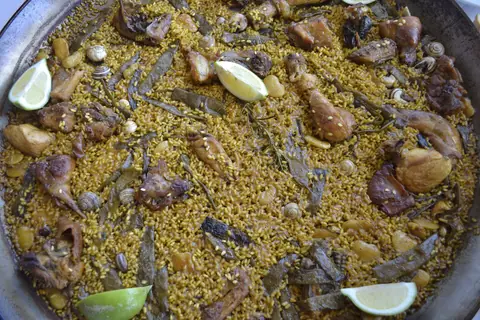
Sit down at midday for authentic wood-fired Paella Valenciana cooked with chicken, rabbit, garrofó beans, and a crisp socarrat crust, sample seafood arroz a banda and arroz del senyoret, dip glazed fartons pastries into ice-cold tiger-nut horchata de chufa from Alboraya, and order an evening pitcher of Agua de Valencia.
Culture
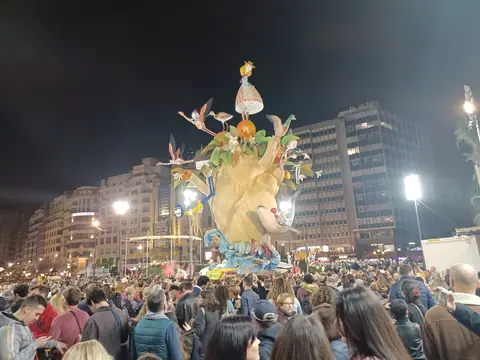
Home to three UNESCO inscriptions, the fifteenth-century Silk Exchange, the medieval Water Tribunal that meets every Thursday at noon outside the Cathedral, and the fiery March Festival of Las Fallas, Valencia pairs bilingual Valencian and Castilian identity with Mediterranean orchard and rice-farming heritage.
Weather by month
Valencia is warmest in July, with average highs around 31°C, and coldest in January, when nights drop to about 8°C. April is the wettest month, with rain on about 5 days. For mild weather with fewer rainy days, aim for February.
| Month | Low | Range | High | Rain | Rainy days |
|---|---|---|---|---|---|
| Jan | 8°C | 17°C | 28 mm | 4 d | |
| Feb | 8°C | 18°C | 21 mm | 3 d | |
| Mar | 10°C | 20°C | 28 mm | 4 d | |
| Apr | 12°C | 22°C | 35 mm | 5 d | |
| May | 15°C | 25°C | 28 mm | 4 d | |
| Jun | 19°C | 28°C | 14 mm | 2 d | |
| Jul | 22°C | 31°C | 7 mm | 1 d | |
| Aug | 23°C | 31°C | 14 mm | 2 d | |
| Sep | 20°C | 28°C | 35 mm | 5 d | |
| Oct | 16°C | 25°C | 35 mm | 5 d | |
| Nov | 11°C | 20°C | 28 mm | 4 d | |
| Dec | 8°C | 17°C | 28 mm | 4 d |
Averages of daily values from 2015 to 2024. Rainy days are days with at least 1 mm of rain. Source: Open-Meteo · Compare destinations by month.
Valencia on the map
Every place we cover in Valencia. Tap a category or pin to explore.
In-depth Valencia guides
Browse the guides grouped by topic: sights, neighbourhoods, food, transport, day trips and trip planning.
Sights, Landmarks & Parks
Key monuments, viewpoints, museums and nature trails.
- Best Things to Do in Valencia: City of Arts and Sciences, UNESCO Silk Exchange, Central Market, Turia & PaellaDiscover the essential experiences in Valencia, from Calatrava's City of Arts and Sciences and the UNESCO Silk Exchange to Mercado Central, cycling the Turia Gardens, and Albufera sunset boats.
- Valencia 3-Day Itinerary: Old Town UNESCO Silk Exchange, Turia Gardens, Calatrava's Arts Complex & AlbuferaFollow our step-by-step 3-day Valencia itinerary covering the UNESCO Silk Exchange, Mercado Central, and Cathedral on Day 1, Turia Gardens and City of Arts on Day 2, and Malvarrosa and Albufera on Day 3.
- City of Arts and Sciences Guide: Calatrava's Palau de les Arts, Hemisfèric, Science Museum & OceanogràficExplore Valencia's two-kilometre City of Arts and Sciences: Santiago Calatrava's Palau de les Arts, Hemisfèric, Science Museum, Umbracle, CaixaForum, and Félix Candela's Oceanogràfic.
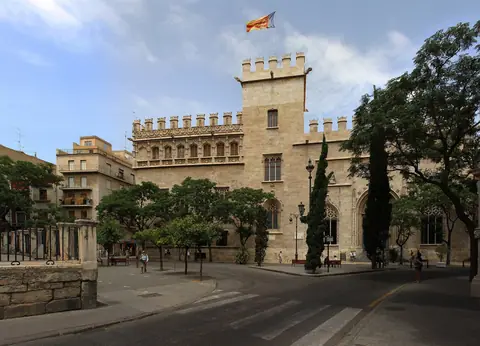
- UNESCO La Lonja de la Seda (Silk Exchange), 1928 Mercado Central & Church of Santos Juanes WalkWalk Valencia's historic commercial heart on Plaza del Mercado, linking the 1482 UNESCO Silk Exchange, the 1,200 stalls of the 1928 Art Nouveau Mercado Central, and Santos Juanes.
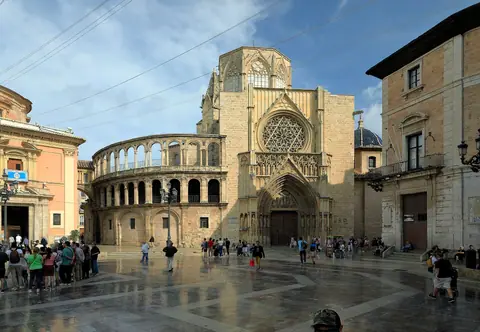
- Valencia Cathedral, Holy Chalice Chapel, 207-Step Miguelete Bell Tower, Plaza de la Virgen & Almoina RuinsExplore the sacred and archaeological heart of Valencia: Valencia Cathedral's three portals, the Holy Chalice, the 207 steps of El Miguelete, the Thursday Water Tribunal, and the Almoina Roman ruins.
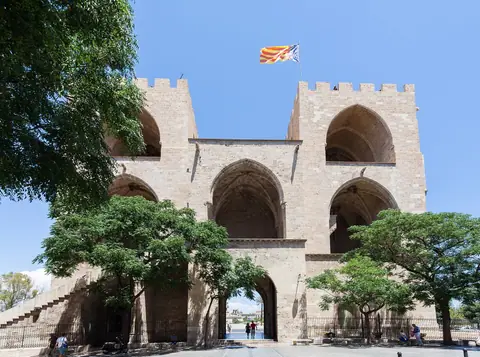
- El Carmen Quarter, 1392 Serranos Towers, 1441 Quart Towers, Portal de la Valldigna & Street Art WalkWalk the medieval walls, Islamic gates, contemporary art cloisters, and urban murals of Barrio del Carmen, from the 1392 Torres de Serranos and 1400 Portal de la Valldigna to the 1441 Torres de Quart.
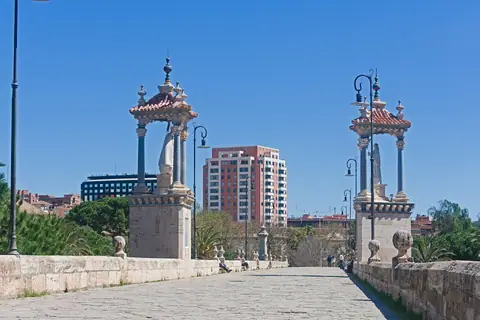
- Jardín del Turia Route: Walking & Cycling the 9 km Former Riverbed from Bioparc to Gulliver ParkWalk or cycle the 9-kilometre sunken Jardín del Turia across 18 bridges from Bioparc Valencia and Cabecera Park past the old town towers, Palau de la Música, and Gulliver Park.
Neighbourhoods & Where to Stay
Districts, historic quarters and the best bases for your stay.
- Valencia Orientation: Ciutat Vella, the 9 km Turia Gardens, City of Arts and Sciences & Bilingual Valencian SignsUnderstand how Valencia is organised around the walled Ciutat Vella, the 9-kilometre sunken Turia Gardens created after the 1957 flood, the City of Arts and Sciences, and the Mediterranean coast.
- Best Time to Visit Valencia: AEMET 1991-2020 Climate Normals, UNESCO Fallas Festival & Mediterranean Beach SeasonPlan your trip with official AEMET Viveros 1991-2020 climate data, 300 annual sunny days, the fiery March UNESCO Fallas festival, summer beach months, and the October rice harvest.
- What to Wear in Valencia: UV Sun Protection, Cathedral Shawls, Turia Cycling Gear & Fallas Walking ShoesPack smartly for Valencia's 300 annual sunny days, polished marble squares in Ciutat Vella, Valencia Cathedral dress code, Turia cycling paths, and Fallas festival nights.
- Where to Stay in Valencia: Ciutat Vella, El Carmen, Ruzafa, Eixample, Ciudad de las Artes & Malvarrosa BeachCompare the best neighbourhoods to stay in Valencia: monumental Ciutat Vella and El Carmen, hip Ruzafa and Eixample, family-friendly Ciudad de las Artes, and seaside El Cabanyal and Malvarrosa.
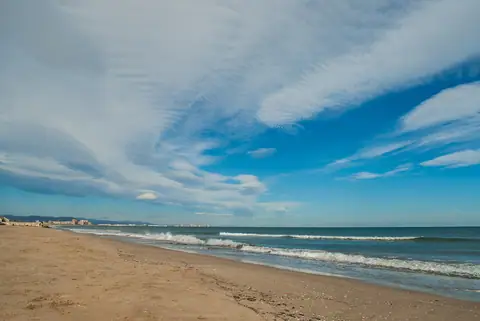
- Malvarrosa & Patacona Beaches, El Cabanyal Fisherman Houses & Marina de Valencia GuideExplore Valencia's Mediterranean coastline: the ceramic-tiled modernist fisherman cottages of El Cabanyal, Marina de Valencia and Veles e Vents, and Las Arenas, Malvarrosa, and Patacona beaches.
Food & Drink
Local dishes, markets, cafés and dining districts.
Getting Around & Arrival
Airport transfers, public transit, passes and driving rules.
Day Trips & Excursions
Easy half-day and full-day trips from the city.
Need your embassy or consulate in Spain? See embassies and consulates in Spain.
Reviews
Log in to write a review.
No reviews yet.