


























Quick Field Data
- UNESCO Inscription: 1987 (Cultural, Criteria ii, iv; decreed a Historic Monuments Zone by presidential decree in 1977).
- Scale & Footprint: Colonial Renaissance grid city in the Valley of Cuetlaxcoapan encompassing the 16th- and 17th-century Puebla Cathedral, the old archbishop's palace, the Biblioteca Palafoxiana, the Chapel of the Rosario inside the Church of Santo Domingo, and colonial houses clad in coloured tiles (azulejos).
- Access & Ticketing: Open historic urban core with individual entry rules for Puebla Cathedral, Biblioteca Palafoxiana, Casa de la Cultura, and historic churches; check the official site for museum schedules and post-earthquake restoration work.
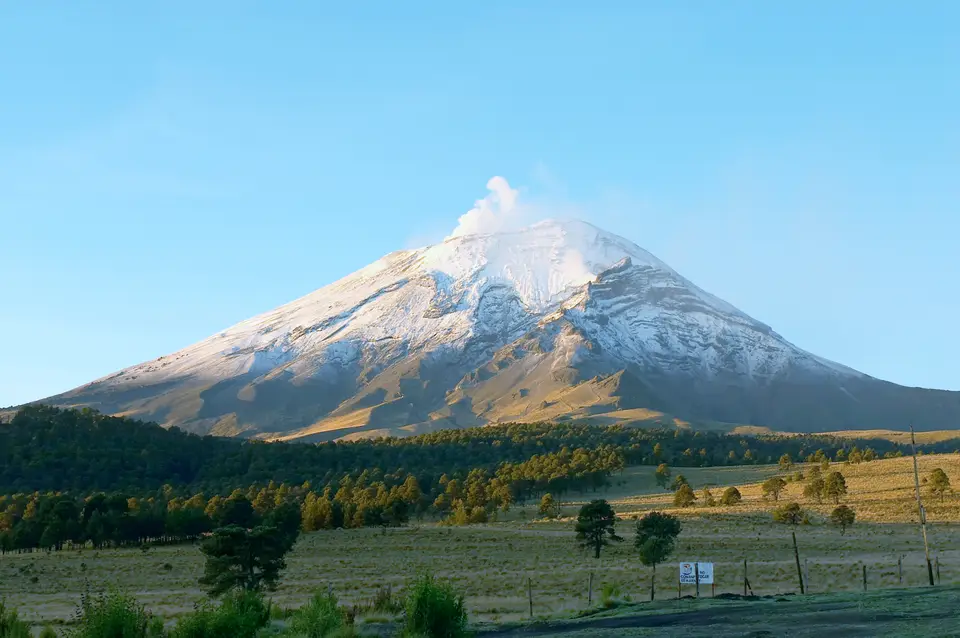
- Arrival Logistics: Located at 19.0460°N, 98.1978°W inside the Cuetlaxcoapan Valley beneath the Popocatepetl volcano, lying roughly 100 km to the east of Mexico City along the historic route to the Port of Veracruz.
Ex Nihilo Foundation in 1531 and the Veracruz to Mexico City Trade Corridor
Situated at 19.0460 degrees north and 98.1978 degrees west inside the high Cuetlaxcoapan Valley beneath the snow-clad Popocatepetl volcano, one of Mexico's highest volcanic peaks, the Historic Centre of Puebla (known in Spanish as the centro histórico de Puebla) lies approximately 100 kilometres to the east of Mexico City. Unlike colonial settlements erected directly over existing indigenous urban centres, the city of Puebla de los Ángeles (originally named Ciudad de los Ángeles) was founded ex nihilo, on previously unoccupied ground, in 1531 along the border zone between the indigenous territories of Cholula, Tlaxcala, and Cuauhtinchan, in accordance with Spain's royal recommendations not to take possession of indigenous territories. Commanding a strategic intermediate position along the primary commercial and cultural trade route linking the Atlantic Port of Veracruz with Mexico City 100 kilometres to the west, Puebla functioned as a core intermediate point of the Spanish Atlantic trade axis for more than two centuries.
The Spanish monarchy repeatedly recognised the rapid growth and considerable 16th-century influence of the young settlement by granting a sequence of royal nobility titles during its first fifty years. In 1532, just one year after its 1531 foundation, Emperor Charles V and his wife Queen Elizabeth from Portugal granted the settlement the official "Title of City", followed in 1538 by its royal "Coat of Arms", both signed by Queen Elizabeth on behalf of Charles V. Subsequent royal decrees elevated its civic status in 1558 to the "Noble and Loyal City of Los Ángeles" and again in 1576, when another royal decree declared it the "Very Noble and Loyal City of Puebla de los Ángeles". Because Ciudad de los Ángeles was designed from the ground up on an open valley floor, colonial planners laid out a regular Renaissance urban grid formed by rectangular squares and blocks oriented along a northeast-to-southeast axis.
Across the 16th, 17th, and eighteenth centuries, commercial prosperity along the Veracruz and Mexico City corridor financed the construction of monumental religious complexes, civic palaces, and courtyard residences across the rectangular grid. Because goods arriving by ship from Spain at the Port of Veracruz and silver and merchandise moving inland toward Mexico City passed through the Valley of Cuetlaxcoapan, the city rapidly accumulated religious foundations, schools, libraries, and merchant houses that reflected its dual function as an ecclesiastical seat and a strategic commercial hub between the coast and the central highlands. In the mid-19th century, national Reform laws mandated the closing of numerous religious institutions across the city, subdividing large monastic properties and reshaping the historic urban fabric of Puebla while leaving the underlying 16th-century Renaissance street blocks intact.
Baroque Sanctuaries, Azulejo Tile Facades, and Colonial Landmarks
The architectural identity of the Historic Centre of Puebla illustrates the new aesthetic concepts born from blending European architectural traditions with American craftsmanship across the Baroque district of Puebla. Throughout the Historic Monuments Zone, a host of colonial courtyard houses, civic buildings, and church domes are clad in patterned coloured ceramic tiles known as azulejos. Combined with carved stonework and white mortar ornament, these glazed tile walls give the streets of the Baroque district their distinctive polychrome character while protecting the colonial masonry from seasonal highland rains. The local adaptation of Renaissance and Baroque spatial planning to indigenous ceramic and stone-carving traditions created an unmistakable regional style across the rectangular blocks of the valley floor, which later exerted a wide influence across the surrounding Puebla and Tlaxcala valley region.
Anchoring the monumental core is the 16th- and 17th-century Puebla Cathedral, accompanied by the commemorative sculpture of the Ángeles testigos honouring the beatification of Bishop Juan de Palafox y Mendoza and the fine architecture of the old archbishop's palace, alongside the Casa de la Cultura and the historic Biblioteca Palafoxiana, which preserves the ecclesiastical and intellectual collections of the colonial bishopric. Nearby stands the Church of Santo Domingo, which houses the celebrated Chapel of the Rosario, one of the richest expressions of Baroque interior ornament in Mexico, where gilded stucco and glazed tilework unite European liturgical architecture with local decorative mastery.
Across the rectangular blocks of the Historic Monuments Zone survive a dense concentration of religious, civic, and cultural landmarks that define the historic urban setting: the Municipal Hall of Puebla fronting the main square, the historic Teatro Principal de Puebla (accompanied in the public plaza by the Statue of Héctor Azar and the Bust of Plácido Domingo), the colonial Church of La Compañía, the conventual Church of las Capuchinas, the twin-towered Church of San Cristóbal, the Church of San Juan de Dios, the colonial Church of San Pedro, the Hospital Church of San Roque, and the Parish of Santa Clara. Traditional market and artisan quarters thrive around the stalls of El Parián, the open-air studios of the Barrio del Artista, and the colonial streets of the Barrio de los Sapos, while the Maqueta del Centro de Puebla displays a three-dimensional scale model of the entire northeast-to-southeast Renaissance grid, allowing visitors to trace how the 1531 foundation of Ciudad de los Ángeles between the indigenous territories of Cholula, Tlaxcala, and Cuauhtinchan evolved into a monumental Baroque ensemble.
Seismic Conservation and Walking the Colonial Grid
Considered the historical origin of the city, the Historic Monuments Zone of Puebla was protected by presidential decree in 1977, and 1 year later in 1987 UNESCO inscribed the Historic Centre of Puebla on the UNESCO World Heritage List under Criteria ii and iv. Because the Valley of Cuetlaxcoapan sits in an active seismic region beneath the Popocatepetl volcano, several of the oldest colonial buildings were badly damaged during the 1999 earthquake and were subsequently repaired, before suffering further structural damage during the 2017 earthquake that required renewed conservation campaigns across the churches, convents, and courtyard houses. Walking the rectangular Renaissance streets today reveals how 16th-century urban planning and Baroque ceramic and mortar ornament endured across centuries of seismic and political change. Travellers exploring central Mexico can reach Puebla by road from the capital using our Mexico City travel guide (which also covers the historic centre of Mexico City) or locate the Cuetlaxcoapan Valley on our interactive world map. Glazed tiles catch the highland sun.
- Starting at Puebla Cathedral and the Biblioteca Palafoxiana: Begin at the main square (inspecting the Maqueta del Centro de Puebla and the Municipal Hall of Puebla) to visit the 16th- and 17th-century Puebla Cathedral and the Ángeles testigos monument honouring Juan de Palafox y Mendoza, then enter the old archbishop's palace, the Casa de la Cultura, and the Biblioteca Palafoxiana to see how ecclesiastical and civic institutions anchored the 1531 Ciudad de los Ángeles layout.
- Visiting the Chapel of the Rosario and colonial churches: Walk through the northeast-to-southeast Renaissance grid to the Church of Santo Domingo to see the Baroque Chapel of the Rosario, then continue to the Church of La Compañía, the Church of las Capuchinas, the Church of San Cristóbal, the Church of San Juan de Dios, the Church of San Pedro, the Hospital Church of San Roque, and the Parish of Santa Clara.
- Exploring Barrio de los Sapos, Barrio del Artista, and El Parián: Admire the colonial houses with walls covered in coloured azulejos through the Barrio de los Sapos, browse the craft market of El Parián and the courtyard studios of the Barrio del Artista, and visit the Teatro Principal de Puebla alongside the Statue of Héctor Azar and the Bust of Plácido Domingo.
