


























Quick Field Data
- UNESCO Inscription: 1984 (placed on the List of World Heritage in Danger from 1999 to 2021) · Criteria (vii), (ix).
- Scale & Footprint: 3,334,600 to 3,600,000 hectares (36,000 square kilometres, or 8,900,000 acres) divided into North and South sectors separated by a forty-kilometre-wide unlisted corridor across the central Congo River basin
- Access & Ticketing: Co-managed since 2015 by the Institut Congolais pour la Conservation and the World Wide Fund for Nature; virtually roadless and accessible primarily by boat along the Salonga, Lokoro, and the Busira and Lula rivers or via dirt track from Monkoto Airport
- Arrival Logistics: Situated halfway between Kinshasa and Kisangani in the Democratic Republic of the Congo, extending across the provinces of Mai Ndombe alongside Equateur, Kasaï, and Sankuru
Two River-Bounded Sectors Across 3,600,000 Hectares of the Congo Basin
Situated at the geographic heart of the central Congo River basin roughly halfway between the national capital of Kinshasa and the river port of Kisangani, extending across Mai Ndombe alongside Equateur, Kasaï, and Sankuru provinces in the Democratic Republic of the Congo, Salonga National Park (Parc National de la Salonga) protects Africa's largest tropical rainforest reserve, ranking second in size worldwide. Originally created in 1956 as Tshuapa National Park, given its modern boundaries by a presidential decree of President Mobutu Sese Seko in 1970 (managed under nature conservation Law 69-041 of 28 August 1969 and Law 70-318 of 30 November 1970 across an official decree area of 3,334,600 hectares, or roughly 3,600,000 hectares / 36,000 square kilometres / 8,900,000 acres), the reserve was inscribed on the World Heritage List in 1984 during the 8th session under natural criteria (vii) and (ix). Rivers guard this roadless forest.
Unlike terrestrial parks carved out by artificial survey lines, the boundaries of Salonga National Park are defined by wide, meandering equatorial rivers that form precise natural borders. The park is divided into two vast, distinct blocks, a Northern Sector and a Southern Sector, separated by an unlisted outside corridor approximately forty kilometres wide (where conservation planners highlight the need for biological corridors to maintain ecological connectivity between the two halves). Winding northwestward through the reserve toward its confluence with the Busira River is the Salonga River itself, while the Lokoro River flows through the central and northern reaches and the Lula River borders the southern sector.
Because no paved roads penetrate the 36,000-square-kilometre interior, almost the entire park is accessible only by water transport, leaving vast expanses of marshland alongside swamp forest and gallery forest practically virgin and never systematically explored by external scientists. On a planetary scale, this immense, intact block of equatorial rainforest plays a fundamental role in regional climate regulation and global carbon sequestration while providing sufficient undisturbed territory for plant and animal communities to continue evolving naturally. In the southwestern sector of the park alone, botanists have identified 735 plant species, an extraordinary 85 percent of which depend directly on forest animals to disperse their seeds through a mutualistic ecological process known as zoochory.
Following armed conflict in the eastern part of the country alongside poaching and housing construction, Salonga was listed as endangered in 1999. After the Institut Congolais pour la Conservation and the World Wide Fund for Nature formed a co-management partnership in 2015, conservation conditions improved and in 2021 UNESCO removed the park from the endangered list.
Bonobos, Forest Elephants and Congo Peafowl and Iyaelima Stewardship
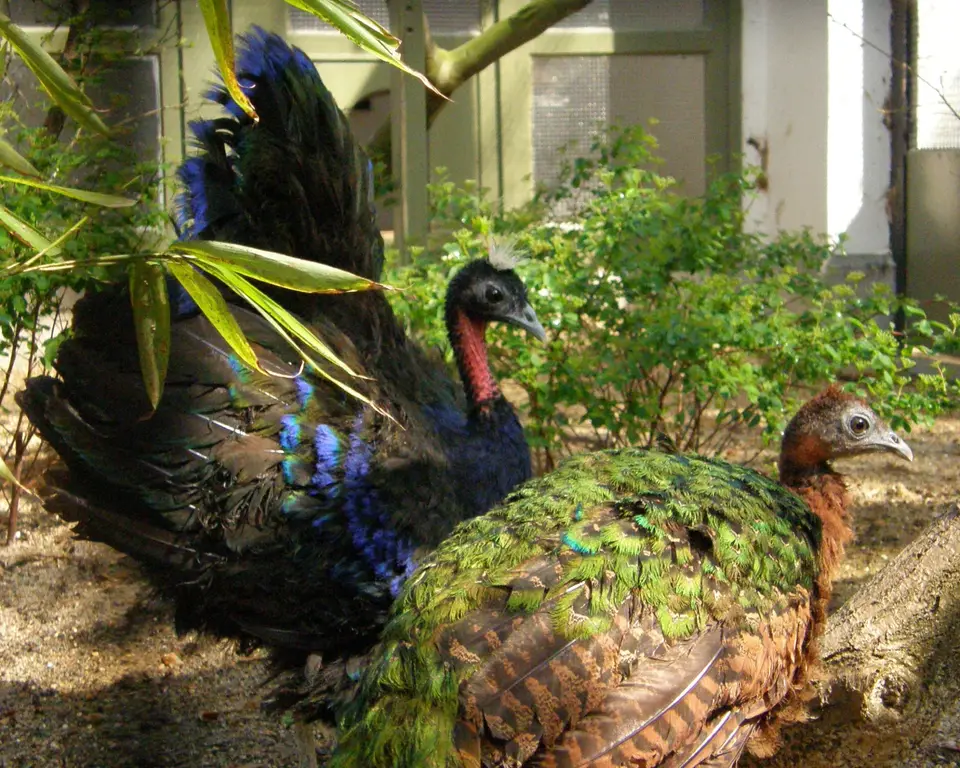
Salonga National Park was created above all to safeguard the evolutionary stronghold of endemic and threatened central Congo Basin fauna that cannot survive in fragmented forests. Foremost among the park's flagship species is the bonobo (historically termed the pygmy or dwarf chimpanzee), a great ape found in the wild only south of the Congo River in the Democratic Republic of the Congo. Alongside the bonobo, the dense swamp and terra-firma forests shelter viable populations of the endangered African forest elephant (bush elephant), the elusive forest-dwelling bongo antelope, leopards, and the African golden cat and the endemic Congo peafowl (Congo peacock, the threatened national bird of the country, which inhabits both primary and secondary forest blocks).
Primate diversity across the canopy is exceptionally rich: in addition to bonobos, the park protects black-crested mangabeys alongside golden-bellied mangabeys, Dryas monkeys, Thollon's red colobus monkeys, Allen's swamp monkeys, red-tailed monkeys alongside nocturnal pottos and dwarf bushbabies. On the forest floor and along the marshy riverbanks live three species of pangolin (giant pangolin, long-tailed pangolin, and tree pangolin), red river hogs, forest buffalo, water chevrotains, sitatungas, bushbucks, blue duikers, yellow-backed duikers alongside Angolan kusimanses and aquatic genets. In the blackwater and whitewater river channels swim hippopotamuses, Congo clawless otters, spotted-necked otters, the endangered African slender-snouted (or false) crocodile, and 56 identified fish species (among them the catfishes Clarias monsembulai and Synodontis nigriventris), while cattle egrets alongside black storks and yellow-billed storks wade the river margins.
Crucially, Salonga's ecology is intertwined with its human inhabitants. Roughly one-third of the Southern Sector is occupied by indigenous hunter-gatherer and farming communities, while two distinct groups reside within the park area: the Iyaelima people (the last remaining traditional residents of the southern forest) and the Kitawalistes (a religious movement that settled inside the park shortly after its creation in 1970), alongside villages in the forty-kilometre inter-sector corridor. Field studies of wild bonobos in the Southern Sector revealed a striking conservation finding: bonobo population densities are highest immediately around Iyaelima villages, because traditional Iyaelima cultural taboos strictly forbid harming or eating bonobos. Recognising this indigenous stewardship, park co-managers have built an active collaboration with the Iyaelima, utilizing Iyaelima villages as conservation guard posts to protect the southern forest. Across the 3,334,600 to 3,600,000 hectares of the Northern and Southern sectors, the combination of natural river boundaries along the Salonga, Lokoro, and the Busira and Lula channels with traditional indigenous forest stewardship in the south has allowed vast marshlands and gallery forests to remain practically virgin. Maintaining ecological connectivity across the forty-kilometre unlisted corridor between the two sectors remains a central priority so that forest elephants, bonobos, and bongo antelopes and leopards can move freely across the central Congo River basin while the intact forest canopy continues its vital role in global carbon sequestration and regional climate regulation. Governed under nature conservation Law 69-041 of 28 August 1969 and Law 70-318 of 30 November 1970, the vast size of the two rainforest sectors ensures that evolutionary processes among both endemic animal species and complex plant communities continue undisturbed inside the equatorial Congo basin. From the remote headwaters of the Lokoro and Lula rivers in the south to the winding course of the Salonga River where it joins the Busira River in the northwest, this roadless 36,000-square-kilometre wilderness remains a critical refuge for the endemic Congo peafowl alongside the bonobo, the African bush elephant, and the slender-snouted crocodile.
Navigating the Lokoro River Corridor and Monkoto Access Track
Because Salonga National Park is one of the most isolated wilderness reserves in the world, visiting the park is a serious expeditionary undertaking that requires advance authorization from park headquarters and chartering river transport or light aircraft into the Monkoto corridor.
Plan your expedition around the Monkoto gateway between the Northern and Southern sectors and the Lokoro River waterways.
- Fly into Monkoto Airport and travel the southeastern access track: Reach the forty-kilometre corridor separating the North and South sectors via Monkoto Airport, then travel by four-wheel-drive vehicle or trek southeastward along the dirt road lined with local villages toward the park boundary to check in with park conservation staff.
- Navigate the Lokoro alongside the Lula and Salonga rivers by dugout boat: Enter the roadless rainforest interior the only way possible, by boat along the Lokoro River (flowing through the central and northern park), the Lula River in the south, or the northwest-meandering Salonga River toward the Busira confluence. Scan the overhanging gallery forests for troops of Thollon's red colobus, black-crested mangabeys, and Allen's swamp monkeys while watching submerged logs for slender-snouted crocodiles and Congo clawless otters.
- Track wild bonobos with Iyaelima guides in the Southern Sector: In the Southern Sector accessible via the Lokoro and Lula rivers, work with park guards and local Iyaelima trackers to observe habituated or wild groups of bonobos foraging in fruiting trees (part of the 85 percent zoochorous flora of the southwestern forest) and listen for Congo peafowl and forest elephants. Compare Salonga with other Congo Basin sanctuaries in our UNESCO World Heritage Atlas.
