


























Quick Field Data
- UNESCO Inscription: 1985 · Criteria (i), (iv).
- Scale & Footprint: Hilltop Rococo church, curved outdoor stairway with soapstone prophets, and ramped forecourt with Passos chapels in Congonhas, Minas Gerais, Brazil.
- Access & Ticketing: Protected as a federal heritage monument by IPHAN since 8 September 1939; check the official site for sanctuary, chapel, and reference centre access.
- Arrival Logistics: Located in the city of Congonhas in Minas Gerais, south of the regional capital Belo Horizonte.
Baroque Pilgrimage Architecture from Braga to Minas Gerais
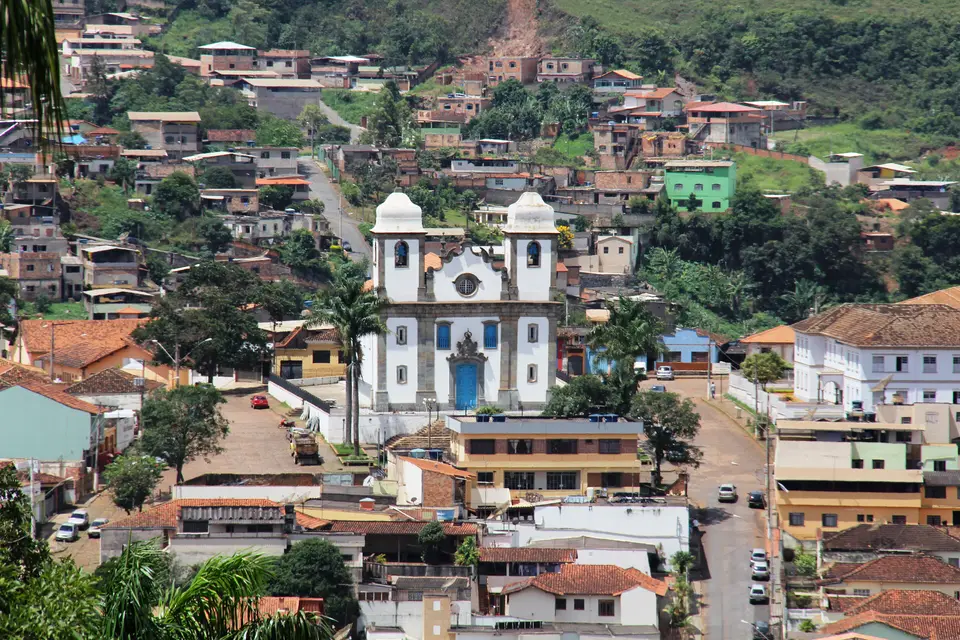
After 1985, the UNESCO World Heritage Atlas in 1985 under Criteria (i) and (iv), the Sanctuary of Bom Jesus do Congonhas (Santuário do Bom Jesus de Matosinhos) stands high on a hillside platform in the city of Congonhas in the Brazilian state of Minas Gerais, south of Belo Horizonte. Baroque sculpture crowns this hilltop. Built during the second half of the eighteenth century, this Brazilian pilgrimage sanctuary consists of three linked architectural and sculptural components: a church featuring a Rococo interior of Italian inspiration, an outdoor monumental stairway decorated with soapstone statues of the twelve prophets, and a ramped forecourt lined by small chapels illustrating the Stations of the Cross (the Passos).
The architectural design and theological layout of the Congonhas sanctuary were directly influenced by the Sanctuary of Bom Jesus do Monte (Santuário do Bom Jesus do Monte, meaning "Good Jesus of the Mount") at Tenões on the outskirts of Braga in northern Portugal (which was itself inscribed as a UNESCO World Heritage Site under Criterion (iv) on 7 July 2019 as ID 1590, covering 26 hectares with a 232-hectare buffer zone, after being classified as a Portuguese Property of Public Interest in 1970 and a National Monument on 15 December 2020). On the Braga hilltop, where the first indication of a chapel dedicated to the Holy Cross dates from 1373 (rebuilt in the fifteenth and sixteenth centuries before a pilgrimage church dedicated to Bom Jesus with six Passion chapels was erected in 1629), construction of the present Portuguese sanctuary started in 1722 under Archbishop Rodrigo de Moura Telles of Braga, whose coat of arms appears over the gateway at the foot of the stairway.
Under Archbishop Rodrigo de Moura Telles, the first stairway row at Braga was completed with chapels dedicated to the Via Crucis, each decorated with terracotta sculptures depicting the Passion of Christ, followed by a zigzag stairway segment dedicated to the Five Senses (Sight, Smell, Hearing, Touch, and Taste), each represented by a different fountain, culminating in a Baroque church erected around 1725 by the architect Manuel Pinto Vilalobos. In the 1760s, three octagonal chapels were added behind the church in the Terreiro dos Evangelistas (with exterior designs attributed to Braga architect André Soares and statues depicting post-Crucifixion episodes including Jesus meeting Mary Magdalene) flanked by four Baroque fountains bearing statues of the four Evangelists. Around 1781, Archbishop Gaspar de Bragança added a third zigzag stairway honouring the Three Theological Virtues of Faith, Hope, and Charity (each accompanied by its own fountain), bringing the complete staircase to 583 steps climbing 116 metres (381 feet), and demolished the old church to build a Neoclassical church designed by architect Carlos Amarante (begun in 1784, decorated in the early nineteenth century, consecrated in 1834 with a main altarpiece dedicated to the Crucifixion, linked to Braga in 1882 by the Iberian Peninsula's first water-balance funicular after the surrounding hills were expropriated as a park, and elevated to a Minor Basilica by Pope Francis on 5 July 2015).
Aleijadinho's Twelve Soapstone Prophets and Polychrome Passos
As pilgrims climbed the zigzag Baroque stairways at Braga (traditionally encouraged to ascend on their knees), they followed a theological path contrasting the five bodily senses of the material world with the spiritual virtues while experiencing the scenes of the Passion of Christ amidst purifying fountains before reaching the temple of God at the top of the hill. That Portuguese sacred landscape design influenced other sanctuaries in Portugal (including Nossa Senhora dos Remédios at Lamego) as well as the eighteenth-century sanctuary complex in Congonhas, Minas Gerais.
In Congonhas, the hillside sanctuary is approached via a ramped forecourt running between the chapels marking the Stations of the Cross (the Passos, noted in UNESCO records both as six chapels flanking the forecourt and as seven chapels depicting the Stations of the Cross). Housed inside these chapels are painted wooden sculpture groups portraying scenes from Christ's Passion carved by Francisco Antônio Lisboa, universally known as Aleijadinho. These dramatic painted wooden groups are masterpieces of an original, moving, and expressive form of Brazilian Baroque art.
Walking from chapel to chapel up the gentle slope of the Congonhas forecourt, visitors witness how Francisco Antônio Lisboa translated the narrative of the Via Crucis into three-dimensional drama. Each whitewashed pavilion acts as an intimate stage where life-sized carved wooden figures gesture toward one another across the room, drawing the pilgrim step by step from the lower garden toward the monumental stone terrace above.
Above the ramped forecourt, the Sanctuary of Bom Jesus do Congonhas rises on a high platform reached by a slightly curved, divided outdoor staircase. Carrying on its parapets monumental statues of the twelve prophets carved in local soapstone (pedra-sabão), the staircase joins with the polychrome wooden Passion sculptures in the chapels below as the crowning achievement of Francisco Antônio Lisboa (Aleijadinho), expressing the full artistic and spiritual values of eighteenth-century Brazilian architecture.
Because soapstone is soft enough to be carved with fine detail yet durable outdoors on the high platform of Congonhas, Aleijadinho was able to give each of the twelve prophets along the parapet walls a distinct posture alongside expressive facial features and flowing robes. Seen from the ramped forecourt below, the statues appear to converse across the twin flights of stairs, uniting architecture and sculpture against the Minas Gerais sky.
Rococo Church Interior, Room of Miracles, and IPHAN Conservation
Dating from the second half of the eighteenth century, the church at the summit of the Congonhas platform features a magnificent Italian Rococo interior whose architecture and ornamentation reflect the stylistic transition period from the Baroque to the Rococo in which it was constructed. Despite the urban changes brought on by the modern growth of the city of Congonhas, the sanctuary complex remains intact and survives as a central religious focus for pilgrimage throughout the Minas Gerais region.
Inside the sanctuary's interior lies the votive offering room (called the Room of Miracles), where faithful pilgrims deposit ex-voto objects as thanks for blessings and healings obtained through the divine intercession of Our Father Bom Jesus. The Congonhas sanctuary of Bom Jesus de Matozinhos received federal heritage protection from Brazil's National Institute of Historic and Artistic Heritage (IPHAN) on 8 September 1939, while the votive Room of Miracles was separately placed on the federal heritage register by IPHAN on 29 January 1981.
To interpret and conserve the architectural and landscaping ensemble of the sanctuary, IPHAN (working in partnership with the municipal administration of Congonhas alongside the UNESCO Brazil Office) initiated construction of a dedicated space housing the Baroque and Stonework Studies Reference Centre, alongside proposals to widen the protected zone around the sanctuary to encompass a substantial perimeter of the Architectural and Urban Complex of the pilgrimage city of Congonhas.
Today, this combination of Aleijadinho's twelve soapstone prophets on the open-air staircase, the polychrome wooden Passion scenes in the hillside chapels, and the living pilgrimage tradition inside the Room of Miracles makes the Sanctuary of Bom Jesus do Congonhas one of the most complete ensembles of eighteenth-century Baroque and Rococo sacred art in Brazil. Visitors approaching from Belo Horizonte can experience both the exterior sculptural choreography of the stairway and chapels and the devotional heritage preserved inside the hilltop church.
- Twelve Soapstone Prophets: Climb the curved, divided outdoor staircase where Aleijadinho's twelve monumental pedra-sabão prophet statues line the parapets above the forecourt.
- Polychrome Passos Chapels: Pause at the hillside chapels flanking the ramped forecourt to view Francisco Antônio Lisboa's expressive polychrome wooden sculptures depicting the Passion of Christ.
- Rococo Church & Room of Miracles: Step inside the eighteenth-century Rococo nave of Italian inspiration and visit the 1981-designated Room of Miracles alongside the Baroque and Stonework Studies Reference Centre.
