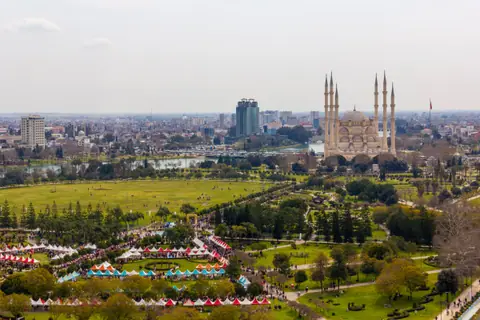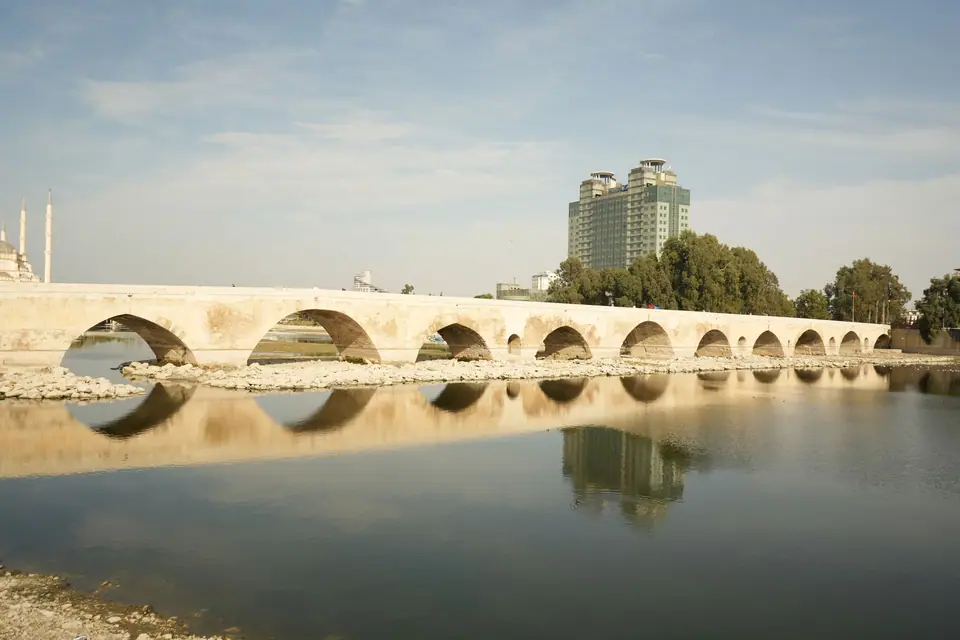
Roman Taşköprü (Stone Bridge, 385 AD) and Sabancı Central Mosque
Crossing one of the oldest bridges in the world still in daily use to the six-minaret Sabancı Central Mosque.
Every visit to Adana begins where the city itself began: at the stone arches spanning the Seyhan River. Standing side by side within 300 metres of each other, the 4th-century Roman Stone Bridge (Taşköprü) and the 1998 Sabancı Central Mosque create one of the most recognizable river skylines in the Mediterranean.
1. Taşköprü (The Roman Stone Bridge, 2nd to 4th Century AD)
Originally built under Roman Emperor Hadrian in the 2nd century AD and thoroughly reconstructed around 384 to 385 AD by the Roman imperial architect Auxentius (whose 12-line Greek poetic inscription carved onto a marble altar slab praising how he tamed the winter floods of the Sarus River is now displayed in the Adana Archaeology Museum), Taşköprü served for over sixteen centuries as the sole link between Anatolia and the Middle East:
- 14 Surviving Arches of 21: originally 310 metres long and supported by 21 volcanic tufa and limestone arches, seven arches at the eastern end were buried beneath the modern riverbank flood embankments in the 19th century, leaving 14 monumental arches spanning the water today, complete with triangular upstream stone cutwaters and five smaller flood-relief arches pierced through the piers.
- Look for the Lion Relief & Walk at Sunset: Closed completely to cars since 2007, it is one of the oldest bridges on earth still in daily pedestrian use. Look over the northern upstream parapet above the 11th arch to spot the carved stone relief of a walking lion, and cross the bridge at sunset when a cool breeze blows down the Seyhan River.
2. Sabancı Central Mosque (Sabancı Merkez Camii, Open 1998)
Rising on a bend of the western riverbank just north of Taşköprü, the Sabancı Central Mosque is the largest mosque in the southern Mediterranean, accommodating up to 28,500 worshippers:
- Why It Has 6 Minarets and 32-Metre Dome: designed by architect Necip Dinç, its exterior silhouette pays homage to Istanbul's six-minaret Sultanahmet (Blue) Mosque (with the four main minarets surrounding the central building soaring 99 metres high to symbolize the 99 Beautiful Names of Allah), while its vast, column-free interior prayer hall beneath a 32-metre-wide central dome supported by eight elephant-foot piers is modelled on Mimar Sinan's 1575 Selimiye Mosque in Edirne.
- Inside the Prayer Hall: step inside to admire the walls lined in classical cobalt-and-coral Iznik-style ceramic tiles and calligraphic panels by master Hüseyin Kutlu.
Traveller tips
Real advice from people who have been to Roman Taşköprü (Stone Bridge, 385 AD) and Sabancı Central Mosque. Every tip is read by our team before it goes live.
No tips yet. Been here? Yours could be the first.
Thank you! Your tip will appear here after a quick review.
More in Adana
Continue exploring Adana with related neighbourhood, food, and planning guides