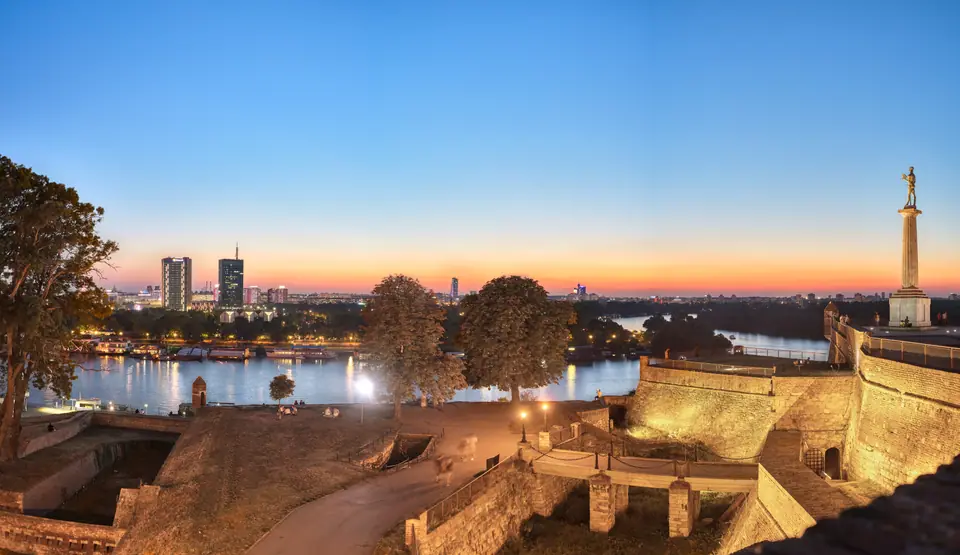
Photo: Petkozaric · CC BY-SA 4.0
Belgrade
A hillside river capital where Ottoman walls, Habsburg facades, Socialist blocks and late-night taverns meet above the Sava and Danube.
Quick decisions
How many days?
Three full days cover the fortress ridge, Stari Grad, Vracar and Zemun smoothly. Add a fourth day for Ada Ciganlija or Mount Avala.
Where to stay?
Dorcol and Stari Grad suit walkable city trips. Vracar brings residential calm near Hram Svetog Save, while Savamala suits late-night bars.
Do you need a car?
No. Urban buses, trams and trolleybuses run fare-free across the city, while street parking relies on mobile app payment and short time limits.
Best for
Layered Balkan history, bold twentieth-century concrete architecture, unhurried riverside promenades and traditional live-music kafana dining.
Before you go
Check the 24-hour police registration rule (beli karton), carry a valid entry stamp if connecting onward, and keep dinar cash for markets and bakeries.
Getting around
Urban GSP buses, trams, trolleybuses and city BG Voz services have carried passengers without tickets since January 2025; A1 airport minibuses and intercity coaches charge fares.
Overview
Belgrade (Beograd, meaning White City) stands where two major European rivers meet beneath a steep limestone ridge. Across two millennia the hilltop carried Roman Singidunum, Byzantine frontier garrisons, medieval Serbian fortifications, Ottoman mosques and Habsburg barracks.
Three contrasting urban personalities shape daily life. Historic Stari Grad and leafy Vracar occupy the older ridge on the right bank of the Sava. Residential New Belgrade spreads across wide Socialist-era boulevards on reclaimed left-bank marshland, and former Habsburg border town Zemun curves beneath tiled roofs along the Danube.
Getting there
Nikola Tesla Airport sits roughly 18 kilometres west of central Belgrade and links to Zeleni venac on fare-free bus 72, Beograd Centar (Prokop) on fare-free bus 600, or Slavija Square on the commercial A1 minibus. Official fixed-zone taxi vouchers from the arrivals TAXI INFO desk protect newcomers against unmetered cab scams.
Major rail and bus hubs shifted outside the old centre. Mainline trains call at Beograd Centar (Prokop) and Novi Beograd, including fast Soko services north to Novi Sad and Subotica, while the relocated Belgrade Bus Station (BAS) operates beside Novi Beograd railway station in Block 42.
Where to stay
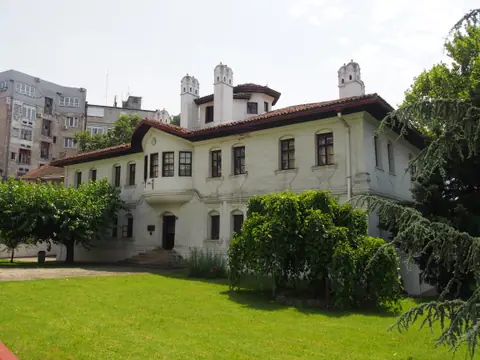
Base selection in Belgrade turns on walking tolerance versus late-night street noise. Dorcol and upper Stari Grad let visitors cross Knez Mihailova, Republic Square and Kalemegdan on foot, though bars along Strahinjića Bana and Skadarlija stay loud well past midnight.
Quiet tree-lined streets around Hram Svetog Save and Kalenic Market make Vracar reliable for families and longer stays. Belgrade Waterfront delivers modern lifts and reliable air conditioning beside the Sava, whereas Savamala and riverside venues vibrate with bass from spring through early autumn.
Things to do
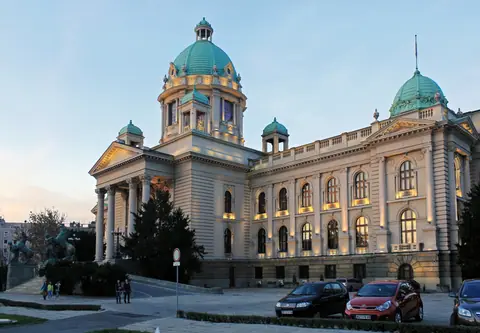
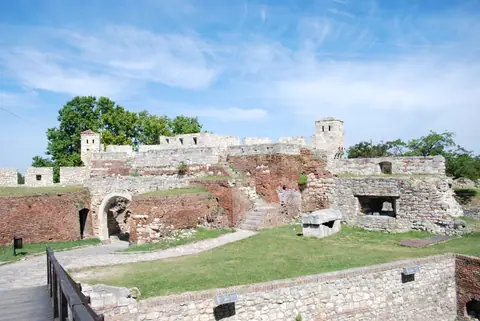
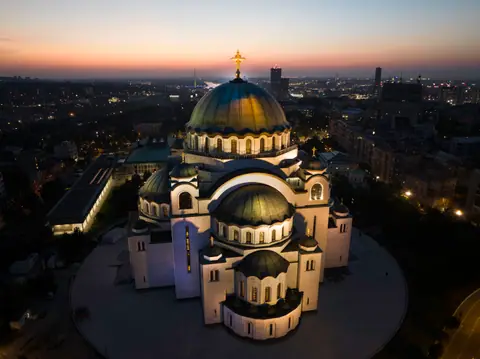
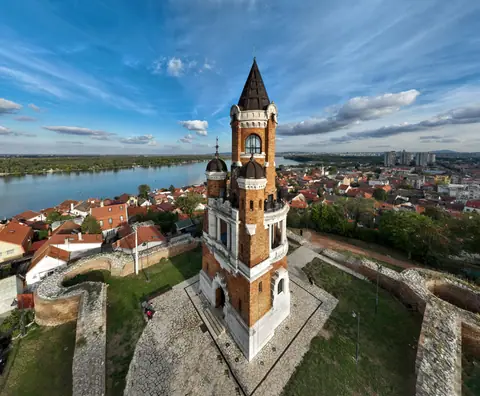
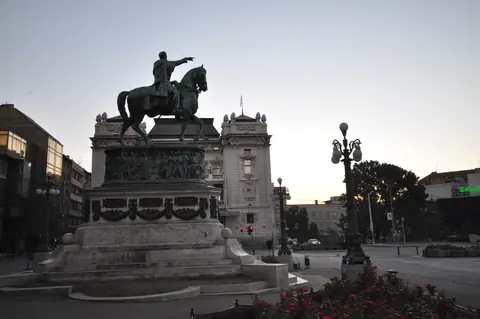
Begin on the Upper Town terraces of Belgrade Fortress where the Pobednik statue overlooks Great War Island, then descend through Zindan Gate to riverfront Nebojsa Tower. From Kalemegdan, pedestrian Knez Mihailova runs past the National Museum on Republic Square toward the gilded dome of the Church of Saint Sava and Nikola Tesla's villa in Vracar.
Balance the historic core with afternoon walks along the Danube in Zemun, architectural detours past the Museum of Contemporary Art and Genex Tower in New Belgrade, and warm-season cycling around Sava Lake at Ada Ciganlija.
Food and drink
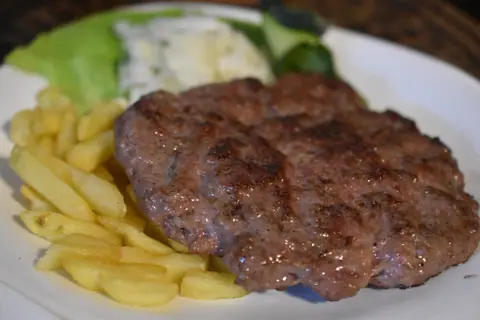
Belgrade kitchens run on slow-simmered pork and beef, wood-charred mincemeat, flaky savoury pastry and generous spoonfuls of aged clotted cream. Classic kafanas serve hand-shaped cevapi and spicy Gurmanska pljeskavica with stuffed cabbage sarma, baked prebranac beans and rolled Karadjordjeva schnitzel.
Morning errands revolve around neighbourhood bakeries selling layered round burek cut by weight and thick plain yoghurt. Open-air markets at Kalenic and Zeleni venac supply fresh fruit, smoked meats, ajvar pepper relish and homemade quince or plum rakija.
Culture
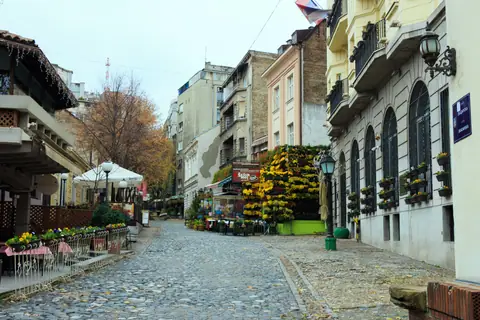
Local rhythm splits between slow daytime espresso in shaded courtyards and multi-hour evening meals accompanied by acoustic starogradska string bands in Skadarlija. Taverns open early and linger into the small hours, with domestic black coffee, fruit preserves and chilled rakija marking every social visit.
Public life spills outdoors from April through October onto riverfront promenades, Tašmajdan Park benches and Danube fish restaurants in Zemun. Winter shifts the city inside theatres, concerts at Kolarac Hall and steam-warmed kafana dining rooms.
Weather by month
Belgrade is warmest in August, with average highs around 30°C, and coldest in January, when nights drop to about -1°C. June is the wettest month by rainfall (96 mm), with rain on about 12 days. For mild weather with fewer rainy days, aim for September and October.
| Month | Low | Range | High | Rain | Rainy days |
|---|---|---|---|---|---|
| Jan | -1°C | 5°C | 48 mm | 14 d | |
| Feb | 1°C | 8°C | 44 mm | 12 d | |
| Mar | 4°C | 13°C | 49 mm | 11 d | |
| Apr | 9°C | 19°C | 52 mm | 12 d | |
| May | 13°C | 24°C | 72 mm | 14 d | |
| Jun | 17°C | 27°C | 96 mm | 12 d | |
| Jul | 18°C | 29°C | 67 mm | 10 d | |
| Aug | 19°C | 30°C | 55 mm | 8 d | |
| Sep | 14°C | 24°C | 59 mm | 10 d | |
| Oct | 9°C | 19°C | 55 mm | 11 d | |
| Nov | 5°C | 12°C | 50 mm | 11 d | |
| Dec | 1°C | 6°C | 55 mm | 14 d |
Averages of daily values from 2015 to 2024. Rainy days are days with at least 1 mm of rain. Source: Open-Meteo · Compare destinations by month.
Belgrade on the map
Every place we cover in Belgrade. Tap a category or pin to explore.
In-depth Belgrade guides
Browse the guides grouped by topic: sights, neighbourhoods, food, transport, day trips and trip planning.
Sights, Landmarks & Parks
Key monuments, viewpoints, museums and nature trails.
- Things to Do in Belgrade: Museums, Parks & ArchitectureCurated guide to Belgrade museums, Brutalist architecture, royal parks and day viewpoints beyond the main fortress.
- Belgrade Fortress & Kalemegdan: Upper Town to the RiverComplete walking guide across Belgrade Fortress and Kalemegdan Park: Upper Town gates, Pobednik terrace, Lower Town and riverside towers.
- Saint Sava & the Nikola Tesla Museum: Vračar HighlightsField guide to Vracar highlights: Saint Sava golden dome mosaics, St Lazar crypt, Nikola Tesla Museum live coil demos and nearby avenues.
Neighbourhoods & Where to Stay
Districts, historic quarters and the best bases for your stay.
- Where to Stay in Belgrade: Neighbourhoods & Noise GuideHonest Belgrade neighbourhood comparison covering walkability, street noise, salonac pre-war walk-ups, air conditioning and summer river bass.
- Zemun, Ada Ciganlija & the Riverfronts: Two Rivers, Two ShoresOutdoor riverside guide linking Danube quays in Zemun, Gardos Hill, Great War Island, Ada Ciganlija beaches and Sava Promenada paths.
Food & Drink
Local dishes, markets, cafés and dining districts.
- What to Eat in Belgrade: Grill, Bakery & Kafana TablesPractical guide to Belgrade cuisine: grilled roštilj meats, flaky burek bakeries, market staples, kafana customs and rakija etiquette.
- Skadarlija & the Kafana Tradition: Music & Historic TavernsAtmospheric guide to Skadarlija cobbled alley and Belgrade historic kafanas, acoustic folk bands, classic table orders and seating practicalities.
Getting Around & Arrival
Airport transfers, public transit, passes and driving rules.
Trip Planning & Itineraries
When to visit, what to pack and day-by-day routes.
- Belgrade Orientation: Rivers, Fortress & QuartersOrientation guide to Belgrade: river geography, Stari Grad monuments, Vracar hills, New Belgrade blocks and essential practical etiquette.
- Best Time to Visit Belgrade: Seasons, Wind & FestivalsMonth-by-month seasonal guide to Belgrade weather, packing layers, kosava wind spells, summer Ada beaches and cultural calendars.
Reviews
Log in to write a review.
No reviews yet.