Photo: Zairon · CC BY-SA 4.0
Saint-André Cathedral and the 231 Steps of Tour Pey-Berland
Inside Bordeaux's Gothic cathedral of royal weddings and its freestanding Flamboyant bell tower, with mandatory online timed-entry booking tips.
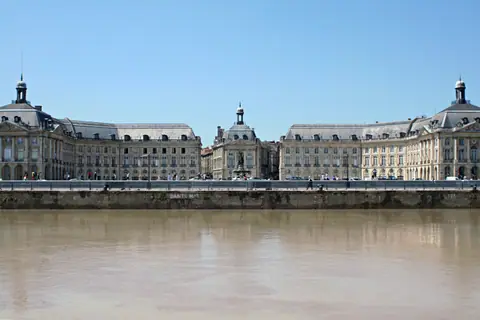
Three blocks inland from the 18th-century riverfront, Place Pey-Berland (pay behr-LAHN) trades classical theatre facades for soaring medieval limestone. Here rises the Primatial Cathedral of Saint-André, flanked by the neoclassical Palais Rohan on one side and its detached bell tower twenty metres off its eastern choir. Visiting both monuments together reveals centuries of Gascon church building, royal dynastic politics, and practical medieval engineering over soft river ground.
From Eleventh-Century Consecration to Royal Weddings
Carolingian charters record a church on this sanctuary ridge by 814 before Pope Urban II arrived in 1096 to consecrate an enlarged stone cathedral. Builders began a Romanesque nave before 1170, leaving a massive lower masonry wall that still anchors the western span. Beyond liturgical prestige, French and English royal ambitions repeatedly put Saint-André at the centre of European dynastic politics. Pilgrims heading south toward northern Spain paused beneath these vaults for blessings before crossing flat sandy pine country.
On 25 July 1137, fifteen-year-old Duchess Eleanor of Aquitaine married the future King Louis VII inside Saint-André, temporarily uniting south-western France with the Capetian crown. Following an annulment, her 1152 marriage to Henry Plantagenet tied Gascony to the English crown for three centuries. Nearly five hundred years later, in November 1615, King Louis XIII married Spanish Infanta Anne of Austria in the same sanctuary. Both the cathedral and its tower carry dual UNESCO protection. UNESCO listed them in 1998 under the Routes of Santiago de Compostela in France (reference 868) and again in 2007 within the Port of the Moon.
Single-Nave Vaults and Twin North Spires
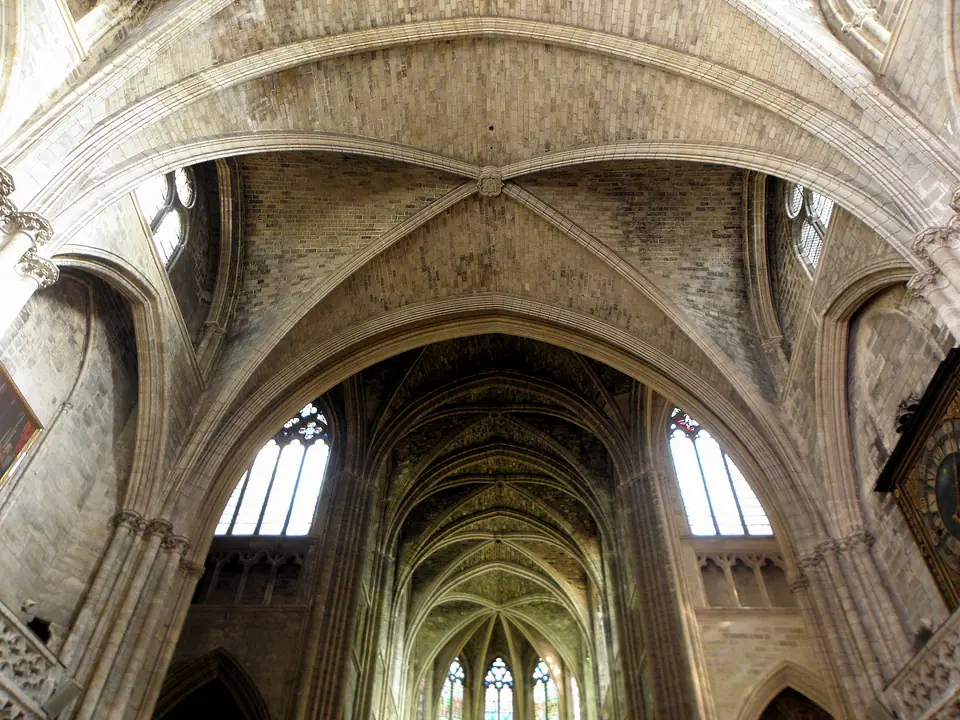
Stepping through the doors reveals an unexpectedly spacious interior plan. Unlike French cathedrals divided by dark side-aisle colonnades, Saint-André spans 124 metres along a broad single-aisle Romanesque-to-Gothic nave. That wide central sweep leads directly into an ambitious Rayonnant choir and ambulatory completed around 1320. Overhead ribs reach bright clerestory lancets, setting off the ornate 16th-century Renaissance stone rood gallery (jubé) relocated near the organ tribune. Delicate relief panels along that stone screen contrast sharply with thick medieval wall piers nearby. Inside the adjoining sacristy rooms, the Marcadé Treasury preserves illuminated liturgical manuscripts and ecclesiastical art. Quiet morning light streams down the eastern ambulatory stained glass before midday tour groups step onto the nave flagstones.
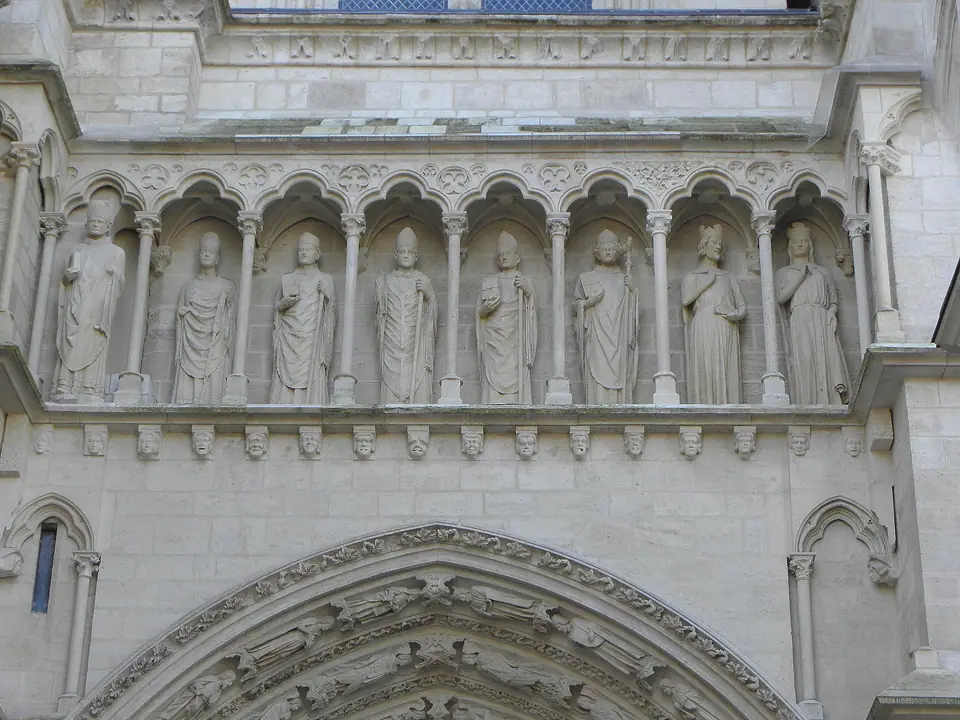
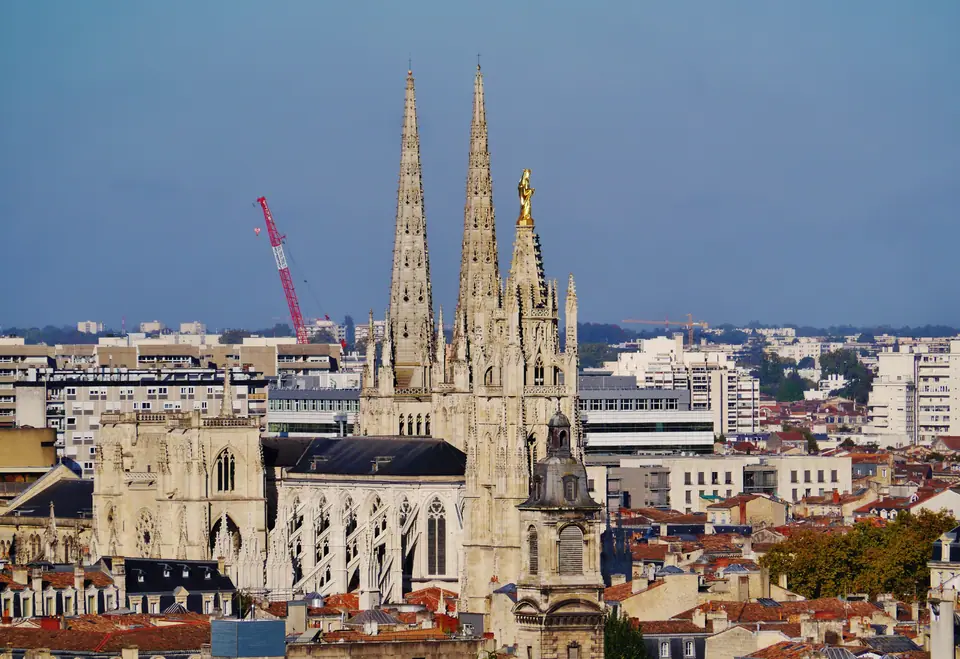
Walk around the exterior flanks to contrast two medieval sculpture programmes. Tucked along the southern transept flank, the Royal Portal (Portail Royal, carved between 1200 and 1250) preserves crisp sculpted apostles and a Last Judgement tympanum sheltered behind buttresses. On the northern facade facing Place Pey-Berland rises the taller North Portal (c. 1325 to 1350), crowned by twin Gothic stone spires climbing 81 metres skyward. After seventeenth-century storm damage, masons rebuilt those twin spires in 1665 and repaired them in 1952 and 1958. Walk behind the eastern chevet to admire soaring stone flying buttresses springing clear across the square. Tall tracery windows and delicate stone pinnacles catch afternoon glow across the square as trams glide quietly past below.
Why Tour Pey-Berland Stands Twenty Metres Apart
Soft, waterlogged subsoil near the Garonne estuary defeated normal church bell-tower plans. When Archbishop Pey Berland laid the cornerstone of a new belfry on 13 October 1440, builders placed its square eight-metre foundation twenty metres east of the cathedral apse. Keeping the tower detached ensured that heavy swinging bronze bells would never vibrate Gothic choir ribs into collapse. Masonry rose in elaborate Flamboyant Gothic lacework until completion around 1500.
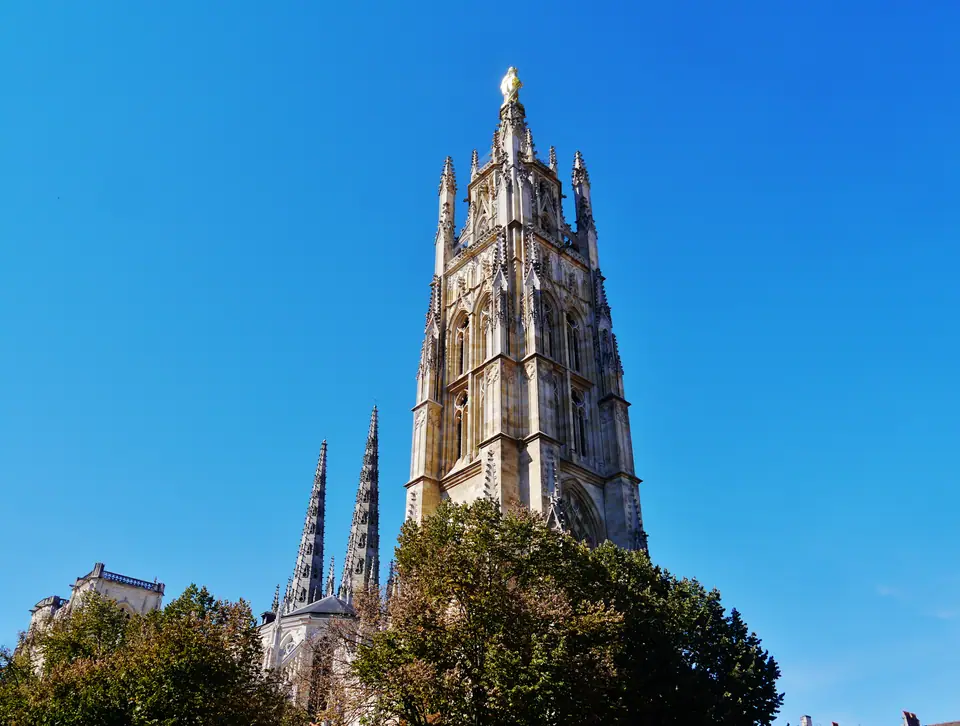
Its survival story reads unexpectedly. Lack of parish funds kept bells absent for centuries while the stone shaft housed tenants until 1790 and later doubled as a lead-shot factory during the Revolutionary era. A violent 1667 gale toppled the original 12.5-metre spire, which builders rebuilt in 1851 ahead of installing four Bollée foundry bells. The heavy Ferdinand-André II bourdon hangs on the lower level, while upper service bells gained electric motors in 1925. Since 1863, a gilded bronze statue of Notre-Dame d'Aquitaine has crowned the pinnacle 66 metres above ground.
Setting the belfry twenty metres clear of the apse saved Saint-André's fragile vaults from marshy subsoil vibrations and gave Bordeaux its finest high skyline lookout.
Timed Booking Rules and the 231-Step Climb
Ascending Tour Pey-Berland remains one of the sharpest vertical experiences in central Bordeaux, though tight medieval stonework dictates strict logistics. Expect a narrow spiral stone staircase climbing 231 steps (different surveys count 229 to 233 depending on threshold landings) past the heavy timber belfry frame. Tight stone exits lead onto narrow exterior viewing galleries at 40 metres and 50 metres above street level. From the upper terrace, terracotta rooftops trace the crescent river curve straight out toward the modern spire of La Cité du Vin and Place de la Bourse. Look west across Place Pey-Berland from the lower ledge to inspect the neoclassical garden courtyard of the Palais Rohan Hôtel de Ville. Clear mornings reveal the flat limestone horizon stretching east toward vineyard hills above the Garonne.
Because the staircase allows limited two-way passing and upper ledges hold small groups safely, Centre des Monuments Nationaux enforces mandatory advance online timed-entry booking through pey-berland.fr (or monuments-nationaux.fr). Do not arrive expecting walk-up tickets at the tower door. Even visitors qualifying for free entry (under-18s and EU residents aged 18 to 25) plus holders of the Bordeaux CityPass must reserve a specific time slot online before climbing. Allow extra minutes to cross security checks at the square entrance before your timed slot opens. Tram Lines A, B, and F stop steps away across Place Pey-Berland, making it effortless to pair a morning tower climb with quiet nave viewing below.
Where it is
- 1Saint-André Cathedral and the 231 Steps of Tour Pey-Berland
- Bordeaux–Mérignac Airport (BOD) · about 11 km from here in a straight line
- Directions in Google Maps
Stations and taxi ranks: OpenStreetMap. Airports: OurAirports. Distances are in a straight line.
Traveller tips
Real advice from people who have been to Bordeaux. Every tip is read by our team before it goes live.
No tips yet. Been here? Yours could be the first.
Thank you! Your tip will appear here after a quick review.
More in Bordeaux
Continue exploring Bordeaux with related neighbourhood, food, and planning guides