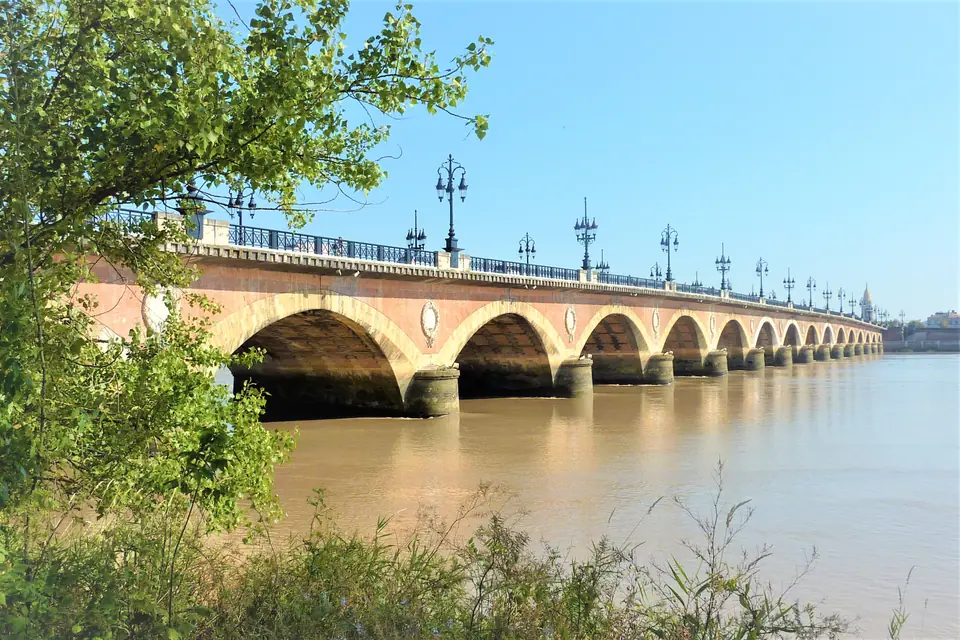
Photo: Patrick Despoix · CC BY-SA 3.0
Bordeaux on the Garonne: Stone Quays and Wine Trade
How Celtic Burdigala, three centuries of English trade, and 18th-century stone planning shaped Bordeaux into a walkable UNESCO river city.
Bordeaux reveals its maritime character the moment you reach the Garonne embankment. Rather than hiding behind medieval stone ramparts, the historic core opens straight onto a sweeping tidal river curve. Medieval charters named that crescent bend the Port de la Lune, or Port of the Moon. Pale Aquitaine limestone facades line traffic-calmed quays where modern trams glide past without overhead wires. Roughly 500 kilometres south-west of Paris, the commune recorded 267,991 residents across 49.36 square kilometres in the 2023 census. Its wider metropolitan area holds 1,426,278 people.
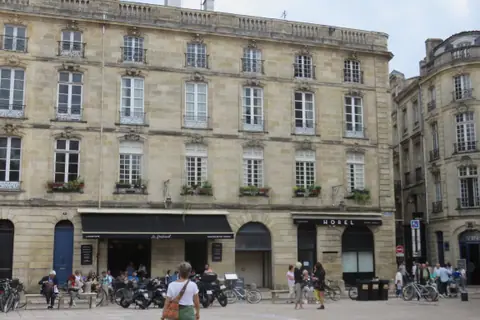
Walking across central streets shows how maritime trade reshaped the city more completely than royal castles ever did. Newcomers expecting dark medieval lanes find sunlit neoclassical boulevards, manicured stone balconies, and carved window keystones called mascarons. Behind those calm 18th-century street fronts sit narrow Gothic alleys, Roman amphitheatre stones, and modern wine halls. Flat gravel terrain connects almost every inner landmark smoothly on foot. Wide open river quays keep daily orientation effortless even on an unhurried afternoon walk.
Port of the Moon in Blonde Limestone
UNESCO inscribed "Bordeaux, Port of the Moon" in 2007 under reference 1256. The listing protects a 1,731-hectare urban core framed by an 11,974-hectare buffer zone. Over 362 listed historic monuments stand inside the city boundaries. That remarkable density puts Bordeaux second in France only to Paris for protected heritage structures. Royal intendants such as the Marquis de Tourny tore down cramped defensive walls during the 1740s and 1750s. They hired Paris architects Jacques and Ange-Jacques Gabriel to project open riverfront symmetry across former mudflats.
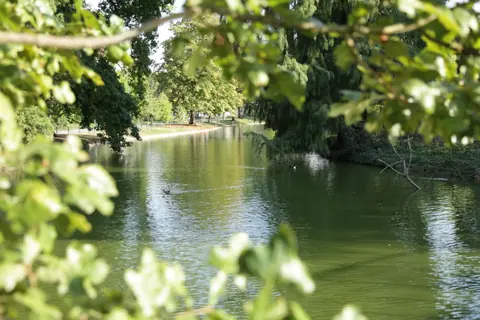
Soft local pierre de taille limestone gave builders uniform warmth across entire blocks. Victor Louis crowned the civic plan on 7 April 1780 by inaugurating the neoclassical Grand Théâtre. By 1835, the former archbishop's Palais Rohan (built between 1771 and 1784) became Bordeaux's Hôtel de Ville. Even public greenery followed that Enlightenment grid. Tourny laid out the 11-hectare Jardin Public in 1746 beside the northern merchant quarter, before 19th-century planners softened its formal geometry with winding ponds.
Celtic Burdigala Through English Gascony
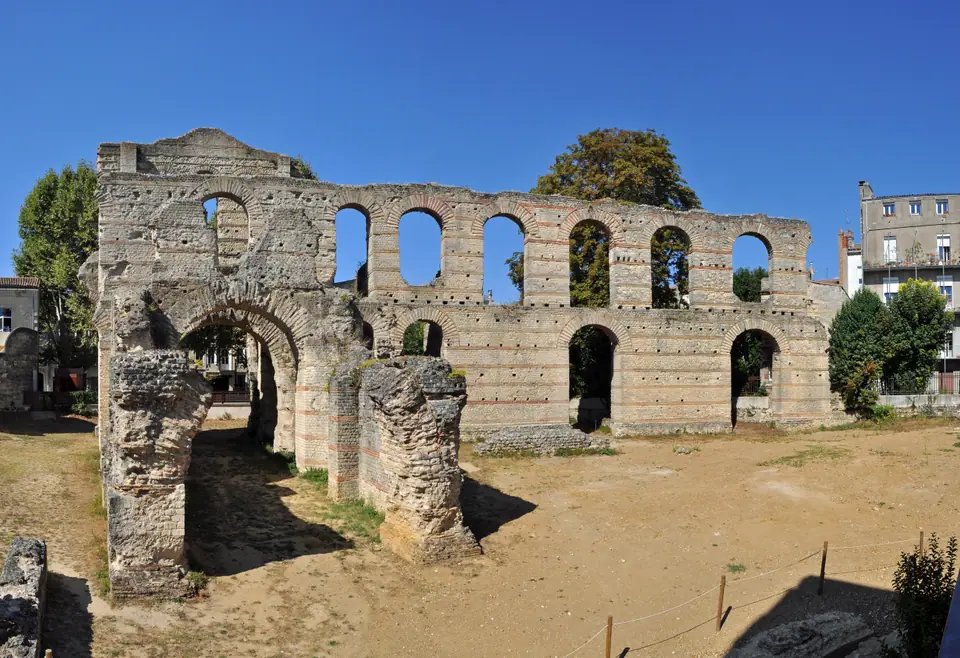
Urban settlement on this gravel terrace began over two millennia before neoclassical theatres opened. Celtic Bituriges Vivisci settlers founded Burdigala around 300 BC. Roman forces took control around 60 BC to build an Atlantic grain and wine hub. Walk ten minutes north-west from Place des Quinconces (kan-KAWNS) to inspect surviving brick and stone arches at the Palais Gallien. Built in the second century AD, its wooden tiers once seated 15,000 to 20,000 spectators. Structural consolidation works paused summer events there in 2026 ahead of a planned July 2027 return.
Medieval Bordeaux spent three centuries tied to England rather than Paris. In July 1137, Eleanor of Aquitaine wed future French king Louis VII inside Saint-André Cathedral. After an annulment, her 1152 marriage to England's future Henry II placed Gascony under Plantagenet rule. Bordeaux merchants shipped casks of pale claret up the English Channel while guarding town charters behind the 35-metre Porte Cailhau (dedicated in 1495) and the 15th-century Grosse Cloche belfry. French forces finally annexed the city after the 1453 Battle of Castillon, creating a regional Parliament in 1462. National governments also relocated briefly to Bordeaux during wartime crises in 1870, 1914, and 1940.
Bordeaux reads like an open ledger in cut stone, where every boom in maritime shipping financed a wider ring of squares, theatres, and merchant cellars.
Atlantic Wealth, Museums and Civic Space
Honest travel planning requires facing how those radiant 18th-century stone mansions were paid for. Bordeaux thrived not solely on estate vineyards, but on Atlantic colonial commerce in sugar, coffee, indigo, and enslaved African people until France abolished slavery in 1848. Reopened in May 2025 after a six-month overhaul, the Musée d'Aquitaine houses a dedicated World Heritage interpretation hall. Its upgraded galleries examine both the golden age in cut stone and its triangular-trade foundations through sober historical records.
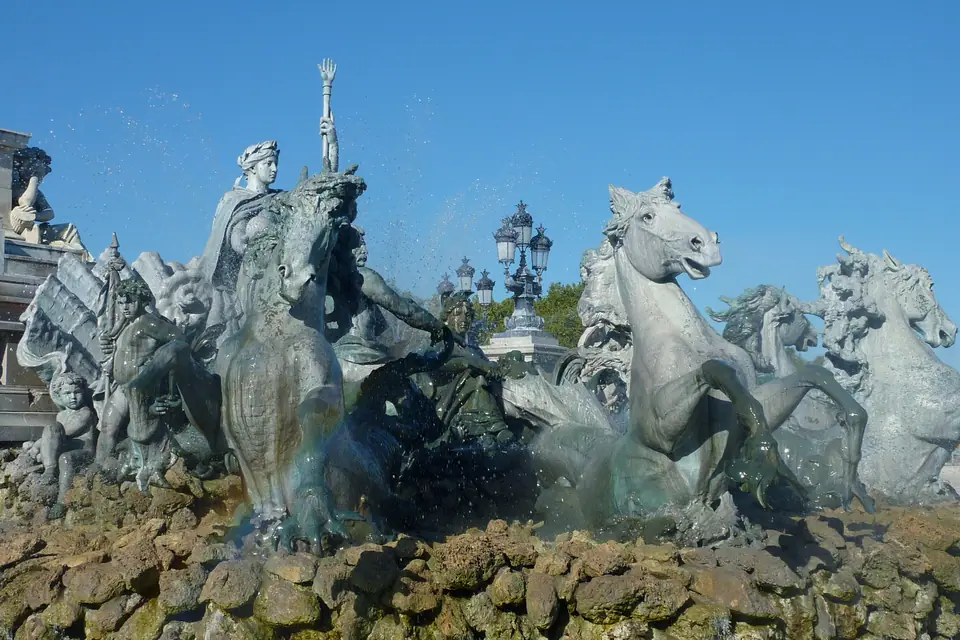
Grand public spaces anchor daily life across the former harbour aprons today. Spanning 12 hectares between the centre and Chartrons (shar-TRAWN), Place des Quinconces ranks as one of Europe's largest city squares. Its wide gravel promenade leads up to the bronze sea-horses of the Monument aux Girondins. Southward runs Rue Sainte-Catherine, stretching 1.2 kilometres from Place de la Comédie down to Place de la Victoire as a lively pedestrian spine. Opposite the old port stairs, Place de la Bourse and the Miroir d'eau turn the former dockyard quay into Bordeaux's favourite gathering terrace.
How Trams, Bridges and Neighbourhoods Connect
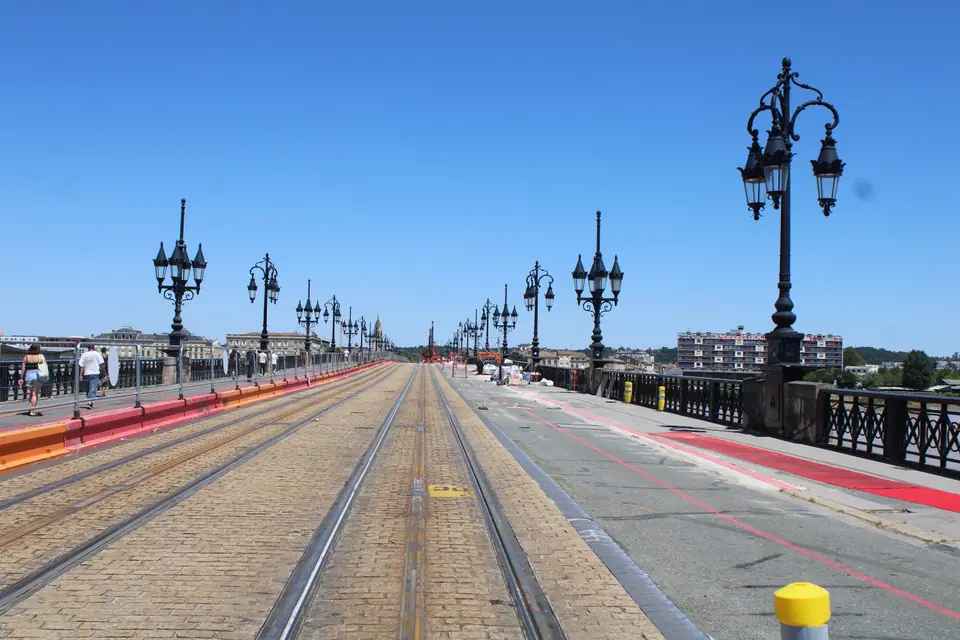
In the late 1990s, Bordeaux cleared parked cars off its riverfront and introduced Alstom APS ground-level power along central tram tracks. Keeping third-rail power underground spared historic facades from tangled overhead wires. Crossing the 17-arch Pont de Pierre (opened on 1 May 1822) highlights that shift toward slower travel. Since May 2025, a 52-month structural reinforcement has banned private cars and buses from the bridge while keeping pedestrian paths and cycle lanes open year-round. Strong estuary tides still flush silt past its piers twice daily, giving the Garonne its distinct ochre tint.
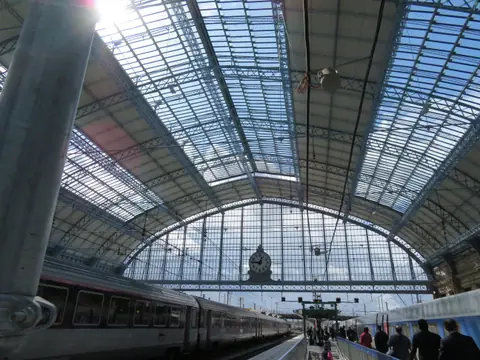
Each inner quarter offers a clear rhythm across a three-day visit. Follow our river-to-dock walking circuit between medieval gates and Bacalan (bah-kah-LAHN). Sleep in Saint-Pierre, Chartrons, or La Bastide, and ride regional trains 35 kilometres east to Saint-Émilion. High-speed trains connect Bordeaux onward to Lyon and Brussels once your Atlantic stay concludes. Dedicated riverside paths encourage calm walking and cycling from southern docks up to northern shipyards. Even lingering on a riverside bench watching Le Bato catamarans glide past shows how smoothly the Port of the Moon remains an everyday waterway.
Where it is
- 1Bordeaux
- Bordeaux–Mérignac Airport (BOD) · about 11 km from Bordeaux in a straight line
- Directions in Google Maps
Stations and taxi ranks: OpenStreetMap. Airports: OurAirports. Distances are in a straight line.
Traveller tips
Real advice from people who have been to Bordeaux. Every tip is read by our team before it goes live.
No tips yet. Been here? Yours could be the first.
Thank you! Your tip will appear here after a quick review.
More in Bordeaux
Continue exploring Bordeaux with related neighbourhood, food, and planning guides