Photo: FrDr · CC BY-SA 4.0
La Cité du Vin and Decoding Bordeaux Wine Country
Inside XTU Architects' 55-metre wine lighthouse in Bacalan, CityPass access tips, and how Left Bank 1855 châteaux contrast with Right Bank appellations.
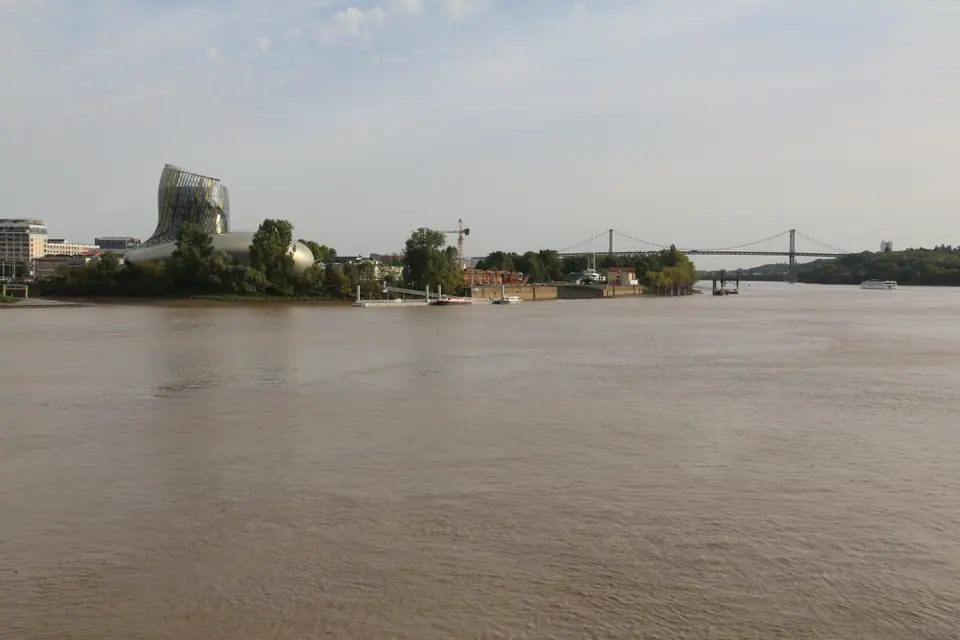
Few European cities anchor their global reputation so thoroughly around one agricultural craft, yet Bordeaux's historic port holds surprisingly few working vines inside city limits. Real wine estates ripple outward across river gravel ridges and limestone valleys in Gironde instead. To connect urban pavements with that surrounding terroir, Bordeaux inaugurated La Cité du Vin on 31 May 2016 along the regenerated Bacalan (bah-kah-LAHN) docks. Public doors opened the following day on 1 June 2016.
Swirling Timber Architecture on the Bacalan Docks
Paris studio XTU Architects (Anouk Legendre and Nicolas Desmazières) designed this 10-level landmark to evoke wine swirling inside a crystal glass or gnarled vine trunks beside river eddies. Covering 13,350 square metres beneath an iridescent glass-and-aluminium skin, its asymmetrical spire climbs 55 metres above the Garonne embankment beside Pont Jacques Chaban-Delmas. Passing one million visitors by autumn 2018 and two million in May 2022, the pavilion anchors Bassins à Flot's shift from quiet shipyards into Bacalan's modern dining hub.
Inside the Permanent Exhibition and the Belvedere
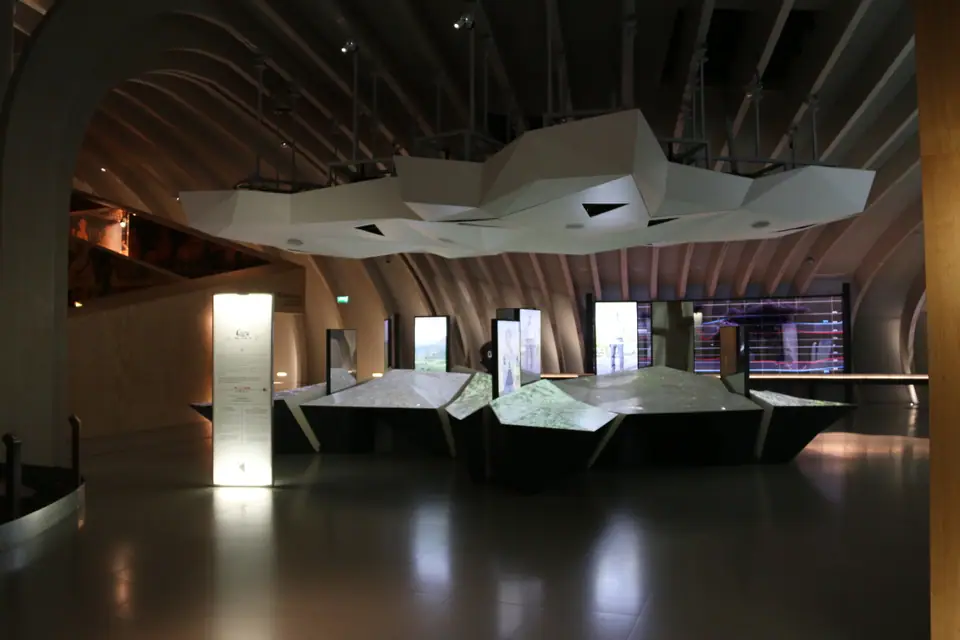
La Cité du Vin avoids the feel of a dry bottle archive focused on local labels. Instead, the centre treats wine as global cultural history across 3,000 square metres of permanent interactive space. Handheld multilingual audio companions sync automatically with twenty themed areas as you wander past suspended giant wine tables, aroma domes, shipping simulators, and filmed grower interviews. Sniffing glass aroma bells of cedar, wet slate, and orchard fruit sharpens your nose before tasting a drop. Exhibits skip dense textbook jargon, framing wine geography clearly for seasoned collectors and casual drinkers alike. Allow two to three hours so you can engage with sensory stations without rushing before riding the lift upward.
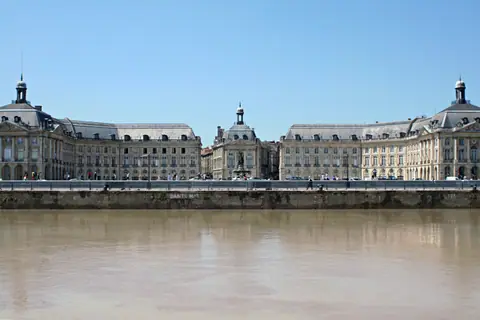
Every general exhibition ticket concludes on the eighth-floor Belvédère, floating 35 metres above the dockside beneath a sculptural chandelier of suspended glass bottles. Panoramic walkways trace the bend of the Garonne south toward Place de la Bourse and Saint-André's distant spires. Sommeliers pour one included glass from a rotating global selection of Bordeaux, European, and New World wines or organic grape juice. Fresh river air on the outer viewing terrace lets you linger over the final sip while watching barges round the waterfront curve.
How Bordeaux CityPass and Tram Access Work
Reaching the riverfront entrance takes 15 minutes from Place des Quinconces aboard Tram Line B (La Cité du Vin stop). Alternatively, Le Bato 1 and Le Bato 2 catamarans dock on the quay opposite Halles de Bacalan. Understanding pass mechanics prevents turnstile surprises. Travellers holding the physical Bordeaux CityPass (exchanged at the downtown Tourist Office if bought online) do not reserve online slots on laciteduvin.com. Present your active physical card straight at the museum reception desk for permanent-exhibition and Belvedere entry, free of earlier midday surcharges. Arriving near morning opening still helps avoid afternoon queues, while temporary art exhibitions carry separate rules.
Left Bank Gravel Versus Right Bank Limestone
Stepping outside the museum makes the broader regional map suddenly legible. Governed under the Conseil Interprofessionnel du Vin de Bordeaux (CIVB), the wider wine region spans 65 AOC appellations and roughly 4,600 to 5,000 active winegrowers and estates. Following state-supported vine-pull programmes clearing around 9,500 to 10,000 hectares in 2024 and 2025 to rebalance global supply, Bordeaux's producing vineyard surface sits near 86,000 to 90,000 hectares. That footprint sits lower than historical peaks above 110,000 hectares yet remains France's powerhouse of blended red, dry white, and sweet wines.
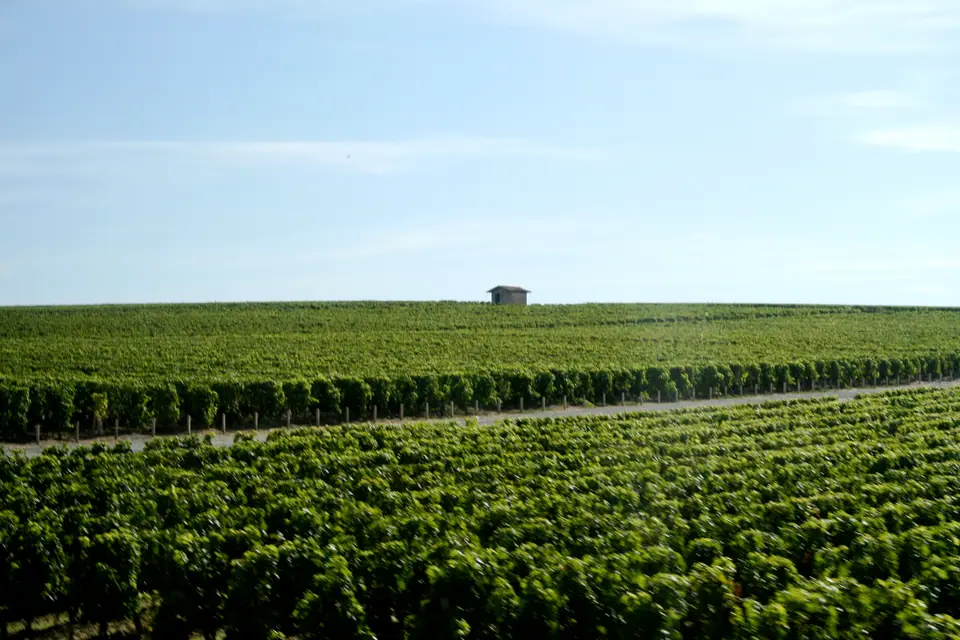
Two waterways split Bordeaux's wines into contrasting styles. West of the Garonne and Gironde lies the Left Bank (Médoc, Haut-Médoc, Pessac-Léognan, Graves, and botrytised sweet Sauternes and Barsac). Deep pebble gravel banks deposited by Pyrenean rivers drain rainfall cleanly and reflect warmth onto late-ripening Cabernet Sauvignon vines. East of the Garonne and Dordogne rises the Right Bank (Saint-Émilion, Pomerol, and Fronsac). Cooler clay and limestone plateaux favour plush Merlot blended with Cabernet Franc, while rolling hills between both rivers produce crisp Entre-Deux-Mers whites.
Fixed 1855 Châteaux Versus Revised Right Bank Estates
Nowhere do those two banks diverge more sharply than in how châteaux earn official rank. Emperor Napoleon III commissioned the celebrated 1855 Bordeaux Classification for the Paris Exposition Universelle. Brokers ranked leading Left Bank red properties across five growths (crus) purely by long-term trading prices, adding a separate sweet-wine tier for Sauternes and Barsac. That list of 61 red châteaux (led by First Growth icons Lafite, Latour, Margaux, Haut-Brion, and Mouton Rothschild) has held virtually unchanged since 19th-century rankings. Just two alterations occurred: adding Château Cantemerle in 1856 and elevating Mouton Rothschild to First Growth in 1973.
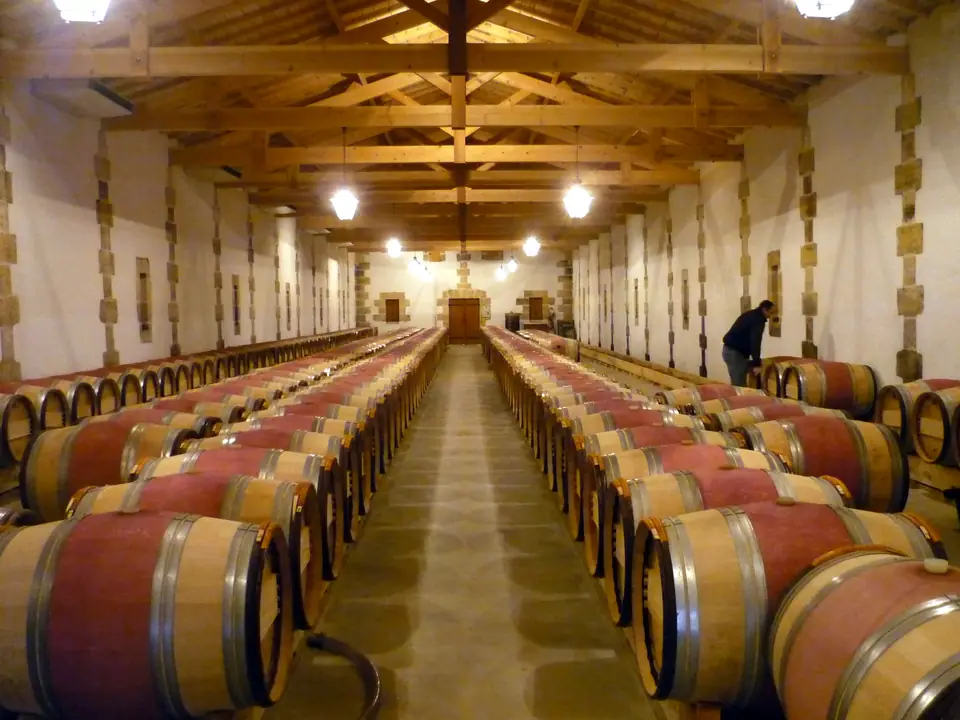
Across the Dordogne, Saint-Émilion launched its own official classification exactly one century later in 1955 on opposite principles. Estates re-apply roughly every ten years so blind tastings, cellar consistency, and vineyard stewardship govern promotion. Its 2022 revision classified 85 estates across Premier Grand Cru Classé and Grand Cru Classé tiers, rewarding sustained cellar quality over static 19th-century pedigrees.
Urban Tasting Bars and Planning Winery Visits
Bordeaux's classified châteaux sit across rural villages north in the Médoc, south in Graves, and east toward Libourne. Inside central Bordeaux, casual drop-in tastings depend on wine bars and tasting rooms rather than castle gates. Book seated workshops at the CIVB École du Vin opposite the Tourist Office on Cours du XXX Juillet for structured flights without leaving Tram Line B. Visiting nearby Chartrons wine bars lets you sample independent grower bottles by the glass without hiring a car for countryside lanes. Arrange vineyard estate appointments weeks ahead when travelling outside harvest rush. When finished along the docks, ride Le Bato river shuttles back toward downtown squares.
Where it is
- 1La Cité du Vin and Decoding Bordeaux Wine Country
- Bordeaux–Mérignac Airport (BOD) · about 14 km from here in a straight line
- Directions in Google Maps
Stations and taxi ranks: OpenStreetMap. Airports: OurAirports. Distances are in a straight line.
Traveller tips
Real advice from people who have been to Bordeaux. Every tip is read by our team before it goes live.
No tips yet. Been here? Yours could be the first.
Thank you! Your tip will appear here after a quick review.
More in Bordeaux
Continue exploring Bordeaux with related neighbourhood, food, and planning guides