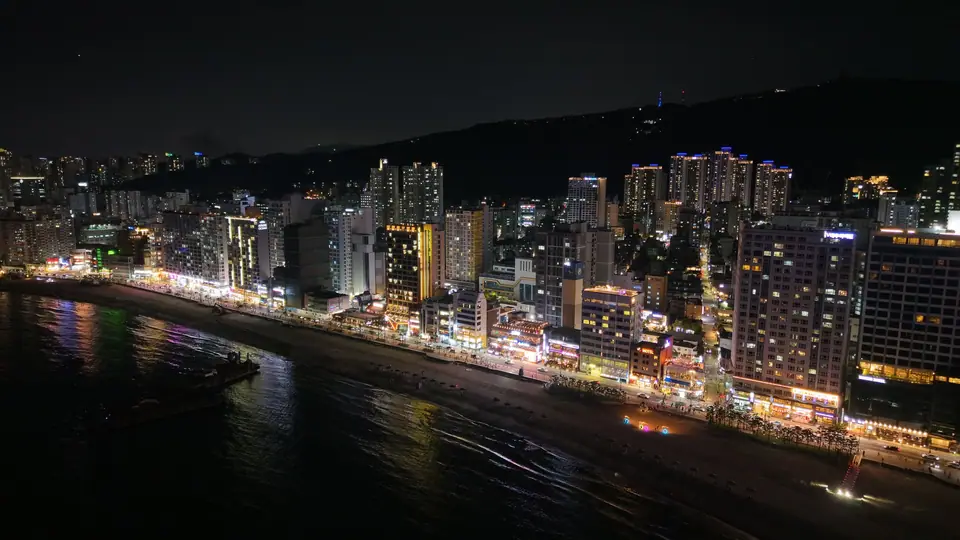
Haedong Yonggungsa, Beomeosa, Coastal Walks and What to Eat in Busan
Oceanfront and mountain temples, dramatic coastal boardwalk hikes and six signature Busan dishes.
Two things set Busan apart from every other city in Korea: dramatic Buddhist temples perched both on wave-battered sea cliffs and granite mountain ridges, and a distinct southeastern coastal cuisine shaped by the harbour and wartime resilience.
Two contrasting temples and two coastal walks
- Haedong Yonggungsa Temple (the ocean cliff temple in Gijang): while most Korean temples hide in mountain forests, Haedong Yonggungsa (founded in 1376) cascades down jagged granite cliffs right above the crashing East Sea surf north of Songjeong and Haeundae. Walk past the twelve zodiac statues, cross the stone bridge over the sea inlet, and climb 108 stone steps beneath a bamboo canopy to the gilded Goddess of Mercy and the sunrise rock opposite the main Daeungjeon hall.
- Beomeosa Temple (the mountain Zen monastery on Geumjeongsan): at the northern end of Metro Line 1 (Beomeosa Station, then Bus 90), Beomeosa was founded in 678 CE by Master Uisang of the Silla Kingdom. Enter through the 17th-century Iljumun (One-Pillar Gate) resting on four granite columns to explore courtyard halls backed by Geumjeongsan Fortress.
- Oryukdo Skywalk, Igidae Coastal Walk and Taejongdae: start at Oryukdo Skywalk (where a U-shaped glass bridge cantilevers 35 metres above the rocks facing the Oryukdo islets) and follow the 4.7-kilometre Igidae Coastal Walk along wooden cliffside stairways looking across the bay to Haeundae. On Yeongdo Island, the forested headland of Taejongdae loops past a white cliffside lighthouse via the open-air Danubi road train.
Five signature Busan dishes you cannot find quite the same in Seoul
Whether you graze through Jagalchi and BIFF Square or dine in Seomyeon and Millak-dong, seek out these five local icons:
- Dwaeji Gukbap (Pork and Rice Soup): milky, rich broth simmered for hours from pork bones, served boiling in an earthenware pot with sliced pork, rice, chives, spicy seasoning paste (dadaegi) and tiny salted shrimp (saeujeot) along Seomyeon Dwaeji Gukbap Alley or Haeundae Market.
- Milmyeon (Busan Wheat Noodles): invented in Busan during the Korean War using wheat flour mixed with sweet potato starch; served icy cold in tangy meat broth (mul-milmyeon) or tossed in spicy chilli sauce (bibim-milmyeon).
- Ssiat Hotteok (Seed-Stuffed Sweet Pancake): pan-fried dough filled with melted brown sugar and cinnamon, snipped open and packed with roasted sunflower seeds, pumpkin seeds and peanuts at BIFF Square.
- Hoe (Sliced Raw Fish) & Grilled Shellfish (Jogae Gui): translucent slices of live white fish wrapped in perilla leaf with chojang chilli paste at Jagalchi, or scallops grilled over charcoal at Cheongsapo.
- Busan Eomuk (Fish Cake) & Nakgopsae: artisanal fish-cake skewers at Samjin Amook, plus bubbling pans of nakgopsae (octopus, beef tripe and shrimp stir-fried with glass noodles).
Traveller tips
Real advice from people who have been to Haedong Yonggungsa, Beomeosa, Coastal Walks and What to Eat in Busan. Every tip is read by our team before it goes live.
No tips yet. Been here? Yours could be the first.
Thank you! Your tip will appear here after a quick review.
More in Busan
Continue exploring Busan with related neighbourhood, food, and planning guides