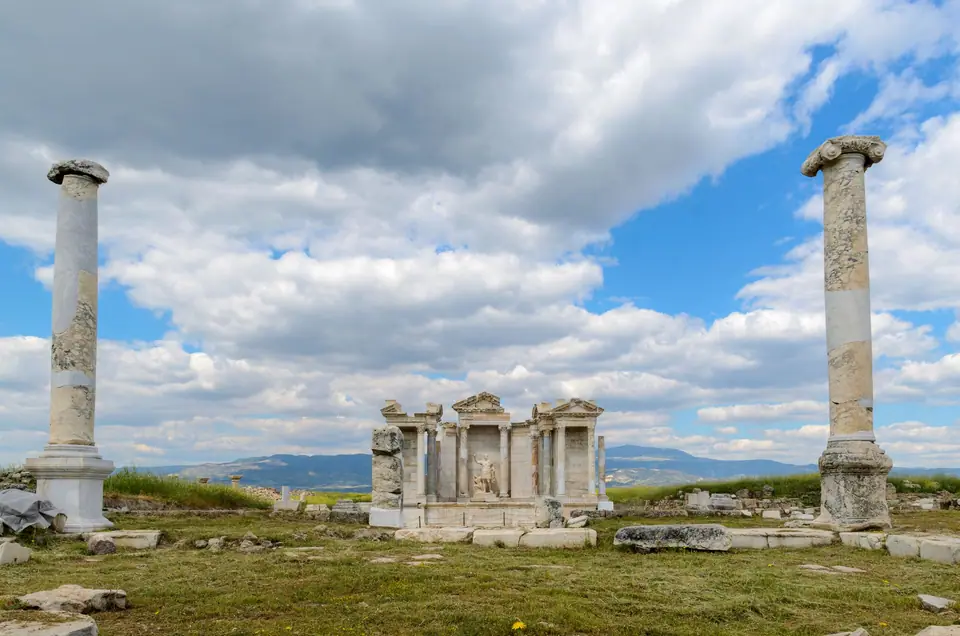
Laodicea Ancient City: Colonnades, Frescoes and the Seven Churches
Exploring the best-restored Roman metropolis in the Lycus Valley just ten minutes north of central Denizli.
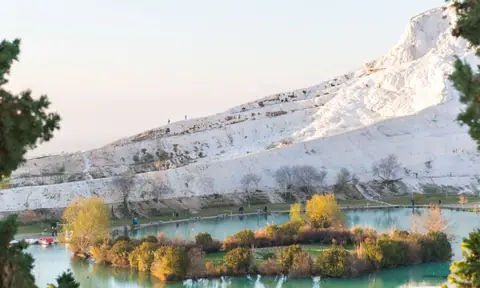
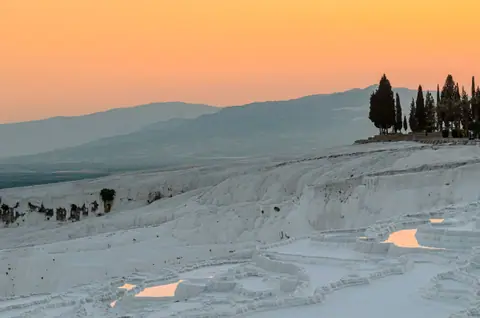
Set on a low flat-topped plateau just six kilometres north of downtown Denizli, directly between the city and the white cliffs of Pamukkale, which gleam in full view across the valley, Laodicea on the Lycus (Laodikeia) is the sleeper masterpiece of southwestern Turkish archaeology. While coach crowds pack Hierapolis ten kilometres away, you can often walk Laodicea's monumental colonnaded streets, glass-floored basilicas and newly restored Roman theatres with barely another visitor in sight.
Why Laodicea was so wealthy in antiquity
Founded between 261 and 253 BC by the Seleucid king Antiochus II and named after his wife Queen Laodice, the city sat at the exact crossroads of the great trade highway from Ephesus and the Aegean coast up into central Anatolia. Under the Roman Empire it became a major banking, medical school and textile powerhouse, famous across the Mediterranean for a breed of sheep yielding soft, glossy raven-black wool (Laodicean trimita tunics) and for an ophthalmic eye-salve powder (Phrygian stone). So rich were its citizens that when a catastrophic earthquake levelled the city in 60 AD during the reign of Nero, Laodicea famously refused imperial disaster aid from Rome and rebuilt itself entirely from its own treasury.
What to see on a two-hour walk through Laodicea
Led since 2003 by Prof. Celal Şimşek and Pamukkale University, year-round excavations and anastylosis (re-erecting original fallen columns) have transformed Laodicea into one of the most legible Roman cities in Turkey:
- Syria Street and the Central Agora: enter past the parking plaza onto the paved main east-to-west artery, lined with re-erected portico columns, shops and a deep stone sewer channel underneath.
- Temple A and the glass skywalk: a Corinthian temple courtyard dedicated to Apollo, Artemis and the imperial cult, where you walk across the tempered glass deck over the vaulted subterranean archive chambers.
- The Church of Laodicea (One of the Seven Churches of Revelation): addressed in the Book of Revelation with the famous metaphor of being neither cold like the mountain waters of Colossae nor hot like the thermal springs of Hierapolis, but lukewarm. Covered by a protective steel shelter with raised glass walkways, this early-fourth-century cathedral preserves mosaic pavements, marble opus sectile floors and an intact cruciform baptistery pool.
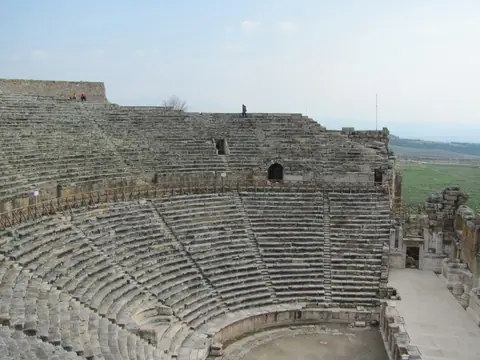
- The Western Theatre and North (Sacred) Agora: the Hellenistic-Roman Western Theatre has been fully restored to seat 15,000 spectators and once again hosts occasional concerts, while the vast North Agora features rows of monolithic marble columns reflected in a shallow pool.
- The Painted Trajan Nymphaeum and House With Peristyle (Church House): do not miss the enclosed residential complex where archaeologists have painstakingly reassembled thousands of fragments of colourful Roman wall frescoes, alongside Turkey's largest ancient Stadium-Amphitheatre (285 metres long) on the southern rim of the plateau.
How to reach Laodicea from Denizli or Pamukkale
Take any Pamukkale or Karahayıt minibus (Route 70) from the lower level of the Denizli Otogar and tell the driver "Laodikeia", and he will drop you at the signed highway turn-off (a 1.2 kilometre walk up the gentle access road to the ticket booth), or take a ten-minute taxi straight to the gate. Museum Pass Türkiye is valid.
Traveller tips
Real advice from people who have been to Laodicea Ancient City: Colonnades, Frescoes and the Seven Churches. Every tip is read by our team before it goes live.
No tips yet. Been here? Yours could be the first.
Thank you! Your tip will appear here after a quick review.
More in Denizli
Continue exploring Denizli with related neighbourhood, food, and planning guides