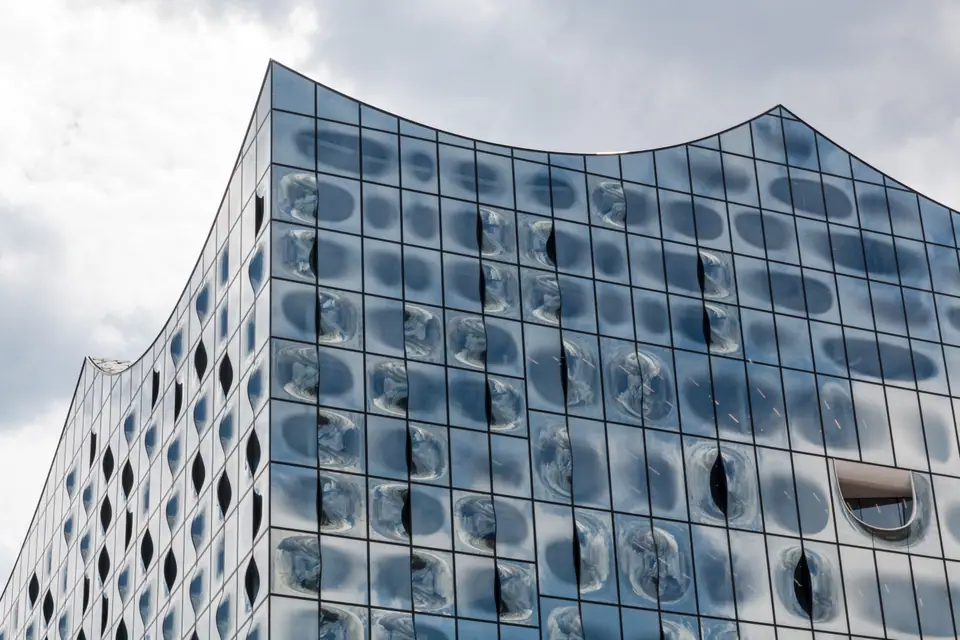
Photo: Dietmar Rabich · CC BY-SA 4.0
The Elbphilharmonie Plaza, Brick Sheds and HafenCity
How a 1963 cocoa warehouse became Hamburg's glass concert icon and anchored a vast dockland quarter.
Kaispeicher A: The 1963 Cocoa Warehouse Pedestal
Walk to Platz der Deutschen Einheit 1 (20457) on the tip of Grasbrook peninsula. Here Hamburg anchored bold glass geometry directly atop heavy working dockland masonry. Rather than bulldozing the wharf empty, Swiss architects Herzog & de Meuron preserved Kaispeicher A, a sturdy brick warehouse built by Werner Kallmorgen between 1963 and 1966 to replace bombed docks. Barges once moored right under its hoists to unload heavy sacks of cocoa beans, loose tea and tobacco.
Builders gutted that windowless masonry shell to install multi-level parking and deep reinforced concrete piles driven through alluvial silt. Yet the rugged dark outer brickwork stayed intact. Walk along the broad western quay to read loading-bay recesses and thick weathered brick before entering the lobby. Steel hoisting frames once swung river freight up into these lofts while freighters waited along quiet timber fenders below. Standing beside its clean brown flank ties Hamburg's famous landmark visually to neighbouring Speicherstadt sheds instead of cutting it loose from port history. Riverfront paths also link this peninsula tip west toward Landungsbrücken piers or north into Neustadt.
Herzog & de Meuron's Glass Wave Crown
Rising sharply off that flat warehouse roof sits a bold glass crown cresting at 108 metres on its western point. Foundation stones went down in April 2007, followed by famous cost debates and engineering delays. A November 2016 test concert preceded the official grand opening on 11 January 2017. Roughly 1,100 curved glass panels formed from 2,200 ceramic-printed panes bounce grey North Sea clouds, bronze evening sun and river ripples like tall wind sails. Upper wings house private residences and a hotel beside public foyers. Low afternoon sun turns curved window bays golden above passing barges along Grasbrook, while grey coastal squalls wash crisp reflections straight down toward steel mooring bollards.
Massive steel spring bearings suspend the concert core to block out rumbling barges and tug horns below. Japanese acoustician Yasuhisa Toyota sculpted the 2,100-seat Grand Hall in terraced vineyard seating completely surrounding the stage. That close seating bowl keeps every listener tight to performers behind 10,000 interlocking gypsum-fibre panels nicknamed the White Skin. Intimate partner spaces include the 550-seat Recital Hall and 170-seat Kaistudio for classical, jazz and experimental shows. Reserve concert seating far ahead on official schedules, and bring layers for outdoor balconies after performances end. From river ferries outside, watch how passing rain squalls shift the roof's glass mirror from slate grey to bright silver.
The Tube Escalator and Public Plaza Deck
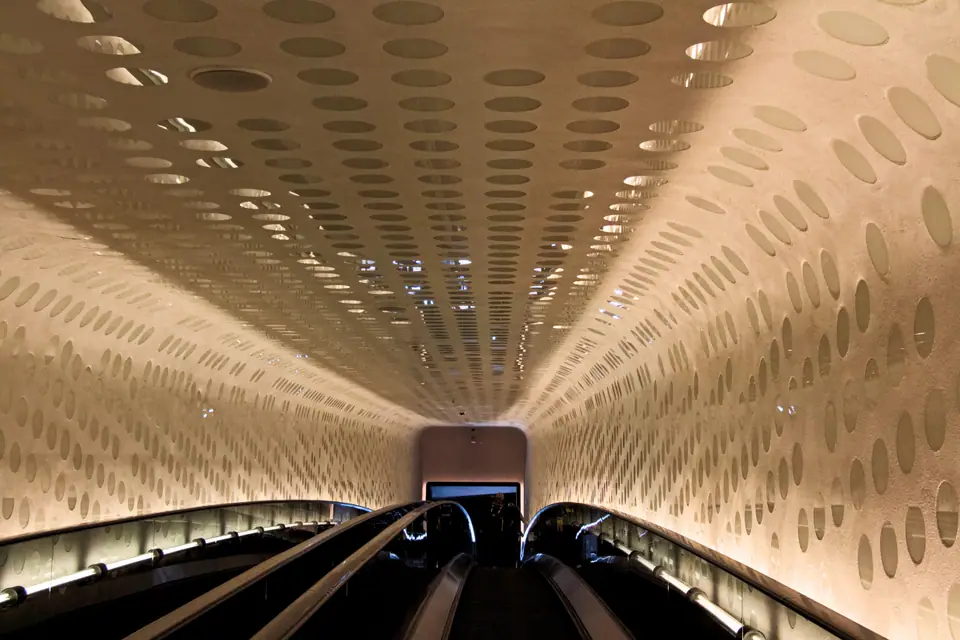
City planners wisely kept the horizontal seam between old brick base and new glass wave open to everyday walkers. Stepping inside the entrance hall drops guests onto the Tube, an 82-metre curved escalator lined with shimmering glass paillettes and cited as Western Europe's longest curved escalator. Because the luminous arc curves smoothly upward, river views stay deliberately hidden until the bright upper panorama window opens. Soft overhead lamps glow against curved white plaster before opening straight onto a bright, airy landing framed by dark port chimneys.
One shorter escalator then lifts visitors onto the open 360-degree Plaza terrace 37 metres above the Elbe. Walk all the way round this breezy brick-and-glass deck to read every harbour quarter at once. Spot Cap San Diego moored west off Überseebrücke, Michel's tall copper spire above Neustadt, warehouse gables northward and dry docks across the Elbe. Carry a windproof layer even in summer because steady estuary gusts blow sharply along open corners.
Plaza entry runs on timed passes. Same-day tickets issue free in person at the visitor pavilion across the road while daily capacity lasts. Advance online reservations on elbphilharmonie.de carry a modest service fee. Early morning or dusk slots help visitors dodge midday coach congestion and warm their hands at indoor espresso counters. Concert ticketholders walk up free two hours before performance time; verify current opening hours online before walking down.
Flood-Proof Warften and U4 HafenCity Access
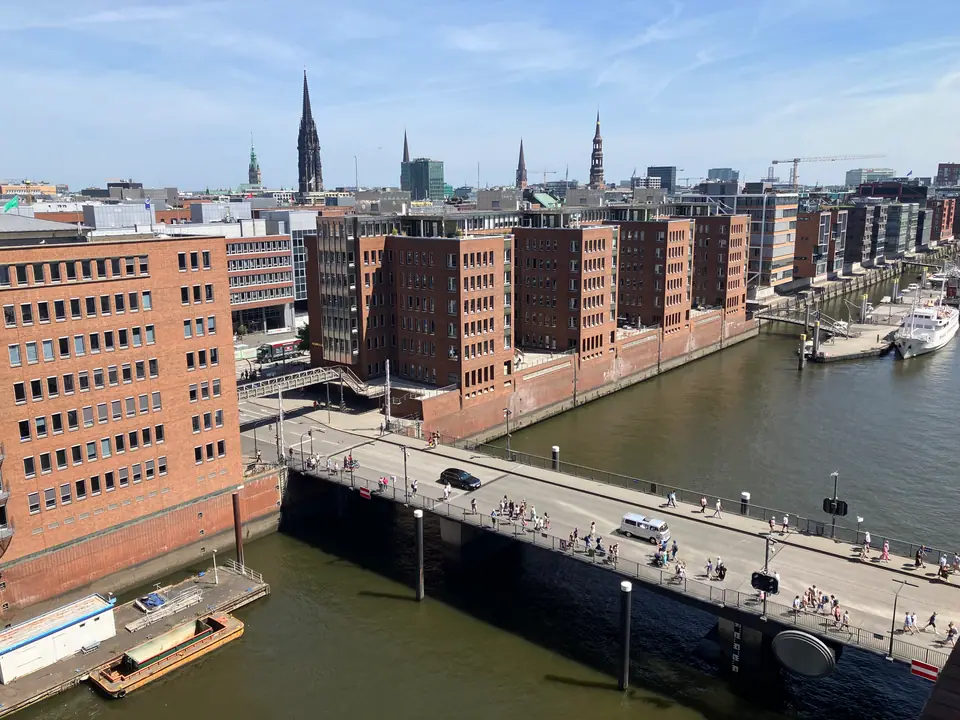
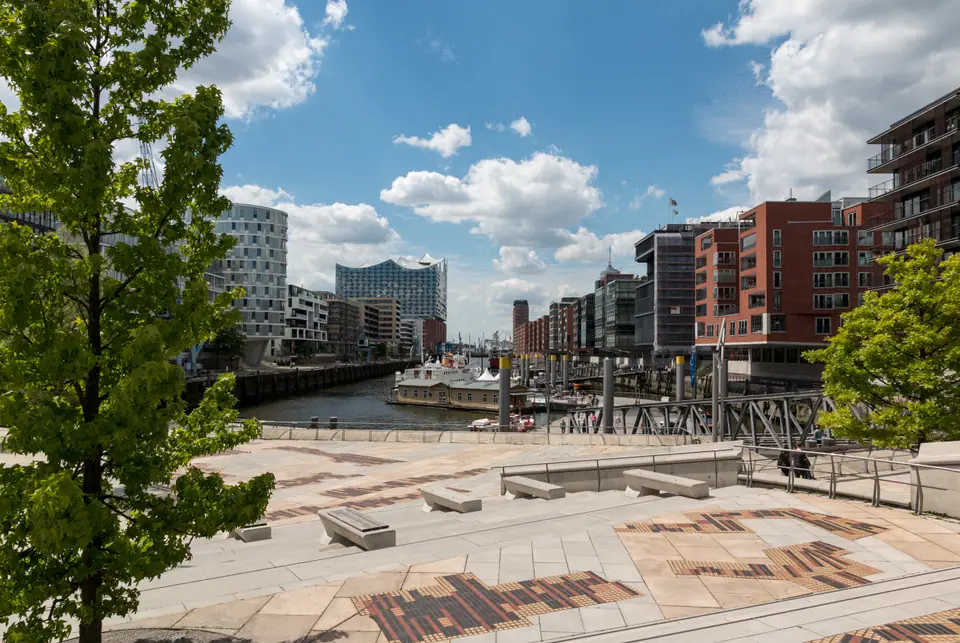
Head east past Am Sandtorkai into HafenCity, recognised as Europe's largest inner-city waterfront regeneration project standing outside Hamburg's main flood dyke. Sober engineering lessons from the devastating February 1962 North Sea storm surge shaped every street height across these former free-port basins. Instead of walling off the shore behind tall concrete barriers, builders raised avenues and residential blocks atop artificial earth mounds called Warften elevated between 7.5 and 9 metres above sea level.
Lower stepped brick quays such as Magellan-Terrassen and Marco-Polo-Terrassen stay close to river tides. Seasonal winter floods can wash harmlessly across stone steps while sealed basements and steel floodgates keep interiors dry above. Down at Sandtorhafen, HafenCity's oldest dock basin forms the Traditionsschiffhafen, keeping wooden historic hulls moored under modern promenades. Flat bridges and kerb-free pavements make walking routes effortless from pier edge to courtyard cafes. Pedestrian footbridges across Dalmannkai link glass apartment rows smoothly to quiet waterside benches sheltered from wind.
Turquoise U4 metro trains link Jungfernstieg fast to Überseequartier, HafenCity Universität and Elbbrücken. Trains stop right beside the major Westfield Hamburg-Überseequartier shopping, dining, Port des Lumières digital art hall and cruise terminal opened on 8 April 2025. Wide waterside walkways here stay level for pushchairs and rolling luggage along quiet dock basins. Even on windy weekday afternoons, coffee terraces tucked behind brick buildings give warm harbour views without boat crowds. Leaving modern waterfront squares behind, a short walk links quiet HafenCity blocks smoothly with harbour cafes toward historic Deichstraße, or catch elevated U3 trains from nearby Baumwall.
Where it is
- 1The Elbphilharmonie Plaza, Brick Sheds and HafenCity
- Hamburg Helmut Schmidt Airport (HAM) · about 10 km from here in a straight line
- Directions in Google Maps
Stations and taxi ranks: OpenStreetMap. Airports: OurAirports. Distances are in a straight line.
Traveller tips
Real advice from people who have been to Hamburg. Every tip is read by our team before it goes live.
No tips yet. Been here? Yours could be the first.
Thank you! Your tip will appear here after a quick review.
More in Hamburg
Continue exploring Hamburg with related neighbourhood, food, and planning guides