Manila
Spanish-era volcanic-stone bastions in Intramuros, the world's oldest Chinatown across the Pasig River in Binondo, neoclassical museum halls, BGC street murals and sizzling sisig.
Quick decisions
How many days?
3 days: walled Intramuros, Fort Santiago and San Agustin Church on day one, Rizal Park, the National Museum Complex and Binondo Chinatown on day two, plus Makati and Bonifacio Global City on day three. Follow our three-day route.
Where should I stay?
Bonifacio Global City (BGC) or Makati: pedestrian-friendly avenues, top dining and modern hotels. Manila Bay and Ermita: close to Intramuros and bay sunsets. Compare districts in our neighbourhood overview.
Do I need a car?
No. Metro Manila traffic is legendary; combine Grab cars on elevated skyways with the LRT-1, MRT-3 and the Pasig River Ferry between Escolta and Guadalupe.
Best for
Spanish-Pacific history: 16th-century stone churches and Manila galleon heritage inside Intramuros. Food walks: Hokkien-Filipino snacks on Ongpin Street in Binondo, crispy lechon, sisig and halo-halo. Museums: the free three-building National Museum Complex.
Before you go
Cluster your days by north and south Metro Manila: never zigzag between historic Manila and BGC twice in the same day. Read our practical briefing.
Getting around
From Ninoy Aquino Airport (MNL): four terminals ring southern Metro Manila, connected to Makati, BGC and Manila Bay via the NAIAX elevated expressway. Details in arrival and transport.
Continue your trip
Ninoy Aquino International Airport (MNL) is the main domestic hub for island-hopping flights to Palawan (El Nido and Coron), Boracay, Cebu, Bohol and Siargao.
Overview
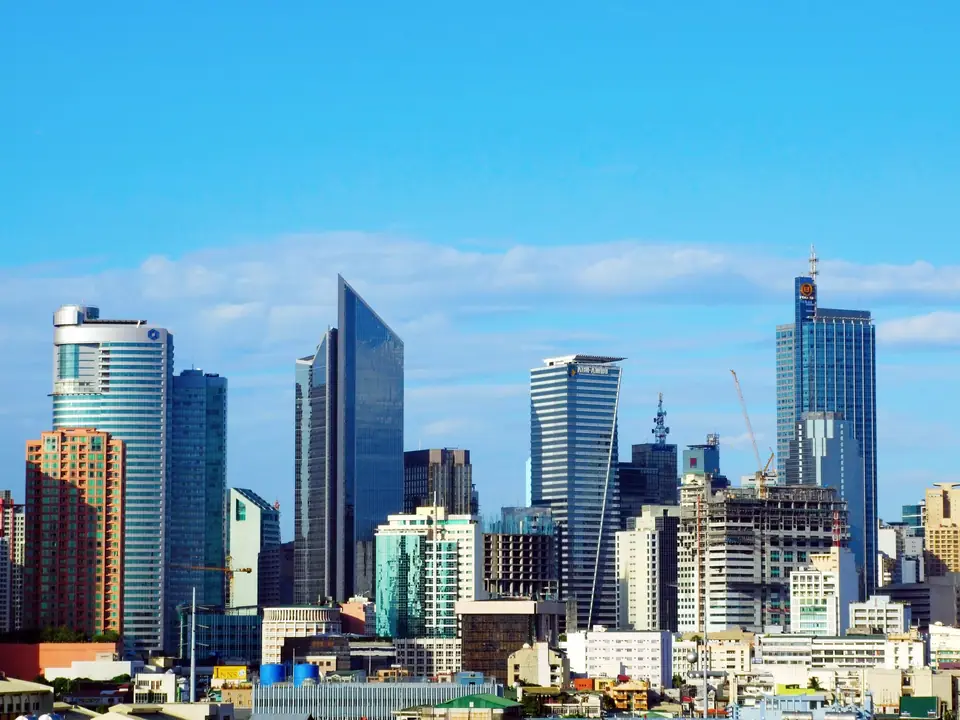
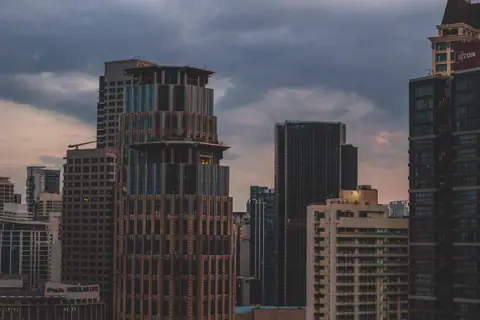
Founded on the eastern shore of Manila Bay at the mouth of the Pasig River, Manila was for two and a half centuries the western terminus of the Spanish Manila-Acapulco Galleon Trade, linking Ming and Qing porcelain and silk from China with silver from Mexico. Today, Metro Manila (the National Capital Region) is a federation of sixteen cities where two contrasting worlds sit half an hour apart: the historic core of walled Intramuros, Rizal Park and 1594 Binondo in the City of Manila, and the palm-lined skyscrapers and pedestrian parks of Makati and Bonifacio Global City (BGC) to the south-east.
Give the capital two or three structured days before flying out to the Philippine islands and you will discover world-class free museums, bamboo bike lanes on 16th-century ramparts and one of Southeast Asia's most soulful dining scenes. Start with our first-timer briefing.
Getting there
Ninoy Aquino International Airport (MNL) operates across four separate passenger terminals on the southern side of the metropolis, linked directly to Manila Bay, Makati and BGC by the elevated NAIA Expressway (NAIAX). Within the city, a stored-value Beep card works on the elevated LRT-1, LRT-2 and MRT-3 lines, while the Grab app handles door-to-door car rides. See how to get to Manila and around.
Where to stay
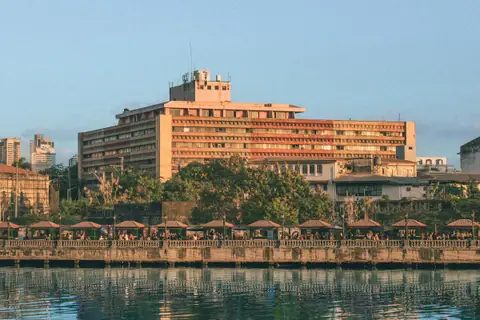
Most visitors choose between sleeping in modern, walkable Bonifacio Global City (BGC) or Makati (Ayala Center, Salcedo and Legazpi Villages) and commuting into Old Manila for sightseeing, or staying beside Rizal Park, Intramuros and Manila Bay to have the historic sights on their doorstep. Compare every district in where to stay in Manila.
Things to do
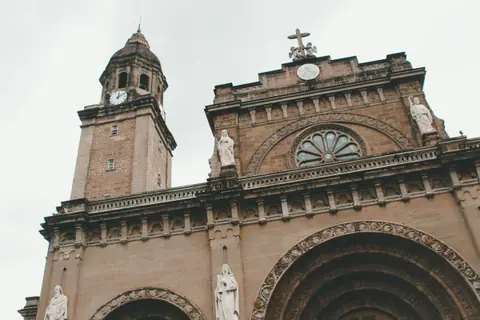
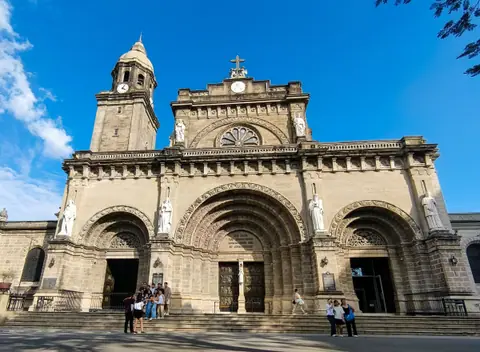
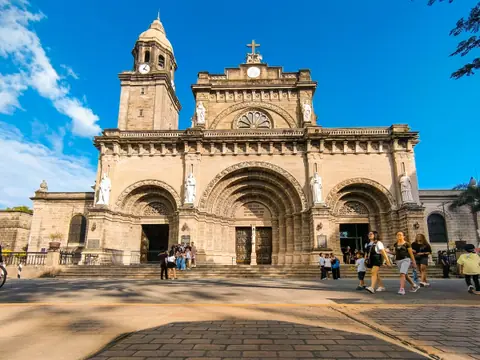
Walk the volcanic-tuff ramparts of Fort Santiago and UNESCO-listed San Agustin Church inside Intramuros, spend an afternoon inside the three neoclassical halls of the National Museum Complex before crossing the Pasig River into Binondo, and unwind among the murals and restaurants of Bonifacio High Street and Ayala Triangle. See the full list in things to do in Manila.
Food and drink
Filipino cuisine is a bold meeting of indigenous Austronesian souring techniques (using calamansi lime, tamarind, green mango and cane vinegar), Chinese wok cookery from Binondo, and Spanish slow-braises and pastries. Do not leave without tasting slow-braised adobo, sizzling pork sisig, tamarind-sour sinigang, roast lechon, Binondo lumpia and shaved-ice halo-halo crowned with purple yam (ube). Read where to eat in Filipino food, Makati and BGC.
Culture
From the 1571 arrival of Miguel López de Legazpi until 1815, Manila was Asia's first truly global crossroads, where Hokkien merchants, Spanish friars, Mexican sailors and Tagalog artisans created a distinct mestizo aesthetic seen in capiz-shell sliding windows, carved hardwood santos and courtyard stone townhouses (bahay na bato).
Weather by month
Manila is warmest in April, with average highs around 34°C, and coldest in January, when nights drop to about 22°C. August is the wettest month, with rain on about 22 days.
| Month | Low | Range | High | Rain | Rainy days |
|---|---|---|---|---|---|
| Jan | 22°C | 30°C | 22 mm | 3 d | |
| Feb | 22°C | 31°C | 16 mm | 2 d | |
| Mar | 24°C | 32°C | 21 mm | 3 d | |
| Apr | 25°C | 34°C | 28 mm | 3 d | |
| May | 26°C | 34°C | 142 mm | 9 d | |
| Jun | 26°C | 32°C | 268 mm | 16 d | |
| Jul | 25°C | 31°C | 412 mm | 21 d | |
| Aug | 25°C | 30°C | 456 mm | 22 d | |
| Sep | 25°C | 31°C | 368 mm | 20 d | |
| Oct | 25°C | 31°C | 214 mm | 14 d | |
| Nov | 24°C | 31°C | 108 mm | 8 d | |
| Dec | 23°C | 30°C | 68 mm | 6 d |
Averages of daily values from 2015 to 2024. Rainy days are days with at least 1 mm of rain. Source: Open-Meteo · Compare destinations by month.
Manila on the map
Every place we cover in Manila. Tap a category or pin to explore.
In-depth Manila guides
Browse the guides grouped by topic: sights, neighbourhoods, food, transport, day trips and trip planning.
Sights, Landmarks & Parks
Key monuments, viewpoints, museums and nature trails.
- Best Things to Do in ManilaSpanish-era stone bastions, bamboo bike rides, free national museums, Binondo dumplings and BGC murals.
- Intramuros: Fort Santiago, San Agustin Church and Casa ManilaWalking or cycling the Spanish stone walls, baroque churches and courtyards of historic Intramuros.
- Rizal Park, the National Museum Complex and Binondo ChinatownExploring the free National Museums of Fine Arts, Anthropology and Natural History, plus Binondo.
Neighbourhoods & Where to Stay
Districts, historic quarters and the best bases for your stay.
Food & Drink
Local dishes, markets, cafés and dining districts.
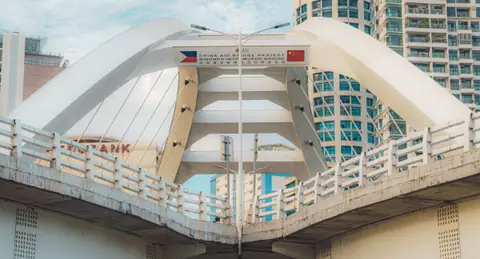
Getting Around & Arrival
Airport transfers, public transit, passes and driving rules.
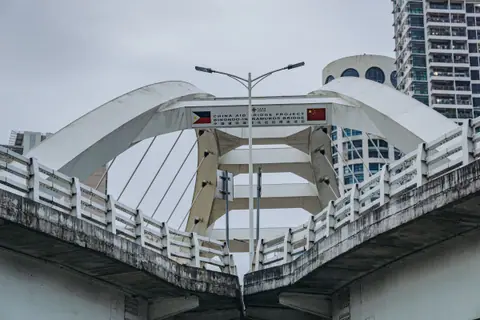
Trip Planning & Itineraries
When to visit, what to pack and day-by-day routes.
- Manila: What to Know Before You GoUnderstanding Metro Manila's layout, terminal numbers at MNL, traffic timing and museum entry.
- Best Time to Visit ManilaCooler dry breezes from December to February, bright spring skies and the tropical wet season.
- What to Wear in ManilaBalancing humid outdoor streets in Old Manila with strong indoor air-conditioning and church etiquette.
- Manila 3-Day Itinerary: Intramuros, Binondo and Modern BGCA traffic-smart three-day route separating historic Old Manila from modern Makati and BGC.
Need your embassy or consulate in Philippines? See embassies and consulates in Philippines.
Reviews
Log in to write a review.
No reviews yet.