


























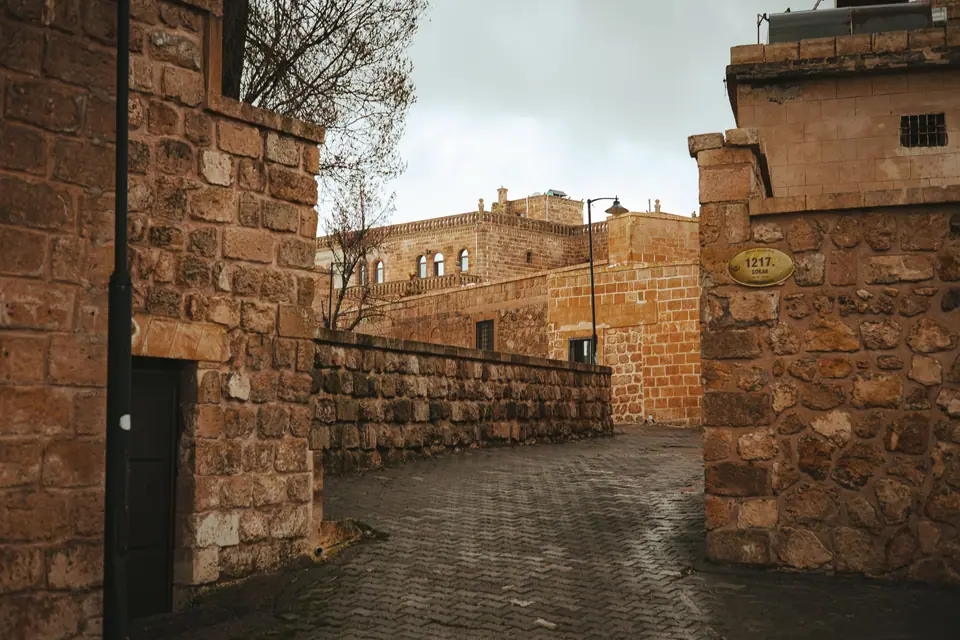
Ancient Dara (Anastasiopolis): Rock-Cut Necropolis and Subterranean Cisterns
Thirty minutes from Mardin: descending into a multi-storey 6th-century rock necropolis and 25-metre underground cisterns.
Thirty kilometres south-east of Mardin along the Nusaybin highway (a 30-minute drive or taxi ride across the flat Mesopotamian plain to Oğuz village), the road climbs into a rocky limestone valley that holds one of the most dramatic archaeological sites in Turkey: Ancient Dara (Anastasiopolis). After the Eastern Roman (Byzantine) Empire lost nearby Nisibis to the Sassanid Persians, Emperor Anastasius I brought thousands of stonemasons here in 505 AD (expanded later by Emperor Justinian I) to build a monumental fortified frontier city straddling the river in record time. Because modern village houses and fig trees sit peacefully among the 6th-century cyclopean walls, exploring Dara feels like stepping onto an epic film set.
Three Extraordinary Sights at Ancient Dara (Free or Museum Pass Entry)
- The Rock-Cut Necropolis and Mass Gallery Tomb (Kaya Nekropolü, At the Western Entrance): for centuries the hillside west of the river served as a stone quarry; in the 6th century AD, the vertical quarry cliffs were transformed into a monumental cemetery. Walk across the glass viewing floor inside the three-storey subterranean Mass Gallery Tomb, excavated in 2009: carved above the arched rock doorway is a detailed 6th-century relief of the Prophet Ezekiel's Vision of the Valley of Dry Bones (symbolising resurrection), while on the rock shelves deep below rest the skeletal remains of hundreds of Roman soldiers and citizens who fell during the 573 AD Persian siege, illuminated by a shaft of sunlight from a rock-cut oculus overhead.
- The 25-Metre Deep "Dungeon Cistern" (Zindan Sarnıcı) and Vaftiz Cistern: to ensure the Roman garrison never ran out of water during a desert siege, Justinian's engineers carved colossal subterranean reservoirs beneath the town. Walk down the long staircase into the echoing darkness of the Dungeon Cistern (locally nicknamed the "Prison" because of its 25-metre-high vertical stone walls holding 10,000 cubic metres of water) and the multi-arched Makam / Baptism Cistern on the upper hill.
- The World's Oldest Surviving Arch Dam, Agora and Bridges: follow the stream bed through the village past the stone piers of three Roman bridges, the paved colonnaded Agora street, and the rock-cut flood-control slots of the 6th-century Dara Arch Dam described by the ancient historian Procopius.
After walking the ruins, sit on a shaded carpet platform by the stream in the village to drink cold homemade ayran or lemonade with village children before driving 15 minutes further east to the eerie cliff-hanging ruins of Marini (Eski Merdis) overlooking the plain.
Traveller tips
Real advice from people who have been to Ancient Dara (Anastasiopolis): Rock-Cut Necropolis and Subterranean Cisterns. Every tip is read by our team before it goes live.
No tips yet. Been here? Yours could be the first.
Thank you! Your tip will appear here after a quick review.
More in Mardin
Continue exploring Mardin with related neighbourhood, food, and planning guides
Mardin Ulu Cami (Grand Mosque) and the Vaulted Bazaars (Çarşılar)
Mardin, Turkey
Deyrulzafaran Monastery (Mor Hananyo) and Kırklar Church: Mardin's Syriac Heritage
Mardin, Turkey
Midyat Old Town, Silver Filigree (Telkari) and Mor Gabriel Monastery (397 AD)
Mardin, Turkey

The Mardin Archaeological Museum and Sakıp Sabancı City Museum
Mardin, Turkey
