


























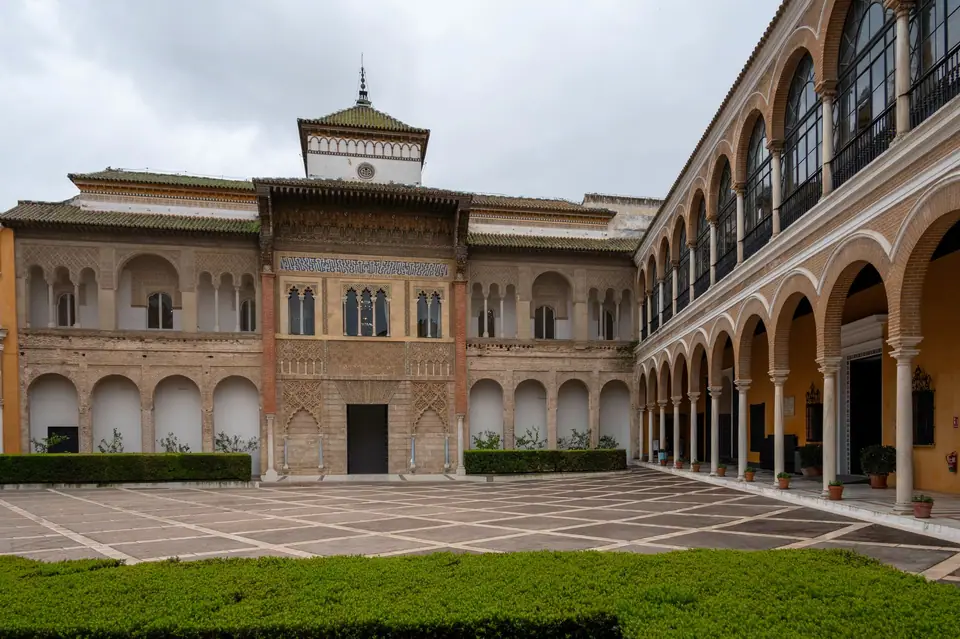
Deyrulzafaran Monastery (Mor Hananyo) and Kırklar Church: Mardin's Syriac Heritage
Stepping inside a 4,000-year-old subterranean Sun Temple and the 640-year seat of the Syriac Orthodox Patriarch.
For nearly two thousand years, Mardin and the surrounding Tur Abdin plateau have been the spiritual heartland of the Syriac Orthodox Church (Süryaniler), one of the oldest Christian communities in the world, whose liturgy is still chanted in Syriac, a dialect of Aramaic (the language spoken by Jesus). You can visit both the principal urban parish church right inside Old Mardin and the fortified desert-like monastery sitting in the hills four kilometres east of town.
1. Deyrulzafaran Monastery (Mor Hananyo, 4 km east of Old Mardin)
Set among almond, fig and olive orchards against a rocky hillside ten minutes by taxi from Birinci Cadde, Deyrulzafaran ("The Saffron Monastery") takes its name from the wild yellow saffron crocuses (zafaran) that grow on the surrounding slopes and were mixed into the mortar of its warm amber stone walls. Founded in 493 AD by Mor Shleymun and expanded in 793 AD by Bishop Mor Hananyo, the monastery served for 640 consecutive years (from 1293 until 1932) as the worldwide seat of the Syriac Orthodox Patriarch of Antioch. Guided tours offered by young Syriac community members take you through four extraordinary spaces inside the complex:
- The Underground Sun Temple (Güneş Tapınağı, c. 2000 BC): directly beneath the monastery's classrooms lies a subterranean chamber built by ancient Mesopotamian sun-worshippers (Shamsis) long before Christianity. Look up at the flat ceiling: massive two-tonne stone blocks are locked together completely horizontally without a single drop of mortar or supporting arch using a secret keystone wedging technique, with a small eastern window where rays of the rising sun struck the sacrificial altar.
- The Mausoleum (Beth Kadişe): where seven Patriarchs and Metropolitans are buried in the traditional sitting position facing east inside rock-cut niches.
- The Church of Mor Hananyo (Domed Cross Church, 5th, 8th Century): preserving original stone animal friezes, a 1,600-year-old stone baptismal font, 300-year-old wooden lecterns inscribed in Aramaic, and the twin marble thrones of the Patriarch and visiting Bishops.
- The First Printing Press in the Region (1876): imported from England via Alexandria by Patriarch Peter IV to print books in Syriac, Arabic and Ottoman Turkish. Finish with a glass of saffron herbal tea in the monastery garden café.
2. Mor Behnam (Kırklar) Church (Inside Old Mardin, off Birinci Cadde)
Hidden behind a carved stone portal in the Шar quarter just two minutes below Cumhuriyet Meydanı stands the Church of the Forty Martyrs (Kırklar Kilisesi), built in 569 AD and dedicated to early Christian siblings Behnam and Saro. Its three-arched courtyard, lacy stone bell tower and 1,500-year-old carved wooden altar curtains remain the active cathedral of Mardin's Syriac community today.
Traveller tips
Real advice from people who have been to Deyrulzafaran Monastery (Mor Hananyo) and Kırklar Church: Mardin's Syriac Heritage. Every tip is read by our team before it goes live.
No tips yet. Been here? Yours could be the first.
Thank you! Your tip will appear here after a quick review.
More in Mardin
Continue exploring Mardin with related neighbourhood, food, and planning guides
Where to Stay in Mardin: Sleeping in a 600-Year-Old Stone Konak vs New Town
Mardin, Turkey
Best Time to Visit Mardin: Spring Green Plains, Golden Autumns and Festivals
Mardin, Turkey
What to Wear in Mardin: Grippy Shoes for Polished Stone Steps and Monastery Dress
Mardin, Turkey
3 Days in Mardin: Old Town, Kasımıye, Deyrulzafaran, Dara and Midyat
Mardin, Turkey
