Osaka Castle, Shitenno-ji and the Umeda Skyline
Samurai history at Osaka Castle, 6th-century Shitenno-ji Temple and sunset views over Kita.
To understand how Osaka grew from a fortified 16th-century merchant citadel into a futuristic metropolis, pair its two oldest historical landmarks on the eastern ridge (Osaka Castle and Shitenno-ji Temple) with the soaring glass towers and lantern alleys of Kita (Umeda) in the north.
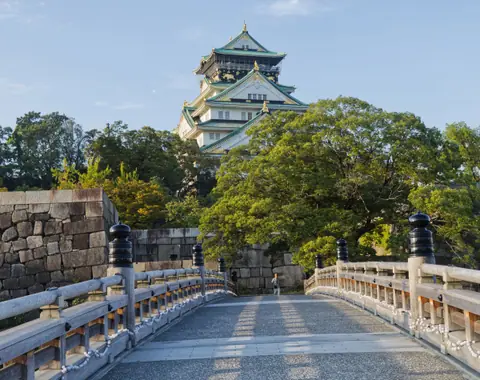
Osaka Castle (Osakajo) and its giant granite walls
Begun in 1583 by Toyotomi Hideyoshi (the warlord who unified Japan at the end of the Warring States period) on the site of the fortified Ishiyama Hongan-ji temple, Osaka Castle was designed to eclipse every stronghold in the country. Although the central keep burned in the 1615 Siege of Osaka and again after a 1665 lightning strike (the current ferro-concrete five-tier, eight-floor exterior dates from 1931 and houses a historical museum with a panoramic 8th-floor observation deck), the surrounding inner and outer water moats, guard turrets (yagura) and dry-stone granite ramparts are original 1620s Tokugawa constructions:
- The Octopus Stone (Takoishi): inside the main Sakura Gate (Sakuramon) stands a single megalithic granite block measuring nearly 6 metres by 11 metres and weighing an estimated 108 tonnes, shipped across the Inland Sea by feudal lords to prove their loyalty to the shogunate.
- Best approach and Nishinomaru Garden: take the Osaka Metro or JR Loop Line to Morinomiya or Osakajokoen Station, walk through the plum grove or the western Nishinomaru Garden (which frames the white-and-gold castle keep behind 300 cherry trees), and arrive at the main keep at 09:00 before lift queues build.
Shitenno-ji Temple and Osaka Tenmangu
Ten minutes south by Tanimachi Line subway stands Shitenno-ji, founded in 593 AD by Prince Shotoku after he invited temple carpenters from the Korean kingdom of Baekje to introduce Buddhism to Japan. While its wooden halls have been faithfully rebuilt over the centuries after fires and wartime bombing, its Garan layout (with the South Gate, Five-Storey Pagoda, Main Golden Hall Kondo and Lecture Hall arranged in a straight north-south line reflecting the path to paradise) remains the oldest Buddhist architectural layout in the country. Further north near Minami-Morimachi sits Osaka Tenmangu Shrine (founded in 949 AD, home of the July Tenjin Matsuri) beside the Tenjinbashisuji Shotengai, Japan's longest covered shopping arcade stretching 2.6 kilometres across three subway stops.
Umeda Sky Building, Grand Green Osaka and Tenma
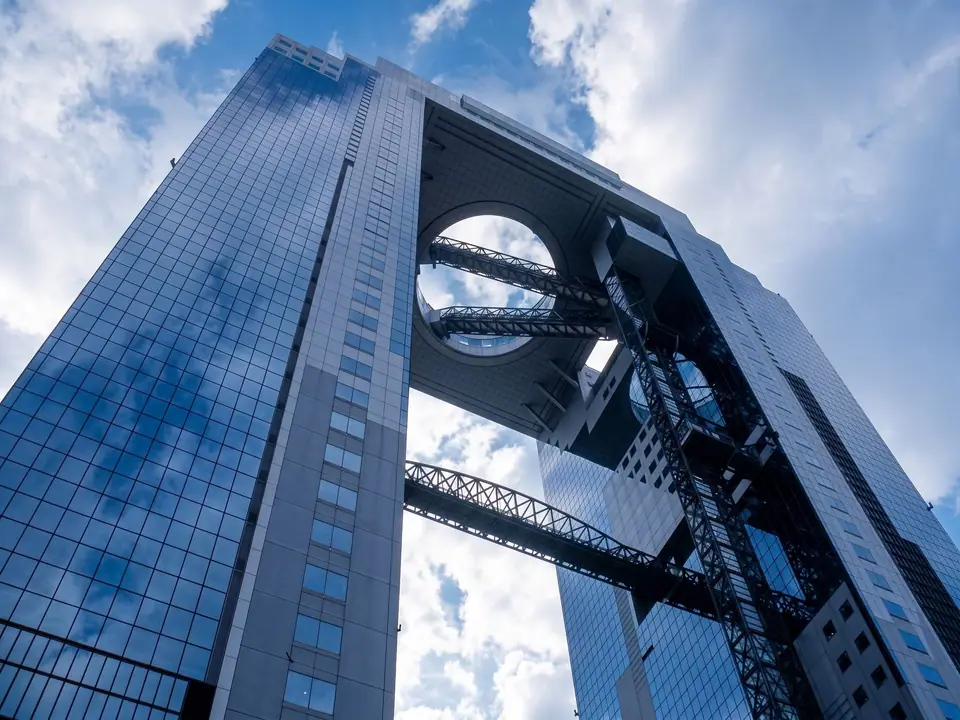
Finish the afternoon in Kita (Umeda). Walk northwest from Osaka Station across the new green urban park of Grand Green Osaka (Umekita) to the 173-metre Umeda Sky Building, designed by Hiroshi Hara as two 40-storey towers joined at the summit by a circular "Floating Garden Observatory" (Kuchu Teien). Ride the glass lift to the 35th floor, cross the vertigo-inducing suspended diagonal escalator through empty air, and step onto the open-air 360-degree roof deck as the sun sets over Osaka Bay and the Yodo River bridges. Afterwards, ride one stop east on the JR Loop Line to Tenma Station for dinner in a maze of unpretentious local izakayas.
Traveller tips
Real advice from people who have been to Osaka Castle, Shitenno-ji and the Umeda Skyline. Every tip is read by our team before it goes live.
No tips yet. Been here? Yours could be the first.
Thank you! Your tip will appear here after a quick review.
More in Osaka
Continue exploring Osaka with related neighbourhood, food, and planning guides