






Lisbon
Seven hills above the Tagus, yellow trams, tiled façades and custard tarts still warm from the oven.
Quick decisions
How many days?
3 days: Alfama and the Baixa, a morning in Belém and a full day in Sintra. 4 to 5 days: add Príncipe Real, the Gulbenkian and a beach afternoon in Cascais. 6 days or more: add Évora, Óbidos or the Arrábida coast.
Where should I stay?
Baixa or Chiado: flat, central and close to every tram and metro line. Alfama: old lanes and fado, but steep. Príncipe Real: leafy and calmer, with good restaurants. More in our where to stay guide.
Do I need a car?
No. The centre is a tangle of one-way hills with very little parking, and private cars can no longer drive up to the palaces in Sintra. Trains cover Sintra, Cascais and most day trips.
Best for
First-timers: a compact, easy capital. Couples: sunsets from the miradouros and fado at night. Families: yes, though the hills are hard work with a pushchair. Food lovers: seafood, cheap wine and the best custard tarts in the world.
Before you go
Book ahead: Pena Palace in Sintra and the Belém Tower both run on timed slots. Tourist tax: charged per person, per night, for up to seven nights. Shoes: the stone pavements are polished and slippery.
Getting around
From the airport: the red metro line, changing once for the centre. In the city: a Navegante card loaded with credit works on the metro, buses, trams and trains. Details in our getting there guide.
Continue your trip
Sintra is about 40 minutes by train and Cascais a similar ride along the coast. Porto is around three hours north on the Alfa Pendular, and the Algarve beaches are a few hours south.
Overview
Lisbon is built on hills that drop steeply to the wide Tagus estuary, and almost every walk ends at a viewpoint. Below you, orange roofs tumble down towards the river, ferries cross to the south bank, and the old trams grind round corners that look too tight for them. The city was largely rebuilt after the earthquake of 1755, so the centre is an orderly grid while the older quarters on either side, Alfama and the Bairro Alto, kept their medieval knots of lanes.
It's also one of the most relaxed capitals in Europe, with long lunches, a glass of wine for the price of a coffee elsewhere, and a sunset crowd on every miradouro. Give it four days if you can, including one in Sintra. Our Lisbon travel guide covers the essentials.
Getting there
Humberto Delgado airport sits inside the city, about 7 km north of the centre, and the red metro line starts at Terminal 1. Trains from Porto arrive at Oriente and Santa Apolónia. Our getting there guide explains the transfers, the Navegante card and why the old airport bus no longer runs.
Where to stay
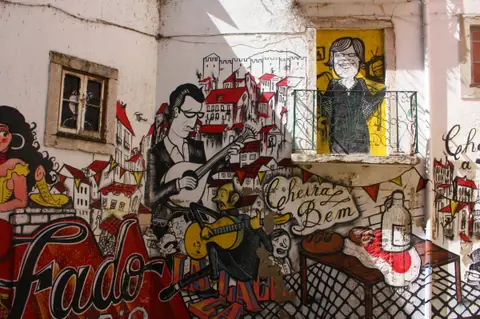
The Baixa and Chiado are the easy first-time base, flat and central. Alfama puts you among the fado houses, Príncipe Real is greener and quieter, and Cais do Sodré is where the nightlife is. We compare them all, including the noise problem in the Bairro Alto, in our where to stay guide.
Things to do
Most trips cover three areas: the monuments of Belém, the old lanes of Alfama and the palaces of Sintra. For the castle, the Gulbenkian, the tile museum, LX Factory and the viewpoints, see our things to do list.
Food and drink
Start with a pastel de nata, a custard tart with a flaky, blistered crust, eaten warm with cinnamon on top. At lunch look for the prato do dia, the dish of the day at a neighbourhood tasca. In June the whole city grills sardines on the street and eats them on bread. And order bacalhau, salt cod, which comes in hundreds of ways.
Culture
In the 15th and 16th centuries Lisbon was the starting point for Portuguese ships sailing to Africa, India and Brazil, and the spice money paid for the Manueline stone carving you see in Belém. The 1755 earthquake, followed by fire and a tsunami, destroyed most of the city. What rose afterwards, under the Marquis of Pombal, is the Baixa grid that still frames daily life.
In-depth Lisbon guides
Practical guides for planning your visit.
- Lisbon Travel Guide: What to Know Before You Go
- Best Things to Do in Lisbon
- How to Get to Lisbon
- Best Time to Visit Lisbon
- What to Wear in Lisbon
- Belém Guide: Jerónimos, the Tower and the Tarts
- Alfama Walking Guide
- Sintra Day Trip from Lisbon
- Where to Stay in Lisbon: A Neighborhood Guide
- Lisbon 3-Day Itinerary
Reviews
Log in to write a review.
No reviews yet.