


























Playa Brava, La Mano (Los Dedos), 1860 Lighthouse & Peninsula Harbour Walk
Walk the complete perimeter of the Punta del Este Peninsula: start at Mario Irarrázabal's 1982 La Mano sculpture on Playa Brava, pass El Emir and the 1860 Lighthouse, and meet wild sea lions at the Puerto.
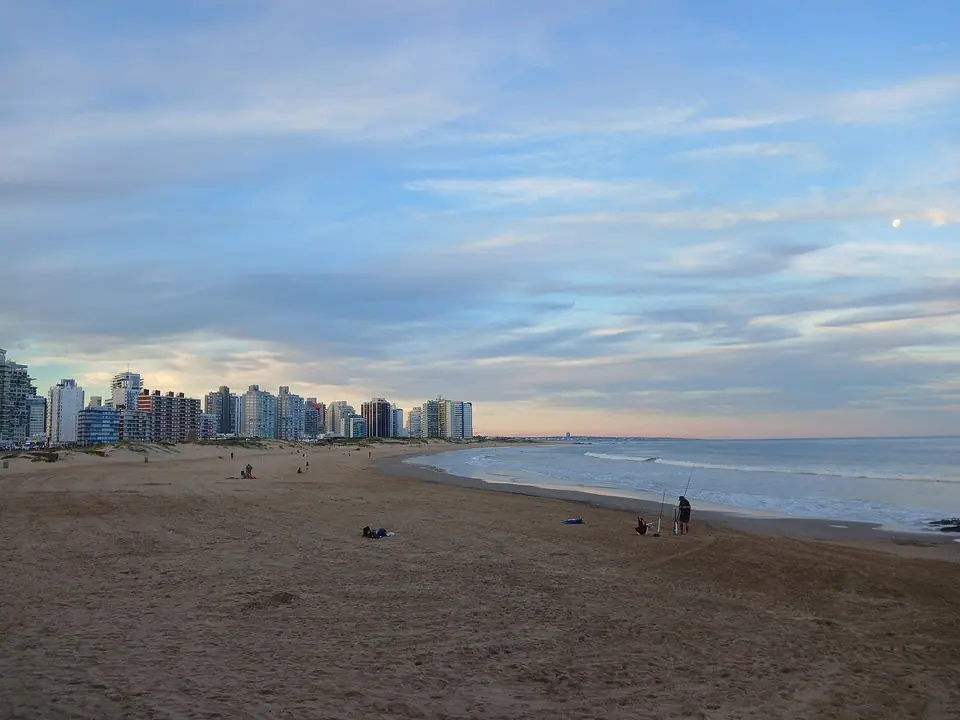
Encircled by the breezy five-kilometre coastal boulevard of Rambla General Artigas, the granite cape of La Península is where Punta del Este began and where the fresh-to-brackish waters of the Río de la Plata officially meet the open Atlantic Ocean. Walking its entire shoreline from Playa Brava Parada 1 around the rocky point to the yacht harbour takes roughly two leisurely hours.
1. Playa Brava & Mario Irarrázabal's La Mano (1982)
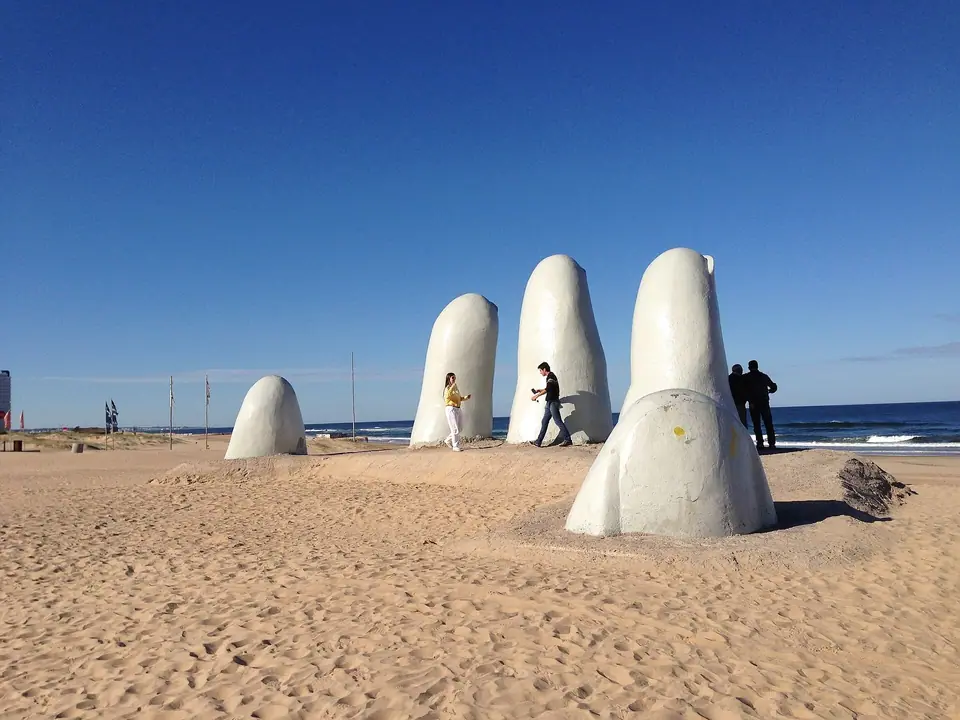
- How Five Concrete Fingers Became Uruguay's Most Famous Landmark: At Parada 1 of Playa Brava, five monumental fingers rise three metres out of the sand against the backdrop of the Atlantic surf. Created over just six days in February 1982 by 41-year-old Chilean sculptor Mario Irarrázabal during the First International Meeting of Modern Sculpture in the Open Air, the work is officially titled Hombre emergiendo a la vida ("Man Emerging into Life"), though locals universally call it La Mano ("The Hand") or Los Dedos ("The Fingers"). Built over a reinforced steel-bar skeleton covered in metal mesh and weather-resistant concrete mortar, it was conceived as a poetic warning to swimmers that the open waves of Playa Brava demand far more caution than calm Playa Mansa three hundred metres across the neck of the cape.
- Playa El Emir & the Plazoleta Gran Bretaña Boundary Marker: Continuing south along the Atlantic side of the Peninsula brings you past the consistent surfing reef of Playa El Emir to the granite boulders of Plazoleta Gran Bretaña (Punta de la Salina), the exact geographical coordinate where the treaty line dividing the Río de la Plata from the Atlantic Ocean meets the shore, Commemorated by anchors and plaques recalling the 1939 Battle of the River Plate.
2. The 1860 Lighthouse, Candelaria Church & the Sea Lions of the Puerto
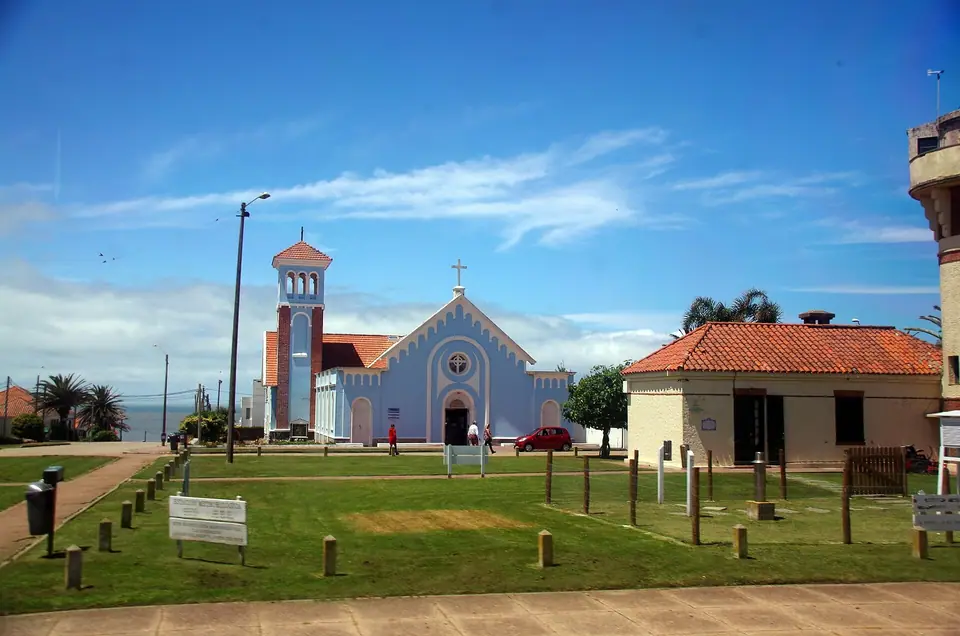
- Faro de Punta del Este (1860) & Iglesia de la Candelaria: Two blocks inland from the rocky tip stands the 45-metre white tower of the Faro de Punta del Este, built in 1860 by Tomás Libarena using animpervious mortar mixed with volcanic earth imported from Rome so that mariners could navigate around Isla de Lobos. Directly across the quiet plaza rises the sky-blue and white stone facade of the Iglesia de Nuestra Señora de la Candelaria (completed in 1941), housing a colonial wooden image of the Virgin brought from Spain.
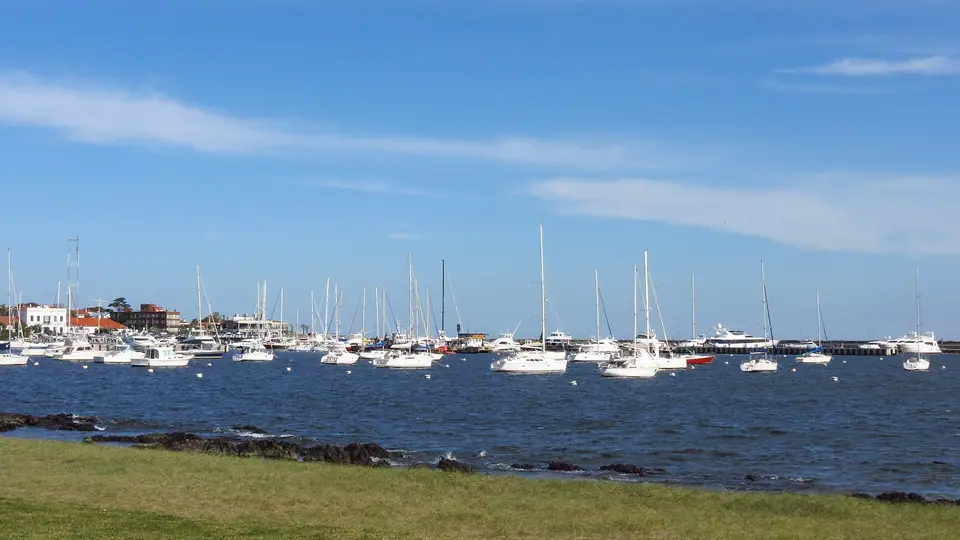
- Puerto de Nuestra Señora de la Candelaria & Artisanal Fish Stalls: Rounding the western tip onto the sheltered bay brings you to the 500-berth Puerto marina. Every morning and early afternoon, artisanal fishing launches tie up along the pedestrian jetty to fillet freshly caught corvina and brótola while wild South American sea lions (Otaria flavescens) weighing up to 300 kilograms swim right alongside the wooden pier.
Traveller tips
Real advice from people who have been to Playa Brava, La Mano (Los Dedos), 1860 Lighthouse & Peninsula Harbour Walk. Every tip is read by our team before it goes live.
No tips yet. Been here? Yours could be the first.
Thank you! Your tip will appear here after a quick review.
More in Punta del Este
Continue exploring Punta del Este with related neighbourhood, food, and planning guides
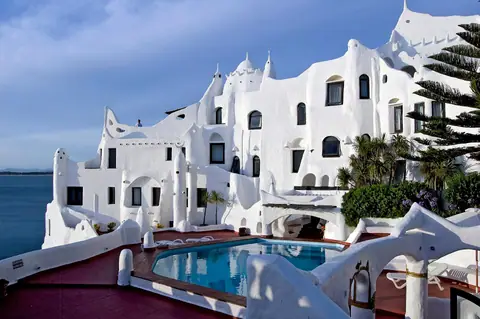
Punta Ballena, Casapueblo (Carlos Páez Vilaró) & Arboretum Lussich Guide
Punta del Este, Uruguay
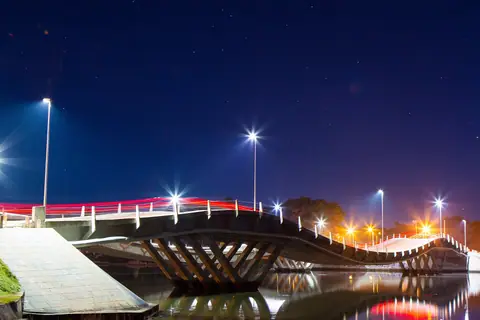
La Barra Undulating Bridge, Manantiales & MACA (Atchugarry Museum) Guide
Punta del Este, Uruguay
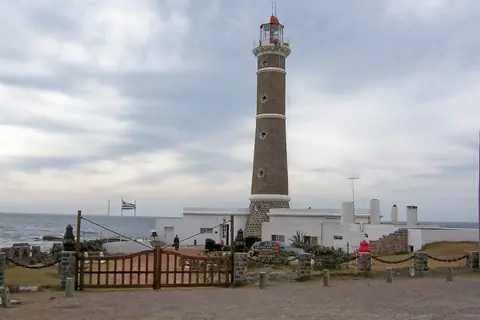
José Ignacio Lighthouse, Parador La Huella & Circular Laguna Garzón Bridge Day Trip
Punta del Este, Uruguay
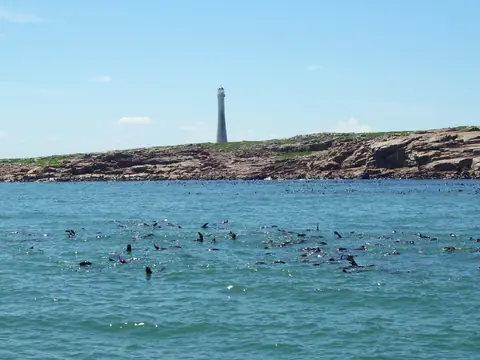
Isla de Lobos Sea Lion Colony, 1906 Lighthouse & Atlantic Whale Watching Guide
Punta del Este, Uruguay
