Photo: SarahStierch · CC BY 4.0
Best Day Trips From Santa Fe
Explore the best day trips from Santa Fe across northern New Mexico, including ancient pueblos, volcanic calderas, canyon trails, and artist havens.
Taking day trips from Santa Fe allows travellers to explore ancient ruins, traditional pueblos, 19th-century mining areas, sandstone canyons, and ancient volcanic craters within easy reach.
Taos and the Scenic High Road
A journey north to Taos along the High Road covers a round trip of approximately 165 miles. The route winds through sleepy valley villages, traditional mountain towns, and historical 19th-century mining areas. Along the way, Chimayo stands as a traditional weaving village where local galleries feature work created by award-winning weavers. Visitors also stop at the 19th-century Santuario de Chimayo, a revered pilgrimage destination known as the Lourdes of the Southwest.
Further along the mountain corridor sits the village of Las Trampas. Here, San Jose de Gracia de las Trampas offers one of New Mexico's best-preserved examples of 18th-century Spanish Colonial mission architecture. Travellers can also follow the Low Road along NM 68. This highway follows the Rio Grande as the water drops dramatically from a broad mesa into a narrow canyon. Before departing, consult our Santa Fe Travel Guide: What to Know Before You Go to balance your day trips with city sights.
Once in Ranchos de Taos, admire the San Francisco de Asis Church. The sculptural buttresses and adobe contours of this church have fascinated artists such as Georgia O'Keeffe and Ansel Adams for more than 300 years. The structure remains a celebrated visual anchor of northern New Mexico.
Visiting Taos Pueblo
Taos Pueblo provides a direct view into deep regional heritage. Taos Pueblo is the only Native American community designated both a World Heritage Site by UNESCO and a National Historic Landmark. Its multi-storied architecture was built more than a thousand years ago.
Made entirely of adobe, these multi-storied homes are still occupied today, embodying a living culture. Travellers come to see traditional residential ways that have continued unbroken in the northern valley. Check the official site before setting out, because tribal authorities periodically close the village for private religious ceremonies and community events. Planning ahead ensures travellers respect local community guidelines while viewing this historic architecture.
The wider Taos area also offers significant outdoor recreation and cultural stops. Nearby destinations like Madrid, Pecos, and the other Las Vegas offer further options for regional exploring. In Las Vegas, travellers can admire distinct Victorian architectural gems before looping back toward the capital.
Bandelier National Monument and Los Alamos
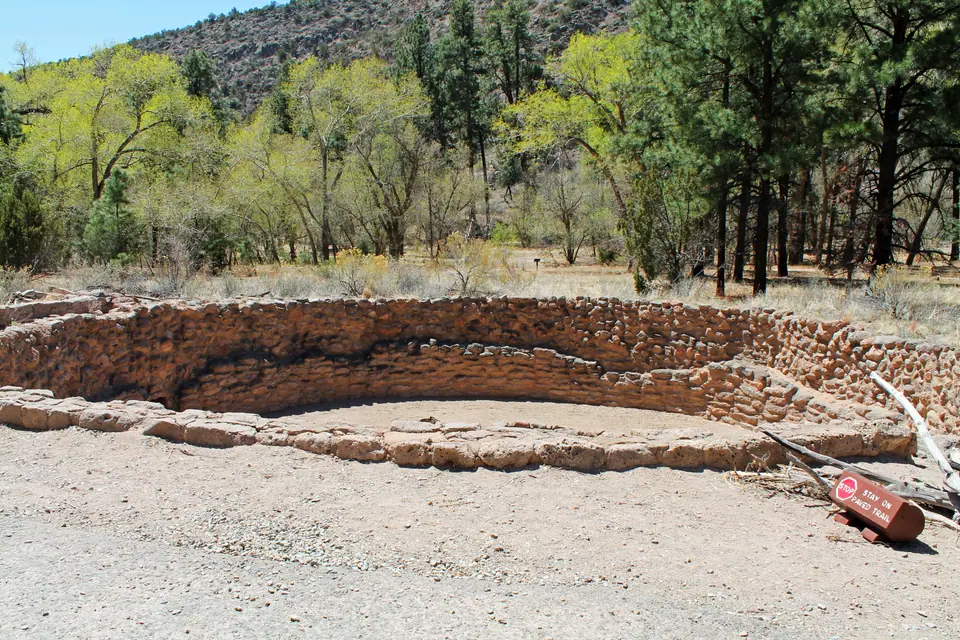
Bandelier National Monument protects over 33,000 acres of rugged canyon and mesa country. This expansive federal reserve preserves ancestral and traditional lands belonging to at least 23 tribal nations. Visitors can take self-guided tours across two distinct monument locations: Frijoles Canyon and Tsankawi Mesa. Both sites feature remarkable ancient ruins once occupied by ancestors of the Pueblo Indians.
If you bring domestic pets, observe strict park regulations. Pets are not allowed in park buildings or on trails. They are allowed solely in parking areas and in campgrounds. Travellers should plan their hikes accordingly when bringing companion animals along for the day.
This excursion pairs directly with a visit to Los Alamos. Stop at the Bradbury Science Museum to learn about the making of the atomic bomb and current research conducted at Los Alamos National Laboratory. When arranging vehicle transport from town, our practical guide on How to Get to Santa Fe provides useful advice for regional road travel.
Abiquiú, Ghost Ranch, and Chama
The excursion north towards Abiquiú, Ghost Ranch, and Chama covers a round trip of approximately 250 miles. Along this road, travellers gaze upon the majestic red rock country captured on canvas by painter Georgia O'Keeffe. Ghost Ranch operates as a conference and retreat centre today. It provides great hiking trails open to the public by permission obtained directly at the retreat centre.
Carson National Forest hosts Echo Amphitheater just up the highway. This geological landmark is a natural echo chamber made of sandstone. Visitors can test their vocal stylings against the curved rock walls before driving further into northern Rio Arriba County.
Continuing north on US 84 brings outdoor enthusiasts to Heron Lake and the Brazos River, both popular spots for trout fishing. In Chama, travellers can climb aboard a steam train and ride narrow-gauge tracks into southern Colorado on the Cumbres & Toltec Scenic Railroad. The remote road passes through the San Juan Mountain Range and crosses the Rio Grande Gorge Bridge, suspended 650 feet above the river. Winter weather periodically closes this high mountain highway.
Jemez Mountain Trail and the Valle Grande
The Jemez Mountain Trail and Los Alamos driving loop encompasses a round trip of approximately 160 miles. Following NM 4 leads drivers straight into the Valle Grande, recognized as one of the world's largest calderas. This colossal geological basin formed when a volcano crater collapsed one million years ago, leaving an immense open expanse framed by forested mountain ridges.
Descending beyond the volcanic rim brings drivers into the town of Jemez Springs. Travellers can soak away travel fatigue in public tubs at a bathhouse built during the Victorian era. The soothing natural spring waters offer an ideal respite along the canyon floor.
Further along NM 4 lies Jemez State Monument, the site of magnificent ancient Indian ruins and the Jemez Pueblo Walatowa Visitor Center. The center documents the history of the ancestral community for visiting travellers. The road later reaches Coronado State Monument. Francisco Vasquez de Coronado and his soldiers set up winter camp here in 1540 while searching for the fabled Cities of Gold.
Pueblo Pottery Along the Rio Grande
The northern Rio Grande valley contains several traditional pueblos celebrated internationally for distinctive pottery styles. San Ildefonso Pueblo sits six miles down the road along the travel corridor west of Santa Fe. The pueblo is best known for famous black-on-black pottery, which originated there and is coveted by fine art collectors world-wide.
Master potter Maria Martinez lived and worked at San Ildefonso Pueblo. She helped revive the famous black pots in the twenties, establishing an aesthetic legacy that influenced indigenous ceramic arts across the continent.
Across the Rio Grande on NM 30 lies Santa Clara Pueblo. Santa Clara Pueblo is also known for its tradition of hand-crafted pottery, specifically blackware and redware with deep engravings. Travellers can visit local workshops to appreciate decorative techniques passed down through generations. Always respect tribal property by following posted rules regarding village photography and visitor access.
Outdoor Recreation in the Rio Grande Gorge
The Rio Grande Gorge provides an outstanding setting for outdoor recreation and rugged desert scenery. The state's premier whitewater run spans 17 miles through the Rio Grande Gorge. This route cuts through a black basalt chasm that offers few easy exits from beginning to end, requiring proper river craft and planning.
Around the river chasm, the Carson and Santa Fe National Forests offer vast recreation lands. Together, these national forests offer more than 1,300 miles of trails and 63 campgrounds for visiting hikers and campers. Wheeler Peak highlights this northern region at an elevation of 13,161 feet, surrounded by numerous trail networks.
Travel choices in northern New Mexico cater to varied interests. Santa Fe stands as the oldest capital city in the United States, making it an ideal central base for driving loops. Travellers heading out to Abiquiú, Jemez Springs, or Taos can easily navigate regional roads from the historic core. From alpine summits and deep basalt canyons to historic villages, day trips from Santa Fe present immense natural and cultural variety. Each route delivers a distinct perspective on the enduring landscapes and traditions of northern New Mexico.
Where it is
- 1Santa Fe
- Albuquerque International Sunport (ABQ) · about 94 km from Santa Fe in a straight line
- Directions in Google Maps
Stations and taxi ranks: OpenStreetMap. Airports: OurAirports. Distances are in a straight line.
Traveller tips
Real advice from people who have been to Santa Fe. Every tip is read by our team before it goes live.
No tips yet. Been here? Yours could be the first.
Thank you! Your tip will appear here after a quick review.
More in Santa Fe
Continue exploring Santa Fe with related neighbourhood, food, and planning guides