Triana Guide: Ceramics, Market Life and the River
What makes Triana different, where to walk, what to eat and how to use the neighbourhood for an evening.
Cross the Guadalquivir and Seville feels slightly less like a monument and more like a neighbourhood. Triana has long been associated with potters, sailors, bullfighters and flamenco artists, and the local identity remains visible in its ceramics, market and riverfront bars.
Start at the bridge
The Puente de Triana is the obvious arrival point. From here you can walk south along the river or turn into the neighbourhood towards the market and ceramic workshops.
Mercado de Triana
The market at Plaza del Altozano stands on the remains of the former San Jorge Castle. The current market has around 100 stalls as well as cafés, tapas bars and small businesses. It is useful both for eating and for understanding the neighbourhood's everyday rhythm.
See the ceramic tradition properly
The Triana Ceramics Centre is built around the remains of a historic pottery site and preserves kilns, tools, moulds and displays explaining the production process. The official tourism information lists it as an indoor option that can be especially useful on hot days.
Walk Calle Betis late in the day
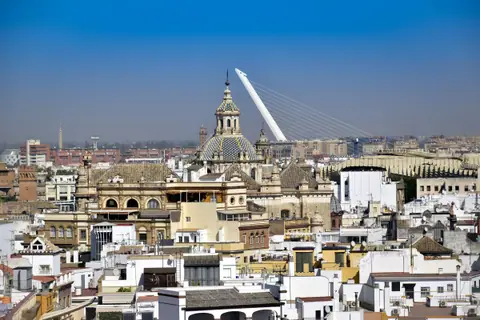
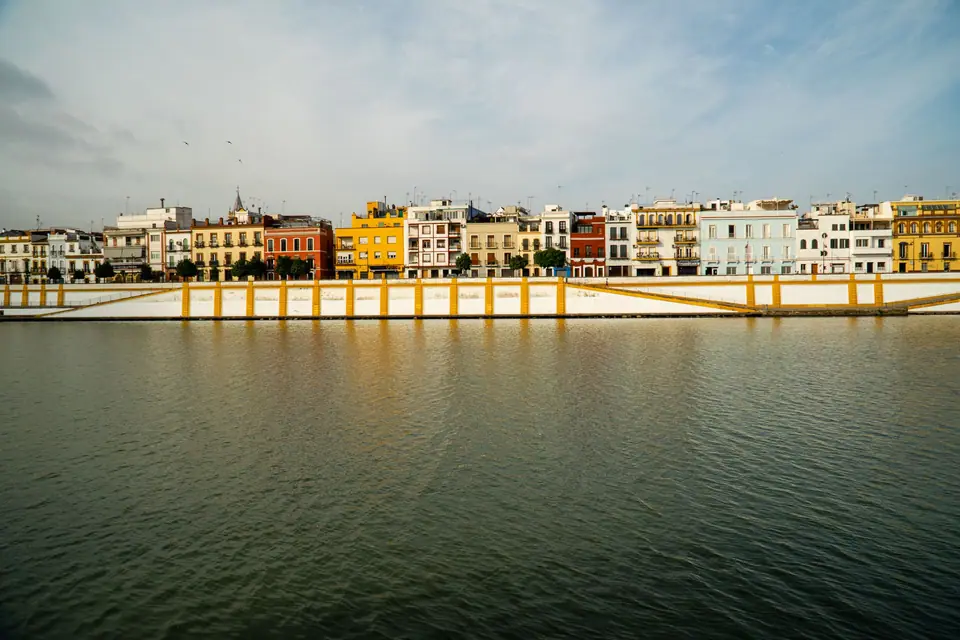
Betis Street is one of Seville's classic river views, with the Cathedral skyline and Torre del Oro across the water. It is busiest in the evening, which is part of the point. Come for the view, then continue deeper into Triana rather than staying entirely on the riverfront.
Triana and flamenco
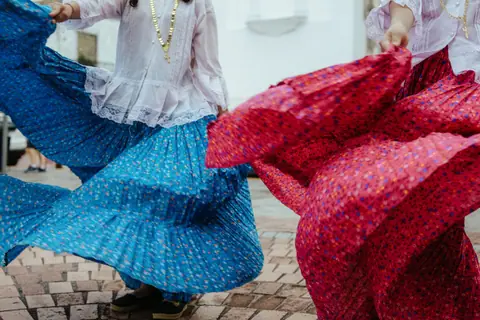
Flamenco has deep links with the neighbourhood. Seville tourism notes the role of Triana in the city's flamenco heritage and points visitors toward peñas, tablaos and performance spaces. For a first show, choose somewhere that explains the format clearly and lists whether drinks are included.
What to eat
Use Triana as a tapas stop rather than a single-destination restaurant night. Markets and neighbourhood bars make it easy to try small dishes, then move on. Look for seasonal seafood, fried dishes, montaditos and local classics.
Where Triana works best in your itinerary
Pair Triana with a morning or afternoon in the centre, then stay across the river for dinner and drinks. This avoids spending your whole day crossing the same bridge and lets you see how the neighbourhood changes after dark.
Triana is better when you leave the bridge
Many first-time visitors cross the Puente de Triana, photograph the river and return. The neighbourhood becomes more interesting once you turn away from the postcard edge. The market, ceramic workshops, parish churches and residential streets explain more about Triana's identity than one panoramic viewpoint.
A craft tradition you can see
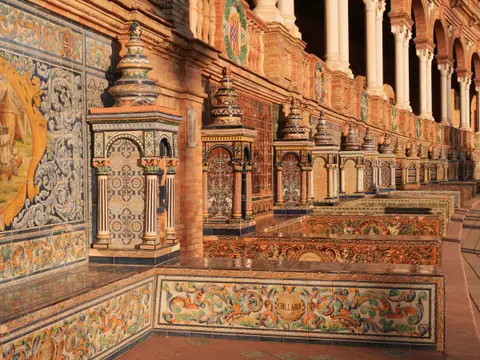
Ceramics are not merely souvenirs here. Seville tourism traces the neighbourhood's ceramic production back to the Islamic period, when glazing and tilework became part of the local visual language. The Triana Ceramics Centre preserves kilns, tools and production traces, which gives context to the tiled façades seen across the city.
How long to stay
Allow at least half a day for Triana. Add an evening if you want tapas or flamenco. The neighbourhood is especially useful as a second-day anchor because it feels different enough from Santa Cruz to make the city seem larger without requiring a long journey.
Traveller tips
Real advice from people who have been to Triana Guide: Ceramics, Market Life and the River. Every tip is read by our team before it goes live.
No tips yet. Been here? Yours could be the first.
Thank you! Your tip will appear here after a quick review.
More in Seville
Continue exploring Seville with related neighbourhood, food, and planning guides