


Flamenco Show in Barcelona
Guitar, song and stamping feet in a small room or a grand hall, and a fair look at what an Andalusian art is doing in the Catalan capital.
Overview
Let's start with the awkward part. Flamenco is not Catalan. It grew up in Andalusia, in the south of Spain, largely in Romani (gitano) communities around Seville, Jerez and Cádiz, and UNESCO listed it as Intangible Cultural Heritage of Humanity in 2010 as an Andalusian tradition. The local folk dance here is the sardana, a slow circle dance you may see in front of the cathedral, and it has nothing in common with flamenco.
That said, Barcelona is not a fake flamenco city either. Andalusian families moved here in large numbers during the twentieth century, and the city has its own gitano communities. Carmen Amaya, one of the most famous flamenco dancers who ever lived, was born in 1918 in Somorrostro, a shanty district on the Barcelona seafront. Barcelona also gave Spain the rumba catalana, a faster, party version of gitano music with guitar and handclaps. So a show here is a good one, just not a local tradition in the way it would be in Seville.
What you actually see
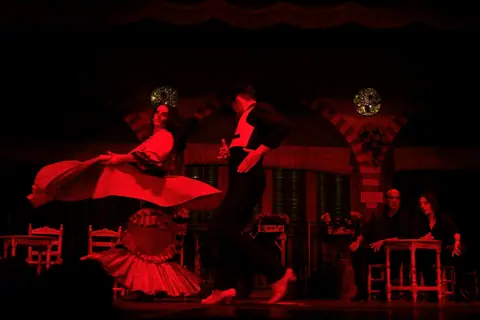
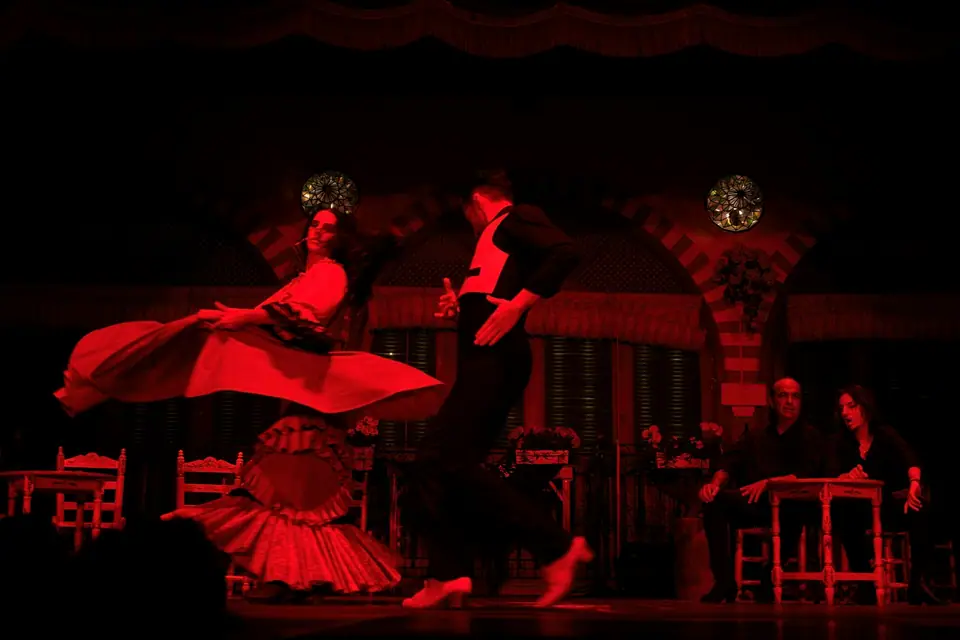
A show is built from three elements. Cante is the singing: raw, often in a cracked voice, with long wailing phrases that surprise people expecting something pretty. Toque is the guitar, which leads everything. Baile is the dance, with the footwork (zapateado) that makes the floor ring. Around them you get palmas (rhythmic handclapping), usually a cajón (a box drum you sit on), and shouts of olé from the performers themselves. Each piece follows a palo, a style with its own rhythm and mood: the heavy soleá, the cheerful alegrías, the fast bulerías that often close the night.
Much of it is improvised. The dancer signals the guitarist, the singer comes in when it feels right, and no two nights run exactly the same.
Tablao or concert hall
A tablao is a small venue built for flamenco: a wooden stage, tables pressed up close, sometimes fewer than a hundred seats. You are near enough to hear the breath and the shoes, and to feel the floor move. This is the format flamenco lovers prefer, and it suits a first visit best.
A concert-hall gala puts the same ingredients on a bigger stage. The Palau de la Música Catalana hosts regular flamenco shows in its main hall and its smaller Petit Palau, and part of the appeal is simply sitting inside that modernista room with its stained-glass skylight. The sound is polished and the staging larger, but from the back rows you lose the intimacy that makes flamenco work. We see it as a good choice for people who wanted to see the Palau anyway.
Honest verdict: if flamenco is the point, choose a tablao. If the building is the point, choose the Palau.
How to Book
Most tablaos run two or three shows a night and sell tickets online in tiers. The usual choices are:
- Show with a drink. Entry plus one drink, usually sangria, wine or a soft drink. For most people this is enough.
- Show with tapas or dinner. You arrive earlier and eat before the performance. The food is rarely the highlight, and in many places tables close to the stage come with the dinner tiers. Eating in the Gothic Quarter or El Born first and booking a drink ticket is often the better night out.
- Concert-hall seats are sold by zone like any concert. Mid-stalls with a clear view of the feet beat a box on the side.
When you compare, check how long the show runs, how many artists are on stage (a singer, a guitarist and at least two dancers is a solid lineup), whether seating is numbered or first come first served, and the cancellation terms. Many tablao tickets are non-refundable or can only be changed a day ahead.
Book a few days ahead in summer and for weekend evenings. The later show is usually looser and the audience more awake. Our three-day itinerary has an evening slot that fits one.
Tips
- Sit close and central. In a tablao, the first rows are where you see the footwork. Side seats in small rooms can leave a pillar or the guitarist between you and the dancer.
- Don't clap along. Palmas follow complex rhythms, and audience clapping throws the artists off. Applaud at the end of each piece, or when the performers pause.
- Photos and video are often banned or limited to the last number. Check the rules before you raise your phone.
- Pair it with the right area. Most tablaos cluster around the Rambla and the Gothic Quarter, so a show fits well after an evening walk there.
- Who it suits: couples, first-timers to Spain, and children old enough to sit still for an hour. It suits less well anyone travelling on to Andalusia, where the shows are closer to the source.
- For more evening ideas, see our things to do list.
Reviews
Log in to write a review.
No reviews yet.
You might also like

Ubud Cycling Tour
Usually a half day to a full day including hotel pickup, with around 2 to 3 hours on the bike · Bali
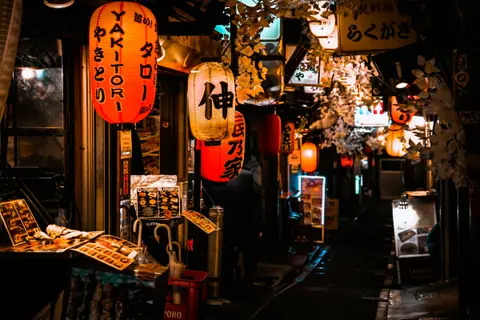
Tokyo Izakaya Food Tour
About 3 hours, usually three or four stops in one or two neighbourhoods · Tokyo
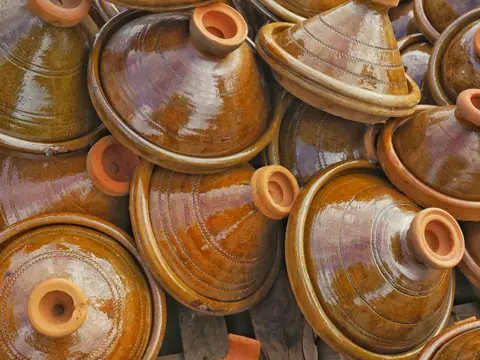
Moroccan Cooking Class in Marrakech
About 3 to 5 hours, including the market visit and the meal you cook · Marrakech
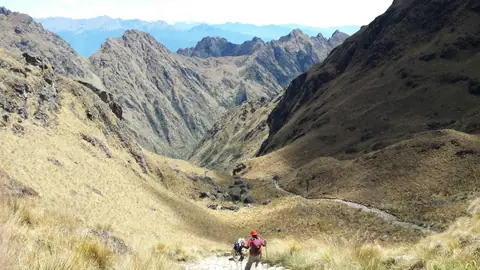
Inca Trail Trek to Machu Picchu
4 days and 3 nights for the classic trek, 1 long day for the short version (2 days with a night in Aguas Calientes and a second visit) · Machu Picchu