All 100 essential sights across Museum Island, Unter den Linden, Brandenburg Gate, the Government Quarter, Nikolaiviertel, Kreuzberg and Charlottenburg mapped in walking order.
Twin River Towns on the Spree to Divided and Reunited Capital
Berlin emerged in the thirteenth century as the twin merchant towns of Berlin and Cölln on either side of a sandy island ford in the Spree River (whose medieval core survives in the Nikolaiviertel). Selected in the fifteenth century as the permanent residence of the Hohenzollern Electors of Brandenburg, the city expanded westward after the Thirty Years War along the lime-tree boulevard of Unter den Linden. Under King Frederick the Great in the eighteenth century and Neo-Classical architect Karl Friedrich Schinkel in the nineteenth, Berlin became a centre of Enlightenment science, music and museum architecture on Museum Island (Museumsinsel).
After becoming capital of the German Empire in 1871 and cultural dynamo of the 1920s Weimar era, Berlin stood at the epicentre of twentieth-century history, from the devastation of the Second World War and the Cold War division marked by the Berlin Wall (1961 to 1989) to the peaceful Fall of the Wall on 9 November 1989 and the city bold architectural rebirth as the capital of reunified Germany.
Brandenburg Gate, Reichstag, Government Quarter & Tiergarten
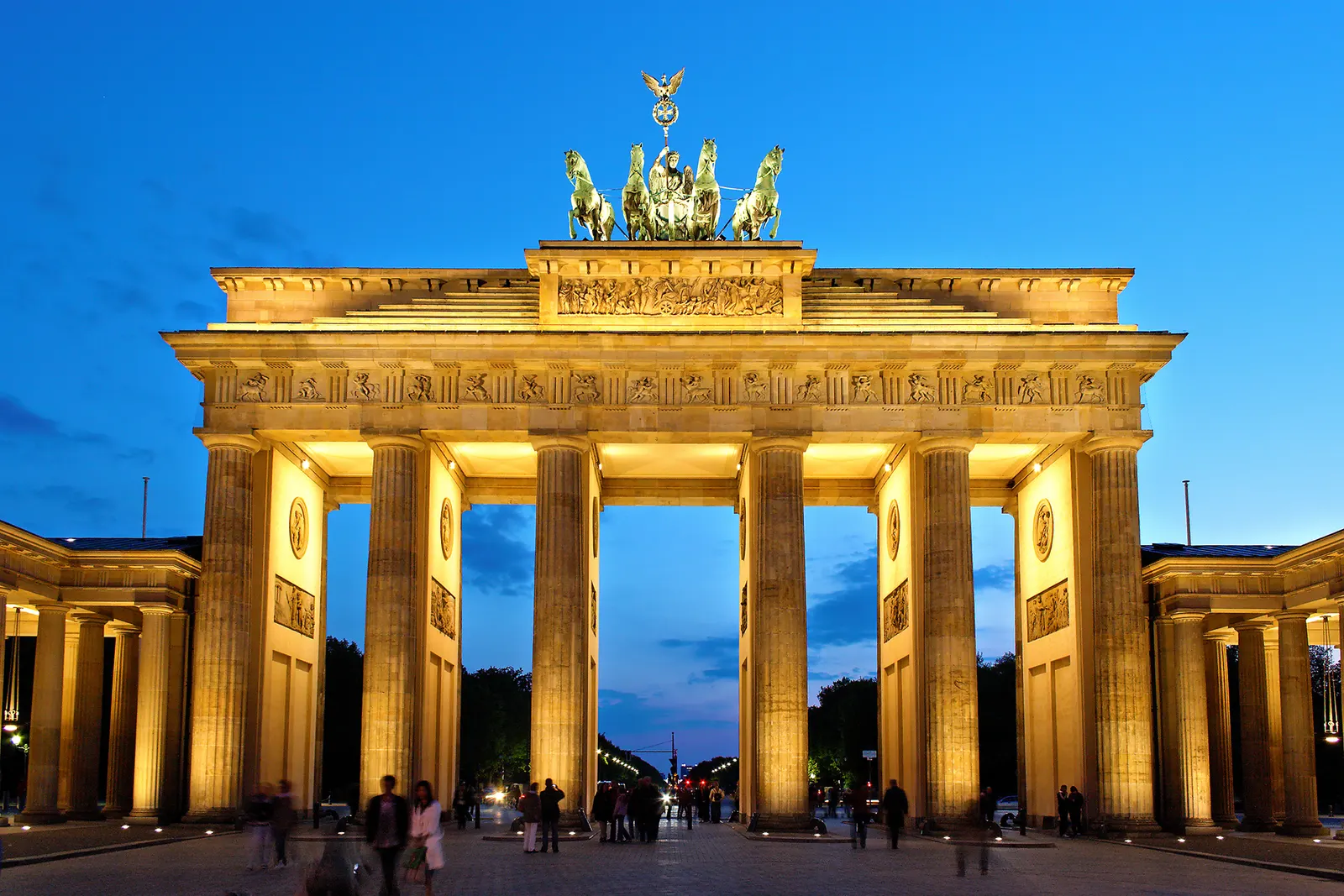
Begin at Pariser Platz and the Brandenburg Gate, visiting the glass dome of the Reichstag, the Holocaust Memorial and the leafy monuments of the Tiergarten.
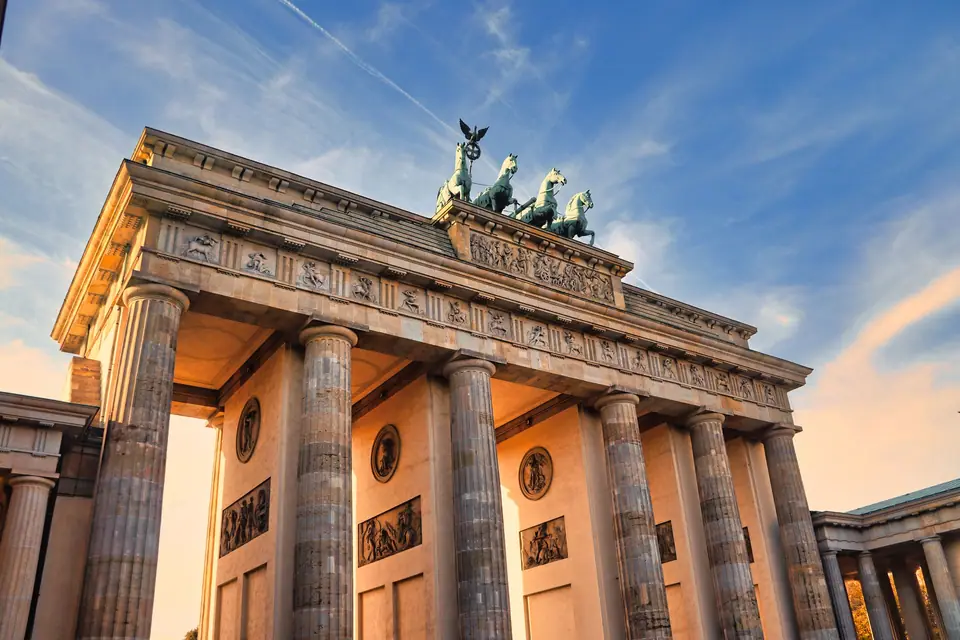
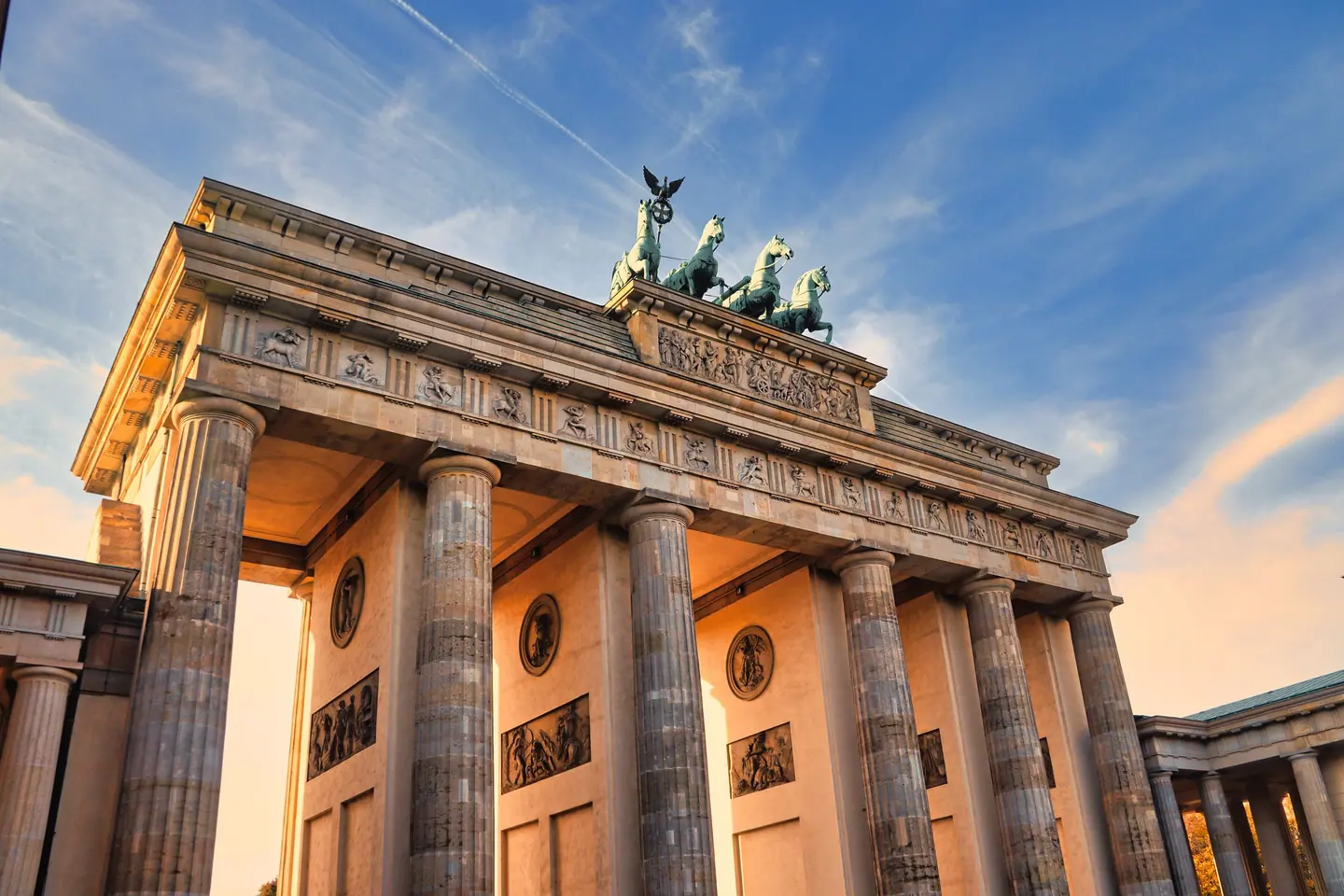
Brandenburg Gate
Commissioned by King Frederick William II and completed in 1791, this monumental gate was designed by Carl Gotthard Langhans following Athenian Propylaea models. Crowning the attic stands Johann Gottfried Schadow's copper Quadriga, depicting the goddess of victory steering a four-horse chariot. During the Cold War it stood isolated in the border strip between East and West Berlin.
Pariser Platz
Laid out in the early eighteenth century, this square was named to honour the 1814 anti-Napoleonic coalition capture of Paris. Devastated during the Second World War and cleared during the division of the city, it was meticulously reconstructed after reunification. Notice the strict architectural guidelines governing building heights and window proportions, visible on the French and American embassies.
Room of Silence
Situated within the northern wing of the Brandenburg Gate, this simple retreat opened in 1994 to offer visitors peace amidst urban movement. Inspired by the meditation room at the United Nations in New York, the space remains free of religious iconography. A woven wall tapestry by Hungarian artist Ritta Pásztor subtly suggests light emerging from darkness.
Memorial to the Murdered Jews of Europe
Designed by architect Peter Eisenman and engineer Buro Happold, this solemn memorial covers 19,000 square metres with 2,711 concrete slabs arranged in a grid. The undulating ground creates an atmosphere of spatial disorientation as visitors walk down the narrow paths. Beneath the field lies an underground information centre documenting the fates of families across wartime Europe.
Memorial to the Homosexuals Persecuted Under Nazism
Inaugurated in 2008, this memorial was designed by Scandinavian artistic duo Michael Elmgreen and Ingar Dragset. Mirroring the dimensions of Eisenman's Holocaust stelae across the street, the cuboid structure features a small window looking into a darkened interior. Visitors peering inside view a continuous film loop depicting an intimate kiss, commemorating victims prosecuted under Paragraph 175.
Memorial to the Sinti and Roma Victims of National Socialism
Conceived by Israeli sculptor Dani Karavan, this quiet memorial opened in 2012 opposite the Reichstag. It consists of a reflective dark circular pool of water with a triangular stone stele at its centre. A fresh wildflower is placed on the stone daily, surrounded by bronze letters inscribed with the poem 'Auschwitz' by Roma poet Santino Spinelli.
Reichstag Building
Constructed in 1894 by Paul Wallot, the Reichstag witnessed pivotal moments of German history, including the 1933 fire and the final Soviet assault in 1945. Following reunification, British architect Norman Foster restored the building, adding a soaring steel and glass dome. Inside, helical ramps allow visitors to walk above the parliamentary plenary chamber, symbolising democratic transparency.
Paul-Löbe-Haus
Designed by Stephan Braunfels and completed in 2001, this massive administrative complex accommodates parliamentary committees and members of the Bundestag. The structure forms part of the 'Band des Bundes', an architectural line of federal buildings crossing the former course of the Berlin Wall. Remarkable for its monumental concrete colonnades and glazed courtyards, it connects directly across the river.
Marie-Elisabeth-Lüders-Haus
Named after the social politician and women's rights campaigner, this riverside building contains the parliamentary library, one of the largest legislative collections globally. Built by Stephan Braunfels, it faces its sister building, the Paul-Löbe-Haus, across the water. A preserved section of the inner Berlin Wall stands within the public foyer, marking where the Cold War division once severed the district.
Federal Chancellery
Engineered by architects Axel Schultes and Charlotte Frank, this vast executive office opened in 2001 as part of the federal ribbon project. Locals often refer to the white central cube as the 'washing machine' due to its monumental semi-circular glazed cutouts. In the forecourt stands Eduardo Chillida's monumental iron sculpture 'Berlin', symbolising political union and dialogue.
Memorial to the Murdered Members of the Reichstag
Set into the pavement outside the south entrance of the Reichstag building, this understated memorial was installed in 1992. It consists of ninety-six cast-iron plaques arranged like upright books on a shelf, each bearing the name, party affiliation, and dates of a murdered parliamentarian. The memorial commemorates representatives across political parties who opposed the totalitarian regime.
Soviet War Memorial (Tiergarten)
Erected by the Red Army in late 1945, this curved marble colonnade honours the soldiers who fell during the Battle of Berlin. It is topped by a bronze statue of a Red Army soldier sculpted by Lev Kerbel. Two Soviet ML-20 howitzers and two T-34 tanks flank the entrance, while thousands of fallen soldiers lie buried in the surrounding parkland.
Beethoven-Haydn-Mozart Memorial
Designed by Rudolf Siemering and completed in 1904, this ten-metre-high monument in the Tiergarten celebrates the classical masters Ludwig van Beethoven, Joseph Haydn, and Wolfgang Amadeus Mozart. Sculpted from Grecian marble, it features relief portraits, cherubs, and allegorical figures representing music. Extensively damaged during the Second World War, the monument underwent careful restoration before being unveiled anew in 2007.
Goethe Monument
Standing along the eastern edge of the Tiergarten, this statue dedicated to Johann Wolfgang von Goethe was created by sculptor Fritz Schaper and unveiled in 1880. Carved from Carrara marble, the figure depicts the writer standing atop an ornate pedestal. Below him sit allegorical figures representing Drama, Lyric Poetry, and Science, reflecting his multifaceted intellectual contributions.
Queen Luise Monument
Erected in 1880, this finely sculpted Carrara marble statue by Erdmann Encke honours Queen Luise of Prussia, celebrated for her patriotic resolve during the Napoleonic Wars. The queen is depicted in flowing period attire, elevated on an ornamental plinth embellished with intricate reliefs. The monument occupies a peaceful grove within the Tiergarten, preserved through careful conservation efforts.
Rousseau Island
Created in the late eighteenth century during the redesign of the Tiergarten by landscape architect Justus Ehrenreich Sello, this tranquil islet honours the Genevan philosopher Jean-Jacques Rousseau. Designed as an English landscape garden element, the tree-shaded mound features a classical memorial urn. We can observe willow trees dipping into the surrounding lake, capturing the romantic spirit of Enlightenment-era park architecture.
Carillon in Berlin-Tiergarten
Constructed in 1987 to commemorate the 750th anniversary of Berlin, this 42-metre-tall tower stands near the House of World Cultures. Designed by architects Dietrich Bangert, Bernd Jansen, Stefan Scholz, and Axel Schultes, it contains 68 cast-bronze bells played via a mechanical keyboard. The massive instrument covers five and a half octaves, sounding daily chimes and hosting live summer recitals.
House of World Cultures
Originally built as the Congress Hall for the 1957 Interbau exhibition, this striking modernist building was a gift from the United States designed by Hugh Stubbins. Locals nicknamed the structure the 'Pregnant Oyster' on account of its dramatically curved prestressed concrete roof. Today it serves as a contemporary centre for international non-European arts, dialogue, and exhibitions.
Bellevue Palace
Erected in 1786 as a summer residence for Prince Augustus Ferdinand of Prussia, this elegant estate was designed by Michael Philipp Boumann as Germany's first early neoclassical palace. Located on the northern fringe of the Tiergarten along the Spree, it has served as the official primary residence of the German Federal President since 1994. Its white tripartite façade overlooks manicured private parkland.
Victory Column
Designed by Heinrich Strack to commemorate Prussian military triumphs in the nineteenth century, this towering monument was completed in 1873 and later moved to the Großer Stern in 1939. At its summit stands Friedrich Drake's gilded sculpture of Victoria, affectionately called 'Goldelse' by Berliners. Visitors ascending the 285 spiral steps inside reach an open-air viewing platform providing sweeping panoramas across the forested park.
Unter den Linden, Gendarmenmarkt, Bebelplatz & Friedrichstraße
Walk east down historic Unter den Linden to Bebelplatz, Humboldt University, Neue Wache and the twin-domed French and German Cathedrals on Gendarmenmarkt.
Russian Embassy in Berlin
Constructed between 1949 and 1951, this imposing complex replaced the destroyed tsarist legation. Architect Anatoly Stryzhevsky designed the symmetric limestone facade in the socialist realist style, featuring classical columns and decorative relief panels. We can inspect the massive central portal and solemn decorative friezes facing the grand boulevard.
Komische Oper Berlin
Founded in 1947 by director Walter Felsenstein, the institution champions innovative musical theatre in the city centre. While the exterior was rebuilt with understated modernist lines following wartime destruction, the interior preserves an opulent 1892 neo-baroque auditorium designed by Viennese architects Fellner and Helmer, complete with gilded stucco and plush red velvet.
Equestrian Statue of Frederick the Great
Sculptor Christian Daniel Rauch spent over a decade crafting this colossal bronze monument, unveiled on Unter den Linden in 1851. The elevated pedestal portrays Frederick the Great in military uniform atop his favourite horse, surrounded by life-sized statues of army commanders, statesmen and Enlightenment philosophers, reflecting the intellectual and military ambitions of Prussia.
Humboldt University Main Building
Originally built by Johann Boumann in the mid-eighteenth century as Prince Henry's royal residence, this neoclassical palace became Berlin's university in 1810. Educational reformer Wilhelm von Humboldt founded the institution to unite teaching and research. Marble statues of Alexander and Wilhelm von Humboldt flank the main gate, welcoming visitors to the historic forecourt.
Bebelplatz
Envisioned by Frederick the Great as part of the grand Forum Fridericianum, this spacious public square was shaped by court architect Georg Wenzeslaus von Knobelsdorff. It gained grim historical prominence in May 1933 when Nazi student groups burned thousands of censored books here. Today, elegant neoclassical facades surround the open stone esplanade.
The Empty Library Memorial
Designed by Israeli sculptor Micha Ullman and inaugurated in 1995, this subterranean monument sits directly below the paving stones of Bebelplatz. Visitors peer down through a glass plate into a whitewashed room filled with empty bookshelves sized to hold twenty thousand volumes. A nearby bronze plaque records Heinrich Heine's chilling 1820 prophetic warning.
St. Hedwig's Cathedral
Erected between 1747 and 1773, St Hedwig's was the first Catholic church built in Prussia following the Reformation. Architect Georg Wenzeslaus von Knobelsdorff modelled the circular rotunda and ribbed copper dome directly on the ancient Roman Pantheon. Rebuilt after heavy wartime bomb damage, it serves as the seat of Berlin's Catholic archbishop.
Alte Bibliothek
Commissioned by Frederick the Great and built between 1775 and 1780 by Georg Friedrich Boumann, this ornate library held the royal book collection. Its undulating, convex facade earned it the local nickname Kommode, or chest of drawers. Today, the restored baroque structure houses the law faculty of Humboldt University directly alongside Bebelplatz.
Berlin State Opera
Opened in 1742 as the Royal Court Opera, this grand hall was designed by Georg Wenzeslaus von Knobelsdorff in the Palladian style. It was the first freestanding opera house in Germany, featuring Corinthian porticos and mythological pediment reliefs. Repeatedly rebuilt after fires and wartime bombardments, it continues to stage major international operatic productions.
Altes Palais
Carl Ferdinand Langhans designed this elegant neoclassical palace between 1834 and 1837 for Prince Wilhelm, who later reigned as German Emperor Wilhelm I. The monarch famously greeted morning crowds from its corner window. Although gutted during the Second World War, the facade was faithfully reconstructed, and the building now accommodates academic university facilities.
Neue Wache
Master architect Karl Friedrich Schinkel designed this compact Greek revival guardhouse in 1818 to commemorate Prussian victories against Napoleon. Its Doric portico evokes a classical Roman castrum. Since 1993, the building has served as Germany's central memorial to the victims of war and dictatorship, illuminated by an open circular oculus in the ceiling.
Mother with her Dead Son Memorial
Positioned directly under the open skylight inside the Neue Wache, this enlarged bronze sculpture reproduces a 1937 design by artist Käthe Kollwitz. Depicting a grieving mother cradling her deceased adult son, the piece reflects universal sorrow. Exposed to rain, snow and direct sunlight, the sculpture delivers an austere emotional impact within the empty stone hall.
Zeughaus
Started in 1695 under master builder Arnold Nering and completed by Jean de Bodt, the Zeughaus is the oldest surviving building on Unter den Linden. Its exterior features classical balustrades topped with sculptural trophies of arms. In the central courtyard, twenty-two expressive stone keystones sculpted by Andreas Schlüter depict the agonised faces of dying warriors.
Prussian Academy of Sciences
Founded in 1700 through the efforts of polymath Gottfried Wilhelm Leibniz, this learned academy gathered prominent European scientists, including Albert Einstein and Max Planck. The monumental neo-baroque complex constructed around 1914 later hosted the Academy of Sciences of East Germany. Today, parts of the vast building serve the Berlin-Brandenburg Academy of Sciences and Humanities.
Gendarmenmarkt
Established at the end of the seventeenth century by Johann Arnold Nering, this square was originally known as the Esplanade. It took its current name from the Gens d'Armes cavalry regiment that stabled horses here. Flanked by matching domed towers and a grand central theatre, it forms one of Europe's most balanced urban ensembles.
Konzerthaus Berlin
Constructed by Karl Friedrich Schinkel between 1818 and 1821 upon the ruins of the burned National Theatre, this building is a masterpiece of German neoclassicism. A grand exterior flight of steps leads up to a hexastyle Ionic portico adorned with mythological sculptures. Inside, the reconstructed Great Hall features crystal chandeliers, gilded balconies and world-renowned acoustics.
Schiller Memorial
Unveiled in 1871 directly in front of the Konzerthaus, this white Carrara marble statue was sculpted by Reinhold Begas. Schiller stands proudly in classical robes holding a manuscript roll. Surrounding the base are four allegorical female figures representing Tragedy, History, Philosophy and Poetry, paying tribute to the celebrated Enlightenment playwright and poet.
Französischer Dom
Built between 1701 and 1705 by the French Huguenot community who fled religious persecution, this place of worship was later enhanced in 1785 by Carl von Gontard's domed neo-baroque tower. While the attached church remains an active Protestant parish, the domed tower houses the Huguenot Museum and a high observation balustrade overlooking central Berlin.
Deutscher Dom
Martin Grünberg designed the original pentagonal Lutheran church here in 1708, while Carl von Gontard added the grand domed tower in 1785 to mirror the French Cathedral opposite. Thoroughly restored after devastating wartime fires, the structure no longer holds religious services. Instead, it hosts the German Bundestag's comprehensive multi-storey exhibition exploring the development of parliamentary democracy.
Friedrichstraße Station
Opened in 1882 on the elevated Stadtbahn viaduct, this historic transport hub played a dramatic role during the Cold War as a fortified border crossing inside East Berlin. Travellers transferred between Eastern and Western transit networks under heavy surveillance. The adjacent steel-and-glass pavilion, nicknamed the Tränenpalast or Palace of Tears, commemorates emotional family partings.
UNESCO Museum Island, Berlin Cathedral, Humboldt Forum & Nikolaiviertel
Explore the five world museums of Museum Island (Altes, Neues, Alte Nationalgalerie, Bode, Pergamon), Berlin Cathedral, Humboldt Forum and the medieval Nikolaiviertel.
Altes Museum
Designed by master architect Karl Friedrich Schinkel and completed in 1830, this monumental building displays classical Greek, Etruscan, and Roman collections. Visitors approach through an imposing portico of eighteen fluted columns facing the Lustgarten. Inside, a two-storey central rotunda modelled directly on Rome's Pantheon presents classical statues under a coffered dome.
Lustgarten
Originally developed as a palace kitchen garden in the sixteenth century, this open park was repeatedly transformed by Prussian monarchs for military parades and public leisure. Peter Joseph Lenné later landscaped the grounds into an urban public square. The centrepiece is a vast seventy-ton granite bowl, carved from a single glacial boulder and installed in 1831.
Berlin Cathedral
Erected between 1894 and 1905 under Emperor Wilhelm II, this Protestant cathedral replaced a simpler neoclassical structure designed by Schinkel. The opulent interior features ornate gilded carvings, marble mosaics, and the historic Sauer pipe organ with over seven thousand pipes. Below the main nave lies the Hohenzollern Crypt, containing almost one hundred royal sarcophagi spanning four centuries.
Neues Museum
Friedrich August Stüler designed the original structure in the mid-nineteenth century, introducing pioneering iron framing and rich decorative wall paintings. Following severe wartime damage, British architect David Chipperfield restored the museum, combining preserved historical remnants with minimalist modern concrete. The Egyptian Museum collection features the limestone bust of Queen Nefertiti alongside extensive prehistoric European artefacts.
James Simon Gallery
Named after the prominent twentieth-century arts patron Henri James Simon, this contemporary pavilion opened in 2019 to serve as the central entrance to Museum Island. Designed by David Chipperfield, it uses slender stone colonnades that visually echo the neoclassical architecture of the neighbouring galleries. The interior houses ticketing facilities, auditorium space, and direct subterranean access routes.
Alte Nationalgalerie
Resembling an elevated Roman temple set on a tall sandstone plinth, this building was conceived by Friedrich August Stüler and built by Johann Heinrich Strack. An equestrian statue of King Frederick William IV commands the entrance stairway. The rooms display extensive collections of Neoclassical, Romantic, and Impressionist art, including masterworks by Caspar David Friedrich and Adolph Menzel.
Pergamon Museum
Constructed between 1910 and 1930 to plans by Alfred Messel and Ludwig Hoffmann, this colossal three-wing museum was purpose-built to house full-scale reconstructed ancient monuments. Its galleries contain the Ishtar Gate of Babylon, the Market Gate of Miletus, and the reconstructed Roman and Islamic facades. Extensive restoration programmes continue to update the complex while safeguarding its fragile architectural antiquities.
Pergamon Museum. The Panorama
Erected across the canal as an interim exhibition space during long-term museum renovations, this rotunda showcases a 360-degree painting by artist Yadegar Asisi. The vast circular canvas reconstructs life in the ancient Greek city of Pergamon during the Roman imperial period. Authentic sculptures and architectural fragments from the museum collection complement the immersive visual reconstruction.
Bode Museum
Architect Ernst von Ihne completed this triangular building in 1904 under the guidance of founding director Wilhelm von Bode. Crowning the Spree river confluence with a majestic ribbed dome, it displays a world-renowned sculpture collection spanning medieval to early Renaissance Europe. The museum also contains Byzantine art, early Christian relics, and an extensive historical numismatic cabinet.
Monbijou Bridge
Built between 1902 and 1904 to link the Spree banks with the apex of Museum Island, this dual bridge spans both arms of the river. The southern span leads directly to the main portal of the Bode Museum beneath its dome. The bridge provides panoramic viewpoints over the water towards Monbijou Park and the passing river barges.
Schlossbrücke, Berlin
Connecting the boulevard Unter den Linden to Museum Island, this stone bridge was designed by Karl Friedrich Schinkel and finished in 1824. Eight white Carrara marble sculpture groups portray the development and trials of classical warriors guided by the goddesses Nike and Athena. Its cast-iron railings display detailed sea horses, dolphins, and tritons.
Humboldt Forum
Occupying the site of the demolished Hohenzollern residence and the East German Palace of the Republic, this cultural complex was designed by architect Franco Stella. Three facades accurately recreate Andreas Schlüter's Baroque palace exteriors, whereas the Spree riverfront features contemporary minimalist masonry. Inside, galleries house the Ethnological Museum and the Museum of Asian Art.
Neptunbrunnen
Sculptor Reinhold Begas created this dramatic fountain in 1891 as a gift from the Berlin city administration to Emperor Wilhelm II. Originally situated in the palace square, it was relocated to the public space near the St Mary Church after the Second World War. The sea god Neptune stands on a scallop shell surrounded by figures personifying the Rhine, Elbe, Oder, and Vistula.
St. Mary's Church, Berlin
Dating back to the late thirteenth century, this red-brick hall church remains one of the oldest preserved religious sanctuaries in central Berlin. Carl Gotthard Langhans added the distinctive Gothic Revival lantern spire atop the medieval tower in 1790. Inside the entrance tower, visitors find a famous twenty-two-metre-long Dance of Death wall painting created during the plague outbreak of 1484.
Marx-Engels-Forum
Created by the East German government in 1986, this landscaped park lies along the Spree riverbank opposite the Humboldt Forum. The focal point is a central circular plaza featuring larger-than-life bronze statues of Karl Marx and Friedrich Engels created by sculptor Ludwig Engelhardt. Surrounding stainless-steel photo steles document the history of the international labour movement.
Liebknechtbrücke
Rebuilt in stone and steel in the mid-twentieth century, this major crossing connects Museum Island to the eastern bank of the Spree river. It takes its name from socialist leader Karl Liebknecht, who proclaimed a free socialist republic from the palace balcony in 1918. The bridge offers clear perspectives of Berlin Cathedral's southern facade and tour boats docking beneath the quayside.
St. Nicholas Church, Berlin
First erected around 1230, this ancient foundation marks the historical origin of Berlin and its neighbouring medieval twin town, Cölln. The church features limestone ashlar foundations, a Gothic hall choir, and twin open-work spires added in 1876. Now operating as a city museum, it displays medieval architectural elements, baroque tombs, and exhibits tracing the early development of the municipality.
Nikolaiviertel
Heavily destroyed during the Second World War, this quarter was rebuilt between 1980 and 1987 by East Berlin authorities to commemorate the city's 750th anniversary. Architect Günter Stahn combined faithful replicas of historic townhouses with prefabricated concrete elements echoing regional German Renaissance styles. Narrow cobbled alleys feature traditional taverns, historicist lamp posts, and artisan workshops.
Knoblauchhaus
Constructed in 1760 for the prominent merchant Knoblauch family, this three-storey townhouse survived the destruction of the surrounding quarter intact. Its delicate neoclassical facade faces the churchyard of Saint Nicholas. Today, the building serves as a museum dedicated to the Biedermeier era, presenting authentic bourgeois parlours, historic family portraits, period furniture, and decorative household items.
Ephraim-Palais
Built between 1762 and 1766 for the court jeweller and financier Nathan Veitel Heine Ephraim, this building represents German late Rococo town architecture. Demolished in 1936 for road widening, its facade components were safely stored and later reconstructed on site during the 1980s. The interior features a celebrated spiral staircase and regular exhibitions on Berlin art and history.
Hackesche Höfe, Scheunenviertel, Bernauer Straße Memorial & Prenzlauer Berg
Thread through the Art Nouveau courtyards of Hackesche Höfe and New Synagogue to the Berlin Wall Memorial at Bernauer Straße, Mauerpark and Kulturbrauerei.
Hackesche Höfe
Designed by August Endell and opened in 1906, this complex represents the largest enclosed courtyard area in Germany. We observe the striking polychrome glazed tiles of the first courtyard, which contrast with the quieter residential quarters deeper inside. Today the site accommodates independent workshops, galleries, and a historic cinema.
Haus Schwarzenberg
Directly adjacent to modern retail spaces, this raw courtyard preserves the unvarnished atmosphere of post-reunification Berlin. The walls are covered in layers of street art, paste-ups, and iron sculptures created by the Dead Chickens collective. It also houses cultural foundations and independent exhibition rooms dedicated to regional wartime history.
Museum Blindenwerkstatt Otto Weidt
Located in a rear wing of Haus Schwarzenberg, this small museum occupies the original premises where Otto Weidt ran his broom manufacturing firm during the Second World War. Weidt employed predominantly blind and deaf Jewish citizens, forging papers and hiding families from deportation. The preserved rooms display personal letters, tools, and the concealed backroom.
Sophienkirche
Founded by Queen Sophie Luise of Prussia in 1712, this church stands quietly behind modern street fronts. Its ornate baroque tower, added in the 1730s by Johann Friedrich Grael, is the sole remaining structure of its style in the city. The tranquil surrounding churchyard contains the graves of composer Carl Friedrich Zelter and poet Karl Wilhelm Ramler.
Grosse Hamburger Strasse Jewish Cemetery
This sacred site served as the earliest resting place for Berlin's modern Jewish community until its closure in 1827. Gestapo forces desecrated the grounds in 1943, digging defensive trenches through the graves and destroying headstones. Today, visitors can see the symbolic tomb of philosopher Moses Mendelssohn and a poignant sculpture group honouring victims of fascism.
The Missing House
Created by French artist Christian Boltanski in 1990, this open-air installation fills a vacant lot left by a 1945 Allied bombing raid. Plaques mounted on the exposed gables of the neighbouring buildings record the names, professions, and dates of residence of the former German and Jewish tenants. The void itself serves as the monument.
New Synagogue
Constructed between 1859 and 1866 under Eduard Knoblauch and Friedrich August Stüler, this was once Germany's largest synagogue. Heavily damaged during the November Pogroms and Allied air raids, the facade and central dome were meticulously reconstructed in the late twentieth century. It now houses the Centrum Judaicum, an institution chronicling local Jewish history.
Postfuhramt
Completed in 1881 by architect Carl Schwatlo, this vast complex served as the hub of the Prussian imperial horse-drawn postal network. The yellow-brick facade features decorative medallions of figures from global postal history along with fine ceramic detailing and twin corner towers. It exemplifies late nineteenth-century municipal infrastructure in the German capital.
St. Adalbert Church
Concealed within a dense residential courtyard, this church was built to serve the Catholic immigrant workers who moved to Spandauer Vorstadt in the late nineteenth century. Because Prussian building laws strictly limited visible Catholic church facades, the exterior blends seamlessly into the tenement street. The interior contains preserved mosaic works and Romanesque revival stone capitals.
Koppenplatz
This leafy square is named after Christian Koppe, an eighteenth-century city governor who donated the parcel as a communal poor cemetery. In the centre sits Karl Biedermann's 1996 bronze memorial sculpture, showing an overturned chair and a table on parquetry flooring. The piece evokes the abrupt eviction and deportation of Jewish residents during National Socialist rule.
St. Elisabeth Church
Commissioned by King Frederick William III and finished in 1835, this is the largest of four suburban churches planned by Schinkel. The austere temple front features six monumental Doric columns supporting a classical pediment. Burnt out during air raids in 1945, the restored nave now provides atmospheric acoustics for classical concerts and temporary exhibitions.
Berlin Wall Memorial
Stretching along Bernauer Straße, this open-air museum preserves the sole remaining section of the border fortifications with its original depth, including the death strip, patrol road, and watchtower. A visitor centre provides historical accounts of escapes and territorial partition. Corten steel poles mark the path where the concrete wall once bisected residential streets.
Chapel of Reconciliation
Erected in 2000, this oval sanctuary stands on the exact footprint of the Neo-Gothic Church of Reconciliation, which East German authorities dynamited in 1985. The innovative structure features compressed loam walls wrapped within an outer screen of wooden louvres. Inside, the original bells and altarpiece retrieved from the rubble have been thoughtfully reinstalled.
Nordbahnhof
During the division of Berlin, trains operating from West Berlin passed through this sealed East Berlin underground station without stopping. Armed border guards patrolled the darkened platforms to prevent defections, turning the site into an infamous ghost station. Today, the pedestrian concourse presents an informative permanent exhibition documenting underground escape tunnels and divided transport networks.
Mauerpark
Spanning the border between Mitte and Prenzlauer Berg, this expansive park was established in the 1990s on former railway yards and border fortifications. A substantial 800-metre segment of the inner Berlin Wall still stands on the western ridge, serving as a dedicated surface for local graffiti artists. The amphitheatre attracts large gatherings on weekends.
Kulturbrauerei
Dating from the late nineteenth century, this multi-courtyard complex was operated by the Schultheiss brewery until 1967. Designed primarily by Franz Heinrich Schwechten, the yellow and red clinker-brick facades evoke a fortified industrial castle. Today, the site functions as a historic cultural venue containing theatres, an art house cinema, and the Museum in the Kulturbrauerei.
Kollwitzplatz
Surrounded by restored Gründerzeit tenement houses, this green square was planned by James Hobrecht during the city's late nineteenth-century expansion. It takes its name from artist and pacifist Käthe Kollwitz, who lived and worked nearby for over five decades. A bronze replica of her seated self-portrait, cast by Gustav Seitz, stands surrounded by shaded park benches.
Wasserturm Prenzlauer Berg
Engineered by Henry Gill, this round brick monument was constructed to supply the growing working-class neighbourhoods of northeastern Berlin with municipal water. The massive lower brick base originally housed engine machinery and municipal staff quarters before being temporarily repurposed as an early detention camp in 1933. The landscaped hillside offers views across the rooftops of Mitte.
Rykestrasse Synagogue
Dedicated in 1904 by Johann Hoeniger, this imposing red-brick synagogue was saved from complete destruction during the November Pogroms of 1938 only because it was hemmed in by non-Jewish tenements. The interiors, however, were thoroughly ransacked and used as a stable. Restored to its pre-war magnificence in 2007, it displays soaring vaulted ceilings and stained glass.
Gethsemane Church
Built between 1891 and 1893 by August Orth, this brick church combines Romanesque Revival massing with Gothic detailing and an imposing octagonal lantern. In autumn 1989, the church served as an essential sanctuary for civil rights campaigners, political dissidents, and peaceful vigils against the East German government. Today, it remains an enduring symbol of peaceful political transformation.
Potsdamer Platz, Checkpoint Charlie, Kreuzberg, East Side Gallery & Charlottenburg
Trace Cold War and cultural landmarks from Potsdamer Platz, Topography of Terror, Checkpoint Charlie and the Jewish Museum to the East Side Gallery and Charlottenburg Palace.
Potsdamer Platz
Once a prewar traffic intersection that was reduced to wasteland during the Cold War, this square underwent massive reconstruction in the 1990s. International architects including Renzo Piano helped shape its modern corporate towers and entertainment quarters. Visitors can inspect preserved sections of the Berlin Wall and historic pavings tracing its former boundary.
Kollhoff Tower
Completed in 1999 by architect Hans Kollhoff, this 103-metre skyscraper echoes traditional early-twentieth-century American high-rises with its dark peat-fired brick facade. Fast elevators whisk visitors to the Panoramapunkt viewing deck on the top floors. The summit provides open-air perspectives across Tiergarten, the government district and the surrounding city centre.
Sony Center
Designed by Helmut Jahn and opened in 2000, this steel and glass ensemble features a dramatic tent-like roof inspired by Mount Fuji. The central public forum incorporates the preserved historic dining rooms of the prewar Hotel Esplanade. It houses cinemas, offices, cafes and the German Film Museum beneath its illuminated canopy.
Leipziger Platz
Laid out in the eighteenth century as an octagonal plaza, this civic space lost its original neoclassical mansions to wartime bombing and the subsequent border zone. Modern redevelopment has faithfully reconstructed its distinctive geometric footprint with uniform building heights. It now connects western retail quarters with the government ministries lining Wilhelmstrasse.
Topography of Terror
Located on the grounds of the former Reich Main Security Office and Gestapo headquarters, this documentation centre chronicles the machinery of state terror. An open-air trench exposes excavated prison basement walls beneath a surviving segment of the Berlin Wall. Inside, a minimalist pavilion presents archival photographs, documents and biographical accounts.
Martin-Gropius-Bau
Designed by Martin Gropius and Heino Schmieden as a museum of decorative arts, this grand venue exhibits Italian Renaissance styling with elaborate mosaics and terracotta friezes. Heavily restored after severe wartime bombardment, its central glass-topped atrium now hosts major international art and design exhibitions. The facade retains deliberate scars from twentieth-century conflicts.
Checkpoint Charlie
Established in 1961, this checkpoint served as the main transit point for foreign diplomats and Allied personnel travelling between the American and Soviet sectors. A replica of the original wooden guardhouse stands in the street alongside reproductions of the multilingual warning sign. The site famously witnessed the tense standoff between American and Soviet tanks in October 1961.
Mauermuseum
Founded in 1962 by human rights activist Rainer Hildebrandt, this museum sits steps away from the former border crossing. It displays authentic artefacts used during daring escape attempts from East Germany, including modified motorcars, miniature submarines, and hot air balloons. The exhibits document broader Cold War diplomacy and peaceful resistance movements across Europe.
Jewish Museum Berlin
Architect Daniel Libeskind designed the distinctive zinc-clad extension, featuring sharp angles and narrow window slits that suggest fractured history. The interior houses symbolic spatial installations, including the Holocaust Tower and the Garden of Exile, designed to evoke disorientation and remembrance. Permanent exhibitions survey two millennia of Jewish cultural, social, and political contributions in Germany.
Berlinische Galerie
Housed in a converted industrial glass warehouse in Kreuzberg, this museum concentrates on art created in Berlin from 1870 to the present day. Its collection encompasses Berlin Secession paintings, Dadaist collages, eastern German photography, and contemporary installations. A yellow-lettered pavement installation marks the entrance, leading travellers into spacious, light-filled galleries.
St. Thomas Church, Berlin
Built between 1864 and 1869 to designs by Friedrich Adler, this Protestant church displays a blend of Romanesque and Renaissance revival styles. Crowned by a 56-metre dome, it served one of the largest evangelical congregations in the world during the late nineteenth century. It borders the historic Bethanien complex, anchoring neighbourhood community life.
Bethanien
Constructed in the 1840s under King Frederick William IV, this sprawling brick complex originally functioned as a hospital staffed by Protestant deaconesses. Rescued from planned demolition by local activists in the 1970s, it now serves as a community cultural centre with artist studios, galleries and performance spaces. A preserved historic pharmacy remains open to visitors on the ground floor.
Markthalle Neun
Opened in 1891 as part of a municipal scheme to supply sanitary foodstuffs to rapidly expanding districts, this market hall preserves original cast-iron columns and timber roof trusses. After narrowly escaping closure, it reopened as a hub for local farmers, bakers, and food traders. It hosts regular food markets and culinary events celebrating small-scale regional agriculture.
Gorlitzer Park
This expansive green space occupies the trackbeds of the nineteenth-century Gorlitzer railway station, which was demolished following wartime destruction. Converted into a park in the late 1980s, the grounds retain remnants of old rail freight arches and pedestrian tunnels. It serves as a central social meeting space within the Kreuzberg district.
Oberbaum Bridge
Constructed in 1896 in North German Brick Gothic style, this crossing features decorative turrets, pointed arches, and a central timber-truss footbridge designed by Santiago Calatrava. It carried both road traffic and the U-Bahn line across the Spree until partition sealed it as a pedestrian crossing for westerners. Restored after reunification, it remains an architectural symbol of connected Berlin.
East Side Gallery
Spanning 1.3 kilometres along Muehlenstrasse, this constitutes the longest continuous stretch of the Berlin Wall still standing. In 1990, artists from around the world covered the eastern concrete surface with murals documenting political change, freedom and hope. Prominent artworks include Dmitri Vrubel's depiction of the fraternal kiss and Birgit Kinder's Trabant car bursting through concrete.
Charlottenburg Palace
Constructed at the close of the seventeenth century, this residence served as the summer seat of the Hohenzollern monarchs. The palace features a prominent dome crowned by a gilded statue of Fortuna, along with opulent baroque and rococo state apartments. Travellers can admire the lavish Porcelain Cabinet and the neighbouring baroque formal gardens extending towards the Spree.
Belvedere, Charlottenburg Palace
Designed by Carl Gotthard Langhans in 1788 for King Frederick William II, this neoclassical pavilion overlooks the park lake. Built as a summer teahouse, its circular structure is painted in pale pastels and capped with a decorative cupola. Today the building houses a permanent collection of historic Berlin porcelain produced by KPM.
Mausoleum in Charlottenburg Palace Park
Commissioned in 1810 by King Frederick William III following the early death of his wife Queen Louise, this temple was designed by Karl Friedrich Schinkel. Built from sandstone with a Doric portico, it houses sculpted marble sarcophagi created by Christian Daniel Rauch. The serene woodland setting offers travellers a quiet sanctuary away from the main palace parterres.
Berggruen Museum
Located opposite Charlottenburg Palace inside a restored nineteenth-century officers' barrack building by Friedrich August Stueler, this museum showcases major twentieth-century modernists. The collection, compiled by dealer Heinz Berggruen, features key paintings, drawings and sculptures by Pablo Picasso, Paul Klee, and Henri Matisse. A modern glass gallery links the building to its neighbouring twin pavilion.
Linking Mitte with Berlin’s Outer Kieze
For neighbourhood accommodation notes, seasonal weather tables and airport transfer details, consult our Berlin destination guide, or browse other city and regional walking routes across the atlas.