Photo: Jakub Hałun · CC BY 4.0
Regensburg
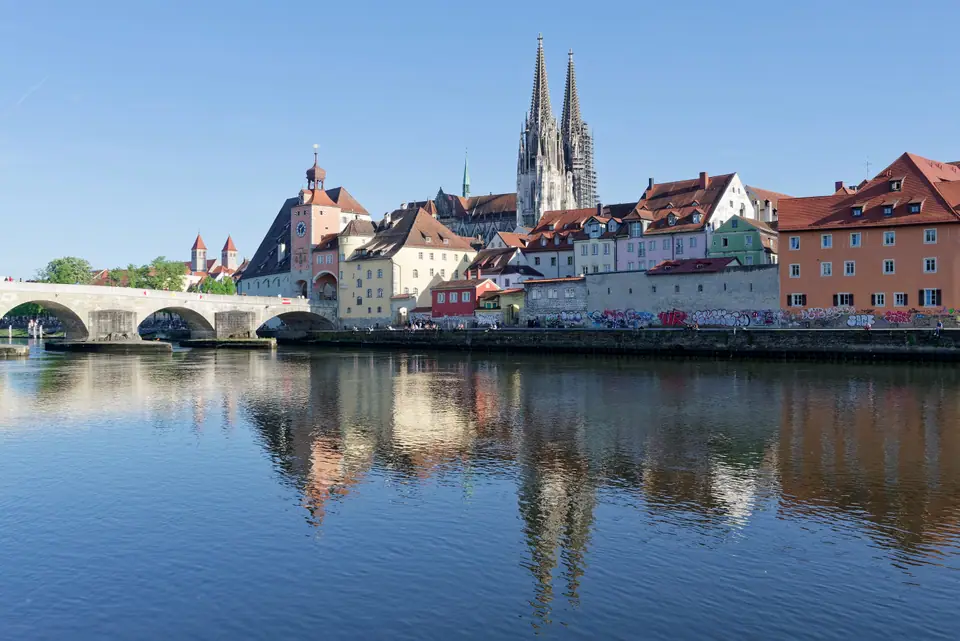
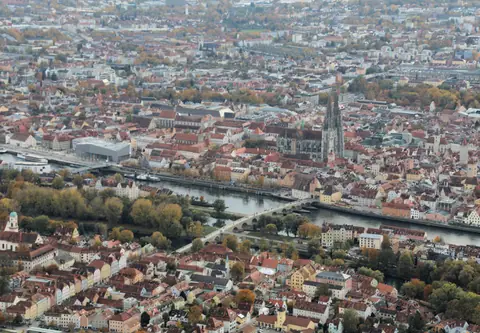
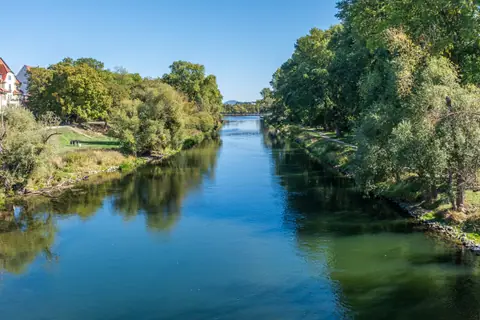
Positioned at the northernmost bend of the Danube, Regensburg combines Roman legionary walls, an intact Gothic cathedral, and patrician tower houses across a preserved medieval core.
Quick decisions
How many days?
Plan two full days for the UNESCO Old Town, Dom St. Peter, and the Altes Rathaus. Add a third day to visit Walhalla at Donaustauf.
Where should we stay?
Pick Altstadt 93047 for historic lanes, Bahnhofsviertel for quick rail connections, or Stadtamhof 93059 across the river to stay outside the green emission zone.
Do we need a car?
No. Driving inside the narrow Altstadt is restricted by an environmental zone. Use trains and local buses, or leave vehicles in peripheral multi-storey car parks.
Best for
Medieval architectural heritage, Roman ruins, Gothic church architecture, Danube riverside paths, and traditional Upper Palatinate charcoal-grilled sausages.
Before you go
Carry euro cash for historic riverside sausage kitchens. Check regional train schedules in advance, and book guided municipal tours for the Imperial Diet chambers.
Getting around
Explore the compact medieval centre on foot. Ride the electric Altstadtbus Emil through core streets, or take RVV bus line 5 east to Donaustauf.
Continue your trip
Board direct regional trains south to Munich in ninety minutes, travel north to Nuremberg, or ride the alex express east across the border to Prague.
Overview
Regensburg sits at the confluence of the Danube, Naab, and Regen rivers in eastern Bavaria. Its 182.8-hectare UNESCO World Heritage centre holds nearly one thousand listed monuments. Patrician tower houses, Roman fortress masonry, and monastic estates shape the streetscape between the riverfront and the green tree-lined belt. For an executive overview of the city layout, consult our Regensburg travel guide.
Spring and early autumn offer prime sightseeing conditions. April averages a mild 15°C high with 44 mm of rain across ten wet days. September brings pleasant 20°C daytime temperatures and 61 mm of rain across ten wet days. Detailed climate patterns appear in our best time to visit guide.
Getting there
Munich Airport serves as the primary international gateway, situated roughly one hundred kilometres southwest of the city. Direct regional RE 22 airport trains connect the airport terminal directly to Regensburg Hauptbahnhof in under ninety minutes. Nuremberg Airport offers an alternative regional entry point to the northwest.
Regensburg Hauptbahnhof anchors the southern edge of the historic core. Regular regional express services link the city to Munich, Nuremberg, and Prague. Drivers arriving via the A3 or A93 motorways must obtain a green emissions sticker to enter the Altstadt low-emission zone. Park at Parkhaus Petersweg or Parkhaus Dachauplatz on the perimeter, as explained in how to get there.
Where to stay
Choosing where to sleep involves balancing historic charm against transport access. Postcode district 93047 covers the central Altstadt, putting sights, museums, and taverns within easy walking distance. Many preserved medieval buildings here lack guest lifts, and vehicle traffic is tightly controlled. Travellers with heavy luggage often prefer hotels near the Hauptbahnhof in the southern railway quarter.
Across the river, district 93059 in Stadtamhof offers quieter guest houses along the northern Danube embankment. This neighbourhood sits outside the municipal low-emission zone while remaining a ten-minute walk from the centre across the river. Regensburg levies no municipal overnight accommodation tax. Compare districts in our guide on where to stay.
Things to do
Start at the 12th-century Stone Bridge, a sixteen-arch engineering marvel spanning the Danube towards Stadtamhof. Just south of the bridge stands Regensburg Cathedral, renowned for its twin 105-metre spires and medieval stained glass. Nearby, the Old Town Hall and Imperial Diet museum preserves the Gothic Reichssaal where the Perpetual Imperial Diet met from 1663 until 1806.
Ten kilometres east along the Danube, the neoclassical temple of Walhalla crowns the forested Bräuberg ridge at Donaustauf. Public bus line 5 and seasonal passenger boats connect the city to the monument. Plan an efficient walking itinerary using our curated guide to things to do.
Food and drink
Bavarian tavern cooking dominates the local dining scene, anchored by Upper Palatinate pork specialties and regional beers. Beside the river stands the Historische Wurstkuchl, serving charcoal-grilled pork sausages on sauerkraut with homemade sweet mustard. The city is also famous for the Regensburger Knacker, a thick pork sausage traditionally served split in a bread roll with mustard, gherkins, and freshly grated horseradish.
Sit down at traditional beer cellars to sample regional roast pork with potato dumplings. Coffee houses line the civic squares, including historic establishments opposite the town hall that have roasted coffee since the seventeenth century. Read our detailed dining advice in what to eat.
Culture
Regensburg maintains traditional Bavarian customs with a strong civic identity. Modest dress is expected when entering the cathedral and active parish churches; remove hats and keep voices lowered during services. Service staff appreciate cash payments at smaller bakeries, riverfront food stalls, and historic dining rooms.
Retail shops and grocery stores close on Sundays throughout Bavaria, though museums, historic churches, and restaurants operate normally. Tipping follows German custom, rounding up bills or adding five to ten percent for polite table service. Greet shopkeepers and waitstaff with a courteous Grüß Gott on arrival, and say Auf Wiedersehen when departing.
Weather by month
Regensburg is warmest in July, with average highs around 25°C, and coldest in January, when nights drop to about -3°C. May is the wettest month by rainfall (83 mm), with rain on about 14 days. For mild weather with fewer rainy days, aim for September.
| Month | Low | Range | High | Rain | Rainy days |
|---|---|---|---|---|---|
| Jan | -3°C | 4°C | 65 mm | 13 d | |
| Feb | -1°C | 7°C | 51 mm | 10 d | |
| Mar | 0°C | 10°C | 46 mm | 10 d | |
| Apr | 4°C | 15°C | 44 mm | 10 d | |
| May | 9°C | 19°C | 83 mm | 14 d | |
| Jun | 13°C | 24°C | 76 mm | 13 d | |
| Jul | 15°C | 25°C | 60 mm | 11 d | |
| Aug | 15°C | 25°C | 75 mm | 12 d | |
| Sep | 11°C | 20°C | 61 mm | 10 d | |
| Oct | 6°C | 15°C | 53 mm | 11 d | |
| Nov | 2°C | 8°C | 57 mm | 11 d | |
| Dec | -1°C | 5°C | 65 mm | 13 d |
Averages of daily values from 2015 to 2024. Rainy days are days with at least 1 mm of rain. Source: Open-Meteo · Compare destinations by month.
Regensburg on the map
Every place we cover in Regensburg. Tap a category or pin to explore.
In-depth Regensburg guides
Browse the guides grouped by topic: sights, neighbourhoods, food, transport, day trips and trip planning.
Sights, Landmarks & Parks
Key monuments, viewpoints, museums and nature trails.
- Schloss St. Emmeram to the Stone Bridge: Walking RegensburgA five-stop walking circuit connecting Thurn und Taxis Palace, Schottenkirche, Altes Rathaus, Porta Praetoria, Dom St. Peter, Stadtamhof, and Walhalla.
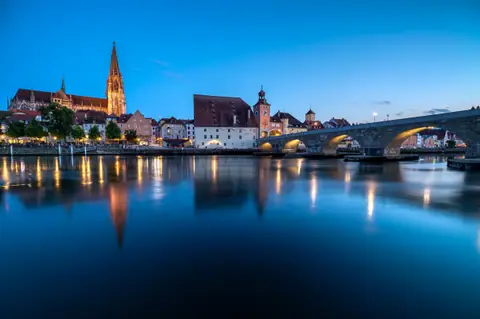
- Steinerne Brücke: Sixteen Arches Across 850 Years on the DanubeHow an 1135 dry riverbed produced Germany's oldest preserved stone bridge, its Debt Tower and Bruckmandl statue, 1945 war wounds, and 2018 restoration.
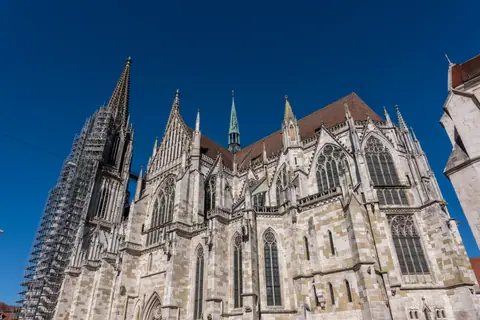
- Dom St. Peter: Gothic Glass, Smiling Angel and 105-Metre Twin SpiresBavaria's sole French-Gothic cathedral across 600 years of construction, 13th-century stained glass, the 37-tonne hanging organ, and 975 Domspatzen choir.
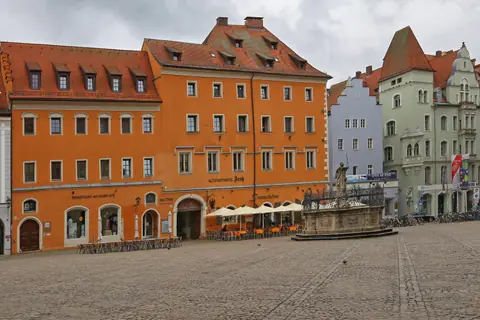
- Altes Rathaus and the Perpetual Imperial Diet of 1663 to 1806Inside Regensburg's 1245 Old Town Hall, the Gothic Reichssaal where the Holy Roman Empire sat for 143 years, the Fragstatt basement, and tour-only rules.
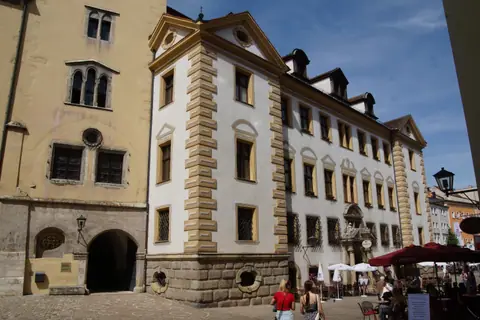
Neighbourhoods & Where to Stay
Districts, historic quarters and the best bases for your stay.
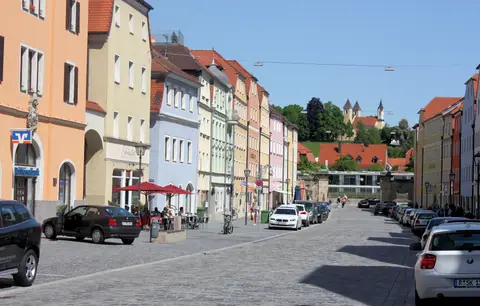
Food & Drink
Local dishes, markets, cafés and dining districts.
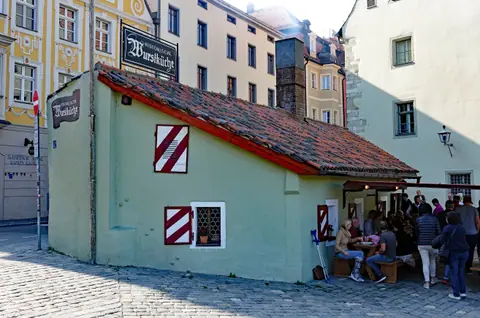
Getting Around & Arrival
Airport transfers, public transit, passes and driving rules.
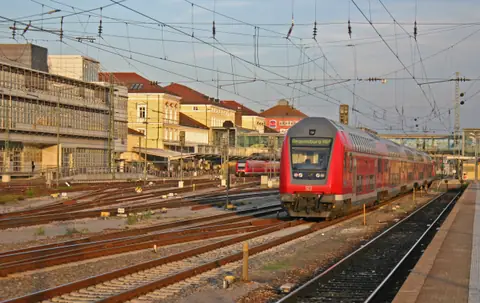
Day Trips & Excursions
Easy half-day and full-day trips from the city.

Trip Planning & Itineraries
When to visit, what to pack and day-by-day routes.
- Regensburg on the Danube: Roman Stones, Tower Houses and Imperial RuleHow a Roman legionary camp at the Danube bend became a medieval Free Imperial City, escaped 1945 carpet bombing, and preserved nearly 1,000 monuments.
- April Calm, May Dult and Four Advent Markets: Regensburg SeasonsMonthly Open-Meteo Danube normals (736 mm rainfall, 25 °C July/August highs), June flood awareness, Maidult, odd-year Bürgerfest, and Advent.
Need your embassy or consulate in Germany? See embassies and consulates in Germany.
Reviews
Log in to write a review.
No reviews yet.