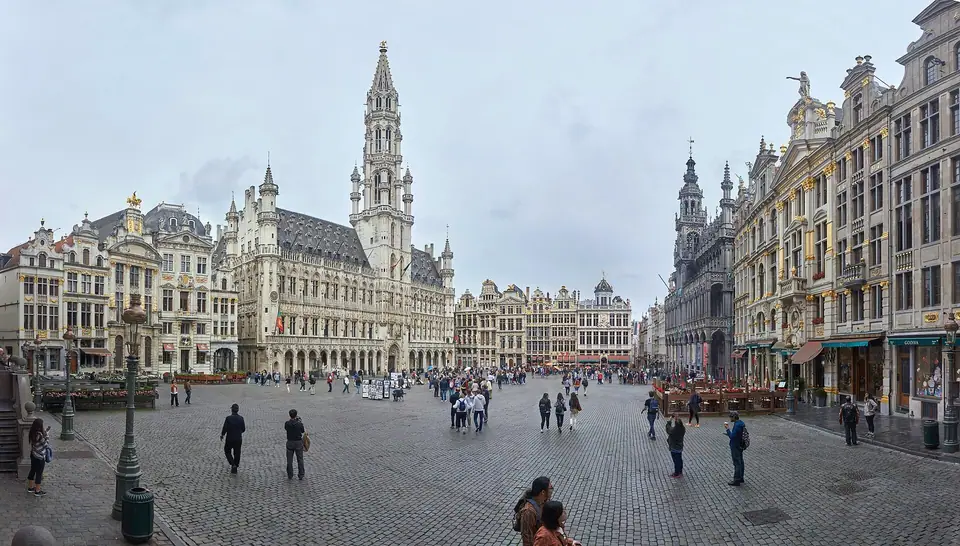
A detailed route from the gilded Baroque guildhalls of the Grand-Place and glass-roofed Royal Galleries to the Mont des Arts, Victor Horta’s Art Nouveau townhouses, and the Atomium.
Brabant Ducal Court on the Coudenberg to the Birthplace of Art Nouveau
Tracing its origins to a tenth-century fortress chapel built by Duke Charles of Lower Lorraine on Saint-Géry Island in the Senne River marshes (Broekzele, Settlement in the Marsh), Brussels rose under the Dukes of Brabant and the Dukes of Burgundy, who held court atop the Coudenberg hill while medieval cloth and brewing guilds erected the flamboyant Gothic Town Hall on the Grand-Place between 1401 and 1455.
After French Marshal de Villeroy's 36-hour artillery bombardment in August 1695 destroyed four thousand timber buildings, the city guilds rebuilt the entire Grand-Place in stone and gold leaf within four years. In 1893, Belgian architect Victor Horta designed the Hôtel Tassel in Brussels, launching the international Art Nouveau movement.
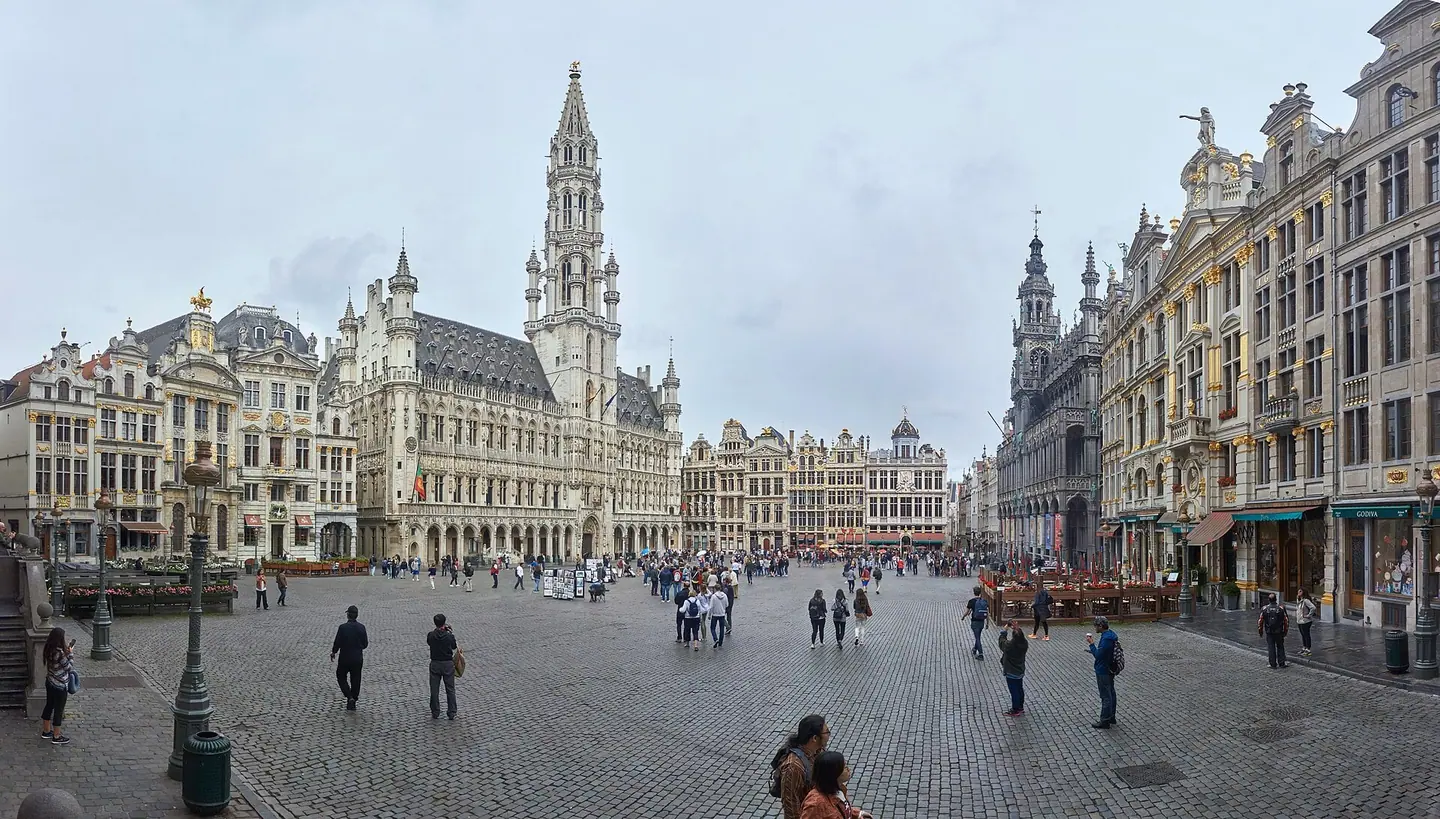
Grand-Place, Manneken Pis, Îlot Sacré & Royal Galleries
Grand-Place UNESCO Square, Brussels Town Hall Hôtel de Ville & Saint Michael Spire, King’s House Maison du Roi (Brussels City Museum), Guildhalls of the Grand-Place (Le Roy d’Espagne, La Louve, Le Cornet), Everard t’Serclaes Brass Relief, Manneken Pis, Galeries Royales Saint-Hubert (1847), and Théâtre Royal de la Monnaie
Grand-Place
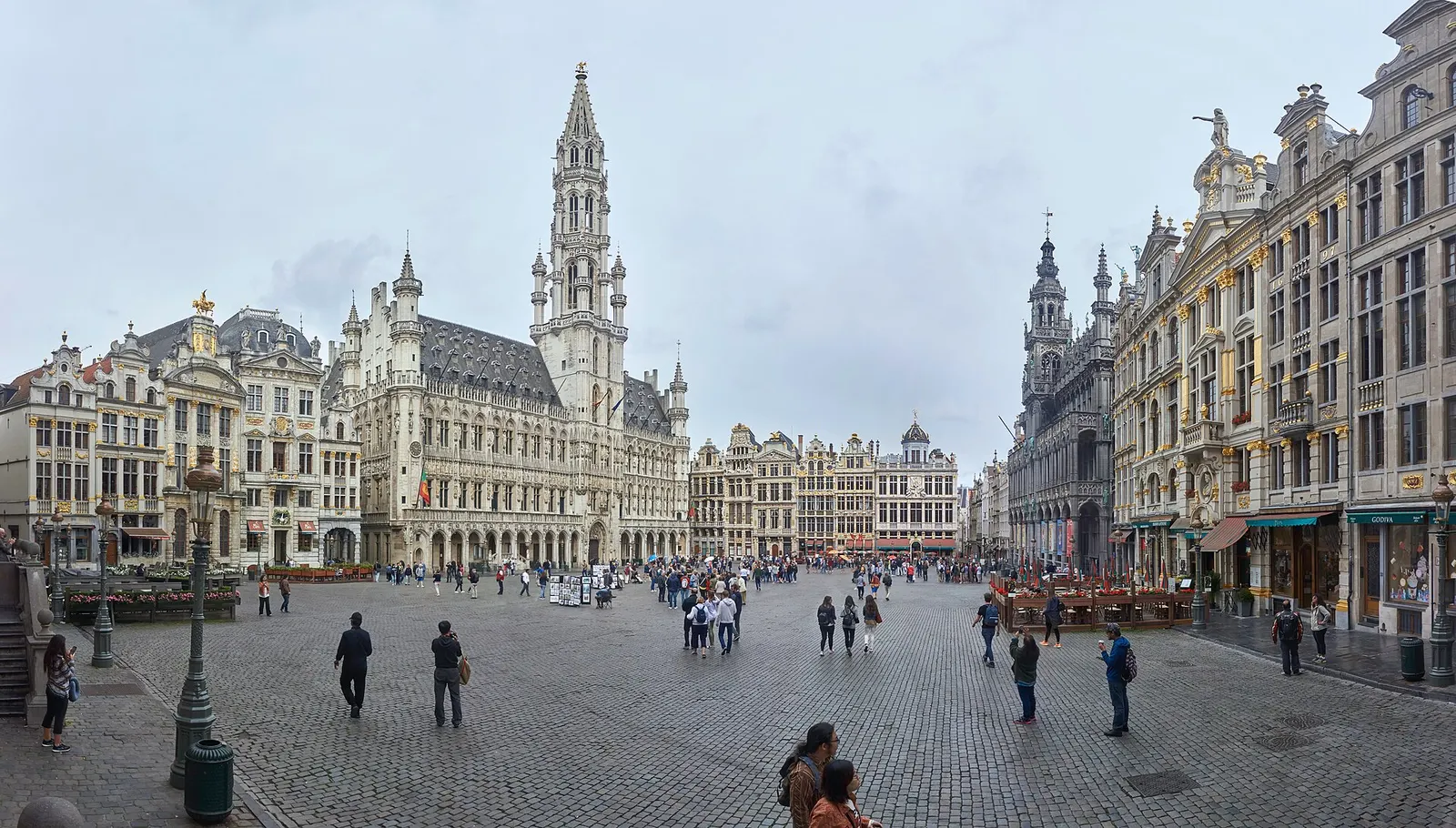
Assembled largely after the devastating French bombardment of 1695, this central square serves as the civic heart of Brussels. Elaborate stone facades feature gilded accents, sculptural allegories, and sweeping gables representing the merchant guilds. We admire the harmonious blend of Gothic, Baroque, and Louis XIV architectural styles framing the cobblestones.
Brussels Town Hall
Dominating the Grand-Place, this landmark town hall displays intricate tracery, arched colonnades, and dozens of statues representing local dukes and saints. Master builder Jan van Ruysbroeck completed the central bell tower in 1455, topping it with a gilded statue of Archangel Michael slaying a dragon. Inside, council chambers feature tapestries and historic portraits.
King's House
Facing the Town Hall, this ornate structure was reconstructed in the late nineteenth century by architect Victor Jamaer in flamboyant neo-Gothic style. Known historically as the Breadhouse, it now contains the Museum of the City of Brussels. Visitors can inspect rich collections of porcelain, altarpieces, and the original stone statue of Manneken Pis.
Le Roy d'Espagne
Rebuilt in 1697, this grand guildhall belonged to the corporation of bakers and honors King Charles II of Spain with a central bust. The facade displays allegorical figures representing water, wind, fire, and grain, paying homage to the baking trade. An octagonal lantern dome crowned by a gilded copper weathercock completes the ornate roofline.
La Louve
Once the headquarters of the ancient Guild of Archers, this Baroque house takes its name from the relief carving above the door showing Romulus and Remus suckling the she-wolf. Rebuilt in 1690 by architect Pierre Herbosch, the upper facade incorporates allegorical statues of Truth, Falsehood, Peace, and Discord beneath a golden phoenix rising from the ashes.
Le Cornet
Constructed in 1697 for the corporation of boatmen, this guildhall showcases the maritime connections of historical Brussels. Architect Antoine Pastorana designed the upper gable to mimic the stern of a seventeenth-century ocean frigate, complete with marine carvings, ocean gods, and billowing scrolls. Windows on the third level recall cabins on vintage merchant ships.
House of the Dukes of Brabant
This monumental classical ensemble unites seven separate merchant houses behind a singular grand facade designed by Guillaume de Bruyn in 1698. Nineteen bronze bust statues of former rulers line the fluted pilasters across the second floor, giving the complex its historical title. It originally sheltered the guilds of millers, carpenters, stonecutters, and tanners.
Everard t'Serclaes Monument
Affixed to the exterior wall of the Maison de l'Etoile, this brass sculpture by Julien Dillens commemorates the fourteenth-century hero who defended Brussels against the Count of Flanders. Medieval folklore holds that stroking the arm of the reclining knight brings good fortune. The relief panels above illustrate significant scenes from the liberation of the city.
Manneken Pis
Cast in 1619 by sculptor Hiëronymus Duquesnoy the Elder, this small bronze statue serves as a beloved folk emblem of local independence. Located at the corner of Rue de l'Étuve, the figure stands atop a stone basin dressed in rotating themed costumes managed by a civic association. The original historic bronze is preserved in the nearby City Museum.
Jeanneke Pis
Sculpted in 1985 by Denis-Adrien Debouvrie and erected in 1987, this small bronze fountain stands tucked inside Impasse de la Fidélité. The artwork depicts a cheerful young girl with pigtails squatting above a limestone basin behind protective iron bars. It was introduced as a lighthearted counterpart to the city's older male fountain landmark.
Galeries Royales Saint-Hubert
Inaugurated in 1847 and designed by Jean-Pierre Cluysenaer, this monumental arcade was one of the earliest covered commercial galleries in Europe. The glass and cast-iron vaulted roof spans two long passageways, the King's Gallery and Queen's Gallery, separated by a colonnaded crossing. Elegant storefronts house artisan chocolatiers, classical bookstores, and traditional tea salons.
Théâtre Royal de la Monnaie
Rebuilt by Joseph Poelaert following an 1855 fire, this neoclassical opera house features an imposing portico supported by eight Corinthian columns. The institution holds deep national significance, as a performance of Auber's opera here in August 1830 sparked the riots that led directly to Belgian independence. The interior contains a lavish red-and-gold horseshoe auditorium.
Place de la Monnaie
Occupying the former site of the ducal mint, this broad public square connects major pedestrian shopping avenues with the theatrical quarter. Modern stone paving and water features frame views of the grand opera facade across the precinct. The plaza regularly hosts cultural demonstrations, civic gatherings, and seasonal open-air exhibitions.
Îlot Sacré
Protected by municipal decree in 1960 to prevent modern redevelopment, this network of narrow alleys features cobblestones and centuries-old brick facades. Centred along Rue des Bouchers, the quarter originally housed traditional trade guilds including butchers, brewers, and tripe merchants. Today we observe traditional stepped gables, lantern-lit passages, and street displays of fresh seafood.
Église Saint-Nicolas
Founded around 1125 by local merchants, this small church dedicated to the patron saint of traders is one of the oldest places of worship in central Brussels. Inside, the surviving choir leans askew due to uneven medieval foundations following multiple reconstructions. Notable features include a seventeenth-century painting by Rubens and an embedded French cannonball from 1695.
Maison de la Bellone
Hidden behind a streetfront entrance near the central district, this late seventeenth-century mansion features a facade attributed to sculptor Jean Cosyn. The central stone relief portrays Bellona, the Roman goddess of war, commemorating the victory of the Holy Roman Empire at the Battle of Zenta. A sleek modern glass roof shelters the inner courtyard, protecting its delicate stone carvings.
Bourse de Bruxelles
Designed by Léon-Ernest Suys and constructed between 1868 and 1873, this palatial exchange showcases grand Corinthian pediments and sculptural reliefs by Auguste Rodin. The building stands over the vaulted course of the River Senne as part of the nineteenth-century central boulevards project. The recently restored central atrium now accommodates a beer discovery museum and public walkways.
Église Notre-Dame du Bon Secours
Erected between 1664 and 1694 by architect Jean-Baptiste Houwaert, this Italianate Baroque church was built along the medieval pilgrimage route to Santiago de Compostela. Its unusual circular interior plan focuses light toward a central dome, creating an intimate worship space. The ornate stone altar enshrines a revered fourteenth-century wooden statue of the Virgin Mary holding infant Christ.
La Fleur en Papier Doré
Housed within an eighteenth-century brick townhouse, this atmospheric literary estaminet served as the regular gathering spot for René Magritte and the Belgian Surrealist circle. The preserved interior rooms display wooden panelled booths covered with handwritten aphorisms, historical collages, and vintage sketches. It provides an authentic glimpse into the mid-twentieth-century bohemian café culture of the capital.
GardeRobe MannekenPis
Situated steps from the fountain on Rue du Chêne, this branch museum preserves hundreds of tailored miniature costumes presented to the bronze statue by visiting diplomats and associations. The collection dates from the seventeenth century through contemporary designs, arranged by region and cultural theme. Multimedia displays document the precise dressing ceremonies conducted by the official municipal wardrober.
Sainte-Catherine, Saint-Géry, Comic Strip Murals & Bourse
Brussels Stock Exchange Bourse Belgian Beer World, Halles Saint-Géry, Place Sainte-Catherine & Black Tower, Béguinage Church of Saint John the Baptist, Belgian Comic Strip Center (1905 Victor Horta Waucquez Warehouse), and Tintin & Corto Maltese Murals
Brussels Stock Exchange
Architect Léon-Pierre Suys designed this grand monument in 1873 over the vaulted Senne river. The pediment features sculptures by Auguste Rodin, while the restored interior central hall now accommodates public exhibitions celebrating historic Belgian brewing traditions.
Halles Saint-Géry
Constructed in 1881 by Adolphe Vanderheggen, this red-brick market hall sits on the legendary birthplace island of Brussels. Inside, visitors can examine a preserved Gothic stone fountain from 1767 beneath an airy framework of cast iron and exposed timber.
Place Sainte-Catherine
This paved public plaza occupies the filled-in basins of the 16th-century inland port, retaining a maritime heritage through its surrounding seafood establishments. The space hosts local community gatherings and borders the remaining quayside water pools that stretch toward the north.
Church of St. Catherine
Joseph Poelaert designed this imposing parish church between 1854 and 1874 using a mix of Romanesque, Gothic, and French Renaissance elements. The interior features a 14th-century Black Madonna statue and woodwork salvaged from an earlier medieval church on the same plot.
Black Tower
Standing directly behind the Church of St. Catherine, this medieval defensive bastion formed part of the first defensive ramparts built around Brussels in the early 1200s. The semicircular limestone tower survived modern urban expansion and now stands framed by modern hotel architecture.
Church of Saint John the Baptist at the Béguinage
Completed in 1676 under architect Lucas Faydherbe, this religious building represents one of the finest examples of Flemish Baroque ecclesiastical design in the Low Countries. Its elaborate front facade displays dynamic pediments and pilasters, while the serene interior preserves large canvas paintings by Theodor van Loon.
Comics Art Museum
Victor Horta designed this former textile warehouse, the Magasins Waucquez, in 1906 with a majestic glass lantern, sweeping staircases, and exposed iron pillars. Today it preserves original plates and drafts from legendary Franco-Belgian illustrators including Hergé, Peyo, and André Franquin.
Tintin Mural at Rue de l'Étuve
Painted across a residential gable wall in 1992, this mural reproduces a classic scene from Hergé's 'The Calculus Affair'. It shows Tintin, Captain Haddock, and Snowy hurrying down a metal fire escape, forming an early stop on the capital's official comic strip trail.
Corto Maltese Mural
Located near the Senne canal quays, this multi-panel composition features Hugo Pratt's famous adventurer gazing out over maritime horizons. Inaugurated in 2007, the artwork covers dozens of square metres of exterior brick, highlighting the city's relationship with European graphic literature.
Broussaille Mural
Installed in 1991 on the Rue du Marché au Charbon, this painting by Frank Pé inaugurated the urban Comic Book Route. The scene depicts the red-haired teenager Broussaille walking arm-in-arm with his partner Catherine, brightening what was previously a blank party wall.
Le Vautour Fountain
Positioned close to the Bourse, this sculpted stone monument supplied fresh drinking water to local market traders in the 19th century. Its carved basin and classic decorative details reflect the municipal modernisation works overseen by Mayor Jules Anspach.
Tour Noire Garden
Surrounding the Black Tower, this quiet space permits close inspection of medieval masonry techniques dating back to the reign of Henry I, Duke of Brabant. We can observe ancient limestone blocks bonded together to defend the medieval trade route between Bruges and Cologne.
Church of Notre-Dame aux Riches Claires
Constructed in 1665 for the Order of Poor Clares, this church features a prominent central dome and a dynamic Baroque facade. The building incorporates red brick paired with bold white stone pediments, demonstrating the influence of Italian Mannerism adapted for Brabantine tastes.
Bellone House
Cosimo Girardelli completed this patrician residence in 1697 to commemorate the victory of Austrian forces over the Ottomans at Zenta. The inner courtyard facade displays a stone bust of Bellona, the Roman goddess of war, and now sits protected beneath an expansive glass roof.
Fontaine Anspach
Dedicated in 1897, this stone obelisk and ornamental fountain commemorates Jules Anspach, who transformed Brussels by channelling the unsanitary Senne river underground. Sculpted bronze allegories surrounding the granite base represent the city and the newly constructed central boulevards.
Passage Saint-Honoré
Running between Rue Neuve and Boulevard Adolphe Max, this modest covered passage maintains its historic cast-iron fittings and vintage glass canopy. It preserves the early commercial layout developed during the late 19th-century expansion of the city's pedestrian retail network.
Old Grain Market
Once an active dock where barges unloaded cereals and hops, this elongated square is now shaded by mature plane trees. A bronze statue of the Flemish educator Jan-Baptist van Helmont stands centrally, surrounded by traditional 18th-century step-gabled townhouses.
Gaston Lagaffe Mural
Painted near the central boulevards, this mural illustrates Gaston Lagaffe causing chaos with a runaway yo-yo. André Franquin created the character in 1957, and the playful exterior artwork offers travellers insight into the distinctive slapstick humour of classic Belgian strip cartoons.
Nouveau Marché aux Grains
Adjacent to the Old Grain Market, this open plaza developed as trade outgrew older quarters in the late 18th century. Notable civic architecture here includes late neoclassical school buildings and historic guild premises that once coordinated regional grain distribution.
De Brouckère Square
Laid out during the vaulting of the Senne, this broad plaza takes its name from former mayor Charles de Brouckère. It is anchored by grand Fin de Siècle buildings, including the historic Hotel Metropole and the Eldorado cinema with its opulent Art Deco interior.
Cathedral, Mont des Arts, Royal Palace & Museum Quarter
Cathedral of St Michael and St Gudula, Brussels Park, Royal Palace of Brussels, Coudenberg Underground Palace Ruins, BELvue Museum, Musical Instruments Museum MIM (1899 Old England Art Nouveau Building), Mont des Arts Panorama, Magritte Museum, and Royal Museums of Fine Arts (Old Masters Bruegel Room)
Cathedral of St Michael and St Gudula
Constructed from local sandy limestone between the eleventh and early sixteenth centuries, this monumental seat of the Roman Catholic Church exhibits pure Brabantine Gothic lines. Inside, we observe Renaissance stained glass windows gifted by Habsburg rulers, alongside monumental Baroque statues of the twelve apostles flanking the nave pillars.
Mont des Arts
Redesigned in the mid-twentieth century by architect René Pechère, this stepped garden complex links the royal quarter with the lower historic city. The landscaped terrace features clipped hedges, geometric fountains, and wide stone staircases. From the upper balustrade, travellers enjoy unobstructed sightlines stretching towards the Grand Place town hall tower.
Musical Instruments Museum
Housed within an 1899 metal-and-glass structure designed by Paul Saintenoy, the museum preserves over a thousand historical sound devices. The building features black wrought ironwork and a distinct corner turret overlooking Place Royale. Visitors can view mechanical pianos, courtly harpsichords, and traditional folk lutes through acoustic listening devices.
Coudenberg Palace Archaeological Site
Buried beneath the modern Place Royale following a devastating fire in 1731, the remains of this royal residence lie below street level. Explorers descend into the preserved gothic cellars of the Aula Magna banqueting hall and the atmospheric Rue Isabelle. Excavated stonework reveals the foundational layers of Brussels during the Burgundian era.
Place Royale
Laid out in the 1770s to replace the burned ruins of the former ducal seat, this symmetrical esplanade displays uniform white neoclassical facades. At its centre stands an equestrian statue of Godfrey of Bouillon, leader of the First Crusade. The open space coordinates the monumental approaches to the surrounding museums and government palaces.
Church of Saint Jacques-sur-Coudenberg
Designed by architects Gilles-Barnabé Guimard and Louis Montoyer, this church was completed in 1787 with the appearance of a Greco-Roman temple. Its facade presents a substantial pediment supported by six Corinthian columns beneath a later copper bell tower. The interior houses austere vaulted ceilings and official memorials to the Belgian royal house.
Royal Palace of Brussels
Constructed across the nineteenth and early twentieth centuries by amalgamating earlier state mansions, the palace presents a grand neoclassical colonnade facing Brussels Park. Though the monarch resides in Laeken, official state receptions take place within its halls. Notable interior features include the Throne Room and the Mirror Room ceiling decorated with jewel-beetle wing cases.
Brussels Park
Established in the late eighteenth century on the former hunting grounds of the Dukes of Brabant, the park forms a rectangle between the palace and parliament. Broad lime tree alleys radiate from central fountains, adorned with classical mythological statues by Laurent Delvaux. The grounds served as an active skirmish zone during the Belgian Revolution of 1830.
Magritte Museum
Occupying the neoclassical Hotel Altenloh, this venue displays the largest public repository of work by René Magritte. Across several themed levels, visitors trace his creative progression from early advertising posters to surrealist gouaches and oil paintings. The collection features celebrated paintings such as The Empire of Light alongside personal sketchbooks.
Royal Museums of Fine Arts of Belgium
Founded under Napoleonic administration and expanded across two centuries, this institution occupies a palatial Beaux-Arts structure designed by Alphonse Balat. The museum encompasses the Old Masters Museum, the Modern Museum, and specialized period wings. Its corridors contain landmark Northern European works ranging from early Flemish Primitives to monumental academic sculptures.
Old Masters Museum
Integrated within the fine arts complex, this gallery possesses paintings by Pieter Bruegel the Elder, Peter Paul Rubens, and Anthony van Dyck. The dedicated Bruegel rooms display The Fall of the Rebel Angels alongside detailed landscape panels. The collection offers a comprehensive visual history of Southern Netherlandish art between the fifteenth and seventeenth centuries.
BELvue Museum
Housed within an eighteenth-century hotel that once served as a luxury lodging and royal residence, this institution explores the nation from 1830 onward. The permanent exhibition uses documents, artefacts, and audiovisual archives to present key political, industrial, and social transformations. The rear terrace offers quiet views over the adjacent palace gardens.
Palace of the Nation
Erected between 1779 and 1783 under Austrian rule as the Sovereign Council of Brabant, the complex terminates the northern axis of Brussels Park. A classical pediment sculpted by Gilles-Lambert Godecharle crowns the central portico. Following Belgian independence, the debating chambers were adapted to host the national legislature.
Royal Library of Belgium
Situated on the western slope of the Mont des Arts, this modern library complex was completed in 1969 to preserve Belgium's bibliographic output. It holds millions of printed volumes, rare cartographic charts, and medieval illuminated manuscripts. The building integrates the surviving sixteenth-century Nassau Chapel within its concrete foundation walls.
Palace of Charles of Lorraine
Constructed in 1757, this aristocratic mansion features a rotunda decorated with relief medallions representing the liberal arts. The former residence reflects the courtly life of Prince Charles Alexander of Lorraine before the destruction of the old Coudenberg Palace. It now forms part of the Royal Library complex and exhibits decorative period woodwork.
Equestrian Statue of Albert I
Standing at the base of the Mont des Arts gardens, this bronze monument by sculptor Alfred Courtens was unveiled in 1951. It portrays King Albert I in military trench coat and helmet, commanding the entrance to the urban avenue. A matching statue of his consort, Queen Elisabeth, stands nearby in the lower courtyard.
Carillon of the Mont des Arts
Mounted within the stone arcade of the Palais des Congrès, this carillon consists of twenty-four tuned bells cast by the Paccard foundry. The exterior clock face features twelve recessed niches holding historical and folk figurines from regional lore, including the painter Rubens and folkloric characters. At designated intervals, the figures rotate into view while chimes sound.
Fin-de-Siècle Museum
Descending several levels below the central museum atrium, this subterranean gallery surveys the period between 1868 and 1914. Displays include paintings, decorative furnishings, and architectural models by Victor Horta, Fernand Khnopff, and James Ensor. The curation highlights the cross-pollination between Brussels Symbolism, Art Nouveau, and early photographic experimentation.
Statue of Godfrey of Bouillon
Cast by sculptor Eugène Simonis and dedicated in 1848, this patriotic bronze figure commemorates the Duke of Lower Lorraine who joined the First Crusade. Godfrey is depicted in armour, raising a Christian banner atop a polished granite pedestal. The statue serves as the focal point for the surrounding neoclassical ensemble of Place Royale.
Royal Academy of Science, Letters and Fine Arts
Commissioned in 1823 for the Prince of Orange and designed by Charles Vander Straeten, this Neoclassical palace stands on the edge of Brussels Park. The exterior features severe rusticated stone bases, ionic pilasters, and a decorative roof balustrade. The interior houses formal assembly chambers where national academic debates and conferences proceed.
Sablon Antiques Square, Marolles & Palace of Justice
Place du Petit Sablon 48 Guild Statuettes, Church of Our Blessed Lady of the Sablon, Place du Grand Sablon, Egmont Palace Courtyard, Porte de Hal Medieval Gate, Place du Jeu de Balle Flea Market in the Marolles, and Palace of Justice Poelaert Panorama Lift
Church of Our Blessed Lady of the Sablon
Built during the fifteenth century, this masterpiece of Brabantine Gothic architecture replaced a modest chapel erected by the Crossbowmen Guild. The exterior displays rich stone traceries, while the interior features dramatic stained-glass windows and Baroque burial chapels belonging to the Thurn und Taxis noble family.
Place du Grand Sablon
Originally an open sandy expanse outside the city walls, this triangular square evolved into a fashionable residential area lined with elegant eighteenth-century gabled houses. Today, visitors encounter prestigious antiques shops, traditional chocolatiers, and a central fountain commissioned by Thomas Bruce, Earl of Ailesbury, in 1751.
Place du Petit Sablon
Designed by architect Henri Beyaert and inaugurated in 1890, this manicured public garden stands framed by an intricate wrought-iron balustrade. Around its perimeter stand forty-eight small bronze statues representing medieval Brussels trades and guilds, surrounding a central monument honoring Counts Egmont and Horn.
Palace of Egmont
Constructed in the sixteenth century for the Countess of Egmont, this expansive complex underwent major neoclassical remodelling under the Ducal House of Arenberg. Today it houses the Belgian Ministry of Foreign Affairs, featuring grand ceremonial courtyards, landscaped gardens, and historic reception rooms used for international diplomatic conferences.
Egmont Park
Accessible through discreet passages from neighbouring streets, this verdant park once formed the private grounds of the Arenberg estate. Within its leafy borders stand an eighteenth-century orangery, a Gothic-style well house, and several expressive bronze statues, providing a quiet retreat close to the upper city.
Palace of Justice
Constructed between 1866 and 1883 by architect Joseph Poelaert, this monumental courthouse was the largest building constructed in nineteenth-century Europe. The eclectic Greco-Roman edifice features a soaring central dome, cavernous waiting halls, and monumental staircases overlooking the low-lying Marolles quarter.
Place Poelaert
Named after the architect of the adjacent law courts, this raised plateau offers wide panoramic views over the lower town toward the Basilica of Koekelberg. An open-air public terrace borders the war memorial honouring fallen Belgian soldiers from both World Wars.
Poelaert Lift
This tall public lift connects the elevated Place Poelaert with the working-class Marolles quarter below. Commuters and travellers step into the glazed cabins to travel down to the Rue des Minimes, enjoying moving vistas across the red-tiled roofs and distant industrial towers of Brussels.
Place du Jeu de Balle
Laid out in the nineteenth century over an old railway works, this cobblestone square in the heart of the Marolles hosts a renowned daily flea market. Traders display vintage curiosities, second-hand books, and salvaged homewares across blankets spread directly onto the stone ground.
Porte de Hal
Erected in 1381, this imposing stone tower represents the sole surviving fortified gate from the second medieval city wall of Brussels. Restored in the nineteenth century with Neo-Gothic battlements, it now houses a museum dedicated to city fortifications, armor, and urban defense history.
Church of Saints John and Stephen Minimes
Constructed in the early eighteenth century for the Minims religious order, this church displays an Italianate Baroque facade of warm sandstone. Inside, visitors find a spacious single nave, classical altars, and an organ celebrated for its acoustic clarity during public choral performances.
Church of Notre-Dame de la Chapelle
Dating back to the twelfth century, this parish church reflects a gradual transition from Romanesque transepts to a Brabantine Gothic nave and choir. It holds the final resting place of celebrated Renaissance painter Pieter Bruegel the Elder, marked by a stone plaque inside.
Cité Hellemans
Designed by architect Emile Hellemans between 1905 and 1915, this red-brick housing complex transformed the congested alleyways of the Marolles into hygienic residential quarters. Art Nouveau details, recessed balconies, and tree-lined pedestrian lanes showcase pioneering civic design created for local working families.
Jewish Museum of Belgium
Situated on Rue des Minimes near the Sablon, this cultural institution preserves an extensive collection of Judaica, historical documents, and ceremonial objects. Exhibits document the centuries-old contribution of Jewish communities to Belgian trade, arts, intellectual life, and modern social culture.
Square de la Réunion
Positioned just southwest of Place du Jeu de Balle, this residential open space reflects the domestic character of the surrounding Marolles quarter. Rows of traditional nineteenth-century brick houses line the perimeter, accompanied by small community gardens and neighbourhood cafes.
Baths of Brussels Centre
Inaugurated in the 1950s, this municipal bathhouse on Rue du Chevreuil replaced earlier hygienic public showers constructed for factory workers. The building preserves distinctive modernist architecture, offering public swimming pools and communal sports facilities in the lower city.
Breughel House
Located on Rue Haute, this Flemish Renaissance step-gabled residence is traditionally regarded as the home where painter Pieter Bruegel the Elder lived and worked. Its red-brick facade, stone quoins, and mullioned windows offer an authentic glimpse of domestic architecture from sixteenth-century Brussels.
Institut Saint-Luc Brussels
Occupying a series of brick buildings near the Sablon, this long-standing arts institution has trained generations of Belgian architects, illustrators, and fine artists. The courtyard displays sculpted architectural fragments, reflecting the school's heritage in architectural craftsmanship and preservation.
Monument to the Belgian Infantry
Positioned prominently on Place Poelaert, this obelisk memorial honors Belgian foot soldiers who perished during early twentieth-century conflicts. The plinth features carved friezes and monumental bronze soldiers, looking out toward the lower urban sprawl of the capital.
Taverne En Stoemelings
Set along Rue Blaes, this classic drinking establishment represents the resilient dialect and communal heritage of the Marolles district. The preserved interior features vintage mirrors, glazed tiling, and wooden counters where residents have gathered across successive generations.
Victor Horta Art Nouveau Houses, Cinquantenaire, European Quarter & Atomium
Horta Museum in Saint-Gilles, Hôtel Tassel, Hôtel Solvay, Maison Cauchie Sgraffito Facade, Parc Léopold & House of European History, Parc du Cinquantenaire Triumphal Arch, Autoworld & Art & History Museum, Royal Greenhouses of Laeken, and the 1958 Atomium
Horta Museum
Built between 1898 and 1901 in Saint-Gilles, this paired townhouse served as Victor Horta's personal residence and workshop. The interior features curved wrought iron banisters, integrated mosaic floors, and a central skylight that floods the open staircase with natural light. Visitors can observe the pioneering integration of exposed metal structures and bespoke timber furniture.
Hôtel Tassel
Commissioned by scientist Émile Tassel and erected between 1893 and 1894, this town house broke radically with classical layout traditions. Horta introduced a revolutionary split-level plan around an open iron skeleton, uniting interior decor with structural framing. The street facade displays stone curved lines harmonised with visible steel supports and delicate stained glass.
Hôtel Solvay
Constructed along Avenue Louise in the late 1890s, this mansion represents one of Horta's most ambitious private commissions. The wealthy patron provided an unrestricted budget, enabling the architect to fashion custom bronze fittings, rare marble panels, and curvilinear woodwork. Its symmetrical facade features undulating bay windows and glass panels that reflect changing daylight.
Maison Cauchie
Architect and decorator Paul Cauchie designed this residence in 1905 directly opposite the Cinquantenaire park. The facade functions as a giant pictorial billboard, covered almost entirely in allegorical figures rendered through the delicate technique of sgraffito plasterwork. Inside, decorative geometric patterns and stylised female figures reflect the influence of the Glasgow School.
Cinquantenaire Triumphal Arch
Commissioned by King Leopold II to commemorate the fiftieth anniversary of Belgian independence, this triple arcade was completed by Charles Girault in 1905. A massive bronze quadriga depicting the province of Brabant crowns the central archway, while peristyle halls flank either side. Visitors can climb to the top gallery for broad views across the European Quarter.
Art & History Museum
Situated within the southern wing of the Cinquantenaire complex, this institution preserves vast antiquities and decorative arts collections from around the globe. Galleries display Roman colonnades, Merovingian jewellery, Egyptian sarcophagi, and European tapestries from Gothic through Renaissance periods. The neoclassical halls also hold an extensive selection of pre-Columbian artefacts and Asian porcelain.
Autoworld
Located in the southern iron-framed hall of the Cinquantenaire, this transport museum charts the development of the motor vehicle from the late nineteenth century onwards. The collection contains over two hundred historic vehicles, including early Belgian marques like Minerva, royal state limousines, and competition cars. The sweeping glass and steel roof trusses reflect late nineteenth-century engineering.
Royal Museum of the Armed Forces and Military History
Occupying the northern wing of the Cinquantenaire palace, this vast museum houses armaments, uniforms, and military regalia dating from medieval times to the modern era. Its towering aviation hall features early biplanes, First World War fighters, and mid-twentieth-century jet aircraft suspended beneath cast-iron ribs. Extensive displays trace Belgium's strategic fortress system and military neutralities.
Parc Léopold
Created in 1880 on the steep valley slope of the Maelbeek stream, this landscaped park incorporates a central pond, weeping willows, and winding footpaths. In the late nineteenth century, it became a campus for scientific institutes, hosting landmark Solvay physics conferences. Today, historical brick institutes stand beside the modern glass towers of the European Parliament.
House of European History
Housed within the restored 1930s Eastman Dental Hospital in Leopold Park, this museum presents a critical examination of shared European memory and conflict. Permanent exhibits address industrialisation, the destruction of two world wars, totalitarian regimes, and post-war integration. The renovation incorporated contemporary glass towers above the original red-brick building, contrasting classic and modern styles.
Hôtel van Eetvelde
Designed by Victor Horta between 1895 and 1897 for diplomat Edmond van Eetvelde, this townhouse sits along the Avenue Palmerston. The interior is organised around a central octagonal light well beneath a stained-glass dome supported by slender iron columns. Intricate vegetal tendrils curl across walls, metal railings, and mosaic floor surfaces.
Saint-Cyr House
Built between 1901 and 1903 by architect Gustave Strauven, this flamboyant facade measures barely four metres in width on the Square Ambiorix. The exterior is notable for its intricate wrought ironwork, resembling floral lace, which wraps around loggias and circular windows. The design reflects an extreme, personal expression of late Art Nouveau ornamentation.
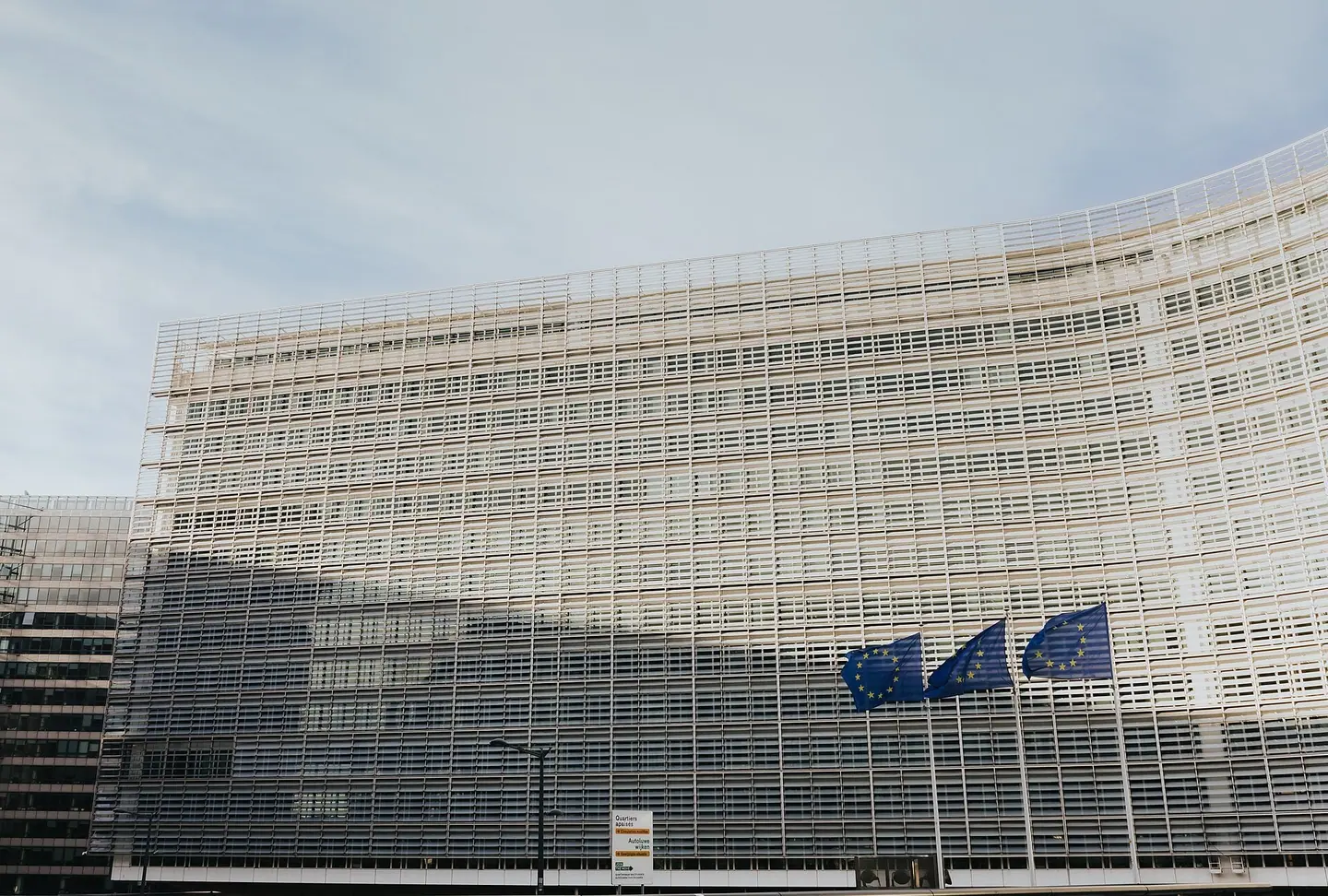
Berlaymont Building
Erected in the late 1960s and extensively renovated around the turn of the millennium, this vast complex forms the administrative core of the European Union. Its distinct four-winged plan radiates from a central hub, supported on underground pylons over road tunnels and rail links. The facade features adjustable screen louvres that shade expansive glass office bands.
Atomium
Engineered by André Waterkeyn for the 1958 Brussels World's Fair, this striking monument represents a unit cell of iron magnified 165 billion times. Nine interconnected spheres clad in stainless steel house educational exhibits and viewing decks linked by escalators and tubes. The top sphere affords extensive views spanning central Brussels and the northern countryside.
Royal Greenhouses of Laeken
Commissioned by Leopold II and designed by Alphonse Balat in 1873, this sprawling glass-and-iron complex sits within the Royal Estate of Laeken. The interconnected pavilions include the circular Iron Church, long glazed galleries, and monumental domed rotundas. They house historical orange trees, tree ferns, and rare subtropical plants preserved under classic Victorian iron framework.
Museum of the Far East
Erected at the beginning of the twentieth century in Laeken, this compound comprises a Japanese Tower, a Chinese Pavilion, and a decorative museum hall. Designed by French architect Alexandre Marcel, the buildings incorporated ornate woodwork and porcelain panels crafted directly in Shanghai and Yokohama. They reflect early twentieth-century European fascination with Asian artistic craftsmanship and architectural ornament.
Square Frère-Orban
Laid out in the Leopold Quarter during the mid-nineteenth century, this quiet square is enclosed by uniform neoclassical facades. At its focal point stands the Church of Saint Joseph, an Italian Renaissance revival basilica built by the Redemptorists. Bronze statues honouring nineteenth-century Belgian statesmen stand along the leafy gravel paths opposite government ministry offices.
Square Ambiorix
Laid out in the 1870s by landscape architect Gédéon Bordiau, this terraced green space links the Squares Quarter with the European institutions. Rockeries, cascades, and bronze sculptures dot the park slopes, which are surrounded by eclectic townhouses and Art Nouveau facades. It offers an exceptional overview of architectural styles popularised during Brussels' rapid fin-de-siècle expansion.
Paul-Henri Spaak Building
Constructed in the 1990s as the principal Brussels home of the European Parliament, this monumental complex is known locally as the Caprice des Dieux due to its rounded glass roofline. The building houses the central hemicycle where parliamentary debates and committee voting sessions occur. A pedestrian bridge connects its sprawling lobbies directly across to the Place du Luxembourg.
Place du Luxembourg
Dominated by the neoclassical facade of the old 1854 Leopold Quarter railway station, this open square now acts as a gathering hub in the European Quarter. A central bronze statue by Guillaume Geefs honours industrial pioneer John Cockerill surrounded by representations of his industrial workers. Today, the square is lined with cafes catering to parliamentary staff and foreign delegates.
Linking the Pentagon Core with Saint-Gilles and Ixelles
You can combine these stops with the district-by-district where-to-stay notes and seasonal planning tables on our Brussels destination page, or explore further regional and neighbourhood guides.