



















Bruges
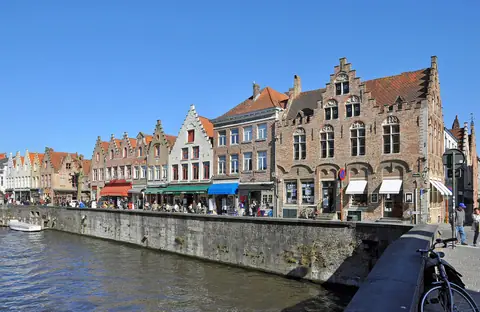
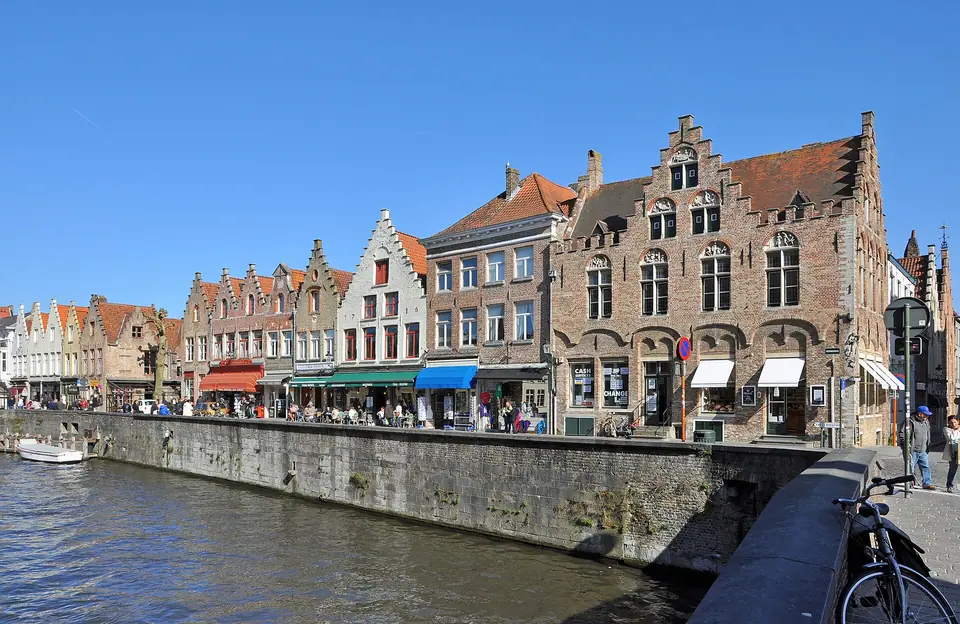
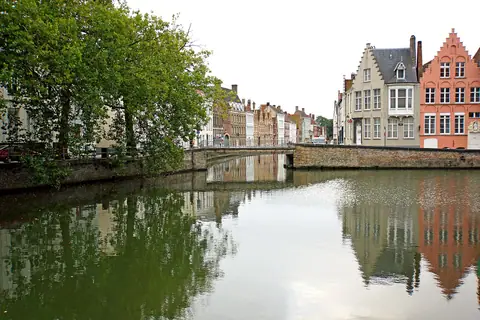
Enclosed within an oval green ring of medieval ramparts and windmills in West Flanders, Bruges preserves its 13th-to-15th-century Hanseatic canal network, brick Gothic towers, and Flemish Primitive art.
Quick decisions
How many days?
Spend 2 to 3 full days: Day 1 for Markt, the Belfort, and Burg Square plus a canal boat cruise, Day 2 for Groeningemuseum, St John's Hospital, and the Begijnhof, and Day 3 for the Kruisvest windmills and Damme.
Where should I stay?
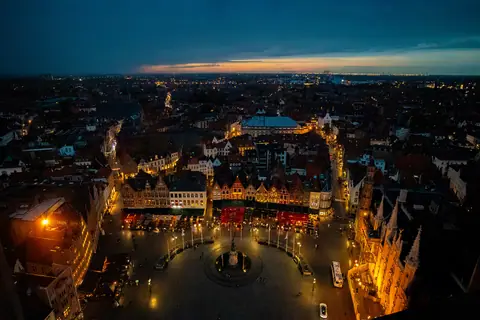
Stay overnight inside the medieval ring in the Dijver and Sint-Anna quarters so you can walk the illuminated canals after day-trippers depart on the 18:00 trains.
Do I need a car?
No: historic Bruges is a 30 km/h pedestrian-priority zone where every canal, museum, and brewery lies within a 20-minute flat walk, and Belgian SNCB/NMBS trains drop you at the southern edge of the ring.
Best for
Brick Gothic architecture, 15th-century Jan van Eyck and Hans Memling paintings, Trappist and lambic beer taverns, bean-to-bar pralines, and tranquil canal-side walks.
Before you go
Book your timed slot for the 366-step Belfort climb and the De Halve Maan Brewery tour online ahead of time, and consider the 72-hour Musea Brugge Card (€33 as of November 2026) if visiting three or more museums.
Getting around
Walk 15 minutes from Brugge Railway Station through Minnewater Park into the old town, or hop on a De Lijn city bus (free transfer for hotel guests or €2.50 contactless fare as of November 2026).
Continue your trip
Ride a direct Belgian IC train east to Ghent (24 minutes), Brussels (58 minutes), or Antwerp (1 hour 25 minutes), or cycle 6 km along the Napoleon canal to Damme.
Overview
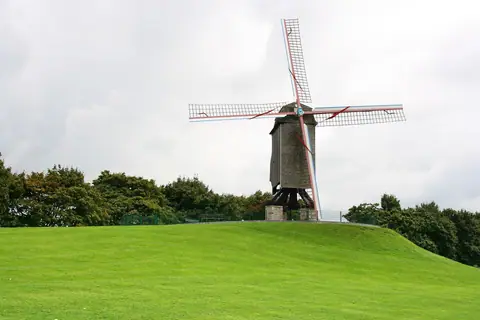
Encircled by a 6.8-kilometre oval green belt of medieval earthen ramparts, moat canals, and four historic wooden windmills in Belgium's Dutch-speaking province of West Flanders, Bruges (Brugge) is the most intact medieval trading city in Northern Europe. Between the 12th and 15th centuries, when the tidal Zwin inlet linked its inner canals to the North Sea, Bruges served as the commercial clearinghouse where Hanseatic League wool and timber merchants met Venetian, Genoese, and Castilian bankers, funding the birth of oil painting under resident masters Jan van Eyck and Hans Memling. When the Zwin channel silted up around 1500 and maritime trade shifted to Antwerp, Bruges slipped into four centuries of economic slumber that spared its brick Gothic gables, medieval almshouses (godshuizen), and cobblestone quays from industrial demolition, earning inscription as a UNESCO World Heritage Site (Reference 996) in 2000.
While daytime tour buses crowd the central axis between Minnewater, Markt Square, and Burg Square between 10:30 and 16:30, stepping ten minutes northeast into the quiet residential lanes of Sint-Anna or staying overnight reveals a living Flemish city of candlelit brown cafés, carillon bells, and mirror-still canals.
Getting there
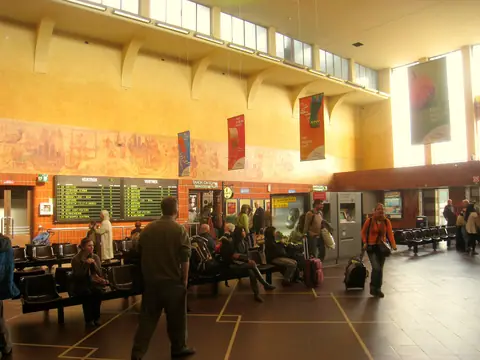
Ride up to three direct hourly SNCB/NMBS InterCity (IC) trains to Brugge Station from Brussels-Midi (58 minutes, connecting directly with London, Paris, and Amsterdam Eurostar trains), Brussels Airport Zaventem (1 hour 28 minutes direct), or Ghent-Sint-Pieters (24 minutes).
Where to stay
Book a canal-front heritage hotel along the Dijver, Spiegelrei, or Pandreitje for immediate access to Rozenhoedkaai and Burg Square, choose the peaceful cobbles of Sint-Anna and Langerei for boutique guesthouses, or stay near ’t Zand Square for easy station and parking access.
Things to do
Climb 366 steps up the 83-metre Belfort belfry, board an open-top canal boat at Rozenhoedkaai, admire Jan van Eyck's 1436 Madonna with Canon van der Paele at the Groeningemuseum and Michelangelo's marble Madonna and Child inside the Church of Our Lady, venerate the relic at the Basilica of the Holy Blood, and stroll the whitewashed 1245 Princely Beguinage Ten Wijngaerde.
Food and drink
Tour the family-owned De Halve Maan Brewery to taste unfiltered Brugse Zot and learn about its 3.2-kilometre underground beer pipeline, sample Guild-certified artisan pralines, and dine on stoverij (Flemish beef stew braised in dark abbey ale) with twice-fried beef-tallow fries.
Culture
Under the 15th-century Valois Dukes of Burgundy, especially Philip the Good and Charles the Bold, Bruges became the artistic capital of Northern Europe, where Jan van Eyck, Petrus Christus, Hans Memling, and Gerard David pioneered luminous oil glazes and microscopic realism.
Weather by month
Bruges is warmest in July, with average highs around 23°C, and coldest in January, when nights drop to about 2°C. November is the wettest month, with rain on about 14 days. For mild weather with fewer rainy days, aim for May, June, July and August.
| Month | Low | Range | High | Rain | Rainy days |
|---|---|---|---|---|---|
| Jan | 2°C | 7°C | 91 mm | 13 d | |
| Feb | 2°C | 8°C | 70 mm | 10 d | |
| Mar | 4°C | 11°C | 77 mm | 11 d | |
| Apr | 6°C | 15°C | 70 mm | 10 d | |
| May | 9°C | 18°C | 70 mm | 10 d | |
| Jun | 12°C | 21°C | 70 mm | 10 d | |
| Jul | 14°C | 23°C | 70 mm | 10 d | |
| Aug | 14°C | 23°C | 70 mm | 10 d | |
| Sep | 11°C | 20°C | 77 mm | 11 d | |
| Oct | 8°C | 15°C | 84 mm | 12 d | |
| Nov | 5°C | 11°C | 98 mm | 14 d | |
| Dec | 2°C | 8°C | 98 mm | 14 d |
Averages of daily values from 2015 to 2024. Rainy days are days with at least 1 mm of rain. Source: Open-Meteo · Compare destinations by month.
Bruges on the map
Every place we cover in Bruges. Tap a category or pin to explore.
In-depth Bruges guides
Browse the guides grouped by topic: sights, neighbourhoods, food, transport, day trips and trip planning.
Sights, Landmarks & Parks
Key monuments, viewpoints, museums and nature trails.
- Bruges: Medieval Egg Layout, Musea Brugge Card, Canal Etiquette & TipsMaster Bruges's oval canal layout, compare the 72-hour Musea Brugge Card against single tickets, and learn how to beat the 10:30 to 16:30 day-tripper rush.
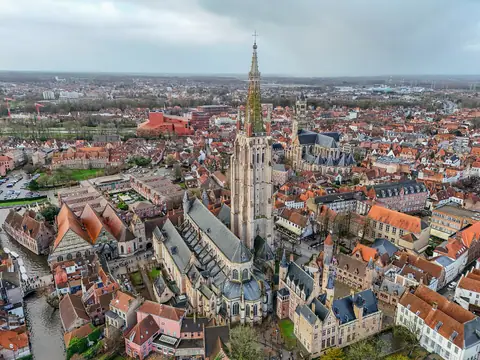
- Best Things to Do in Bruges: Belfort, Canals, Flemish Primitives & Hidden AlmshousesExplore the 10 essential experiences in Bruges, from climbing the 83-metre Belfort and cruising the inner canals to Jan van Eyck paintings and 14th-century almshouses.
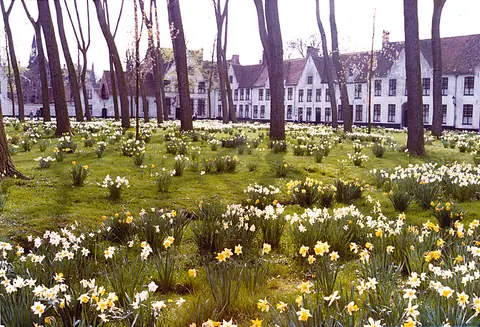
- Best Time to Visit Bruges: Seasonal Weather, Holy Blood Procession & Winter GlowCompare Bruges month by month with KMI climate normals, from spring daffodils at the Begijnhof and the May Procession of the Holy Blood to Winter Glow light trails.
- 3-Day Bruges Itinerary: Medieval Canals, Flemish Masters, Beer & DammeFollow our timed 3-day Bruges itinerary covering the Belfort, Rozenhoedkaai canal boats, Jan van Eyck and Memling art, De Halve Maan Brewery, and Damme.
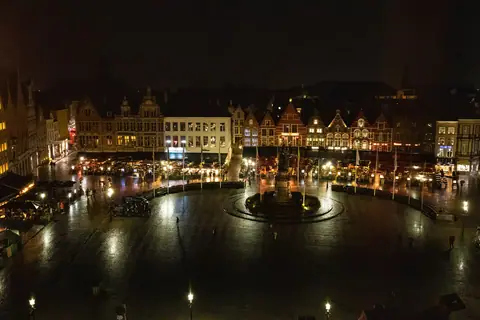
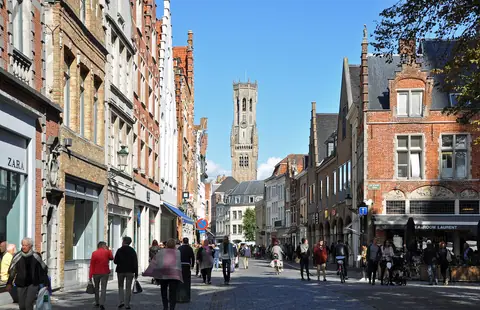
- Markt Square, Belfort Climb & Burg Square Town Hall GuideExplore Bruges's twin historic plazas: climb the 366 steps of the 83 m Belfort on Markt Square, tour the 1376 Gothic Town Hall on Burg Square, and time the carillon.
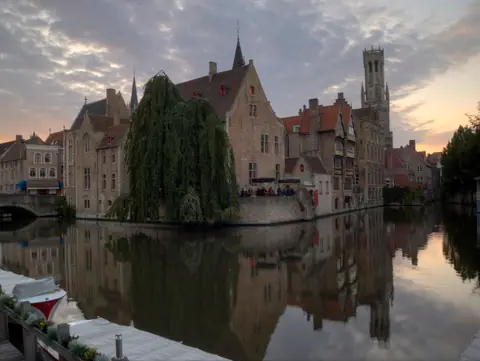
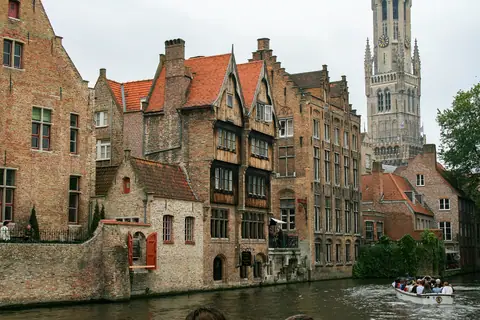
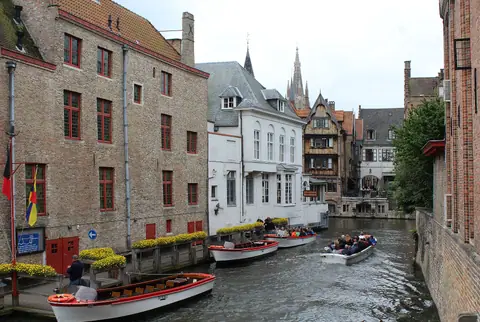
- Bruges Canal Boat Tours, Rozenhoedkaai & Secret Bridges WalkEverything you need to know about Bruges's 30-minute canal boat cruises, all 5 boarding jetties, 2026 ticket prices, and a self-guided walk along the quietest bridges.
- Flemish Primitives in Bruges: Groeningemuseum, Memling & MichelangeloExplore Bruges's three world-class art collections along Dijver and Mariastraat: Jan van Eyck at the Groeningemuseum, Hans Memling at St John's Hospital, and Michelangelo's Madonna.
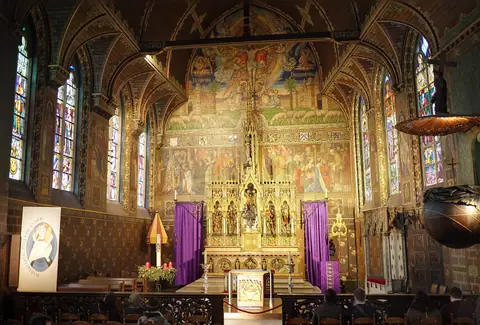
- Basilica of the Holy Blood, Veneration Schedule & Jeruzalemkerk GuideVisit Bruges's two most extraordinary sacred sites: the double-chapel Basilica of the Holy Blood on Burg Square and the 1429 Adornes Jeruzalemkerk in Sint-Anna.
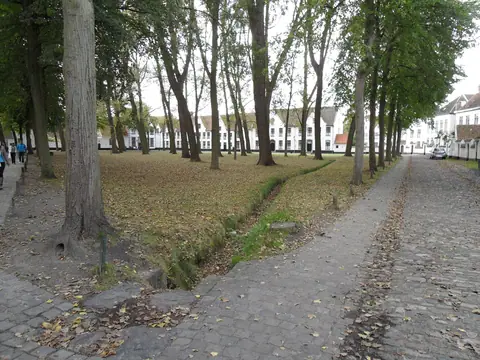
- Begijnhof Beguinage, Minnewater Lake & Hidden Godshuizen WalkWalk the peaceful southern gateway of Bruges: the UNESCO-listed 1245 Princely Beguinage, Minnewater (Lake of Love), and six hidden 14th-century Godshuizen almshouses.
Neighbourhoods & Where to Stay
Districts, historic quarters and the best bases for your stay.
- What to Wear in Bruges: Cobblestone Shoes, North Sea Wind Layers & Belfry ClimbPack smart for Bruges with practical footwear advice for medieval porphyry cobblestones, windproof rain shells for sudden North Sea showers, and Belfort stair tips.
- Where to Stay in Bruges: Canal-Front Dijver vs Sint-Anna & 't ZandCompare the best neighbourhoods to stay in Bruges: historic canal-front hotels on Dijver and Spiegelrei, quiet Sint-Anna guesthouses, and convenient 't Zand.
Food & Drink
Local dishes, markets, cafés and dining districts.
- De Halve Maan Brewery, Underground Beer Pipeline & Historic TavernsTour Bruges's family-run De Halve Maan Brewery (and see its 3.2 km underground beer pipeline), discover the best historic Trappist bars, and find real beef-tallow fries.
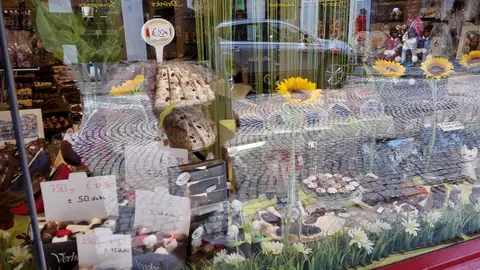
- What to Eat in Bruges: Certified Chocolatiers, Flemish Stews & WafflesHow to tell Bruges's genuine Guild-certified bean-to-bar chocolatiers from tourist bulk shops, plus where to eat authentic Flemish beef stoverij, waterzooi, and waffles.
Getting Around & Arrival
Airport transfers, public transit, passes and driving rules.
Day Trips & Excursions
Easy half-day and full-day trips from the city.
Reviews
Log in to write a review.
No reviews yet.