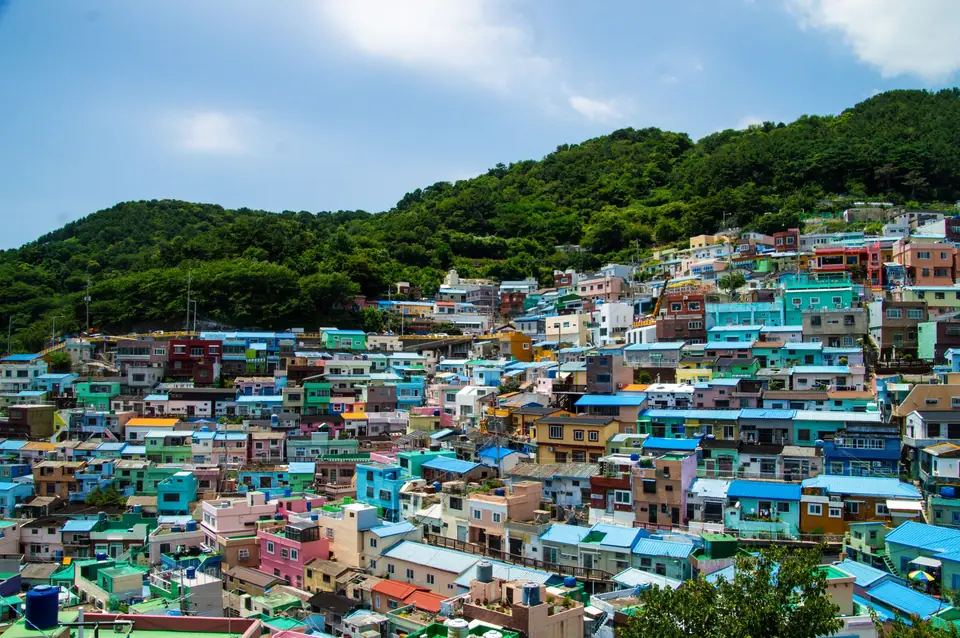
Follow a sweeping maritime journey through Busan, tracing wartime refugee quarters, historic fish markets, and cliffside Buddhist sanctuaries along the Korea Strait.
From Joseon Trading Post to Wartime Haven and Maritime Metropolis
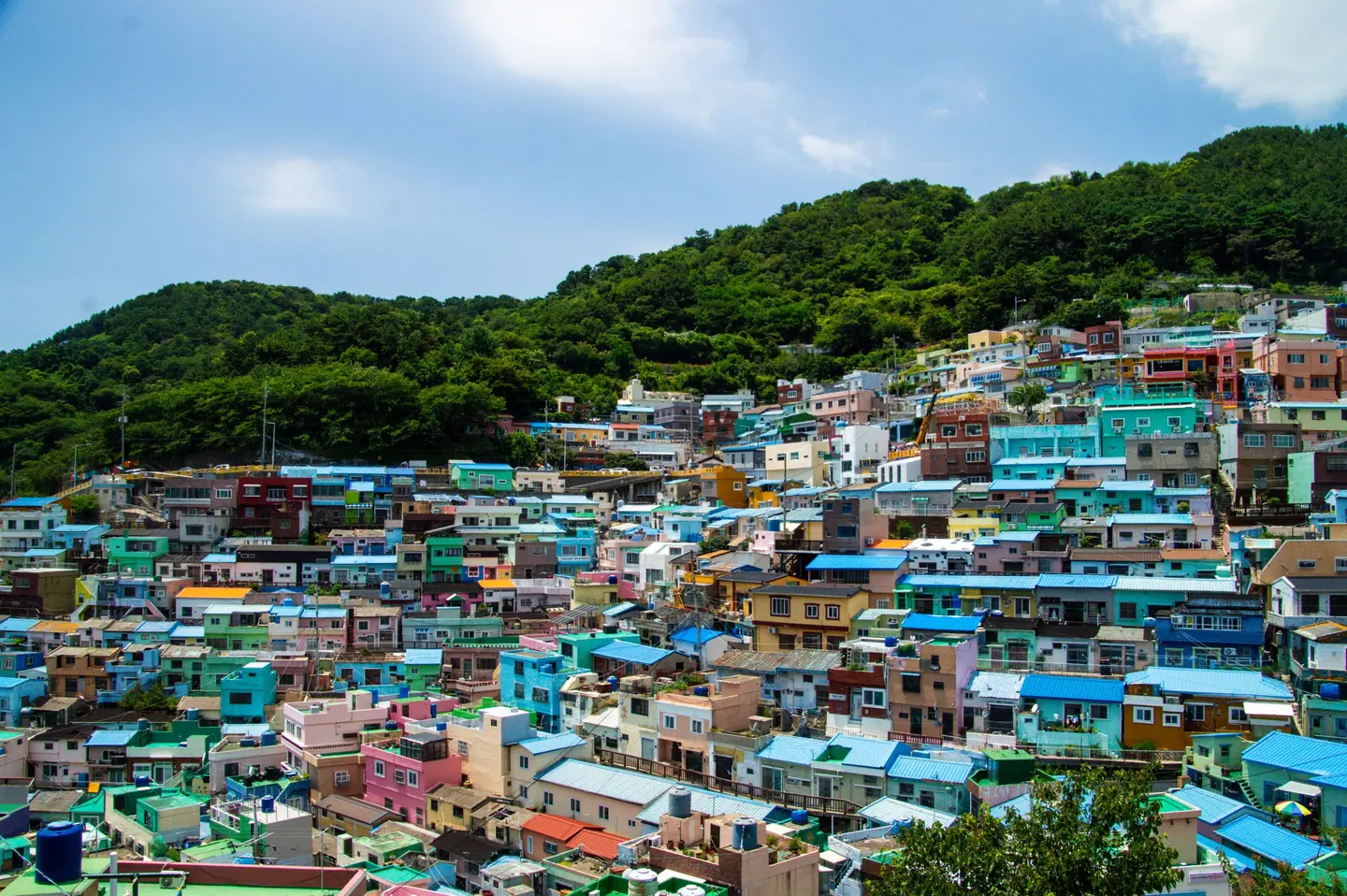
Long before towering maritime hubs lined the Korea Strait, the settlement known as Dongnae guarded the southeastern reaches of the peninsula, serving as the Joseon Dynasty’s primary gateway for diplomacy and commerce with Japan through the fortified Waegwan trading enclave. The port expanded rapidly during modern industrialisation, but its pivotal transformation occurred during the Korean War, when Busan functioned as the provisional wartime capital of the Republic of Korea. Fleeing southward along the Nakdong River perimeter, millions of refugees established improvised settlements across the steep granite hillsides, carving out terraced neighbourhoods such as Gamcheon and Bosu-dong that survive today as vital cultural repositories.
In the post-war decades, Busan harnessed its natural deep-water harbour to emerge as one of the world’s most formidable transshipment centres. Urban infrastructure connected disparate fishing coves into an integrated coastal metropolis, bridging the gritty dockside markets of Nampo-dong with modernist high-rises in Centum City and windswept clifftop sanctuaries like Haedong Yonggungsa.
Old Port Waterfront: Jagalchi Fish Market, Nampo and Yongdusan
The historical maritime core hums with the clamour of fishmongers, narrow dining alleyways, and the quiet vantage point of Busan Tower atop Yongdusan.
Jagalchi Market
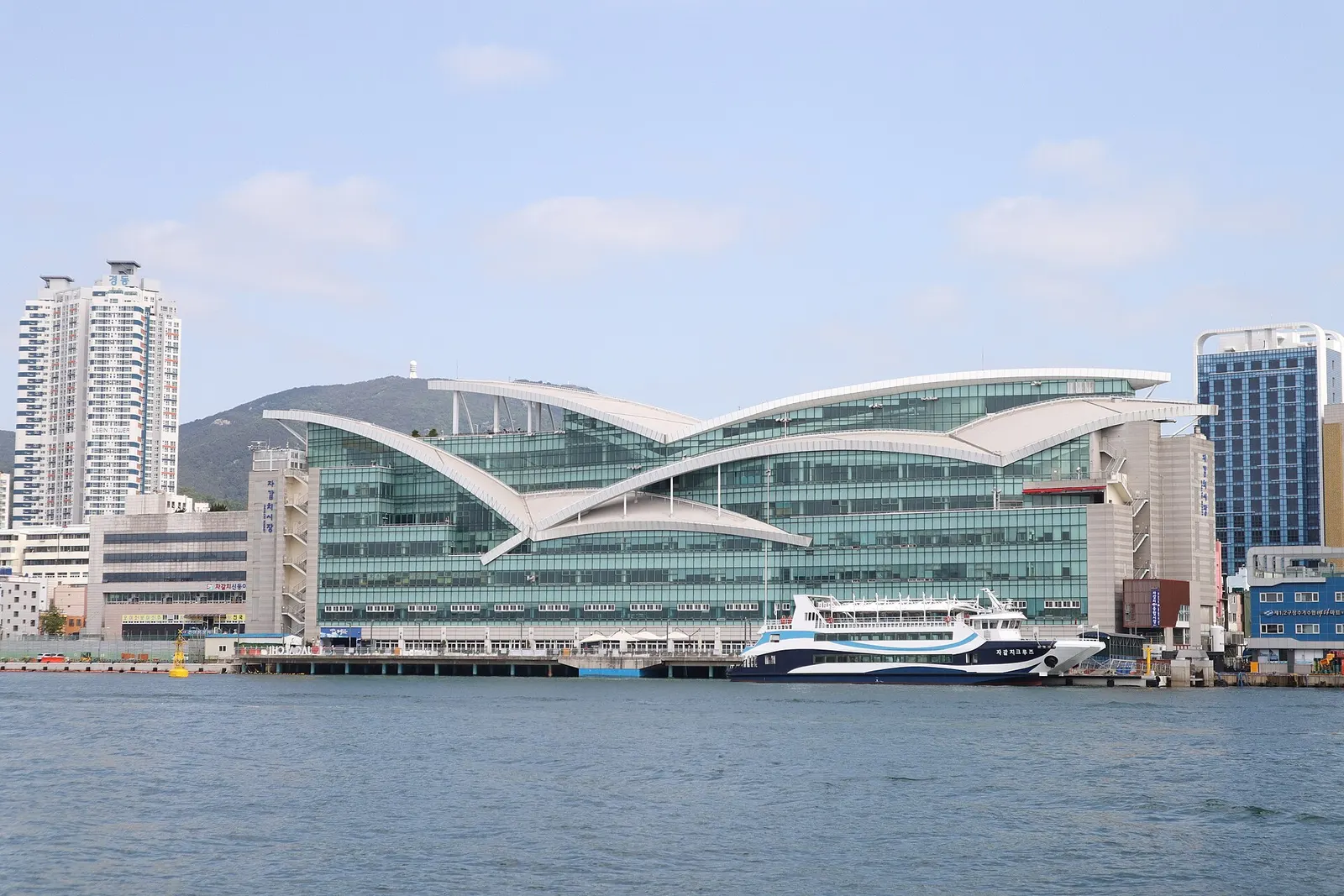
Established during the Japanese colonial era and expanded by female vendors after the Korean War, this historic fish market occupies a modern waterfront hall shaped like a gull. Visitors can inspect live sea creatures in ground-floor tanks before dining upstairs. Outside, elderly fishmongers known as Jagalchi Ajumma still clean catches on wooden stalls.
Busan Tower
Erected in 1973 atop Yongdusan Park, this 120-metre slender structure was modelled after the balustrade of Bulguksa Temple's Dabotap Pagoda. The observation deck offers panoramic outlooks across Busan Port, the harbour islands, and dense coastal hills. Unlike many telecommunications towers, it was designed purely as a scenic tourist viewpoint.
Yongdusan Park
Occupying a hill shaped like a dragon's head emerging from the sea, this park once housed a Shinto shrine during Japanese rule and refugee shacks during the Korean War. Today, shaded pathways lead visitors past monuments, an outdoor pavilion, and floral clocks. It serves as a peaceful refuge directly above the crowded commercial district of Nampo-dong.
Statue of Admiral Yi Sun-sin
Standing prominently at the base of Busan Tower in Yongdusan Park, this bronze monument honours the sixteenth-century admiral who defeated Japanese fleets during the Imjin War. Sculpted in full military regalia, Yi gazes out towards the sea with his hand resting on a long sword. The plinth details his pivotal maritime victories around the southern coastline.
Yeongdodaegyo Bridge
Completed in 1934, this was Korea's first bascule bridge, built to permit large ships to traverse the south port canal. During the Korean War, it served as an emotional rendezvous point for separated families fleeing southward. Modern restorations preserved its lifting mechanism, which elevates the single span during scheduled maritime demonstrations.
Gukje Market
Formed in 1945 by returning Koreans and refugees trading wartime surplus, Gukje Market grew into one of the country's central trading hubs. A labyrinth of covered alleyways divides the market into specific wholesale zones selling textiles, kitchenware, tools, and vintage clothing. Its chaotic post-war history was immortalised in popular Korean cinema.
Bupyeong Kkangtong Market
Known colloquially as the Tin Can Market, this venue specialised in imported canned rations and goods smuggled from US military bases after the Korean War. Covered arcades now shelter vendors offering local fishcakes, porridge, and regional produce. At dusk, central corridors transform into an energetic night market packed with regional street food carts.
BIFF Square
Conceived as the primary venue for the inaugural Busan International Film Festival in 1996, this commercial pedestrian boulevard celebrates regional cinema. Copper handprints and footprints of renowned actors and directors are embedded directly into the pavement. Street carts selling sweet ssiat hotteok (seed-filled pancakes) line the thoroughfare between modern multiplexes.
Bosudong Book Street
Originating in 1950 when a refugee couple began selling discarded American military magazines, this narrow lane expanded into a sanctuary for affordable literature. Dozens of small shops stack rare out-of-print titles, comics, and textbooks ceiling-high along concrete steps. Cultural murals and quiet coffee shops now punctuate the historic literary corridor.
Busan Museum of Movies
Situated on the eastern flank of Yongdusan, this contemporary cultural facility traces the evolution of Korean cinema from early twentieth-century motion pictures to modern blockbusters. Visitors can explore film production techniques, sound engineering, and virtual reality studios across four levels. The exhibition highlights Busan's long-standing status as a vital Asian film capital.
Busan Modern and Contemporary History Museum
Constructed in 1929 as the Busan branch of the Oriental Development Company, this neoclassical reinforced-concrete structure later served as the United States Information Service office. Now repurposed as a public museum, the building features exhibitions examining imperial exploitation and post-war urban growth. Classical pilasters and original vaults remain visible throughout.
Nampo-dong Underground Shopping Centre
Constructed beneath Junggu-ro to ease surface pedestrian congestion, this subterranean commercial arcade extends for several city blocks between major subway stations. It contains hundreds of compact retail outlets specialising in leather goods, Korean cosmetics, and tailored clothing. The underground concourse provides a direct sheltered link between the old port and central commercial avenues.
Choryang Catholic Church
Perched on the lower slopes above the central railway terminus, this red-brick Catholic church has ministered to working-class dockers and railway staff for decades. Its tall arched stained-glass windows and modest bell tower reflect post-war ecclesiastical architecture. The peaceful churchyard offers vantage points over the cargo cranes and marine terminals of Busan Port.
Choryang Ibagu-gil
This heritage trail winds through residential hillside neighbourhoods settled by refugees during the Korean War. The route features historic homes, community galleries, and the 168 Stairs, which steepened the daily commute for dockworkers. A modern public monorail now runs alongside the steps, offering clear vistas over the busy container port below.
Yeongdodaegyo Memorial Park
Located on the southern abutment of the historic drawbridge, this modest stone plaza commemorates Korean War refugees who gathered here seeking lost kin. Bronze statues depict an anxious mother and child scanning the horizon for missing relatives. Informative panels outline the engineering challenges overcome during the bridge's 1930s construction.
Busan Port Coastal Passenger Terminal
Overlooking the inner harbour, this transportation terminal historically handled sea transport connecting Busan to Geoje, Jeju, and remote archipelago settlements. The sweeping glass-fronted facility allows visitors to observe tugboats, passenger ferries, and patrol vessels manoeuvring through narrow shipping lanes. It remains an active symbol of the city's seafaring heritage.
Daecheong-dong Catholic Cathedral
Also known as the Jungang Cathedral, this prominent religious complex serves as the spiritual seat of the regional diocese. Built in modern architectural style with subtle traditional accents, the church features extensive brick masonry and high clerestory windows. The complex stands as an enduring centre of community outreach for downtown maritime labourers.
Provisional Capital Memorial Hall
Built in 1926 as the official residence for the provincial governor, this hybrid Western and Japanese-style wooden mansion served as South Korea's presidential residence while Busan was temporary capital from 1950 to 1953. Restored rooms contain authentic period furnishings, diplomatic records, and war relics. The adjacent exhibition hall outlines wartime civilian life.
Choryang Church
Founded in 1892 by American missionary William M. Baird, this was the first Presbyterian church established in Busan. The present stone-faced sanctuary serves as a monument to early Korean Protestantism and anti-colonial resistance against Japanese religious mandates. A small museum on site preserves historical bibles, parish records, and missionary photographs.
Yeongdo Bongnaesan Mountain Viewpoint
Rising at the centre of Yeongdo Island across the water from Nampo-dong, this 395-metre peak provides an unobstructed aerial panorama of the old port. Wooden observation decks face the inner harbour, Yeongdodaegyo Bridge, and the dense alleyways of Jagalchi. Trails pass unusual rock formations surrounded by coastal pine forests.
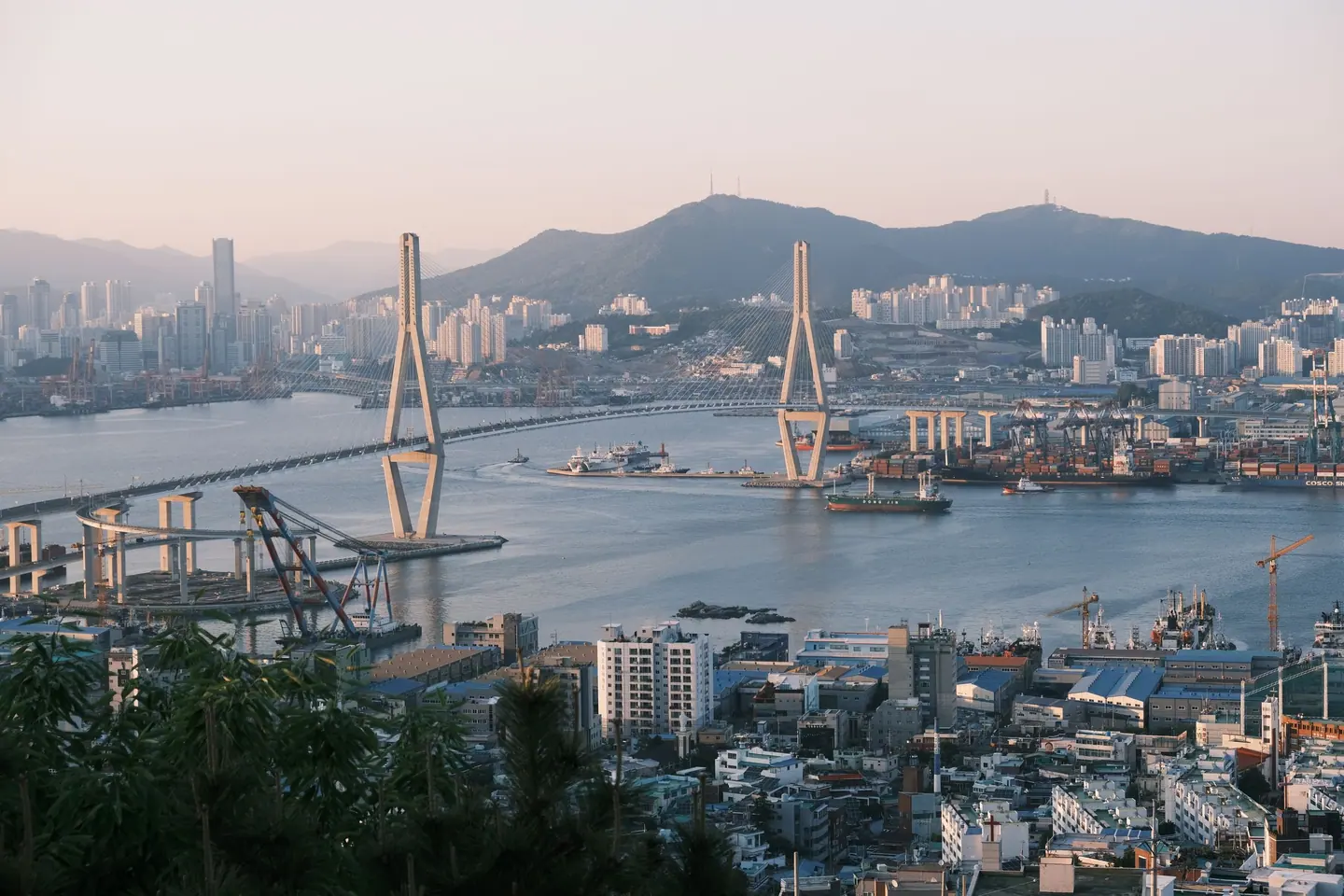
Refugee Ridges: Gamcheon Culture Village and Bosu-dong Book Street
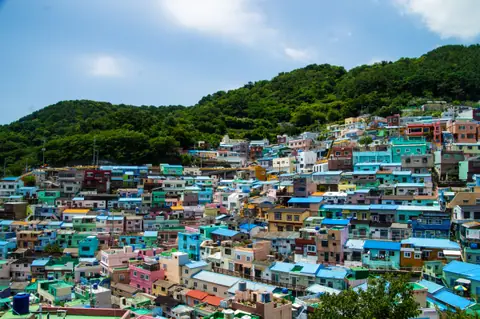
Terraced pastel houses cling to rugged slopes, preserving the resilient residential architecture established by displaced families during the Korean War.
Gamcheon Culture Village
Built across steep slopes by displaced families during the Korean War, this settlement features tiered rows of pastel houses designed so no home blocks the view of another. Narrow stairs connect colourful dwellings adorned with murals, sculptures, and small galleries. Visitors can observe how makeshift shelters evolved into a cohesive hillside community.
Bosu-dong Book Street
This narrow lane emerged when refugee professors and students began trading second-hand textbooks and foreign publications during the Korean War. Today, floor-to-ceiling stacks of vintage volumes, comic books, and academic texts spill into the pedestrian corridor. The surrounding alleyways feature quiet study spaces, modest cafes, and bronze plaques detailing the street's literary heritage.
Provisional Capital Memorial Hall
Constructed in 1926 as the South Gyeongsang provincial governor's office, this brick and timber building served as President Syngman Rhee's residence when Busan was the wartime capital. The restored interior contains period furniture, official government documents, and photographs from the conflict. An adjacent exhibition hall presents dioramas and artefacts documenting civilian life during the national emergency.
Ami-dong Tombstone Cultural Village
When refugees flooded into Busan in 1950, desperately scarce land forced families to build homes across an abandoned Japanese cemetery on Mount Cheonma. Many houses still incorporate stone grave markers, retaining walls, and granite foundations directly into their domestic architecture. Walking the staircases reveals marked headstones repurposed as structural plinths and drainage channels.
Bupyeong Kkangtong Market
Originally established during the Japanese colonial era, this market expanded rapidly as refugees traded surplus military rations and canned provisions smuggled from American military bases. Sheltered under vast metal canopies, modern vendors sell regional street delicacies, fresh produce, and household goods. The market preserves its original grid street layout alongside memorials recalling mid-century ration trading.
Gukje Market
Founded in 1945 by returning overseas Koreans and expanded by wartime refugees, Gukje Market functioned as the country's primary commercial clearing house for relief supplies and foreign commodities. Concrete arcades shelter hundreds of stalls organised by trade, including textiles, hardware, and cookware. Exploring the dense alleys offers insight into South Korea's rapid post-war economic resilience.
Yongdusan Park
Yongdusan, shaped like a dragon's head rising from the sea, sheltered thousands of refugee shacks before devastating fires swept the ridge in the 1950s. The site now contains the towering Busan Diamond Tower alongside an imposing bronze statue of Admiral Yi Sun-sin. Elevated terraces provide panoramic vistas over the old downtown ports and terraced residential slopes.
Busan Diamond Tower
Erected in 1973 without telecommunications apparatus, this 120-metre tower was designed purely as an architectural viewpoint for city residents. Its high-speed lifts transport visitors to an enclosed observation deck displaying sweeping views of the surrounding mountainous terrain and maritime cargo terminals. The base incorporates heritage displays tracing the urban growth of Busan since liberation.
Yeongdodaegyo Bridge
Completed in 1934 as Korea's first bascule bridge, this steel span became a legendary gathering point for families separated during chaotic retreats to Busan. The bridge lifts its single leaf daily to allow maritime traffic through the harbour channel. Bronze statues along the adjacent waterfront promenade depict waiting families and weeping relatives, honouring tragic wartime separations.
Jagalchi Market
Formed along a gravel shore after the Korean War, this waterfront market was driven primarily by female fishmongers, known as Jagalchi Ajumma, whose husbands were wounded or killed. The modern facility resembles a flying seagull, housing tanks filled with live seafood and traditional open-air fish counters on the ground floor. Second-floor dining spaces overlook busy fishing boat wharves.
Busan Modern and Contemporary History Museum
Housed in a 1929 stone structure that originally served as the Oriental Development Company and later the American Cultural Center, this institution charts Busan's twentieth-century history. Detailed exhibits cover the influx of northern refugees, political movements, and foreign relief operations. Restored interior woodwork and archival photographs document the dramatic transition from occupied port to industrial metropolis.
Choryang 168 Stairs
This dramatic flight of 168 concrete steps was constructed so hillside residents could carry fresh water and supplies down to the port and train station. A modern monorail now runs alongside the stairs to assist elderly residents ascending the precipitous incline. Small lookout platforms throughout the climb showcase panoramic angles of Busan Station and the container terminals below.
Sanbokdoro Road
Carved into the ridges during the 1960s, this panoramic mountain-hugging road linked disconnected refugee enclaves that clung to the upper slopes. The road offers remarkable vantage points over thousands of low-rise dwellings cascading down towards the sea. Observation desks, historical markers, and small rooftop cafes line the pavement, allowing visitors to examine hillside engineering solutions.
Democracy Park
Positioned atop Mount Bo-su, this monument honours the April 19 Revolution, the 1979 democratic protests, and the June 1987 civic resistance movements. The site includes the Torch of Democracy monument, an expansive memorial hall, and quiet forested walking paths. Visitors can explore indoor galleries showing documentary footage, political banners, and oral histories of civic resistance in Busan.
Baekje Hospital Building
Built in 1927 as Busan's first modern general hospital, this red-brick structure later served as a police station, military dormitory, and Chinese restaurant. The interior preserves original load-bearing masonry walls, weathered timber beams, and antique window frames. A ground-floor cafe and cultural space allow visitors to examine the weathered texture of colonial-era industrial architecture.
Cheonmasan Mountain Observation Deck
Situated on the ridge above Gamcheon, this elevated wooden platform provides a direct aerial perspective over the pastel rooftops cascading across the mountain hollow. Information panels describe the terrain's geological formation and the evolution of surrounding hillside shanties into sustainable modern neighbourhoods. The viewpoint looks outward across Namhang Port and the distant bridges of the South Sea.
Huinnyeoul Culture Village
Clinging to the sheer cliffs of Yeongdo Island across from central Busan, this narrow settlement was built by refugees who found no room on the mainland. A single pedestrian footpath winds past small whitewashed houses overlooking crashing waves. Coastal defense barriers, coastal tunnels, and community murals highlight how residents adapted to living on steep oceanic precipices.
Namhang Market
Established in the mid-twentieth century near ship repair docks, this covered market catered to maritime labourers and families residing on the island's terraced slopes. The market is known for traditional blood sausage, dried seaweed, and salted fish prepared using wartime preservation recipes. Wide covered aisles allow exploration of local everyday commerce away from major commercial hubs.
Busan Citizens Park
Occupying a former Imperial Japanese Army base and later the United States military's Camp Hialeah, this urban park preserves historic military barracks, stone officer quarters, and mature plane trees. Educational pavilions explain the base's role in distributing logistical supplies and personnel during the Korean War. Walking paths, streams, and sculpture gardens have replaced barbed wire enclosures.
United Nations Memorial Cemetery
Established in 1951 by the United Nations Command, this immaculate memorial ground holds the remains of over two thousand soldiers from sixteen contributing nations. The grounds feature manicured lawns, a central memoriam pavilion designed by Kim Swoo-geun, and the Wall of Remembrance. A tranquil canal separates the interdenominational chapel from national military plots surrounded by pines.
Island Bastions and Forest Trails: Yeongdo and Taejongdae Cliffs
Connected by sea-spanning bridges, this mountainous island features historic shipbuilding yards, sheer ocean palisades, and maritime heritage centres.
Taejongdae
Named after King Taejong Muyeol of Silla, this rocky promontory marks the southernmost point of Yeongdo. Dense evergreen woodlands of camellia and pine border precipitous sea cliffs overlooking the Korea Strait. Walking trails wind past geological formations carved by persistent wave action over millennia.
Yeongdodaegyo Bridge
Constructed in 1934 during the Japanese colonial period, this drawbridge served as a critical transport link and a symbolic meeting point for displaced families during the Korean War. Modern mechanical restorations allow the roadway to tilt upward periodically. Bronze sculptures along the shore depict war refugees.
Busanhangdaegyo
Opened in 2014, this steel-and-concrete structure connects Yeongdo to Nam District across Busan Port. Its diamond-shaped pylons reach heights exceeding one hundred metres, carrying coastal ring traffic above commercial shipping lanes. The curved access ramp on the island side forms a continuous loop over waterfront warehouses.
Namhangdaegyo
Completed in 2008, this sea-crossing bridge links the western coast of Yeongdo to Songdo Peninsula. A dedicated pedestrian pathway flanks the southern deck, offering views across the anchorage grounds where cargo ships rest. The bridge stands on heavy marine pillars designed to withstand seasonal typhoon surges.
National Maritime Museum of South Korea
Designed to evoke a colossal ocean droplet, this modern institution occupies a reclaimed harbour headland in Dongsam-dong. The galleries display traditional Joseon Dynasty naval vessels alongside historic astronomical navigational tools. A cylindrical aquarium stands at the centre of the main atrium, surrounded by interactive maritime displays.
Korea Maritime & Ocean University
Established in 1945, South Korea's primary nautical academy occupies the dedicated landmass of Jo Island, linked to Yeongdo by a stone causeway. Its harbour quays house large training vessels that prepare officers for international merchant fleets. Coastal pathways around the perimeter reveal rock shelves and university research installations.
Bongraesan
Rising nearly four hundred metres above sea level, this craggy summit forms the geographic anchor of Yeongdo. Legend attributes the mountain to celestial protectors, and historic shrines sit tucked among natural boulder clusters. From the observation platforms, travellers look out across Busan Port, Taejongdae, and distant offshore islands.
Busan Modern and Contemporary History Museum
Located just across the strait from Yeongdo in Jung District, this neoclassical stone building dates to 1929 when it housed the Oriental Development Company. Later converted into an American cultural centre, it now presents historical documents on local industrial development. The preserved facades retain classical pilasters and ornamental masonry.
Jagalchi Market
Bordering the channel directly facing Yeongdo Island, this coastal market trace its commercial roots to the late nineteenth century. Fishmongers display regional catches of octopus, flounder, and abalone across expansive wet halls. The seaside concourse provides clear vantage points towards the shipyards and dry docks across the water.
Yongdusan Park
This wooded knoll was named for its resemblance to a dragon's head rising from the sea to protect the shoreline. The park grounds feature a statue of Admiral Yi Sun-sin and monuments commemorating twentieth-century civic movements. Elevated terraces gaze directly across the channel towards the peaks and shipyard cranes of Yeongdo.
Busan Tower
Constructed in 1973 in Yongdusan Park, this 120-metre-tall tower was modelled on the balustrade of the Dabotap Pagoda in Gyeongju. The summit observatory grants sweeping perspectives of the industrial docks and maritime bridges of neighbouring Yeongdo. It functions entirely as a viewing platform without transmission antennas.
Ami-dong Tombstone Culture Village
During the Korean War, thousands of refugees settled on these steep granite slopes, repurposing abandoned Japanese gravestones as retaining walls, steps, and house foundations. The dense district illustrates wartime survival and domestic adaptation. Markers throughout the alleys explain how residents built homes atop masonry plinths under emergency conditions.
Gamcheon Culture Village
Constructed on steep ridges opposite Yeongdo during the 1950s by religious followers and war refugees, this settlement cascades toward the southern sea. Narrow stone stairways connect multi-tiered dwellings built so that no house blocks the sunlight of another. Community art projects have integrated installations into disused alleyways and public verandas.
Songdo Beach, Busan
Opened in 1913 as the first public bathing beach in Korea, Songdo curves along an inlet bounded by pine groves. Curved timber skywalks project over the waves, providing uninterrupted sightlines toward the ship-repair docks on Yeongdo. Sea cables carry cabins over the water toward western coastal headlands.
Songdo Cloud Trails
Extending over three hundred metres from the Songdo shoreline toward Geobukseom Islet, this elevated walkway features transparent glass panels exposing crashing waves below. From the bridge railing, we view cargo ships anchored off the Yeongdo coast. The path incorporates local folktales about mythological dragons and coastal fishermen.
Annam Park
Located on the peninsula directly west of Yeongdo across the bay, this coastal park preserves exposed Cretaceous sedimentary cliffs and marine terraces. Walking tracks lead through broadleaf forests down to pebble beaches that look toward Taejongdae. Observation towers on the cliff line highlight regional geological faults.
Oryukdo
These basalt sea stacks stretch south-east from the mainland, appearing as five or six distinct islands depending on tide levels. The outermost islet hosts an automated lighthouse established in 1937 to guide international shipping into Busan Port. They guard the eastern sea passage directly opposite the Taejongdae headland.
Igidae
Running along the outer coast of Nam District, this geological park features volcanic formations and wave-cut benches overlooking the Korea Strait. The name commemorates two Joseon courtesans who legend says perished while defending regional integrity. Paths along the edge provide long-range vistas across the bay to Yeongdo.
UN Memorial Cemetery
Established in 1951, this serene site holds over two thousand fallen soldiers from sixteen nations who served in the Korean War. The memorial hall, designed by architect Kim Swoo-geun, displays international flags and commemorative plaques. Landscaped ponds and immaculate gardens surround rows of uniform stone markers near the harbour approaches.
Busan Museum
Founded in 1978, this museum preserves archaeological relics, ancient ceramics, and diplomatic documents concerning maritime trade with neighbouring kingdoms. The outdoor courtyard contains historic stone stupas, boundary stones, and memorial tablets collected across the province. Displays chronicle the maritime evolution of Busan from prehistoric shell mounds to an industrial seaport.
Eastern Sands and Contemporary Hubs: Haeundae Beach and Centum City
Busan's modern urban strip unites sweeping sandy beaches and thermal springs with cutting-edge cultural complexes such as the Busan Cinema Center.
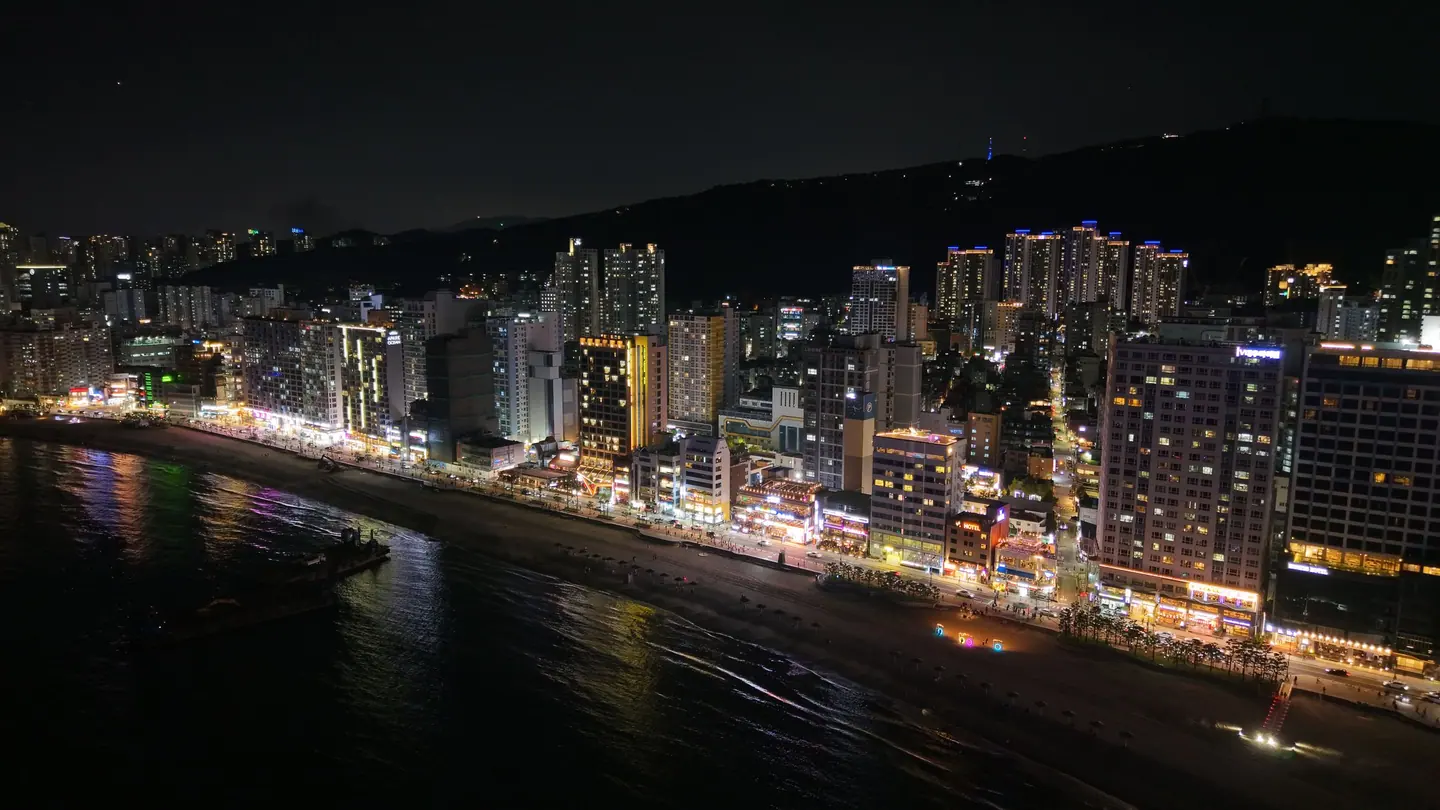
Haeundae Beach
Named after the scholar Choe Chi-won, this broad coastline spans over a kilometre along the Korea Strait. The boardwalk features open-air folk games, seasonal flowerbeds, and sweeping vistas toward Dongbaekseom Island. Visitors regularly gather here during autumn to observe the Chuseok full moon rising directly over the eastern headland.
Dongbaekseom
Originally an offshore island, sedimentation connected this rocky knoll to the mainland over centuries. Coastal wooden trails wind beneath dense camellias, leading toward carved rock inscriptions attributed to ninth-century poet Choe Chi-won. A bronze mermaid statue perched on the shoreline rocks commemorates the legendary Princess Hwangok from the Kingdom of Naranda.
Nurimaru APEC House
Constructed on the southern tip of Dongbaekseom for the 2005 APEC Leaders Meeting, the structure reinterprets a traditional Korean pavilion using glass and steel. Inside, the circular summit chamber retains original nameplates, national flags, and official banqueting furniture. The perimeter terrace looks directly across the waters toward the Gwangan Bridge.
Busan Cinema Center
Designed by Austrian firm Coop Himmelb(l)au, this complex serves as the principal venue for the annual Busan International Film Festival. Its monumental cantilevered roof covers an expansive outdoor amphitheatre and incorporates thousands of programmable LED ceiling panels. Inside, multiple screening rooms host domestic art-house premieres and international film retrospective programmes throughout the year.
Busan Museum of Art
Opened in 1998, this multi-level civic institution houses extensive collections of modern Korean art alongside touring international retrospectives. The adjacent Space Lee Ufan presents stone and steel installations created by the mono-ha pioneer, set within minimalist concrete galleries. Outside, manicured sculpture lawns contain contemporary works by leading regional artists.
Shinsegae Centum City
Recognised by Guinness World Records as one of the world's largest department store facilities, this commercial landmark anchor-develops Centum City. Beyond retail floors, the building features an indoor ice rink, rooftop sculpture park, and a sprawling jjimjilbang that utilises natural hot spring waters. The complex connects directly to neighbouring cultural venues via subterranean plazas.
BEXCO
The Busan Exhibition and Convention Centre spans multiple interconnected halls designed with wide, column-free exhibition spaces. Built on the former site of Suyeong Airfield, it hosts large international maritime summits, gaming conventions, and cultural expos. Its aerodynamic glass facade mirrors the contemporary urban architectural language that defines the Centum City district.
Haeundae Market
Positioned just inland from the shoreline, this linear market has served the community since the early twentieth century. Stalls display live sea eels in circulating glass tanks, fresh gukbap broths, and traditional hotteok pastries filled with seeds. It offers travellers a direct contrast to the nearby glass-and-steel coastal developments.
Dalmaji-gil
Winding up the slopes of Mount Wausan, Dalmaji-gil is known locally as the path for viewing the evening moon. In spring, cherry blossoms form a continuous canopy over the road, sheltering independent art galleries and local tea houses. Viewing platforms along the road yield vistas spanning Haeundae Beach and Oryukdo Islets.
Cheongsapo
This coastal pocket maintains a working fleet of small wooden vessels despite nearby high-rise construction. Two prominent lighthouses, one painted red and one white, stand guard over the outer breakwater to guide fishing boats. Travellers arrive to walk along the seaside timber boardwalks and observe shellfish baking over charcoal braziers.
Cheongsapo Daritdol Observatory
Projecting seventy metres out over the rocky coastal shoals, this modern viewing pier resembles a serpent slithering into the sea. Sections of transparent reinforced glass in the floor allow visitors to observe ocean swells breaking directly below. Telescopes along the outer perimeter provide views of passing cargo freighters navigating maritime lanes.
Songjeong Beach
Situated northeast of Haeundae, Songjeong offers a gentler shoreline flanked by shallow sandbars and pine trees. The beach has evolved into South Korea's primary surf enclave, hosting schools and equipment rental shops year-round. At the northern end, Jukdo Park contains an octagonal wooden pavilion overlooking rocky inlets and crashing waves.
Haedong Yonggungsa
Established in 1376 by the royal teacher Naong, this rare seaside temple departs from customary mountain layouts by directly hugging ocean crags. Visitors cross a stone bridge flanked by stone lanterns to reach shrines dedicated to Haesu Gwaneum, the Sea Goddess of Mercy. In spring, cliffside paths feature lantern arrays celebrating Buddha's birthday.
Apec Naru Park
Constructed along the Suyeonggang River to commemorate the 2005 Asia-Pacific Economic Cooperation forum, this linear park connects Centum City to tidal waterways. Paved paths wind through stands of broadleaf trees, alongside permanent sculptures installed during the Busan Biennale. The waterfront esplanade provides clear vantages of the Busan Cinema Center cantilever roof.
Suyeongman Yachting Center
Constructed to host the sailing regattas of the 1988 Summer Olympics, this expansive marina accommodates hundreds of recreational vessels. Paved piers provide close perspectives of luxury catamarans, sailing skiffs, and the glass towers of Marine City. Walking routes around the perimeter offer sweeping views of Gwangan Bridge spanning across the outer bay.
Haeundae Hot Springs
Records indicate that King Jinseong of Silla bathed in these thermal waters during the ninth century to treat skin ailments. The mildly alkaline, radium-bearing mineral waters continue to supply several traditional public bathhouses across central Haeundae. A communal public footbath near the local community centre allows pedestrians to experience the geothermal waters.
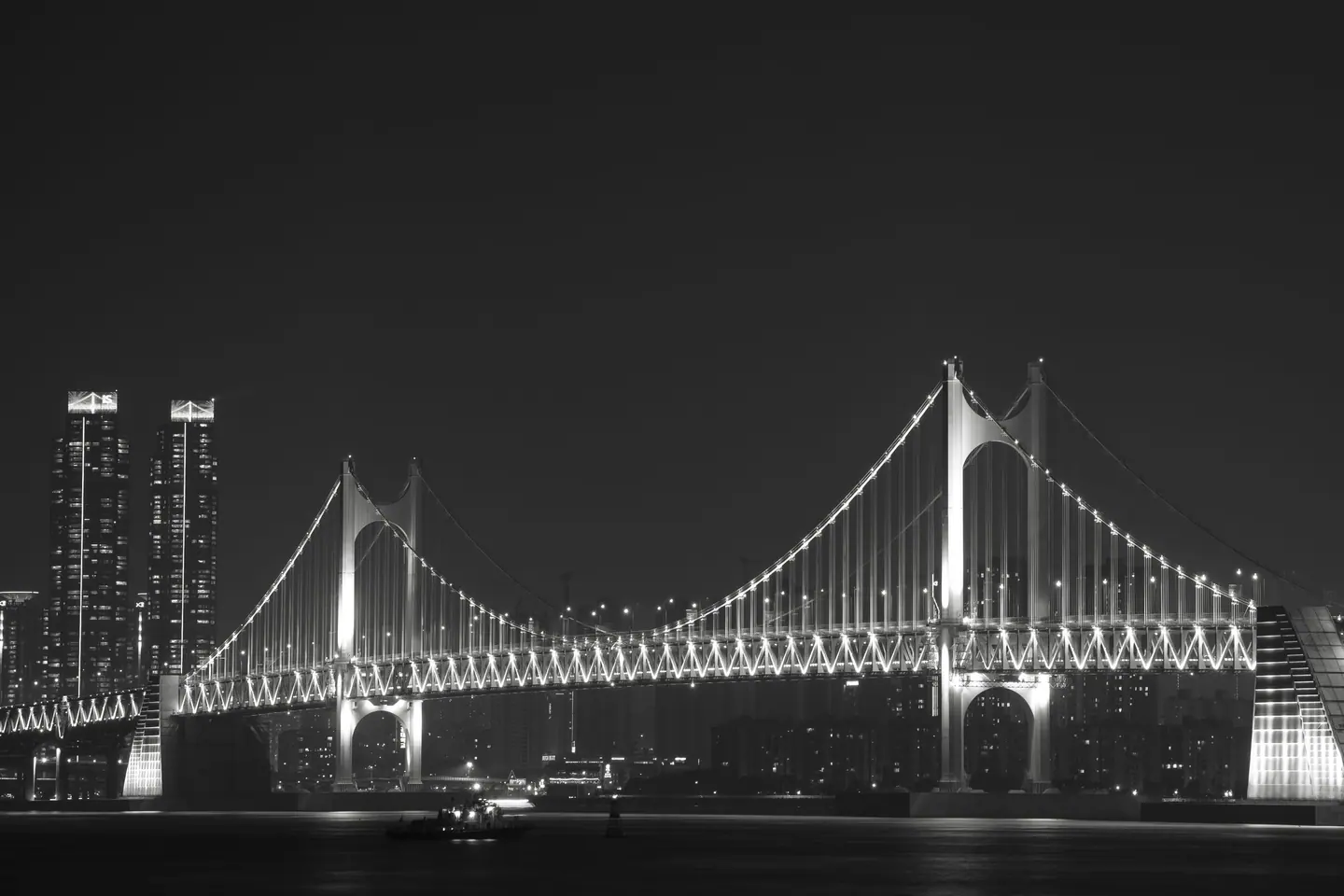
Gwangandaegyo
Stretching more than seven kilometres between Centum City and Nam-gu, this suspension bridge is a defining engineering landmark of coastal Busan. The bi-level design separates vehicular traffic directions while framing views across the Korea Strait. At dusk, thousands of computer-controlled external lights illuminate the suspension cables in synchronised artistic displays.
The Bay 101
Positioned at the base of Dongbaekseom, this marine leisure complex serves as a popular embarkation point for local harbour cruises. The waterside boardwalk is noted for its night views, where the illuminated glass facades of Marine City reflect against the harbour basin. The site features multiple outdoor cafes and water-sports rental centres.
Busan Museum of Movies
Located in the Centum City media quarter, this institution charts the development of Korean film production from early silent shorts to modern international releases. Interactive galleries allow visitors to experiment with virtual green screens, sound effects recording, and film editing software. Archival exhibits display historic cameras, vintage film reels, and classic cinema posters.
Suyeong Historic Park
Occupying the former grounds of the Gyeongsang Jwasuyeong naval base, this quiet park protected the regional coastline during the Joseon Dynasty. Stone monuments, an intact south fortress gate, and centuries-old natural monument trees dot the landscaped lawns. A dedicated shrine honours General An Yong-bok, who sailed to Japan to defend Korean territorial rights over Ulleungdo.
Cliffside Sanctuaries: Haedong Yonggungsa and the Gijang Coastline
A rare seaside Buddhist temple clings to wave-battered rocks, offering panoramic views over the Korea Strait from its ornate stone pagodas.
Haedong Yonggungsa
Established in 1376 by the royal teacher Naong, this coastal complex deviates from traditional mountain retreats by facing the open sea. Visitors cross a stone bridge guarded by twelve zodiac figures before reaching oceanfront pavilions and a three-storey stone pagoda adorned with four lions.
Sirangdae
Located on the promontory south of Haedong Yonggungsa, this rocky outcrop earned its name from the Joseon magistrate Gwon Jeok, who visited in the eighteenth century. Chiseled inscriptions survive on the weathered stone faces, where scholars gathered to compose verses over the crashing waves.
National Institute of Fisheries Science
Set on the coastal edge of Sirang-ri, this national institute preserves South Korea's oceanic legacy through scientific study and public education. The onsite Fisheries Science Museum features halls displaying traditional fishing implements, whale skeletons, and an interactive marine laboratory illustrating maritime conservation across the southern sea.
Orangdae Park
Tradition recounts that five friends in exile gathered on these granite cliffs to drink wine and compose poetry. Today, a distinctive Buddhist altar pavilion, Yongwangdan, sits on an isolated wave-swept rock, honouring the Dragon King and serving as a focal point for traditional coastal shamanic rites.
Yeonhwa-ri
This natural cove shelters fishing vessels alongside a long-standing collective of elderly haenyeo who free-dive for sea cucumbers and abalone. The shoreline accommodates open-air seafood stalls and stone drying beds where kelp has been harvested according to generations of local maritime custom.
Jukdo Island
Distinguished as the only island in Gijang County, Jukdo was celebrated in historical records for its thick bamboo groves and maritime beauty. Although modern works introduced a stone arched bridge connecting it to the mainland, the perimeter still features wave-cut platforms and sea-battered boulders.
Daebyeon Port
Functioning for centuries as the primary deep-water port of Gijang, Daebyeon maintains an active fleet that lands immense catches of Pacific anchovies each spring. Stone wharves allow travellers to witness traditional fishermen rhythmically shaking silver anchovies from heavy offshore nets along the concrete quays.
Gijang Jukseong Church
Constructed in 2009 for the television drama Dream, this European-style stone church stands directly atop coastal rock ledges overlooking the sea. Its pointed red roof, cream plaster walls, and stained-glass accents create an architectural contrast against the slate-coloured tides of the coastline.
Jukseong-ri Fortress
Erected in 1593 by Japanese general Kuroda Nagamasa during the Imjin War, this fortress commands the entrance to Gijang Bay. The surviving compound features sloping Japanese-style stone ramparts (waeseong) that curve around a coastal hillside, providing clear vantage points across maritime shipping routes.
Gijang Hyanggyo
Established in 1407 and rebuilt after the Japanese invasions, this state-run school served local scholars for centuries. The walled compound maintains a classic layout, featuring the Daeseongjeon shrine where memorial ceremonies honour Confucius, along with the Myeongyundang lecture hall framed by ancient ginkgo trees.
Gijang Market
Dating back to the Joseon period, this traditional market operates as Gijang's economic heart, famous nationwide for its seasonal snow crab and wild seaweed. Giant steam baskets line the market alleys outside seafood vendors, filling the covered passages with savoury maritime steam day and night.
Jangansa
Founded in 673 by the master monk Wonhyo, this valley temple features the Daeungjeon, a designated National Treasure rebuilt in 1657. The main hall displays sophisticated late Joseon bracket complexes and colourful multi-tiered eaves, sheltering three gilded wooden Buddha statues carved by seventeenth-century monk-sculptors.
Cheokpanam
Positioned further up Mount Bulgwangsan above Jangansa, this quiet stone hermitage marks the site where monk Wonhyo supposedly rescued Chinese monks by hurling wooden planks through the air. Today, the high mountain terrace offers expansive valley views, a simple stone pagoda, and secluded meditation platforms.
Ilgwang Beach
Enclosed by low hills, this curved beach has been frequented by travellers since the early twentieth century due to its shallow depths and mild currents. A seaside wooden boardwalk provides views of anchored skiffs, while coastal pines shield historic pavilions where local writers once congregated.
Hak-ri Port
historic into the southern hook of Ilgwang Bay, Hak-ri was named for migratory cranes that historically roosted on its shores. The harbour features modest stone piers, dry-dock repair ramps, and rows of small squid-drying racks that reflect rural Korean coastal livelihoods.
Chilam Port
Chilam operates as a primary harbour for harvesting conger eel along Gijang's northern coast. Its outer breakwaters feature three brightly painted navigational beacons: the Baseball Lighthouse, the Gull Lighthouse, and the White Lighthouse, each offering architectural markers for incoming wooden boats.
Gijang Eupseong
Built in 1425 to defend townspeople from coastal pirate raids, this stone wall complex originally spanned nearly one kilometre around central Gijang. Substantial segments of cut-stone defensive masonry and reconstructed foundation platforms remain visible on the quiet slopes north of the central administrative area.
Songjeong Beach
Lying just south of Gijang's border, this shallow beach stretches over a kilometre along an eastern curve of the coast. The northern end hosts the Songiljeong Pavilion, an elevated wooden gazebo perched on rocky bluffs that offers sightlines across breaking swells to the horizon.
Anpyeong Historic Village
Positioned inland from the rocky coast, Anpyeong features preserved stone lanes, centuries-old family shrines, and long-standing traditions of pottery firing. The surrounding agricultural fields maintain Joseon-era irrigation trenches, framed by the quiet forested peaks of Mount Geumjeongsan's eastern foothills.
Cheonggang-ri Dolmen Site
This archaeological site preserves a massive southern-style dolmen constructed by prehistoric agrarian communities. Supported by small prop stones beneath a heavy flat capstone, the megalith illustrates early Bronze Age settlement patterns and funerary customs that took root in the fertile coastal valleys of Gijang.
Navigating the Port City: Ferry Terminals, Coastal Metro Lines and Sea Breeze
Pair this route with the practical neighbourhood breakdowns, climate charts and transport advice in our Busan travel overview, alongside additional mapped city walks.