A 100-stop route across Dubai, starting at the coral-and-gypsum wind-tower houses of Al Fahidi and Dubai Creek dhow wharves before tracing Sheikh Zayed Road to Downtown and Jumeirah.
Pearl Divers, Barjeel Courtyard Houses and the Dredging of Dubai Creek
Inhabited since the Bronze Age around the Jumeirah coast and the Saruq Al-Hadid desert metalworking site, Dubai grew around Khor Dubai (Dubai Creek), a natural ten-mile saltwater inlet sheltered from the Persian Gulf. In 1787 the Al Fahidi Fort was built to guard the settlement, and in 1833 Sheikh Maktoum bin Butti led the Al Bu Falasah clan of the Bani Yas tribe to establish the Al Maktoum dynasty along the creek.
By the turn of the twentieth century, tax-free trade drew pearl divers, Persian merchants from Bastak (who introduced the distinctive barjeel wind towers of Al Fahidi), and Indian textile traders to the souks of Deira and Bur Dubai, laying the commercial foundations for Sheikh Rashid bin Saeed Al Maktoum's dredging of Dubai Creek in the 1950s and the city's transformation into a global aviation and architectural hub.
Al Fahidi Wind Towers, Shindagha & Bur Dubai Creek
Al Fahidi Historical Neighbourhood, Al Fahidi Fort Dubai Museum, Coffee Museum, Sheikh Saeed Al Maktoum House, Al Shindagha Museum, Perfume House, Bur Dubai Abra Dock, and Textile Souk
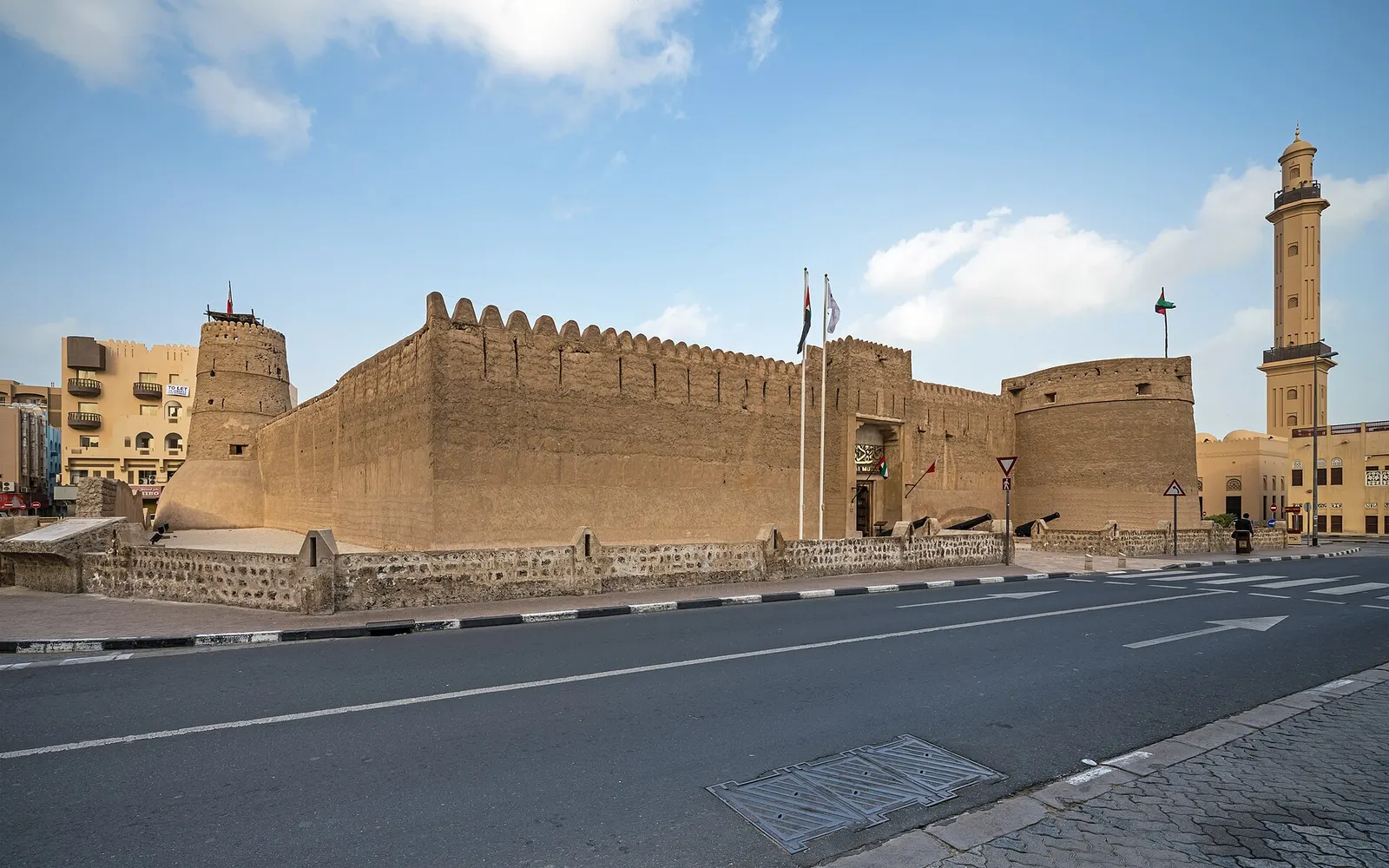
Al Fahidi Fort
Constructed in 1787, this square stone stronghold served as a royal residence and defensive fortification protecting the town. Built from coral blocks bonded with lime, the complex features three defensive towers and an interior courtyard. Travellers can examine traditional weapons, coastal vessels, and archaeological relics unearthed from ancient regional settlements.
Al Fahidi Historical Neighbourhood
Established in the late nineteenth century by textile and pearl merchants, this district preserves the pre-oil streetscape of Bur Dubai. The buildings display high barjeel wind towers engineered to funnel cooling breezes down into the ground floors. Today the narrow alleys lead between gypsum walls to art spaces, quiet courtyards, and craft studios.
Dubai Coffee Museum
Located inside a restored courtyard residence, this institution presents the history of regional roasting traditions from Ethiopia and the Arabian Peninsula. We can observe centuries-old brass pots, grinding mills, and historical roasters distributed across two floors. The rooms demonstrate how the bean transitioned from local trading harbours into everyday Middle Eastern hospitality.
Coins Museum
Operating inside a two-storey coral stone residence, this specialist museum displays hundreds of rare coins across eight themed rooms. Visitors can view copper, silver, and gold money from the early Islamic caliphates and neighbouring trading partners. Magnifying displays and touchscreens highlight the calligraphy, mint marks, and historical portraits stamped onto each specimen.
XVA Gallery
Occupying a historic home featuring three preserved wind towers, this cultural centre showcases contemporary art from across the Middle East. The central courtyard shaded by a mature tree offers a quiet retreat among whitewashed walls. Inside, changing exhibitions reveal regional paintings, sculpture, and photography placed in striking contrast to the rustic coral masonry.
Majlis Gallery
Established in the late 1970s, this gallery helped spark the preservation of the surrounding historical quarter. The rooms retain original timber joists, heavy carved wooden doors, and decorative plaster latticework. The exhibition spaces display ceramics, bespoke furniture, and watercolours produced by international artists who have lived and worked across the Emirates.
Old City Wall of Dubai
Constructed around 1800 from coral stone and gypsum, this preserved wall segment formed part of the historic defensive perimeter around Bur Dubai. The masonry protected the settlement from desert incursions during seasonal tribal conflicts. Visitors can inspect the porous texture of the marine limestone blocks that once encircled the town and its neighbouring harbour.
Grand Mosque of Dubai
Originally constructed in 1900 as a Quranic school, this central mosque was rebuilt in 1998 in traditional architectural style. It features a seventy-metre minaret, which is among the tallest along the Creek, along with numerous decorative domes. Sand-coloured walls, arched entrance portals, and blue-tinted stained glass define its dignified waterfront exterior.
Shiva Temple Dubai
Permitted by the ruling family in the mid-twentieth century, this place of worship reflects the longstanding trading links between western India and the Persian Gulf. Situated in the dense lane network behind the waterfront, the complex long hosted regular religious services. The upper rooms feature shrines adorned with intricate statues and offerings from visiting devotees.
Bur Dubai Textile Souk
Sheltered beneath wooden shingled roofs, this covered market has served maritime merchants for over a century. The stalls display rolls of raw silk, cotton, and embroidered fabrics alongside garments crafted by local tailors. Restored timber beams and stone arches evoke the commercial atmosphere that defined the waterfront trade before modernization.
Bur Dubai Abra Dock
This busy quay serves as the primary embarkation point for motorised wooden boats crossing between Bur Dubai and Deira. The small vessels retain simple bench seating built over central diesel engines. Watching the constant flow of passengers provides a direct view into the maritime transportation heritage that shaped the twin settlements.
Al Shindagha Watchtower
Standing watch over the entrance to the waterway, this circular stone tower formed an essential component of the coastal security system. The design features thick coral walls pierced by narrow arrow slits and observation platforms. It provided sentinels with clear sightlines across the Persian Gulf, deterring approaching raids against the ruling family.
Sheikh Saeed Al Maktoum House
Built in 1896, this spacious home served as the government seat and private residence of Dubai's former ruler until 1958. Thirty rooms surround a central courtyard, topped by four high wind towers that cooled the interior during intense summer heat. Today the building exhibits rare monochrome photographs, official treaties, and maritime charts from the pre-federation era.
Al Shindagha Museum
Occupying dozens of restored domestic buildings, this large museum details how maritime trade and pearling transformed the desert settlement. Interactive displays explain traditional boatbuilding methods, coastal navigation, and social governance through oral histories. The pedestrian lanes link multiple pavilions that reveal the day-to-day routines of twentieth-century Emirati life.
Perfume House at Al Shindagha Museum
Housed in the former residence of Sheikha Shaikha bint Saeed Al Maktoum, this curated wing explores the cultural significance of regional fragrances. Scent stations present pure samples of oud, saffron, rosewater, and musk used in customary ceremonies. Historical distillation apparatus and imported glass bottles illustrate how trade networks supplied raw perfume materials to local blenders.
Sheikh Juma Al Maktoum House
Dating to 1928, this handsome courtyard house features ornate plaster moldings and carved teak window shutters imported from India. The building houses exhibits celebrating traditional calligraphy, textile weaving, and architectural craftsmanship. The spatial plan, organised around two internal courtyards, reflects the practical requirements of extended family life in the early twentieth century.
Heritage Village Dubai
Created to preserve traditional practices, this cultural village features full-scale reconstructions of barasti palm frond houses, mountain tents, and mud-brick structures. Artisans demonstrate customary metalworking, weaving, and net-making techniques on site. The complex illuminates the resilience of early inhabitants who survived by balancing seasonal desert grazing with pearl diving.
Diving Village
Positioned right on the water's edge, this compound honours the divers and shipbuilders who formed the backbone of the historic economy. Exhibits showcase wooden dhows, dive weights, nose clips, and oyster harvest baskets. Information panels outline the grueling multi-month expeditions that crews made into the Persian Gulf before the development of cultured pearls.
Saruq Al Hadid Archaeology Museum
Housed within an elegant 1920s residence built for Sheikh Juma bin Maktoum, this collection displays finds from an Iron Age smelting site discovered in the dunes. We can examine bronze daggers, intricate gold jewelry, pottery, and ceremonial animal figurines. The objects prove that ancient nomadic clans maintained complex metalworking centres across the desert.
Al Shindagha Creek Viewpoint
Positioned at the western mouth of Dubai Creek, this stone-paved promenade provides wide views across the maritime passage toward Deira. Traditional wooden cargo dhows navigate past contemporary commuter vessels throughout the day. Interpretive markers along the quayside explain the navigational history of the waterway, which served as the natural harbour that founded modern Dubai.
Deira Gold Souk, Spice Souk & Dhow Wharfage
Dubai Creek Abra Crossing, Deira Old Souk, Dubai Spice Souk, Dubai Gold Souk, Al Ahmadiya School, Heritage House Deira, Naif Museum, Dhow Wharfage Baniyas Road, and Dubai Creek Golf Clubhouse
Dubai Creek Abra Crossing
For generations, motorised wooden vessels known as abras have ferried commuters between Deira and Bur Dubai. Boarding these modest boats offers an immediate vantage point across the historic saltwater inlet. From mid-stream, observers take in the contrasting architectural layers of old dockside houses, wind towers and mid-century commercial facades.
Deira Old Souk Marine Transport Station
Positioned right beside the western edge of the market district, this busy embarkation point links maritime transit with landward trading. Passengers step directly from timber decks onto paved promenades lined with merchants. We observe rows of moorings where boatmen skilfully manoeuvre their open vessels amid tidal currents and constant harbour traffic.
Dubai Spice Souk
Shaded beneath timber-framed awnings, this covered market preserves the atmospheric trading patterns of twentieth-century maritime commerce. Sacks of Persian saffron, Iranian dried limes, cloves and frankincense resins spill outward from traditional storefronts. Visitors walk through narrow stone alleyways that showcase carved wooden lintels and traditional wind-catching structural details.
Deira Grand Souk
Also recognised historically as Souk Al Kabeer on the Deira waterfront, this arcade served as the primary mercantile conduit for imported dhow cargo. The restored alleyways feature decorative wooden ceilings and arched porticos that temper direct desert sunlight. Today, its stalls retail textiles, woven garments, perfumes, household hardware and traditional brassware.
Dubai Gold Souk
Established in the early decades of the twentieth century, this dense commercial precinct hosts hundreds of independent jewellery merchants. Elaborate displays of high-carat gold necklaces, diamonds and bullion gleam behind plate-glass windows beneath high timber arches. Government regulation ensures all precious metals sold here undergo strict purity verification.
Dubai Gold Souk Main Gate
A monumental wooden archway defines the primary entrance to the historic jewellery quarter. The structure showcases intricate Islamic geometric woodwork and traditional Arabic calligraphy welcoming arriving traders. Standing here, one looks down the central pedestrian promenade, which remains shielded from the elements by a high timber roof.
Al Ahmadiya School
Founded by pearl merchant Sheikh Ahmed bin Dalmouk, this handsome compound was the first formal educational establishment in Dubai. Restored as a public museum, the building features an internal courtyard encircled by rooms that once taught Quranic studies and science. Its coral-stone walls, gypsum carvings and arched colonnades provide clear insight into pre-oil architecture.
Heritage House Deira
Built around 1890, this grand family home exemplifies the domestic lives of prosperous merchants before the discovery of oil. The residence is arranged around a breezy central courtyard designed to maximise natural airflow, constructed using coral rag, gypsum and teak. Dioramas and preserved artefacts across the domestic quarters illustrate traditional culinary and social customs.
Al Ras Public Library
Constructed during the civic expansion of the early 1960s, this facility holds distinction as the earliest public library established in the emirate. The mid-century municipal design features clean geometric lines and tall reading halls stocked with rare Arabic manuscripts and regional historical records. It reflects the intellectual evolution of the historic Al Ras neighbourhood.
Deira Old Souk Mosque
Positioned amid the historic pedestrian avenues of the souk, this neighbourhood mosque has provided spiritual respite to local merchants for decades. Its compact design features traditional regional arches, understated white plaster walls and a slender minaret rising above the rooftops. The structure harmonises with the historic urban fabric that surrounds it.
Naif Museum
Constructed in 1939 as Dubai's first police headquarters, this fortress was erected using local clay and chandal wood beams. One of its original defensive towers now operates as a municipal museum displaying vintage uniforms, historical weapons, detention rooms and legal records. The exhibits detail the evolution of justice and civil security across the emirate.
Naif Souk
Originally an open camel market, this trading post developed into one of the most frequented traditional consumer markets in Deira. Following a major fire in 2008, the structure was rebuilt with contemporary safety standards while preserving traditional Emirati architectural cues. It specialises in abayas, textiles, perfumes, accessories and everyday regional wares.
Murshid Bazaar
Named after a renowned Kuwaiti merchant who settled in Deira, this expansive wholesale and retail district stretches through narrow city blocks. The bazaar is renowned for wholesale perfume oils, regional spices, electronic items and textiles. The covered alleys showcase a historic urban environment where handcarts and foot travellers navigate between traditional shopfronts.
Deira Perfume Souk
Clustered along Sikkat Al Khali, this market specialises in traditional Arabian fragrances, pure agarwood chips, incense burners and essential oils. Master blenders prepare bespoke attar formulations using musk, rose and ambergris in glass vials. The street level presents a sensory showcase of regional olfactory traditions that have endured across generations.
Baniyas Square
Serving as the historic commercial core of central Deira, this public square underwent major redevelopment from the 1960s onward. Surrounded by pioneering mid-century trading houses and hotels, it long served as a vital trading nexus for international wholesale merchants. Today, landscaped plazas and an underground metro station anchor this energetic meeting point.
Deira Fish Market Site
Historically situated near the mouth of the creek, this trading ground supplied the city with fresh catch directly from incoming dhows. The modern replacement market along the Corniche retains this coastal heritage with specialised sections for seafood, dates and dry goods. The stalls offer views of local fishermen unloading kingfish, hammour and prawns.
Deira Dhow Wharfage
Stretching along Baniyas Road, this working quayside is packed several vessels deep with traditional wooden cargo dhows. Crews load and unload goods destined for ports across the Persian Gulf, East Africa and South Asia, including household appliances and vehicle parts. Walking along the stone quay provides unvarnished insight into centuries-old maritime trade routes.
Baniyas Road Waterfront
This wide esplanade tracks the north-eastern bank of the Creek, offering panoramic views of passing water transport and Bur Dubai's waterfront opposite. Public benches, date palms and heritage lighting poles make it an informative route for viewing commercial maritime operations. Historical markers trace the waterway's dredging programmes under Sheikh Rashid bin Saeed Al Maktoum.
Al Maktoum Bridge
Completed in 1963, this strategic bridge marked a critical infrastructure milestone by physically linking the separate towns of Deira and Bur Dubai. Prior to its construction, cross-water movement relied entirely on abras and wooden boats. The structure includes an opening drawbridge section that continues to lift periodically, allowing tall ships to transit inland.
Dubai Creek Golf Clubhouse
Designed by architect Brian Johnson and completed in 1993, this clubhouse on the Deira creek bank stands as an acclaimed work of contemporary architecture. Its dramatic sail-shaped concrete forms rise up to capture the spirit of traditional seafaring vessels. The building is prominently represented on the UAE fifty-dirham banknote, celebrating Dubai's nautical heritage.
Zabeel Park, Museum of the Future & DIFC
Dubai Frame, Zabeel Park, Etihad Museum Union House, Jumeirah Mosque, Satwa Street, Emirates Towers, Museum of the Future, DIFC Gate Building, andGate Avenue Galleries
Dubai Frame
Standing 150 metres tall in Zabeel Park, this monumental rectangular tower opened to visitors in 2018. Designed by architect Fernando Donis, its gold-plated steel panels echo traditional regional patterns. From the glass-floored sky bridge, observers can view historic Deira towards the north and modern high-rises to the south.
Zabeel Park
Spanning over forty-seven hectares near the royal palace quarter, this green recreational space opened in 2005. Pedestrian bridges link its landscaped sections, which feature boating lakes, formal lawns, and botanical displays. The park functions as a major civic open space, bordered by the circular roadways connecting Bur Dubai with modern commercial avenues.
Stargate Dubai
Constructed in the northern sector of Zabeel Park, this distinct venue was built with five interconnected spaceship-themed domes. Initially planned as an edutainment complex, the site reflects the early two-thousands municipal initiative to integrate digital media with public leisure. Its futuristic architecture remains a prominent curiosity within the landscaped grounds.
Zabeel Palace
Constructed in the nineteen-sixties amidst arid scrubland, this royal residence evolved into the ceremonial heart of government under Sheikh Rashid bin Saeed Al Maktoum. Surrounded by expansive gardens and palatial security gates, the estate hosted pivotal diplomatic assemblies before national federation. Travellers often view the palatial perimeter from the grand approach avenue.
Etihad Museum
Designed by Moriyama and Teshima Architects, this subterranean pavilion opened in 2017 with an undulating white roof evoking the parchment of the 1971 constitution. Seven bronze columns represent the pens used by the founding rulers to sign the historic treaty. Galleries preserve personal artefacts, political documents, and audiovisual records of the founding process.
Union House
Also known as Dar Al Etihad, this circular modernist pavilion hosted the rulers of six emirates on 2 December 1971 to establish the United Arab Emirates. The original interior has been carefully restored, complete with the round table and period armchairs used during the summit. It stands adjacent to a towering 123-metre flagpole.
Guest House Palace
Constructed in the late nineteen-fifties as an official residence for Sheikh Rashid bin Saeed Al Maktoum, this limestone building forms an integral component of the Etihad Museum complex. It served as the private meeting space for regional rulers during intense treaty negotiations. Restored period rooms showcase mid-century furnishings, ceremonial gifts, and personal quarters.
Jumeirah Mosque
Inaugurated in 1979, this landmark sanctuary was built entirely from white stone in the medieval Fatimid architectural tradition. The prayer hall features multi-columned hypostyle spaces leading to an ornate central dome flanked by twin minarets. It operates cultural awareness programmes designed to educate international travellers about Islamic heritage and regional traditions.
Majlis Ghorfat Umm Al Sheif
Erected in 1955 as a seaside summer residence for Sheikh Rashid bin Saeed Al Maktoum, this two-storey gypsum and coral building sits within a tranquil palm garden. The traditional architecture features an open upper veranda designed to capture cooling sea breezes before the advent of electricity. It offers clear insight into mid-century political and domestic life.
Al Satwa Road
Running through the historic core of Al Satwa, this historic thoroughfare developed rapidly during the late twentieth century as South Asian communities settled in central Dubai. The street is lined with traditional tailor shops, haberdashers, and open-fronted bakeries. Murals created by international artists during municipal regeneration programmes decorate several flanking apartment buildings.
Satwa Grand Mosque
Positioned at the commercial centre of the Satwa neighbourhood, this religious complex serves as the civic anchor for surrounding residential quarters. The building incorporates traditional geometric tilework, tall arched windows, and an ornate slender minaret. Its courtyard and perimeter arcades provide shaded assembly spaces during Friday prayers and seasonal community gatherings.
Al Dhiyafa Street
Officially renamed 2 December Street in 2011 to commemorate the founding of the nation, this broad avenue links Jumeirah to the central trade route of Trade Centre Roundabout. It emerged in the nineteen-seventies as an important commercial strip famous for independent outdoor dining venues. Public murals across residential blocks depict cultural heritage themes.
Trade Centre Roundabout
Engineered in the late nineteen-seventies, this vast road intersection long served as the formal gateway connecting historic creek districts to the southern desert route. Anchored by the central trade complex, the junction symbolised municipal expansion beyond traditional city walls. It remains one of the busiest focal points along the northern stretch of Sheikh Zayed Road.
Dubai World Trade Centre Tower
Completed in 1979 to a design by British architect John Harris, this thirty-nine-storey concrete tower was originally the tallest building in the Middle East. Featuring a brise-soleil facade engineered to withstand desert heat, it established the city as an international business hub. The structure even featured prominently on regional currency banknotes for decades.
Emirates Towers
Designed by architect Hazel Wong and completed in the year 2000, these twin triangular towers house corporate offices and luxury hotel suites. Triangular profiles clad in reflective glass and polished aluminium panels flank a central retail boulevard. The dramatic geometric profile was deliberately oriented to create changing shadows across Sheikh Zayed Road throughout the day.
Museum of the Future
Engineered by Killa Design and Buro Happold, this asymmetric toroidal structure opened in 2022. The stainless-steel facade is pierced by glazed openings forming Arabic poetry penned by Sheikh Mohammed bin Rashid Al Maktoum. Across several internal exhibition floors, immersive installations explore climate technologies, public health advancements, and space exploration concepts.
DIFC Gate Building
Serving as the administrative anchor of the financial free zone, this monumental portal structure was designed by architecture firm Gensler and opened in 2004. Constructed from Italian limestone and steel, the building reinterprets European triumphal arches as a contemporary business portal. It sits centrally along an elevated pedestrian axis leading towards downtown districts.
Gate Village
Comprising ten granite-clad mid-rise pavilions surrounding open public plazas, this precinct forms the cultural heart of the financial district. Built to encourage pedestrian circulation, the zone houses internationally renowned contemporary art galleries, commercial auction houses, and fine-dining venues. Rotating public sculptures by regional and international sculptors populate its paved breezeways throughout the year.
Gate Avenue
Stretching almost one kilometre, this multi-level promenade connects the financial core to neighbouring residential and commercial high-rises. The open-air upper deck features indigenous planting, shaded seating, and outdoor contemporary art installations. Subterranean levels host bespoke retail outlets, while the parkway offers unobstructed sightlines towards surrounding modern office towers.
DIFC Grand Mosque
Positioned at the southern terminal of Gate Avenue, this contemporary place of worship was designed by RMJM and completed in 2020. The structure resembles a simple limestone cube wrapped in an intricate geometric mashrabiya screen that modulates daylight into the main prayer hall. It provides contemplative sanctuary within the corporate business district.
Burj Khalifa, Dubai Opera & Downtown Waterfront
Burj Khalifa, The Dubai Fountain, Souk Al Bahar, Dubai Opera, Burj Park, Dubai Mall Waterfall & Aquarium, Mohammed Bin Rashid Boulevard, Dubai Water Canal Bridge, and Ras Al Khor Wildlife Sanctuary
Burj Khalifa
Completed in 2010, this skyscraper rises 828 metres above the central district. The structural system relies on a buttressed core inspired by the desert flower Hymenocallis, tapering as it ascends towards an immense steel spire. Visitors observe intricate engineering details across the outdoor observation platforms overlooking the city grid.
The Dubai Fountain
Set within the thirty-acre man-made Burj Lake, this illuminated water feature shoots jets reaching up to 140 metres high. Engineered by WET Design, the installation incorporates thousands of lights and colour projectors synchronised to classical and Arabic musical compositions. We recommend standing along the pedestrian promenade to view the intricate wave formations.
Dubai Opera
Designed by architect Janus Rostock, this performing arts auditorium takes inspiration from traditional Arabian sailing vessels. The structure features a bow housing the main stage and orchestra, while the elongated hull accommodates waiting areas and restaurants. Its versatile interior converts between a theatre, concert hall, and flat-floor banquet venue.
Souk Al Bahar
Constructed as a modern interpretation of a classical Arabian marketplace, this complex features natural stone corridors, vaulted ceilings, and ornate wooden archways. It stands linked to the main retail mall by a pedestrian footbridge over the lake. Inside, antique traders, carpet merchants, and waterfront dining terraces line the dimly lit arcades.
Dubai Mall Waterfall
Spanning all four levels of the indoor shopping centre, this 24-metre-high water wall remains a significant architectural landmark inside the precinct. The cascade is decorated with life-sized fibreglass sculptures of human divers plunging downwards, honouring the nation's historical pearl-diving traditions. Overhead skylights illuminate the flowing water throughout daylight hours.
Dubai Aquarium and Underwater Zoo
Centred around a ten-million-litre reservoir, this marine facility possesses one of the largest single acrylic viewing panels globally. A pedestrian tunnel runs beneath the water, allowing visitors to view sand tiger sharks and rays swimming overhead. The upper level features an educational zoo exploring river systems and coastal environments.
Burj Park
Occupying a small island in Burj Lake, this landscaped green space provides an open vantage point for studying downtown architecture. Paved pathways loop around manicured lawns, bordered by native palms and contemporary public sculptures. Footbridges connect the island directly to the nearby opera district and commercial boulevard.
Wings of Mexico
Created by Mexican artist Jorge Marín in 2010, this permanent public artwork features a pair of feathered bronze wings mounted upon an elevated plinth. Positioned on Mohammed Bin Rashid Boulevard, the sculpture is oriented so that the neighbouring skyscraper towers rise directly behind it. The installation invites viewers to step between the wings.
Mohammed Bin Rashid Boulevard
This wide, tree-lined avenue wraps around the core developments of the downtown district. Paved with distinctive decorative stonework and planted with mature date palms, it contains public art displays, hotels, and numerous open-air cafés. We observe distinct Arabic motifs woven into modern street furniture and architectural façades along the route.
Palace Downtown
Positioned beside the central lake, this resort is built in the palatial Middle Eastern style featuring earth-toned masonry, arched colonnades, and reflective ornamental pools. The design references regional heritage through intricately carved mashrabiya screens and landscaped courtyards. It provides an architectural contrast to the sleek glass towers that dominate the surrounding skyline.
The Dubai Mall Chinatown
Located on the upper levels of the shopping complex, this curated indoor enclave celebrates East Asian design and culture. Traditional red lanterns, neon signage, and a giant sculpted panda greet visitors entering through an ornate moon gate. The pavilion hosts tea houses, specialist grocers, and regional dining counters serving authentic fare.
Dubai Water Canal Boardwalk
Opened in 2016, this marine channel carves a 3.2-kilometre path through the city towards the Arabian Gulf. Wide pedestrian pathways flank the water, incorporating running tracks, smart lighting poles, and landscaped seating zones. Visitors can walk the boardwalk to observe passenger ferries navigating beneath modern highway overpasses.
Tolerance Bridge
Spanning the canal, this distinctive pedestrian suspension bridge features a dramatic twisting steel arch. It was named by royal decree to honour international tolerance and cultural harmony within the emirate. The structure offers unobstructed pedestrian and cyclist access, complete with transparent balustrades that permit clear views down the canal.
Dubai Water Canal Waterfall
Engineered into the Sheikh Zayed Road bridge structure, this mechanical cascade pumps water continuously into the canal below. The flow is illuminated by multicoloured light-emitting diodes that shift in colour patterns through the evening. An automated sensor system halts the water curtain whenever maritime vessels navigate underneath.
Ras Al Khor Wildlife Sanctuary
Encompassing mudflats, lagoons, and mangrove forests at the head of the historic creek, this sanctuary provides a refuge for thousands of birds. Shrouded timber viewing hides allow visitors to observe large colonies of greater flamingos, herons, and waders without causing disruption. The wetlands present an unusual juxtaposition of undisturbed ecology against distant city skyscrapers.
The Foundry
Situated on Boulevard Crescent, this multi-room cultural centre combines an art gallery, collaborative workspace, and podcast studio. The venue hosts rotating exhibitions by local and international contemporary artists alongside a curated reading room stocked with architecture monographs. Its raw concrete floors and modular walls reflect an industrial design approach.
Twisted Bridge
This enclosed pedestrian footbridge features a dynamic twisting steel lattice that rotates as it crosses the water canal. The aluminium louvres provide shade while channelling cooling breezes from the channel water below. Its geometric frame draws structural inspiration from traditional Bedouin tents and contemporary parametric architecture.
Dubai Mall Zabeel Bridge
This expansive two-hundred-metre glass bridge spans Financial Centre Road, connecting the primary mall building with its Zabeel expansion. Travelators transport visitors across the multi-lane expressway while expansive floor-to-ceiling windows display the northern financial district skyline. Contemporary art installations and small exhibition spaces are regularly arranged along the interior corridor.
Sheikh Mohammed Bin Rashid Boulevard Sculptures
Distributed along the main curve of the boulevard, this public collection features bronze, marble, and steel works by renowned international sculptors. Notable pieces include horse sculptures by Fernando Botero and whimsical human figures by Donald Greig. The collection serves as an outdoor gallery integrated seamlessly into the daily pedestrian streetscape.
Souk Al Bahar Bridge
Constructed from pale stone, this central footbridge crosses Burj Lake between the primary shopping complex and the marketplace. Traditional brass lanterns and low stone balustrades flank the walkway, echoing classical Levantine engineering. It serves as one of the principal gathering points for spectators viewing the choreographed evening fountain displays.
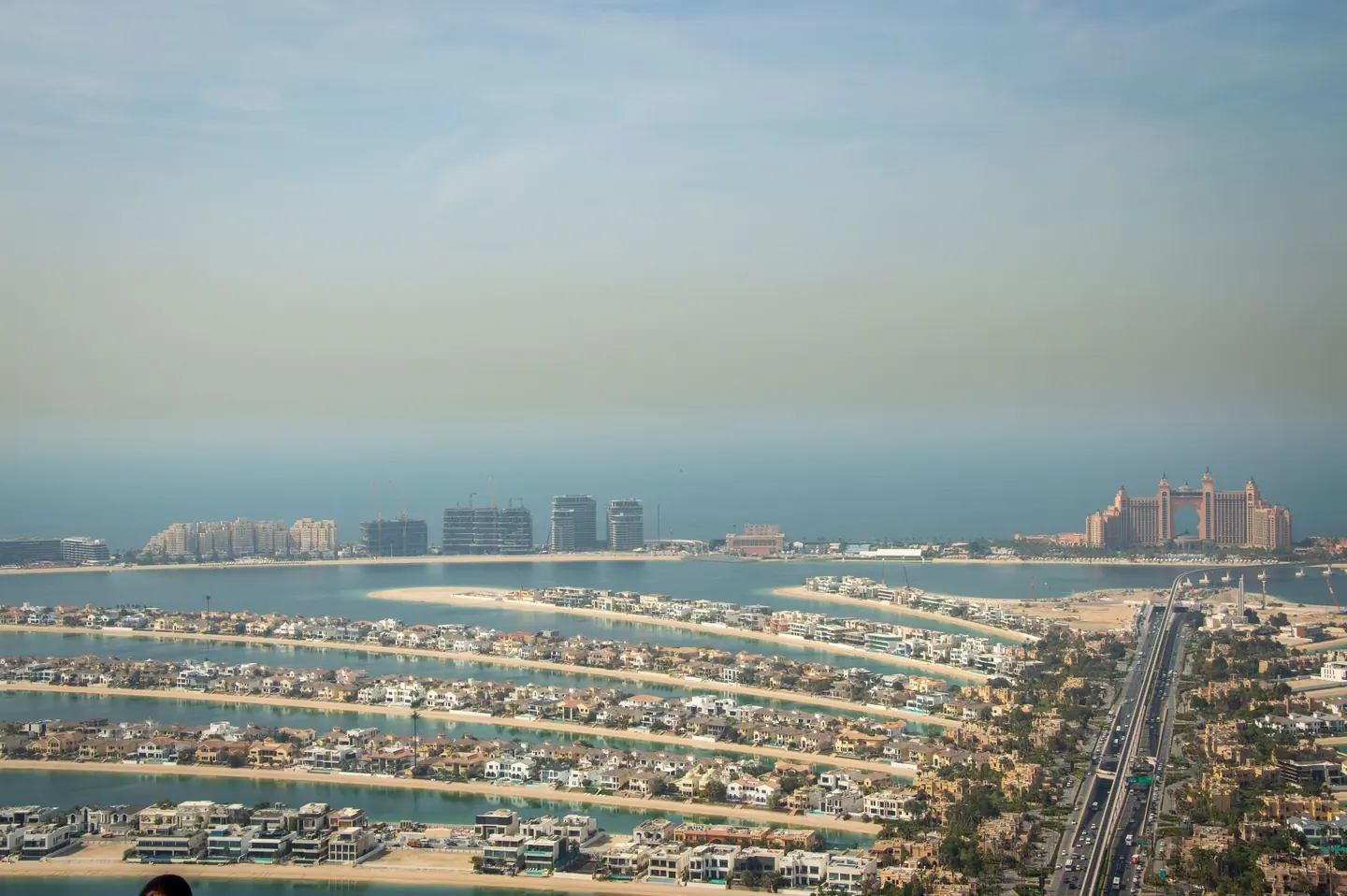
Madinat Jumeirah, Palm Jumeirah, Marina & Alserkal Avenue
Alserkal Avenue Arts District, Kite Beach Jumeirah, Burj Al Arab Viewpoint, Souk Madinat Jumeirah, Palm Jumeirah Boardwalk, The View at The Palm, Dubai Marina Walk, Ain Dubai Bluewaters, and Al Qudra Lakes
Alserkal Avenue
Established in 2008 in the industrial quarter of Al Quoz, this creative compound repurposes commercial warehouses into independent galleries, design studios and experimental performance spaces. The architecture features minimalist metal facades alongside Concrete, a cultural venue designed by the Office for Metropolitan Architecture. Visitors can inspect progressive Middle Eastern visual arts, artist workshops and independent cinematic screenings throughout the open courtyards.
Kite Beach
Positioned along the Jumeirah coastline, this wide sand beach developed into a prime watersports hub known for kitesurfing, beach volleyball and seaside fitness tracks. Its open layout provides unobstructed views of the Arabian Gulf and the neighbouring sail-shaped hotel to the south. Paved running circuits and seaside promenades allow travellers to observe marine activities and local beach culture against the urban skyline.
Burj Al Arab
Engineered by architect Tom Wright and completed in 1999, this luxury hotel stands on an artificial island connected to the mainland by a private curved bridge. The structure mimics the billowing sail of a traditional Arab dhow, rising 321 metres above the sea. Notable design elements include a massive triangular atrium, Teflon-coated fiberglass facade and a cantilevered helipad suspended near the roof.
Souk Madinat Jumeirah
Constructed as an architectural tribute to ancient Arabian trading settlements, this bazaar integrates traditional wind towers, carved timber archways and decorative mashrabiya latticework. A three-kilometre network of meandering waterways surrounds the market halls, serviced by wooden abra water taxis. Visitors navigate covered stone arcades filled with regional handicrafts, brass lanterns and textile stalls leading out towards coastal lagoon terraces.
Palm Jumeirah
Created through extensive land reclamation in the early 2000s, this offshore archipelago consists of a central trunk, sixteen fronds and a surrounding protective crescent breakwater. It represents a major maritime civil engineering accomplishment that added dozens of kilometres of coastline to the city. The development hosts residential villas, hotels and private marinas connected by an elevated monorail transit system.
Palm Jumeirah Boardwalk
Stretching eleven kilometres across the outer crescent of the archipelago, this pedestrian boardwalk was built atop the rock breakwater that shields the inner fronds from open sea currents. It provides panoramic sightlines across the outer perimeter towards the Dubai Marina skyline and the open waters of the Gulf. The walkway includes viewing decks, informational markers and refreshment points for coastal walkers.
The View at The Palm
Located on the fifty-second floor of the central Palm Tower, this elevated vantage point provides 360-degree views across the entire frond network, the Arabian Gulf and the mainland horizon. An interactive exhibition at the base details the geotechnical engineering, dredging and construction history of the artificial island. The glass-walled viewing platform offers an unobstructed aerial perspective of the development's geometric layout.
Atlantis The Palm
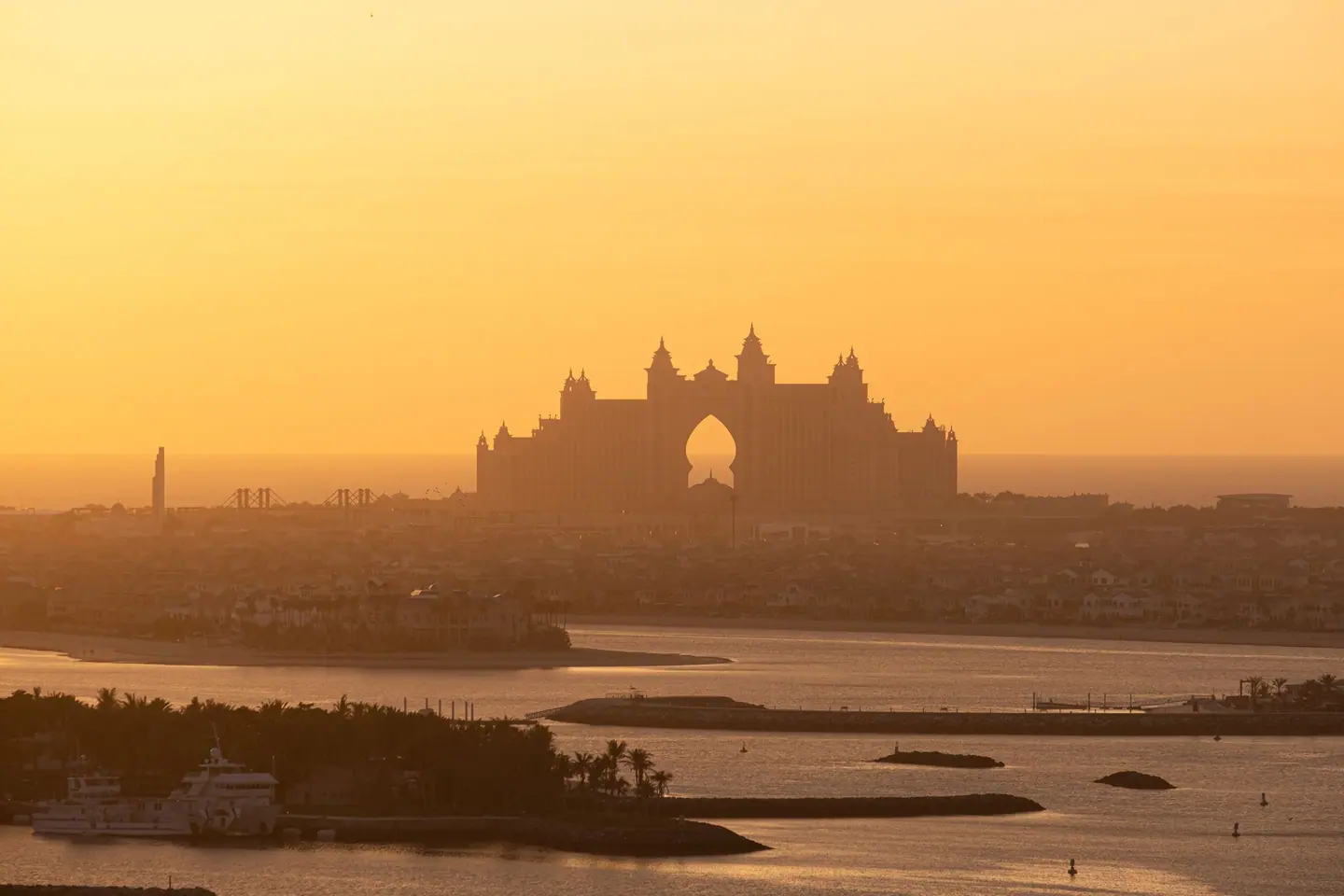
Opened in 2008 at the apex of the archipelago crescent, this palatial resort was designed with an oceanic theme blended with classic Arabian architectural motifs. Its central grand archway serves as a nautical focal point visible from the trunk and surrounding waterways. The site houses extensive marine exhibits, vast open-air water lagoons and public aquariums holding indigenous Arabian Gulf marine species.
Lost Chambers Aquarium
Built beneath the crescent resort, this aquarium complex features a network of underwater tunnels and chambers designed to resemble the ruins of a submerged prehistoric metropolis. Over twenty distinct marine exhibits contain thousands of aquatic animals, including stingrays, sharks and sea horses. The stone mazes and viewing panes display decorative artifacts, nautical cartography and ancient engineering motifs framed within turquoise water tanks.
Palm West Beach
This linear seaside promenade runs along the western edge of the trunk, bordered by native palm trees and contemporary coastal architecture. It serves as an accessible public space for walking, cycling and observing watercraft operating across the calm western channel. The walkway delivers direct sightlines towards the high-rise residential towers and hotel clusters of Dubai Marina and Jumeirah Beach Residence.
Dubai Marina Walk
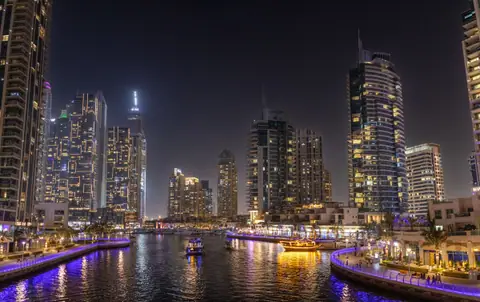
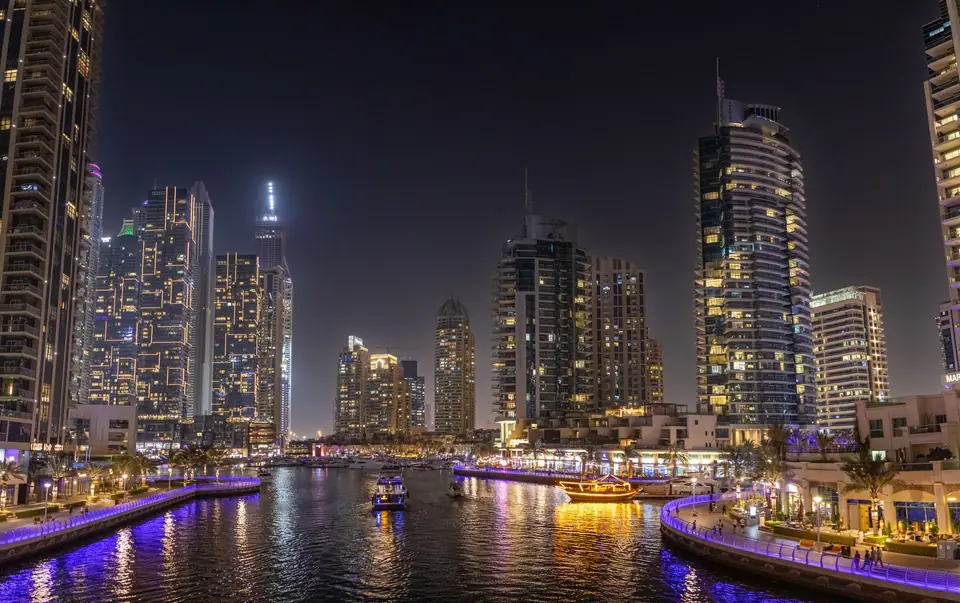
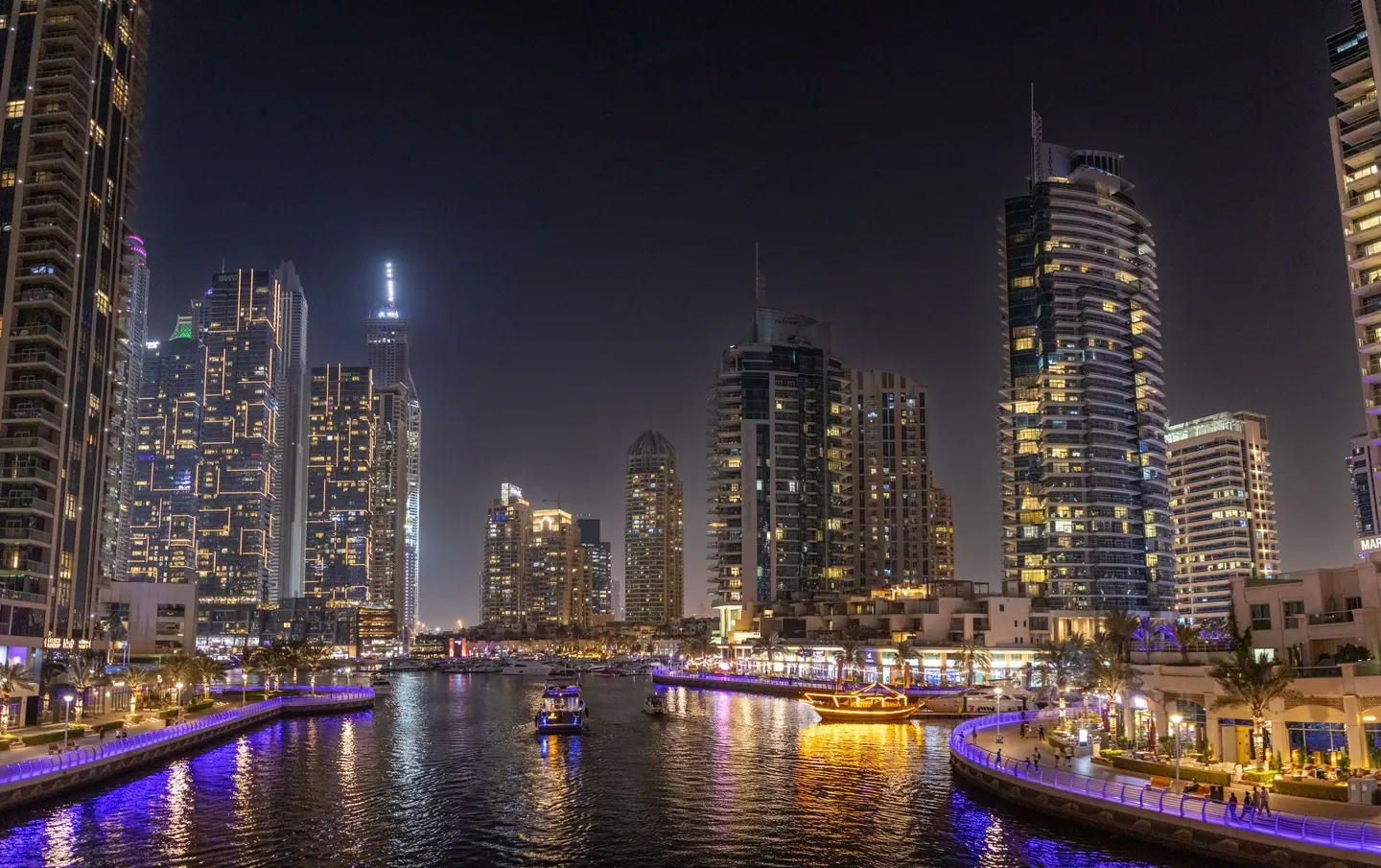
Enclosing a large man-made canal carved from the desert into the Gulf, this continuous pedestrian path stretches for seven kilometres beneath high-density residential skyscrapers. It opened in the mid-2000s as a model of urban waterfront development, featuring landscaped gardens, public moorings and outdoor dining terraces. Travellers can observe luxury yachts cruising the canal and admire contemporary architectural high-rises lining the waterfront.
Cayan Tower
Designed by Skidmore, Owings & Merrill, this 306-metre residential tower features a ninety-degree spiral achieved by rotating each floor 1.2 degrees around a central cylindrical concrete core. Completed in 2013, the twisting form relieves wind pressure and prevents direct solar radiation from overheating the internal residential spaces. The exterior is clad in metallic screens and tinted glass, presenting a dynamic profile against the marina basin.
Princess Tower
Rising 413 metres into the Marina district, this tower held the title of the tallest residential building in the world upon its completion in 2012. It features 101 storeys above ground and is capped with a distinctive neo-classical dome topped by an observation spire. The facade incorporates post-modern decorative elements, reflecting the early twenty-first-century trend of luxury residential verticality along the Dubai coast.
Dubai Marina Mall
Constructed along the main waterway, this retail and community pavilion serves as an architectural transition between the surrounding residential towers and the open water promenade. Its circular domed atrium floods the multi-level interior with natural daylight, leading directly out to marina moorings and ferry docks. The complex acts as a central gathering point for pedestrians traversing the promenade circuits.
Ain Dubai
Anchored on the reclaimed grounds of Bluewaters Island, this structure stands 250 metres tall as the largest observation wheel ever built. Constructed using approximately 11,200 tonnes of steel, the wheel features forty-eight glass-enclosed passenger cabins offering panoramic vistas over the coastline and skyline. The central hub and spindle rest on four massive support legs, demonstrating contemporary maritime structural engineering.
Bluewaters Island
Constructed off the coast of Jumeirah Beach Residence, this mixed-use reclaimed island is connected to the mainland via a road network and a 265-metre pedestrian footbridge. The urban plan integrates shaded public squares, seaside retail strips and contemporary low-rise residential blocks. Its waterside promenades provide open viewing terraces back towards the towering skyline of the marina.
The Beach at JBR
Developed on the shoreline fronting the massive Jumeirah Beach Residence residential complex, this low-rise urban development integrates pedestrian streetscapes directly with public sand beaches. Its timber and stone buildings feature an industrial-modern aesthetic arranged around central plazas, public art displays and water features. The promenade offers immediate access to the public beach and sightlines across the channel to Bluewaters Island.
Al Rahim Mosque
Inaugurated in 2013 at the southern extremity of the marina canal, this mosque serves as the primary spiritual centre for the local marina community. The building features an elegant single minaret and a facade clad in pale limestone, illuminated at night with subtle lighting schemes. Its design pairs traditional Islamic geometric patterns and arched windows with clean, modern coastal lines.
Al Qudra Lakes
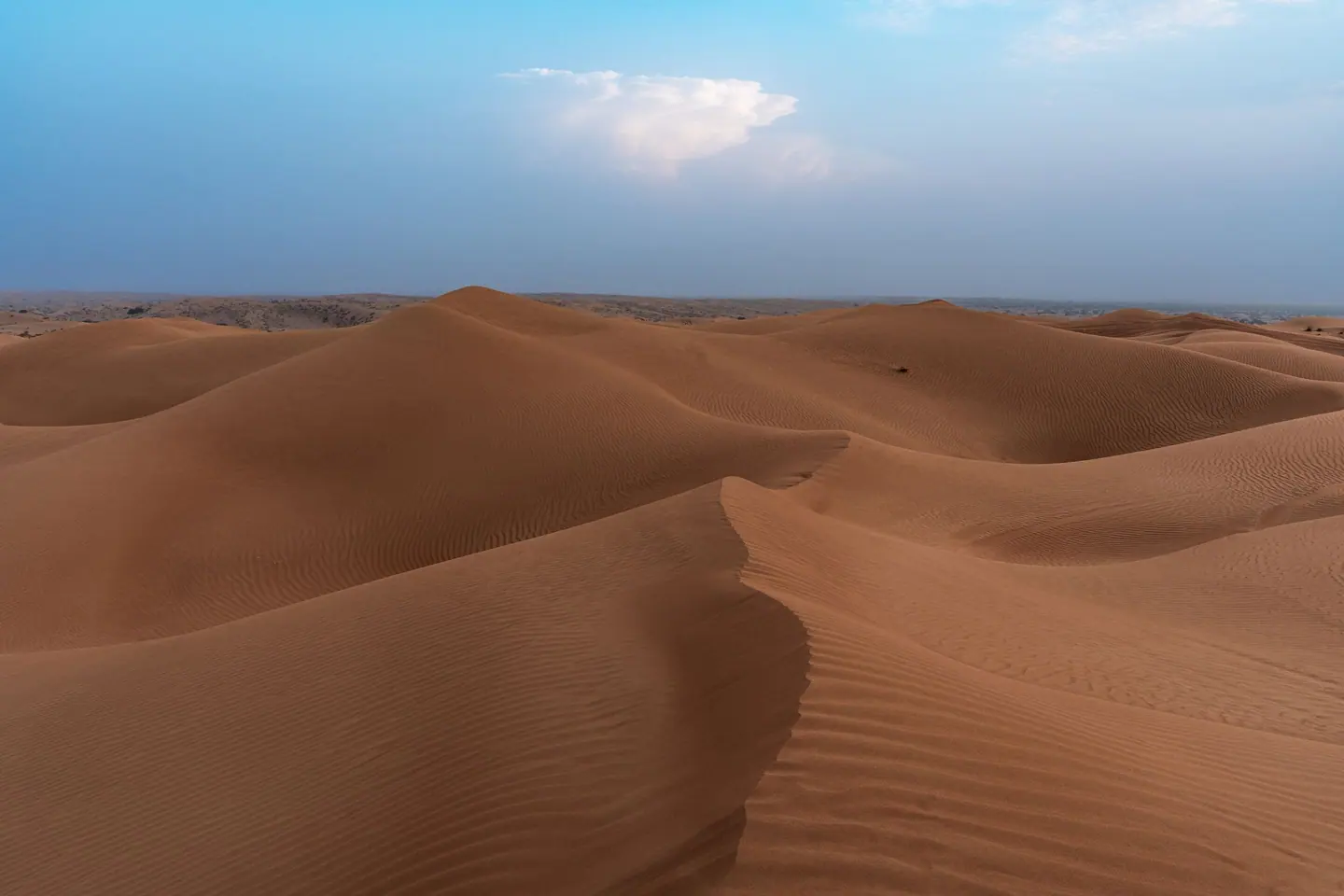
Situated in the southern desert dunes, this network of artificial freshwater lakes was created to establish an eco-tourism destination and wildlife sanctuary. The shallow waters attract over a hundred species of migratory and native birds, including black swans, herons and desert steppe eagles. Visitors can explore quiet dirt tracks around the lake margins, observing natural flora thriving amid the desert expanse.
Love Lake Dubai
Constructed within the desert near the Al Qudra wetland network, this landscaped site features two large interconnected lagoons shaped into the silhouette of adjacent hearts. Thousands of native shrubs, desert trees and date palms were planted along the shores to spell out decorative phrases when viewed from above. Dedicated walking paths, timber platforms and bird hides allow travellers to appreciate desert biodiversity and sustainable conservation efforts.
Abras, Metro Links and Creekside Walks in Dubai
For neighbourhood accommodation notes, seasonal weather tables and airport transfer details, consult our Dubai Creek Heritage, Al Fahidi & Modern Skyline destination guide, or browse other city and regional walking routes across the atlas.