





















Luxor
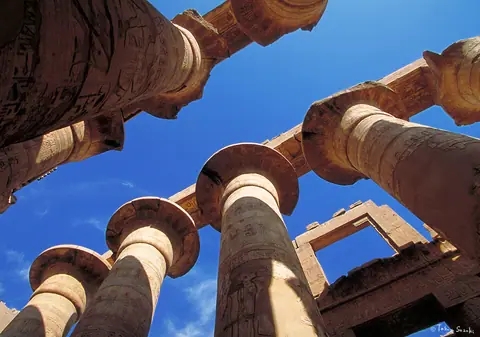
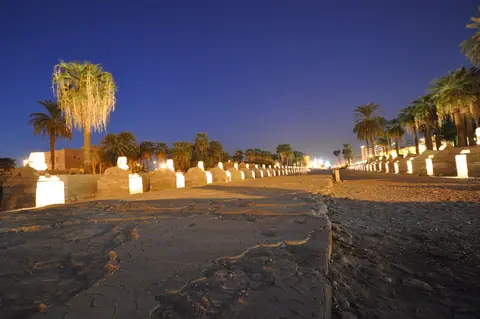
Divided by the Nile between the living temples of the East Bank and the royal necropolises of the West Bank, UNESCO-listed Luxor (ancient Thebes, Waset) preserves the 134-column Great Hypostyle Hall of Karnak, the 2.7-kilometre Avenue of Sphinxes, and the painted rock-cut tombs of the Valley of the Kings.
Quick decisions
How many days?
Plan at least 3 full days: Day 1 for the East Bank (Karnak Temple, Luxor Museum, and Luxor Temple via the Avenue of Sphinxes), Day 2 for the Northern West Bank (Valley of the Kings and Hatshepsut Temple at Deir el-Bahari), and Day 3 for the Southern West Bank (Medinet Habu, Ramesseum, and Deir el-Medina).
Where should I stay?
Choose between historic riverfront hotels along the East Bank Nile Corniche for walking access to Luxor Temple and the railway station, or tranquil mud-brick garden guesthouses in Al-Gezira and Ramla on the West Bank near the ferry landing.
Do I need a car?
No: cross the Nile in 5 minutes on the municipal passenger ferry (around 15 EGP for foreign visitors as of November 2026), walk the East Bank Corniche, and hire a private driver for a half-day West Bank temple loop (around 800 to 1,200 EGP as of November 2026).
Best for
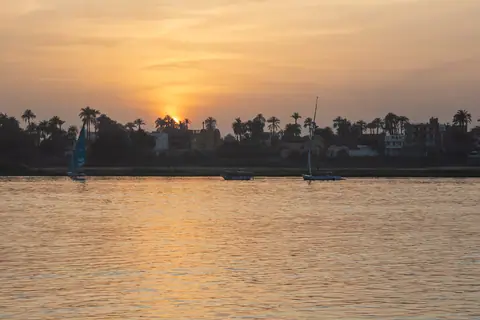
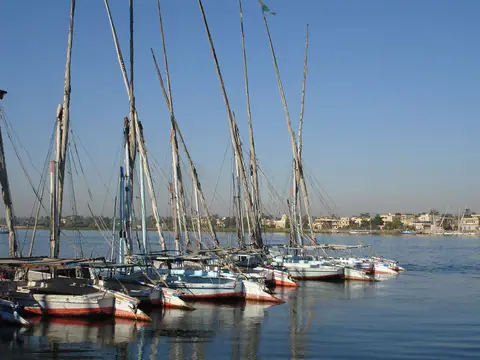
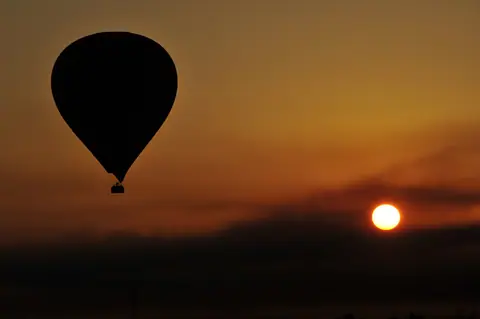
New Kingdom pharaonic temples, painted subterranean royal tombs, sunrise hot-air balloon flights over the Nile floodplain, sunset felucca sailing, and day trips to Dendera and Abydos.
Before you go
All Ministry of Tourism and Antiquities ticket windows in Luxor are strictly cashless (Visa and Mastercard only) as of 2026, while small cash notes in Egyptian Pounds (EGP) are still needed for ferries, taxis, and local tea stalls.
Getting around
Fly into Luxor International Airport (LXR) 7 km east of town or ride the overnight train from Cairo, then use the public Nile ferry and agreed-fare taxis rather than hailing horse carriages on the Corniche.
Continue your trip
Sail or take the 3-hour train south to Aswan and Abu Simbel, drive north to Dendera and Abydos, or fly 1 hour north to Cairo.
Overview
Stretching along both banks of the Nile River 670 kilometres (416 miles) south of Cairo in Upper Egypt, Luxor (Arabic: Al-Uqsur, meaning "The Palaces") stands on the site of ancient Thebes, known to the Egyptians as Waset and celebrated by the Greek poet Homer in the Iliad as "hundred-gated Thebes". For more than five centuries during the New Kingdom (Eighteenth to Twentieth Dynasties, roughly 1550 to 1077 BCE), Waset served as the religious and ceremonial capital of the Egyptian Empire. Inscribed as a UNESCO World Heritage Site in 1979 (Reference 87: Ancient Thebes with its Necropolis) across 7,390 hectares, the city follows a sacred solar geography split cleanly by the Nile.
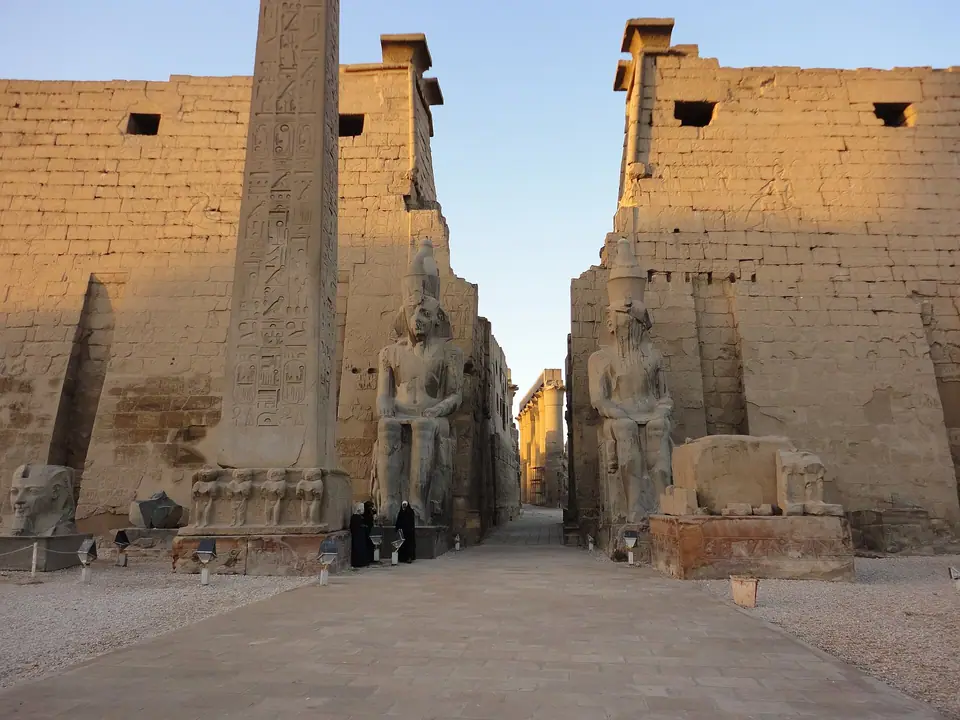
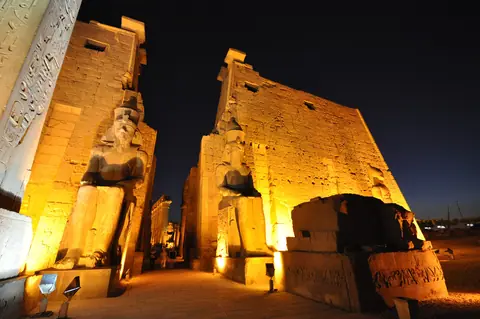
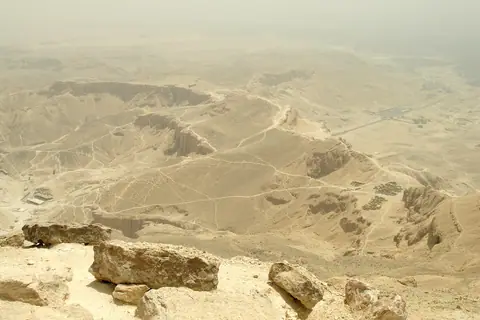
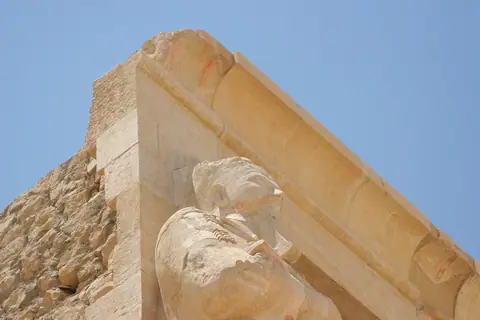
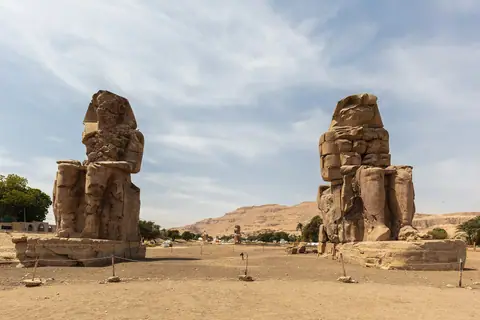
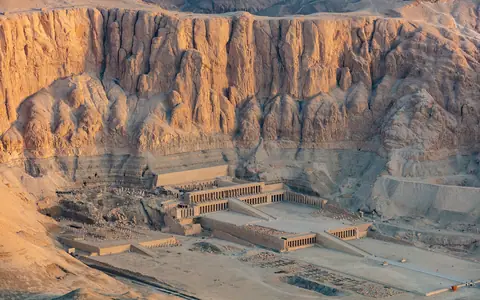
On the East Bank, where the sun rises each morning over the Eastern Desert, the pharaohs built monumental stone houses for the living gods. Here the 100-hectare Karnak Temple Complex and its 134-column Great Hypostyle Hall link southward via the restored 2.7-kilometre Avenue of Sphinxes (Tariq al-Kebash) to Luxor Temple and the living Abu el-Haggag Mosque, flanked by the Luxor Museum and the Mummification Museum on the Nile Corniche. Directly across the river on the West Bank, where the sun sinks behind the 420-metre pyramidal limestone peak of al-Qurn ("The Horn"), lies the realm of the dead and eternal rebirth. Beyond the twin 18-metre Colossi of Memnon, the Ramesseum, Medinet Habu, and the artisans' village of Deir el-Medina, desert wadis conceal the 65 rock-cut royal sepulchres of the Valley of the Kings (including KV62 Tutankhamun and KV17 Seti I) beside the three-tiered Mortuary Temple of Hatshepsut at Deir el-Bahari and the Valley of the Queens.
Getting there
Fly into Luxor International Airport (LXR) just 7 kilometres east of the Nile Corniche (15 minutes by pre-booked taxi, around 350 to 500 EGP as of November 2026) on direct domestic flights from Cairo (1 hour) or seasonal European charters, arrive at Luxor Railway Station on the overnight Abela sleeping train or seated ENR express from Cairo (9.5 to 10.5 hours) or Aswan (3 hours), or cross between the East and West Banks via the 5-minute municipal Nile ferry or the Al-Baghdadi Bridge 9 kilometres south.
Where to stay
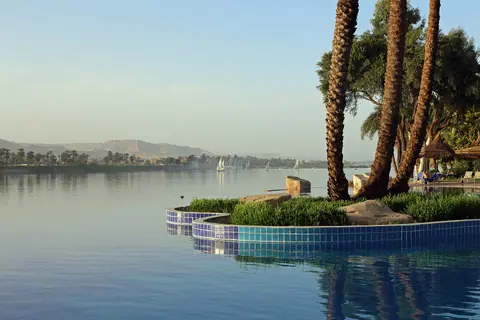
Choose between the East Bank Corniche and Palace District for historic colonial-era riverfront resorts (such as the 1886 Sofitel Winter Palace), walkable access to Luxor Temple and the railway station, the quiet resort islands and gardens of Khaled Ibn El-Walid Street and Crocodile Island to the south, or the peaceful agricultural lanes of Al-Gezira and Ramla on the West Bank for rooftop views of the Theban Hills and instant morning access to the tombs.
Things to do
Walk through the 134 sandstone columns of the Karnak Great Hypostyle Hall and Sacred Lake, stroll the 2.7-kilometre Avenue of Sphinxes into illuminated Luxor Temple, descend into three base-ticket tombs plus KV62 Tutankhamun and KV9 Ramesses V/VI in the Valley of the Kings, admire the Punt expedition reliefs at Hatshepsut's Temple at Deir el-Bahari, tour the painted courtyards of Medinet Habu, the Ramesseum, and Deir el-Medina, and take a day trip north to the astronomical ceiling of Dendera and the Osiris sanctuary of Abydos.
Food and drink
Dine on Upper Egyptian (Sa'idi) classics in our Luxor food guide: slow-simmered clay-pot tameya and ful medames with sun-risen aish shamsi sourdough bread, spiced pigeon or duck stuffed with freekeh green wheat, layered koshary, roasted Nile perch, and ruby-red karkadeh hibiscus tea grown in the Upper Nile valley.
Culture
Every sacred axis in Luxor was engineered around the annual Opet Festival and the Beautiful Feast of the Valley, when priests carried the gilded barques of the Theban Triad, Amun-Ra, Mut, and Khonsu, along the Avenue of Sphinxes and across the Nile. Today, that layered continuity lives on in the thirteenth-century Mawlid of Sheikh Yusuf Abu el-Haggag, whose annual boat procession circles the ancient walls of Luxor Temple.
Weather by month
Luxor is warmest in June, with average highs around 41°C, and coldest in January, when nights drop to about 6°C. January is the wettest month, with rain on about 0 days. For mild weather with fewer rainy days, aim for February and December.
| Month | Low | Range | High | Rain | Rainy days |
|---|---|---|---|---|---|
| Jan | 6°C | 23°C | 0 mm | 0 d | |
| Feb | 8°C | 25°C | 0 mm | 0 d | |
| Mar | 12°C | 30°C | 0 mm | 0 d | |
| Apr | 17°C | 35°C | 0 mm | 0 d | |
| May | 21°C | 39°C | 0 mm | 0 d | |
| Jun | 24°C | 41°C | 0 mm | 0 d | |
| Jul | 25°C | 41°C | 0 mm | 0 d | |
| Aug | 25°C | 41°C | 0 mm | 0 d | |
| Sep | 22°C | 39°C | 0 mm | 0 d | |
| Oct | 18°C | 35°C | 0 mm | 0 d | |
| Nov | 12°C | 29°C | 0 mm | 0 d | |
| Dec | 8°C | 24°C | 0 mm | 0 d |
Averages of daily values from 2015 to 2024. Rainy days are days with at least 1 mm of rain. Source: Open-Meteo · Compare destinations by month.
Luxor on the map
Every place we cover in Luxor. Tap a category or pin to explore.
In-depth Luxor guides
Browse the guides grouped by topic: sights, neighbourhoods, food, transport, day trips and trip planning.
Sights, Landmarks & Parks
Key monuments, viewpoints, museums and nature trails.
- Best Things to Do in Luxor: Karnak, Valley of the Kings, Hatshepsut, Medinet Habu & Nile SailsExplore the 12 essential things to do in Luxor, ranked with 2026 ticket prices, visiting durations, and lighting windows across the East and West Banks.
- Luxor 3-Day Itinerary: East Bank Temples, Northern Royal Wadis & Southern Mortuary LoopFollow our hour-by-hour 3-day Luxor itinerary covering Karnak, Luxor Temple, the Valley of the Kings, Hatshepsut Temple, Medinet Habu, Deir el-Medina, and sunset felucca sails.
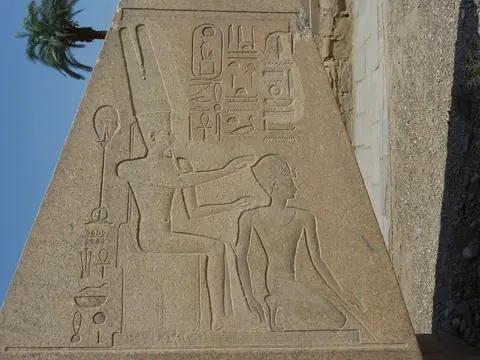
- Karnak Temple Guide: Great Hypostyle Hall, Sacred Lake, Obelisks, Open-Air Museum & Precinct of Amun-RaExplore the 100-hectare Karnak Temple Complex in Luxor: the 134-column Great Hypostyle Hall, Hatshepsut's Obelisk, Sacred Lake, Open-Air Museum chapels, and dawn route.
- Luxor Temple & Avenue of Sphinxes Guide: First Pylon, Abu el-Haggag Mosque, Amenhotep III & Night WalkWalk the 2.7 km Avenue of Sphinxes into Luxor Temple: explore Ramesses II's First Pylon, the living Abu el-Haggag Mosque, Amenhotep III's Colonnade, and Roman chapel frescoes.
- Valley of the Kings Guide: Best 3 Base-Ticket Tombs, KV62 Tutankhamun, KV9 Ramesses V/VI & KV17 Seti IMaster the Valley of the Kings ticket system in Luxor: pick the best 3 tombs on your base ticket, compare extra tickets for KV62 Tutankhamun, KV9, and KV17 Seti I, and beat the heat.
- Hatshepsut Temple (Deir el-Bahari) & Valley of the Queens Guide: Punt Reliefs, Tombs of the Nobles & QV66Explore Queen Hatshepsut's three-tiered temple at Deir el-Bahari, the Punt and Birth colonnades, the Tombs of the Nobles at Sheikh Abd el-Qurna, and the Valley of the Queens.
- Southern West Bank Guide: Medinet Habu, Deir el-Medina Artisans' Village, Ramesseum & Colossi of MemnonExplore Luxor's Southern West Bank circuit: deep-cut painted reliefs at Medinet Habu, the workmen's village and tombs of Deir el-Medina, the Ramesseum, and Colossi of Memnon.
- Luxor Museum, Mummification Museum & Nile Felucca Guide: 1989 Statue Cachette, Royal Mummies & Banana IslandExplore the Luxor Museum's 1989 Statue Cachette and royal mummies, the Mummification Museum on the Corniche, and how to charter a sunset wooden felucca sailboat to Banana Island.
Neighbourhoods & Where to Stay
Districts, historic quarters and the best bases for your stay.
- Luxor Orientation: East Bank vs West Bank Geography, Cashless Ticket Rules, Luxor Pass & Avoiding ScamsMaster Luxor's East Bank and West Bank layout, 100% cashless antiquities ticketing, Luxor Pass vs individual site fees, Nile crossings, and how to avoid carriage and alabaster traps.
- Best Time to Visit Luxor: Upper Egypt Desert Climate Normals, Winter Sun & Summer Heat StrategyPlan your trip with WMO 1991-2020 climate normals for Luxor: sunny 23-25°C winter days, shoulder-season mornings, and how to beat 41°C summer canyon heat.
- What to Wear in Luxor: Subterranean Tomb Heat, Sun Protection, Footwear & Upper Egypt Modest DressPack smart for Luxor: breathable linen layers for 30-35°C subterranean royal tombs, grippy closed shoes for wooden tomb ramps, UPF sun gear, and modest Sa'idi dress etiquette.
- Where to Stay in Luxor: East Bank Corniche Resorts vs West Bank Al-Gezira Garden GuesthousesCompare Luxor's 4 accommodation zones by Nile crossing time, noise levels, and monuments: Central East Bank Corniche, Khaled Ibn El-Walid & Islands, West Bank Al-Gezira, and North Karnak.
Food & Drink
Local dishes, markets, cafés and dining districts.

Getting Around & Arrival
Airport transfers, public transit, passes and driving rules.

Day Trips & Excursions
Easy half-day and full-day trips from the city.
Reviews
Log in to write a review.
No reviews yet.