A 100-stop walking route across Greek-Roman Neapolis, Baroque Spaccanapoli, Bourbon royal palaces, Vomero hill castles, and the ancient cities of the Bay of Naples.
Greek Neapolis, Spanish Viceroys and the Court of the Two Sicilies
Founded by Greek colonists from Cumae in the sixth century BC as Neapolis (New City), Naples still preserves the exact three-street grid (Decumani) and cross-streets (Cardines) of its ancient Greek plan in the heart of the modern Centro Storico. Under the Roman Empire, the Bay of Naples became the favoured coastal retreat of emperors, poets, and patricians until the eruption of Mount Vesuvius in AD 79 buried neighbouring Pompeii and Herculaneum.
Subsequently ruled by Byzantines, Normans, Angevins, Aragonese, and Spanish Habsburgs before becoming the glittering capital of the Bourbon Kingdom of the Two Sicilies in 1734, Naples accumulated Europe's densest concentration of Baroque churches, royal palaces, and opera houses.
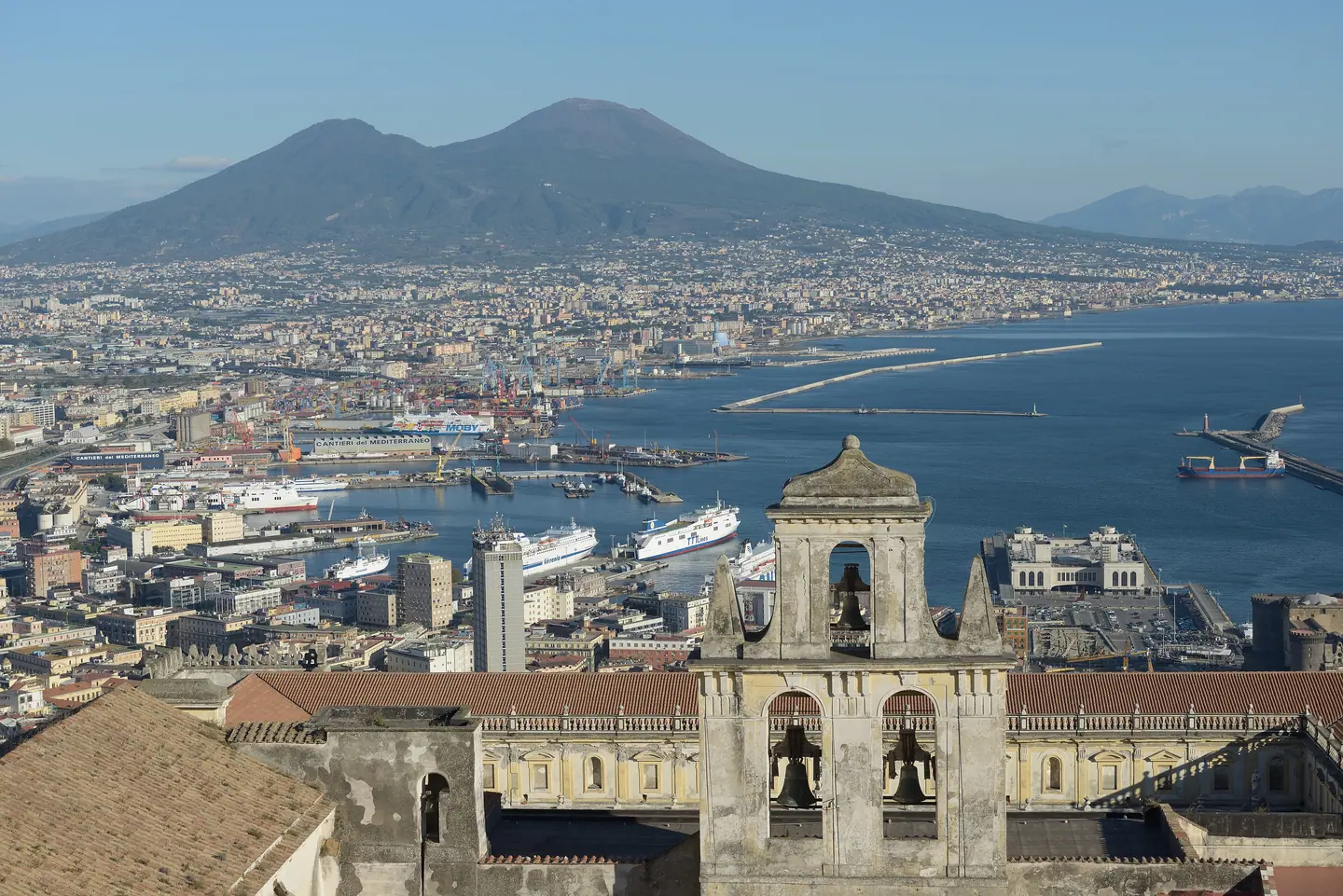
Spaccanapoli, San Gregorio Armeno & Duomo
Naples Cathedral Duomo di San Gennaro, Pio Monte della Misericordia, Via dei Tribunali, San Lorenzo Maggiore, Naples Underground Napoli Sotterranea, San Gregorio Armeno, Cappella Sansevero, and Santa Chiara Cloister
Naples Cathedral
Dedicated to the Assumption of Mary, this grand cathedral incorporates Roman columns, a 14th-century Gothic core, and subsequent Baroque embellishments. Inside, visitors inspect the Royal Chapel of the Treasure of San Gennaro, decorated with frescoes by Domenichino and Giovanni Lanfranco, alongside the adjoining 4th-century Basilica of Santa Restituta.
Pio Monte della Misericordia
Founded in 1602 by seven young Neapolitan nobles, this octagonal church served as the base for charitable works assisting the sick, hungry, and imprisoned. The high altar contains Caravaggio's renowned 1607 canvas, The Seven Works of Mercy, which synthesises the institution's philanthropic mandate through dramatic chiaroscuro and realistic street figures.
Via dei Tribunali
Serving historically as the Decumanus Major of ancient Neapolis, this straight avenue preserves urban continuity across more than two millennia. Named after the royal courts transferred here during the Spanish viceregal era, it is framed by noble palazzi, venerable bakeries, and several historic churches that illustrate centuries of local civic development.
San Lorenzo Maggiore
Constructed in the 13th century under the patronage of Charles of Anjou, this church presents an impressive French Gothic apse complete with radiating chapels. Beneath its cloister, an expansive archaeological excavation reveals the preserved macellum and administrative heart of Roman Neapolis, spanning shops, streets, and water basins.
Naples Underground
Extending forty metres beneath the city streets, this vast labyrinth was originally excavated by the Greeks to extract tufa stone for defensive walls and temples. The Romans later transformed the chambers into an extensive freshwater aqueduct system, which subsequently provided vital air-raid shelter for thousands of citizens during the Second World War.
San Gregorio Armeno
Founded by Basilian nuns fleeing the Byzantine iconoclastic controversies, this monastic church boasts a lavish Baroque interior adorned with carved gilded woodwork and frescoes by Luca Giordano. Its tranquil cloister features an elegant marble fountain flanked by citrus trees, presenting an austere contrast to the energetic market street directly outside.
Via San Gregorio Armeno
Linking the two central decumani of ancient Naples, this narrow street has maintained an unbroken craft tradition tracing back to pagan terracotta votive figures. Today, generational workshops display intricately carved presepe nativity scenes, terracottas, and contemporary figurines, keeping a distinctive Neapolitan folk art alive in the city centre.
Cappella Sansevero
Redesigned in the 18th century by Raimondo di Sangro, Prince of Sansevero, this intimate chapel integrates Freemason symbolism with virtuoso late-Baroque art. Its principal treasure is Giuseppe Sanmartino's Veiled Christ, a marble masterwork depicting the deceased body veiled beneath a delicate shroud that appears entirely translucent.
Spaccanapoli
Comprising several contiguous streets, this narrow corridor physically bisects the ancient urban core of Naples from east to west. Walking its flagstone paving exposes layers of architectural evolution, where noble Renaissance courtyards, shrine-dotted alleys, and everyday street life display the unvarnished character of the historic districts.
Complesso Monumentale di Santa Chiara
Commissioned by King Robert the Wise in 1310, this complex contains an austere Gothic basilica that houses medieval royal tombs. The adjoining clarissan cloister is famous for its mid-18th-century octagonal pillars and stone benches, each decorated with vivid majolica tiles depicting rustic landscapes, maritime scenes, and mythological figures.
Gesù Nuovo
Originally constructed in 1470 as the Renaissance palace of Roberto Sanseverino, this structure was converted into a Jesuit church in the late 16th century. Behind its diamond-point rusticated facade lies an ornate high-Baroque interior, featuring expansive ceiling frescoes by Francesco Solimena and marble reliefs framing numerous family chapels.
Piazza del Gesù Nuovo
Serving as the western gateway to Spaccanapoli, this public square is bounded by historic palazzi, noble residences, and monumental ecclesiastical architecture. In its centre stands the towering Guglia dell'Immacolata, an ornate marble and brass spire erected between 1747 and 1750 through public subscription to ward off civic disasters.
Palazzo Venezia
Donated in 1412 by King Ladislaus of Naples to the Republic of Venice, this palace served as an official embassy for several centuries. Visitors explore its grand neoclassical halls, open loggia, and a tranquil rooftop garden known as the Casina Pompeiana, offering views over the surrounding residential rooftops.
San Domenico Maggiore
Erected by Charles II of Anjou in 1283, this monumental basilica served as an intellectual centre where philosopher Thomas Aquinas taught theology. The sacristy houses forty-five wooden caskets containing the mummified remains of Aragonese monarchs and noblemen, while the church interior features delicate Gothic rib vaulting and 16th-century sepulchres.
Guglia di San Domenico
Positioned prominently within Piazza San Domenico Maggiore, this monumental spire was commissioned by city authorities after the devastating plague epidemic of 1656. Designed by Cosimo Fanzago and completed by Domenico Antonio Vaccaro, it rises in tapered tiers decorated with heraldic sirens, cherubs, and an elevated bronze effigy of Saint Dominic.
Basilica of San Paolo Maggiore
Erected in the late 16th century upon the ruins of the Roman Temple of the Dioscuri, this church retains two original Corinthian columns integrated into its facade. Within the Latin-cross interior, we find detailed frescoes by Massimo Stanzione alongside an elevated sanctuary marking the resting place of Saint Andrew Avellino.
Palazzo Marigliano
Built between 1512 and 1513 for Bartolomeo di Capua, this aristocratic residence represents a significant survival of Renaissance domestic architecture in the historic centre. The inner courtyard retains marble portrait busts, a dramatic grand staircase, and a serene garden, having witnessed pivotal moments in the 1701 Conspiracy of Macchia.
Santa Maria delle Anime del Purgatorio ad Arco
Built in the early 17th century, this two-level church reflects the traditional Neapolitan devotion to the anime pezzentelle, the abandoned souls in purgatory. The upper church showcases fine Baroque canvases by Massimo Stanzione, while the lower hypogeum preserves ancestral altars, anonymous skulls, and private shrines tended by local families.
San Pietro a Majella
Erected at the turn of the 14th century for the Celestines, this church displays classic Angevine Gothic architecture alongside an ornate wooden ceiling painted by Mattia Preti. Adjoining the church is the prestigious music conservatory where masters such as Bellini and Donizetti studied, housing an invaluable archive of musical manuscripts.
Palazzo del Panormita
Commissioned by the Sicilian poet and humanist scholar Antonio Beccadelli, known as Il Panormita, this palace illustrates Florentine Renaissance design elements adapted for Aragonese Naples. Its distinctive exterior features piperno stone ashlar masonry on the ground floor, framed classical pilasters, and an elegant loggia that historically hosted humanist academic debates.
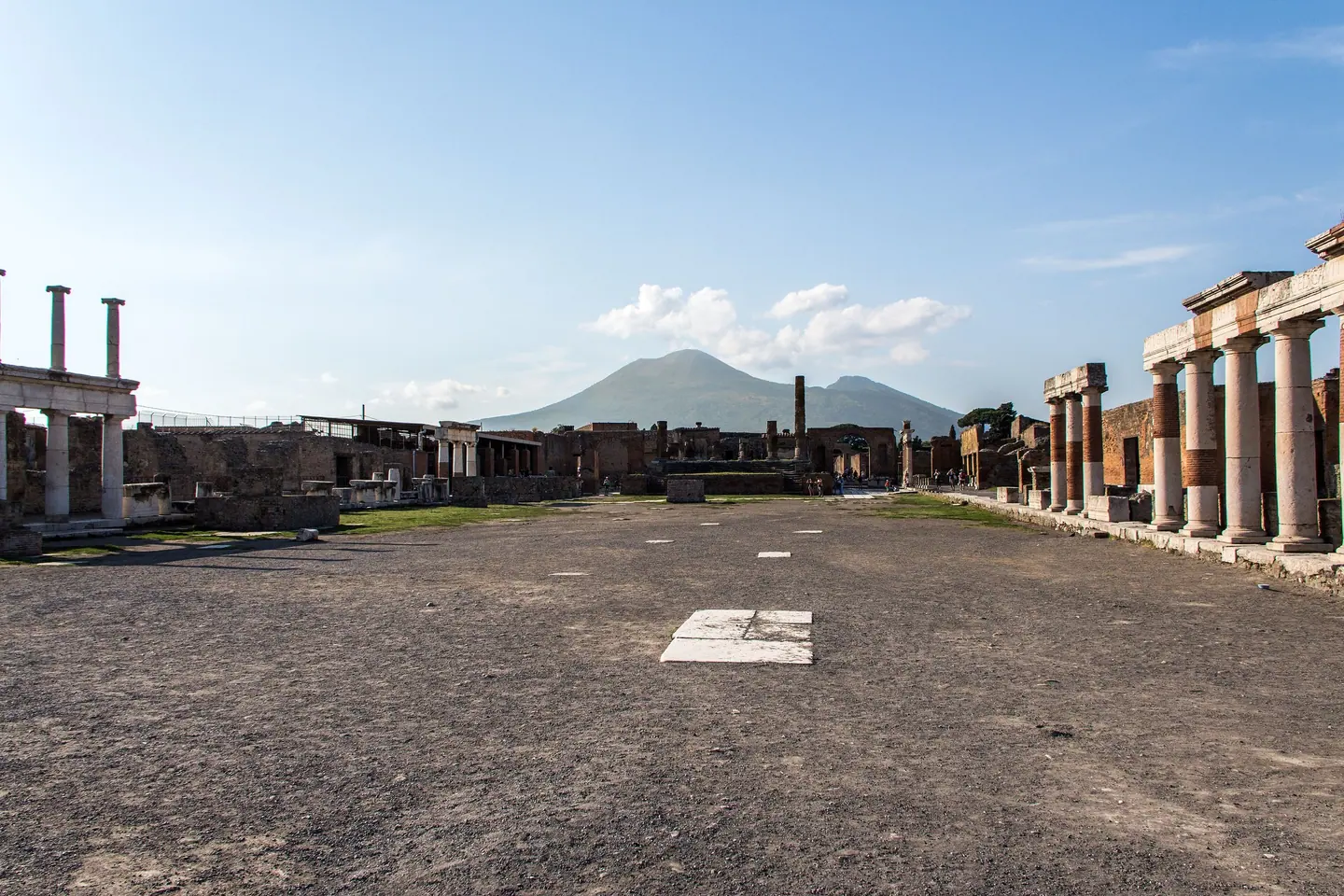
Archaeological Museum, Capodimonte & Sanità Quarter
National Archaeological Museum of Naples MANN, Galleria Principe di Napoli, Catacombs of San Gennaro, Basilica of Santa Maria della Sanità, Palazzo dello Spagnolo, Fontanelle Cemetery, and Museo di Capodimonte
National Archaeological Museum of Naples
Housed inside a grand sixteenth-century cavalry barracks, this institution holds treasures retrieved from Pompeii, Herculaneum, and the Farnese Collection. Visitors can examine the colossal Farnese Hercules, exquisite floor mosaics depicting Alexander the Great, and rare bronze statues. The Roman wall paintings preserved here offer unmatched insight into classical interior decorative arts.
Galleria Principe di Napoli
Constructed between 1870 and 1883 opposite the archaeological museum, this arcade reflects late nineteenth-century urban renewal plans. The structure features an elegant cast-iron and glass roof resting upon classical masonry pilasters. We observe fine stucco details and quiet passageways that provide a tranquil contrast to the traffic of neighbouring thoroughfares.
Porta San Gennaro
Dating back to early medieval times, this city gate was reconstructed in 1537 under the Spanish viceroyalty. Above the arch sits a fresco painted by Mattia Preti, commissioned as a votive offering following the devastating plague of 1656. The portal remains an active pedestrian threshold leading north toward the Sanità district.
Palazzo dello Spagnolo
Erected in 1738 to designs by architect Ferdinando Sanfelice, this aristocratic residence showcases Neapolitan late Baroque architecture. Its defining feature is the theatrical open staircase, often termed hawk-wing stairs, framing the interior courtyard with overlapping arches. Intricate stucco decorations by Aniello Prezioso still adorn the main portals and landings.
Palazzo Sanfelice
Architect Ferdinando Sanfelice designed this family home between 1724 and 1728 to serve as his private urban residence. The building includes an innovative double-ramp staircase facing the inner court, which served as a prototype for his later architectural projects. Marble busts of the Sanfelice family line the landings amid weathered volcanic tuff stone.
Basilica of Santa Maria della Sanità
Designed by Dominican architect Fra Nuvolo and constructed between 1602 and 1613, this church features a prominent dome surfaced in yellow and green majolica tiles. Inside, the elevated presbytery sits directly above the crypt entrance leading to the Catacombs of San Gaudioso. The nave displays canvases by prominent artists including Luca Giordano.
Catacombs of San Gaudioso
Established in the fifth century following the burial of the North African bishop Saint Gaudiosus, this underground cemetery underwent significant adaptation in the seventeenth century. The Dominican friars drained corpses in niches called cantarelle, embedding skulls directly into wall plaster while painter Giovanni Balducci rendered the bodies in fresco. Surviving early Christian arcosolia feature ancient mosaic fragments.
Ponte della Sanità
Commissioned by the French administration under Joseph Bonaparte and completed in 1809, this tall bridge linked the royal palace of Capodimonte directly with central Naples. The viaduct dramatically altered local geography by soaring directly over the Sanità quarter, even crossing above church cloisters. A public lift allows visitors to travel directly between street levels.
Fontanelle Cemetery
Carved into the Materdei hillside, these cavernous tuff quarries were repurposed in the mid-seventeenth century to inter victims of plague and cholera epidemics. Millions of bones and skulls were later catalogued and arranged along rock corridors during the nineteenth century. The site became the centre of the local pezzentelle cult, involving prayers for souls in purgatory.
Catacombs of San Gennaro
Carved from porous yellow tuff stone, these expansive underground galleries date from the second to the fifth century. The site contains the original fifth-century tomb of Saint Januarius along with monumental columned chambers and an underground basilica. Rare early Christian frescoes depict deceased figures beside images of the apostles.
Basilica di San Gennaro extra Moenia
Constructed in the fifth century outside the classical city walls, this basilica was built adjacent to the tomb of Saint Januarius. Although modified across centuries and serving as a hospital during pestilence outbreaks, recent restorations stripped later additions to reveal its clean Romanesque and early Christian spatial layout. It now serves as an entrance hub for the catacombs.
Hospital of San Gennaro dei Poveri
Founded in 1667 to house beggars and plague survivors, this extensive charitable complex was erected around the ancient basilica of San Gennaro. The grand courtyard features stone colonnades and wide ramps designed to accommodate stretchers and carriages. Today it remains an active public healthcare facility reflecting four centuries of continuous welfare operations.
Church of San Severo fuori le mura
This sixteenth-century church incorporates the subterranean Catacombs of San Severo, where the fourth-century bishop of Naples was originally laid to rest. The interior features Baroque altars and paintings by artists including Paolo de Matteis. A small modern gallery within the complex displays striking sculptural work by local contemporary masters.
Palazzo Traetto
Situated on Via dei Cristallini, this aristocratic palace is notable for its graceful inner courtyard and curved open loggias. The design demonstrates how local eighteenth-century architects maximised natural light in the deep ravines of the Sanità. The entrance portal features basalt volcanic stone framing an expansive carriage entryway.
Hypogeum of the Cristallini
Discovered beneath residential basements along Via dei Cristallini, these four Greek burial chambers date back to the late fourth century BC. The tombs retain painted trompe-l'oeil reliefs, carved stone funeral beds, and Greek inscriptions preserving classical burial practices. Sculpted patera and architectural friezes offer rare proof of the city's ancient Neapolis period.
Museo di Capodimonte
Commissioned in 1738 by King Charles VII of Naples, this vast palace was built to showcase the inherited Farnese art collection. The museum rooms preserve major works by Caravaggio, Titian, Raphael, and Artemisia Gentileschi alongside the original royal apartments. A dedicated porcelain cabinet contains thousands of delicate Capodimonte ceramics created on the grounds.
Real Bosco di Capodimonte
Encompassing over one hundred hectares, these historic royal grounds were laid out in the 1730s under architect Ferdinando Sanfelice. Five main avenues radiate from the central hemicycle, forming a fan-shaped hunting park framed by ancient oaks, holm oaks, and chestnut trees. Several historic estate dependencies, including royal farmhouses and porcelain factories, stand along the paths.
Church of San Gennaro in Bosco
Erected in 1745 for royal courtiers and estate workers, this chapel was commissioned by Charles VII and designed by Ferdinando Sanfelice. The simple Baroque facade opens into a refined single-nave interior intended for quiet prayer. In 2021, architect Santiago Calatrava installed a site-specific decorative programme highlighting the interior vaults.
Belvedere di Capodimonte
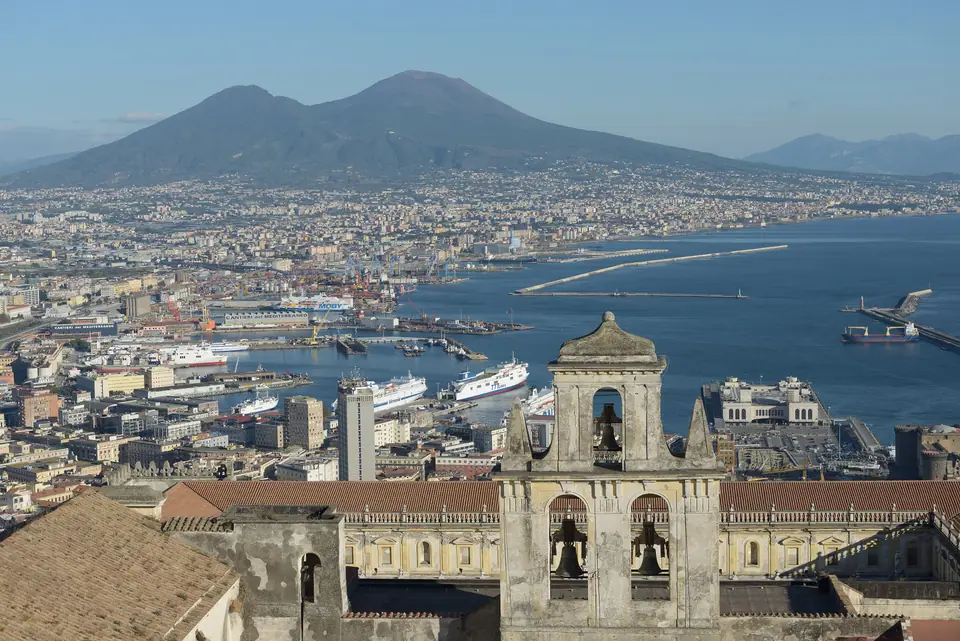
Positioned at the southern boundary of the royal park, this wide esplanade offers views sweeping across the historic city centre to Mount Vesuvius and the island of Capri. Travellers have gathered at this promontory since the era of the Grand Tour to study the coastal topography. Shaded stone benches along the perimeter provide resting spots beneath maritime pines.
Hermitage of the Camaldoli
Founded in 1585 by the Camaldolese order, this monastery sits upon the Camaldoli hill over four hundred metres above sea level. The church interior contains paintings by Massimo Stanzione and Luca Giordano surrounded by peaceful monastic cloisters and hermits' cells. The churchyard belvedere offers expansive panoramas reaching toward Pozzuoli and the Phlegraean Fields.
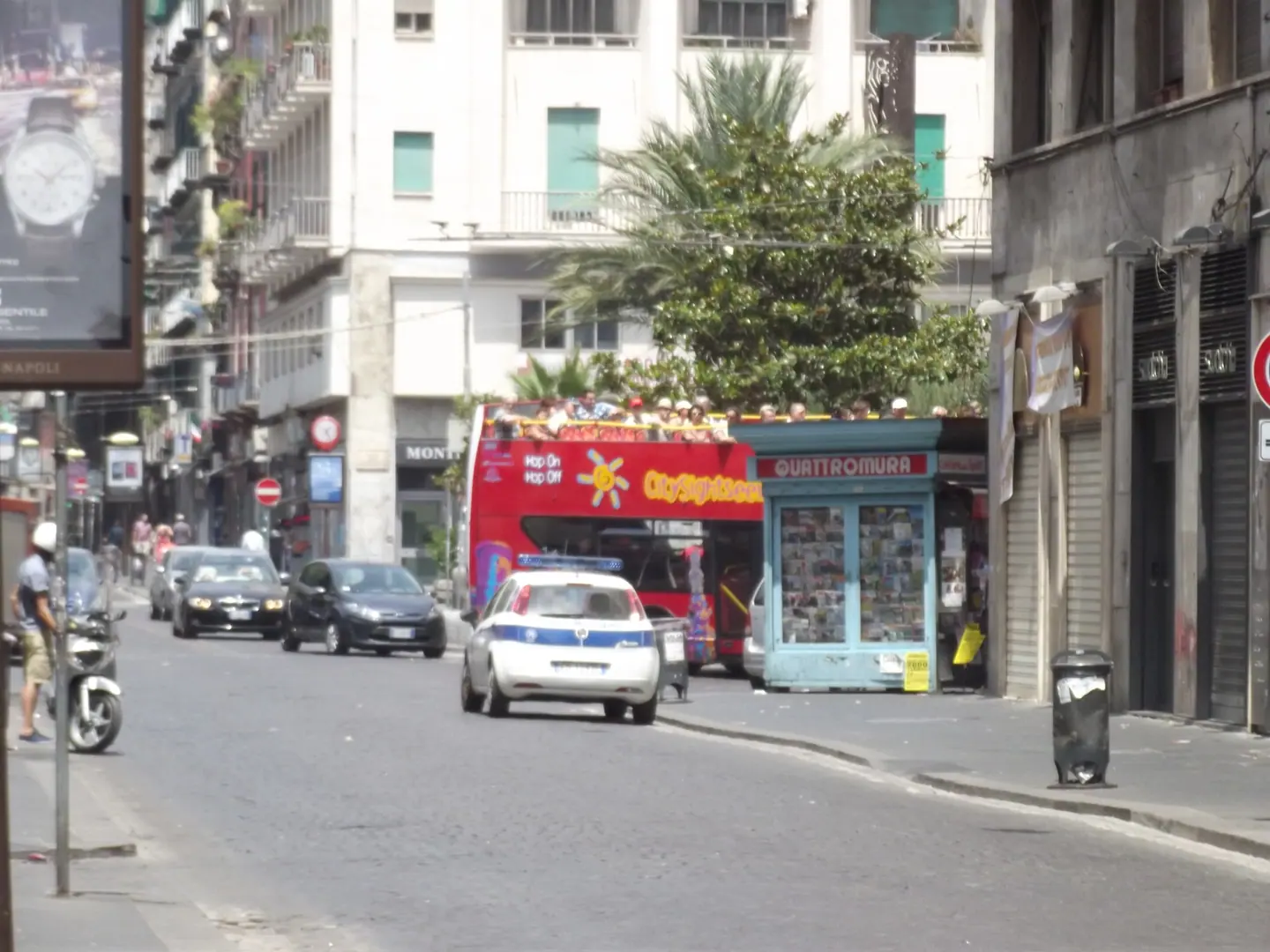
Piazza del Plebiscito, Royal Palace & Santa Lucia Waterfront
Piazza del Plebiscito, Royal Palace of Naples, Teatro di San Carlo, Galleria Umberto I, Castel Nuovo Maschio Angioino, Via Toledo, Quartieri Spagnoli, Castel dell’Ovo, and Borgo Marinari
Piazza del Plebiscito
Named after the 1860 vote that unified Italy under the House of Savoy, this grand public space is enclosed by a sweeping semicircular colonnade. Visitors can admire bronze equestrian statues of Charles III and Ferdinand I sculpted by Antonio Canova and Antonio Cali. The square often hosts civic gatherings and open-air classical concerts throughout the year.
Basilica of San Francesco di Paola
Commissioned by King Ferdinand I of the Two Sicilies to honour a vow, this church dominates the western perimeter of Piazza del Plebiscito. Architect Pietro Bianchi designed the rotunda to recall the Pantheon in Rome, topping it with a high coffered dome supported by Corinthian columns. Inside, thirty-four fluted columns of local marble ring the solemn, daylight-flooded central nave.
Royal Palace of Naples
Designed by Domenico Fontana in the seventeenth century, the complex served as the seat of Bourbon and Spanish monarchs. Eight marble statues along the facade depict the principal rulers of Naples from Roger the Norman to Vittorio Emanuele II. Inside, the monumental grand staircase leads travellers to the preserved court theatre, the throne room, and royal apartments.
Biblioteca Nazionale Vittorio Emanuele III
Occupying the eastern wing of the Royal Palace, this institution preserves rare manuscripts, incunabula, and centuries of Bourbon administrative records. Its most celebrated treasure remains the collection of carbonised papyri recovered from the Villa of the Papyri in ancient Herculaneum. Researchers and visitors can observe the ornate frescoed ceilings of the reading rooms overlooking the gardens.
Teatro di San Carlo
Inaugurated in 1737 by King Charles VII of Naples, this opera house predates Milan's La Scala by several decades. Designed by Giovanni Antonio Medrano, the auditorium features six tiers of gilded boxes draped in crimson velvet beneath a fresco of Apollo presenting Minerva. Operas by Rossini, Donizetti, and Bellini received their original premieres inside this acoustic hall.
Galleria Umberto I
Erected between 1887 and 1890 during the urban renewal of the city, this cruciform arcade combines classical masonry with industrial ironwork. A fifty-six-metre barrel-vaulted glass dome illuminates the central crossing, where the floor features an elaborate marble zodiac mosaic. The arcade continues to house traditional cafes, print shops, and offices behind its classical facades.
Castel Nuovo
Commonly known as the Maschio Angioino, this fortress was initially erected in 1279 by Charles I of Anjou. Its most prominent feature is the white marble triumphal arch inserted between the round stone towers to celebrate Alfonso V of Aragon's entrance into the city in 1443. The fortress houses the civic museum and the Gothic Hall of the Barons.
Piazza Municipio
One of the largest public squares in Europe, this expanse links the civic seat of Palazzo San Giacomo to the maritime port. Recent redesigns by architect Alvaro Siza integrated archaeological remains from the ancient Greek and Roman harbour discovered during metro excavations. The centre displays the equestrian monument to Victor Emmanuel II, framed by maritime pin oaks.
Fontana del Nettuno
Created between 1599 and 1601 by Domenico Fontana, Michelangelo Naccherino, and Pietro Bernini, this fountain has occupied several locations across the city. The central marble figure of Neptune wields a trident atop four dolphins, ringed by tritons, sea monsters, and satyrs spouting water. It now rests permanently in Piazza Municipio outside the city hall.
Palazzo San Giacomo
Commissioned in 1816 by King Ferdinand I to centralise government ministries, this building was constructed over the historic church of San Giacomo degli Spagnoli. Architects Vincenzo Cafiero and Stefano Gasse designed the classical facade with austere Doric pilasters and round arches. Today it serves as the administrative seat of the Mayor and municipal council of Naples.
Via Toledo
Created in 1536 by the Spanish viceroy Don Pedro de Toledo, this thoroughfare extends for over a kilometre from Piazza Dante to Piazza Trieste e Trento. It was celebrated in the travel writings of Stendhal and remains lined with eighteenth-century aristocratic palazzi and busy retail shops. Pedestrians use it to access both the Quartieri Spagnoli and the municipal centre.
Quartieri Spagnoli
Constructed in the sixteenth century to house Spanish troops, this dense neighbourhood retains its original military grid pattern of steep, narrow alleys. Lines of laundry hang between stone balconies above traditional street-level family homes known locally as bassi. Travellers navigate stone staircases to discover small craft workshops, religious wall shrines, and prominent contemporary street murals.
Chiesa di San Ferdinando
Originally constructed by the Jesuits in the seventeenth century as San Francesco Saverio, this church passed to the Bourbon royal family in 1767. The interior showcases dynamic Baroque paintings by Paolo de Matteis depicting scenes from the life of the saint, along with ornate gilded altars. It served for generations as the traditional parish church for artists and musicians.
Fontana del Carciofo
Installed in 1956 during the tenure of mayor Achille Lauro, this circular fountain occupies the centre of Piazza Trieste e Trento. Locals nicknamed it the Artichoke fountain due to the layered bronze floral motif from which the central jet of water cascades. It stands at the intersection linking Via Toledo, the Royal Palace, and the San Carlo Opera.
Santa Maria della Catena
Founded in 1576 by sailors from the port of Santa Lucia, this church was rebuilt in the late eighteenth century in a late Baroque style. It contains the marble tomb and significant altarpieces of the Neapolitan painter Francesco De Mura, who bequeathed his fortune to the institution. The simple facade overlooks the descending street toward the Santa Lucia waterfront.
Castel dell'Ovo
Perched on the islet of Megaride where Greek colonists first founded the settlement of Parthenope, this is the oldest standing fortification in Naples. Its name derives from a medieval legend claiming the poet Virgil concealed a magical egg in its foundations to support the ramparts. Travellers can ascend to the Ramaglietto terrace for views across the entire Gulf of Naples.
Borgo Marinari
Constructed around the rocky base of Castel dell'Ovo, this compact maritime community dates back to the nineteenth century. Originally inhabited by local fishermen and boatwrights, the harbour now accommodates private yachts, rowboats, and traditional waterfront seafood restaurants. It remains linked to the mainland of Santa Lucia by a narrow stone causeway that withstands open sea swells.
Fontana del Gigante
Sculpted by Pietro Bernini and Michelangelo Naccherino in the seventeenth century, this fountain originally stood near the Royal Palace before its relocation to Via Partenope. The structure comprises three round arches adorned with the heraldic shields of viceroys, flanked by statues of river gods and maritime beasts spouting water. It provides an elevated stone frame for views toward Mount Vesuvius.
Monumento a Umberto I
Situated along the Santa Lucia coastline, this marble monument commemorates King Umberto I, who visited the city to assist citizens during the severe cholera epidemic of 1884. The sculpted installation includes decorative stone pedestals and commemorative inscriptions honoring his support for municipal hygiene and infrastructure reforms. It serves as a prominent landmark along the sea-facing promenade.
Church of Santa Maria Egiziaca a Pizzofalcone
Commissioned in 1661 by Augustinian nuns, this church was designed by Cosimo Fanzago on the ridge of the Pizzofalcone hill. The building is renowned for its Greek-cross plan enclosed within an octagonal perimeter, capped by a light-filled dome. Inside, visitors encounter paintings by Paolo Finoglio and Luca Giordano, framed by polychrome marble altars typical of seventeenth-century Neapolitan craftsmanship.
Vomero Hill, Certosa di San Martino & Posillipo Coast
Castel Sant’Elmo, Certosa di San Martino, Villa Floridiana, Pedamentina di San Martino, Villa Pignatelli, Chiaia Riviera, Mergellina Harbour, and Parco Virgiliano Posillipo
Castel Sant'Elmo
Carved directly into the volcanic tuff stone atop Vomero hill, this imposing sixteenth-century fortress assumed its unique hexagonal layout under Spanish viceroy Don Pedro de Toledo. Visitors walk along wide ramparts that offer panoramic outlooks across the Gulf of Naples. The central parade ground hosts contemporary art exhibitions, while ancient subterranean munitions stores remain preserved below.
Certosa di San Martino
Founded in the fourteenth century and extensively remodelled during the seventeenth century, this former monastery represents one of the finest local examples of Baroque architecture. Architect Cosimo Fanzago designed the grand cloister with its marble balustrades and carved skulls. Inside, galleries display historic maritime models, royal Bourbon carriages, and an extensive collection of traditional Neapolitan nativity scenes.
Pedamentina di San Martino
Constructed in the fourteenth century to transport building materials to Castel Sant'Elmo, this stepped pathway contains over four hundred stone stairs. It winds past terraced gardens, domestic orchards, and historic tuff walls, presenting shifting angles of Mount Vesuvius. The descent links the hilltop monastic precinct directly with the lower residential quarters of Montesanto and the historic centre.
Villa Floridiana
King Ferdinand I of the Two Sicilies purchased this estate in 1817 for his morganatic wife, the Duchess of Floridia. Architect Antonio Niccolini redesigned the villa and laid out English-style gardens filled with camellias, stone pines, and ornamental fake ruins. The shaded pathways lead through peaceful glades towards a belvedere overlooking the coastline of Chiaia.
Museo Duca di Martina
Set inside the main residence of Villa Floridiana, this museum houses an important collection of decorative arts assembled by Placido de Sangro, Duke of Martina. The rooms feature thousands of pieces of European porcelain, including delicate wares from Capodimonte, Meissen, and Sevres. Ming and Qing dynasty Chinese ceramics, Venetian glass, and Renaissance enamels complete the display.
Piazza Vanvitelli
Named after the royal architect Luigi Vanvitelli, this octagonal plaza was laid out in the late nineteenth century as the heart of a residential expansion. Flanked by grand Neo-Renaissance apartment blocks, it serves as the principal gathering place on Vomero hill. Historic funicular stations connect this transport node directly with the commercial thoroughfares of the lower city.
Villa Pignatelli
Commissioned in the 1820s by the English architect Pietro Valente for Ferdinand Acton, this villa later belonged to the Rothschild banking family and the Pignatelli nobility. Its monumental portico features fluted Doric columns, opening into halls decorated in opulent French Empire furnishings. The estate also includes a carriage museum situated within the rear English landscaped gardens.
Riviera di Chiaia
Developed in the late sixteenth century along the coastal waterfront, this wide avenue was once the preferred carriage promenade for European aristocrats on the Grand Tour. It borders the northern edge of the Villa Comunale gardens and contains elegant residences from the seventeenth and eighteenth centuries. Walking here, one observes classic examples of Neapolitan Baroque and Neoclassical facades.
Villa Comunale di Napoli
King Ferdinand IV established this royal garden in the 1780s, creating an elegant seaside promenade originally reserved exclusively for the royal family and court. Designed by Carlo Vanvitelli, the grounds are dotted with neoclassical statues, fountains, and a cast-iron music pavilion. Today it forms a green buffer between the traffic of Chiaia and the Gulf waters.
Stazione Zoologica Anton Dohrn
German scientist Anton Dohrn founded this research station in 1872 to study marine flora and fauna in the Mediterranean. Located within the Villa Comunale, it is among the oldest operating marine research institutes in the world. Visitors can observe the historic nineteenth-century aquarium tanks and admire classical fresco cycles by Hans von Marees in the library.
Mergellina Harbour
Historically a distinct fishing hamlet, Mergellina sits at the western terminus of the seaside promenade of Via Caracciolo. Its marina accommodates traditional wooden skiffs alongside modern ferries bound for the Phlegraean Islands and Capri. A wide quay provides clear views back towards the Castel dell'Ovo and the sweeping arc of the Neapolitan shoreline.
Santa Maria del Parto a Mergellina
Erected on land gifted by King Frederick of Aragon to the poet Jacopo Sannazaro, this church stands elevated on a rocky spur. Inside lies Sannazaro's marble tomb, decorated with pagan mythological figures under Christian guises. The sanctuary also contains the celebrated painting of Saint Michael defeating the devil, known locally as the Devil of Mergellina.
Crypta Neapolitana
Engineered in the first century BC by the Roman architect Lucius Cocceius Auctus, this seven-hundred-metre tunnel connected Naples with Pozzuoli. Carved through the tuff ridge, it eliminated the arduous climb over the Posillipo promontory for Roman legions and travellers. Over the centuries, literary figures from Seneca to Petrarch recorded their passage through its echoing, torchlit depths.
Tomb of Virgil
Perched above the entrance to the Crypta Neapolitana, this Roman burial chamber of the Augustan period is traditionally identified as the resting place of Virgil. The barrel-vaulted structure features cremation niches set into the masonry walls. Nearby in the peaceful park grounds rests the monument to Giacomo Leopardi, who died in Naples in 1837.
Palazzo Donn'Anna
Architect Cosimo Fanzago began constructing this coastal residence in the 1640s for Donna Anna Carafa, wife of the Spanish viceroy. Work halted following the viceroy's departure and Anna's death, leaving the monumental baroque structure unfinished. Waves wash directly against its weathered foundations, creating an atmospheric silhouette that has inspired writers and artists for centuries.
Villa Rosebery
Constructed in the early nineteenth century by Austrian officer Joseph von Thurn, this coastal estate later served as the private retreat of British Prime Minister Lord Rosebery. Acquired by the Italian State in the twentieth century, it remains an official residence of the Italian President. The grounds slope down to the sea, featuring wooded parkland and botanical gardens.
Gaiola Island
Positioned just metres from the Posillipo coast, these two rocky islets are united by an arched stone bridge suspended over the water. One islet holds a solitary villa, while submerged Roman ruins surround both in the shallow seabed. The surrounding waters form a protected marine park where ancient fish ponds and harbour structures remain visible underwater.
Submerged Marine Protected Area of Gaiola
Covering the waters around the Trentaremi headland, this marine reserve protects ancient tuff quarries, maritime villas, and retaining walls submerged by volcanic bradyseism. Land-based visitors can walk along scenic coastal paths overlooking the crystal-clear cove. The research centre provides exhibits documenting how geological shifts transformed this former Roman luxury retreat into an aquatic archaeological site.
Imperial Villa of Pausilypon
Originally built by the wealthy Roman knight Vedius Pollio in the first century BC, this estate later passed into the hands of Emperor Augustus. The archaeological remains include a theatre capable of seating two thousand people, alongside an adjacent smaller odeon for music recitals. Access is gained through the Grotta di Seiano, an ancient tunnel cutting entirely through the headland.
Parco Virgiliano
Laid out on the highest promontory of Cape Posillipo, this cliffside public park features terraced walkways lined with Mediterranean pines and shrubs. Belvederes look down upon the dramatic natural cliffs of Trentaremi bay and out towards the Gulf of Pozzuoli. The clear vantage points encompass the island of Nisida, the Phlegraean Fields, and the blue expanse of the Tyrrhenian Sea.
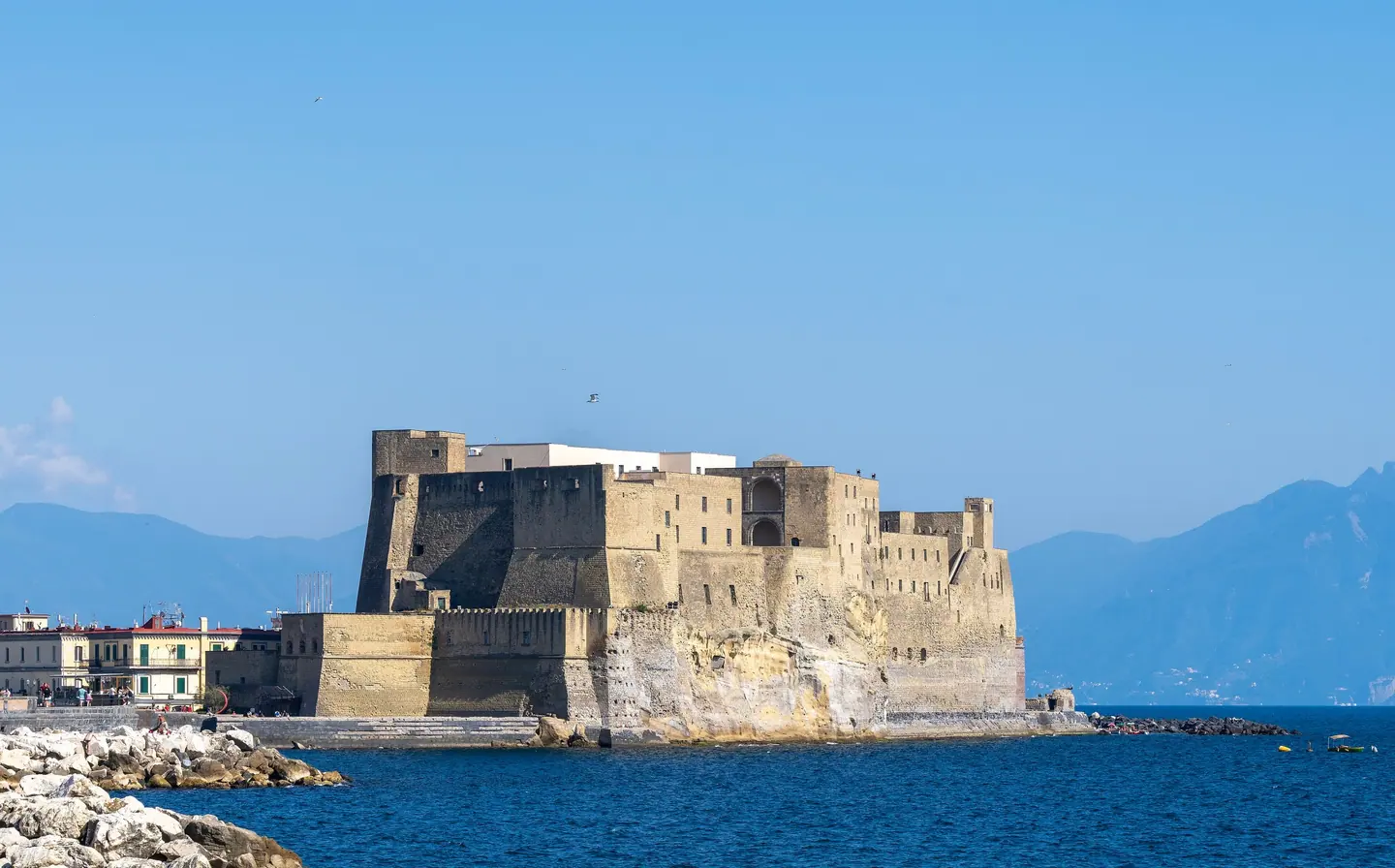
Pompeii, Herculaneum & Phlegraean Fields
Pompeii Forum, Villa of the Mysteries, Amphitheatre of Pompeii, Herculaneum Archaeological Park, Mount Vesuvius Crater, Flavian Amphitheatre Pozzuoli, Macellum of Pozzuoli, and Royal Palace of Caserta
Forum of Pompeii
Flanked by porticoes, municipal administration buildings and the Temple of Jupiter, this expansive rectangular plaza served as the civic heart of Pompeii. Colonnettes and bases for honorary statues line the perimeter, where the northern vista frames Mount Vesuvius. Notice the limestone paving and remains of the macellum market along the eastern border.
Amphitheatre of Pompeii
Built around 70 BC, this subterranean oval arena predates the Colosseum in Rome by more than a century. The structure features external double staircases and vaulted access tunnels designed to accommodate up to twenty thousand spectators. Visitors can walk the central arena floor, which witnessed gladiatorial games and riots recorded by Roman historians.
Villa of the Mysteries
Perched just outside the Herculaneum Gate, this sprawling residential complex contains some of the best preserved wall paintings of antiquity. The continuous megalography in the dining room depicts an initiation ritual into the cult of Dionysus against vivid cinnabar red backgrounds. Examine the architectural terraces that once overlooked the Bay of Naples.
House of the Faun
Occupying a complete insula of three thousand square metres, this elite residence represents Hellenistic architecture at its most refined. A replica bronze statuette of a dancing faun adorns the impluvium basin in the Tuscan atrium. The exedra room famously yielded the Alexander Mosaic, which is now preserved in the national museum in Naples.
Lupanar of Pompeii
Situated at the intersection of two narrow lanes, this purpose-built brothel contains ten small masonry bedrooms with built-in stone beds. Painted erotic scenes remain visible above each doorway, illustrating the services offered to sailors and local patrons. Hundreds of scratched graffiti inscriptions left by visitors and workers still cover the interior plaster.
Herculaneum Archaeological Park
Buried under twenty metres of volcanic mud and ash during the 79 AD eruption, Herculaneum retained organic materials that vanished at neighbouring sites. Two-storey wooden building frames, furniture, carbonised foodstuffs and roof timbers survived intact. The excavated streets reveal multi-level town houses, public baths and seafront arched boathouses containing hundreds of human skeletons.
Villa of the Papyri
Believed to have belonged to Julius Caesar's father-in-law, this luxurious villa contained a vast private collection of classical bronzes and philosophical scrolls. Exploration through subterranean eighteenth-century tunnels uncovered over eighteen hundred carbonised papyrus rolls dedicated to Epicurean texts. Parts of the extensive coastal colonnade and grand peristyle garden are visible from open excavation trenches.
Villa Poppaea at Oplontis
Attributed to Empress Poppaea Sabina, this vast leisure residence showcases second-style Roman wall paintings with remarkable architectural illusions. The property includes an immense sixty-metre swimming pool flanked by marble statues, formal garden courtyards and private bath suites. Walk through the eastern wing to observe optical illusion frescoes depicting theatrical masks, baskets and peacocks.
Mount Vesuvius Crater
Rising to twelve hundred metres, the summit of this active volcano features a rim path encircling the deep central crater formed during the 1944 eruption. Fumaroles release steam along the rugged inner rock walls of basalt and volcanic tuff. From the crest, views extend over the metropolitan sprawl of Naples and the Sorrento Peninsula.
Flavian Amphitheatre of Pozzuoli
Commissioned by Emperor Vespasian, this arena ranked among the largest amphitheatres in the empire, accommodating forty thousand spectators. The subterranean level remains remarkably intact, displaying original trapdoors, animal cages, vaulted corridors and mechanical pulleys used for spectacles. Walk along the subterranean network where sunlight filters through ancient floor openings directly onto stone masonry.
Macellum of Pozzuoli
Misidentified historically as a temple of Serapis, this colonnaded market complex holds significance for both classical archaeology and geology. Three towering cipollino marble columns bear borehole bands created by marine molluscs, proving historical fluctuations in land elevation caused by volcanic pressure. The central courtyard preserves an elevated circular tholos surrounded by merchant shops.
Solfatara of Pozzuoli
Formed roughly four thousand years ago, this shallow caldera lies at the volcanic centre of the Phlegraean Fields. The barren, light-coloured crater floor features boiling mud pools and active fumaroles discharging steam laden with hydrogen sulphide. Roman writers regarded the site as the home of the god Vulcan and mined its alum reserves.
Baiae Submerged Archaeological Park
Once the favoured seaside playground of the Roman aristocracy, half of ancient Baiae sank underwater due to volcanic subsidence. Today, maritime excursions and diving routes reveal intact mosaic floors, paved streets, marble statues and villa foundations submerged in shallow clear water. On land, hillside remnants include monumental domed thermal chambers historically labelled as temples.
Aragonese Castle of Baia
Erected by the Crown of Aragon in 1495 atop a high volcanic promontory, this fortress guarded the Gulf of Pozzuoli against naval incursions. The fortified complex now houses the Archaeological Museum of the Phlegraean Fields, showcasing artefacts salvaged from local excavations and underwater surveys. Terraces provide elevated panoramas over the bay toward Cape Miseno.
Piscina Mirabilis
Carved into the volcanic bedrock, this cathedral-like reservoir provided water for the Roman imperial western Mediterranean fleet stationed at Portus Julius. The structure measures seventy metres long and fifteen metres high, supported by forty-eight cruciform pillars arranged in four distinct rows. The interior surfaces are coated in waterproof cocciopesto plaster, creating acoustic reverberations under vaulted ceilings.
Cave of the Sibyl
Discovered in 1932, this subterranean gallery is linked by classical tradition to the prophetess described in Virgil's Aeneid. Cut directly into the hillside tuff, the corridor extends more than one hundred metres with a distinctive trapezoidal cross-section illuminated by lateral shafts. The passage terminates in a vaulted chamber where oracle consultations were purported to have occurred.
Acropolis of Cumae
Established in the eighth century BC by colonists from Euboea, Cumae represents the cradle of Magna Graecia and introduced the alphabet to Italy. Winding trails ascend through ancient defensive walls to the lower terrace of Apollo and the upper temple of Jupiter, later converted into an early Christian basilica. The summit overlooks the Tyrrhenian coast and Lake Fusaro.
Lake Avernus
Filling an extinct volcanic crater, this dark body of water was believed by ancient Romans to be the entrance to Hades due to toxic gases that once killed flying birds. Agrippa transformed the lake into a secure military harbour connected by tunnels to the sea during the Roman civil wars. A walking path skirts the lake perimeter, passing the brick ruins of a large imperial thermal bath.
Casina Vanvitelliana
Designed by architect Carlo Vanvitelli in 1782 for King Ferdinand IV of Bourbon, this geometric pavilion stands on an islet linked by a wooden footbridge. The structure features rounded pavilions, classical pediments and delicate balconies reflected in the still waters of Lake Fusaro. The lodge hosted European monarchs and dignitaries during seasonal hunting and fishing excursions.
Royal Palace of Caserta
Built by Luigi Vanvitelli for Charles VII of Bourbon to rival Versailles, this monument ranks among the largest royal residences in the world. The rectangular palace boasts twelve hundred rooms, four central courtyards and an ornamental marble staircase crowned by a painted fresco dome. Beyond the palace, a three-kilometre central water axis features cascading fountains, neoclassical sculpture groups and an expansive English garden.
Funiculars, Metro Art Stations and Circumvesuviana Links
Pair this route with the practical neighbourhood breakdowns, climate charts and transport advice in our Naples Spaccanapoli, Royal Waterfront & Bay of Naples travel overview, alongside additional mapped city walks.