Naples
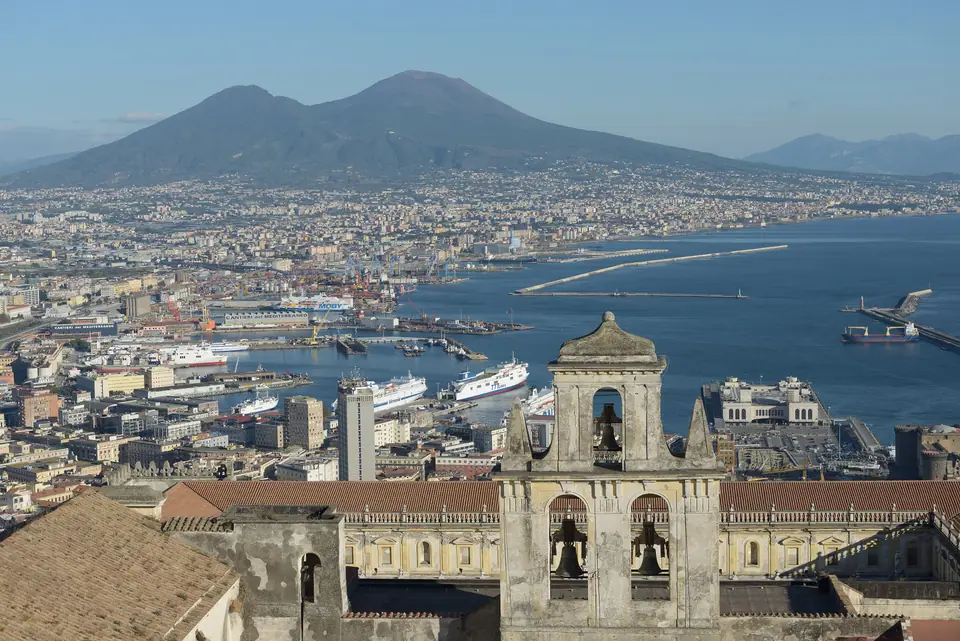
Greek-Roman street grids along Spaccanapoli, Baroque chapels and Caravaggio altarpieces, Bourbon royal palaces, wood-fired Neapolitan pizzerias, and volcanic views toward Mount Vesuvius.
Quick decisions
How many days?
3 to 4 days: Spaccanapoli and the Centro Storico on Day 1, the Archaeological Museum and Piazza del Plebiscito on Day 2, and Pompeii, Herculaneum, or Mount Vesuvius on Day 3.
Where should I stay?
Centro Storico: historic palaces and pizzerias. Santa Lucia or Chiaia: seafront promenades and boutiques. Vomero: leafy hilltop avenues linked by funiculars.
Do I need a car?
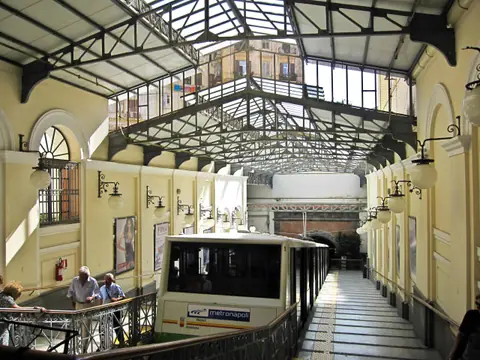
No. Dense scooter traffic and camera-enforced ZTL zones make driving impractical; ride Metro Line 1, the four hillside funiculars, and the Circumvesuviana railway.
Best for
Archaeology: MANN and Pompeii. Baroque art: Cappella Sansevero. Food: wood-fired Pizza Margherita and sfogliatella.
Before you go
Reserve timed tickets in advance on the official websites for the Cappella Sansevero and the summit crater of Mount Vesuvius, and wear rubber-soled shoes for volcanic basalt paving stones.
Getting around
Walk the three ancient decumani in the historic centre, ride Metro Line 1 between Garibaldi, Toledo, Museo, and Vomero, and use the four funicular lines across the Naples public transport network.
Continue your trip
High-speed Frecciarossa and Italo trains link Napoli Centrale directly to Rome, Florence, and Milan, while hydrofoils from Molo Beverello cross the Bay of Naples to Capri, Ischia, Procida, and Sorrento.
Overview
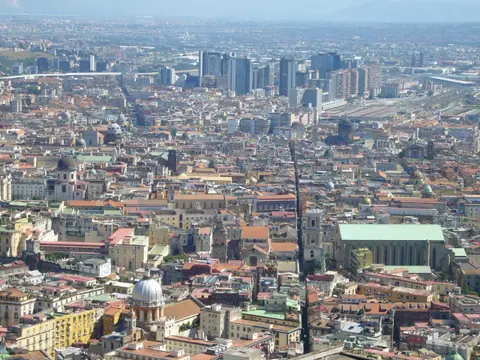
Rising in amphitheatrical tiers from the northern shore of the Bay of Naples between the volcanic caldera of the Phlegraean Fields (Campi Flegrei) and the 1,281-metre cone of Mount Vesuvius, Naples (Napoli) is the regional capital of Campania and the third-most populous municipality in Italy after Rome and Milan. Founded by Greek colonists from Cumae first at Parthenope on the headland of Pizzofalcone in the eighth century BC and refounded as Neapolis ("New City") in the late sixth century BC, the city has been continuously inhabited for more than twenty-five centuries.
In the 1,021-hectare UNESCO-listed Historic Centre of Naples along Spaccanapoli and Via dei Tribunali, the original Greek-Roman grid of three parallel east-to-west decumani and narrow north-to-south cardini frames Gothic royal basilicas, Caravaggio altarpieces, and the eighteenth-century marble sculptures of Cappella Sansevero and Naples Cathedral. North of the ancient walls, the Naples National Archaeological Museum (MANN) and Capodimonte Palace preserve the Farnese Renaissance collection alongside mosaics and frescoes recovered from Pompeii and Herculaneum.
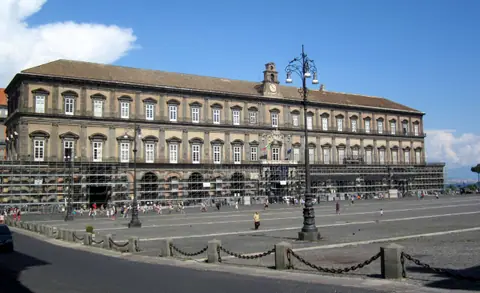
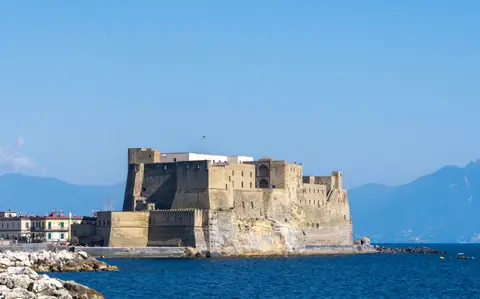
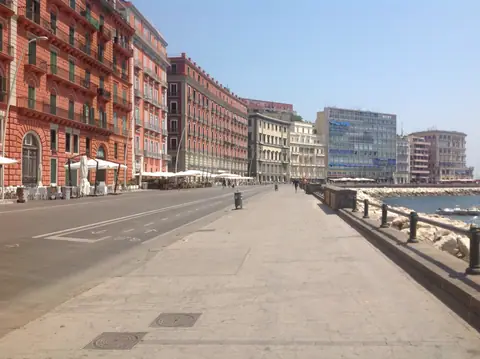
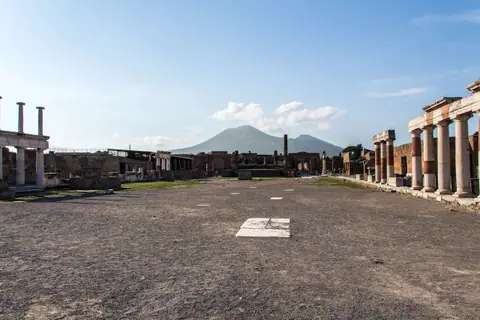
Along the monumental lower waterfront, Piazza del Plebiscito, the Royal Palace, Teatro di San Carlo, and Castel Nuovo connect via the seaside promenade of Via Partenope to Castel dell'Ovo on the islet of Megaride, while the Circumvesuviana commuter railway links central Naples in under forty minutes with the buried Roman cities of Pompeii, Herculaneum, and the crater rim of Mount Vesuvius.
Getting there
International and domestic flights arrive at Naples International Airport (NAP) at Capodichino, located roughly six kilometres northeast of the centre and linked to Piazza Garibaldi (Napoli Centrale) and Molo Beverello port by the ANM Alibus shuttle and predetermined fixed-fare taxis. High-speed Frecciarossa and Italo trains arrive at Napoli Centrale on Piazza Garibaldi, while passenger hydrofoils and ferries from Capri, Ischia, Procida, and Sorrento dock at Molo Beverello and Calata Porta di Massa. See the how to get to Naples guide for full arrival routes.
Where to stay
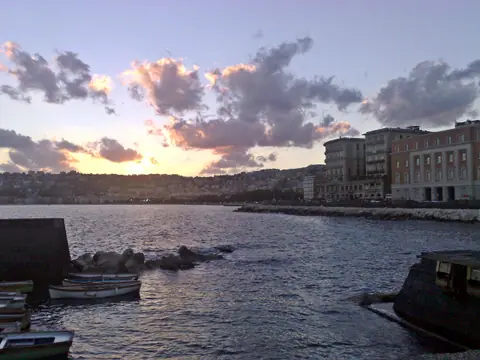
Each neighbourhood offers a distinct elevation and atmosphere: the Centro Storico around Piazza Bellini and Piazza del Gesù Nuovo places you steps from ancient churches and wood-fired pizzerias, Santa Lucia and Chiaia offer seafront hotels and leafy pedestrian boutiques along the Villa Comunale, and hilltop Vomero provides quiet nineteenth-century boulevards linked to Via Toledo by funicular. Compare bases in the where to stay in Naples guide.
Things to do
Group your sightseeing by geographical tier: walk Spaccanapoli, Via dei Tribunali, and Cappella Sansevero and the Duomo on Day 1, pair the National Archaeological Museum with Vomero hill and Piazza del Plebiscito on Day 2, and ride the Circumvesuviana to Pompeii, Herculaneum, and Mount Vesuvius on Day 3. Follow the things to do in Naples guide and 3-day itinerary.
Food and drink
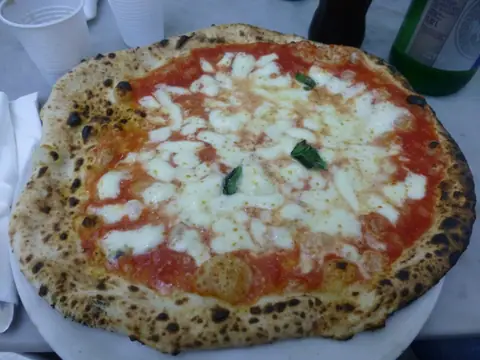
Inscribed on UNESCO's Intangible Cultural Heritage list in 2017, the art of the Neapolitan pizzaiuolo centres on hand-stretched wood-fired Pizza Margherita, Pizza Marinara, and golden pizza fritta, complemented by warm ricotta-filled sfogliatelle (riccia and frolla), rum-soaked babà, Easter pastiera, and slow-simmered Sunday ragù and Genovese sauces.
Culture
Two UNESCO World Heritage inscriptions frame the city and its bay: the Historic Centre of Naples (inscribed in 1995 across 1,021 hectares from the Greek acropolis of Pizzofalcone to Capodimonte) and the Archaeological Areas of Pompeii, Herculaneum and Torre Annunziata (inscribed in 1997).
Weather by month
Naples is warmest in August, with average highs around 31°C, and coldest in January, when nights drop to about 5°C. November is the wettest month, with rain on about 10 days. For mild weather with fewer rainy days, aim for May, September and October.
| Month | Low | Range | High | Rain | Rainy days |
|---|---|---|---|---|---|
| Jan | 5°C | 13°C | 92 mm | 9 d | |
| Feb | 5°C | 14°C | 95 mm | 9 d | |
| Mar | 7°C | 16°C | 78 mm | 9 d | |
| Apr | 10°C | 19°C | 99 mm | 9 d | |
| May | 14°C | 24°C | 59 mm | 6 d | |
| Jun | 18°C | 28°C | 33 mm | 3 d | |
| Jul | 21°C | 30°C | 29 mm | 2 d | |
| Aug | 21°C | 31°C | 36 mm | 4 d | |
| Sep | 18°C | 27°C | 89 mm | 6 d | |
| Oct | 14°C | 23°C | 136 mm | 9 d | |
| Nov | 10°C | 18°C | 152 mm | 10 d | |
| Dec | 6°C | 14°C | 112 mm | 10 d |
Averages of daily values from 2015 to 2024. Rainy days are days with at least 1 mm of rain. Source: Open-Meteo · Compare destinations by month.
Naples on the map
Every place we cover in Naples. Tap a category or pin to explore.
In-depth Naples guides
Browse the guides grouped by topic: sights, neighbourhoods, food, transport, day trips and trip planning.
Sights, Landmarks & Parks
Key monuments, viewpoints, museums and nature trails.
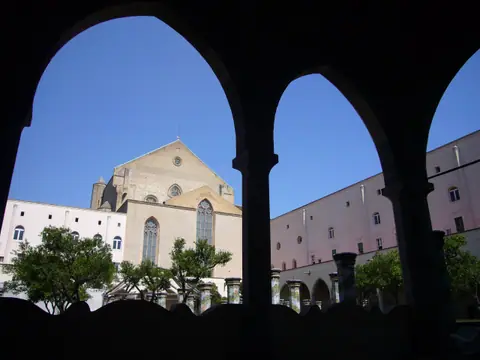
- Things to do in Naples: archaeological wonders, cloisters and castlesFrom the Pompeii mosaics of the National Archaeological Museum and the majolica-tiled cloister of Santa Chiara to the ramparts of Castel Sant'Elmo, these are the essential sights in Naples.
- 3 days in Naples itinerary: historic decumani, royal palaces and PompeiiA balanced 3-day Naples itinerary pairing the Greek-Roman streets of Spaccanapoli and the Duomo on Day 1, the National Archaeological Museum and Royal Waterfront on Day 2, and Pompeii with Vesuvius on Day 3.
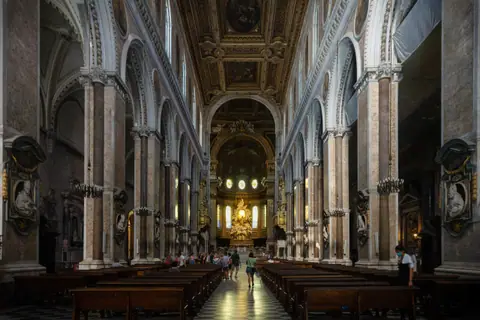
- Cappella Sansevero and Duomo di Napoli: the Veiled Christ and San GennaroVisit the Baroque funerary chapel of Cappella Sansevero to see Giuseppe Sanmartino's 1753 Veiled Christ, then walk to Naples Cathedral for the Royal Chapel of the Treasure of San Gennaro and the fourth-century baptistery.
- National Archaeological Museum (MANN) and Capodimonte: Farnese and Roman treasuresExplore the world's finest collection of Pompeii frescoes, mosaics, and Farnese sculptures at the Naples National Archaeological Museum (MANN), then ascend to the Bourbon palace and galleries of Capodimonte.
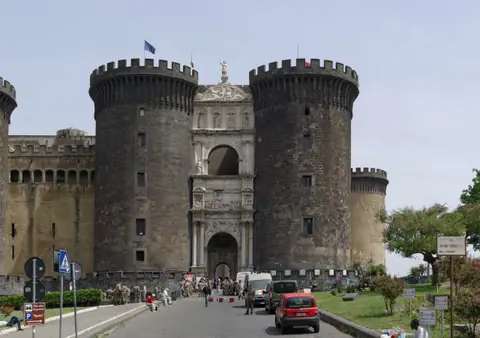
- Piazza del Plebiscito and Royal Palace: San Carlo, Galleria Umberto and Castel NuovoExplore the monumental civic heart of Naples around Piazza del Plebiscito: the Royal Palace of Naples, the neoclassical Basilica of San Francesco di Paola, Teatro di San Carlo, Galleria Umberto I, and medieval Castel Nuovo.
- Castel dell'Ovo and the Lungomare: Megaride islet, Borgo Marinari and Via PartenopeStroll the traffic-free seaside promenade of Via Partenope and Via Caracciolo past the Fountain of the Giant to the medieval ramparts of Castel dell'Ovo and the harbour village of Borgo Marinari.

Neighbourhoods & Where to Stay
Districts, historic quarters and the best bases for your stay.
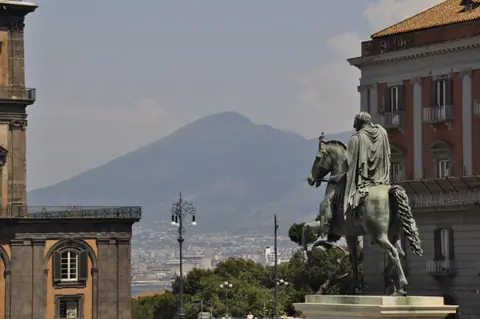
- Naples: Greek foundations, royal palaces and volcanic baysNaples is the capital of Campania and Italy's third-largest city, where a sixth-century BC Greek street plan meets Baroque chapels, Bourbon palaces, and views across the Bay of Naples to Mount Vesuvius.
- Best time to visit Naples: Mediterranean seasons, weather and Christmas alleysSpring (April to June) and early autumn (September to October) bring warm 19°C to 27°C days ideal for walking Spaccanapoli and Pompeii, while December fills Via San Gregorio Armeno with nativity art.
- Where to stay in Naples: Centro Storico, Chiaia, Santa Lucia and VomeroCompare Naples's four main accommodation districts: the lively Graeco-Roman lanes of the Centro Storico, seaside Santa Lucia, elegant Chiaia, and the hilltop boulevards of Vomero.
- Spaccanapoli and the Centro Storico: walking the ancient Greek-Roman gridWalk the razor-straight lower decumanus of Spaccanapoli and parallel Via dei Tribunali through Piazza del Gesù Nuovo, Santa Chiara, San Domenico Maggiore, San Lorenzo Maggiore, and Pio Monte della Misericordia.
- Quartieri Spagnoli and Rione Sanità: Via Toledo, Baroque staircases and catacombsExplore two of Naples's most atmospheric quarters: the sixteenth-century military grid of the Quartieri Spagnoli rising west of Via Toledo, and the Baroque palaces and early Christian catacombs of Rione Sanità.
Food & Drink
Local dishes, markets, cafés and dining districts.
Getting Around & Arrival
Airport transfers, public transit, passes and driving rules.
- How to get to Naples: Capodichino airport, high-speed trains and ferriesNaples is served by Naples International Airport (Capodichino) six kilometres northeast of the centre, high-speed rail at Napoli Centrale on Piazza Garibaldi, and Bay of Naples ferries at Molo Beverello.
- Getting around Naples: Metro Line 1 Art Stations, funiculars and CircumvesuvianaNavigate Naples without a car using Metro Line 1's contemporary Art Stations, four hillside funicular railways climbing to Vomero, and the Circumvesuviana train toward Pompeii and Sorrento.
Day Trips & Excursions
Easy half-day and full-day trips from the city.
Need your embassy or consulate in Italy? See embassies and consulates in Italy.
Reviews
Log in to write a review.
No reviews yet.