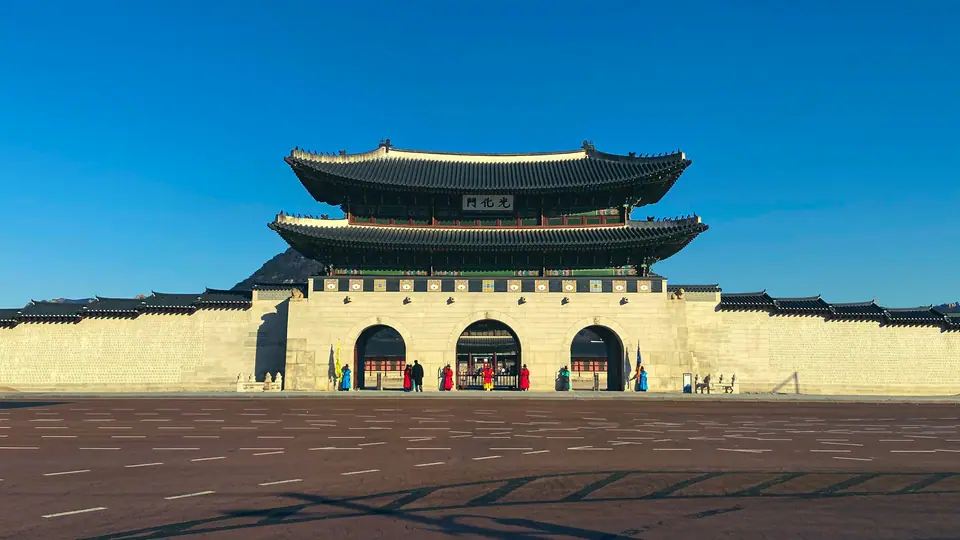
All 100 essential sights across Gyeongbokgung, Bukchon Hanok Village, Changdeokgung, Jongno, Myeongdong, Namsan, Itaewon and Hangang mapped in walking order.
Hanyang Beneath Bugaksan: Six Centuries as Korea’s Royal Seat
First settled along the Han River basin more than two thousand years ago as Wiryeseong, an early capital of the Baekje Kingdom, the city rose to permanent national prominence in 1394 when King Taejo, founder of the Joseon Dynasty, moved his throne here and named the walled capital Hanyang (later Hanseong). Guided by traditional Korean geomancy (pungsu-jiri), Joseon planners placed the main royal palace of Gyeongbokgung at the southern foot of Bugaksan Mountain looking out toward the protective southern peak of Namsan and the broad curve of the Han River, encircling the city with an eighteen-kilometre stone fortress wall linking four great gates and four smaller gates.
For over five centuries, Joseon kings governed from the Five Grand Palaces, preserved the royal ancestral tablets at Jongmyo Shrine and fostered the scholar-official hanok courtyards of Bukchon. Rebuilt with extraordinary energy after the Japanese colonial era and the Korean War of 1950 to 1953, modern Seoul places fourteenth-century wooden palace halls, restored stream promenades at Cheonggyecheon and hillside fortress trails beside contemporary design plazas and night markets.
Gwanghwamun, Gyeongbokgung Palace, Seochon & Cheongwadae
Begin at Gwanghwamun Square and Gyeongbokgung Palace, exploring the National Palace Museum, Seochon lanes and Blue House (Cheongwadae) grounds.
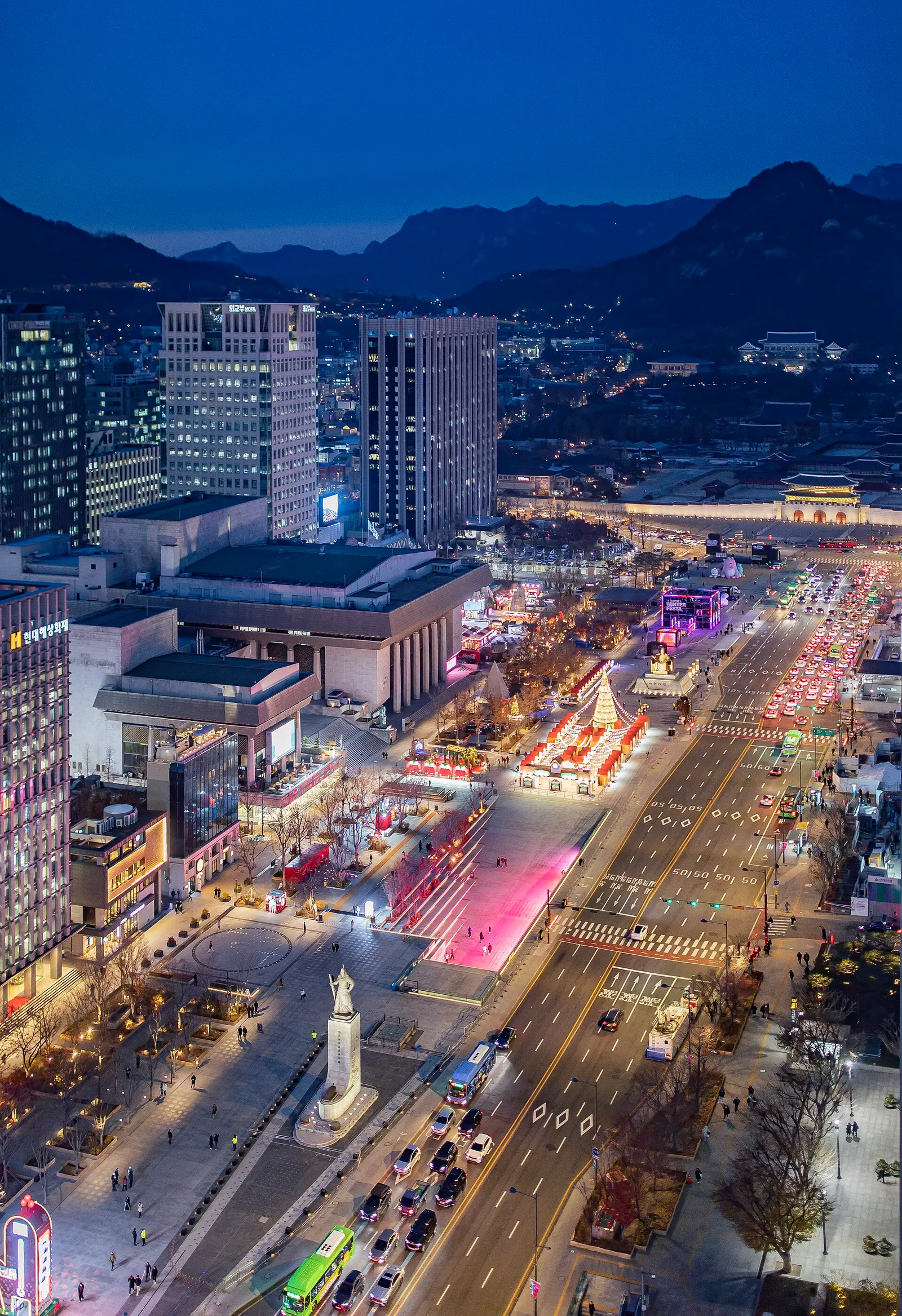
Gwanghwamun Square
Originally Yukjo-geori, the historic government avenue of the Joseon Dynasty, this pedestrianised plaza stretches southward from the royal palace gate. We observe twin monuments honouring Admiral Yi Sun-sin and King Sejong the Great beside sunken garden terraces. The open promenade aligns directly with the craggy peak of Mount Bugaksan to the north.
King Sejong Statue
Dedicated to the fourth Joseon monarch who devised the Hangul script in 1443, this golden-bronze seated figure anchors the civic square. In front of the pedestal stand bronze replicas of Joseon scientific instruments, including a celestial globe and rain gauge. Visitors can descend into the subterranean exhibition halls directly beneath the plinth.
Admiral Yi Sun-sin Statue
Erected in 1968, this imposing statue depicts the naval hero who defended Korea against Japanese maritime invasions during the late sixteenth century. The commander stands holding his sword beside a model of the ironclad Turtle Ship. Fountains shooting water jets flank the base, symbolising historical sea battles fought across southern waters.
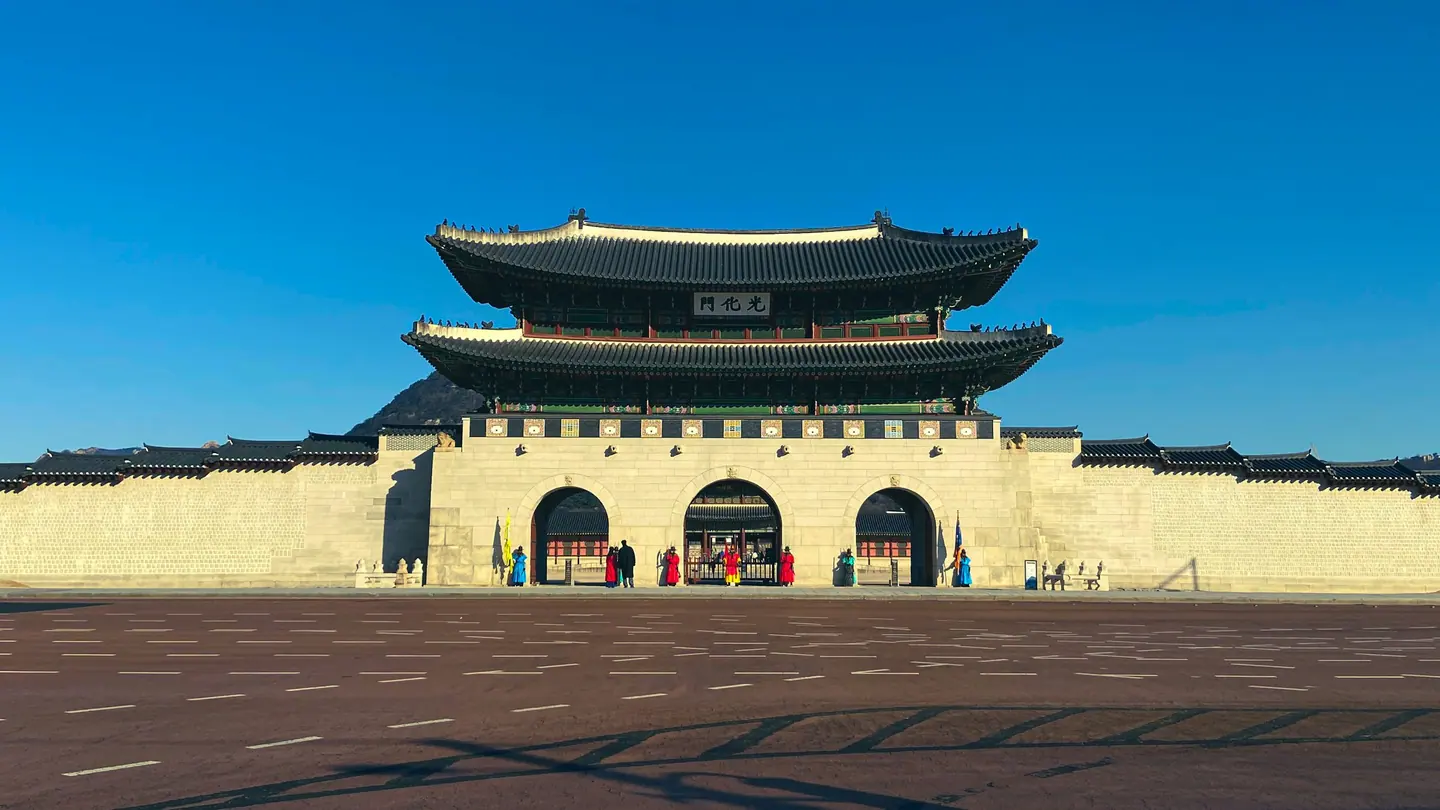
Gwanghwamun
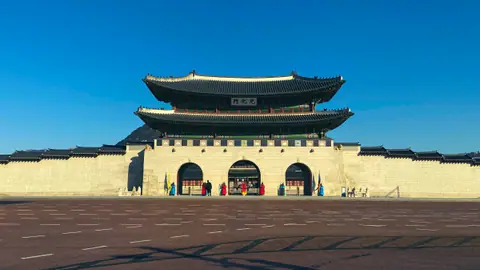
Serving as the fortified entrance to Gyeongbokgung, this structure features three arched carriageways built into a stone base topped by a two-storey wooden pavilion. The central gate was reserved solely for the monarch during state processions. Royal guard changing ceremonies take place daily outside the outer courtyard.
Geunjeongjeon
Standing on a raised two-tiered stone terrace, this monumental wooden hall hosted royal coronations and morning audiences with court officials. Its granite courtyard is lined with carved rank stones showing where ministers stood according to strict bureaucratic hierarchy. Intricate ceiling carvings inside depict two golden dragons symbolising supreme sovereign authority.
Sajeongjeon
Positioned immediately behind the primary throne room, this open-fronted pavilion served as the king's daily office for policy debates and scholarly study. The hall is flanked by two auxiliary pavilions, Cheonchujeon and Manchunjeon, fitted with traditional underfloor ondol heating for winter meetings. Look inside to see a large folding screen painted with dragons and clouds.
Gyeonghoeru
Raised on forty-eight massive stone pillars over an artificial pond, this grand pavilion hosted state feasts and foreign diplomatic delegations during the Joseon era. Three artificial islands planted with weeping willows sit within the surrounding waters. Access across stone bridges reveals carved lotus blossoms and mythical stone beasts along the water margins.
Hyangwonjeong
Constructed in 1873 under King Gojong, this hexagonal wooden structure sits in the centre of a square pond in the northern palace grounds. A delicate wooden footbridge named Chwihyanggyo connects the islet to the palace gardens. The site provided a tranquil private refuge for the royal household away from administrative duties.
Geoncheongung
Built deep inside Gyeongbokgung by King Gojong in 1873, this secluded royal enclave reflects the restrained wooden architecture of noble residences rather than formal palace halls. The complex witnessed historic events, including Korea's first domestic electric lighting installation in 1887 and the tragic assassination of Empress Myeongseong in 1895.
National Palace Museum of Korea
Located just inside the southwestern perimeter of Gyeongbokgung, this museum preserves over forty thousand treasures from the Joseon royal courts and the Korean Empire. Galleries display royal seals, calligraphic royal scrolls, court attire and state palanquins. A major highlight is the automated celestial water clock reconstructed from fifteenth-century designs.
National Folk Museum of Korea
Occupying a pavilion inspired by traditional pagoda architecture on the palace's eastern edge, this museum illustrates historical Korean lifestyles across four seasons. Galleries showcase agricultural implements, ancestral ritual tables, traditional medicinal shops and folk clothing. An outdoor village reconstructed behind the main building features a late-nineteenth-century tramway and vintage streetscapes.
Cheongwadae
Situated against the southern slope of Mount Bugaksan, this government estate served as the official presidential residence from 1948 until its public opening in 2022. The main executive pavilion is topped with roughly 150,000 blue ceramic roof tiles crafted in traditional Korean style. Paths lead through manicured state reception gardens, former cabinet halls and press briefing rooms.
Chilgung
This quiet ancestral shrine complex houses the spirit tablets of seven royal concubines who gave birth to Joseon kings but never became queens consort. The grounds contain separate ceremonial shrines, courtyards and ancient juniper trees. It represents an unusual chapter of Joseon court ritual, positioned directly southwest of the Blue House.
Tongin Market
Established in 1941 during the Japanese colonial period for local residents, this covered arcade runs through the centre of the historic Seochon district. Stalls display fresh seasonal produce, cured seafood and handmade Korean side dishes. Visitors exchange brass coinage tokens for traditional lunchbox trays to sample local specialities like pan-fried spicy rice cakes.
Seochon Hanok Village
Stretching west of Gyeongbokgung, this residential quarter historically housed the chungin middle class, including royal translators, doctors and court artists. Narrow alleys wind between restored timber hanok dwellings featuring grey-tile roofs and brick facades. Small independent bookshops, ceramic studios and tea houses operate quietly within these historic courtyards.
Sajikdan
Constructed in 1395, this ceremonial complex contained the sacred national altars where Joseon kings conducted seasonal sacrifices to the gods of land and grain. The square stone platforms, surrounded by stone walls and wooden gates, embody traditional Confucian statecraft principles. The peaceful surrounding park contains dense pine groves and memorial stones.
Daelim Museum
Housed within a converted mid-century brick residence in a Seochon backstreet, this modern cultural institution focuses on photography, industrial design and contemporary visual arts. French architect Vincent Cornu renovated the structure to incorporate glass facades and natural light wells into the domestic rooms. A serene walled garden sits beside the entrance.
Boan Yeogwan
Operating as a traditional roadside inn from 1942 until 2005, this historic building provided lodging for poets, painters and itinerant travellers near the royal palace. Its raw wooden floorboards, unplastered walls and tatami room footprints remain preserved as atmospheric exhibition spaces. An adjoining modern annex contains an independent bookshop and guestrooms.
OVR / Okin-dong Hanok Precinct
Tucked against the eastern foothills of Mount Inwangsan, this quiet corner of upper Seochon retains traditional street patterns that escaped major modern redevelopment. Stone embankments, narrow stairways and original tile roofs run beside the historical course of the Suseong-dong valley stream. Notable twentieth-century writers and painters lived and worked in these secluded lanes.
Suseongdong Valley
Restored to its natural state after the removal of 1970s apartment blocks, this picturesque mountain ravine was painted by the eighteenth-century master Jeong Seon. The site features the ancient stone Girin Bridge, the oldest single-span stone bridge remaining in Seoul. Walking paths wind through granite boulders, pine trees and crystal mountain waters with views across the capital.
Bukchon Hanok Village, Samcheong-dong, Changdeokgung & Secret Garden
Walk the tiled hanok ridges of Bukchon between Gyeongbokgung and Changdeokgung Palace, the Secret Garden (Huwon) and Changgyeonggung.
Bukchon Hanok Village
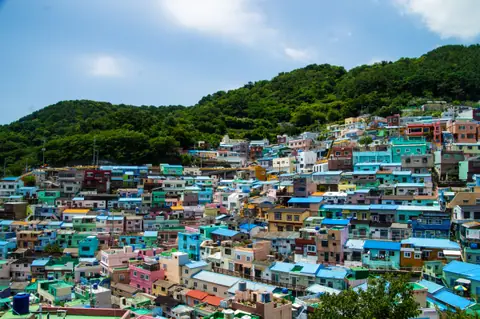
Bukchon contains one of the densest clusters of preserved hanok architecture in Seoul, historically housing high-ranking Joseon officials and royal relatives. Visitors walking these hilly alleys observe stone foundation plinths, intricate wooden lattice windows, and clay-tiled curved roofs. Quiet observation is requested as many residences remain private family homes.
Baek In-je House
Constructed in 1913 during the Japanese colonial era, this grand mansion belonged to the prominent physician Baek In-je. The property diverges from standard Joseon layouts by connecting the women's quarters and men's quarters through internal corridors under a single roofline. A landscaped garden with brick walls and black pine trees surrounds the residence.
Gahoe-dong Hanok Alleys
This specific corridor in Gahoe-dong provides one of the classic architectural views across Seoul's historic core. Rows of single-storey timber dwellings step progressively up the slope, framing the modern high-rises of downtown in the distance. The contrast between traditional clay roof ridge caps and modern urban glass demonstrates the city's layered growth.
Bukchon Traditional Culture Center
Occupying a restored noble residence that once belonged to the Gyedong Min clan, this cultural centre introduces visitors to local preservation methods. Informational exhibits display the joinery techniques used to assemble hanok timber frames without metallic nails. Courtyard spaces host demonstrations of traditional tea ceremonies and Korean calligraphy.
Choong Ang High School
Established in 1908, Choong Ang High School features distinctive early twentieth-century stone architecture designed in the Gothic Revival style. Students and teachers here secretly drafted the March 1st Declaration of Independence in 1919 before public protests erupted across the country. Its central stone hall and steep gables overlook a peaceful quadrangular campus.
Gwanghwamun Gate (Bukchon Approach)
Serving as the primary southern gate of Gyeongbokgung, this structure marks the western boundary of the traditional Bukchon quarter. Rebuilt using indigenous pine timber and master stonecraft, the two-storey wooden pavilion rests atop three arched granite gateways. The central passage was reserved exclusively for the Joseon king and state processions.
National Museum of Modern and Contemporary Art, Seoul
Built on the former site of the Defense Security Command, this gallery incorporates an early modern red-brick military building alongside sleek contemporary pavilions. The design weaves open courtyards between galleries, connecting Samcheong-ro with surrounding palace walls. Rotating exhibitions showcase twentieth-century Korean painting, sculpture, and international digital installations.
Samcheong-dong Street
Running along a quiet valley between Gyeongbokgung and Mount Bugaksan, Samcheong-dong contains numerous adapted hanok workshops, tea rooms, and boutique spaces. Small stone stairways climb from the street into residential pockets where granite retaining walls support traditional timber fences. It provides a peaceful pedestrian route connecting central Bukchon with northern park trails.
Samcheong Park
Designated as a municipal park in 1940, this wooded sanctuary offers walking trails shaded by dense pine and cherry trees. Stone-lined streams run down through the valley, fed by natural mountain springs. The trails connect directly to the Seoul City Wall trail climbing toward the Sukjeongmun gate along the historic northern ramparts.
Sukjeongmun
Sukjeongmun served as the northern gate of the Seoul City Wall, constructed in 1396 during the reign of King Taejo. Due to feng shui principles and proximity to royal precincts, it was rarely opened for civilian traffic and was primarily used for ceremonial purposes. The single-tier wooden pavilion was faithfully reconstructed in 1976.
Waryong Park
Positioned atop a ridge extending east from Bugaksan, Waryong Park tracks a scenic portion of the Seoul City Wall. The name translates to crouching dragon, referencing the serpentine curve of the mountain contours. Visitors can follow the stone parapets down toward Hyehwamun or gaze south across the tiled roofs of Changdeokgung.
Donhwamun
Constructed in 1412 and rebuilt in 1609 after the Imjin War, Donhwamun is the oldest surviving main gate of any royal palace in Seoul. The two-storey timber gatehouse features intricate multi-bracket roofs and rests upon a sturdy granite base. Historically, a massive bronze bell in the upper pavilion rang to signal the opening and closing of palace gates.
Injeongjeon
Injeongjeon served as the principal ceremonial hall where coronations, royal audience ceremonies, and foreign diplomatic receptions took place. The exterior appears as a two-storey structure, but the interior opens into a soaring single chamber dominated by the royal throne. Electric chandeliers and yellow curtains were added in 1908 during late modernisation efforts.
Huijeongdang
Originally used as the king's sleeping quarters and later converted into a daily workplace, Huijeongdang was repeatedly destroyed by fires throughout history. The present structure was reconstructed in 1920 using salvaged timber from Gyeongbokgung. The interior displays a unique combination of traditional wooden ceilings alongside imported Western elements such as parquet flooring and glass windows.
Daejojeon
Daejojeon was the formal residence of the queen, serving as the setting for the birth of royal heirs and royal family gatherings. The building lacks a traditional ridge beam on its roof, an architectural feature reserved exclusively for the queen's bedchamber to ensure unimpeded cosmic energy. An enclosed rear garden features tiered stone planters carved with auspicious symbols.
Buyongjeong Pavilion and Pond
Situated in the first enclave of the Secret Garden, Buyongjeong features two wooden support pillars planted directly into the water of Buyongji pond. The pond's square shape represents the earth, while the rounded central island represents heaven according to ancient cosmology. Opposite the water stands Juhamnu, a two-storey library pavilion that housed royal archives.
Yeongyeongdang
Commissioned in 1827 by Crown Prince Hyomyeong, Yeongyeongdang was built intentionally without traditional palace paintwork, mimicking the plain wood and stone aesthetic of a nobleman's home. The prince held private cultural performances and entertained foreign diplomats within its intimate courtyards. A nearby study building, Seonhyangjee, features copper roof plates and adjustable wooden window screens.
Jondeokjeong Pavilion
Built in 1644 beside a curved lotus pond, Jondeokjeong is distinguished by its hexagonal floor plan and complex two-tiered roof construction. Under the ceiling hangs an ornate wooden panel containing a treatise by King Jeongjo, proclaiming his desire to act as an impartial monarch to all subjects. The interior rafters are richly decorated with historic dragons and clouds.
Myeongjeongjeon
Constructed in 1484 and rebuilt in 1616 after being razed during the Japanese invasion, Myeongjeongjeon is the oldest primary throne hall preserved in Seoul. Uniquely facing east rather than south due to local topography, the compact single-storey hall rests on a two-tiered granite terrace. Stone rank markers stand in the flagstone courtyard, indicating positions for civil and military officials.
Daeonsil (Great Greenhouse)
Completed in 1909 by French architects and Japanese engineers, this conservatory is an early example of modern glass and iron architecture in Korea. The white wooden and steel frame supports glass panels, housing rare indigenous plants alongside traditional bonsai specimens. A formal French-style maze garden and stone fountain sit outside the greenhouse entrance.
Insadong, Jogyesa Temple, Jongmyo Shrine, Cheonggyecheon & Dongdaemun
Follow the teahouses of Insadong and Jogyesa Temple to UNESCO-listed Jongmyo Shrine, Gwangjang Market, Cheonggyecheon Stream and Dongdaemun Design Plaza.
Jogyesa Temple
Founded in 1910 under the name Gakhwangsa, this sanctuary serves as the administrative centre of Seon Buddhism in Korea. The main hall, Daeungjeon, features monumental wooden beams and houses three gilded Buddha statues. Visitors should inspect the ancient lacebark pine and Chinese scholar tree on the grounds, both centuries old.
Museum of Korean Buddhist Art
Established in 1993, this museum preserves sacred works spanning the Goryeo and Joseon dynasties. The permanent collection includes wooden altar carvings, gilded bronze figures, and rare ritual implements. We observe intricate lotus and cloud motifs across the antique silk banners displayed throughout the exhibition rooms.
Ssamziegil
Designed by architect Choi Moon-kyu, this four-storey cultural complex opened in 2004 along Insadong's central thoroughfare. Its continuous spiralling ramp connects courtyard artisans with rooftop open areas. Traditional ceramics, paper crafts, and handmade textiles line the walkway, creating a modern interpretation of a classical Korean market alley.
Tapgol Park
This civic garden stands on the historic grounds of the 15th-century Wongaksa temple. The Korean Declaration of Independence was read aloud here on 1 March 1919, sparking nationwide demonstrations against colonial rule. The site contains the ten-storey marble Wongaksa Pagoda, protected inside a transparent glass pavilion.
Wongaksa Pagoda
Erected under King Sejo, this 12-metre marble monument ranks among the finest stone carvings of the Joseon period. Its tiers display reliefs of dragons, lotus petals, Buddhas, and celestial guardians. The pagoda stands as National Treasure Number 2, sheltered to prevent deterioration from urban weathering.
Unhyeongung
This refined residential complex served as the private home of Heungseon Daewongun, father of Emperor Gojong, during the late 19th century. The compound retains classical wooden halls such as Noandang and Norakdang, constructed with graceful tiled eaves. Architectural details reveal the prestige and domestic lifestyle of Joseon royal relatives.
Tteok Museum
Founded by culinary researcher Yoon Sook-ja, this specialist museum documents hundreds of variations of traditional rice cakes. Displays present antique kitchenware, stone mills, wooden moulds, and seasonal table settings. The exhibits illustrate how ceremonial rice cakes marked major life milestones, from infant celebrations to ancestral rites.
Jongmyo
Originally constructed in 1394, this serene sanctuary preserves the spirit tablets of Joseon kings and queens. Its main hall, Jeongjeon, is one of the longest timber-frame buildings in the world. Royal ancestral rituals, accompanied by archaic court music and dance, have been performed here for over five centuries.
Gwangjang Market
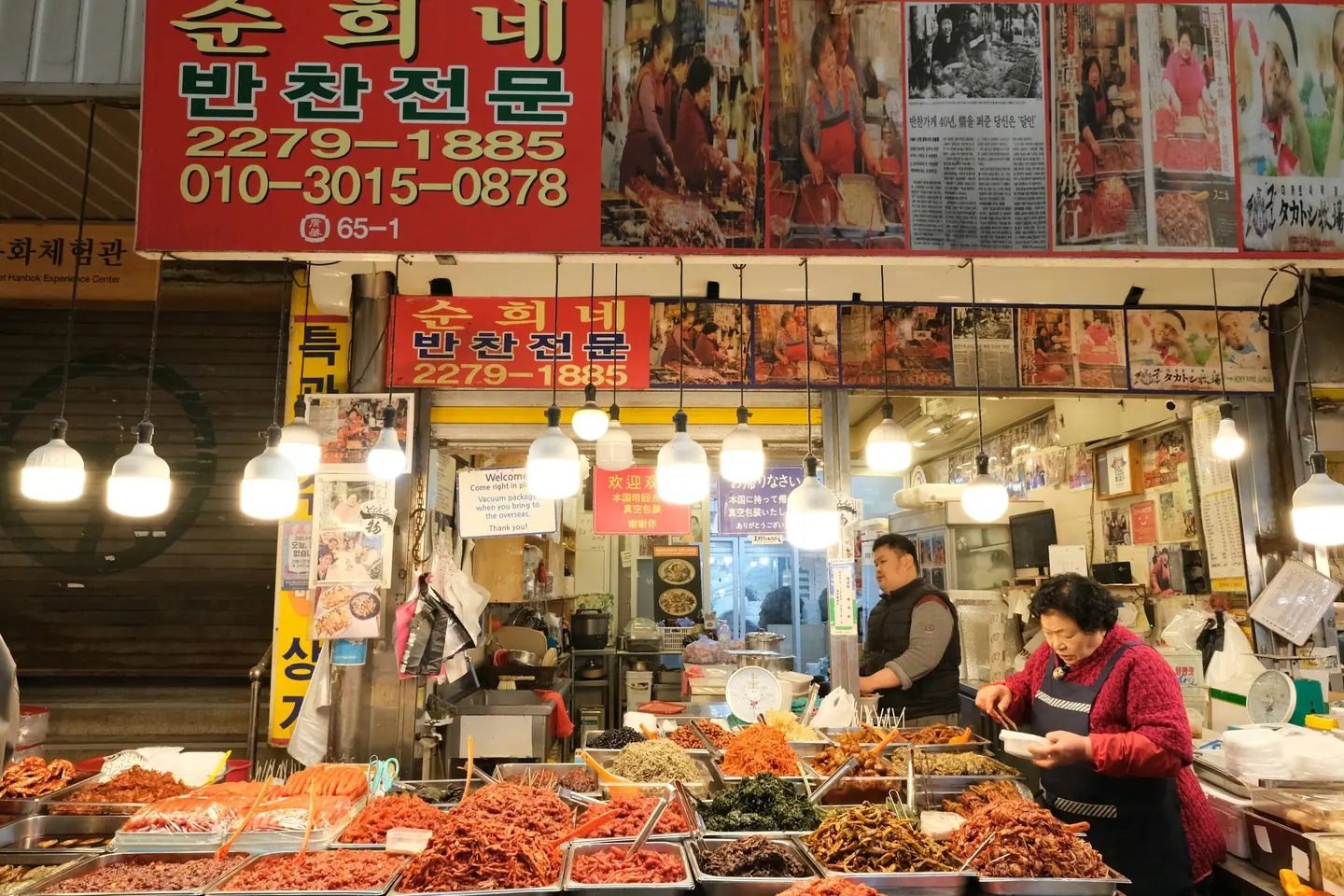
Founded in 1905, this historic venue was the first permanent daily market established in Korea. Covered corridors shelter fabric merchants trading in fine hanbok silks, linen bedding, and vintage clothes. The central intersection contains food stalls serving bindaetteok mung-bean pancakes and hand-cut noodle soups prepared on heated metal counters.
Sewoon Sangga
Constructed in 1968 under architect Kim Swoo-geun, this kilometre-long concrete complex was Korea's first mixed-use development. Long recognised as a hub for electronics parts and fabrication, it underwent significant urban regeneration in 2017. Elevated pedestrian decks now connect workshops with rooftop viewing platforms overlooking Jongno and surrounding alleys.
Cheonggyecheon
Covered by concrete and an elevated expressway for decades, this historic waterway was reopened in 2005 as a linear municipal park. Cobblestone walkways, footbridges, and landscaped banks flank the clear stream. Informational markers detail the waterway's role during the Joseon era, when it served as the capital's main natural drainage canal.
B信gak
This wooden pavilion houses the civic bell that sounded to open and close Seoul's city gates during the Joseon dynasty. Though reconstructed after wartime damage, the pavilion continues to host the official New Year bell-ringing ceremony. The surrounding plaza marks the historic crossroads between central markets and government ministries.
Supyogyo
This historic crossing point along Cheonggyecheon was named after the supyo, a carved stone water gauge placed here in 1441. The original stone bridge was relocated to Jangchungdan Park in the 20th century, though a modern footbridge maintains the connection. Informational panels nearby trace the hydrology and civil engineering feats of early Seoul.
Dongdaemun Market
Tracing its beginnings to 1905, this sprawling retail district forms the heart of South Korea's textile and fashion industries. Wholesale fabric warehouses, pattern cutters, and retail shopping malls cluster around narrow streets and multistory complexes. The area operates around the clock, supplying domestic designers and international buyers with raw materials.
Dongdaemun
Officially named Heunginjimun, this landmark was built in 1398 and rebuilt in 1869 in late Joseon style. It is unique among Seoul's gates for its ongseong, a semicircular outer wall constructed to defend the low-lying terrain. The two-storey timber pavilion above the arched granite passage features elaborate bracket systems.
Seoul City Wall Museum
Located in Dongdaemun Seonggwak Park, this modern museum chronicles the construction, decline, and restoration of the capital's perimeter defences. Interactive maps, recovered artefacts, and scale models illustrate how builders quarried stone to fortify surrounding ridges. An adjacent outdoor trail ascends the slope along surviving portions of the wall.
Dongdaemun Design Plaza
Opened in 2014, this neofuturistic complex features curved aluminium panels, seamless flowing surfaces, and landscaped turf roofs. It contains exhibition galleries, conference halls, and design laboratories that host Seoul Fashion Week. The structural form integrates historical remnants discovered on site, including fragments of ancient military camp walls.
Dongdaemun History & Culture Park
Surrounding the design plaza, this outdoor park exposes archaeological layers uncovered during stadium demolitions in 2008. Remnants include the Hadogam military training camp, stone sluice gates, and restored sections of the Fortress Wall of Seoul. Walkways and glass viewing decks allow travellers to inspect structural foundations in their original settings.
Igansumun Sluice Gate
Constructed during the reign of King Taejo, this granite sluice gate channelled mountain runoff from Mount Namsan beneath the fortress wall. Excavated during the 2008 redevelopment, the twin arches retain original stone joints and protective wooden stakes. The monument provides practical insight into late 14th-century flood mitigation techniques.
Naksan Park
Resting on the mountain representing the blue dragon in Seoul's geomantic layout, this elevated park follows the crest of the inner ramparts. Walking trails skirt ancient stonework, climbing toward viewing decks that overlook central Seoul and the Jongno basin. The park highlights the defensive boundary where nature and civic fortification met.
Deoksugung Palace, Jeongdong, Myeongdong, Namsangol & Namsan Seoul Tower
Stroll the stone-wall path of Deoksugung through Myeongdong Cathedral and Namsangol Hanok Village up the fortress trails to Namsan Seoul Tower.
Deoksugung
Originally serving as an emergency royal residence during the Imjin War, this palace later became the centre of Emperor Gojong's Korean Empire. Visitors observe an unusual harmony of Joseon dynasty timber halls standing beside grand neoclassical stone edifices. The grounds contain Junghwajeon throne hall and the ornate Daehanmun gate, where traditional royal guard changing ceremonies take place daily.
Seokjojeon
Designed by British architect J. R. Harding and completed in 1910, this neoclassical palace served as the imperial audience hall and residence for the Korean Empire. The stone exterior features Ionic porticoes and a pediment carved with the imperial plum blossom crest. Restored state rooms now operate as the Daehan Empire History Museum, showcasing period furnishings, dining saloons, and diplomatic reception halls.
Jeongdong-gil
Tracing the outer boundary wall of Deoksugung, this tranquil stone-paved avenue was the diplomatic core of late nineteenth-century Seoul. Ginkgo trees shade the curved path, which borders foreign legation estates, early missionary schools, and historic cultural venues. We recommend admiring the rhythmic pattern of traditional masonry and clay roof tiles that line the quiet pedestrian boulevard.
Seoul Museum of Art
Housed behind the preserved 1928 Renaissance-style facade of the former Japanese-era Supreme Court, this institution presents modern Korean and international art. The historic brick and granite frontage leads into a light-filled contemporary atrium featuring revolving exhibitions. Visitors can view extensive holdings of painter Chun Kyung-ja alongside outdoor bronze sculptures displayed in the tranquil garden courtyard.
Chungdong First Methodist Church
Constructed in 1897 by American missionary Henry Appenzeller, this sanctuary is Korea's first Protestant church building. Its single-storey Gothic Revival red-brick design features arched windows, wooden trusses, and an asymmetric corner bell tower. The interior maintains an austere timber aesthetic that played an essential role as a clandestine meeting ground for Korean independence activists during Japanese colonial rule.
Former Russian Legation
Standing in Jeongdong Park, this three-storey white Renaissance tower is the sole surviving fragment of the sprawling Russian diplomatic compound built in 1890. Emperor Gojong famously sought political refuge inside these walls in 1896 following the assassination of Queen Myeongseong. The restored tower and preserved underground tunnel network serve as silent reminders of great-power rivalries over late-Joseon Korea.
Paejae Haktang History Museum
Established in 1885 by Methodist missionary Henry Appenzeller, this East Wing building dates from 1916 and represents one of the nation's earliest western educational facilities. The handsome red-brick structure features arched entrance porticoes and original wooden floorboards. Inside, exhibits trace the education of prominent alumni, including Korea's first president Syngman Rhee and modern poet Kim Sowol.
Hwangudan
Erected in 1897, this sacred complex was built so King Gojong could proclaim the Korean Empire and conduct imperial sacrifices to Heaven. While the primary three-tiered marble altar was replaced during the colonial period, the striking three-storey octagonal wooden pavilion, known as Hwangugak, remains intact. Nearby stand three carved stone drums commemorating the fortieth anniversary of Gojong's accession to the throne.
Seoul City Hall
This civic complex unites the 1926 colonial Renaissance-style former City Hall with an undulating glass edifice completed in 2012. The historic stone building now functions as the Seoul Metropolitan Library, preserving original wooden staircases and decorative ceilings. Inside the modern glass annex, visitors admire one of the world's largest indoor vertical gardens, climbing seven storeys above the central lobby.
Bank of Korea Museum
Completed in 1912 to designs by Japanese architect Tatsuno Kingo, this granite monument features classical French Renaissance chateau characteristics with sturdy corner pavilions. Originally the Bank of Joseon headquarters, it now operates as a comprehensive numismatic museum. Visitors can view ancient barter items, dynastic coins, and an authentic walk-in vault filled with replica gold bars and banknotes.
Namdaemun Market
Dating back to 1414 during King Taejong's reign, this traditional open-air wholesale bazaar spans several city blocks near the Great South Gate. Thousands of independent vendor stalls line narrow alleyways, peddling textiles, handcrafted kitchenware, and local ingredients. We suggest exploring specialised food alleys dedicated to braised cutlassfish and hand-pulled knife noodles, which showcase living culinary traditions.
Sungnyemun
Officially designated National Treasure No. 1, this magnificent timber-and-stone portal was erected in 1398 as the primary southern threshold of the capital. The arched granite base supports a two-storey wooden pavilion roofed with dark grey ceramic tiles. Following extensive reconstruction after a 2008 fire, visitors can observe traditional Joseon architectural joinery and defensive ramparts running beside the traffic circle.
Myeongdong Cathedral
Completed in 1898 on a high knoll overlooking the commercial district, this landmark sanctuary serves as the national seat of the Archbishop of Seoul. The Latin-cross basilica was constructed using over twenty varieties of locally fired red and grey bricks without plaster finishes. Its soaring bell tower and subterranean crypt honour Korean Catholic martyrs who perished during eighteenth-century persecutions.
Myeongdong Theater
Constructed in 1936 as the Meijiza theatre, this building functioned as the premier cinema and cultural hall during the colonial era and later as the National Theater of Korea. Its symmetrical facade exhibits decorative Baroque detailing, arched entrances, and intricate pilasters. Reopened in 2009 after meticulous preservation, the venue stages classic and modern theatrical productions within a modernised auditorium.
Namsangol Hanok Village
Located on the northern foot of Mount Namsan, this heritage park features five authentic Joseon-era hanok dwellings relocated from across Seoul. The residences range from middle-class houses to aristocratic estates, complete with traditional ondol underfloor heating conduits and stone courtyards. The grounds also incorporate a serene pavilion, carp pond, and the Seoul Millennium Time Capsule buried in 1994.
Seoul Millennium Time Capsule
Buried in 1994 to commemorate Seoul's six centuries as the national capital, this subterranean capsule rests inside a crater-like granite plaza. The chamber seals 600 representative artefacts of twentieth-century daily life and culture, scheduled for extraction in the year 2394. The surrounding terraced stone amphitheatre provides a meditative space framing views towards the wooded heights of Namsan.
Namsan Cable Car
Commencing operation in 1962, this aerial ropeway was Korea's first passenger cable car system, transporting visitors across the northern slopes of Mount Namsan. The ride provides an unbroken panoramic perspective of Myeongdong and the dense skyline of downtown Seoul. As the cabins glide upwards toward the summit terminal, passengers gain clear views of the surrounding pine forests and historic fortress ramparts.
Namsan Palgakjeong
Constructed in 1959, this traditional octagonal pavilion crowns the summit plateau of Mount Namsan, offering an expansive gathering place for walkers and hikers. Its painted eaves feature elaborate dancheong patterns in red, green, and turquoise pigments beneath a tiered hipped roof. The pavilion grounds host martial arts demonstrations and provide clear lookouts over the Han River and northern mountain ridges.
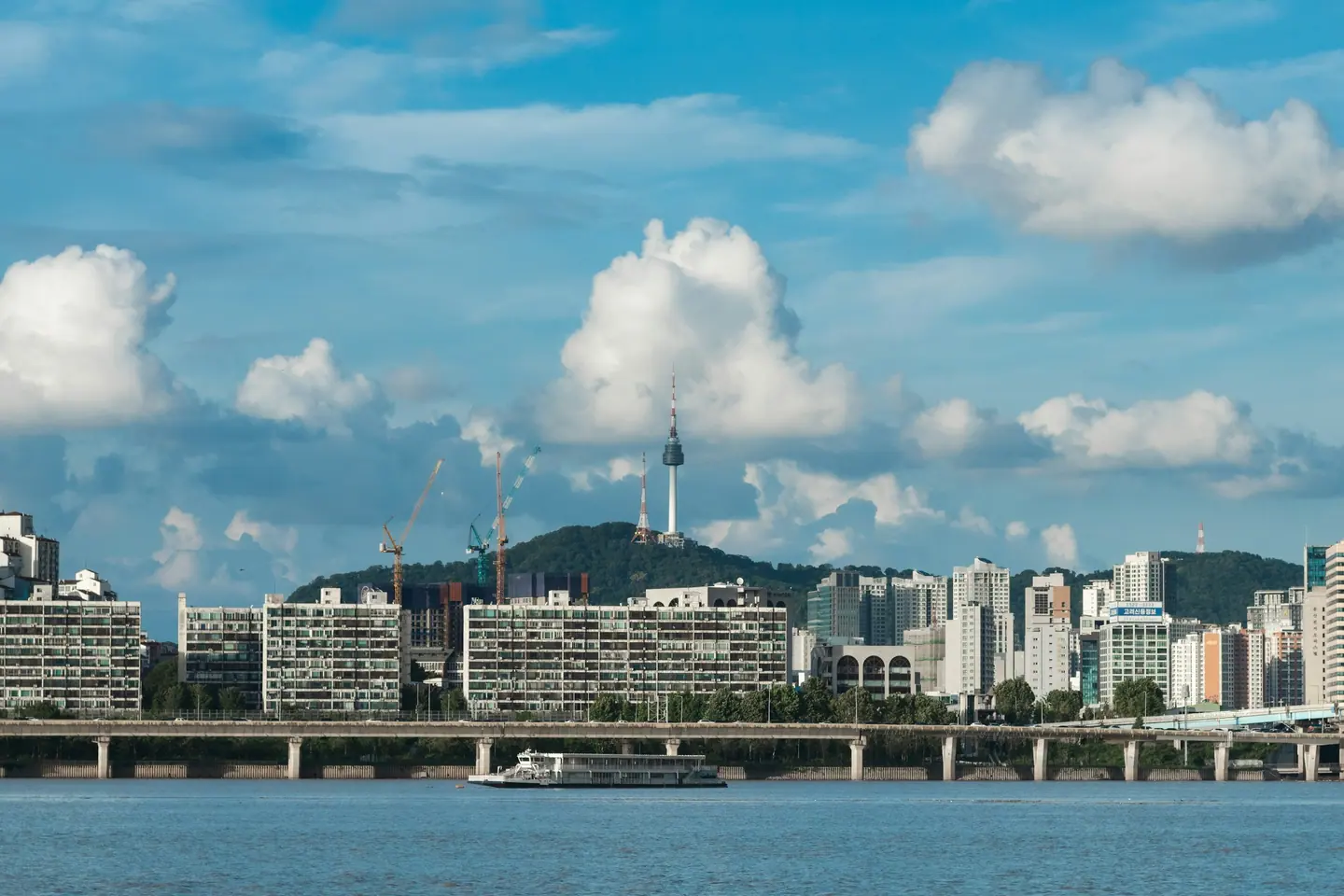
N Seoul Tower
Erected in 1969 as Korea's first general radio transmission tower, this 236-metre spire rises from the highest point of Mount Namsan. Observation decks afford 360-degree vistas across the entire metropolitan region and the winding course of the Han River. At night, computerised exterior lighting illuminates the shaft in colour-coded hues indicating current regional air-quality levels.
Namsan Fortress Wall
This section of the historic Hanyangdoseong was built under King Taejo in 1396 to safeguard the dynastic capital along its southern perimeter. The wall displays distinct construction techniques, from crude rounded boulders of the early Joseon period to finely squared granite blocks fitted during King Sukjong's reign. Well-maintained walking trails follow the undulating stone ramparts as they descend toward Hoehyeon.
Namdaemun, Seoullo 7017, National Museum of Korea, Hongdae & Han River
Combine Sungnyemun (Namdaemun Gate) and Market with the National Museum of Korea in Yongsan, War Memorial, Hongdae and the Han River parks.
Sungnyemun Gate
Originally built in 1398, this monumental stone and timber portal served as the southern gate of the capital fortress. Following a devastating arson attack in 2008, craftsmen restored the two-storey wooden pavilion using traditional Joseon carpentry techniques. Visitors can admire the granite base and the grand arched passageway guarded by ceremonial sentries.
Namdaemun Market
Dating back to 1414, this historic commercial hub spans several city blocks near the fortress wall. It houses thousands of independent stalls trading fabrics, ceramics, cookware, and regional foods. The maze of narrow lanes offers travellers a direct look at Seoul's commercial trading heritage.
Seoullo 7017
Constructed in 1970 as a traffic flyover, this elevated concrete viaduct was decommissioned and reopened in 2017 as a pedestrian park. Dutch architects landscaped the structure with hundreds of plant species native to the Korean Peninsula. Walking along the walkway provides sweeping vantage points over Seoul Station and the surrounding skyline.
Culture Station Seoul 284
Completed in 1925, this red-brick terminal reflects Renaissance-revival architecture accented by a central dome and Byzantine flourishes. After modern railway facilities opened nearby, the structure was restored as an exhibition space. Travellers can examine the grand ticket hall, heritage waiting rooms, and ornate stained glass.
Yakhyeon Catholic Church
Consecrated in 1892, this hill-top sanctuary is the oldest Romanesque-Gothic brick church on the Korean Peninsula. Designed by French missionary Father Eugene Coste, the building commemorates Catholic martyrs executed at nearby Seosomun. The simple cruciform interior features pointed arches, stained glass windows, and a quiet memorial park.
Seosomun Shrine History Museum
Built beneath an urban park, this subterranean museum marks the execution ground where dozens of early Korean Catholics were martyred. The minimalist architecture employs monumental red-brick courtyards and skylights that channel natural daylight underground. Inside, historical exhibitions display sacred artefacts alongside thought-provoking contemporary art installations.
Hyochang Park
Originally the burial site of Crown Prince Munhyo, this wooded sanctuary was transformed into a national memorial following the Second World War. It contains the tombs of key figures from the Provisional Government of the Republic of Korea, including Kim Gu. Wooded pathways lead visitors past commemorative pavilions and sculpted monuments.
Kim Koo Museum
Located within Hyochang Park, this museum chronicles the life of Kim Koo and the struggle for Korean self-determination. The galleries display handwritten documents, personal belongings, and historic photographs documenting the Provisional Government in exile. An austere bronze statue of the statesman greets travellers at the main entrance.
War Memorial of Korea
Established in 1994 on the site of former military headquarters, this sprawling complex documents Korea's military history. Six indoor halls exhibit ancient weaponry, artefacts from the Korean War, and modern combat technology. Outside, the perimeter plaza displays preserved tanks, naval vessels, and aircraft from twentieth-century conflicts.
National Museum of Korea
Relocated to Yongsan in 2005, this monumental museum showcases Korean cultural heritage spanning from prehistory through the modern era. The central corridor leads to galleries containing National Treasures such as the Ten-Storey Pagoda of Gyeongcheonsa Temple and gilded Maitreya sculptures. The adjacent outdoor park features reflection pools and relocated historical stonework.
National Hangeul Museum
Opened in 2014, this sleek facility explains the linguistic history and philosophical foundations of Hangeul, commissioned by King Sejong the Great in 1443. Exhibits highlight early typography, historical manuscripts, and the rapid spread of literacy across Korea. Interactive installations demonstrate the scientific arrangement of the phonetic writing system.
Yongsan Family Park
Occupying lands once requisitioned by the Japanese military and later by United States armed forces, this tranquil park opened in 1992. It incorporates wide lawns, lotus ponds, and paved walking circuits bordered by weeping willows. The grounds also host an open-air sculpture garden featuring works by notable modern artists.
Ichon Hangang Park
Situated along the northern bank of the Han River, this park offers riverside promenades and restored wetland habitats. Concrete embankments have been naturalised with native reeds and aquatic flora, providing sanctuary for migratory waterfowl. Travellers can view large outdoor installations erected during the Hangang Art Park public initiative.
Banpo Bridge Rainbow Fountain
Spanning the Han River between Yongsan and Seocho, this double-decker crossing incorporates the Moonlight Rainbow Fountain along its flanks. Nearly four hundred water nozzles pump river water outward in choreographed displays illuminated by coloured lights. The lower level, Jamsu Bridge, provides dedicated pedestrian and bicycle lanes close to the water.
Some Sevit
Anchored near the southern footing of Banpo Bridge, this complex consists of three connected artificial islands designed to rise and fall with the river's water level. Built in 2011, the structures house art galleries, event spaces, and restaurants wrapped in metallic, curved facades. Illuminated exterior glass panels glow across the river waters at night.
63 Building
Completed in 1985 in preparation for the 1988 Summer Olympics, this golden-glass skyscraper was briefly the tallest building outside North America. The glazed exterior uses double-reflective glass coated in real gold to reflect sky and river light. An observation gallery on the sixtieth floor provides clear panoramas across Seoul and the Han basin.
Yeouido Hangang Park
Covering the waterfront of Seoul's central financial district, this park is one of the most frequented leisure grounds in the metropolis. It features wide cycling circuits, water-skating pools, and performance stages set against views of Mapo across the water. Each spring, the adjacent boulevard forms the centrepiece of the national cherry blossom celebrations.
Mapo Bridge
Opened in 1970 as Seoul expanded south across the Han River, this heavy concrete and steel bridge connects Mapo District to the financial district of Yeouido. The wide pedestrian walkways flanking the traffic lanes feature commemorative telephone stations and uplifting public art installations. Walking across the span affords sweeping views of river traffic and sunset horizons.
Jeoldusan Martyrs' Shrine
Occupying a dramatic promontory over the Han River, this headland earned its name, meaning 'beheading mountain', during the Byeongin persecutions of 1866. A brutalist chapel, memorial museum, and outdoor sculpture trail now stand on the clifftop. The memorial museum preserves historic court records and relics from early Christian converts.
Hongdae Street
Evolving around the prestigious fine arts faculty of Hongik University, this district has long served as Seoul's creative capital. Paved pedestrian walks, graffiti-painted murals, and open-air performance circles define the street plan. Travellers regularly gather here to watch buskers, independent musicians, and dancers perform original material in public spaces.
Combining Jongno with the Rest of Seoul
You can combine these stops with the district-by-district where-to-stay notes and seasonal planning tables on our Seoul destination page, or explore further regional and neighbourhood guides.