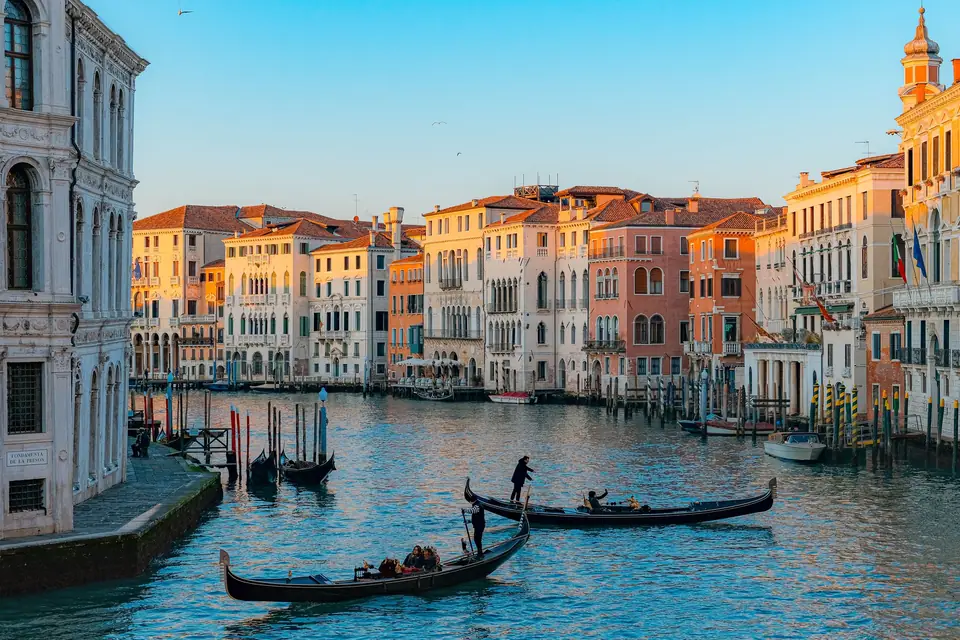
All 100 essential sights across San Marco, San Polo, Rialto, Dorsoduro, Cannaregio, Castello and the Venetian Lagoon islands mapped in walking order.
From Marshland Refuge to the Most Serene Maritime Republic
Venice originated in the fifth and sixth centuries AD when inhabitants of Roman Venetia fled mainland invasions onto the mudflats and sandbars of the Venetian Lagoon, driving millions of rot-resistant alder and larch timber piles deep into the compacted clay to support brick and Istrian-stone foundations. By the eleventh century, La Serenissima (the Most Serene Republic of Venice) commanded trade routes connecting Constantinople, Alexandria and the Silk Road to western Europe, governed by an elected Doge and Great Council from the Gothic palace beside St Mark Basilica.
Across more than a millennium of independence (697 to 1797), Venetian merchant wealth funded six historic sestieri (districts) laced by 150 canals and 400 footbridges, state shipyards at the Arsenale capable of fitting out a warship in a single day, and the Renaissance and Baroque ateliers of Bellini, Titian, Tintoretto, Veronese, Palladio, Canaletto and Vivaldi.
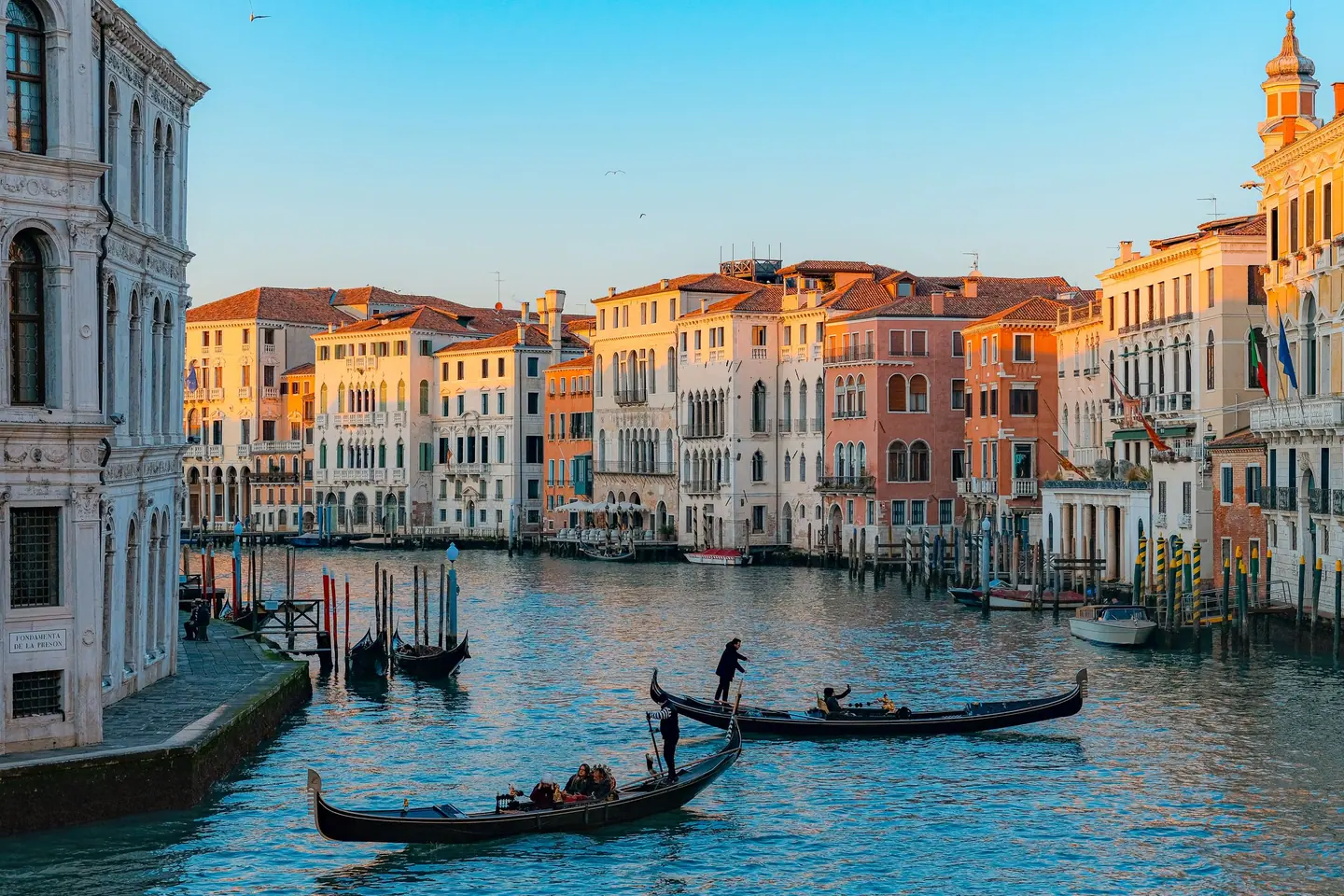
Piazza San Marco, Doge Palace & Riva degli Schiavoni
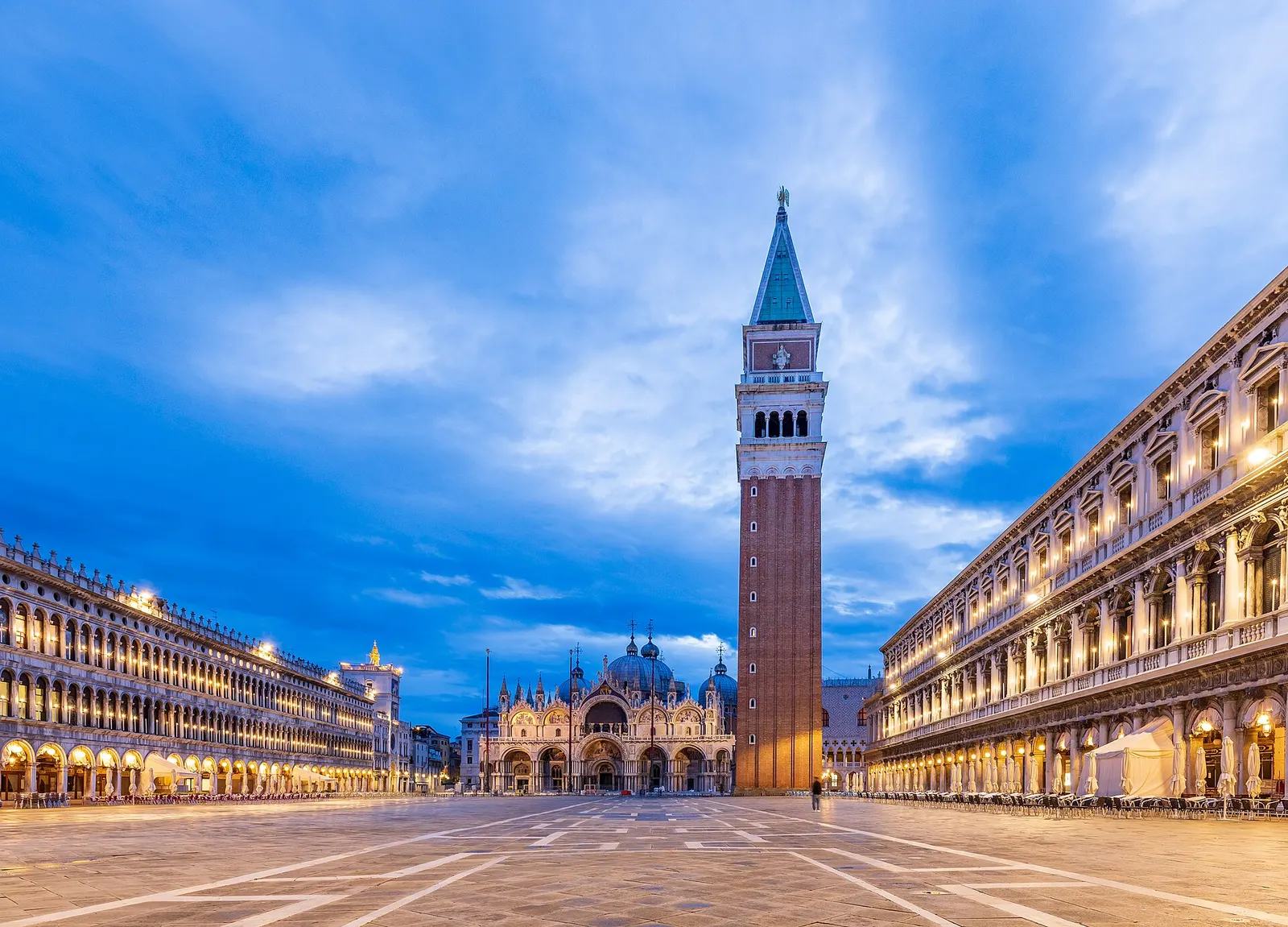
Begin in the ceremonial drawing room of Piazza San Marco with St Mark Basilica, the Campanile, Doge Palace, Bridge of Sighs and the lagoon promenade.
Piazza San Marco
Piazza San Marco has served as the political and ceremonial forum of Venice since the ninth century. Trapezoidal in shape, the square is paved in dark trachyte with white marble geometric bands. Napoleon reportedly called it the finest drawing room in Europe, framed by the arcaded Procuratie and the monumental basilica facade.
St Mark's Basilica
Constructed to enshrine the relics of Saint Mark the Evangelist, this Byzantine masterpiece showcases five swelling domes and intricate marble spolia. Inside, over eight thousand square metres of gold ground mosaics narrate biblical chronicles across the vaulted ceilings. Visitors should observe the Pala d'Oro, an exceptional medieval goldsmith altarpiece studded with thousands of precious gems.
St Mark's Campanile
Standing nearly ninety-nine metres tall, the campanile was rebuilt in 1912 following its sudden collapse a decade earlier. The original foundation dates to the tenth century, functioning historically as a lighthouse for mariners entering the lagoon. From the belfry loggia, five historic bells still ring out across the terracotta roofs towards San Giorgio Maggiore.
Torre dell'Orologio
Erected in the late fifteenth century, this early Renaissance clock tower displays the time, lunar phases, and zodiac movements to seafaring merchants. Above the lapis lazuli and gold dial sits a sculptural Madonna, crowned by two bronze figures known locally as the Moors. These bronze automatons strike the immense bell every hour on the open terrace.
Procuratie Vecchie
Architect Mauro Codussi initiated this three-storey classical arcade to accommodate the procurators of Saint Mark, Venice's second-highest civic magistrates. Completed by Jacopo Sansovino in 1532, the facade features fifty identical round arches topped by two tiers of loggias. The colonnade sheltered prominent merchants, while modern restoration has made the upper galleries accessible for cultural exhibitions.
Procuratie Nuove
Designed by Vincenzo Scamozzi and completed by Baldassarre Longhena, the Procuratie Nuove mirrored the northern arcade with richer classical embellishments. Later converted into a royal palace for Eugène de Beauharnais, the structure now houses the Correr Museum collections. The ground-floor colonnade accommodates historic gathering spots, including Caffe Florian, which has traded beneath these arches since 1720.
Museo Correr
Occupying the Napoleonic Wing that bridges the two Procuratie, this museum presents art and artefacts illustrating Venetian civic life. Rooms decorated in neoclassical style display historical maps, dogal vestments, ancient coins, and naval models. The picture gallery features significant Renaissance canvases, including works by Antonello da Messina, Vittore Carpaccio, and the Bellini family.
Piazzetta San Marco
This open ceremonial space connects Piazza San Marco to the waters of the Bacino di San Marco. Bounded by the Doge's Palace and the Biblioteca Marciana, it historically hosted state arrivals and public announcements. Twin monolithic columns of granite rise near the water edge, crowned by the winged Lion of Venice and Saint Theodore spearing a crocodile.
Biblioteca Marciana
Masterminded by Jacopo Sansovino, this building stands as one of the finest Renaissance achievements in northern Italy, showcasing Doric and Ionic orders topped by classical statues. Established to house Cardinal Bessarion's extensive gift of classical Greek and Latin manuscripts, the interior contains a monumental staircase and lavish reading room. Murals by Titian, Tintoretto, and Veronese decorate its ceiling panels.
Zecca
Positioned beside the library, this heavily rusticated stone edifice was constructed by Jacopo Sansovino to safeguard the Republic's coin production. Heavy rustication was deliberately chosen to symbolise impregnable civic security and resist intense forge fires. Within these halls, artisans minted the renowned Venetian gold ducat, known as the zecchino, which circulated as reliable currency across the Mediterranean.
Doge's Palace
The Doge's Palace presents a celebrated blend of Venetian Gothic architecture, featuring delicate open arcades supporting an airy upper floor of patterned pink and white marble. It served simultaneously as the Doge's private residence, the seat of the Senate, and the court of justice. Inside, the massive Sala del Maggior Consiglio displays Tintoretto's Il Paradiso above the ducal throne.
Porta della Carta
Carved by Giovanni and Bartolomeo Bon in the 1440s, this ornate marble doorway serves as the state entrance linking the basilica to the palace courtyard. Its name derives from government scribes who set up desks nearby or from decrees formally posted on the stone jambs. Above the portal, Doge Francesco Foscari kneels reverently before the winged Lion of Venice.
Scala dei Giganti
Antonio Rizzo designed this white Carrara marble staircase in the late fifteenth century for dogal coronation ceremonies. Two towering statues carved by Jacopo Sansovino, representing Neptune and Mars, flank the top of the steps, symbolising Venetian mastery over sea and land. Newly elected doges stood at the landing to take their solemn oaths and receive the camauro cap.
Bridge of Sighs
Constructed in 1600 by Antonio Contino, this enclosed limestone bridge spans the canal between the interrogation rooms of the Doge's Palace and the Prigioni Nuove. The bridge features fine stone bar screens over its small openings, which afforded prisoners their final view of the lagoon before incarceration. Its poetic name was popularised in the nineteenth century by Lord Byron.
Prigioni Nuove
Built to replace cramped cells within the palace roof and basement, the New Prisons represented an early effort towards purpose-built, secure penal architecture. The heavy Istrian stone facade faces the waterfront with thick barred windows and severe rustication. Cells inside were lined with thick wooden planks to insulate inmates against damp conditions rising from the tidal canals.
Molo di San Marco
The Molo served as the primary landing quay for foreign ambassadors, state galleys, and returning naval fleets arriving in the Venetian capital. Lined with traditional wooden mooring posts, it remains the principal boarding point for gondolas crossing to neighbouring islands. Travellers walking along this wide stone embankment gain open vistas across the Bacino towards the island of San Giorgio Maggiore.
Ponte della Paglia
Spanning the mouth of the Rio di Palazzo where it meets the lagoon, this Istrian limestone bridge was first raised in 1360 and widened in the nineteenth century. Its name recalls the historic trade in straw boats, which were permitted to dock beneath its span. Today, visitors congregate along its stone balustrade to photograph the Bridge of Sighs.
Riva degli Schiavoni
Named after the Slavic merchants from Dalmatia who berthed merchant ships here during the Middle Ages, this promenade forms Venice's most celebrated waterfront walk. Paved in stone during the fourteenth century, the broad quayside is lined with historic hotels, coffee houses, and boat moorings. Literary travellers, including Charles Dickens and Henry James, frequently lodged in the grand palazzi facing the waters.
Monumento a Vittorio Emanuele II
Unveiled in 1887 to mark the tenth anniversary of the monarch's death, this massive bronze monument by Ettore Ferrari portrays King Victor Emmanuel II on horseback. The pink granite pedestal incorporates allegorical female figures representing Venice liberated from Austrian rule, alongside lions defending public shields. Positioned prominently along the Riva, it serves as a central orientation point for maritime traffic.
Santa Maria della Pieta
Rebuilt by Giorgio Massari between 1745 and 1760, this waterfront church was attached to an orphanage where young female musicians received rigorous musical instruction. Antonio Vivaldi served here as violin master and house composer, penning numerous concertos specifically designed for the building's superb acoustic qualities. The interior oval hall contains a ceiling fresco of the Coronation of the Virgin by Giovanni Battista Tiepolo.
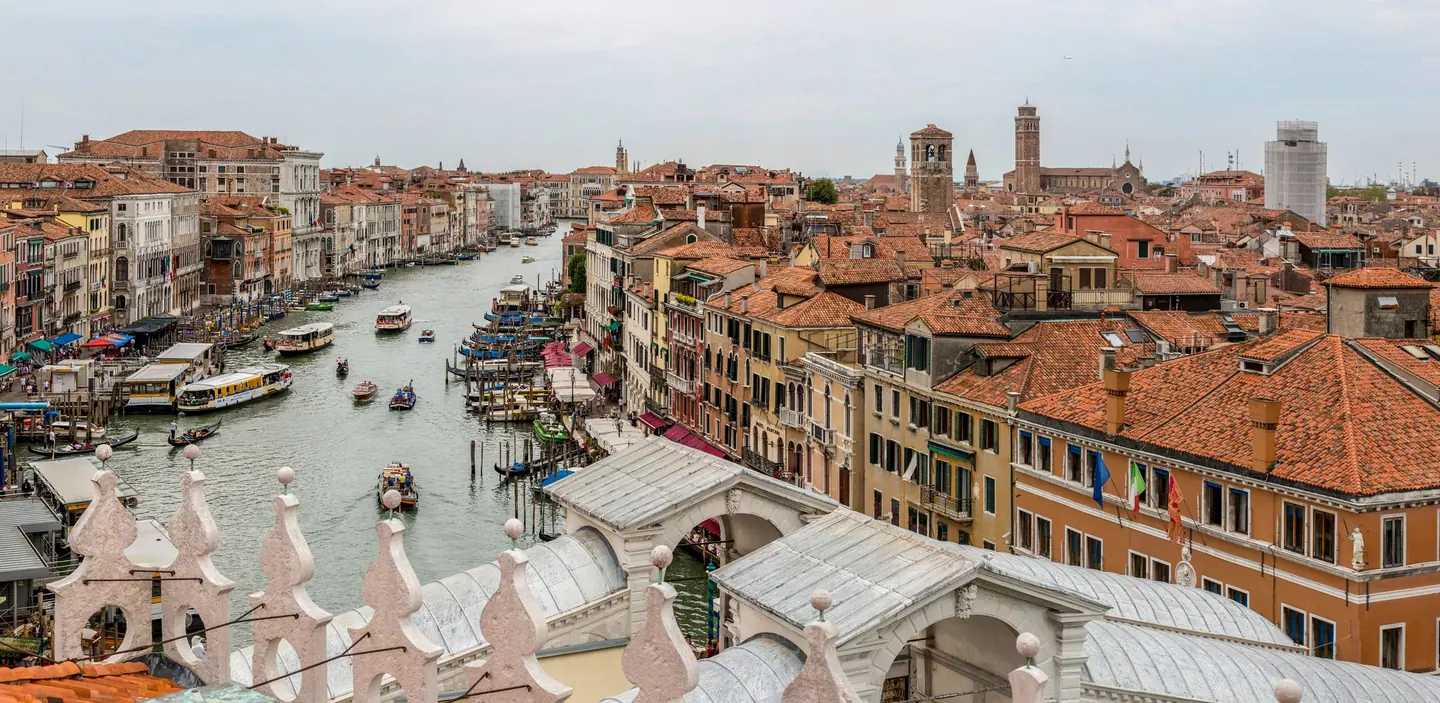
San Marco Lanes, La Fenice, Accademia Bridge & Peggy Guggenheim
Thread through Campo Santo Stefano and Teatro La Fenice across the wooden Accademia Bridge to the Gallerie dell Accademia, Peggy Guggenheim Collection and Santa Maria della Salute.
Teatro La Fenice
Named after the mythical phoenix, this neoclassical opera house first opened in 1792. It staged world premieres for Rossini, Bellini, Donizetti, and Verdi before catastrophic fires in 1836 and 1996 necessitated meticulous reconstructions. We can admire the opulent five-tier auditorium, decorated with delicate gilt woodwork and plush velvet seating.
Palazzo Contarini del Bovolo
Constructed in the late fifteenth century, this residence blends Venetian Gothic with early Renaissance motifs. Its chief attraction is the striking cylindrical staircase tower, known locally as the bovolo or snail shell, designed by Giovanni Candi. Visitors ascending the open-arched brick loggias gain panoramic perspectives over nearby domestic rooftops.
Campo San Fantin
This paved square serves as the forecourt to Teatro La Fenice, the Renaissance church of San Fantin, and the historic Ateneo Veneto. Once a gathering ground for theatre patrons, the space preserves a dignified civic atmosphere. Notice the sixteenth-century stone facades framing the square, offering a tranquil pause away from primary thoroughfares.
Ateneo Veneto
Founded in 1812 inside the sixteenth-century Scuola Grande di San Fantin, this institution was established to promote science, literature, and the arts. The building historically comforted prisoners condemned to death. Today, visitors can examine the solemn hall adorned with mannerist canvases by Palma the Younger depicting scenes of human suffering and redemption.
Chiesa di San Fantin
Rebuilt in the sixteenth century by architects Antonio Abbondi and Jacopo Sansovino, this church presents an austere classical exterior. The interior contains a distinctive vaulted chancel designed by Cesare Franco, alongside distinguished tombs of Venetian magistrates. Look closely at the refined Istrian stone carvings embellishing the altars and arched chapels.
Campo Sant'Anzolo
Situated between San Marco and Santo Stefano, this broad square takes its name from the Church of Sant'Angelo, which was demolished in the early nineteenth century. Historic palazzi, including the Gothic Palazzo Duodo where composer Domenico Cimarosa died, ring the perimeter. We can inspect two preserved stone wellheads standing in the square centre.
Oratorio dell'Annunziata
Founded in the fourteenth century and restored in later centuries, this diminutive religious house borders Campo Sant'Anzolo. It historically served the Scuola dei Zoti, a guild providing mutual aid to lame or disabled citizens. The understated facade features a carved stone relief of the Annunciation above its classical entrance portal.
Campo Manin
This open space was redeveloped in the late nineteenth century and renamed in honour of Daniele Manin, leader of the 1848 Venetian Republic of San Marco. A prominent bronze statue of the statesman stands at the centre, sculpted by Luigi Borro. Modern bank buildings contrast sharply with neighboring historical fabric here.
Campo Santo Stefano
One of Venice's grandest public squares, Campo Santo Stefano served for centuries as a venue for festivals, spectacles, and bull races until 1802. Notable palazzi surrounding the space include Palazzo Loredan and Palazzo Morosini. A central nineteenth-century marble statue commemorates scholar Niccolò Tommaseo, situated steps from outdoor cafe terraces.
Chiesa di Santo Stefano
Built by the Hermits of Saint Augustine in the fourteenth century, this church displays an elaborate Gothic portal attributed to Bartolomeo Bon. Inside, visitors encounter an extraordinary ship's keel roof constructed by Venetian naval carpenters. The sanctuary houses major works by Tintoretto, including The Last Supper and The Agony in the Garden.
Palazzo Loredan in Campo Santo Stefano
Acquired by the wealthy Loredan family in 1536, this residence was comprehensively rebuilt in the classical style by architect Antonio Abbondi. It currently accommodates the Istituto Veneto di Scienze, Lettere ed Arti. The interior preserves the Pantheon Veneto, a collection of marble busts celebrating illustrious historical figures of the Venetian Republic.
Chiesa di San Vidal
Originally founded in the eleventh century by Doge Vitale Falier, the current structure dates from an eighteenth-century reconstruction designed by Antonio Gaspari. Its classical stone facade honours dogal commander Carlo Contarini. The deconsecrated nave now serves as a concert hall, preserving an altar painting of Saint Vitale on horseback by Vittore Carpaccio.
Ponte dell'Accademia
Erected in 1933 as a temporary replacement for an unpopular nineteenth-century Austrian iron bridge, this timber span remains one of only four crossings over the Grand Canal. It links San Marco to Dorsoduro. Pedestrians crossing its rising wooden steps enjoy sweeping, elevated perspectives looking towards the dome of Santa Maria della Salute.
Gallerie dell'Accademia
Housed within the former complex of the Scuola Grande di Santa Maria della Carità, this national museum displays a comprehensive survey of Venetian painting from the fourteenth to eighteenth centuries. Masterpieces include works by Bellini, Giorgione, Titian, and Veronese. It also holds Leonardo da Vinci's Vitruvian Man, exhibited only on rare occasions.
Scuola Grande di Santa Maria della Carità
Established in 1260, this was the oldest of the six major charitable confraternities in Venice. The complex incorporates a Gothic hall, a monastery designed in part by Andrea Palladio, and an eighteenth-century classical facade by Bernardino Maccaruzzi. Its gilded wooden ceiling remains a defining decorative feature of the primary gallery spaces.
Palazzo Venier dei Leoni
Commissioned in 1748 by the noble Venier family and designed by Lorenzo Boschetti, this residence never advanced beyond the ground storey. American heiress Peggy Guggenheim purchased the property in 1949 and made it her permanent home. Its stark Istrian stone facade contrasts sharply with the tall Gothic palazzi flanking the canal.
Peggy Guggenheim Collection
Located inside Palazzo Venier dei Leoni, this institution holds one of Europe's foremost collections of early twentieth-century art. Exhibited works represent major figures including Picasso, Kandinsky, Pollock, and Magritte. Visitors can tour the private sculpture garden, where Peggy Guggenheim and several of her pet Lhasa Apsos lie buried.
Palazzo Barbarigo
Dating originally from the sixteenth century, this palace was heavily modified in the late nineteenth century by the Testolini glass company. Its upper Grand Canal facade was entirely covered with historic glass mosaics depicting historical scenes, including Doge Agostino Barbarigo. This unique exterior decoration distinguishes the building from neighboring Renaissance palazzi.
Palazzo Dario
Built in the late fifteenth century for civil servant Giovanni Dario, this residence presents an early Renaissance facade attributed to Pietro Lombardo. The waterfront wall is adorned with multicolored circular discs of porphyry and marble. A slight structural tilt towards the canal and local legends of misfortune have earned it regional notoriety.
Santa Maria della Salute
Erected as a votive offering following the devastating plague of 1630, this baroque basilica was designed by Baldassare Longhena and completed in 1687. Its octagonal design supports two large domes and theatrical exterior buttresses shaped like giant scrolls. Inside, the sacristy contains major canvases by Titian, including The Descent of the Holy Spirit.
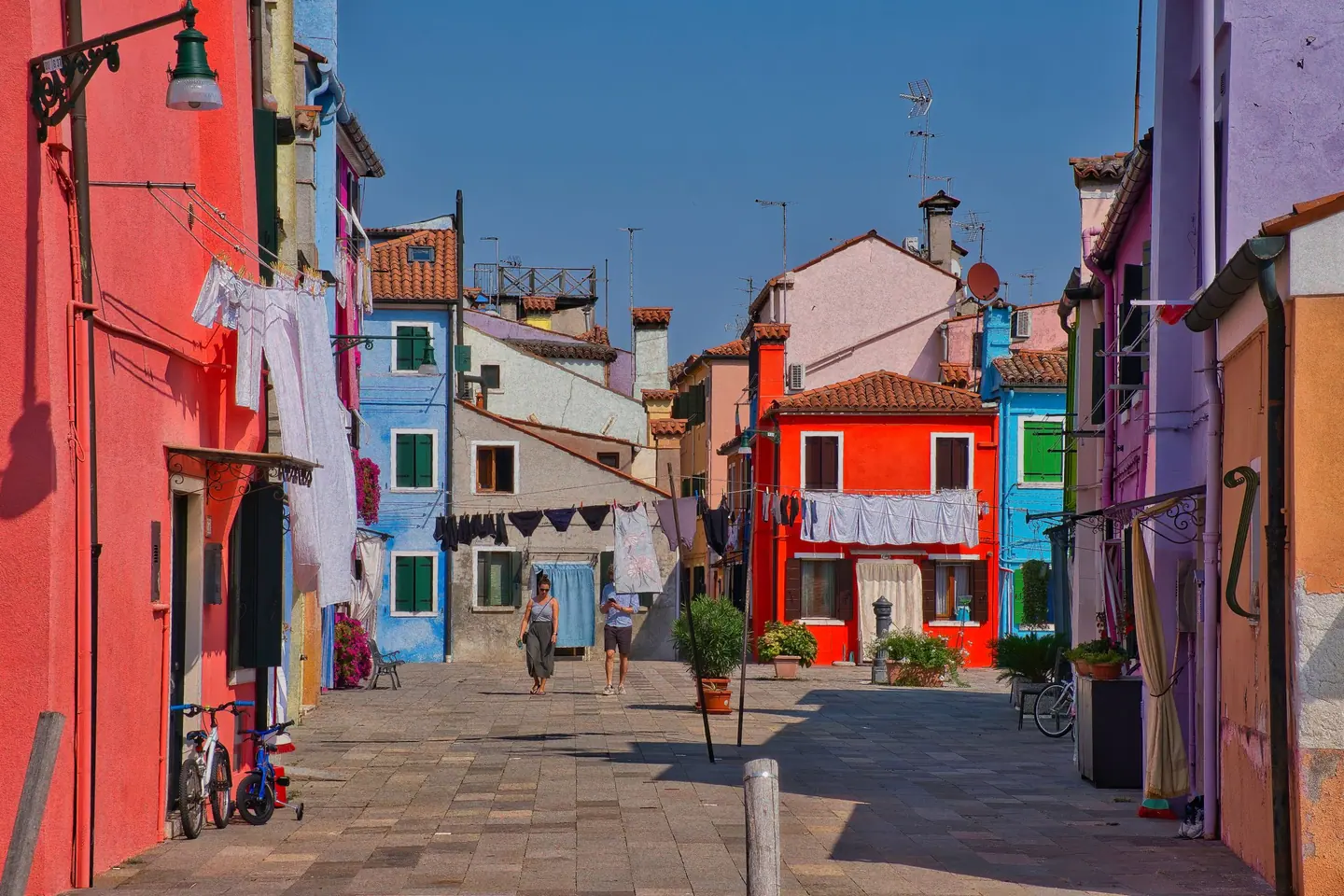
Rialto Bridge, Grand Canal Palaces, San Polo & Frari Basilica
Cross the Rialto Bridge into the ancient Rialto food markets, San Giacomo di Rialto, the Titian masterpieces of the Frari Basilica and Tintoretto cycles at Scuola Grande di San Rocco.
Rialto Bridge
Designed by Antonio da Ponte and completed in 1591, this stone bridge replaced earlier wooden crossings that repeatedly collapsed. Its single arch supports two inclined ramps flanked by arcaded shops. We can pause at the central balustrade to observe passing gondolas and traditional water taxis.
Chiesa di San Giacomo di Rialto
Traditionally founded in the fifth century, this modest church features a distinctive exterior portico and a large fifteenth-century clock dial. Venetian merchants conducted trade beneath its arches, governed by strict municipal weights and measures. Inside, ancient marble columns support a compact Greek cross layout.
Gobbo di Rialto
Sculpted by Pietro da Salò in the sixteenth century, this stone hunchback figure bears a flight of steps leading to a podium. Town criers read official decrees and lists of debtors from this elevated block. Satirical political verses were often attached to its base by local citizens.
Campo San Giacomo di Rialto
This paved space served as the financial core of maritime Venice, surrounded by offices for international bankers and currency exchangers. An inscribed stone tablet on the church exterior still instructs merchants to conduct their business honestly. Shaded arcades continue to define the square perimeter.
Rialto Fish Market
Known locally as the Pescheria, this covered market hall was constructed in 1907 by Domenico Rupolo in a Neo-Gothic style. Pointed red arches open towards the Grand Canal, where wholesale fishing vessels historically unloaded their catch. Elaborate carved capitals depict diverse marine creatures beneath the roofline.
Fabbriche Nuove di Rialto
Commissioned in 1555 and completed by Jacopo Sansovino, this classical structure curved along the canal to house city trade magistrates. Its rhythmic ground floor portico accommodated commercial stalls beneath austere upper levels. Today, the complex serves as regional civil court chambers.
Fabbriche Vecchie di Rialto
Built by Antonio Abbondi following a catastrophic fire in 1514, this arcade provided offices for customs officials and commercial monitors. The long facade faces Campo Cesare Battisti, exhibiting uniform classical proportions typical of High Renaissance public works. The ground floor remains dedicated to vegetable and fruit purveyors.
Chiesa di San Giovanni Elemosinario
Rebuilt by Scarpagnino in 1527 after the Great Rialto Fire, this church stands hemmed in by residential tenements and marketplace alleys. Inside, an altarpiece by Titian depicts Saint John the Almsgiver, accompanied by significant works by Pordenone. Its Greek cross floor plan remains exceptionally intact.
Campo San Cassiano
This expansive campo was the site of the Teatro San Cassiano, the world first public opera house opened in 1637. Paved with grey masegni flagstones, the square provides access to several canal bridges and traditional taverns. It offers a tranquil contrast to the crowded market paths nearby.
Chiesa di San Cassiano
While the exterior exhibits a plain brick facade from a seventeenth-century renovation, the interior contains remarkable Renaissance art. Tintoretto painted the primary presbytery works, including The Crucifixion and The Resurrection. A thirteenth-century detached bell tower stands across the canal.
Campo San Polo
Once unpaved and used for agriculture and bull-baiting spectacles, this vast open space was entirely paved in 1493. Prominent Venetian families built substantial palaces around its borders over five centuries. Today, local children play games across the open stones where civic ceremonies once gathered.
Chiesa di San Polo
Dating from the ninth century with fifteenth-century Gothic reconstructions, this church features an elaborate south portal attributed to Bartolomeo Bon. Inside, an unusual ship-keel timber ceiling shelters Giambattista Tiepolo painting of the Way of the Cross. Tintoretto provided an imposing depiction of the Last Supper.
Palazzo Soranzo
Fronting Campo San Polo, this compound comprises two adjacent residences constructed between the fourteenth and fifteenth centuries. Their facades feature fine polyphora windows with delicate traceries characteristic of Venetian Gothic domestic architecture. Giorgione executed external frescoes here, though only archival descriptions survive.
Palazzo Corner Mocenigo
Commissioned by the Corner family in the mid-sixteenth century, this imposing residence demonstrates mainland Renaissance military styling adapted for water-logged Venice. The robust rusticated base supports two classical piani nobili with bold pedimented windows. Today it serves as the regional headquarters for the Italian financial police.
Palazzo Tiepolo Passi
Constructed in the early sixteenth century on the foundations of an older Gothic dwelling, this palace preserves classical balanced proportions. Two grand floors display stone balconies and paired central arches overlooking water traffic. Andrea Meldolla painted external decorations here that faded during the nineteenth century.
Palazzo Bernardo
Erected by the Bernardo merchant dynasty around 1442, this building illustrates late Venetian Gothic domestic grandeur. The waterfront facade features two superimposed six-light mullioned openings crowned with carved trefoil arches. Francesco Sforza stayed here during his official diplomatic visits to the Venetian Republic.
Santa Maria Gloriosa dei Frari
Completed in the fifteenth century by Franciscan friars, this massive brick church represents Italian Gothic architecture at an immense scale. Inside stands Titian celebrated Assumption over the high altar, alongside his Pesaro Madonna. The interior also shelters monumental marble tombs for sculptor Antonio Canova and Titian.
Scuola Grande di San Rocco
Founded to aid citizens during repeated outbreaks of plague, this lay confraternity erected its white marble Renaissance seat between 1515 and 1560. Jacopo Tintoretto spent more than two decades painting the interior walls and ceilings with biblical cycles. Mirrors help visitors examine the vast ceiling compositions without strain.
Chiesa di San Rocco
Positioned beside the Scuola Grande, this church was built between 1489 and 1508 by Bartolomeo Bon the Younger before receiving an eighteenth-century facade. It was dedicated to Saint Roch, protector against pestilence, whose relics rest within a consecrated side chapel. Several large canvases by Tintoretto adorn the chancel.
Scuola Grande di San Giovanni Evangelista
Established in 1261, this confraternity complex is approached through a carved marble screen by Pietro Lombardo enclosing a quiet courtyard. Inside, Mauro Codussi constructed a Renaissance double-ramped ceremonial staircase leading up to the grand assembly hall. The confraternity historically preserved an important fragment of the True Cross.
Santa Croce, Ca Pesaro, Cannaregio & Venetian Ghetto
Walk north through Santa Croce and the quiet canals of Cannaregio to the historic 1516 Venetian Ghetto, Madonna dell Orto and Ca d Oro on the Grand Canal.
San Giacomo dall'Orio
Founded in the ninth century and reconstructed in 1225, this church anchors one of the most traditional parish squares in Santa Croce. Inside, we observe a fourteenth-century timber ceiling shaped like a ship's hull alongside an ancient green marble column brought from the Levant. The walls display canvases by Lorenzo Lotto and Paolo Veronese.
Palazzo Mocenigo
This grand seventeenth-century residence once housed seven Doges of the illustrious Mocenigo family before opening as a civic museum. Visitors walk through frescoed reception rooms decorated with original period furnishings, stuccoes, and portraits. The permanent exhibitions document the evolution of Venetian fashion and the historic local trade in precious perfumes and spices.
San Stae
Commissioned by Doge Alvise Mocenigo II in 1709, this church presents an expressive Baroque facade directly onto the Grand Canal waters. The interior functions as an important gallery of eighteenth-century Venetian art, containing works by Giambattista Tiepolo, Sebastiano Ricci, and Giovanni Battista Piazzetta. Mocenigo's tomb rests under a simple stone slab in the central nave floor.
Ca' Pesaro
Designed by Baldassare Longhena in the mid-seventeenth century and completed by Antonio Gaspari, this marble palace exemplifies Venetian high Baroque architecture. Today it houses the International Gallery of Modern Art alongside the Museum of Oriental Art on the upper floor. The rooms feature sculptures by Auguste Rodin alongside paintings by Gustav Klimt and Marc Chagall.
Museo di Storia Naturale di Venezia
Originally constructed in the early thirteenth century as the Fontego dei Turchi, this riverfront palace served for centuries as a trading depot for Ottoman merchants. Restored heavily in the nineteenth century, it displays historic Venetian-Byzantine arcades on the water. The galleries contain ancient fossils, zoological specimens, and prehistoric dinosaur skeletons collected on scientific expeditions.
San Zan Degolà
Dedicated to the beheaded Saint John the Baptist, this modest church retains a simple Romanesque layout from its eleventh-century rebuilding. Supported by antique Greek marble columns with Byzantine capitals, the interior features fragments of frescoes painted between the eleventh and thirteenth centuries. The building now serves the local Russian Orthodox community for their liturgical services.
San Simeon Piccolo
Erected by architect Giovanni Scalfarotto between 1718 and 1738, this church is famous for its massive copper dome rising above the Grand Canal opposite the railway station. A classical temple portico welcomes visitors into a circular rotunda illuminated from above. Beneath the floor lies a vaulted brick crypt painted with eighteenth-century scenes of the afterlife.
Ponte delle Guglie
Rebuilt in 1580 in Istrian stone, this bridge takes its name from the carved obelisks standing on each corner of the arch. Spanning the wide Cannaregio Canal, it marks the historic northern entrance for boats arriving from mainland Venice. Travellers admire stone masks beneath the railings and balustrades guarding the approach into the surrounding parish.
Campo del Ghetto Novo
Established by decree of the Venetian Senate in 1516, this large square served as the focal point of the Jewish quarter for centuries. Because outward expansion was strictly prohibited, residents built upward, creating unusually tall residential blocks rarely seen across the city. Modern bronze relief panels by Arbit Blatas on the brick walls commemorate Holocaust victims.
Scuola Grande Tedesca
Concealed within a regular domestic facade to comply with Venetian building restrictions, this synagogue was founded by Ashkenazi merchants in 1528. The interior features an elliptical women's gallery, gilded Hebrew inscriptions, and classical decorative moulding. Visitors note the five large arched windows looking down upon the main open space of the historic Ghetto square.
Scuola Spagnola
Founded by Jews expelled from the Iberian peninsula, this synagogue received a monumental redesign in the 1630s attributed to architect Baldassare Longhena. It features an imposing wooden bimah opposite an ornate carved Torah ark adorned with columns of black and white marble. Elaborate wood carvings, heavy brass chandeliers, and an elevated gallery complete the interior decoration.
Scuola Levantina
Constructed in the mid-sixteenth century and restored in the late seventeenth century, this synagogue served Jewish merchants arriving from Ottoman territories. The upper prayer hall houses a high raised pulpit crafted by woodcarver Andrea Brustolon, decorated with Solomon-style twisted columns. Exterior walls show decorative stone mouldings and traditional leaded glass windows facing the narrow Campiello delle Scuole.
Palazzo Mastelli del Cammello
This fourteenth-century residence once belonged to the Mastelli brothers, merchants who arrived from the Peloponnese during the twelfth century. The waterfront facade displays a bas-relief depicting a servant leading a laden camel, referencing the family's eastern trade connections. A collection of small Roman, Byzantine, and Gothic sculptural fragments remain embedded in the outer brickwork.
Campo dei Mori
Named after the Mastelli merchant brothers who relocated from the Morea region of Greece, this quiet square features four stone figures embedded into building corners. The most famous is Signor Antonio Rioba, whose missing nose was replaced with an iron substitute in the nineteenth century. The figure long served as a spot for anonymous satirical political poems.
Madonna dell'Orto
Constructed in the fourteenth century by the Umiliati order, this brick church presents a fine Gothic facade with statues of the twelve Apostles. Painter Jacopo Tintoretto was a devout parishioner here and his final resting place lies inside the presbytery chapel. The choir displays his massive canvases representing The Last Judgement and The Making of the Golden Calf.
Sant'Alvise
Commissioned in 1388 by Antonia Venier following a vision of Saint Louis of Toulouse, this church stands on the peaceful northern rim of Venice. The interior is famous for its barco, a rare hanging nuns' choir supported by marble columns and iron grilles. Art enthusiasts visit to examine three dramatic paintings by Giambattista Tiepolo depicting Christ's Passion.
Palazzo Surian Bellotto
Constructed in the seventeenth century by architect Giuseppe Sardi, this imposing residence stands proudly along the Cannaregio Canal. During the eighteenth century it served as the French embassy, where philosopher Jean-Jacques Rousseau lived and worked as an embassy secretary in 1743. Today the building retains decorative Baroque pediments, stone balconies, and symmetrical Venetian windows.
Ponte Chiodo
This isolated brick and Istrian stone bridge is one of only two historic bridges across Venice that never received modern side parapets. Named after the noble Chiodo family who owned the adjacent residence, it spans a small canal within the Cannaregio district. It preserves the authentic pedestrian experience common across medieval Venice before safety barriers were systematically added.
Ca' d'Oro
Built between 1428 and 1430 for patrician Marino Contarini, this palace represents the pinnacle of Venetian Gothic domestic architecture. Its delicate open loggias originally shone with extensive gold leaf, cinnabar, and ultramarine paintwork. Baron Giorgio Franchetti restored the property in the late nineteenth century, bequeathing it to house masterpieces including Andrea Mantegna's Saint Sebastian.
Santa Sofia
Records document a church on this site as early as the ninth century, with a comprehensive rebuild supervised by Antonio da Ponte in the late sixteenth century. Much of its original structure was truncated during nineteenth-century street clearances, leaving the entrance tucked beneath an arcade of ordinary dwellings. Inside, visitors find quiet altarpieces by the Bassano family and eighteenth-century sculptures.
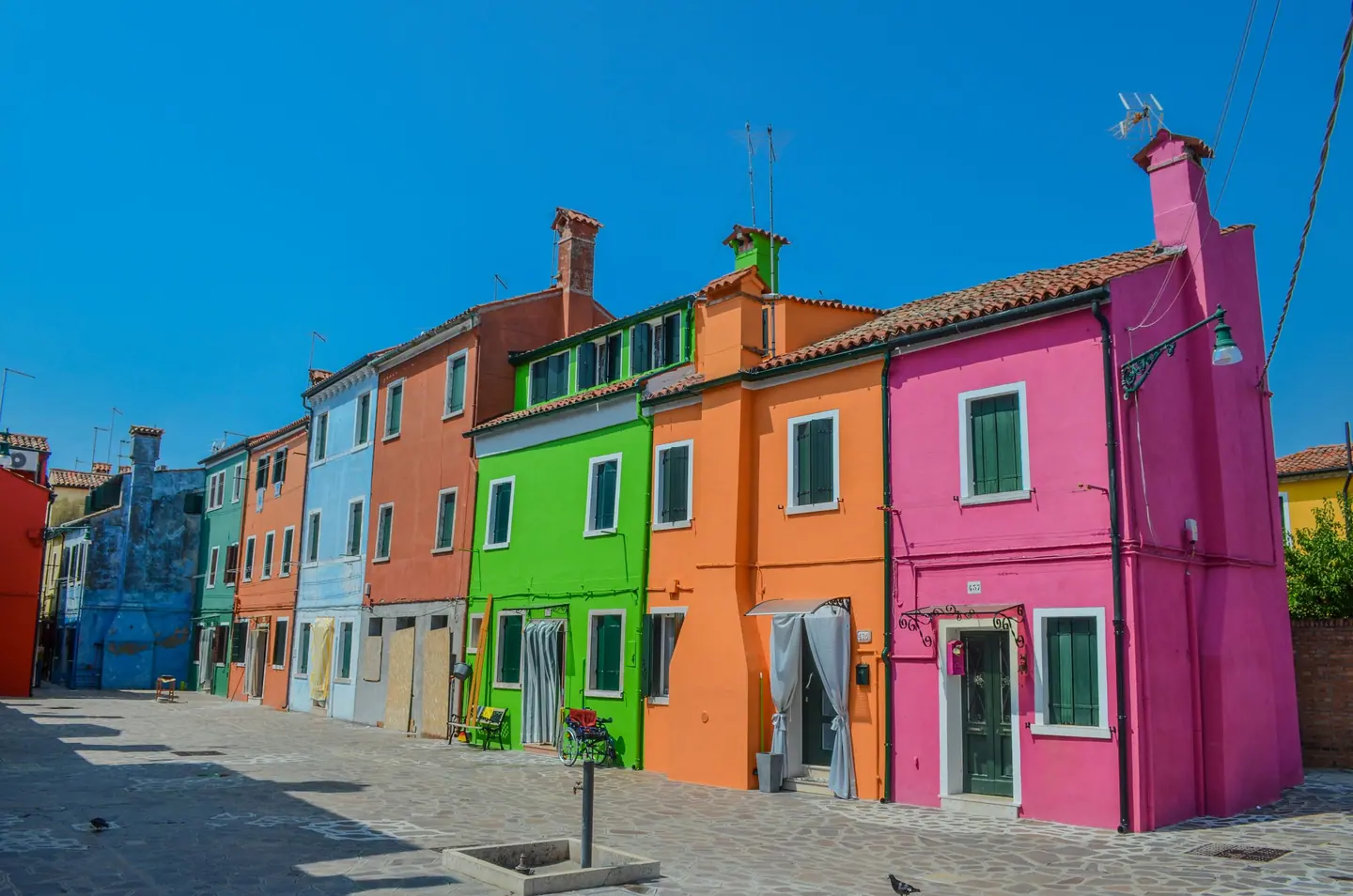
Santi Giovanni e Paolo, Arsenale, San Giorgio Maggiore & Lagoon Islands
Explore Castello from the Doges pantheon at Santi Giovanni e Paolo and the Venetian Arsenale to Palladio San Giorgio Maggiore and the islands of Murano, Burano and Torcello.
Basilica dei Santi Giovanni e Paolo
Known locally as San Zanipolo, this soaring Gothic brick basilica houses the elaborate funerary monuments of twenty-five doges. Completed in the fifteenth century, its cavernous interior holds masterpieces by Giovanni Bellini and Paolo Veronese. We admire the imposing stone tombs that line the walls, reflecting centuries of Venetian political power.
Scuola Grande di San Marco
Standing alongside San Zanipolo, this former confraternity hall now forms the public entrance to Venice's civil hospital. Pietro Lombardo and Mauro Codussi designed the delicate Renaissance facade, which features clever trompe-l'oeil marble reliefs depicting the miracles of Saint Mark. Inside, the grand upper hall displays historic medical texts and apothecary jars.
Equestrian Statue of Bartolomeo Colleoni
Dominating the Campo Santi Giovanni e Paolo, this bronze monument honours the mercenary captain Bartolomeo Colleoni, who left his fortune to the Republic. Andrea del Verrocchio modelled the fierce warrior astride his steed, capturing dramatic movement and stern resolve. Completed by Alessandro Leopardi, the pedestal rises high above the square.
Santa Maria dei Miracoli
Built between 1481 and 1489 to house a miraculous image of the Virgin Mary, this compact church resembles a carved jewel box. Pietro Lombardo clad both exterior and interior in multi-coloured polychrome marble panels, crowned by a semicircular pediment. A raised choir and exquisite bas-reliefs of mermaids and saints distinguish the sanctuary.
San Francesco della Vigna
Originally surrounded by coastal vineyards, this Franciscan church was designed by Jacopo Sansovino with proportions rooted in Kabbalistic harmonics. Andrea Palladio later added the grand classical facade, articulated with colossal Corinthian columns and a triangular pediment. The interior houses fine chapels containing paintings by Veronese and sculptures by Alessandro Vittoria.
Campo Santa Maria Formosa
One of the largest public squares in the Castello district, Campo Santa Maria Formosa showcases architectural styles from Gothic to Baroque. The focal church, rebuilt by Mauro Codussi in 1492, features dual facades facing the canal and square. Noble residences including Palazzo Ruzzini border the irregular cobblestone open space.
Querini Stampalia Foundation
This sixteenth-century aristocratic residence preserves original furnishings, eighteenth-century frescoes and paintings by Giovanni Bellini and Pietro Longhi. Between 1961 and 1963, modern architect Carlo Scarpa ingeniously remodelled the ground floor and water garden, allowing canal tides to flow harmlessly through concrete channels. It offers insights into Venetian domestic noble life.
San Zaccaria
Favoured by early doges, this church blends Gothic and Renaissance styles across a tall stone facade completed by Mauro Codussi. Inside sits Giovanni Bellini's celebrated 1505 San Zaccaria Altarpiece, acclaimed for its serene colour and spatial harmony. Beneath the high altar lies a Romanesque vaulted crypt, often submerged in reflective lagoon water.
Scuola di San Giorgio degli Schiavoni
Established in 1451 by the city's Slavic merchant community, this modest two-storey guildhall retains its original timber interior and gilded woodwork. The ground-floor hall is lined with Vittore Carpaccio's narrative cycle depicting Saint George slaying the dragon and Saint Jerome in his study. The detailed panels provide glimpses of Renaissance Venice.
Venetian Arsenal
Dating back to the twelfth century, the Arsenale was the engine of Venetian maritime dominance, operating assembly-line techniques to build war galleys. The Renaissance land gate, Porta Magna, features marble lions brought from Greece and classic triumphal arch motifs. Today, parts of the expansive dockyard host contemporary art exhibitions for the Biennale.
Museo Storico Navale
Housed in a fifteenth-century granary near the Arsenale basin, this museum chronicles the seafaring traditions of Venice and the Italian navy. Exhibits include detailed ship models, historic artillery, maritime instruments and an authentic model of the doge's ceremonial barge, the Bucintoro. Adjoining warehouses preserve actual historic vessels including traditional lagoon rowing craft.
San Pietro di Castello
Until 1807, this quiet island church served as the official cathedral of Venice rather than Saint Mark's Basilica. The facade reflects Andrea Palladio's early schemes, while an unusual tilting white-stone campanile by Mauro Codussi rises beside the green churchyard. Inside rests the ancient marble Throne of Saint Peter, incorporating Islamic funerary stones.
Giardini della Biennale
Created by Napoleonic decree in the early nineteenth century, these verdant public gardens line the waterfront of eastern Castello. The grounds contain thirty permanent national pavilions designed by prominent twentieth-century architects, including Alvar Aalto and Carlo Scarpa. Between exhibitions, the shady avenues of plane trees provide quiet views across the open lagoon.
Church of San Giorgio Maggiore
Positioned across the water from the Piazzetta, Palladio's bright Istrian stone facade balances classical temple fronts with temple pediments. The luminous white interior houses Tintoretto's dramatic paintings, The Last Supper and The Fall of Manna, framing the choir. An elevator ascends the campanile, providing panoramic vistas across the Doge's Palace and lagoon.
Fondazione Giorgio Cini
Established in 1951, this cultural foundation restored the ancient Benedictine monastic complex behind San Giorgio Maggiore. Visitors explore two cloistered courtyards designed by Andrea Palladio, an imposing monumental staircase by Baldassarre Longhena, and the former refectory. The expansive complex also contains a hedge labyrinth dedicated to the Argentine author Jorge Luis Borges.
San Lazzaro degli Armeni
Given to the Armenian Catholic monk Mekhitar in 1717, this peaceful walled island contains a monastery, printworks, gardens and museum. The library preserves thousands of rare oriental manuscripts alongside artefacts such as an Egyptian mummy and personal mementos from Lord Byron's language studies here. The church combines Gothic pointed arches with Eastern liturgical ornamentation.
Church of Santa Maria e San Donato
Dating from the twelfth century, this basilica on Murano is famed for its external two-tier blind arcade overlooking a canal. Inside, the twelfth-century polychrome mosaic floor depicts peacocks, griffins and intricate geometric patterns comparable to Saint Mark's Basilica. The sanctuary keeps the relics of Saint Donatus, alongside large prehistoric dragon bones suspended behind the altar.
Murano Glass Museum
Located in a Gothic palace that once housed the bishops of Torcello, this museum charts the technical evolution of Venetian glassmaking. Chronological displays exhibit Roman glassware, delicate fifteenth-century Renaissance enameled vessels including the famous Coppa Barovier, and elaborate twentieth-century blown glass. It illustrates why Murano's artisans were segregated to guard their trade secrets.
Burano Lace Museum
Housed in the Gothic Palazzo del Podestà on Burano, this museum occupies the site of the famous lacemaking school founded in 1872. Exhibits trace the delicate needle lace technique, known as punto in aria, which adorned European royal courts during the sixteenth and seventeenth centuries. Archival samples, drawings and lace pieces showcase the island's intricate craft.
Torcello Cathedral
Founded in 639, the Cathedral of Santa Maria Assunta stands as one of Venice's oldest architectural survivals on the quiet northern island of Torcello. The stark interior features marble columns with Byzantine capitals and stone window shutters. The entire western wall is covered by an elaborate twelfth-century mosaic portraying the Crucifixion and the Last Judgment.
Pairing Venice with the Veneto
Pair this route with the practical neighbourhood breakdowns, climate charts and transport advice in our Venice travel overview, alongside additional mapped city walks.