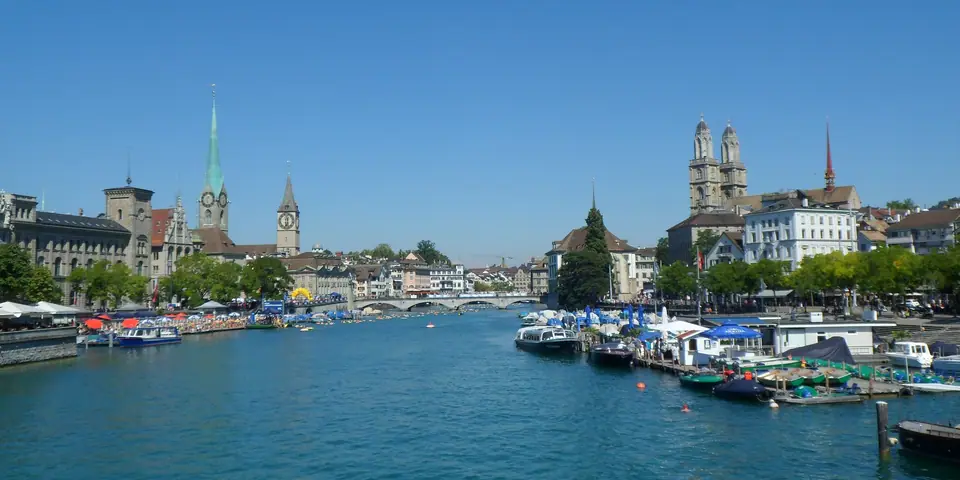
A detailed walking route along both banks of the River Limmat and Lake Zurich: Roman Lindenhof, medieval Niederdorf guildhalls, Chagall’s stained glass, and Kunsthaus Zurich.
Roman Customs Post of Turicum, Guild Rule and Zwingli’s Reformation
Established in 15 BC as the Roman customs station of Turicum on the moraine hill of Lindenhof where Lake Zurich drains into the crystal-clear River Limmat, the settlement rose to prominence in the ninth century when Charlemagne's grandson Louis the German founded the Fraumünster Abbey for noblewomen opposite the twin-towered Grossmünster. Joining the Swiss Confederation in 1351, Zurich was governed for centuries from riverside guildhalls (Zunfthäuser) along the Limmatquai.
In 1519 Huldrych Zwingli launched the Swiss Reformation from the pulpit of the Grossmünster; in the nineteenth and twentieth centuries, Alfred Escher's railways and ETH Zurich turned the city into a powerhouse of science and finance, where Albert Einstein studied and Cabaret Voltaire gave birth to Dada in 1916.
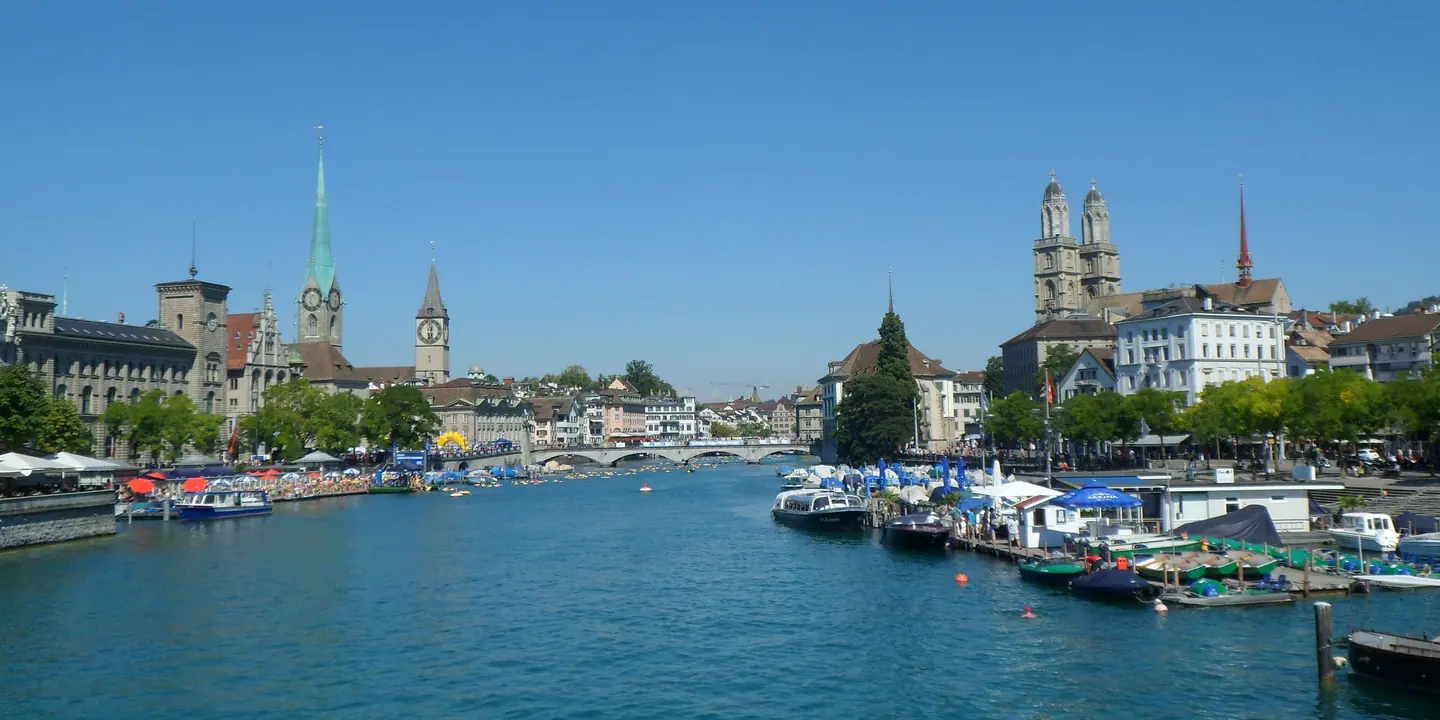
Niederdorf, Grossmünster & Limmatquai Guildhalls
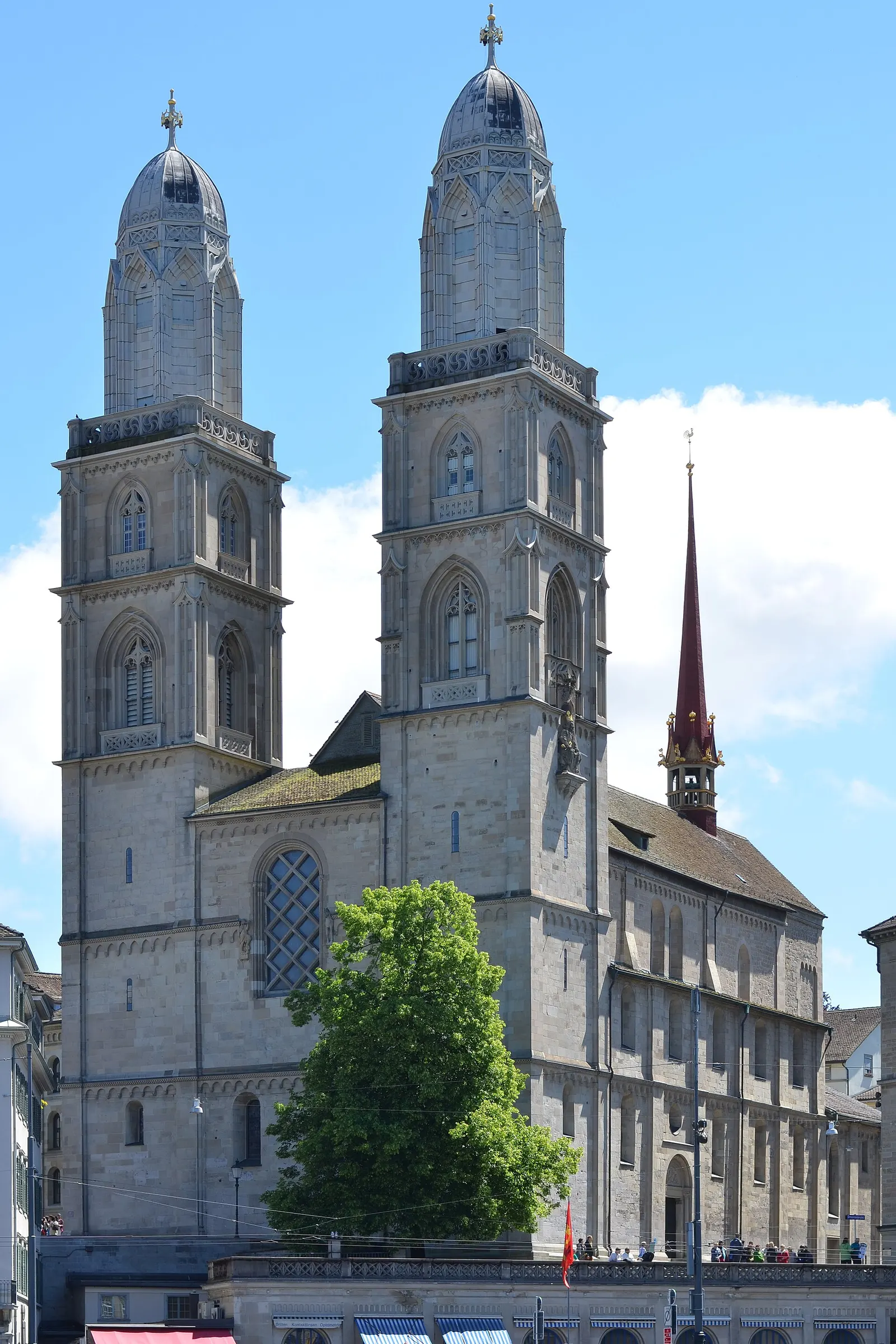
Grossmünster Twin Towers & Giacometti/Polke Windows, Romanesque Crypt, Wasserkirche & Zwingli Statue, Helmhaus, Zunfthaus zur Meisen, Zunfthaus zur Zimmerleuten, Zunfthaus zur Rüden, Rathaus (1698 over the Limmat), Cabaret Voltaire on Spiegelgasse, and Predigerkirche
Grossmünster
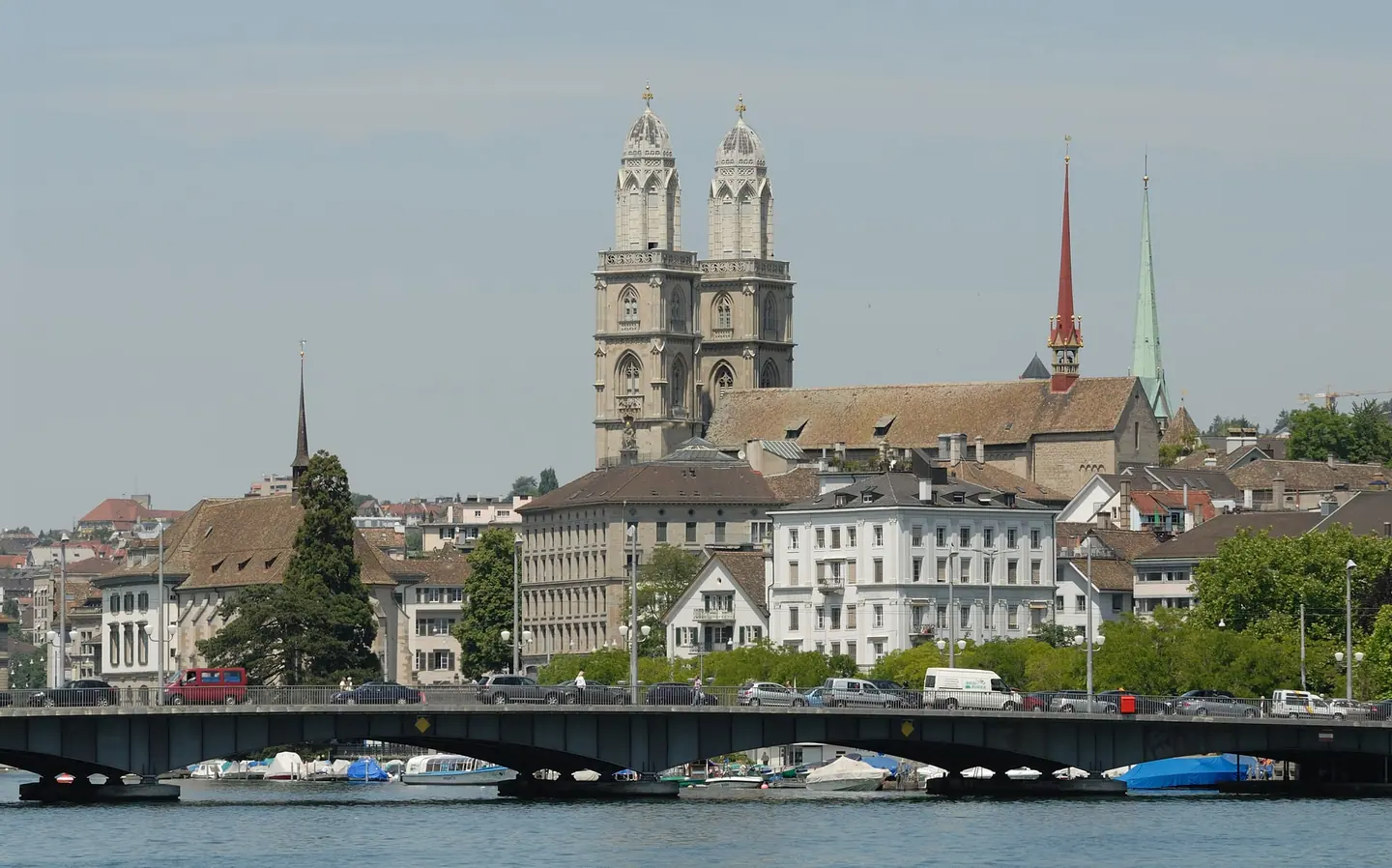
Founded according to legend by Charlemagne, this landmark church was central to Huldrych Zwingli's Reformation in the sixteenth century. Visitors can inspect the Romanesque carved capitals, modern choir windows by Augusto Giacometti and agate windows by Sigmar Polke. Climbing the Karlsturm rewards travellers with clear views across the Limmat.
Grossmünster Crypt
Dating from the eleventh and twelfth centuries, this subterranean space is among the largest Romanesque crypts in Switzerland. It preserves original wall frescoes depicting scenes of martyrdom alongside the fifteenth-century sandstone statue of Charlemagne taken down from the south tower. The atmosphere offers a sombre perspective on Zurich's medieval devotion.
Wasserkirche
Originally constructed on a small island in the Limmat, this church marks the traditional execution site of Zurich's patron saints, Felix and Regula. Completed in late Gothic style around 1486, the building features three choir windows designed by Augusto Giacometti. The foundation stone of the ancient martyr sanctuary remains visible inside the archaeological crypt.
Helmhaus
Directly connected to the Wasserkirche, the Helmhaus was constructed in 1791 by Hans Conrad Bluntschli as a covered municipal market and court. Its ground-level arcade once sheltered court sessions and grain merchants trading beside the water. Today, the upper halls host a rotating public programme dedicated to contemporary Swiss artists.
Zwingli Memorial
Positioned against the choir of the Wasserkirche, this bronze statue by Austrian sculptor Heinrich Bäumer was unveiled in 1885. It depicts Huldrych Zwingli holding a Bible in his left hand and a broadsword in his right, symbolising faith and civic resolve. The figure stands as an enduring emblem of Zurich's Protestant transformation.
Rathaus Zurich
Erected between 1694 and 1698, this late Renaissance town hall rests entirely upon piles driven into the riverbed. The exterior features ornate stone carvings, portal busts and gilded ironwork overlooking the water. Inside, the cantonal and municipal parliaments still assemble beneath richly decorated baroque ceilings and historic ceramic stoves.
Zunfthaus zur Zimmerleuten
Constructed in the fourteenth century and extensively altered around 1708, this riverfront hall served Zurich's carpenters and construction guilds. A major fire in 2007 led to a meticulous restoration of its baroque facade, carved wooden interiors and oriel windows. The building continues to operate as an active guild headquarters and restaurant.
Zunfthaus zur Rüden
Originally documented in 1348, the Rüden was acquired by the city's aristocratic patricians and merchant nobility. The building is renowned for its remarkable Gotische Trinkstube, a hall with a cantilevered timber beam ceiling carved with heraldic symbols. Its stone arcade arches extend directly over the pedestrian pavement of Limmatquai.
Zunfthaus zur Saffran
Built between 1740 and 1742 for the spice and haberdashery merchants, this mansion represents French baroque influence in old Zurich. Its symmetrical limestone facade displays fine iron railings, pilasters and pediments facing the river. The interior preserves original stucco work by southern masters and serves as an enduring meeting place for traditional guilds.
Zunfthaus zur Haue
Dating back to the late Middle Ages, Haus zur Haue became the guild house of the city vintners and winemakers in 1450. The structure presents a prominent stepped gable, limestone mullioned windows and a distinctive iron guild sign depicting a grape hoe. It reflects the agricultural heritage that shaped the economy of medieval Zurich.
Rathausbrücke
Connecting the two banks of the Limmat since medieval times, this wide bridge was historically known as the Gmüesbrügg due to its vegetable markets. Reconstructed in concrete and stone, the platform provides expansive views of guild facades, the Rathaus and the river. It remains a regular location for outdoor farmers' stalls on selected mornings.
Cabaret Voltaire
Located at Spiegelgasse 1, this modest tavern was founded in February 1916 by Hugo Ball, Emmy Hennings, Tristan Tzara and Hans Arp. From its stage, the Dada movement was launched, challenging bourgeois values through nonsensical poetry, sound experiments and radical performance. Today, the venue maintains an exhibition room, archive and cultural bar.
Lenin's Residence on Spiegelgasse
At Spiegelgasse 14, Vladimir Lenin and Nadezhda Krupskaya rented a room on the second floor between 1916 and April 1917. Lenin researched in the nearby central library and wrote political tracts before returning to Russia on the famous sealed train. A discreet stone plaque beside the door commemorates the Bolshevik leader's residency.
Predigerkirche
Founded in 1231 by the Dominican Order, this church boasts the tallest Gothic choir in the city alongside a dramatic nineteenth-century tower spire. Following the Reformation, the monastic buildings became a hospital, and the nave was partitioned to serve varying municipal purposes. The restored high-vaulted interior remains celebrated for its acoustics and quiet dignity.
Central Library Zurich
Occupying parts of the former Predigerkloster, the Zentralbibliothek serves both the city and the university with extensive collections. The institution holds irreplaceable documents, including Reformation texts, medieval maps and personal estates of Swiss thinkers. Travellers can wander the quiet cloister courtyard, which provides a peaceful contrast to the lanes outside.
Hirschenplatz
This cobbled junction has formed the heart of the Niederdorf district since the thirteenth century. It is defined by painted townhouses, including the historic Gasthof zum Hirschen with its decorative wrought-iron tavern sign. The square serves as a lively crossroad connecting alleys lined with bookshops, cafes and historic dwellings.
Rindermarkt
Once the primary cattle market of medieval Zurich, this winding street preserves several of the old town's finest medieval facades. Gottfried Keller, the famed Swiss novelist and poet, lived and worked in Haus zum Brunnenhof at number 9. Today, the street retains an authentic atmosphere, home to independent craft workshops and antiquarian stores.
Neumarkt
Laid out during an eastward city expansion in the twelfth century, Neumarkt showcases tall stone houses with internal gardens and historical wall paintings. At number 5 stands the Theater am Neumarkt, situated in a former guild-like shoemakers' hall. The street offers an undisturbed glimpse of domestic urban life from the late Middle Ages.
Münzplatz
Tucked away behind the Grossmünster's choir, this small square was where the city of Zurich operated its municipal mint. The surrounding buildings, built against the rising bedrock, date from the late Gothic and Renaissance eras. A traditional stone fountain stands at its centre, creating a calm refuge immediately off the main tourist trail.
Zunfthaus zur Meisen
Positioned at the western abutment of Münsterbrücke, this French-inspired palace was constructed in 1757 for the guild of tavern keepers. Its facade exhibits wrought-iron balconies and an ornamental entrance gate topped by a gilded bird motif. The interior features restored salons with delicate rococo stucco ceilings and painted porcelain displays.
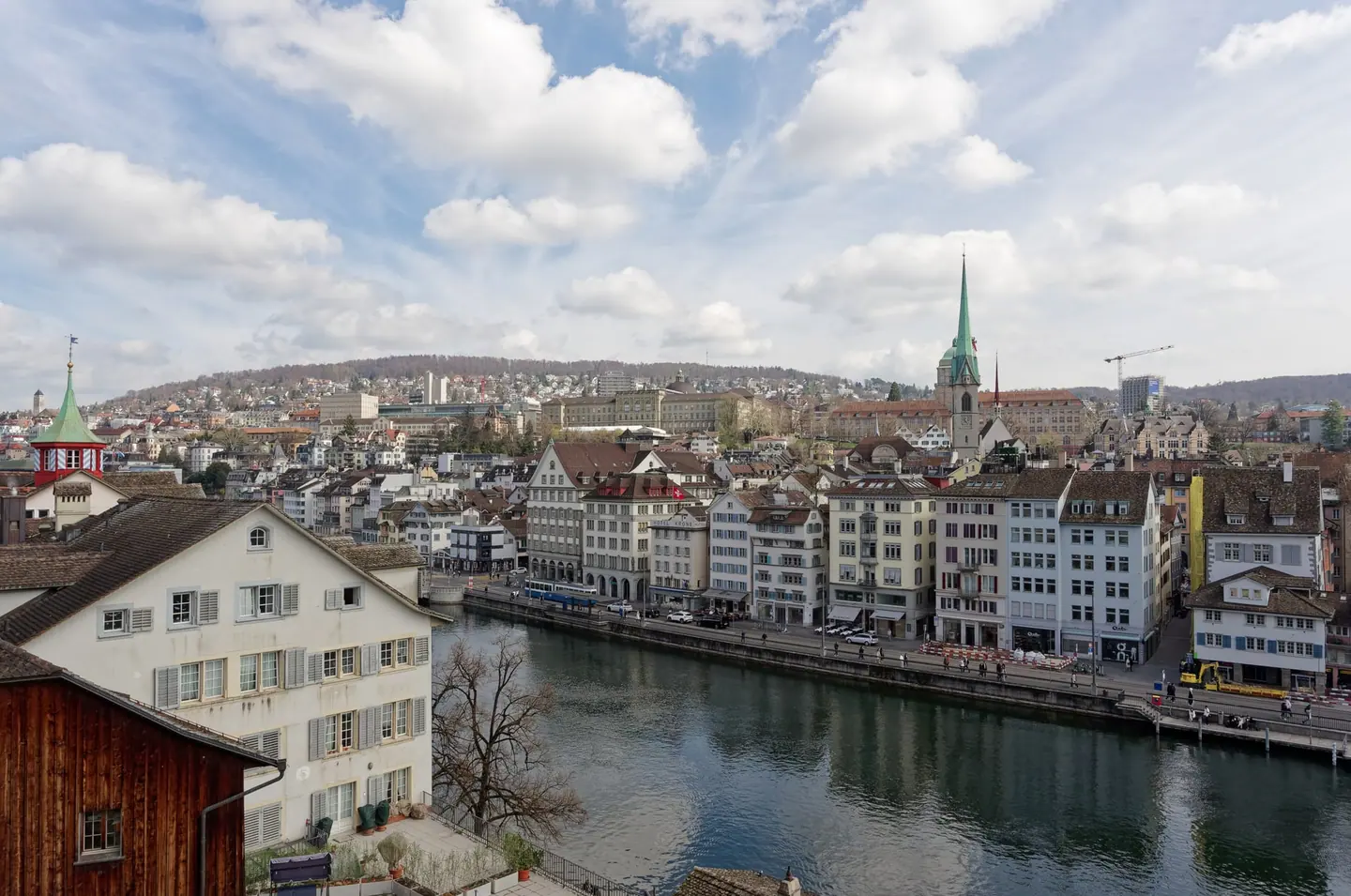
Lindenhof Hill, St Peter, Augustinergasse & Fraumünster
Lindenhof Roman Hill Panorama over the Limmat, Schipfe Oldest Riverbank Craft Quarter, St Peter’s Church (Europe’s Largest Clock Face, 8.7m), Augustinergasse Painted Oriel Windows, Münsterhof Square, Zunfthaus zur Waag, and Fraumünster Marc Chagall & Augusto Giacometti Windows
Lindenhof
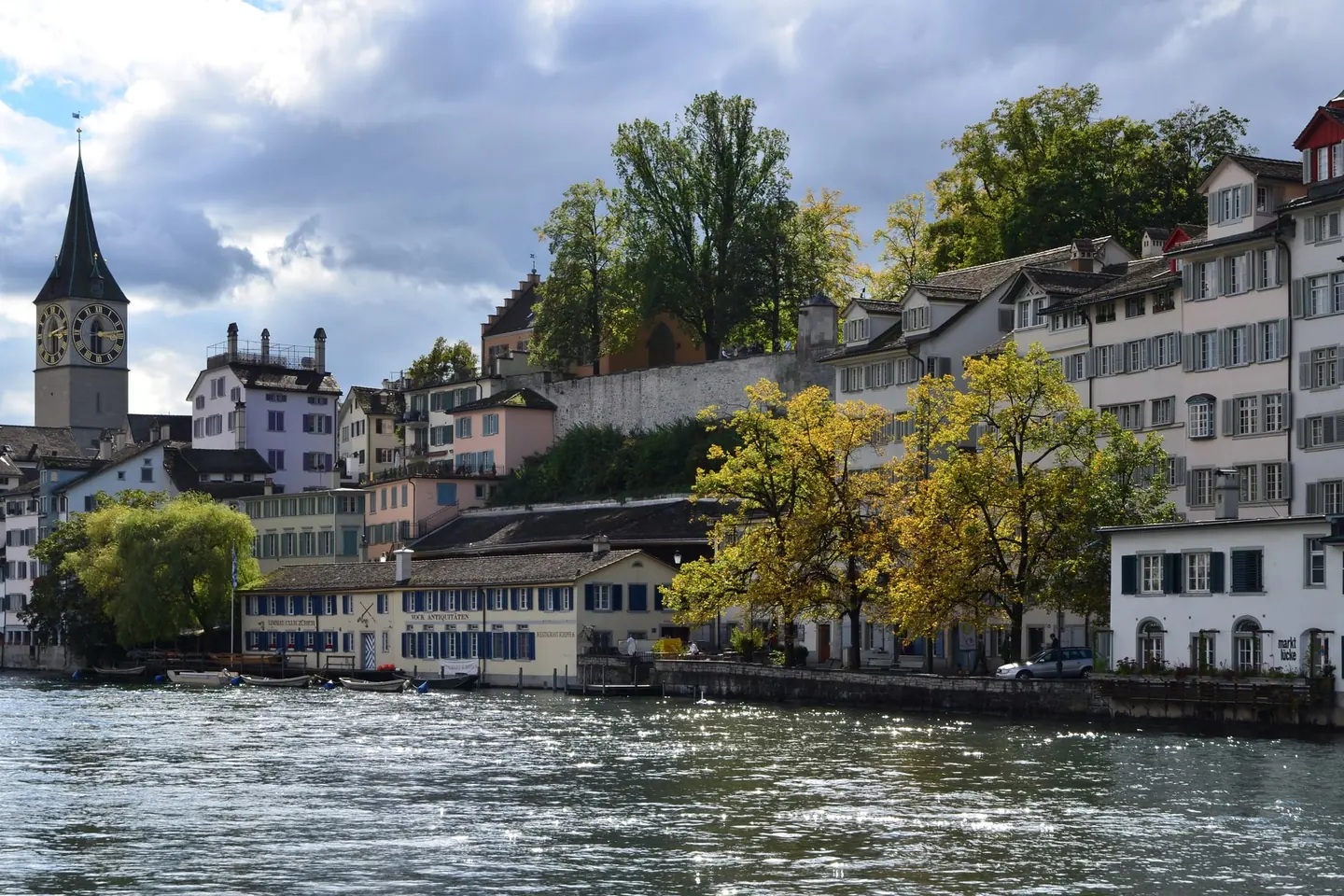
Set on the site of a fourth-century Roman fortress, this shaded terrace was once the location of a Carolingian imperial palace. Today, visitors gather beneath leafy lime trees to observe giant chess matches and take in wide vistas over the river towards the Grossmünster. A stone monument commemorates the local women who defended the city during a medieval siege.
St. Peter, Zurich
Dating back to the eighth century, this parish church features Romanesque choir walls and a broad Baroque nave added in the eighteenth century. The exterior tower draws international attention for its massive clock face, measuring 8.7 metres in diameter. Inside, quiet white stucco work and historical grave markers line the perimeter.
Schipfe
Stretching along the western bank beneath Lindenhof, this quarter originated as a medieval boat landing where freight was hauled ashore. The narrow stone lane still preserves timber-framed houses that host small artisan workshops, including silversmiths and woodworkers. Walking along the embankment reveals tranquil reflections of the opposite bank in the flowing river water.
Augustinergasse
Connecting St Peterhofstatt with the western fortifications, this pedestrian alley was established alongside an Augustinian monastery in the thirteenth century. It is celebrated for tightly packed residential facades outfitted with intricately carved, brightly painted oriel windows. These protruding bay windows were originally designed to bring natural light and fresh air into narrow domestic rooms.
Münsterhof
Once an unpaved marsh, this historic town square was paved in the Middle Ages to serve as the principal market and gathering place before the Fraumünster abbey. Redesigned as a car-free urban space, it now features a central fountain crafted from regional shell limestone. Historic guildhouses line the edges, forming an open architectural record of municipal trade.
Fraumünster
Founded in 853 by King Louis the German for noble women, this former convent church retains its Romanesque chancel and Gothic nave. Visitors enter primarily to admire the five-part choir window series created by Marc Chagall, alongside an expansive rose window by Augusto Giacometti. The peaceful cloister contains murals illustrating the city's early religious founding legends.
Zunfthaus zur Waag
Standing prominently on Münsterhof, this timbered and plastered structure served as the headquarters of linen weavers and hatters beginning in the fourteenth century. The building received its late-Gothic and early-Baroque profile through extensive renovations in 1637. Today, its upper dining salons feature historic stained glass roundels and intricate panelled wood ceilings.
Zunfthaus zur Meisen
Erected in the mid-eighteenth century for the vintners' guild, this residence represents the finest example of French-influenced Rococo architecture in the city. Its symmetric facade features decorative wrought-iron balconies and an ornate stone portal facing the river. The interior rooms house delicate ceiling frescoes and a permanent display of historic Swiss porcelain and faience.
Augustinerkirche, Zurich
Built in 1270 as a monastery church for the Augustinian order, this high-gabled stone structure later served as a mint and grain warehouse during the Protestant Reformation. Restored in the twentieth century, it features a stark Gothic nave, a high wooden roof, and simple chancel windows. It now functions as the principal place of worship for the local Christian Catholic parish.
Münzplatz
Positioned just off Augustinergasse, this secluded square takes its name from the mint that operated in the neighbouring monastic complex after the Reformation. Historic houses around the perimeter feature colourful shutters, stone portals, and classical facade proportions. A small fountain in the corner marks the spot where artisans gathered away from the central traffic arteries.
St. Peterhofstatt
This cobbled square forms an open atrium around the clock tower and entrance of St Peter's Church. Shaded by mature trees, the perimeter is defined by several medieval guild properties and pastoral residences dating to the sixteenth century. The space offers a close perspective of the tower masonry and classical stone pediments.
Strehlgasse
Running parallel between Lindenhof hill and the Münsterhof area, this ancient street preserves deep foundations from medieval townhouses. Its narrow path retains the original urban alignment of the inner settlement, bordered by smooth cobblestones and heavy oak doors. Look upward to spot recessed attics and historic iron guild signs projecting over the street.
Hans Waldmann Monument
Positioned at the western end of Münsterbrücke, this bronze equestrian statue commemorates Hans Waldmann, mayor of Zurich and military commander during the Burgundian Wars. Executed by political rivals in 1489, Waldmann is rendered here in full ceremonial armour atop a powerful horse. The monument stands directly between the Fraumünster and the river bank.
Münsterbrücke, Zurich
Completed in 1838 to connect the Fraumünster and Grossmünster churches, this sandstone bridge replaced two ancient wooden crossings. Designed with shallow segmental arches resting on heavy stone pillars, it provides clear vantage points along the river corridor towards Lake Zurich. Pedestrian paths flanking the balustrade offer unhindered angles of the historic waterfront architecture.
Rathausbrücke, Zurich
Historically called the Gmüesbrugg or vegetable bridge, this wide crossing has linked the riverbanks since Roman times. Modernised with a wide concrete deck, it continues to serve as an open public terrace and active marketplace on select weekday mornings. Its central position affords an unobstructed view back up to the Lindenhof retaining wall and down the Schipfe.
Haus zum Rüden
Situated on the riverbank opposite Münsterbrücke, this stone structure was acquired by the noble Constaffel society in the fourteenth century. The lower stone arcade once sat directly in the water before modern quays were constructed. Its upper floor houses the grand Gotische Stube, renowned for a curved timber ceiling shaped like the inverted hull of a ship.
Kämbel Guild House
Overlooking Münsterhof near the Fraumünster, this tall guildhouse was the historic gathering hall for camel-drivers, oil-merchants, and food traders. Rebuilt in the late seventeenth century, it displays a balanced Baroque facade crowned by an ornate roof gable and gilded emblem. The site contains richly decorated meeting rooms preserving centuries of municipal commercial history.
Pfalzgasse
Leading upward from St Peter towards the Lindenhof plateau, this historic ramped street follows the perimeter of the ancient imperial residence. Heavy stone retaining walls support the elevated gardens above, while classical residential properties frame the southern side. Walking here reveals layers of Roman masonry integrated into the lower footings of surrounding houses.
In Gassen
This paved shopping lane served as a key trading corridor connecting the ancient river wharves to the western city gates. Traditional stone arches and narrow shopfronts line the pedestrian way, displaying classical regional ironwork and decorative cornices. It offers a direct approach from modern retail districts into the protected medieval core around St Peter.
Fortunagasse
Dropping sharply from the edge of the Lindenhof terrace down to the Schipfe waterfront, this narrow passage consists largely of stone steps and enclosed alleys. Medieval residential facades press tightly together overhead, demonstrating the dense spatial planning of the medieval inner city. The path provides a direct walking connection between the high Roman plateau and the working craft wharves below.
Bahnhofstrasse, Paradeplatz, Landesmuseum & ETH Polyterrasse
Paradeplatz, Bahnhofstrasse, Giacometti Murals (Blüemlihalle) in Amtshaus I, Zurich Hauptbahnhof Niki de Saint Phalle Guardian Angel, Swiss National Museum Landesmuseum, Polybahn Funicular, ETH Zurich Main Building by Gottfried Semper, and Polyterrasse Viewpoint
Paradeplatz
Originally an eighteenth-century cattle market known as the Saumarkt, this central square evolved into the administrative heart of Swiss banking during the nineteenth century. Major financial institutions line its perimeter, intersected by numerous tram routes that link the Old Town with Lake Zurich. Visitors can admire the grand neo-Renaissance facades and sample handmade confections at the neighbouring heritage cafes.
Bahnhofstrasse
Engineered by Arnold Bürkli in the 1860s after the demolition of Zurich's medieval ramparts, this tree-lined boulevard spans 1.4 kilometres between the railway terminus and the lake. It remains globally celebrated for its luxury boutiques, department stores, and historic commercial palazzi. Walking along the pavement reveals an orderly blend of neoclassical architecture, public clocks, and modern storefront displays.
Giacometti Murals in Amtshaus I
Commissioned in 1922 to brighten the vaulted entrance of a former cellar converted into administrative offices, this space is affectionately called the Blüemlihalle. Artist Augusto Giacometti covered the ceiling and walls with warm floral patterns and portraits of working-class artisans using rich mineral pigments. Visitors can register briefly at the police reception desk to inspect the glowing, kaleidoscope-like frescoes.
Zurich Hauptbahnhof
Opened in 1871 under the direction of architect Jakob Friedrich Wanner, Switzerland's largest railway station features a monumental sandstone facade fronted by a statue of statesman Alfred Escher. Its expansive neo-Renaissance main hall, once accommodating incoming steam trains, now hosts public cultural gatherings and seasonal markets. The cavernous ceiling and classical arches reflect the zenith of Swiss rail expansion.
L'Ange Protecteur by Niki de Saint Phalle
Suspended from the ceiling of the Hauptbahnhof main concourse, this eleven-metre-tall, brightly painted polyester guardian angel was gifted to the Swiss Federal Railways in 1997. Sculptor Niki de Saint Phalle styled the benevolent figure with widespread golden wings and a patterned bathing suit. The buoyant, multicoloured presence provides an unexpected contemporary contrast to the station's formal sandstone architecture.
Swiss National Museum
Built between 1892 and 1898 by architect Gustav Gull, the Landesmuseum resembles a romantic, historicist castle combining diverse Swiss architectural traditions. Its halls exhibit extensive collections of Swiss cultural history, including prehistoric artefacts, medieval ecclesiastical wood carvings, and patriotic weaponry. A sharp, geometric concrete wing completed in 2016 creates an intriguing architectural dialogue with the original turreted palace.
Polybahn Funicular
Operating continuously since 1889, this heritage cable railway ascends an eighty-metre vertical gradient from the Limmatquai riverfront to ETH Zurich. Its bright red passenger carriages glide along a single track with a central passing loop, whisking commuters through a steep forested cutting in barely two minutes. The line offers a charming glimpse into late nineteenth-century municipal transport engineering.
ETH Zurich Main Building
Constructed between 1858 and 1864 by Gottfried Semper and subsequently expanded by Gustav Gull, this palatial seat of science dominates Zurich's eastern hillside. The neoclassical facade features colossal Corinthian pilasters and an impressive elevated cupola framing the entrance hall. Inside, sweeping staircases and dignified corridors have fostered pioneering researchers, including Albert Einstein, who studied and taught here.
ETH Polyterrasse
Extending directly in front of the federal university's main building, this wide pedestrian platform offers panoramic vistas across Zurich's spires, the Limmat River, and distant Alpine ridges. Students and townspeople gather on the terrace to rest between lectures or take in the open horizon. It serves as one of the city's finest spots for surveying the urban topography.
University of Zurich Main Building
Erected between 1911 and 1914 according to plans by Karl Moser, the university's main structure blends sober monumentalism with fine Jugendstil ornamentation. Its imposing square tower is a visible feature across the cityscape, rising over tiered courtyards and colonnaded halls. Inside, the light-filled atrium features marble reliefs, a sweeping skylight, and cast reproductions of antique classical sculptures.
Alfred Escher Memorial
Standing directly before the main portal of the Hauptbahnhof, this 1889 bronze statue by Richard Kissling commemorates industrialist and politician Alfred Escher. Escher was instrumental in creating the Gotthard Railway, founding Credit Suisse, and establishing the federal polytechnic institute. The ornate stone base incorporates allegorical figures of Swiss commerce and industry, flanked by stone water basins.
Pestalozzi Park
Situated adjacent to Bahnhofstrasse, this leafy public square was established in the late nineteenth century as a peaceful enclave amid growing commercial development. At its centre stands a bronze memorial by Hugo Siegwart depicting pedagogue Johann Heinrich Pestalozzi tenderly instructing a child. Shaded benches, seasonal flowerbeds, and mature plane trees provide a calm respite for passing shoppers.
Urania Sternwarte
Constructed in 1907 as Switzerland's first public astronomical observatory, this circular stone tower rises fifty-one metres above the Uraniastrasse. Its rotating dome houses a massive twelve-ton optical refractor telescope equipped with Zeiss precision lenses, designed to demonstrate astronomical bodies to urban citizens. The tower remains an emblematic example of Zurich's early twentieth-century architectural embrace of public education.
Lindenhof
Perched on a natural moraine above the Limmat, Lindenhof was occupied in ancient times by a Roman customs post and later by a Carolingian imperial palace. Today, the peaceful square is shaded by lime trees and populated by locals playing chess on oversized stone boards. The stone parapet offers an open vantage point over the guild houses of the Limmatquai.
Predigerkirche
Founded in the thirteenth century as the sanctuary for Zurich's Dominican friars, this church features an imposing choir built during the high Gothic era. In the late nineteenth century, city architect Friedrich Bluntschli added a needle-like neo-Gothic bell tower that remains the tallest church spire in Zurich. The interior reveals refined rib-vaulting and a luminous atmosphere suited for contemplation and organ concerts.
Central Square
Positioned at the northern exit of the Old Town, this major traffic junction was originally called Leonhardsplatz before taking its name from the adjacent grand hotel in 1950. Several tram lines converge here near the bottom station of the Polybahn funicular and the Limmat River bridgehead. Surrounded by historic sandstone facades, the square provides an authentic portrait of Zurich's daily kinetic movement.
Haus zur Trinitat
Standing along the central stretch of Bahnhofstrasse, this site marks one of the historic structures absorbed during the street's late nineteenth-century commercial expansion. The building blends dignified stonework with refined classicist details characteristic of the private banking houses of the district. It highlights the transformation of Zurich from a provincial walled town into a prominent European centre of commerce.
Platzspitz Park
Directly behind the Swiss National Museum, this triangular tongue of land sits wedged between the converging waters of the Limmat and Sihl rivers. Developed in the fourteenth century as an open meadow for shooting contests, it was landscaped as a baroque pleasure ground in the eighteenth century. Today, quiet pathways, riverside avenues, and classical gazebos invite leisurely outdoor strolls.
FocusTerra Museum
Housed within the Department of Earth Sciences at ETH Zurich, this museum presents interactive exhibits on geological formations, mineralogy, and volcanic phenomena. The centrepiece is an airy, multilevel atrium framed by iron railings and topped with an expansive glass skylight. Travellers can examine rare Alpine crystal clusters and explore an earthquake simulator used for academic demonstration.
Liebfrauenkirche
Built between 1893 and 1894 by architect August Hardegger, this landmark church serves the Catholic community near the university quarter. Modelled on early Christian and Romanesque basilicas, it features a distinct free-standing bell tower and an ornate timber flat ceiling. The interior walls showcase elaborate liturgical mosaics and gold-leaf details designed in the Beuron artistic style.
Kunsthaus Zurich, Opera House & Lake Zurich Promenade
Kunsthaus Zurich (Moser, Pfister & David Chipperfield Buildings), Schauspielhaus, Bürkliplatz Lake Steamer Pier, Zurich Opera House on Sechseläutenplatz, Pavilion Le Corbusier on Zürichhorn, Chinese Garden Zurich, Botanical Garden University of Zurich, and Rietberg Museum in Rieterpark
Kunsthaus Zurich
Founded by the Zürcher Kunstgesellschaft, this premier art museum holds one of Switzerland's most significant collections. The complex integrates Karl Moser's 1910 original building with modern extensions, including David Chipperfield's light-filled cube opened in 2021. Inside, we observe extensive holdings of Alberto Giacometti sculptures, French Impressionist canvases, and classical Swiss paintings.
Schauspielhaus Zurich
Operating primarily in the Pfauen building near Heimplatz, this revered playhouse served as a vital sanctuary for exiled German-speaking playwrights during the Second World War. The auditorium features traditional proscenium architecture adapted for challenging, contemporary stagecraft. Visitors today can attend classical repertoire alongside modern experimental theatre productions staged throughout the seasonal programme.
Zurich Opera House
Constructed in 1891 by the Viennese architects Fellner and Helmer, this ornate venue replaced the burned Actientheater. Its exterior displays classical portrait busts of cultural figures such as Mozart, Beethoven, and Schiller carved into the white limestone facade. Inside, the intimate red and gold auditorium presents classical opera and ballet performances throughout the year.
Sechseläutenplatz
Spanning over sixteen thousand square metres, this open public square connects the Opera House with the lakeshore. It serves as the historic staging ground for the spring Sechseläuten festival, where the symbolic Böögg snowman effigy is burned. Broad bands of native Vals quartzite, planted red oaks, and integrated water fountains define the minimalist open promenade.
Bürkliplatz
Created during the late nineteenth-century lake promenade developments, Bürkliplatz acts as the primary departure hub for passenger steamers on Lake Zurich. Shaded by dense rows of horse chestnut trees, the terrace commands wide vistas toward the distant Glarus Alps. The square hosts weekly fresh produce markets alongside weekend antique and flea markets.
Pavillon Le Corbusier
Completed in 1967 at the edge of Zürichhorn park, this structural experiment represents Le Corbusier's final realised design before his death. The building breaks from his usual raw concrete, featuring pre-enamelled steel panels beneath a freestanding welded parasol roof. Now operated as an exhibition space, the structure houses furniture, sketches, and rotating design exhibits.
Chinese Garden Zurich
Donated in 1993 in gratitude for Swiss technical assistance with Kunming's water supply, this authentic enclosure ranks among the highest-grade Chinese gardens outside Asia. It follows classical temple garden design with a central pond, delicate pavilions, and carved stone bridges. Plantings of winter plum, bamboo, and pine reflect the traditional Three Friends of Winter motif.
Botanical Garden of the University of Zurich
Opened in 1977 in the Weinegg quarter, this university garden covers over fifty thousand square metres of research and public grounds. Its most recognisable architectural elements are three futuristic, geodesic greenhouse domes providing varied climatic zones from humid tropics to arid savannah. The surrounding parklands present systematic beds, medicinal herb sections, and regional alpine flora.
Old Botanical Garden
Dating from 1837, this elevated city sanctuary occupies the historic ramparts of Zurich's seventeenth-century fortifications. While academic research moved eastward in the late twentieth century, this garden preserves its heritage arboretum and an octagonal palm house from 1877. The upper terrace features a historic medicinal garden dedicated to sixteenth-century naturalist Conrad Gessner.
Museum Rietberg
Set within a nineteenth-century public park, this museum is the only institution in Switzerland dedicated exclusively to arts from Asia, Africa, America, and Oceania. It combines the neoclassical Villa Wesendonck with an underground glass pavilion extension known as the Emerald. Highlights include Chinese ceramics, early Buddhist stone sculpture, and West African ritual masks.
Villa Wesendonck
Built between 1853 and 1857 by architect Leonhard Zeugheer for silk merchant Otto Wesendonck, this villa provided inspiration and refuge for composer Richard Wagner. Constructed in the style of an Italian Renaissance country house, it boasts symmetrical porticos and stately formal salons. Today, the villa forms the central historical administrative block of Museum Rietberg.
Rieterpark
Encompassing more than sixty-eight thousand square metres, Rieterpark represents the largest municipal public landscape park in Zurich. Planted with beech, oak, and cedar specimens dating back to the mid-nineteenth century, its sloping lawns offer distant vistas of Lake Zurich. Gentle pathways guide travellers around historic villas, marble fountain basins, and seasonal botanical displays.
Quaibrücke
Constructed between 1881 and 1887 under city planner Arnold Bürkli, this pivotal bridge spans the outflow of the River Limmat into Lake Zurich. Serving as a crucial link between Bürkliplatz and Bellevue, it handles heavy tram, vehicular, and foot traffic. Pedestrians pause on the wide sidewalks to photograph the historic city spires framing the water.
Utoquai
Forming the eastern embankment of Zurich's historic nineteenth-century lake improvement project, Utoquai provides a wide, tree-lined walking route along the water. It is bordered by grand late-Victorian mansions, yacht club moorings, and public bathing installations. Strollers can enjoy clear views west toward the Uetliberg ridge and south toward the snowcapped Alpine peaks.
Strandbad Utoquai
Designed by city architect Paul Peikert in 1890, this classic wooden palace bathhouse extends directly over the waters of Lake Zurich. Built in the Moorish revival style, it incorporates separate swimming pools, sunbathing decks, and distinctive timber dome cupolas. It remains a popular summer public bathing facility retaining much of its original nineteenth-century character.
General-Guisan-Quai
Stretching southwards from Bürkliplatz through the Enge quarter, this broad promenade honours General Henri Guisan, the commander-in-chief of the Swiss Army during World War II. The lakeside path features landscaped lawns, manicured plane trees, and stone sculptures facing the lake. Prestigious corporate and diplomatic headquarters face the waterfront along the opposite side of the avenue.
Tonhalle Zurich
Inaugurated in 1895 with an opening performance conducted by Johannes Brahms, this grand concert auditorium was designed by Fellner and Helmer. Though wrapped by the modernist Kongresshaus complex built in 1939, the Great Hall retains its gilded plasterwork, historic ceiling frescoes, and original acoustical proportions. It remains the principal concert home of the Tonhalle Orchestra Zurich.
Enge Church
Constructed between 1892 and 1894 by architect Alfred Friedrich Bluntschli, this monumental parish church dominates the elevated moraine above the Enge lakeshore. Built from light-coloured Ticino granite, its design draws heavily on Italian High Renaissance principles with a central cupola and soaring campanile. The elevated terrace offers fine panoramic views across the lower lake basin.
Bellevue Square
Named after the historic Grand Hotel Bellevue that once stood nearby, this lively urban junction was created during the nineteenth-century quai engineering works. Today, it serves as the eastern tram transport crossroads linking Old Town streets, Sechseläutenplatz, and the lake promenades. It features kiosks, street cafes, and pedestrian plazas overlooking the outflow of the River Limmat.
Zürichhorn
Formed by the alluvial delta of the Hornbach stream, this broad park was transformed into a public recreation ground in the 1880s. The open lawns accommodate monumental modern sculptures, such as Jean Tinguely's kinetic water-churning machine Eureka, beside shady gravel avenues. In summer, the lakeside edge accommodates an open-air cinema screen positioned directly over the lake water.
Schanzengraben, Zürich-West Viadukt & Uetliberg Summit
Old Botanical Garden Katz Bastion, Schanzengraben Moat Walk & Männerbadi, FIFA Museum, Im Viadukt Railway Arches in Zürich-West, Frau Gerolds Garten & Prime Tower, Löwenbräukunst Kunsthalle & Migros Museum, and Uetliberg Lookout Tower over Lake Zurich and the Alps
Old Botanical Garden
Established in 1837 upon the remains of baroque ramparts, this peaceful public park showcases heritage trees alongside an octagonal glass palm house from 1877. Visitors can explore the historic medicinal herb garden dedicated to Renaissance physician Conrad Gessner at the crest of the hill. Shaded paths provide pleasant views towards the historic city core and the former defensive moats.
Katz Bastion
Named after the historic 'Katze' artillery platforms, this elevated stone redoubt formed part of the extensive seventeenth-century fortifications designed to protect Zurich during religious conflicts. Today it forms the high promontory of the Old Botanical Garden, offering broad vantage points over the Schanzengraben. The grassy terrace preserves the dramatic contours of the original defensive earthworks.
Schanzengraben Canal
Constructed during the 1640s as a defensive moat, the canal was repurposed in the nineteenth century into a sunken river walk lined with wooden footbridges and sandstone embankments. The pathway runs below street level, isolating pedestrians from traffic noise between Lake Zurich and the Sihl river. Duckweed, weeping willows and stone masonry give the channel a tranquil ambience throughout the year.
Männerbad Schanzengraben
Constructed in 1864, this open-air wooden bathing establishment is built directly into the stone walls of the Schanzengraben canal. It continues to operate as a traditional men-only swimming bath during daylight hours before opening to all visitors as an evening cultural lounge. The simple timber decking and enclosing historic masonry offer an atmospheric glimpse into historic lakeside bathing culture.
FIFA Museum
Situated opposite Enge railway station, this modern exhibition centre opened in 2016 across three levels of the refurbished Haus Zur Bastei. The galleries house the original FIFA World Cup Trophy, hundreds of international jerseys, and comprehensive archival documents tracing global sports tournaments. Interactive installations illustrate the tactical, social, and technological development of the sport across generations.
Zurich Enge Railway Station
Erected between 1925 and 1927 to plans by Otto and Werner Pfister, this striking station building is clad entirely in dark Ticino granite. Its grand facade and sweeping colonnades reflect severe neoclassical principles influenced by ancient Roman architecture. Travellers passing through the station can inspect its cavernous ticket hall and decorative relief sculptures carved into the stone facades.
Bleicherweg
Bleicherweg takes its name from the historic textile bleaching fields that once occupied the lakeside floodplains south of the medieval walls. During the late nineteenth century, the avenue evolved into an imposing arterial street lined with grand residential blocks and banking headquarters. Walking along the pavement reveals handsome stone facades, wrought-iron balconies and early twentieth-century administrative architecture.
Museum Haus Konstruktiv
Occupying a listed 1940s electrical substation on the banks of the Sihl, this institution focuses on constructivist, concrete, and conceptual art. The brick and steel interior provides dramatic exhibition galleries for works inspired by the Zurich Concretists, including Max Bill and Camille Graeser. The building preserves industrial switchgear and structural steel alongside rigorous geometric installations.
Im Viadukt
Constructed in 1894 to carry passenger trains across the western floodplains, the stone arches of the Letten Viaduct were comprehensively restored in 2010. Today, dozens of masonry bays contain independent boutiques, design studios and a covered municipal market hall. Above the shops, the former railway tracks have been converted into an elevated walking and cycling promenade across Zürich-West.
Markthalle Im Viadukt
Positioned at the eastern terminus of the viaduct promenade, this market hall brings together regional Swiss farmers, cheesemakers and bakeries under continuous stone vaults. Designed to promote sustainable regional produce, the interior allows visitors to inspect traditional Alpine cheeses and freshly baked sourdough loaves. Generous skylights illuminate the brickwork and raw concrete additions that integrate the structure into the modern district.
Frau Gerolds Garten
Created in 2012 on a derelict railway plot, this modular project uses stacked shipping containers, raised vegetable beds and wooden sundecks to foster neighbourhood gatherings. Climbing plants and herbs grow alongside communal outdoor dining benches near the Hardbrücke railway station. The site illustrates Zurich's modern approach to temporary urban design and the productive revitalisation of industrial land.
Prime Tower
Reaching a height of 126 metres, the Prime Tower was designed by architects Gigon and Guyer and opened in 2011. Its faceted exterior is clad in triple-glazed green glass panels that mirror changing weather conditions and the surrounding railway infrastructure. The tower stands as a symbol of the transformation of Zürich-West from a heavy manufacturing precinct into a commercial service hub.
Löwenbräukunst
The distinctive red-brick brewhouse and imposing brick chimney of the former Löwenbräu beer factory were integrated with modern cantilevered architecture in 2012. Today the complex houses international commercial galleries, public art foundations, and creative publishers. Visitors can admire the contrast between Victorian industrial brickwork and sleek modern concrete cantilevers extending over Limmatstrasse.
Migros Museum für Gegenwartskunst
Founded in 1996 and located inside the Löwenbräukunst complex, this museum presents dynamic temporary exhibitions and works from its extensive permanent collection. It emphasises participatory installations, conceptual sculpture, and performance documentation from artists active since the late twentieth century. The raw industrial galleries provide generous spatial freedom for complex three-dimensional artworks.
Kunsthalle Zürich
Sharing facilities inside the Löwenbräu complex, Kunsthalle Zürich operates without a permanent collection, staging rotating group presentations and solo monographs. Its programme focuses on emerging international practitioners and pressing cultural debates through painting, sculpture and time-based media. The high ceilings and industrial concrete floors provide an austere setting tailored for avant-garde cultural production.
Schiffbau
Constructed in 1891 by the engineering firm Escher Wyss to fabricate steamships and marine boilers, the Schiffbau is an impressive red-brick factory building. In 2000, it was repurposed into an innovative cultural complex hosting three stages for the Schauspielhaus Zürich theatre company alongside a jazz club. The monumental steel gantry cranes and brick facades remain visible within the cavernous public foyer.
Turbinenplatz
As the largest pedestrian square in Zürich-West, Turbinenplatz honours the heavy mechanical engineering heritage of the Escher Wyss manufacturing works. Designed by landscape architects, the surface features basalt cobblestones criss-crossed by timber boardwalks, rusted steel rills and grove-like clusters of birch trees. Surrounding office buildings demonstrate the complete civic redevelopment of the old industrial quarter.
Hardbrücke
Completed in 1972, this dual-level concrete highway bridge spans more than two kilometres across the railway tracks approaching Zurich Main Station. Beneath its concrete pillars, the space has been converted into public tram terminals, pedestrian connections and open-air recreational spaces. The viaduct stands as a stark monument to post-war automobile infrastructure integrated into dense rail surroundings.
Uetliberg Lookout Tower
Erected in 1990 to replace an older nineteenth-century platform, this triangular steel tower rises 72 metres above the Uto Kulm summit plateau. Ascending the open spiral staircase brings visitors to an open viewing platform roughly 900 metres above sea level. From the summit, panoramic views extend across Lake Zurich, the Limmat Valley, and southwards toward the snow-capped Glarus Alps.
Planetenweg Uetliberg
Following the ridgeline of the Albis crest from Uetliberg towards Felsenegg, this educational trail recreates the solar system at a precise scale of one to one billion. Each millimetre along the path represents one thousand kilometres in space, with bronze markers detailing the planets positioned at proportionate distances. The trail provides shaded walking through beech forests with periodic viewpoints over the lake basin.
River Boats, Lake Steamers and Uetliberg Ridge Trails
You can combine these stops with the district-by-district where-to-stay notes and seasonal planning tables on our Zurich destination page, or explore further regional and neighbourhood guides.