Interlaken
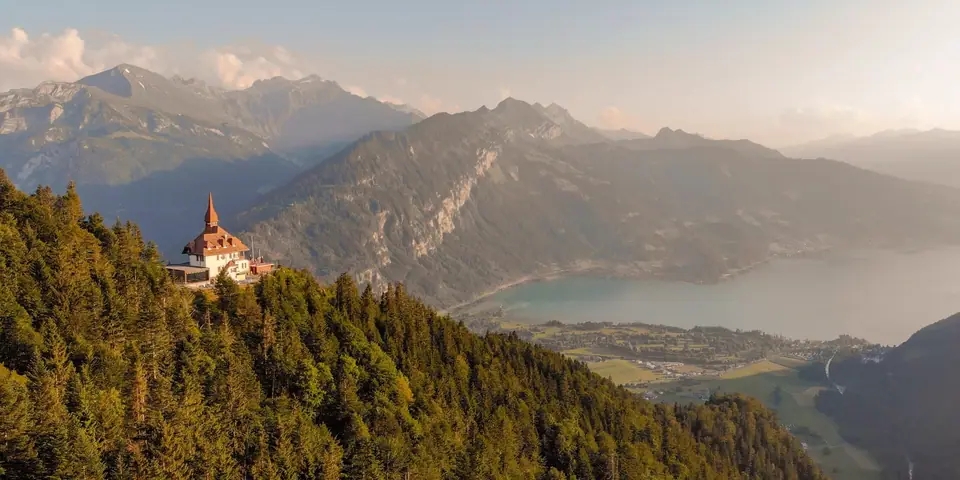
A valley town on the Bödeli floodplain between emerald Lake Brienz and deep blue Lake Thun, where the Höhematte meadow opens directly onto the Jungfrau and five railways climb into the Bernese Oberland.
Quick decisions
Overview
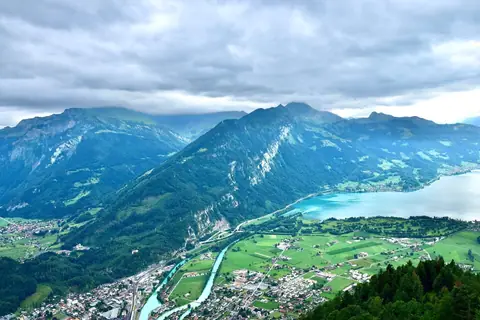
Interlaken sits at 568 metres above sea level on the flat alluvial plain called the Bödeli, formed over millennia by sediment carried down from the Lütschine and Lombach rivers between Lake Brienz (Brienzersee) to the east and Lake Thun (Thunersee) to the west. The River Aare flows 5.5 kilometres across this isthmus, dropping 6 metres from Lake Brienz at 564 metres to Lake Thun at 558 metres. Long before resort hotels lined its central boulevard, the valley floor was governed by an Augustinian monastery recorded in 1133 by Emperor Lothair III under the Latin name Interlacus, meaning between the lakes. After the Bernese Reformation secularised the convent in 1528, the settlement remained known as Aarmühle until it officially adopted the name Interlaken in 1891.
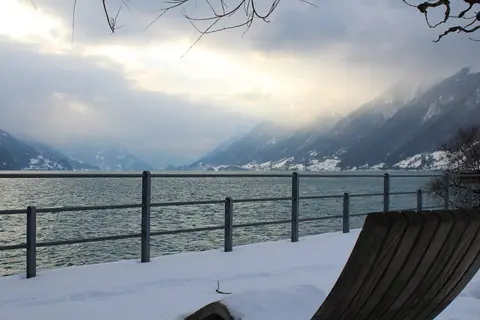
In the middle of town, a 35-acre open meadow called the Höhematte was purchased in 1860 by local hoteliers and municipality leaders to guarantee an unobstructed view southward through the Lütschine gap to the snow-covered Jungfrau (4,158 metres). Because the municipality occupies a compact valley floor, visitors can walk effortlessly between the eastern and western rail stations while enjoying clear views of wooded ridges and glaciated summits. Start your planning with the Interlaken travel guide and the things to do overview, or map out rail and boat days using the three-day Interlaken itinerary.
Getting there
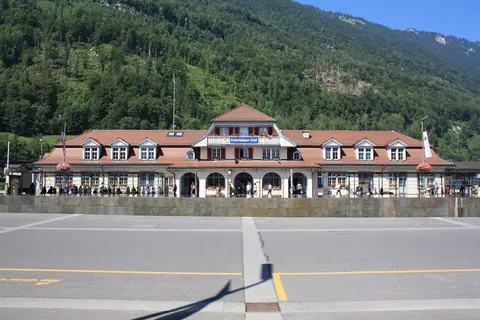
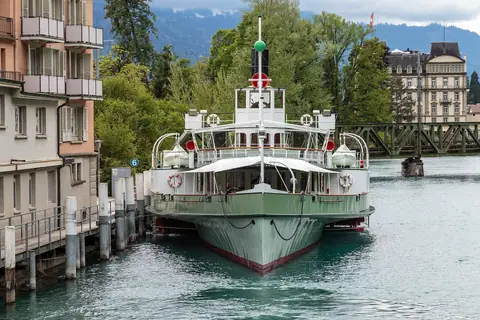
Standard-gauge trains of Swiss Federal Railways (SBB), BLS, Deutsche Bahn ICE, and EuroCity services run from Basel, Bern, and Spiez along the southern shore of Lake Thun to Interlaken West and Interlaken Ost. Interlaken Ost is the eastern terminus of the standard-gauge line and the transfer hub for the metre-gauge Bernese Oberland Railway (BOB, opened in 1890) to Lauterbrunnen and Grindelwald, as well as the Zentralbahn Brünig line (opened in 1888) over the Brünig Pass to Lucerne. BLS ship piers sit adjacent to the river channel at Interlaken Ost for Lake Brienz and on the shipping canal at Interlaken West for Lake Thun.
This dual-station layout separates western lake excursions and central shopping streets from eastern mountain rail transfers and Lake Brienz cruises. Frequent mainline trains, municipal buses, and a flat pedestrian promenade connect the two stations throughout the day, allowing passengers arriving from Zurich, Geneva, or Bern to drop their bags at their chosen hotel and step onto a mountain cogwheel carriage or historic paddle steamer with minimal waiting at the platform.
Where to stay
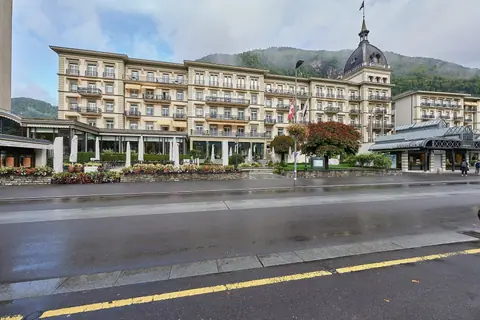
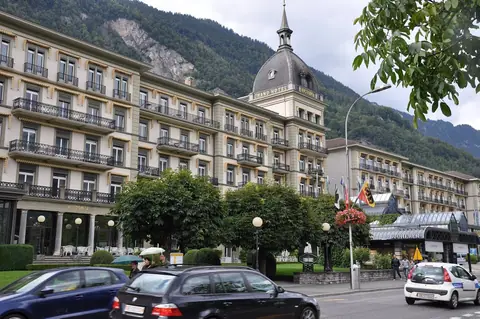
Choosing where to stay in Interlaken depends on your daily rail and boat plans. The Höheweg and Höhematte corridor features grand 19th-century hotels such as the 1865 Victoria-Jungfrau with direct views of the Jungfrau. Across the Aare bridges, Unterseen offers quieter streets around a medieval town square founded in 1279. Staying near Interlaken Ost places you within a five-minute walk of the Harderbahn funicular, Lake Brienz steamers, and early-morning BOB trains into the Lauterbrunnen and Grindelwald valleys.
Because the entire valley floor is level and compact, moving luggage between train platforms and hotel lobbies is straightforward whether you walk along the tree-lined boulevard or hop on a local bus. Every registered overnight guest receives a local visitor card that covers public bus lines across the municipality and neighbouring villages, making it easy to sleep in a quiet lakeside corner on Lake Thun or near the southern railway junction at Wilderswil while keeping rapid access to every mountain departure and lakeside pier.
Things to do
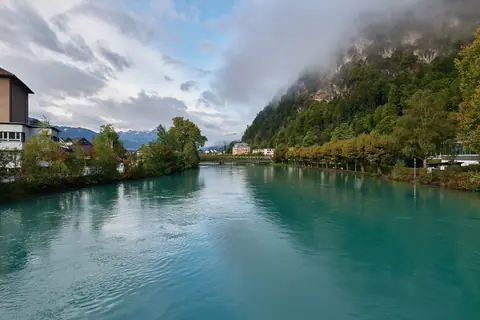
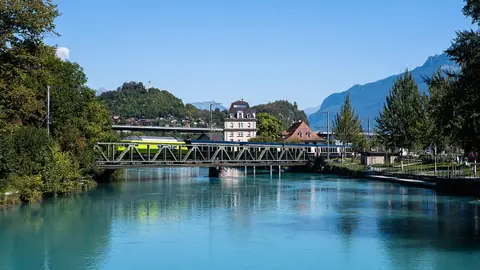
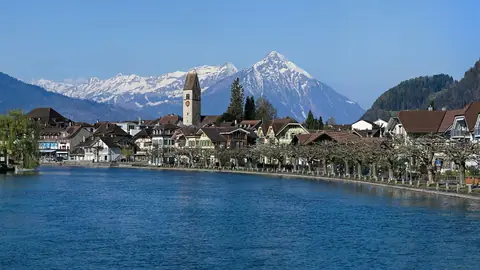
Within the valley, walk the Höhematte park, Höheweg, and Schloss Interlaken, then cross the Aare to explore Unterseen and the lakeside tower of Weissenau Castle. The contrast between the formal promenade gardens of the southern bank and the cobbled medieval square on the northern bank gives walkers two distinct perspectives on regional history within a short stroll. Along the river channel, engineered stone weirs and shaded island paths connect the historic town bridges with quiet nature reserves where reed beds meet the open water.
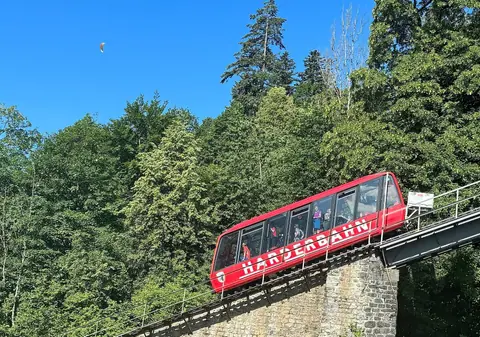
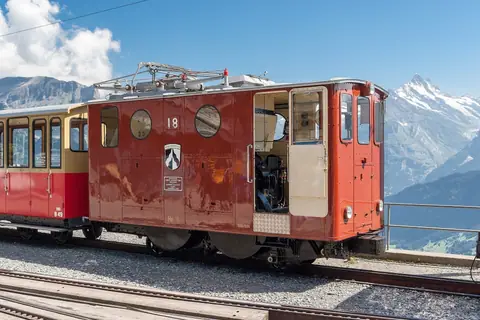
For immediate mountain views, ride the 1908 Harder Kulm funicular to 1,322 metres or board the 1893 Schynige Platte rack railway from Wilderswil to the Alpine Botanical Garden. On the water, sail east on Lake Brienz to Giessbach Falls or west on Lake Thun to St. Beatus Caves, and dedicate a clear day to Jungfraujoch (3,454 metres). Combining low-elevation boat cruises with high-elevation cogwheel trains allows travellers to adapt each day to changing mountain cloud cover without losing sightseeing time across the Bernese Oberland.
Food and drink
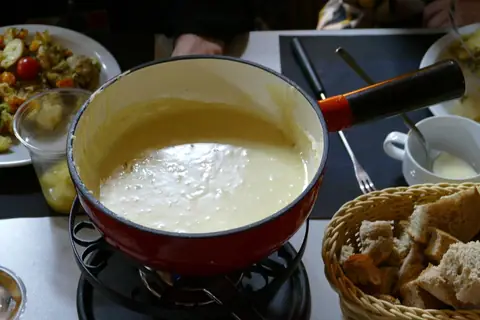
Dining in the Bernese Oberland revolves around alpine dairy, cured meats, and potatoes. Read our guide to what to eat in Interlaken for the background on Käsefondue served in a caquelon, Raclette scraped over boiled potatoes, pan-fried Rösti, Älplermagronen with stewed apple compote, and aged Berner Alpkäse from high mountain pastures. Traditional recipes developed out of the practical needs of herdsmen and valley farmers who relied on nutrient-dense ingredients capable of surviving long winters and steep transport routes between valley villages and summer grazing meadows.
Across both banks of the Aare, historic wood-panelled taverns and hotel dining rooms pair these hearty mountain staples with crisp white wines from the sunny terraced slopes along Lake Thun and freshly caught whitefish from the cold glacial waters of the twin lakes. Meals frequently conclude with light, oven-baked meringues from the neighbouring Haslital valley accompanied by thick double cream, offering a sweet counterpoint to the savoury richness of melted mountain cheese, smoky bacon, and slow-simmered cured pork platters served in traditional wooden bowls.
Culture
Pastoral traditions and 19th-century Romanticism shaped Interlaken's cultural identity. Founded on 17 August 1805 at Unspunnen Castle after the Napoleonic mediation of 1803, the Unspunnenfest revived Swiss wrestling (Schwingen), alphorn blowing, yodelling, and the hurling of the 83.5-kilogram Unspunnenstein boulder. For seasonal weather patterns and daylight hours, consult the best time to visit Interlaken.
Throughout the nineteenth century, European poets, landscape painters, and composers visited the former monastery precinct and the surrounding valleys, turning local alpine folklore and dramatic glacial scenery into celebrated subjects of literature and music. Architectural heritage on the valley floor reflects this transition from a medieval monastic estate and timber mill settlement to a refined Victorian resort, preserving Gothic cloister arches and Baroque bailiff residences alongside ornate Belle Époque hotel facades, concert pavilions, and landscaped friendship gardens that welcome travellers throughout the year.
Weather by month
Interlaken is warmest in July, with average highs around 24°C, and coldest in January, when nights drop to about -3°C. May is the wettest month, with rain on about 2 days. For mild weather with fewer rainy days, aim for June, July, August and September.
| Month | Low | Range | High | Rain | Rainy days |
|---|---|---|---|---|---|
| Jan | -3°C | 3°C | 9 mm | 2 d | |
| Feb | -3°C | 5°C | 9 mm | 2 d | |
| Mar | 1°C | 11°C | 10 mm | 2 d | |
| Apr | 4°C | 15°C | 10 mm | 2 d | |
| May | 8°C | 19°C | 13 mm | 2 d | |
| Jun | 12°C | 22°C | 13 mm | 2 d | |
| Jul | 14°C | 24°C | 13 mm | 2 d | |
| Aug | 14°C | 24°C | 13 mm | 2 d | |
| Sep | 10°C | 19°C | 10 mm | 2 d | |
| Oct | 6°C | 14°C | 9 mm | 2 d | |
| Nov | 1°C | 8°C | 10 mm | 2 d | |
| Dec | -2°C | 4°C | 10 mm | 2 d |
Averages of daily values from 2015 to 2024. Rainy days are days with at least 1 mm of rain. Source: Open-Meteo · Compare destinations by month.
Interlaken on the map
Every place we cover in Interlaken. Tap a category or pin to explore.
In-depth Interlaken guides
Browse the guides grouped by topic: sights, neighbourhoods, food, transport, day trips and trip planning.
Sights, Landmarks & Parks
Key monuments, viewpoints, museums and nature trails.
- Things to Do in Interlaken: Viewpoints, Lake Steamers and RailA curated breakdown of Interlaken's best experiences across valley parks, cogwheel ridges, glacial lakes, and 4,000-metre peaks.
- Höhematte Park, Höheweg and Schloss Interlaken GuideHow an 1860 civic purchase preserved Interlaken's 35-acre Jungfrau view corridor between the Höheweg hotels and the former Augustinian monastery.
- Harder Kulm Funicular (Harderbahn) and Two Lakes FootbridgeEverything you need to know about riding the Harderbahn funicular to Interlaken's 1,322-metre home viewpoint and cantilevered platform.
- Schynige Platte Railway and Alpine Botanical Garden GuideRide an 1893 electric rack railway with historic wooden carriages from Wilderswil to a 1,967-metre ridge garden facing Eiger, Mönch, and Jungfrau.
Neighbourhoods & Where to Stay
Districts, historic quarters and the best bases for your stay.
- Interlaken: Valley Layout, Lakes and Mountain RailHow the Bödeli alluvial plain links Lake Brienz and Lake Thun, with practical orientation between Interlaken West, the Höhematte, and Interlaken Ost.
- Unterseen Old Town, Aare River Bridges and Weissenau CastleDiscover the medieval town of Unterseen on the right bank of the Aare, its historic wooden and stone weirs, and the 13th-century ruins of Weissenau.
- Where to Stay in Interlaken: Höheweg, Unterseen and Ost ComparedA neighbourhood-by-neighbourhood comparison of Interlaken's three main lodging zones, plus lakeside Neuhaus and nearby Wilderswil.
- Best Time to Visit Interlaken: Climate Normals and Seasonal GuideMonth-by-month MeteoSwiss climate normals for Interlaken and how seasonal timetables affect Harder Kulm, Schynige Platte, and the lake steamers.
- 3-Day Interlaken Itinerary: Valley, Lakes, Ridges and JungfraujochA step-by-step three-day plan linking Interlaken's two lakes, historic rack railways, and high-alpine viewpoints with minimal backtracking.
Food & Drink
Local dishes, markets, cafés and dining districts.
Getting Around & Arrival
Airport transfers, public transit, passes and driving rules.
Day Trips & Excursions
Easy half-day and full-day trips from the city.
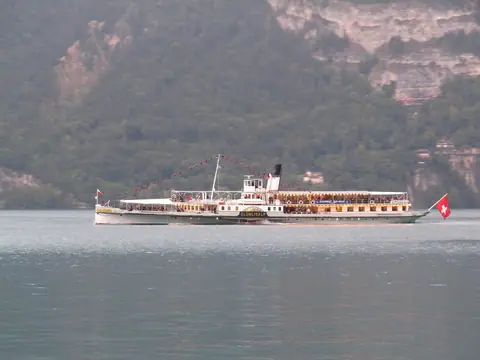
- Lake Brienz (Brienzersee), Paddle Steamer Lötschberg and Giessbach FallsWhy glacial rock flour turns Lake Brienz turquoise, and how to combine a paddle steamer cruise with the 1879 Giessbach funicular and fourteen-stage waterfall.
- Lake Thun (Thunersee), Paddle Steamer Blümlisalp and St. Beatus CavesHow to sail Lake Thun from the Interlaken West canal pier, ride the 1906 steamer Blümlisalp, and walk 1,000 metres inside the limestone St. Beatus Caves.
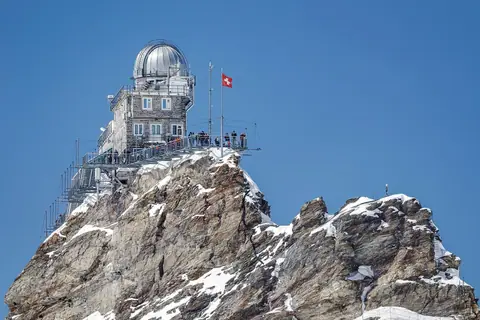
- Jungfraujoch (3,454 m) and the Jungfrau Railway Guide from InterlakenHow to travel from Interlaken Ost to Europe's highest railway station at 3,454 metres, covering the 1912 rock tunnel, Sphinx Observatory, and Aletsch Glacier.
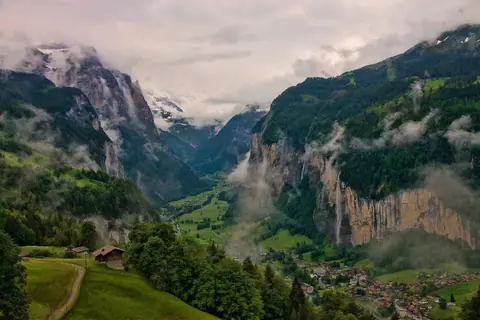
- Lauterbrunnen Valley, Grindelwald and Eiger Day Trips from InterlakenHow the two branches of the Bernese Oberland Railway connect Interlaken Ost with Lauterbrunnen's vertical limestone cliffs and Grindelwald's Eiger basin.
Need your embassy or consulate in Switzerland? See embassies and consulates in Switzerland.
Reviews
Log in to write a review.
No reviews yet.