Zurich
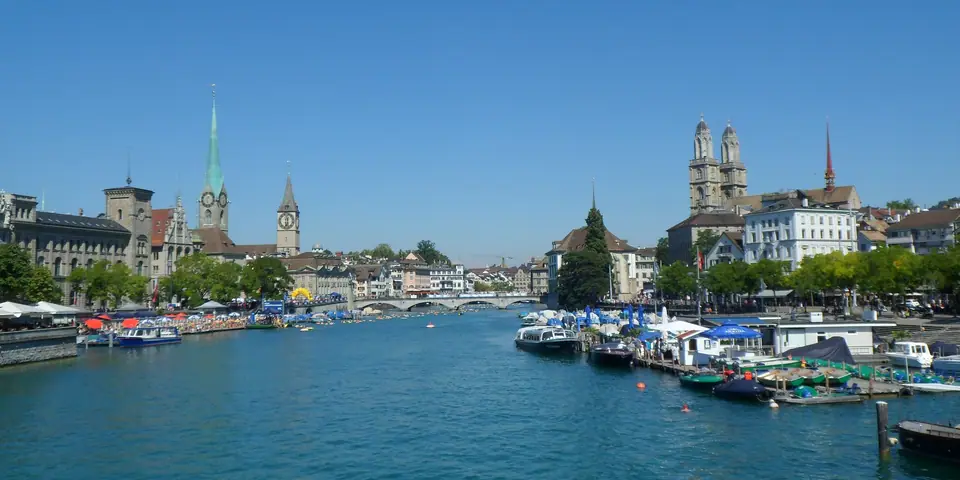
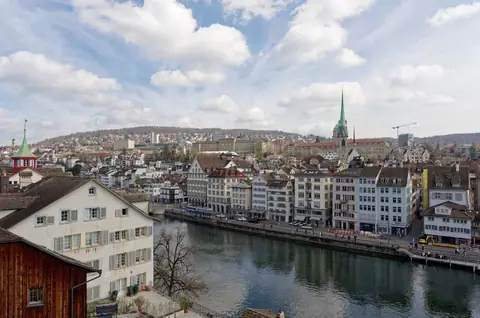
Standing where the Limmat River flows out of the northwestern tip of Lake Zurich, Switzerland's largest city pairs medieval guild houses and Romanesque churches with major art museums, lakeside bathing piers, and ridge trails high on the Uetliberg.
Quick decisions
How many days?
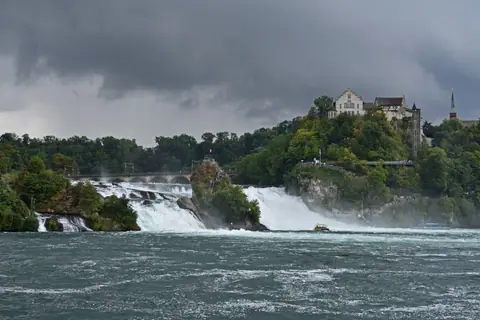
Three days allow you to cover both banks of the Altstadt, a Lake Zurich boat cruise, the Kunsthaus and Landesmuseum, the Uetliberg ridge, and a half-day trip to the Rhine Falls or Kilchberg.
Where should I stay?
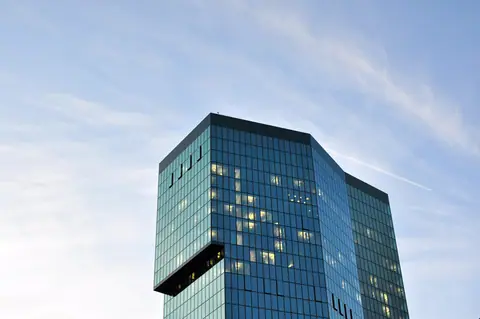
Kreis 1 (Altstadt) places you within walking distance of the Limmat bridges and Zürich HB, Seefeld and Enge suit lakeside stays, and Zürich-West (Kreis 5) offers contemporary hotels near Hardbrücke.
Do I need a car?
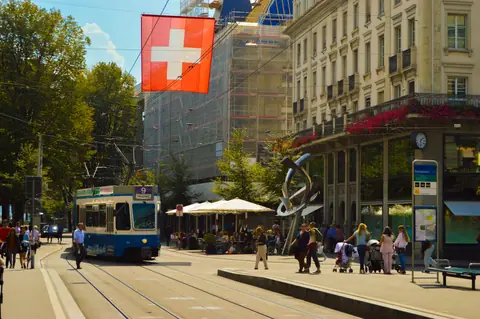
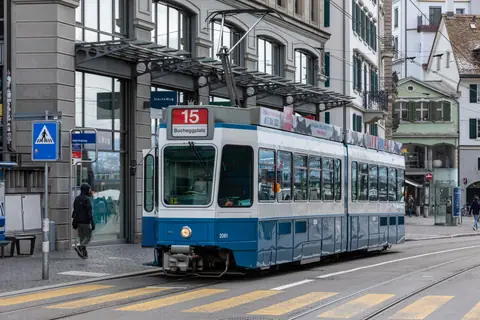
No. Bahnhofstrasse and Paradeplatz are largely closed to private cars, while VBZ trams, S-Bahn trains, the Polybahn funicular, and lake boats run under a single ZVV zonal ticket.
Best for
Medieval and Reformation architecture, modern and Swiss art collections, summer lake swimming, panorama ridge hikes, and classic Swiss dining.
Before you go
ZVV uses a proof-of-payment system without fare gates; always buy and validate your zone ticket before boarding trams, buses, or S-Bahn trains. Check our seasonal weather guide before packing.
Getting around
Fare Zone 110 covers the entire city of Zurich across VBZ trams, buses, S-Bahn rail lines, the UBS Polybahn funicular, and Limmat river boats.
Continue your trip
Pair your city stay with our 3-day Zurich itinerary, what to eat in Zurich, and top things to do.
Overview
Set in north-central Switzerland at the northwestern tip of Lake Zurich, Zurich is the capital of the canton of Zurich and the largest city in the country, with 440,935 municipal residents at the end of 2025 and 1.45 million people in its urban area. Permanently settled for more than 2,000 years around the Roman customs post of Turicum, the city rose to imperial immediacy in the Middle Ages and became the cradle of the Swiss-German Protestant Reformation under Huldrych Zwingli in 1519.
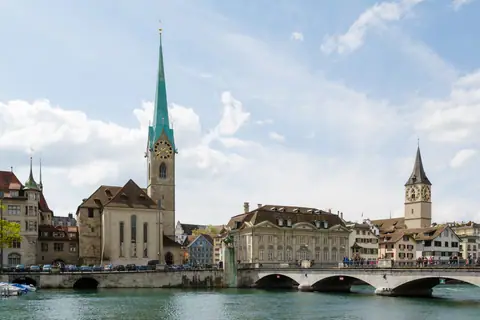
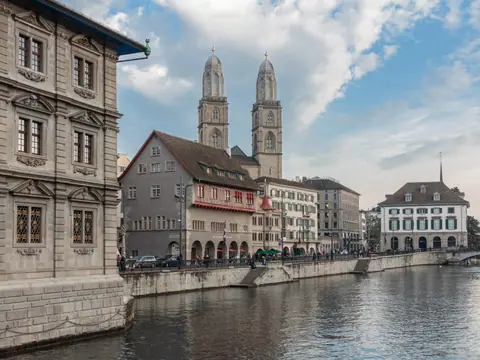
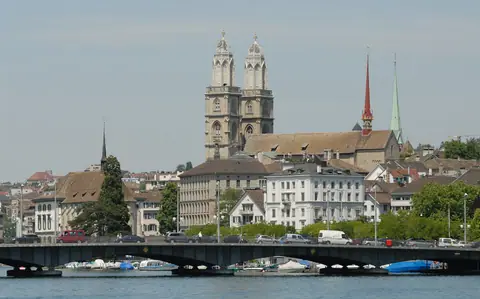
In District 1, the Altstadt, Lindenhof, and Niederdorf preserve moraine hilltop terraces, guild halls, and the 1916 Dada birthplace at Cabaret Voltaire. Across the river bridges stand the spires of Grossmünster, Fraumünster, and St. Peter, while Bahnhofstrasse, Paradeplatz, and Augustinergasse connect railway station plazas to painted medieval bay windows. Beyond the historical ramparts, lakeside parks, bathing piers, and post-industrial creative quarters give the urban landscape a balanced rhythm between heritage and contemporary innovation, supported by research institutions and an integrated public transport network. Because the downtown districts sit directly around the water outflow and railway junction, travellers can explore centuries of architecture on foot while keeping Alpine viewpoints within easy reach.
Getting there
Zurich Airport (ZRH) lies 9 kilometres north of central Zurich and links directly to Zürich Hauptbahnhof, Switzerland's busiest railway station serving up to 2,915 trains daily. Within the city, ZVV Fare Zone 110 integrates VBZ metre-gauge electric trams, S-Bahn lines, the 1889 UBS Polybahn funicular, and ZSG river and lake boats.
Underground rail platforms beneath the airport terminal allow arriving passengers to board frequent mainline and suburban trains that reach the downtown station hall in just a few minutes. From the central concourse, blue-and-white trams fan out across every municipal district on dedicated tracks, making private cars unnecessary inside the urban core. Because the regional transport network operates on an open proof-of-payment basis without platform turnstiles, passengers simply purchase a zonal pass from kerbside machines or mobile apps prior to boarding. The same unified ticket covers scenic water bus rides along the river and up the lower lake shore, while simple zone extensions unlock mountain excursions and cross-canton day trips. Well-marked pedestrian walkways and cycle lanes further support easy surface movement.
Where to stay
Visitors typically base themselves in Kreis 1 (Altstadt) on either bank of the Limmat or near Paradeplatz, while Seefeld and Enge offer lakeside stays and Zürich-West provides modern hotels by Hardbrücke station.
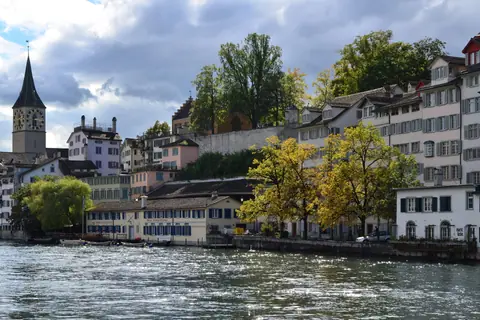
Choosing the west bank of the old town around Rennweg and Münsterhof places you on calm pedestrian streets within easy reach of the main station and luxury shopping avenues. Across the river, the east bank around Limmatquai and the Niederdorf suits travellers who want evening dining, historic tavern lanes, and immediate proximity to the major art galleries and university funicular. Families and summer visitors often gravitate toward the leafy residential quarters along the upper lake basin, where promenade paths, botanical gardens, and wooden swimming bathhouses sit steps from tram stops. For contemporary high-rise architecture, design hotels, and late-night theatre stages, the regenerated factory districts west of the main rail tracks offer spacious rooms with quick commuter rail connections into the historic centre. Every central neighbourhood connects directly to the airport and main railway hub.
Things to do
Start with our Zurich travel guide and overview of things to do in Zurich. Explore the Roman and medieval Lindenhof and Niederdorf, admire the Chagall windows of Fraumünster and twin-towered Grossmünster, and sail from Bürkliplatz across Lake Zurich. Tour the expanded Kunsthaus Zürich and Swiss National Museum, ride the S10 train up Uetliberg (870 m), and take half-day trips to the Rhine Falls and the Lindt Home of Chocolate.
Walking routes through the central quarters link riverfront quays with hilltop academic terraces and leafy lakeshore promenades. On the west bank, quiet cobbled alleys climb past artisan workshops and medieval courtyards toward shaded viewpoints overlooking the Limmat bridges. On the east bank, pedestrian lanes wind beneath historic guild houses, bookshops, and independent galleries before opening onto Sechseläutenplatz and the neoclassical opera house, allowing travellers to combine architectural sightseeing with relaxed afternoons by the water. Public fountains fed by fresh water dot almost every square along the way.
Food and drink
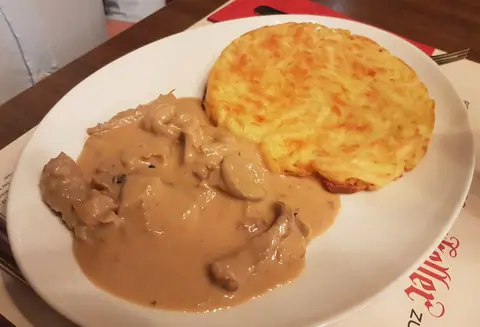
Signature dishes in Zurich include Zürcher Geschnetzeltes (sliced veal in a white-wine, cream, and mushroom sauce mentioned in a cookbook from 1947) served with crispy pan-fried potato Rösti, Confiserie Sprüngli's airy Luxemburgerli macarons on Paradeplatz, and Birchermüesli, invented around 1900 on the Zürichberg by physician Maximilian Bircher-Benner.
Across the old town, historic guild houses and former armouries continue to serve traditional recipes inside wood-panelled dining halls decorated with stained glass and civic crests. During the warmer months, outdoor dining shifts toward riverside terraces along the Limmat, lakeside kiosks, and container gardens in the western industrial quarter. In autumn and winter, local brasseries and seasonal chalets bring ceramic pots of melted Swiss cheese fondue to the table alongside regional white wines, roasted chestnuts, and artisanal bakery specialities.
Food markets inside converted railway viaducts and weekly farmers' stalls on central squares also provide easy opportunities to sample aged mountain cheeses, crusty farmhouse loaves, and dark Swiss chocolate crafted around the lake basin. Café culture thrives from morning espresso counters to afternoon pastry salons along the main avenues.
Culture
From the 1916 Dada performances at Cabaret Voltaire on Spiegelgasse 1 to the 1891 Fellner & Helmer Opernhaus Zürich on Sechseläutenplatz and the Giacometti and Munch holdings at Kunsthaus Zürich, cultural life spans historic guild traditions such as April's Sechseläuten and industrial reuse at the Schiffbau theatre in Zürich-West.
The intellectual heritage of the city reflects centuries of printing, religious reform, and scientific inquiry at its federal and cantonal universities. In spring, medieval craft guilds parade in historical costume through the cobbled lanes to burn the winter snowman effigy on the lakeside square, maintaining civic customs rooted in the fourteenth-century guild constitution. Throughout the year, symphony orchestras, repertory theatre ensembles, and independent art spaces occupy venues ranging from neo-rococo auditoriums to converted brick turbine halls and former breweries. Summer transforms the riverbanks and lakeshore into open-air stages, swimming clubs, and film venues, while winter brings illuminated markets, choral concerts inside Romanesque churches, and major international exhibitions across the museum quarter. Public art installations and historic stone fountains enrich everyday walks across the municipal squares.
Weather by month
Zurich is warmest in July, with average highs around 24°C, and coldest in January, when nights drop to about -1°C. May is the wettest month, with rain on about 2 days. For mild weather with fewer rainy days, aim for June, July, August and September.
| Month | Low | Range | High | Rain | Rainy days |
|---|---|---|---|---|---|
| Jan | -1°C | 4°C | 10 mm | 2 d | |
| Feb | -1°C | 5°C | 9 mm | 2 d | |
| Mar | 2°C | 10°C | 11 mm | 2 d | |
| Apr | 5°C | 15°C | 11 mm | 2 d | |
| May | 9°C | 19°C | 12 mm | 2 d | |
| Jun | 13°C | 22°C | 12 mm | 2 d | |
| Jul | 14°C | 24°C | 12 mm | 2 d | |
| Aug | 14°C | 24°C | 12 mm | 2 d | |
| Sep | 11°C | 19°C | 10 mm | 2 d | |
| Oct | 7°C | 14°C | 10 mm | 2 d | |
| Nov | 3°C | 8°C | 10 mm | 2 d | |
| Dec | 0°C | 4°C | 12 mm | 2 d |
Averages of daily values from 2015 to 2024. Rainy days are days with at least 1 mm of rain. Source: Open-Meteo · Compare destinations by month.
Zurich on the map
Every place we cover in Zurich. Tap a category or pin to explore.
In-depth Zurich guides
Browse the guides grouped by topic: sights, neighbourhoods, food, transport, day trips and trip planning.
Sights, Landmarks & Parks
Key monuments, viewpoints, museums and nature trails.
- Things to Do in Zurich: Churches, Lake Cruises & Cultural HighlightsFrom Chagall's stained glass and Dada cabaret halls to lakeside lidos and Alpine lookouts, these are the essential experiences in Zurich.
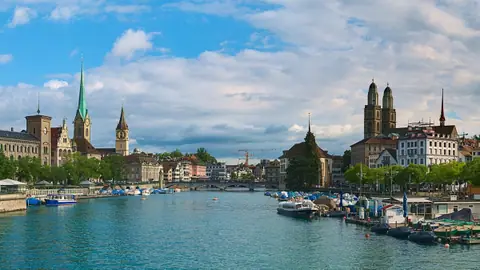
- Zurich's Historic Churches: Grossmünster, Fraumünster, St. Peter & WasserkircheAn architectural and historical guide to the churches along the Limmat that shaped Zurich's medieval guilds and the sixteenth-century Reformation.
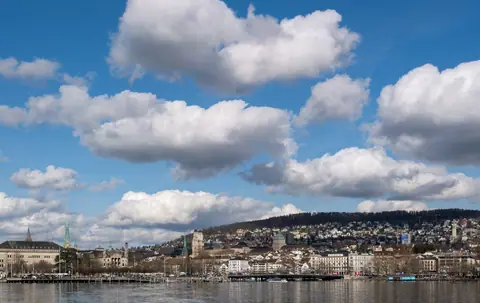
- Lake Zurich Promenades, Bürkliplatz & Boat CruisesDiscover Zurich's waterfront where the glacial lake meets the Limmat, featuring 1881 to 1887 quayside parks, paddle steamers, and wooden lidos.
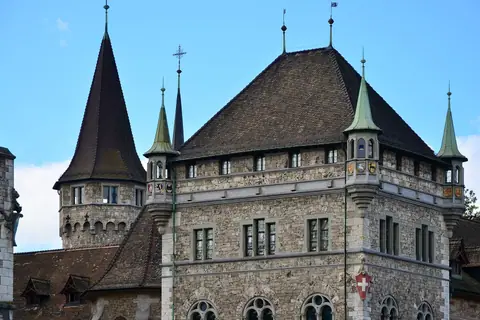
- Kunsthaus Zürich, Swiss National Museum & ETH PolyterrasseExplore Zurich's major cultural institutions: the expanded Kunsthaus on Heimplatz, the chateau-style Landesmuseum by the main station, and ETH Zurich.
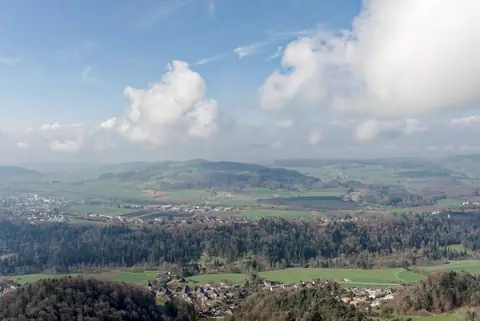
- Uetliberg Mountain: S10 Railway, Uto Kulm & Panorama Ridge TrailsHow to visit Zurich's 870-metre local mountain by S10 train, climb the Uto Kulm lookout tower, and hike the Albis ridge trail to Felsenegg.
Neighbourhoods & Where to Stay
Districts, historic quarters and the best bases for your stay.
- Zurich: Essential Planning for Your VisitAn essential orientation to the largest city in Switzerland, explaining how the Limmat River, Lake Zurich, and the twelve urban districts fit together.
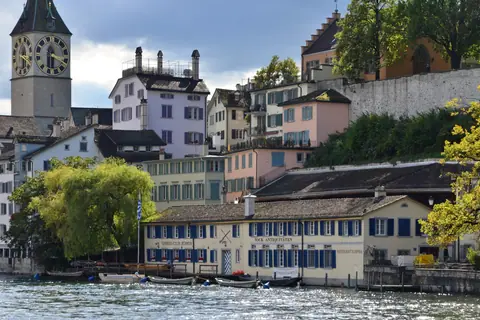
- Zurich Old Town (Altstadt): Lindenhof, Schipfe, Rathaus & NiederdorfA walking guide through District 1 on both banks of the Limmat, covering the Roman hilltop of Lindenhof, waterfront Schipfe, the Rathaus, and Niederdorf.
- Bahnhofstrasse, Paradeplatz & Augustinergasse: Shopping, Banks & Bay WindowsTrace the 1.4-kilometre boulevard built over Zurich's medieval moat from the main railway station to the lake, plus Paradeplatz and Augustinergasse.
- Zürich-West: Prime Tower, Im Viadukt, Frau Gerolds Garten & SchiffbauA guide to District 5 (Industriequartier), where nineteenth-century railway viaducts and shipyards now house design boutiques, market halls, and theatres.
- Where to Stay in Zurich: Best Neighbourhoods & Areas ComparedA practical comparison of Zurich's main accommodation districts, helping you choose between the medieval Altstadt, the lakeshore, and creative Kreis 5.
- Best Time to Visit Zurich: Monthly Weather, Lake Season & SechseläutenA month-by-month breakdown of Zurich's four seasons using official MeteoSwiss 1991 to 2020 climate normals from the Zurich-Fluntern station.
- 3 Days in Zurich Itinerary: Old Town, Lake Cruise, Uetliberg & Rhine FallsA well-paced three-day route pairing Zurich's medieval churches and museums with an Uetliberg panorama ride, Zürich-West, and the Rhine Falls.
Food & Drink
Local dishes, markets, cafés and dining districts.
Getting Around & Arrival
Airport transfers, public transit, passes and driving rules.
Day Trips & Excursions
Easy half-day and full-day trips from the city.
Need your embassy or consulate in Switzerland? See embassies and consulates in Switzerland.
Reviews
Log in to write a review.
No reviews yet.