Quick Field Data
- UNESCO Inscription: 1997 (Ref. 812), serial cultural site across Gutao town and two outlying temples in Shanxi Province; Criteria (ii), (iii), and (iv).
- Scale & Footprint: 245.62 hectares encompassing the 225-hectare (2.25-square-kilometre) walled core plus Shuanglin Temple 6 kilometres southwest and Zhenguo Temple 12 kilometres northeast.
- Access & Ticketing: Pedestrian streets inside the city gates stay free to stroll. Climbing the Ming ramparts or entering Rishengchang Bank, the Confucian Temple, Shuanglin Temple, and Zhenguo Temple requires a Pingyao Ancient City ticket or combined heritage pass checked locally.
- Arrival Logistics: Major commercial flights reach Taiyuan Wusu International Airport (TYN), 70 kilometres northeast (roughly 90 to 100 kilometres south of central Taiyuan). High-speed rail connects southwest from Beijing (472 kilometres air distance, 715 kilometres overland).
Turtle City Ramparts and Urban Origins in Shanxi
Resting along the east bank of the Fen River near the southwestern Taiyuan Basin and eastern Loess Plateau, the Ancient City of Ping Yao preserves China's clearest surviving Ming and Qing county seat. Located in the middle reaches of the Yellow River some 100 kilometres south of Taiyuan, the plain supported human settlement over 2,800 years ago under King Xuan of Zhou (roughly 827 to 782 BC), who ordered early earthen ramparts. Through the Spring and Autumn period the county belonged to Jin, moving under Zhao in the Warring States period before becoming Pingtao under Qin rule and the seat of Zhongdu County under the Han dynasty. Unlike Chinese towns demolished during modern rebuilding, Pingyao kept both its historic street grid and original timber-and-brick fabric standing in situ.
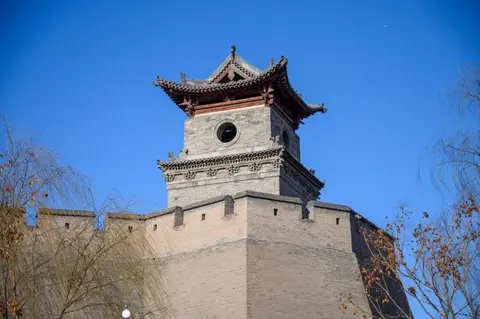
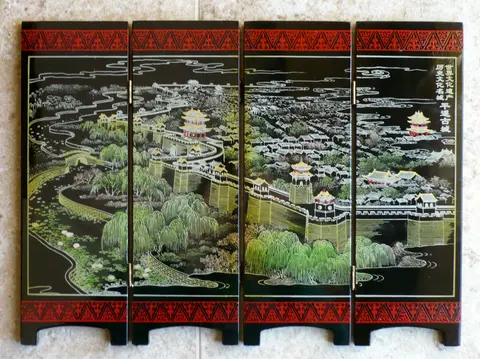
Classic Pingyao Ancient City history took physical form in 1370, the third year of the Ming Hongwu Emperor, when builders wrapped the settlement in 12-metre-high defensive walls. Measuring 6,163 metres around and enclosed by an outer moat 4 metres wide and 4 metres deep, the 2.25-square-kilometre fortress earned the nickname Turtle City from its six barbican gates. One south gate forms the turtle's head, one north gate marks its tail, and two gates each pierce the east and west walls like four walking legs. Four corner towers, 72 watchtowers, and over 3,000 battlements line the wall crest, traditionally recalling Confucius's disciples and scholars, earning recognition second only to the Great Wall among surviving Chinese ramparts. Over five centuries, these defences sheltered shops, temples, and residential wards untouched by large-scale industrial clearing.
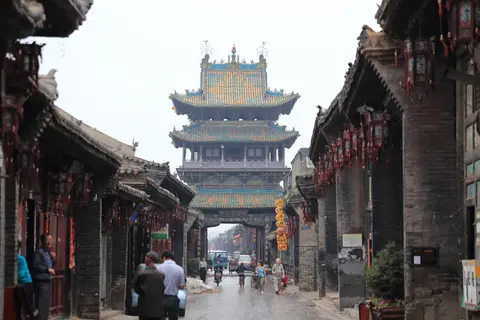
Known locally in Chinese as Pingyao Gucheng, the walled core is administered today as Gutao town overseeing 10 administrative villages in Jinzhong's Pingyao County, adjacent to protected Qi County. Far from becoming an empty museum shell, Pingyao remains a living town where over 20,000 people inhabit historic lanes inside the walls. More than 100 streets and narrow lanes follow a traditional ba gua cosmological pattern lined with nearly 4,000 surviving 17th-to-19th-century storefronts and dwellings. Permanent county population stood at 450,697 in China's seventh census (down 52,015 from 502,712 in 2010, averaging minus 1.09 percent annual change). By early 2024, county residents numbered 442,785 (50.3 percent urbanised across 222,832 urban and 219,953 rural dwellers, including 225,301 males and 217,484 females), while Gutao held 48,531 residents across 16,634 households in 2009.
Cultural inventories register 1,075 immovable relics across the ancient town and surrounding countryside, including 143 protection units and 20 top national heritage sites spanning Five Dynasties, Song, Jin, Yuan, Ming, and Qing eras, plus over 300 ancient ruin sites. Periodic restorations begun in the 15th century led into systematic conservation from 1979 onwards, earning State Council designation as a Chinese Historical and Cultural City in 1986 and UNESCO inscription in 1997. Protected under the 1982 Law on the Protection of Cultural Relics, China's Urban-rural Planning laws, and Pingyao's own conservation statutes, the walled core gained China's top 5A national tourist rating in 2015. A dedicated World Cultural Heritage Management Committee coordinates maintenance, curbs intrusive modern construction, and protects the town after a partial collapse of the southern wall in 2004.
China's Draft Banking Capital and Courtyard Architecture
From the 16th century regionally through the late 19th and early 20th centuries empire-wide, Pingyao served as Qing China's financial nerve centre between imperial Xi'an and Beijing. Because bandits plagued overland routes across northern China's plains, merchants hauling chests of gold and silver bullion risked severe highway losses on every journey. To solve that security threat, Shanxi financiers invented standardised paper drafts and remittance bonds redeemable across distant regional branches. Soon over 20 banking institutions operated inside Pingyao's grey-brick lanes, accounting for more than half of the country's entire draft banking network.
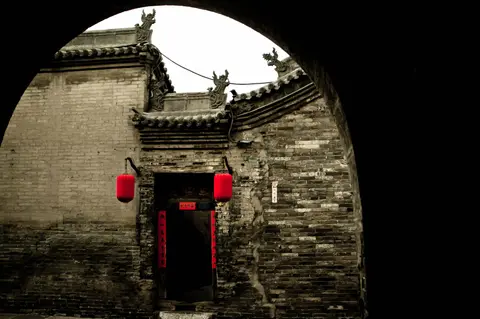
Foremost among them stood Rishengchang, China's earliest and largest exchange bank, controlling nearly half of the late Qing silver trade at its zenith before going bankrupt in 1914 amid post-revolutionary upheaval. Accumulated banking fortunes transformed local residences into comprehensive collections of northern Chinese siheyuan courtyard houses built from the 14th to the 19th centuries. Every type of traditional Chinese courtyard layout appears inside these lanes, uniting construction methods and building materials across five centuries of Han urban life. Street doorways display carved stone guardian lions, horse-mounting blocks, and hitching posts supporting ornate chuihua hanging-flower gates carved with historical figures, blossoms, and birds. Under projecting timber eaves, artisans painted polychrome murals depicting Sanxing longevity figures, classical stories, and the four scholarly arts of qin music, go strategy, calligraphy, and painting.
Merchant wealth also shaped fortified rural estates immediately outside Pingyao, exemplified by the nearby Qiao Family Compound. Constructed from 1756 by tea and tofu merchants and vastly expanded by third-generation head Qiao Zhiyong, who built a Shanxi commercial empire, Qiao's Grand Courtyard covers over 8,000 square metres arranged from above like the Chinese character Xi (meaning pleasure). Six main yards and 20 inner courtyards bounded by 313 rooms sit behind 10-metre defensive perimeter walls equipped with rooftop guard patrol alleys, remaining a private family home until the 1980s before opening as a museum. Large stone guardian lion statues stand guard outside main gateways, combining traditional stone carving and heavy timber joinery from the 18th and 19th centuries. Inside Gutao itself, economic records note 19,059 workers in 2009, including 3,811 farmers mechanising grain and cotton cultivation across 613 hectares (9,977 mu) together with prized cured beef, energy-focused industry, rapid tourism expansion, and traditional polished lacquerware craft.
Comparing Pingyao's intact brick-walled town plan against other Chinese cities reveals why early county-seat preservation carries such weight. Across more than 100 narrow lanes, ornate wood carvings, brick reliefs, and stone door pillars survive beside everyday shops and family courtyards, documenting continuous Han cultural, social, economic, and religious life across imperial dynasties. Detailed municipal rules enacted under China's Cultural Relics laws also protect outlying temple skylines and historic residential wards from jarring urban expansion across the surrounding county seat.
Shuanglin and Zhenguo Outlying Monastic Sanctuaries
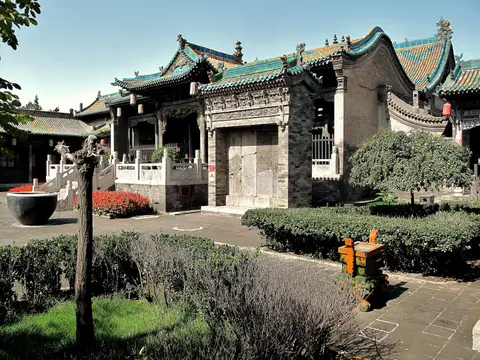
Two rural Buddhist complexes enclosed inside the 245.62-hectare World Heritage boundary add immense artistic and structural depth beyond the Ming city walls. Located 6 kilometres southwest of the county seat, Shuanglin Temple preserves over 2,000 polychrome clay sculptures fashioned during the Ming and Qing dynasties, hailed internationally as an oriental art gallery of painted sculpture. Twelve kilometres northeast sits Zhenguo Temple, anchored by its Five Dynasties Wanfo Shrine, one of China's oldest surviving wooden hall structures predating the 1370 fortifications by centuries. Together, the walled town, Shuanglin Temple, and Zhenguo Temple give visitors a complete picture of five centuries of Han social life, religious devotion, military defence, and late imperial commerce while balancing growing tourist interest against residential daily needs.
Modern heritage conservation ensures Pingyao's architectural layout endures without sacrificing living community vitality. Since China enacted its Cultural Relics Protection Law in 1982 and updated implementation rules in 1991, specialist bodies enforce strict height, facade, and material standards across Gutao's 100-plus lanes. Unlike towns emptied into open-air replicas, Pingyao preserves continuous family life inside carved courtyard homes, keeping doors and painted eaves weathered naturally together with modest guild workshops. Walking slowly from the 1370 southern barbican through Rishengchang Draft Bank out toward Shuanglin and Zhenguo temples traces how Shanxi merchants converted rural trade wealth into lasting urban artistry. At the same time, local authorities continue monitoring drainage, timber upkeep, and crowd flow along busy South Avenue to protect older mud-and-brick masonry from tourism pressure and seasonal winter dust storms across the Taiyuan Basin. Detailed regulations restrict commercial neon signage, guard historic courtyard layouts against demolition, and ensure heritage tourism brings steady sustainable livelihoods to resident craftsmen across the walled town.
Access Zones Across the Ancient City and Temples
Separating central walled avenues from the two outlying UNESCO temples and nearby merchant estates creates an unhurried itinerary across Shanxi's basin.
| Complex Zone | Key Highlights | Access & Ticket Rule |
|---|---|---|
| Ming City Walls & Gates. | 1370 ramparts spanning 6,163 metres, six barbican gates, four corner towers, 72 watchtowers, and tiled town views. | Ground gates open freely for pedestrian entry. Walking along top ramparts requires the combined heritage pass. |
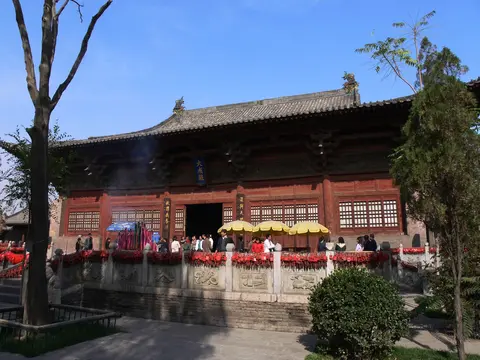
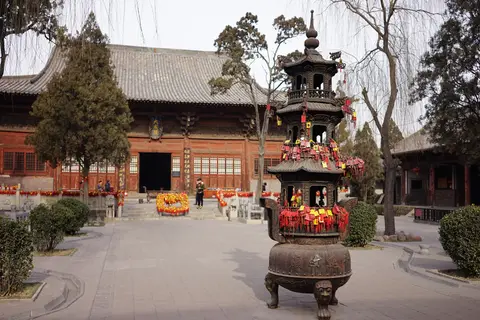
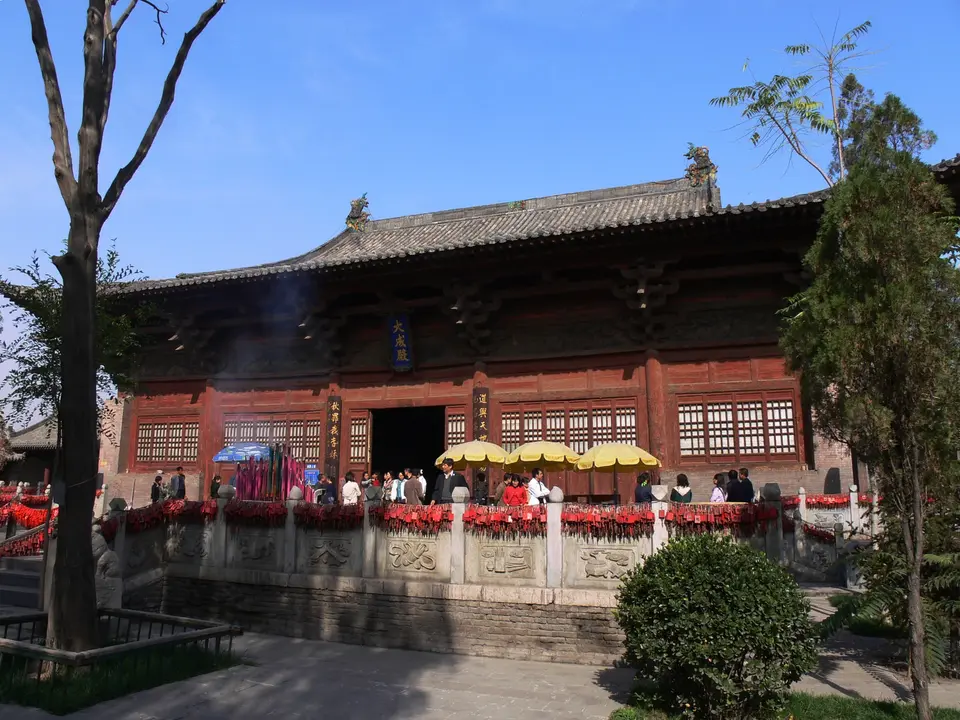
| West Street & South Avenue Core. | Rishengchang Draft Bank, City Tower (Shilou), Confucian Temple Hall of Great Accomplishment, and carved siheyuan alleys. | Old-town lanes remain free to stroll. Individual courtyards validate the Pingyao pass at entry gates. |
| Shuanglin Temple (Southwest). | Monastic complex 6 kilometres southwest housing over 2,000 Ming and Qing polychrome sculptures. | Connected by local road or rural bus. Requires separate ticket admission or eligible regional heritage pass validation. |
| Zhenguo Temple (Northeast). | Five Dynasties timber Wanfo Shrine 12 kilometres northeast demonstrating early pre-Ming joinery. | Reached northeast of town by taxi or shuttle. Check local gate ticketing before travelling out from the walls. |
Three Architectural Details Across Pingyao's Streets and Ramparts
- Turtle-Plan Gates and 72 Watchtowers: Walk the crest of the 12-metre Ming ramparts to trace how six barbican gates mimic a tortoise head, tail, and four legs. Notice the rhythmic spacing of 72 watchtowers and over 3,000 battlements guarding the 4-metre perimeter moat.
- Carved Chuihua Gates and Stone Mounting Blocks: Pause outside merchant compounds along West and South streets to spot carved stone mounting blocks beside entrance lions. Look upward under eaves to find delicate wooden hanging-flower brackets and painted classical scholarly motifs.
- Five Dynasties Timber Brackets at Zhenguo Temple: Inside Wanfo Shrine northeast of the city walls, inspect massive interlocking wooden roof brackets supporting broad eaves without modern steel nails. This early joinery predates the 1370 city walls by several centuries.
How to Get to Pingyao From Beijing and Seasonal Timing
Planning what to see in Pingyao works comfortably across two full days pairing old-town banking courtyards with Shuanglin and Zhenguo temples. Under a temperate continental climate averaging 10.2 degrees Celsius and roughly 540 millimetres of annual precipitation concentrated in summer, autumn delivers crisp sunny days and mild walking conditions. By contrast, winter turns cold under northwestern winds and occasional sandstorms with sparse snow, while spring brings wide daily temperature shifts and light rain.
Travellers planning routes from Beijing ride high-speed trains southwest down the 715-kilometre overland rail link across Shanxi Province, while flights arrive at Taiyuan Wusu International Airport (TYN), 70 kilometres northeast (roughly 90 to 100 kilometres south of central Taiyuan). Adjacent protected county towns like nearby Qi County also pair smoothly with Pingyao when exploring Shanxi's basin. Combine northern rail trips with our Beijing destination guide or browse additional imperial cities inside our UNESCO World Heritage Atlas.