


























Quick Field Data
- UNESCO Inscription: Inscribed in 1987 (criteria i, iii, iv, vi) as a cultural necropolis in Lintong District, at a distance of 35 kilometres northeast from Xi'an in Shaanxi Province, China.
- Scale & Footprint: A 56.25-square-kilometre property encompassing over 600 sites and nearly 200 accompanying pits around a rammed-earth tomb mound surviving to 51.3 metres.
- Access & Ticketing: Entry covers the protective museum hangars over Pits 1, 2, and 3 as well as the landscaped tomb mound park; check the official site for real-name ticket reservations.
- Arrival Logistics: Situated at the northern foot of Mount Li (Lishan Mountain) in Lintong District, linked by direct metro, suburban rail, and bus routes from central Xi'an.
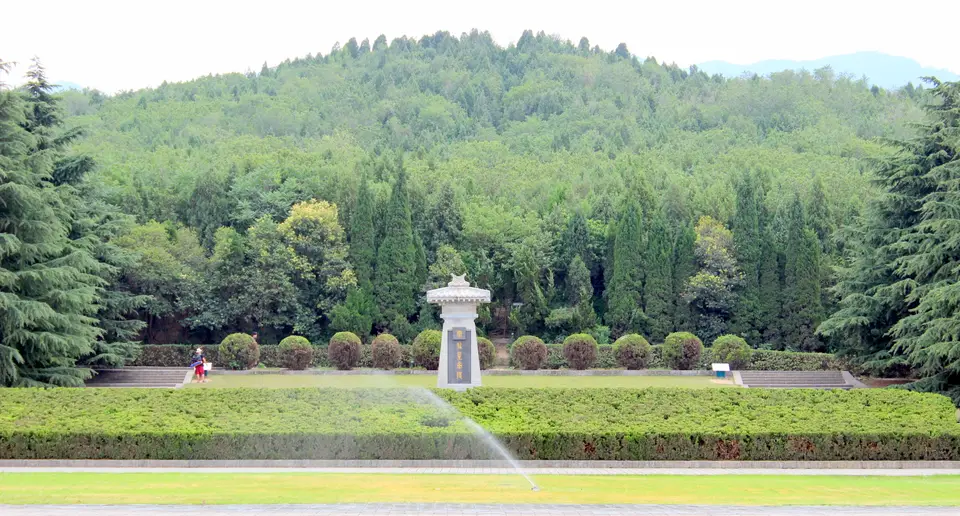
Standing at the northern foot of Lishan Mountain some 35 kilometres northeast of Xi'an in Shaanxi Province, the Mausoleum of the First Qin Emperor forms the largest imperial funerary complex in Chinese history. Begun in 246 BCE when the future Qin Shi Huang ascended the throne at age 13 and intensified after he conquered six rival states to unify China in 221 BCE, the necropolis occupied up to 700,000 conscripted labourers from every province until 208 BCE, two years after the emperor's death in 210 BCE. Designed under the supervision of Prime Minister Li Si to mirror the urban plan of the Qin capital at Xianyang, the complex centres on a truncated earthen pyramid that originally rose 76 metres and survives today to a height of 51.3 metres. Surrounding this unexcavated burial mound across a protected zone of 56.25 square kilometres lie more than 600 archaeological sites and nearly 200 accompanying pits. The site remained hidden underground until March 1974, when local farmer Yang Zhifa alongside Wang Puzhi and five brothers struck hardened red earthenware and bronze arrowheads at a depth of two metres while digging a well in Xiyang village, Lintong County. The scale is monumental. Today the mausoleum is a cornerstone of the UNESCO World Heritage Atlas, preserving hyper-realistic terracotta garrisons, bronze chariots, and the physical blueprint of China's first unified empire.
What distinguishes the Lintong necropolis from every earlier burial in East Asia is its conception as a complete subterranean microcosm of the Qin state, court, and military machine. Geographer Li Daoyuan, writing six centuries later in the Shui Jing Zhu, noted that Mount Li was selected because its northern slopes were rich in gold and its southern slopes rich in fine jade. In the first century BCE, the historian Sima Qian recorded within the sixth chapter of the Records of the Grand Historian that workmen dug through three layers of groundwater, cast a bronze outer coffin, built miniature palaces and towers for a hundred officials, rigged mechanical crossbows, illuminated the chamber with whale or walrus fat candles, and used mechanically flowing mercury to simulate the Yangtze, the Yellow River, and the great sea beneath constellations on the ceiling. Modern soil testing has detected anomalous mercury concentrations reaching 1,440 parts per billion at one central point and averaging 205 parts per billion across 53 other points, lending empirical support to Sima Qian's description while an underground dam and drainage system discovered in 2000 still keeps groundwater at a depth of 30 metres away from the burial chamber.
Xianyang's Subterranean Mirror and the Terracotta Garrison
The architectural geometry of the mausoleum reproduces the double-walled enclosure of ancient Xianyang oriented along a north-south axis, with an inner city circumference of 2.5 kilometres and an outer city circumference of 6.3 kilometres. Positioned in the southwest of the inner enclosure and facing east, the unexcavated underground palace has been mapped through magnetic anomaly and remote-sensing surveys. A four-metre-high brick perimeter wall measuring 460 metres north to south and 390 metres east to west sits beneath a rammed-earth enclosing wall of 30 to 40 metres, sheltering a central tomb chamber 80 metres long, 50 metres wide, and about 15 metres high at an estimated depth between 20 and 50 metres. In December 2012, archaeologists who had been excavating surface foundations since 2010 announced the discovery of a vast courtyard-style imperial palace measuring 690 metres by 250 metres across 170,000 square metres, containing 18 courtyard houses and a main hall nearly a quarter the size of Beijing's Forbidden City.
Distributed inside and outside the two enclosure walls are specialized pits that staffed the emperor's afterlife. West of the mound inside the inner wall lay exquisite painted bronze chariots and horses, alongside terracotta courtiers and civil bureaucrats. Between the inner and outer walls, excavators uncovered terracotta entertainers, strongmen, and a pit filled with stone suits of armour, while the northern sector housed an imperial park populated by bronze cranes, swans, and ducks accompanied by musicians, and the outer western sector contained imperial stables with real horses, kneeling terracotta grooms, and mass graves of forced labourers. About 1.5 kilometres east of the tomb mound stand the famous military pits excavated after Fang Shumiao and cultural centre curator Zhao Kangmin recognised the significance of Yang Zhifa's 1974 well discovery, for which Yang had initially received 10 yuan for two carts of fragments. Pit 1 was excavated from May 1974 and covered by a protective hall in 1979, followed by Pit 2 in May 1976 and Pit 3 in July 1976. Across 20,000 square metres, these three pits have yielded around 7,000 life-size terracotta warriors and horses, approximately a hundred wooden battle chariots, and tens of thousands of bronze lances, swords, axes, halberds, bows, and arrowheads whose preservation owes to soil chemistry, tin-bronze alloys, and lacquer layers rather than deliberate chromium plating.
Walking the Three Military Pits and the Lishan Mound
A visit to the Mausoleum of the First Qin Emperor splits naturally between the eastern museum complex housing Pits 1, 2, and 3 and the quiet, tree-covered pyramid of Mount Li 1.5 kilometres to the west. Most visitors spend their time solely inside the three vast hangars of the Terracotta Army, where infantry, kneeling archers, cavalrymen, and charioteers stand in battle formation facing east toward the states Qin conquered. Yet walking the landscaped inner and outer city perimeters around the 51.3-metre Lishan tomb mound is essential for grasping how the garrison functioned merely as the eastern vanguard of a 56.25-square-kilometre imperial capital.
- Examine Pit 3 and Pit 2 before the main infantry hall: Starting with the compact command headquarters of Pit 3 and the mixed cavalry, chariot, and kneeling archer formations of Pit 2 makes it much easier to read the military organisation when you enter the 7,000-strong main army of Pit 1.
- Take the shuttle to the Lishan tomb mound park: Do not skip the western necropolis zone; walking around the truncated pyramid and visiting the auxiliary pits of acrobats, civil officials, and bronze waterbirds reveals the inner and outer Xianyang city layout.
- Study the bronze chariots and weapon metallurgy: Spend dedicated time in the exhibition galleries inspecting the half-scale painted bronze chariots, horse halters, and excavated crossbows and swords before checking the official site for current conservation gallery openings.
Conservation Ethics and the Unopened Underground Palace
Since 1976, scholars and engineers have debated whether to excavate the central burial mound or nearby tombs despite seismic risks and tourism pressures. The State Administration of Cultural Heritage has consistently rejected proposals to open the underground palace or adjacent royal tombs because early excavations after 1974 showed how rapidly the bright mineral lacquer and painted pigments on the terracotta warriors flaked and oxidized once exposed to air. Even within the enclosed halls of Pit 1, conservation scientists must constantly monitor bacterial and fungal communities that deteriorate earthenware surfaces, while any breach of the central chamber would cause the liquid mercury veins to volatilize immediately.
Leaving the First Emperor's subterranean palace sealed beneath its wooded mound gives the Lintong landscape a rare archaeological gravity. Whether Professor Duan Qingbo's argument that core construction concentrated into seven years between the 28th and 34th years of the reign (219 to 213 BCE) after unification or Sima Qian's longer 38-year timeline from 246 to 208 BCE before Zhang Han redeployed the workforce and Xiang Yu's rebellion swept Xianyang is followed, the physical remains speak with unmatched clarity. Every individualised moustache, armour plate, and horse halter in the Lintong pits records the craftsmanship and administrative reach that forged a unified China.
