Quick Field Data
- UNESCO Inscription: 1995 (Ref. 741), cultural port settlement in Lunenburg County, Nova Scotia, Canada; Criteria (iv) and (v).
- Scale & Footprint: 33.85-hectare Old Town core laid out as a steep hillside rectangular grid overlooking a natural harbour, surrounded by a 32.44-hectare protective buffer zone.
- Access & Ticketing: Commemorated as a National Historic Site of Canada (1991) and governed by municipal Heritage Conservation District bylaws; public streets and harbourfront wharves remain open year-round, while museums require local admission.
- Arrival Logistics: Major commercial flights arrive at Halifax / Stanfield International Airport (YHZ), 85 kilometres northeast. Regional Canadian heritage routes extend 601 kilometres northwest toward Quebec City.
Mi'kmaq Shores, Foreign Protestants, and the 1753 Lunenburg Plan
Sheltered inside a natural harbour on the western shore of Mahone Bay roughly 100 kilometres southwest of Downtown Halifax, Old Town Lunenburg sits on a heavily indented coastline of the Fairhaven Peninsula. Long before European colonists arrived, Mi'kmaq communities moved seasonally between coastal hunting and clam-gathering grounds stretching from Mahone Bay toward modern Lunenburg, welcoming up to 300 summer inhabitants. Earlier Mi'kmaq names such as āseedĭk, meaning clam-land, and Makikewe'j entered Acadian French usage as Mirliguèche after Acadians settled nearby during the 1620s. Peaceful trade and intermarriage bound both communities together, with Governor Edward Cornwallis reporting comfortable Mirliguèche homesteads thriving well as late as 1749.
Imperial rivalry across Acadia shifted regional control after France ceded peninsular Nova Scotia to Britain under the 1713 Treaty of Utrecht. Britain built Fort George at Halifax in 1749 and recruited over 1,400 European artisans and farmers known as Foreign Protestants to establish loyal settlements. After promised Halifax land grants stalled and frustration mounted, officials dispatched settlers led by Charles Lawrence and roughly 160 soldiers to Lunenburg in July 1753. Naming the settlement after King George II, Duke of Braunschweig-Lüneburg, pioneers assembled prefabricated blockhouses and defensive palisades across a narrow neck of land.
Early colonial winters tested the settlers severely when delays in provisions and distrust sparked an armed uprising called the Lunenburg Rebellion before troops under Colonel Robert Monckton restored British order. By 1754, the young port operated a sawmill and store, though warfare returned swiftly following the 1755 expulsion of the Acadians and arrival of New England Planters. Mixed Mi'kmaq and Maliseet raids devastated Lunenburg in 1756, followed by the 1758 Lunenburg Campaign before regional hostilities ended around 1760. Later conflict saw American Revolutionary privateers sack the port in 1782 before town residents fortified the harbour and fitted out the privateer Lunenburg during the War of 1812.
Through the 19th century, maritime trade pivoted from local coastal harvests toward ambitious offshore Grand Banks fisheries and deep-sea schooner construction. Lunenburg exported dried and salted cod known as the Lunenburg Cure straight to Caribbean markets, honoured today by a hammered copper cod weather vane atop St. Andrew's Presbyterian Church. Between 1920 and 1933, United States Prohibition even turned the discreet South Shore port into a lively base for Atlantic rum-running. Meanwhile, Lunenburg's famous Smith & Rhuland shipyard launched celebrated wooden vessels including Bluenose (1921), Flora Alberta (1941), Sherman Zwicker (1942), Bluenose II (1963), Bounty (1961) and the HMS Surprise replica (1970).

Hillside Timber Grid, St. John's Church, and Offshore Shipbuilding
Built across a steep south-facing glacial drumlin hillside overlooking both front and back harbours, Old Town Lunenburg exemplifies 18th-century British colonial town planning drawn directly in Britain. Surveyors stamped compact rectangular property lots and rigid rectilinear streets onto sloping Cambrian and Ordovician bedrock without bending roadways to match steep contours. Because town limits later expanded east and west during 19th-century prosperity into neighbouring New Town, the original 33.85-hectare grid escaped disruptive high-rise redevelopment. Only early defensive perimeter fortifications vanished above ground, leaving central public squares, narrow streets and functioning docks clearly legible.
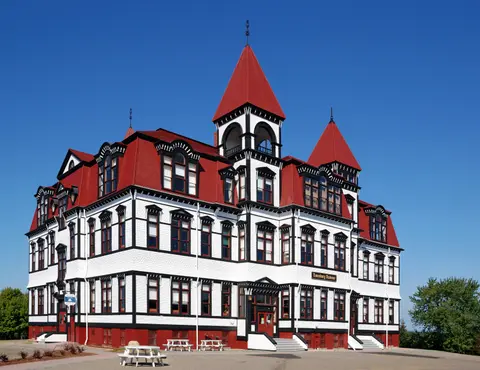
Preserving over 250 years of cohesive vernacular wooden architecture sets Lunenburg apart across North America. Roughly 40 historic structures inside Old Town carry listings on the Canadian Register of Historic Places, complemented by around a dozen registered landmarks across adjacent New Town. Highlights include the 1793 Knaut-Rhuland House museum operated by the Lunenburg Heritage Society, the 1890 wooden Zion Evangelical Lutheran Church and the 1763 St. John's Anglican Church, built in soaring Carpenter Gothic timber framing. Nearby stands the 1909 Lunenburg Opera House, while the ornate Victorian mansard profile of Lunenburg Academy crowns the northern hilltop crest.
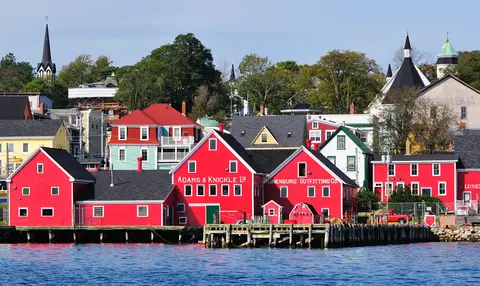
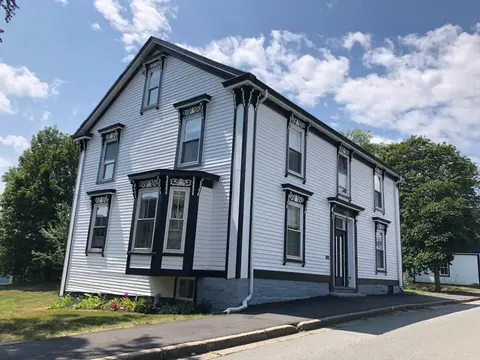
Local builders forged a distinctive regional wooden style featuring clapboard and shingle siding, steep gable roofs, bay windows and painted trim unified by harmonious scale. One hallmark architectural invention is the five-sided projecting dormer locally dubbed the Lunenburg bump, engineered to draw extra light and headroom into steep upper-storey lofts. Because residents maintained timber homes continuously across prosperous late-1800s shipbuilding decades and leaner modern eras, almost zero modern concrete infill breaks the historic streetscape. Even contemporary commercial ventures and community buildings follow strict material guidelines favouring painted wood over synthetic siding.
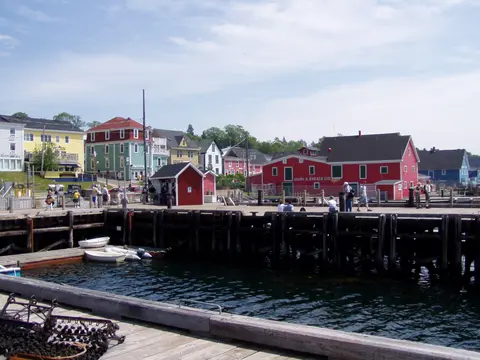
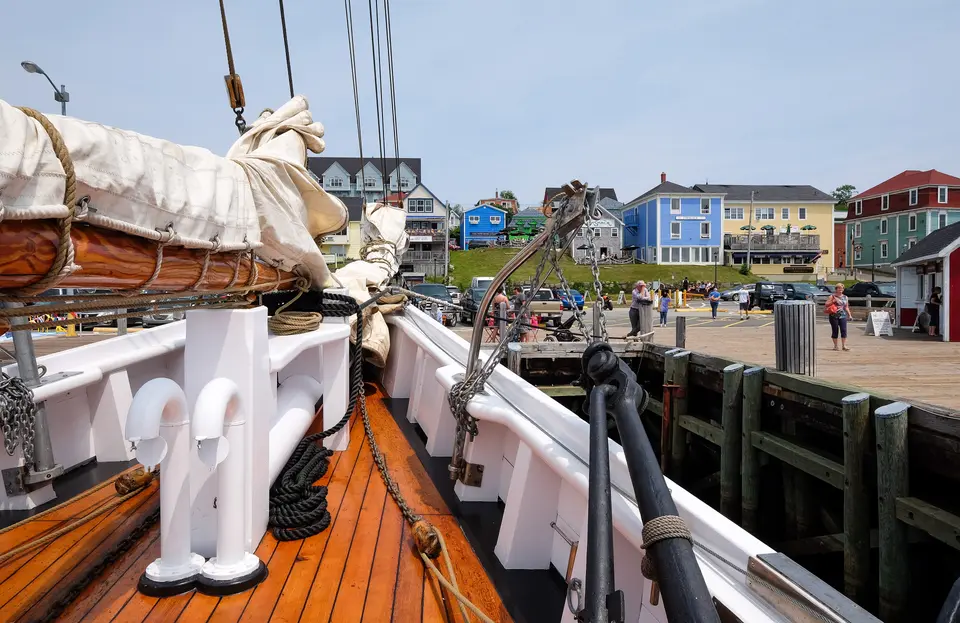
Down on the working waterfront, historic marine trades remain visible right beside heritage museum exhibits. The Fisheries Museum of the Atlantic, part of the Nova Scotia Museum network, anchors dockside wharves with historic fishing vessels including the schooner Bluenose II. When Smith & Rhuland passed to Scotia Trawler Equipment Limited in 1967, local shipyards shifted post-war construction from wooden schooners toward steel trawlers aided by skilled Newfoundland labourers, leaving the original yard site today as a recreational marina. Active maritime industry persists via ABCO Industries, founded in 1947 on the World War II Camp Norway site to build welded aluminium vessels, and Lunenburg Shipyard, operating a dry dock, machining shops, carpentry works and 272-kilogram foundry castings.
Waterfront Preservation, Fishery Shifts, and Heritage Bylaws
Keeping an active port town authentic when offshore Atlantic fisheries face long-term uncertainty forms Lunenburg's central preservation challenge. During 2005, the Province of Nova Scotia stepped in to buy 17 waterfront buildings from Clearwater Foods, owner of High Liner Foods, transferring stewardship to the Lunenburg Waterfront Association to prevent speculative demolition. Subsequent restoration work starting in 2010 added $1.5 million in shipbuilding infrastructure on the waterfront during the Bluenose II rebuild. Yet rising property values, steep wooden maintenance costs and shifting offshore fish stocks continue testing private homeowners who own almost the entire 33.85-hectare heritage district.
Looking at modern lunenburg nova scotia population and workforce patterns reveals how community life evolved beyond wooden schooner building. High Liner Foods still operates Canada's largest secondary fish-processing plant inside town limits, linking maritime identity directly with contemporary employment. According to 2016 census patterns, sales and services accounted for 24 percent of local occupations, while health care, social assistance, accommodation, food services, manufacturing and retail jointly supplied roughly half of all jobs. Coastal scenery and preserved wooden streets have also drawn television and film productions repeatedly, ranging from Dolores Claiborne and Cloudburst to Hanamizuki, Haven, The Sinner and Locke & Key, plus cutting Nova Scotia's 2025 Boston Christmas Tree.
Multi-layered municipal and provincial laws safeguard Lunenburg against inappropriate alterations across both the 33.85-hectare core and 32.44-hectare buffer zone. Commemorated nationally in 1991 as a Historic Site of Canada, the town enforces land-use and heritage rules under Nova Scotia's Municipal Government Act (1998) and Heritage Property Act (1989). In 2000, local officials adopted the Heritage Conservation District Plan, Bylaw and Guidelines (consolidated in 2001) to screen exterior restorations, paint choices and structural modifications carefully. Later, the 2010 Town of Lunenburg Heritage Sustainability Strategy mapped long-term responses to tourism growth, historic accuracy in renovations and coastal climate-change risks.
Preserving living harbour trades ensures Old Town Lunenburg operates as a genuine Atlantic working community rather than an empty shell. Commercial inshore fishing boats still berth beside heritage timber fish sheds and museum wharves along the sheltered front cove. Municipal planners balance summer visitor footfall and cruise-season traffic against quiet residential streets climbing steep drumlin blocks. Ongoing provincial and local coordination helps property owners finance delicate wooden window, shingle and Lunenburg bump repairs faithfully across changing North Atlantic seasons.
Access Zones Around Old Town Lunenburg, Nova Scotia
Walking uphill from the working wharves across steep perpendicular avenues gives visitors an immediate grasp of any lunenburg nova scotia map. Check seasonal hours at individual heritage museums and marine shops before planning indoor visits across Old Town.
| Complex Zone | Key Highlights | Access & Ticket Rule |
|---|---|---|
| Harbourfront Wharves and Museum | Fisheries Museum of the Atlantic, Bluenose II berth, preserved Clearwater waterfront sheds and working inshore wharves. | Open pedestrian harbour boardwalks year-round; museum exhibitions and Bluenose II deck tours follow posted admission schedules. |
| Old Town Steep Grid Blocks | 1753 rectilinear street plan, painted 18th- and 19th-century wooden homes, Lunenburg bump dormers and Knaut-Rhuland House (1793). | Free public walking along steep pavements; remember residential homes remain private properties governed by conservation bylaws. |
| Upper Town Churches and Academy | Carpenter Gothic St. John's Anglican Church (1763), Zion Evangelical Lutheran Church (1890), Opera House (1909) and Lunenburg Academy. | Open hilltop streetscapes and church grounds; verify church interior and municipal heritage gallery access locally. |
| Working Yards and New Town | ABCO Industries (former Camp Norway), Lunenburg Shipyard dry dock, Smith & Rhuland marina and 19th-century New Town extensions. | Public marina edges and eastern/western streets are open; active shipyards and industrial plants remain restricted workplaces. |

Three Maritime Timber Details in Lunenburg's Historic Core
- Five-Sided Projecting Lunenburg Bump Dormers: Look up at second-storey street facades along Montague and Cumberland streets to spot five-sided windowed dormers jutting boldly through steep roof eaves for extra light and coastal views.
- Hammered Copper Cod Weather Vane: Scan the spire of St. Andrew's Presbyterian Church overlooking Old Town for its gleaming copper codfish weather vane, celebrating centuries of Lunenburg Cure salt-cod exports to the Caribbean.
- Carpenter Gothic Timber Framing on St. John's Church: Inspect the tall pointed timber windows, exterior vertical board-and-batten details and black-and-white woodwork of the 1763 Anglican church beside the 1814 Jessen Bell.
Best Time to Visit Lunenburg Nova Scotia From Halifax
Checking coastal seasons clarifies what is the best month to visit nova scotia and pinpoints the best time to visit lunenburg nova scotia without spring fog or winter storms. Moderated by Mahone Bay waters, winters turn cold and frequently wet with brief freeze-thaw snowpacks, while thick fog and chilly ocean lag delay bright spring weather often until mid-May. Warm, breezy daytime highs averaging 21 to 24 degrees Celsius make July, August and September the warmest, driest months for walking steep harbour hills, followed by crisp clear autumn afternoons.
Planning lunenburg nova scotia things to do works smoothly across a full day trip or an unhurried overnight stay exploring both harbours and museum docks. Travellers checking things to see lunenburg nova scotia often combine morning walks past Lunenburg Academy and St. John's Anglican Church with afternoon tours inside the Fisheries Museum of the Atlantic and Knaut-Rhuland House. Stepping carefully up steep perpendicular grid streets reveals how 18th-century planners laid rigid straight blocks squarely across rounded glacial drumlin hills.
Getting directions to lunenburg nova scotia is straightforward from Halifax along South Shore highways roughly 100 kilometres northeast, making the drive between lunenburg nova scotia to halifax quick and direct. International flyers land at Halifax / Stanfield International Airport (YHZ), positioned 85 kilometres northeast of Old Town Lunenburg, while longer eastern Canadian itineraries connect 601 kilometres northwest toward Quebec City. Browse other Atlantic maritime and colonial settlements inside our UNESCO World Heritage Atlas.