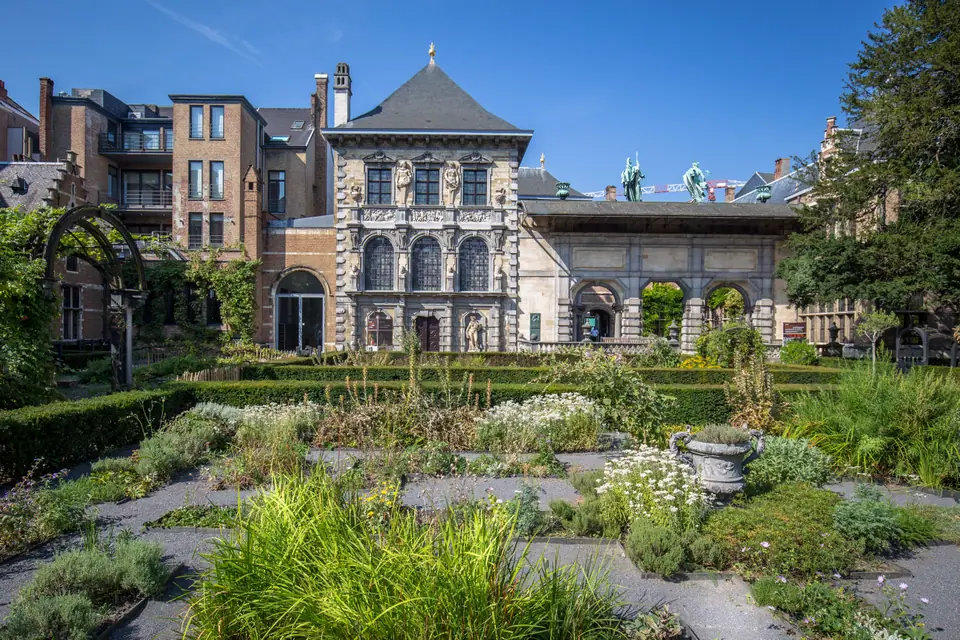
Photo: Davidh820 · CC BY-SA 4.0
Rubenshuis, Plantin-Moretus and the Golden Age
Antwerp Golden Age workshops: Rubenshuis Hopland pavilion and 2030 residence works, UNESCO Plantin-Moretus presses and Mayer van den Bergh at Maagdenhuis.
Antwerp's sixteenth- and seventeenth-century Golden Age becomes clearest inside two surviving residences that doubled as high-output workshops. Peter Paul Rubens turned a town palazzo off Meir into a studio exporting giant altarpieces across Europe, while Christophe Plantin turned Vrijdagmarkt into northern Europe's foremost scholarly printing house. Planning accurately today requires checking live restoration work. Rubenshuis welcomes guests through its Hopland 13 garden pavilion while historic rooms stay closed until 2030, and Museum Mayer van den Bergh exhibits headline paintings nearby at Maagdenhuis.
Workshops that turned art and print into industry
Under Emperor Charles V, Baltic cargo, Iberian spices, pepper and New World silver converged on the Scheldt before religious conflict split the Low Countries. Iconoclast raids in 1566, the 4 November 1576 Spanish Fury killing around 8,000 citizens, and Antwerp's 1585 Spanish reconquest under Alexander Farnese drove maritime finance north. Yet Antwerp's 1584 diamond guild and Baroque Counter-Reformation commissions sparked deep artistic and scholarly output, outlined further in our city orientation guide.
Inside the Rubenshuis restoration and new Hopland entrance
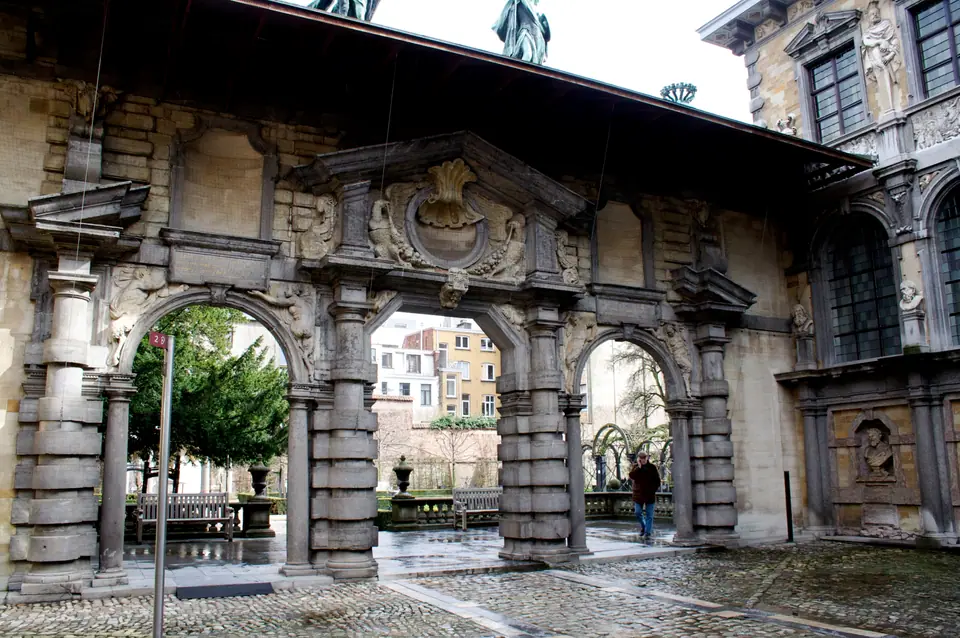
Rubens (1577 to 1640) married Isabella Brant in 1609 and bought a Flemish townhouse on the Wapper in 1610. He redesigned it as an Italianate palazzo with a tall northern workshop wing and a monumental stone garden portico opening onto an axial garden. After his death in 1640, widow Helena Fourment leased the estate to English Royalists William and Margaret Cavendish until sale followed Margaret's departure in 1660. Antwerp bought the property in 1937 through Henri Blomme's legacy and opened a civic museum in 1946. Notable paintings include his early Adam and Eve (around 1600) and a Self-Portrait painted near age fifty.
Check open zones before walking up to the gates. On 30 August 2024 the museum opened Robbrecht en Daem's contemporary entrance pavilion at Hopland 13, replacing the old Wapper courtyard approach. Guests enter there for the interactive Rubens Experience and climb to the second-floor Rubenianum research library overlooking the garden. Outside stretches a redesigned Baroque garden with over 17,500 seasonal plants shaped by colour guidance from fashion designer Dries Van Noten. The historic Artist's Residence stays shut for structural conservation through 2030, so visits focus on those pavilion, library and garden grounds.
| Year | Rubenshuis milestone |
|---|---|
| 1610 | Rubens buys townhouse and builds Italianate studio wing. |
| 1640 / 1660 | Rubens dies; Cavendish tenancy ends and estate is sold. |
| 1937 / 1946 | City buys site via Blomme bequest and opens civic museum. |
| August 2024 | Hopland 13 pavilion, library and 17,500+ plant garden open. |
| Until 2030 | Historic Artist's Residence remains closed for restoration. |
How Rubens ran an industrial Baroque studio
Separating a towering workshop hall from his private study for portraits, oil sketches and small panels let Rubens balance diplomatic travel with huge church orders. Trained pupils and assistants transferred oil designs onto vast oak panels and stretched canvases. The master then refined key faces, highlights and final glazes. Several towering works completed under that workshop division hang a short walk away inside the Cathedral of Our Lady.
Five centuries of type inside Plantin-Moretus
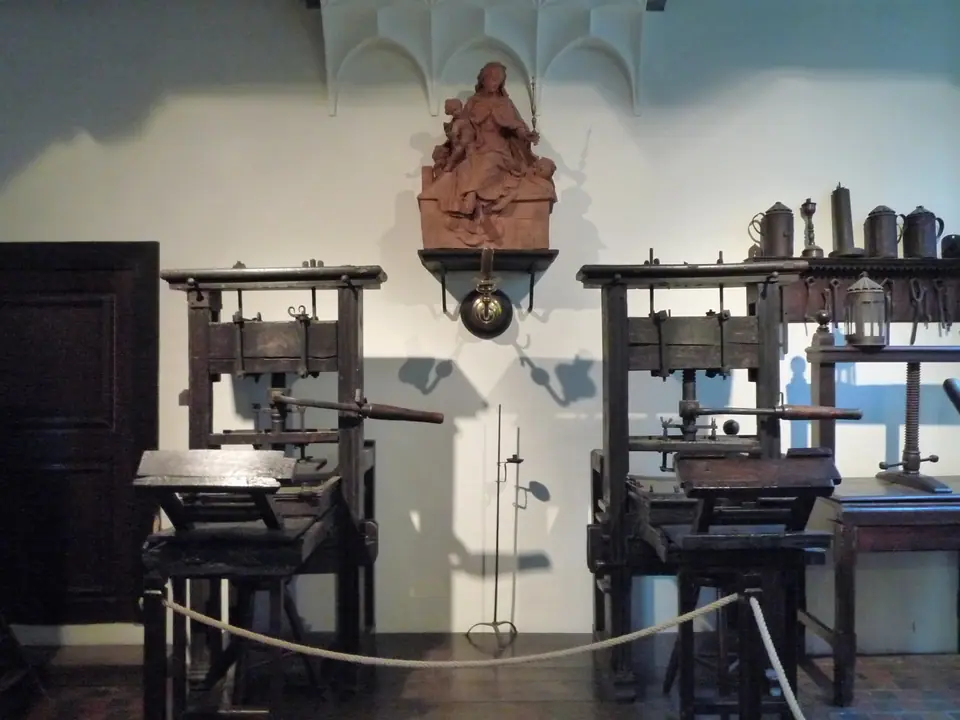
Across Vrijdagmarkt, printer Christophe Plantin opened the Plantin Press in the 1500s using precision metal punches bought from leading Paris typefounders. Its landmark eight-volume Plantin Polyglot (Biblia Regia) set parallel scholarly columns in Latin, Greek, Hebrew, Aramaic and Syriac. Today the galleries safeguard the world's two oldest surviving printing presses (circa 1600) beside a rare 36-line Gutenberg Bible, woodblocks and patrician rooms. Surviving metal punches and scholarly folios illustrate how Antwerp supplied European book fairs across generations.
Edward Moretus sold the intact printing house and residence to Antwerp in 1876, opening public visits in 1877. Nominated in 2002, Plantin-Moretus earned UNESCO World Heritage status (ID 1185) in 2005 as the first museum on the World Heritage list. In September 2016 a sleek paper conservation wing and reading room opened on Holy Ghost Street, deepening access to five centuries of Antwerp printing heritage.
| Year | Plantin-Moretus chronology |
|---|---|
| 1500s | Christophe Plantin opens press and prints the Polyglot Bible. |
| 1876 / 1877 | Edward Moretus sells to Antwerp; doors open to visitors. |
| 2002 / 2005 | UNESCO nomination followed by World Heritage Site inscription. |
| 2016 | New reading room and paper heritage wing open on Holy Ghost Street. |
Mayer van den Bergh treasures relocated to Maagdenhuis
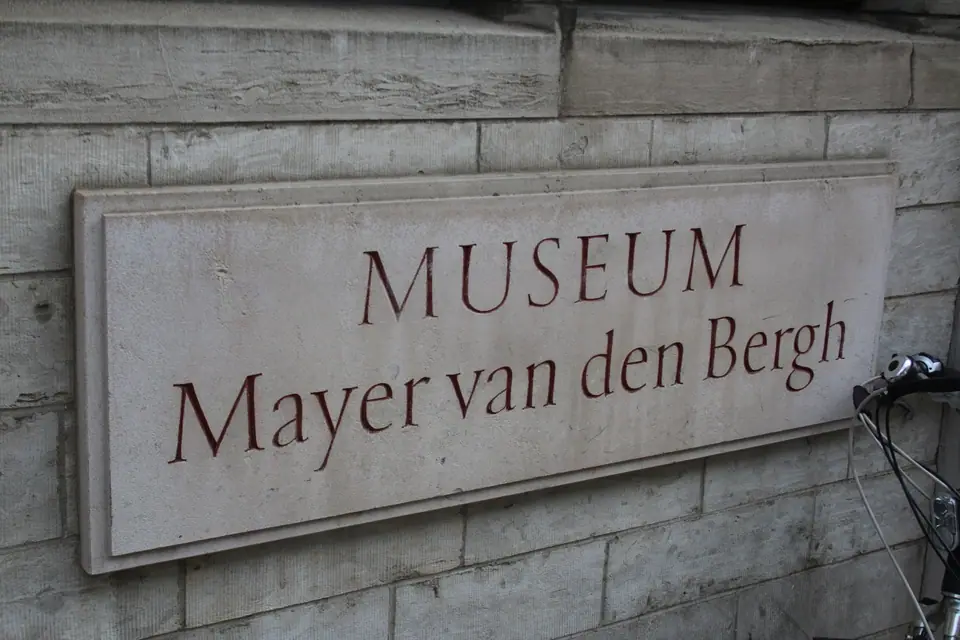
Collector Fritz Mayer van den Bergh gathered Gothic and Renaissance sculpture, fine tapestries and Old Masters inside his neo-Gothic house at Lange Gasthuisstraat 19. On 27 April 2025 the museum closed that historic house for major structural renovation. Works now expand into neighbouring courtyard building Hof van Arenberg until around 2029 to 2030. Through September 2028, about 90 headline holdings including Pieter Bruegel the Elder's Mad Meg (Dulle Griet) hang 100 metres away inside sixteenth-century Maagdenhuis at Lange Gasthuisstraat 33. Carved altars, woven tapestries and early panels anchor that curated temporary exhibition.
Sequencing Golden Age houses in one city-centre walk
Link all three addresses in one compact half-day circuit without boarding a tram. Start at Hopland 13 (0.5 kilometres from Meir) for the Rubenshuis pavilion and Baroque garden, then walk southwest to Maagdenhuis for Bruegel. Break for lunch near Grote Markt (0.3 kilometres north of Hopland) before inspecting Vrijdagmarkt printing rooms. Finish north toward Het Eilandje maritime docks or organise rainy museum schedules inside our three-day Antwerp itinerary.
Where it is
- 1Rubenshuis, Plantin-Moretus and the Golden Age
- Brussels Airport (BRU) · about 36 km from here in a straight line
- Directions in Google Maps
Stations and taxi ranks: OpenStreetMap. Airports: OurAirports. Distances are in a straight line.
Traveller tips
Real advice from people who have been to Antwerp. Every tip is read by our team before it goes live.
No tips yet. Been here? Yours could be the first.
Thank you! Your tip will appear here after a quick review.
More in Antwerp
Continue exploring Antwerp with related neighbourhood, food, and planning guides