


























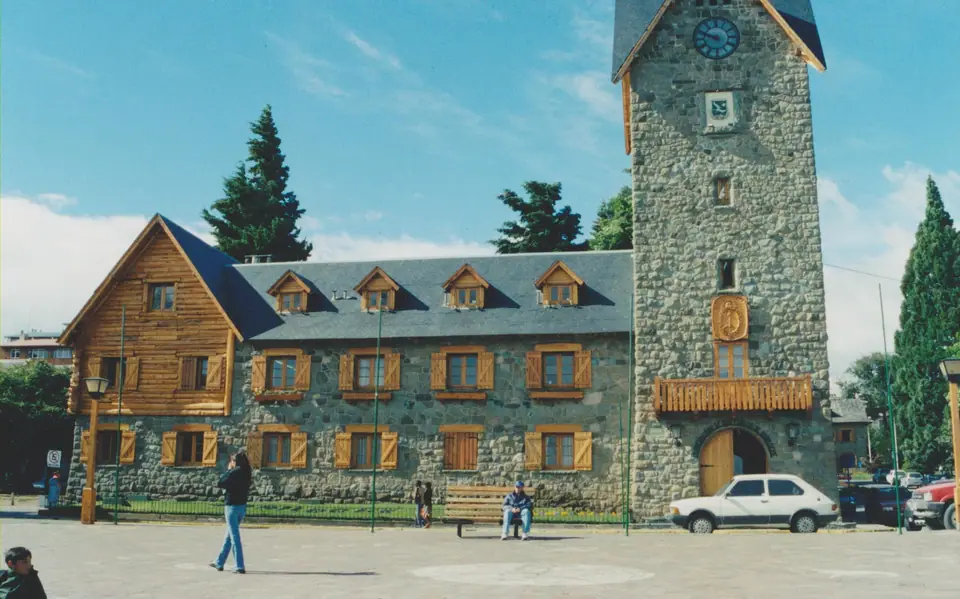
Centro Cívico, Cathedral of Nahuel Huapi & Calle Mitre Chocolate Route Guide
Walk through the architectural and sweet heart of downtown Bariloche: explore the 1940 green-tuff stone Centro Cívico and Museo de la Patagonia, the 1946 neo-Gothic Cathedral, and Calle Mitre's chocolatiers.
In the late 1930s, determined to transform a frontier timber settlement into an international mountain resort worthy of Argentina's newly created National Park system, National Parks president Exequiel Bustillo commissioned architects Ernesto de Estrada and Alejandro Bustillo to reshape downtown San Carlos de Bariloche. The result is a cohesive Alpine-Andean stone cityscape that anchors the shoreline of Lago Nahuel Huapi to this day.
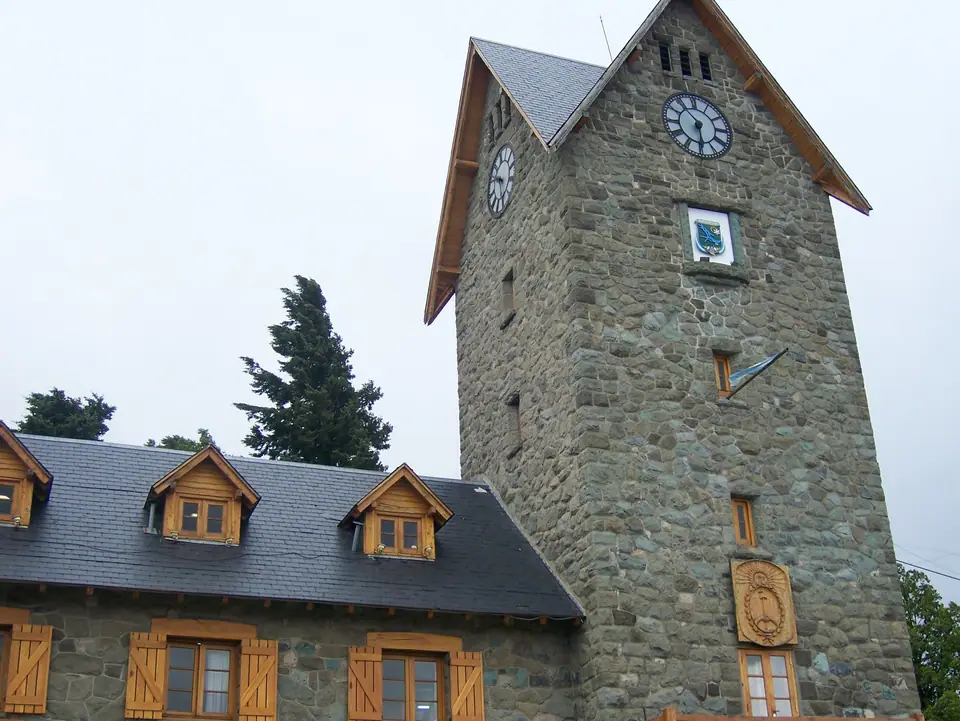
1. Centro Cívico de Bariloche (1940) & Museo de la Patagonia
Inaugurated on 17 March 1940 and declared a National Historic Monument in 1987, the Centro Cívico wraps around a flagstone plaza that opens directly toward the blue expanse of Lago Nahuel Huapi:
- Green Tuff Stone, Native Cypress & the Noon Clock Figures: Built from blocks of greenish-grey volcanic tuff stone (piedra toba verde) quarried from nearby Cerro Carbón, massive hewn trunks of native Cordilleran cypress (ciprés) and alerce (Fitzroya), and slate roof tiles, the complex integrates the Town Hall, Police Station, Post Office, Customs House, and Sarmiento Library. Stand in the square at 12:00 noon or 18:00 to watch four carved wooden figures emerge from the clock tower in turn: an indigenous Tehuelche/Mapuche inhabitant, a Jesuit missionary, a Spanish soldier, and a European pioneer farmer.
- Museo de la Patagonia "Francisco P. Moreno": Occupying the eastern wing of the Centro Cívico, this comprehensive museum traces 13,000 years of Patagonian natural history, marine fossils, Mapuche and Tehuelche ethnography (including quillango guanaco-skin cloaks and silverwork), the 17th-century Jesuit mission at Nahuel Huapi, and Perito Moreno's 1903 boundary explorations; check the official National Parks portal for current Tuesday-to-Saturday opening hours.
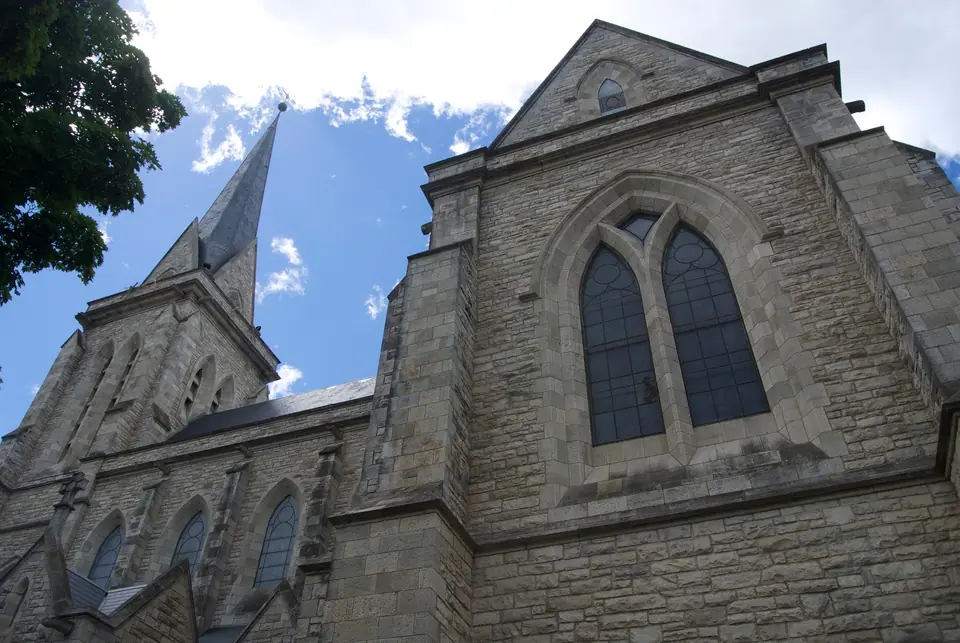
2. Catedral Nuestra Señora del Nahuel Huapi (1946) & the Calle Mitre Chocolate Mile
- The 1946 Lakeside Neo-Gothic Cathedral: Six blocks east along the waterfront gardens at Vicealmirante O'Connor and Beschtedt rises the Catedral Nuestra Señora del Nahuel Huapi, designed gratis by Alejandro Bustillo and consecrated in 1946. Built in the shape of a Latin cross oriented toward the lake with a 69-metre bell tower, its interior is illuminated by French-crafted stained-glass windows by brothers E. and G. Thomas that weave Patagonian flora, local pioneers, and indigenous figures into the Stations of the Cross.
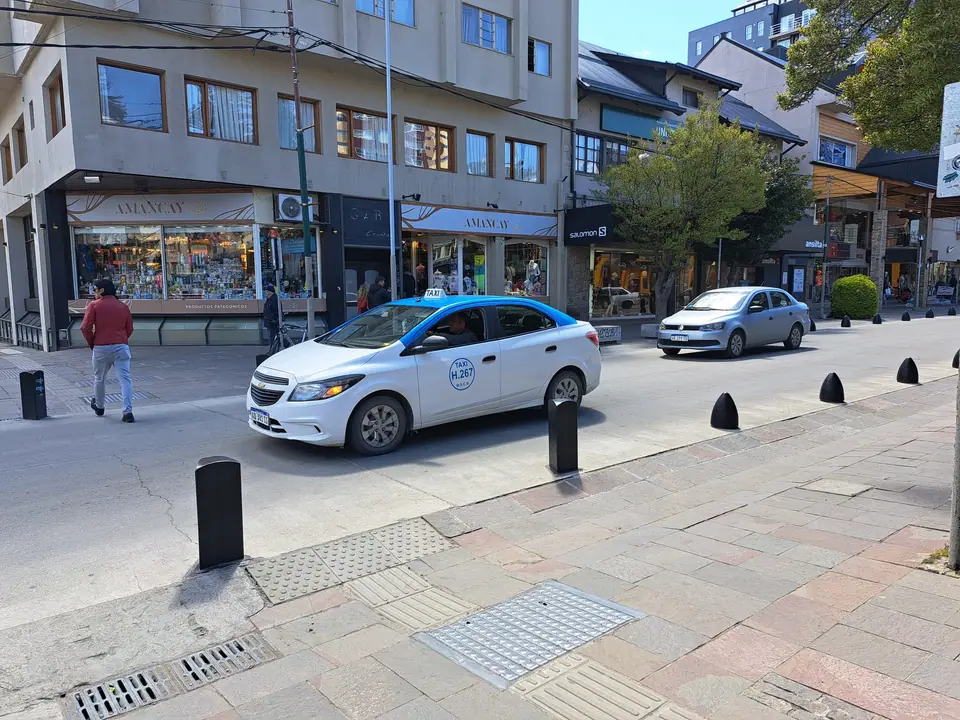
- Walking the Calle Bartolomé Mitre Chocolate Route: Passing beneath the double stone arch at the eastern corner of the Centro Cívico puts you at the start of Calle Mitre. Over the next six blocks, stop into Rapa Nui (Mitre 202, featuring an Art Nouveau café and a full-size indoor ice-skating rink in the back), Mamuschka (Mitre 298, famed for its red Russian-doll tins and award-winning bean-to-bar chocolates), Abuela Goye, and nearby family-run Chocolates Benroth (Beschtedt 569).
Traveller tips
Real advice from people who have been to Centro Cívico, Cathedral of Nahuel Huapi & Calle Mitre Chocolate Route. Every tip is read by our team before it goes live.
No tips yet. Been here? Yours could be the first.
Thank you! Your tip will appear here after a quick review.
More in San Carlos de Bariloche
Continue exploring San Carlos de Bariloche with related neighbourhood, food, and planning guides
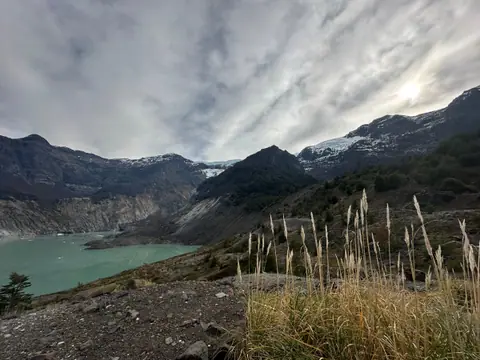
Cerro Tronador (3,491m), Ventisquero Negro & Cascada Los Alerces Day-Trip Guide
San Carlos de Bariloche, Argentina
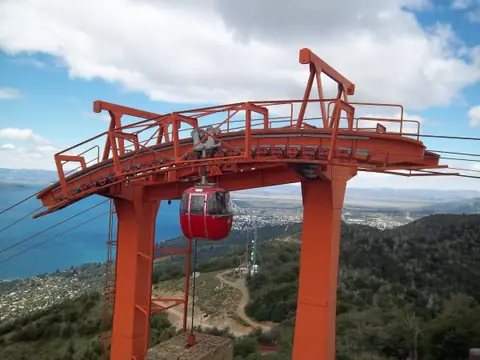
Cerro Otto Teleférico, 360° Revolving Café & Lago Gutiérrez Guide
San Carlos de Bariloche, Argentina

Route of the Seven Lakes (Ruta de los Siete Lagos) & Villa La Angostura Guide
San Carlos de Bariloche, Argentina
Patagonian Craft Beer Trail, Playa Bonita & Lakeside Breweries Guide
San Carlos de Bariloche, Argentina
