


























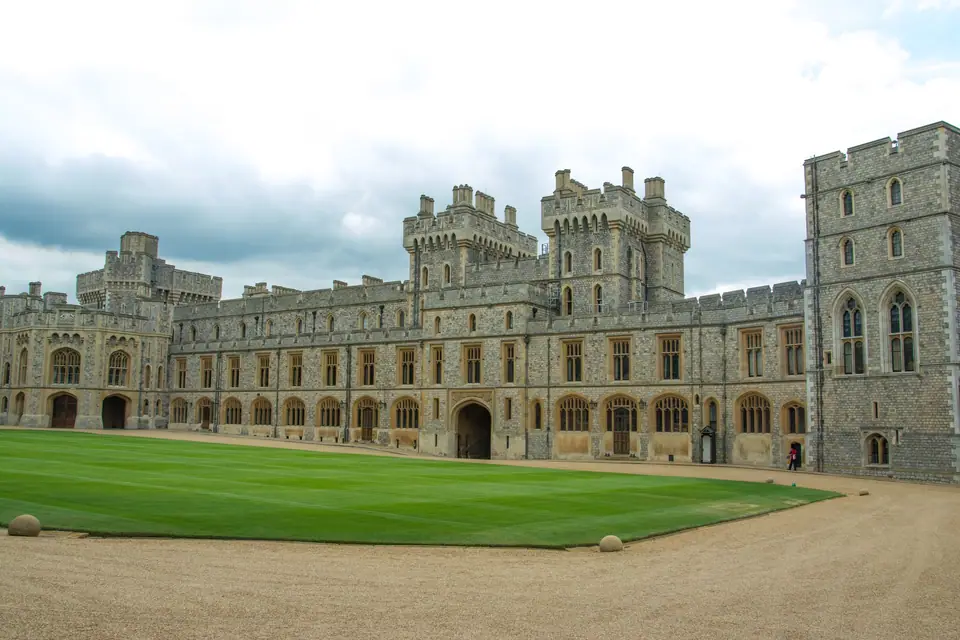
Bergenhus Fortress, Håkon's Hall and St Mary's Church (Mariakirken)
Inside medieval Norway's royal throne hall at Bergenhus Fortress and the 12th-century stone arches of Mariakirken.
During the 13th century, before the union with Denmark shifted political power south, Bergen was the capital of the Kingdom of Norway and the seat of the royal court across an empire that stretched to Iceland, Greenland, the Faroe Islands and the Scottish Isles. Guarding the northern entrance to Vågen harbour just past Bryggen stands Bergenhus Fortress (Bergenhus festning), the old royal homestead called Holmen, paired immediately inland with the city's oldest surviving stone church.
Håkon's Hall (Håkonshallen) and the Rosenkrantz Tower
While the grassy outer parkland and cannon bastions of Bergenhus Fortress are free to walk through from early morning until late evening, its two great stone monuments (both managed by Bymuseet i Bergen and included in the Bergen Card) take you directly into the Middle Ages and Renaissance:
- Håkon's Hall (Håkonshallen, 1261): built between 1247 and 1261 by King Håkon Håkonsson as a grand royal residence and ceremonial feasting hall for the wedding and coronation of his son, King Magnus the Lawmender (who promulgated Norway's first unified national code of laws here in 1274). Influenced by contemporary English Gothic royal halls, the three-storey soapstone-and-stone structure remains Norway's largest secular medieval building, still used for royal dinners and concerts during the Bergen International Festival.
- Rosenkrantz Tower (Rosenkrantztårnet): standing right beside Håkon's Hall, this fortified residence incorporates the 1270s medieval keep of King Magnus the Lawmender (including his private bedchamber and chapel), which Scottish masons expanded in the 1560s for governor Erik Rosenkrantz into a combined Renaissance lord's residence and defensive cannon tower aimed both at the sea and at the unruly Hanseatic merchants on Bryggen. Climb the narrow, winding intramural stone staircases all the way from the dark ground-floor dungeon to the open rooftop parapet for a close-up view over Vågen harbour.
St Mary's Church (Mariakirken, c. 1140 to 1180)
Walk two minutes behind the last wooden houses of Bryggen to the twin stone towers of St Mary's Church (Mariakirken), the oldest surviving building in all of Bergen. Built in Romanesque soapstone in the mid-12th century and serving from 1408 to 1766 as the parish church of the German Hanseatic merchants at Bryggen, it escaped the great city fires with its magnificent 1470s gilded triptych altar created in Lübeck and a dazzling 1676 baroque pulpit carved with tortoises, celestial globes and Biblical figures.
Traveller tips
Real advice from people who have been to Bergenhus Fortress, Håkon's Hall and St Mary's Church (Mariakirken). Every tip is read by our team before it goes live.
No tips yet. Been here? Yours could be the first.
Thank you! Your tip will appear here after a quick review.
More in Bergen
Continue exploring Bergen with related neighbourhood, food, and planning guides
Bryggen Guide: Wooden Alleys, Schøtstuene and Hanseatic History
Bergen, Norway
Mount Fløyen Guide: Fløibanen Funicular, Forest Lakes and Walking Down
Bergen, Norway

Mount Ulriken Cable Car (Ulriken643) and the Vidden Trail to Fløyen
Bergen, Norway

Nordnes, Skuteviken and Sandviken: Bergen's Quiet Wooden Streets
Bergen, Norway
