Bergen
UNESCO-listed wooden Hanseatic merchant rows along Bryggen wharf, funicular and cable car climbs up seven surrounding mountains, and express boats into Sognefjord and Hardangerfjord.
Quick decisions
How many days?
3 days: Bryggen wharf, Bergenhus Fortress and the Fløibanen funicular on day one, KODE art museums, Nordnes wooden alleys and Mount Ulriken on day two, plus a Mostraumen, Sognefjord or Hardangerfjord excursion on day three. Follow our three-day route.
Where should I stay?
Bryggen & Vågsbunnen: cobbled medieval lanes right on the historic harbour. Torgallmenningen & Sentrum: steps from the airport light rail and KODE museums. Nordnes: quiet white wooden houses on a peninsula. Compare areas in our neighbourhood overview.
Do I need a car?
No. Central Bergen is compact and walkable, linked to the airport by the Bybanen light rail and to the fjords by express passenger catamarans and trains.
Best for
Fjord gateways: direct boat and rail access to Nærøyfjord, Sognefjord, Hardangerfjord and Mostraumen. Timber heritage: 1702 Hanseatic wooden passages at Bryggen and white clapboard hillside neighbourhoods. Mountain views: two summit railways starting inside the city.
Before you go
Pack a hooded waterproof jacket in every month of the year: Bergen is famously Norway's rainiest city, and watching the live webcam before riding up Mount Ulriken or Fløyen saves you climbing into a cloud. Read our practical briefing.
Getting around
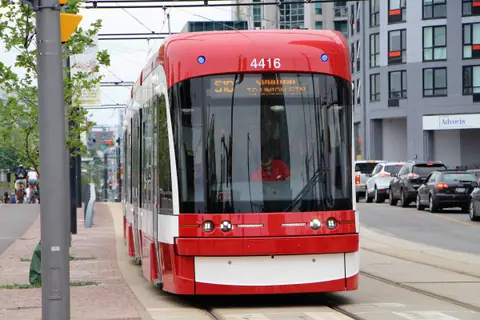
From Bergen Airport Flesland (BGO): Bybanen Light Rail Line 1 runs directly from the terminal to Byparken in the city centre in 45 minutes for a standard single bus fare. Details in arrival and transport.
Continue your trip
Ride the scenic Bergensbanen train east to Oslo (via Flåm and Nærøyfjord), or board the Hurtigruten and Havila coastal express north toward Ålesund and Tromsø.
Overview
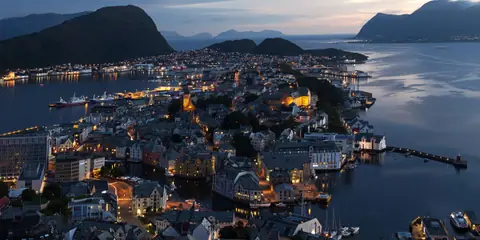
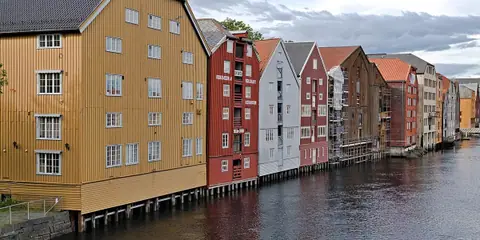
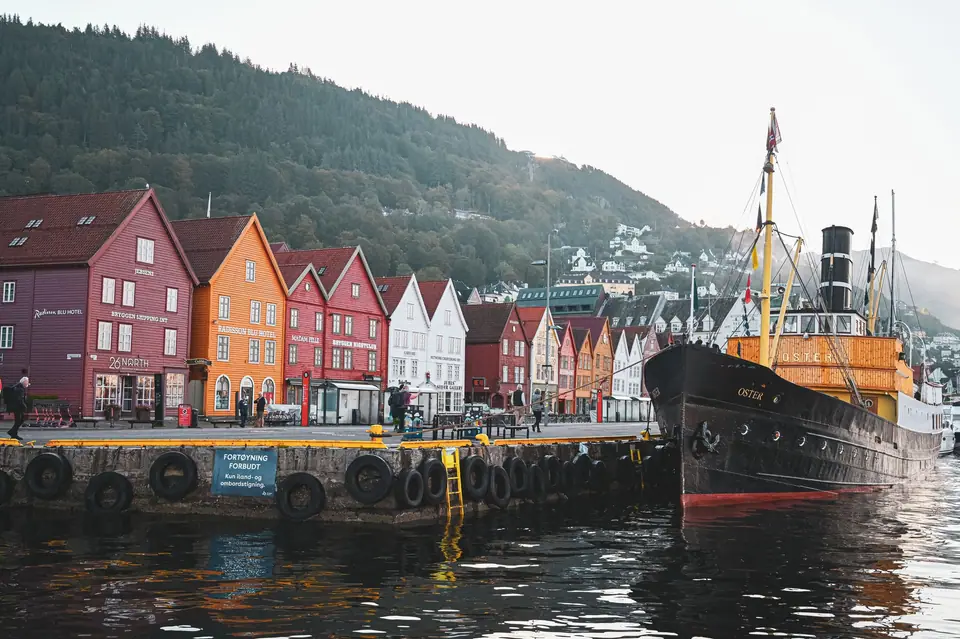
Cradled inside a natural amphitheatre of seven mountains (De syv fjell) on Norway's fractured North Sea coast, Bergen served as the royal capital of medieval Norway in the 13th century and as one of the four great overseas trading ports of the Hanseatic League for four hundred years. Along the eastern quay of Vågen harbour stands Bryggen, where 62 narrow timber merchant buildings painted in ochre, dark red and mustard yellow lean shoulder to shoulder above deep wooden passages.
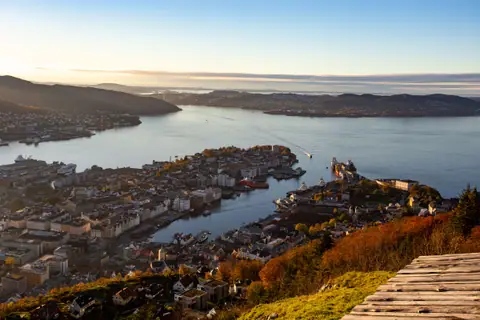
Few cities connect urban life so effortlessly with high mountain ridges and deep fjords: within ten minutes of the harbour you can ride the Fløibanen funicular up Mount Fløyen or the Ulriken643 cable car to bare alpine granite, wander the quiet white clapboard lanes of Nordnes and Sandviken, or step aboard a morning catamaran into Mostraumen, Sognefjord and Hardangerfjord. Start with our before-you-go briefing and top things to do in Bergen.
Getting there
Bergen Airport, Flesland (BGO), sits 18 kilometres south of the centre and connects directly to Byparken at the heart of downtown via Bybanen Light Rail Line 1 (45 minutes) or the faster Flybussen coach (25 minutes). Bergen Railway Station sits five minutes' walk east of Byparken for trains to Voss, Myrdal (Flåm) and Oslo, while Strandkaiterminalen across the harbour launches express boats into the fjords. See getting to Bergen and Skyss tickets and the Bergen Card.
Where to stay
Almost every visitor stays within a fifteen-minute walk of the Vågen harbour bowl: along Bryggen and cobbled Vågsbunnen for medieval character, around Torgallmenningen and Byparken for step-free access to the airport light rail and train station, or out on the quiet wooden peninsula of Nordnes. We compare all neighbourhoods in where to stay in Bergen.
Things to do
Duck behind the waterfront facades into the creaking timber passages of Bryggen and the Schøtstuene assembly halls, ride the Fløibanen funicular at sunset, admire Edvard Munch's paintings at the KODE Art Museums and Edvard Grieg's lakeside home Troldhaugen, visit the Fantoft Stave Church, and take a half-day boat trip through the Mostraumen narrows. Full list in things to do in Bergen.
Food and drink
Centuries of stockfish trade and coastal fishing shape every menu in Bergen: steaming bowls of creamy Bergensk fiskesuppe (sweet-and-sour white fish soup with root vegetables and shrimp), spring cod tongue, traditional sugar-and-salt-cured persetorsk, reindeer hotdogs topped with lingonberries and crispy onions at Trekroneren, and giant cinnamon swirls known exclusively in Bergen as skillingsboller. Read more in our Bergen seafood and bakery guide.
Culture
Founded in 1070 by King Olav Kyrre as Bjørgvin ("the green meadow among the mountains"), Bergen remained the largest town in Norway until the 1830s and gave birth to composer Edvard Grieg, playwright Ludvig Holberg and painter J.C. Dahl.
Weather by month
Bergen is warmest in July, with average highs around 20°C, and coldest in January, when nights drop to about 0°C. October is the wettest month, with rain on about 18 days. For mild weather with fewer rainy days, aim for June and July.
| Month | Low | Range | High | Rain | Rainy days |
|---|---|---|---|---|---|
| Jan | 0°C | 4°C | 210 mm | 18 d | |
| Feb | 0°C | 5°C | 175 mm | 16 d | |
| Mar | 1°C | 7°C | 165 mm | 15 d | |
| Apr | 4°C | 11°C | 125 mm | 12 d | |
| May | 8°C | 15°C | 105 mm | 11 d | |
| Jun | 11°C | 18°C | 120 mm | 12 d | |
| Jul | 13°C | 20°C | 145 mm | 14 d | |
| Aug | 13°C | 19°C | 185 mm | 16 d | |
| Sep | 10°C | 16°C | 225 mm | 17 d | |
| Oct | 7°C | 12°C | 245 mm | 18 d | |
| Nov | 3°C | 7°C | 235 mm | 18 d | |
| Dec | 1°C | 5°C | 240 mm | 18 d |
Averages of daily values from 2015 to 2024. Rainy days are days with at least 1 mm of rain. Source: Open-Meteo · Compare destinations by month.
Bergen on the map
Every place we cover in Bergen. Tap a category or pin to explore.
In-depth Bergen guides
Browse the guides grouped by topic: sights, neighbourhoods, food, transport, day trips and trip planning.
Sights, Landmarks & Parks
Key monuments, viewpoints, museums and nature trails.
- Best Things to Do in BergenUNESCO wooden wharves, mountain funiculars, fjord cruises, Munch art galleries and stave churches.
- Bryggen Guide: Wooden Alleys, Schøtstuene and Hanseatic HistoryLooking beyond the postcard front of Bryggen into its 1702 timber passages and Hanseatic assembly halls.
- Mount Fløyen Guide: Fløibanen Funicular, Forest Lakes and Walking DownRiding the 6-minute Fløibanen funicular to 320 metres, walking around Skomakerdiket lake and descending on foot.
- Mount Ulriken Cable Car (Ulriken643) and the Vidden Trail to FløyenClimbing to 643 metres on the Ulriken gondola and hiking the high alpine Vidden ridge across to Mount Fløyen.
- Bergen Art and Music: KODE Museums and Edvard Grieg's TroldhaugenViewing Edvard Munch's masterpieces at KODE 3 alongside composer Edvard Grieg's lakeside cabin at Troldhaugen.
- Bergenhus Fortress, Håkon's Hall and St Mary's Church (Mariakirken)Inside medieval Norway's royal throne hall at Bergenhus Fortress and the 12th-century stone arches of Mariakirken.
- Bergen on a Rainy Day: Best Indoor Museums, Cozy Cafés and PoolsTurning a classic rainy Bergen day into a warm trail of Munch galleries, wooden cafés and heated pools.
- Fantoft Stave Church and Gamlehaugen Royal Residence by Light RailRiding Bybanen Line 1 fifteen minutes south of downtown to the dragon-carved Fantoft Stave Church and Gamlehaugen.


Neighbourhoods & Where to Stay
Districts, historic quarters and the best bases for your stay.
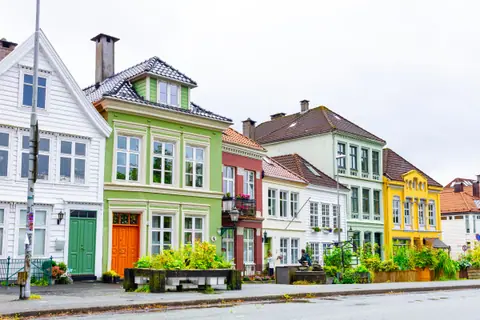
- Nordnes, Skuteviken and Sandviken: Bergen's Quiet Wooden StreetsWandering Europe's best-preserved neighbourhoods of white clapboard houses, rose-draped smau alleys and sea pools.
- Where to Stay in Bergen: Bryggen, Vågsbunnen, Sentrum and NordnesComparing Bergen's four best hotel areas by harbour views, cobbles, luggage convenience and atmosphere.

Food & Drink
Local dishes, markets, cafés and dining districts.

Getting Around & Arrival
Airport transfers, public transit, passes and driving rules.
- Getting to Bergen: Flesland Airport Light Rail, Trains and HurtigrutenWhy the 45-minute Bybanen Light Rail Line 1 from Flesland Airport is one of Europe's best airport bargains.
- Getting Around Bergen: Skyss App, Bybanen, Beffen Ferry and Bergen CardNavigating Bybanen Lines 1 and 2, riding the historic Beffen harbour boat and deciding on the Bergen Card.
Day Trips & Excursions
Easy half-day and full-day trips from the city.
- Mostraumen Fjord Cruise from Bergen: Waterfalls and Narrow ChannelsThe best half-day fjord cruise departing directly from Bergen's Fish Market through the narrow Mostraumen strait.
- Visiting Sognefjord, Nærøyfjord and Flåm from BergenTwo ways to experience the UNESCO Nærøyfjord and Flåm Railway on a full-day return trip from Bergen.
- Hardangerfjord Day Trip from Bergen: Steinsdalsfossen and Cider OrchardsWalking behind the curtain of Steinsdalsfossen waterfall and cruising the orchard-lined Hardangerfjord.


Trip Planning & Itineraries
When to visit, what to pack and day-by-day routes.
- Bergen: What to Know Before You GoNavigating the Vågen harbour bowl, timing around cruise ships, rain gear and card payments.
- Best Time to Visit Bergen: Fjord Season, Festspillene and WeatherWhy late May and June beat every other month in Bergen for dry skies, blooming orchards and huge waterfalls.
- What to Wear in Bergen: Waterproof Layers, Trail Shoes and Mountain WindDressing like a Bergenser: waterproof outer shells, water-resistant footwear and warm fleece layers for the peaks.
- 3 Days in Bergen: Bryggen, Two Mountain Summits and a Fjord ExcursionThree days combining UNESCO Bryggen, both mountain railways, white wooden alleys and a fjord cruise.



Need your embassy or consulate in Norway? See embassies and consulates in Norway.
Reviews
Log in to write a review.
No reviews yet.