



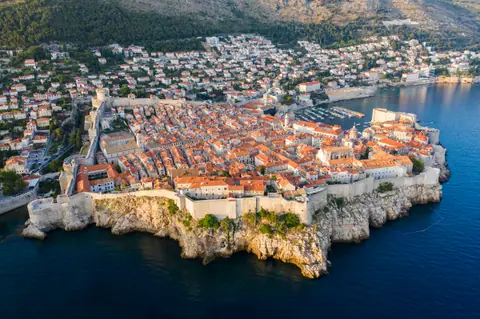














Paris
The Eiffel Tower, the Louvre and centuries of art and architecture along the Seine.
Quick decisions
How many days?
3 days: the big sights, at a brisk pace. 4 to 5 days: the same, plus Montmartre, the Musée d'Orsay and time to sit in cafés. 6 days or more: add Versailles or a day in a neighbourhood like the Canal Saint-Martin.
Where should I stay?
The Marais or Saint-Germain: central and walkable, not cheap. Latin Quarter: lively and a bit better value. Montmartre: village feel, further from the river. More in our where to stay guide.
Do I need a car?
No. The metro goes everywhere, parking is expensive, and traffic in the centre is slow. You'll walk a lot anyway.
Best for
First-timers: yes. Couples: it's Paris. Families: yes, if you don't try to do three museums a day. Budget travellers: possible, since a lot of the best things (walking, churches, parks, markets) cost nothing.
Before you go
Book ahead: the Louvre, the Eiffel Tower and the Catacombs all use timed tickets. Shoes: you'll walk 15,000 steps a day without trying. French: say "bonjour" when you walk into a shop or café. It matters more than you'd think.
Getting around
From the airports: RER B from Charles de Gaulle, metro line 14 from Orly. In the city: metro and walking. Details in our getting there guide.
Continue your trip
High-speed trains reach London in about two and a quarter hours, Brussels in under two, and the Loire Valley châteaux in around an hour and a half.
Overview
Everyone arrives in Paris with a list: the Eiffel Tower, the Louvre, Notre-Dame, a croissant. You'll tick those off. What tends to stay with people, though, is smaller. A glass of wine on a café terrace at 6pm, the light on the Seine as the bridges come on, a street in the Marais you walked down by accident.
Four days is a comfortable minimum. The city is dense, and it rewards a slow pace: one big sight a day, then walk. Our Paris travel guide covers the practical side.
Getting there
Most visitors fly into Charles de Gaulle or Orly, or arrive by Eurostar from London. Both airports now have a direct rail link into the city. See our getting there guide for the details.
Where to stay
Where you sleep in Paris changes the trip more than in most cities. The central arrondissements keep you on foot, Montmartre feels like a village, and the Latin Quarter is younger and cheaper. Our neighbourhood guide helps you pick.
Things to do
The Eiffel Tower, the Louvre and Montmartre are on nearly every itinerary, and we have full guides to the Eiffel Tower, the Louvre and Montmartre. For everything else, from Sainte-Chapelle to the Catacombs, see our things to do list.
Food and drink
Parisians take lunch seriously, and you should too. Look for a set menu (the "formule") at a neighbourhood bistro, buy your bread from a proper boulangerie rather than a chain, and leave room for cheese. Many small restaurants still close for part of August.
Culture
Paris has been at the centre of European art, ideas and politics for centuries, and the city wears that history openly. The medieval lanes around Notre-Dame, the wide 19th-century boulevards laid out by Baron Haussmann, the cafés where writers and painters argued through the 1920s: you walk through all of it in a single afternoon.
In-depth Paris guides
Practical guides for planning your visit.
- Paris Travel Guide: What to Know Before You Go
- Best Things to Do in Paris
- How to Get to Paris
- Best Time to Visit Paris
- What to Wear in Paris
- Eiffel Tower Guide: Tickets and Best Times to Visit
- Louvre Guide: How to Actually See It
- Montmartre Guide: Sacré-Cœur and the Artists’ Quarter
- Where to Stay in Paris: A Neighborhood Guide
- Paris 3-Day Itinerary
Reviews
Log in to write a review.
No reviews yet.